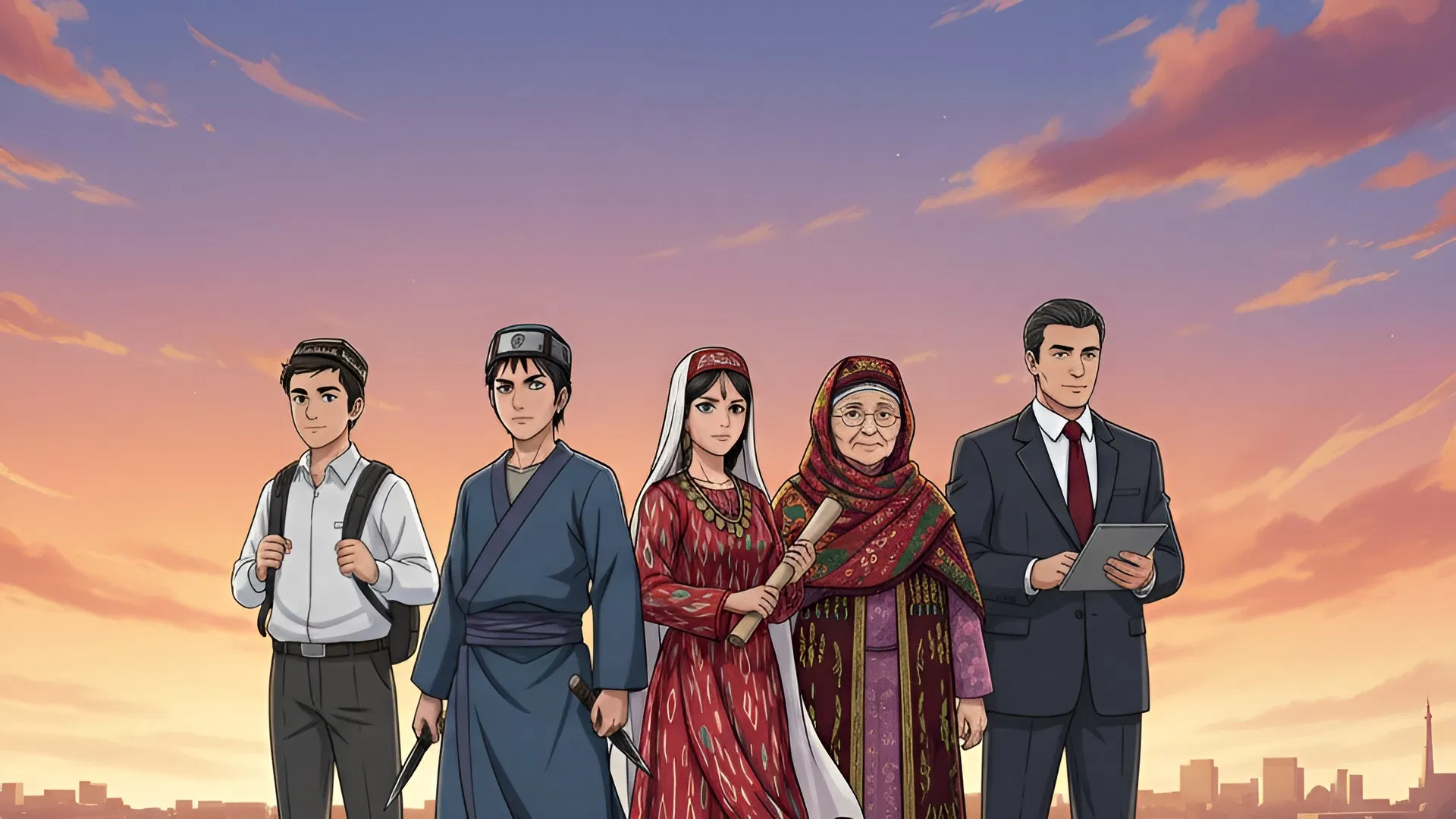
In Uzbekistan, anime is still viewed with some suspicion. For years, Japanese animation was associated with teenagers, eccentric fans and a certain kind of rebellion. Nobody raised an eyebrow at a Spider-Man cartoon or the latest Toy Story, but mention Naruto or Bleach and suddenly you were expected to justify your taste. So what really sets anime apart from Western animation, when both can be products of mass entertainment backed by enormous corporations?
To understand where it all comes from, we need to go back to post-war Japan. The country was facing a devastating crisis, a ruined economy and millions of unemployed people. It was at this point that a young artist named Osamu Tezuka, later known as the “God of Manga”, drew inspiration from the Disney animation being imported into Japan, began drawing his own graphic stories, and eventually went on to create Astro Boy.
The series effectively helped establish many of the rules of modern Japanese animation: simplified animation to save time and money while the country was still struggling economically, and large eyes to make emotions more immediately expressive. It soon became clear that these cartoons could also be an excellent cultural export. Cheap to produce but highly expressive, animation became a way for a country in crisis to speak about dreams, hardship, growing up and trauma.
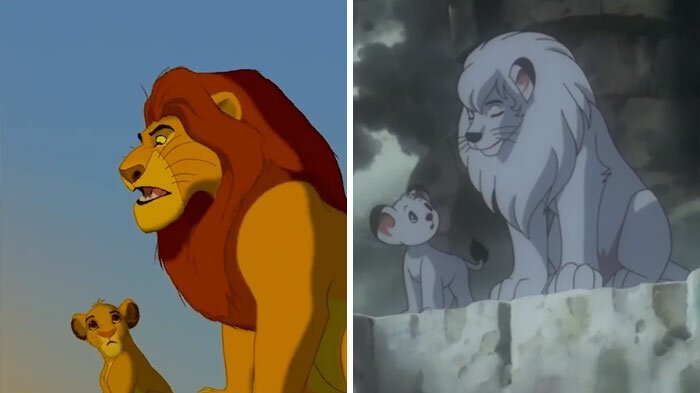
Tezuka was not the only one inspired by Disney. The influence also travelled in the opposite direction. One of Disney’s most iconic family films, The Lion King, bears striking similarities to Tezuka’s Kimba the White Lion, which was broadcast on Japanese television in the 1960s. There is a lion cub destined to inherit the throne, an evil uncle, a mentor figure who appears from beyond the grave, and even visual compositions and plot devices that can later be recognised in the story of Simba.
 Source: konnichiwa.ru
Disney, of course, denied the accusations of plagiarism. But the comparison reveals something more interesting: what we tend to think of as classic Western animation also grew in dialogue with Japanese visual culture.
So why does the stereotype that anime is “childish”, “strange” or somehow “wrong” persist? The answer lies partly in cultural habits and a lack of context. Anime became popular in Uzbekistan much later than Western animation. It appeared on children's television, and even then only in limited quantities, at a time when the very idea of “cartoons” was already firmly associated with American, and less often French or British, animation. If you wanted to enter the world of Japanese animation, you had to buy pirated discs, find friends who were already familiar with it, and, in the early days of its popularity, struggle through poor-quality dubbing to make sense of what you were watching. There was little explanation of where anime came from or how it had developed. The result was an understandable simplification: anime was treated as a “genre”, when in fact it was a much broader cultural phenomenon, far more diverse than children's cartoons.
Anime is Not a Genre, but a Style
Calling anime a single genre is like reducing Uzbek cuisine to plov. The visual language may be recognisable across many different types of anime: large eyes, exaggerated emotions, characters whose inner struggles are written across their faces with almost painful clarity. But that is only the form, the wrapping, the packaging. Underneath it, the content can be anything from an exceptionally gentle children's fairy tale to a full-blown exploration of existential crisis.
Let's start with something safe and familiar in the world of animation: children's stories. For the generation that grew up in the 1990s, Pokémon was one of the first big fictional universes, while Hayao Miyazaki's feature films, soft and airy in their visual style, showed children that art could also be kind.
Take one step to the side, though, and you find the romantic Kaichou wa Maid Sama!, where school drama revolves around first love and there is enough sweetness to send you into a diabetic coma by the third episode.
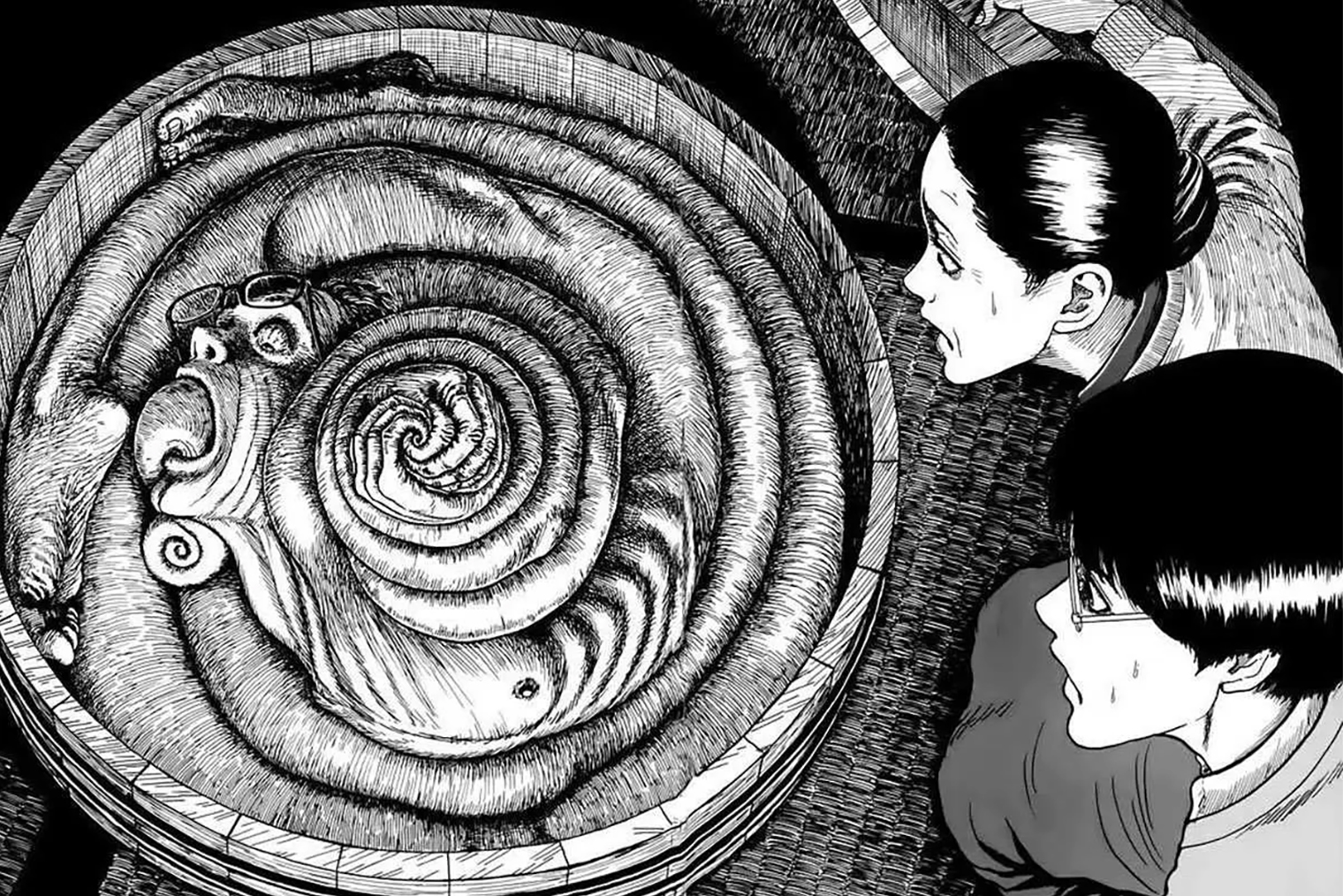
Then the lights go out. And Junji Ito walks onto the stage. A master of transforming ordinary moments into psychological wormholes, Ito turns everyday life into something deeply unsettling. His animation is not simply horror. It is existential dread and a deep, primal fear. After some of his stories, you may find yourself shuddering at the curl of a cinnamon roll or the shell of a garden snail.
 Source: 98mag.kz
If you are after something more cerebral, there is Paprika, one of the most intellectually ambitious films ever made about dreams, and one that inspired Christopher Nolan when he was creating Inception.
 Источник: 9gag.com
And what about a semi-political, semi-biblical meditation on genocide, war, propaganda and the price of freedom? If that sounds interesting, put on Attack on Titan. It will test the strength of your moral convictions.
But if all of that feels a little too heavy, One-Punch Man is somewhere nearby, cheerfully dismantling the conventions of the superhero genre. Because being invincible, as it turns out, is not particularly cool. It is actually rather boring.
That is why when someone tells you that all anime is the same, it probably means their viewing history contains little more than one title. Anime is not a genre. It is a visual language and a grammar for storytelling, capable of telling any kind of story, from a bedtime fairy tale to a horror story told around a campfire.
Who Are Anime Fans, Really?
By the mid-2020s, anime fans are no longer afraid to wear badges on their backpacks or carry keyrings featuring their favourite characters. The second Comic Con has already come and gone this summer, and by the end of the year fans of different fictional universes will return for the third Geek Con. Merchandise from favourite worlds can now be found in specialist shops popping up here and there in shopping centres, sometimes tucked among the more familiar stores. And yet the stereotypes remain. To dispel the myths about people who love Japanese animation, you only need to meet them. What you find is not some isolated club of eccentrics, but a genuine cross-section of society.
Nurlan Sheranov, 36, Executive Director of Bold Brands International
Nurlan's everyday life consists of strict schedules, deadlines and responsibility for his team. On his shelves, however, you will find Gundam models assembled by hand, while his head is full of associations with Naruto, Bleach and Psycho-Pass.
I belong to the generation whose lives were invaded by anime not through TikTok algorithms, but because Naruto was on 2x2 at seven in the evening, and that was an event. My teenage years coincided with a time when anime was considered something strange, almost underground. But I was growing up at the same time as these stories were developing, and for a while I literally grew up alongside the characters.
His favourite genres include shōnen and isekai, from classics such as Bleach to escapist stories such as That Time I Got Reincarnated as a Slime and Overlord.
For me, anime is not just entertainment, but a complete art form with its own schools, genres, and philosophies. It can even be useful in my work. For example, we once used JoJo-style* catchphrases in one of our corporate videos.
*jojo-style catchphrases
“JoJo” refers to JoJo’s Bizarre Adventure, a popular Japanese manga and anime franchise created by Hirohiko Araki, known for its distinctive style, flamboyant characters, and memorable catchphrases.
Malika Shermatova, 29, accountant
Malika's days are filled with reports, spreadsheets and piles of financial paperwork. But there is always room for a bright island of colour: anime. For Malika, anime has evolved alongside her life.
It’s hard to pick a favourite, but if I had to, I’d say Bleach. I really like shōnen with strong emotions and adventures that never leave you indifferent. If anime used to feel like fireworks, colourful and exciting, stimulating your mind and filling you with wonder and joy, now it feels more like sitting by a fireplace under a warm blanket with a cup of hot coffee, watching the strange shapes of the flames.
As for the stereotypes, Malika has long since stepped out of their shadow.
Well, as someone who has experienced all the delights of these stereotypes first-hand, I can say that they don't matter to me anymore. Of course, they used to hurt. Today anime has become an ordinary part of life, and I tend to look indulgently at people who still have these prejudices. It's a little sad that in the twenty-first century some people still don't understand that tastes are not something to argue about.
Ruslan Zaytsev, 27, marketer and young father
Ruslan works with major projects and looks after his family, but he likes to make time for anime. His favourites include One Piece, Demon Slayer, Solo Leveling and Death Note.
I love anime for its carefully constructed worlds, detailed artwork and stories that pull you in for a long time. Take One Piece, for example. It has this enormous fantasy world, and the way it grows alongside the characters, with every arc surprising you and capturing your imagination, is incredible. Many of my adult friends watched anime as children too. My son is still little, so I don't force anime on him. He watched a couple of episodes of One Piece, said, ‘Cool,’ and went off to play (laughs).
Bogdan Garaskov, 28, head barista
For Bogdan, anime is not simply a hobby but part of his personal history.
I grew up with the Sword Art Online title while playing the online game Lineage 2, and the two became a point of convergence between two important worlds for me. Anime is a deep, multilayered world where you can find something that speaks to you: philosophy, culture, and a distinctive way of storytelling. As for stereotypes, it is easy to put labels on people, but before deciding that someone is strange, it is worth asking yourself: am I not strange myself?
Bogdan treats stereotypes with irony and good humor. People are different, tastes differ, and there is nothing wrong with that.
As a child, I was fascinated by L from Death Note: his powers of deduction, attention to detail, and ability to see the bigger picture were truly impressive. Later, Alucard joined my list of favorites. As a vampire, he showed rare moments of mercy, which made them all the more valuable. People who refuse to watch anime are missing out on an experience, a journey of discovery, another fascinating world and a culture that has a great deal to offer.
Arslan Aslanov, 31 years old, baker
For Arslan, anime is simply another form of art, and the stereotypes surrounding its fans are little more than a misunderstanding.
It's just a stereotype. I watch anime, and so do many of my friends. Someone else might like detective stories or action films, and they can still be an alternative person. So what? Sometimes anime sparks professional interest. For example, after Food Wars!, I started thinking about food and the restaurant industry as a whole. The influence is more inspiring than direct. At work, you have to stick to reality rather than the plots of anime. For me, what matters are characters who keep moving forward no matter what, like Naruto, Luffy, Tanjiro and Rengoku. At the same time, I don't look at the industry through rose-tinted glasses. There is plenty of forgettable anime out there too, but what industry doesn't have its share?
Five Anime That Have Influenced Global Culture
Akira - the film that defined modern cyberpunk
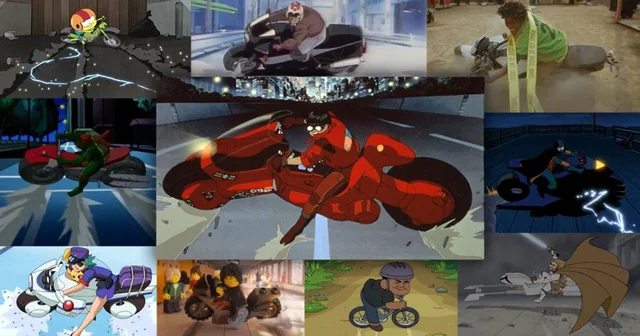
A neon Tokyo of the future. Street bikers. Government control. A power capable of destroying the world as people know it. Akira is not simply an animated film. It is a cultural phenomenon that helped define the visual language of cyberpunk for decades, from The Matrix to Cyberpunk 2077. The precision and scale of its hand-drawn animation remain astonishing, while its famous motorbike slide has become a recurring visual motif across popular culture.
"Naruto: “Dattebayo” Says It All
A boy dreams of becoming the strongest, but before he can achieve that, he has to overcome his real enemies: loneliness, trauma and rejection. For those who grew up in the 2000s and 2010s, Naruto became something like a manual for surviving a world of chaos and uncertainty. Millennials took the message to heart: work hard, keep trying, believe in your dream, and you can achieve anything. At the same time, it is a story about ninjas and an artistic interpretation of growing up in difficult circumstances while continuing to hold on to hope.
Berserk: The Epic That Shaped Dark Fantasy
A hero's journey through betrayal and an endless struggle with himself, in a world where humanity and cruelty are locked in a perpetual battle. Berserk helped lay the foundations of modern dark fantasy. It established the archetype of the solitary hero, a world built around difficult choices and antagonists whose morality is rarely straightforward. Its influence can be seen particularly clearly in the Dark Souls series and all subsequent soulslike games, from its architecture to its philosophy of fighting on against impossible odds. Yet behind its brutal exterior is a deeply human story about willpower, choice and freedom.
Attack on Titan: The Most Talked-About Anime of the Decade
A world where humanity hides behind enormous walls to escape the Titans, while trying to uncover the truth about the world, the past and the future, and, above all, the truth about themselves.
The series proved that Japanese animation could function as full-scale global drama, tackling power, fear, social mechanisms and rabid propaganda. It is one of those rare projects discussed not only in the media and on Reddit, but also in university lecture halls.
Cowboy Bebop: Jazz, Space and Anime Coming of Age
A group of bounty hunters travels across the solar system, confronting the past, freedom and loneliness. Cowboy Bebop is a work of art in its own right: one of the first truly East-meets-West anime experiences. Yoko Kanno's soundtrack, its noir aesthetic and philosophical stories elevate the series towards auteur cinema. Its influence can be felt in Firefly, The Mandalorian and the soundtracks of Netflix series, while its stylish take on space noir helped set the trend.
Why did anime become a global phenomenon?
Japanese animation relies not on realism but on stylised metaphors: exaggeration, symbolism and visual expressions of emotion that can be understood almost instantly. Animation scholar Susan Napier argues that anime was conceived from the outset as a form of artistic expression with its own rules, rather than as an attempt to rival Disney.
Its foundation, however, is manga. Manga is not simply comics. It is a vast system of mass literature, built around weekly magazines, long-running sagas and authorial experimentation. It is an industry worth hundreds of billions of yen a year, with manga artists such as Eiichiro Oda, Kentaro Miura and Naoki Urasawa occupying a cultural position comparable to that of major writers.
Anime is far more than a niche interest. It is a vast industry, with studios, art schools and production houses built around it. The Report on Japanese Animation Industry documents hundreds of studios and thousands of professionals working within an established production system capable of producing dozens of series every season without compromising on quality.
And in Japan, the creator can matter as much as the brand. An author's name can influence sales almost as strongly as the story itself. That creates an environment in which individual style, experimentation and risk are valued. As a result, some works feel like more than just content. They become a kind of personal mythology for their creators.
What can Uzbekistan learn?
Uzbekistan has a new generation of artists, designers, game developers and animators. It also has no shortage of stories. Our culture contains an entire world of characters, myths and legends, from Alpomish to tales of divs and pari. The popularity of anime among people of different ages demonstrates that there is a strong demand for high-quality visual storytelling. If we stop treating animation as something “for children” or “not serious”, we could develop an industry of our own, with creators, studios, original projects and a recognisable visual aesthetic.
People who grow up surrounded by art without borders carry what they love into adulthood. They create illustrations, video games, comics and branding in which you can recognise principles they once discovered in their favourite titles: energetic visual language, deeply empathetic characters, eclectic influences and worlds that make you want to enter them.
And that is perfectly normal. Anime itself grew out of cultural synthesis. Cyberpunk aesthetics travelled from Hollywood science fiction of the 1980s to Japan, where artists reworked them and eventually sent them back into the world, influencing the classics of global gaming. Today, China produces its own donghua, while Netflix keeps offering new takes on beloved classics, with mixed results.
But the greatest lesson of anime is not about superpowers. It is about humanity. There is something deeply symbolic about the fact that this idea emerged from a country that, in confronting its own traumas and mistakes, created a new form of art whose language is now understood around the world.
Read also
Newsletter
A letter from the HD editors
Once a week, we send the best stories, events, and cultural discoveries from Central Asia.