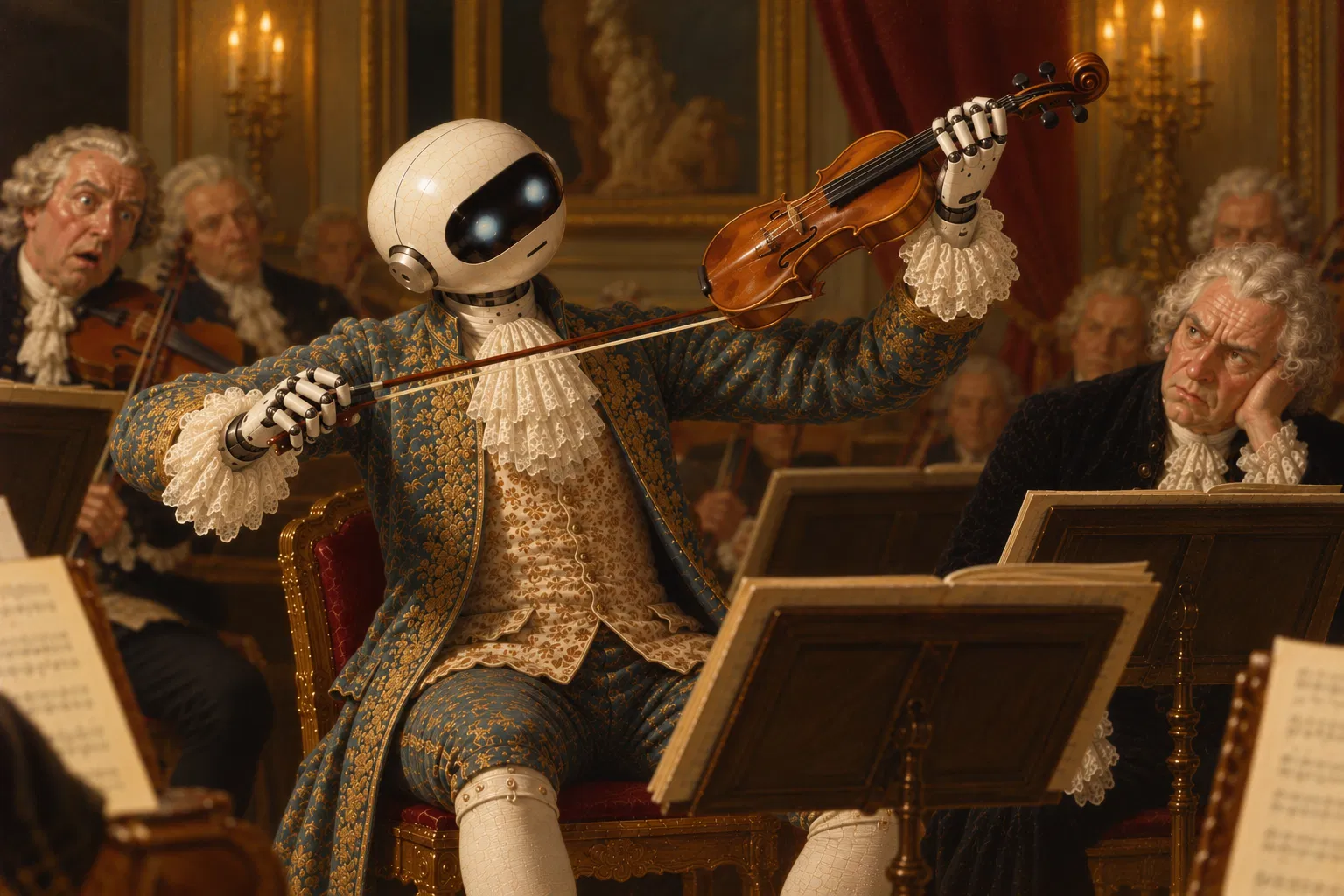
The future arrived in our lives with laughable ordinariness. No Skynet, no AM seething with hatred, not even a replicant philosophizing in the rain. Artificial intelligence has settled into a browser tab, becoming an ordinary household appliance. Many people already delegate routine tasks to it on autopilot, like a workout plan or sanitizing a work email. But counting daily calories is one thing, and creating is something else entirely.
The controversy is sparked precisely by the attempt to switch from applied functionality and offload human feelings onto silicon. For millennia we flattered ourselves with the thought that creativity is exclusively our biological monopoly. But today artificial intelligence generates detailed landscapes in a couple of seconds, creates sonnets and produces huge arrays of artistic text without going through the agony of creation.
But is it really art? John Searle in 1980 proposed a thought experiment - the Chinese Room. Imagine a person who does not know a single word of Chinese. Lock him in a room with an endless reference book that spells out every algorithm of action - if you are given such and such a character, produce such and such in response. The person receives letters from outside and, consulting this reference book, produces perfect answers. Those communicating with him from the other side will think that inside is a connoisseur of Chinese, but in reality it is just a clerk shuffling symbols about whose meaning he has not even a vague idea.
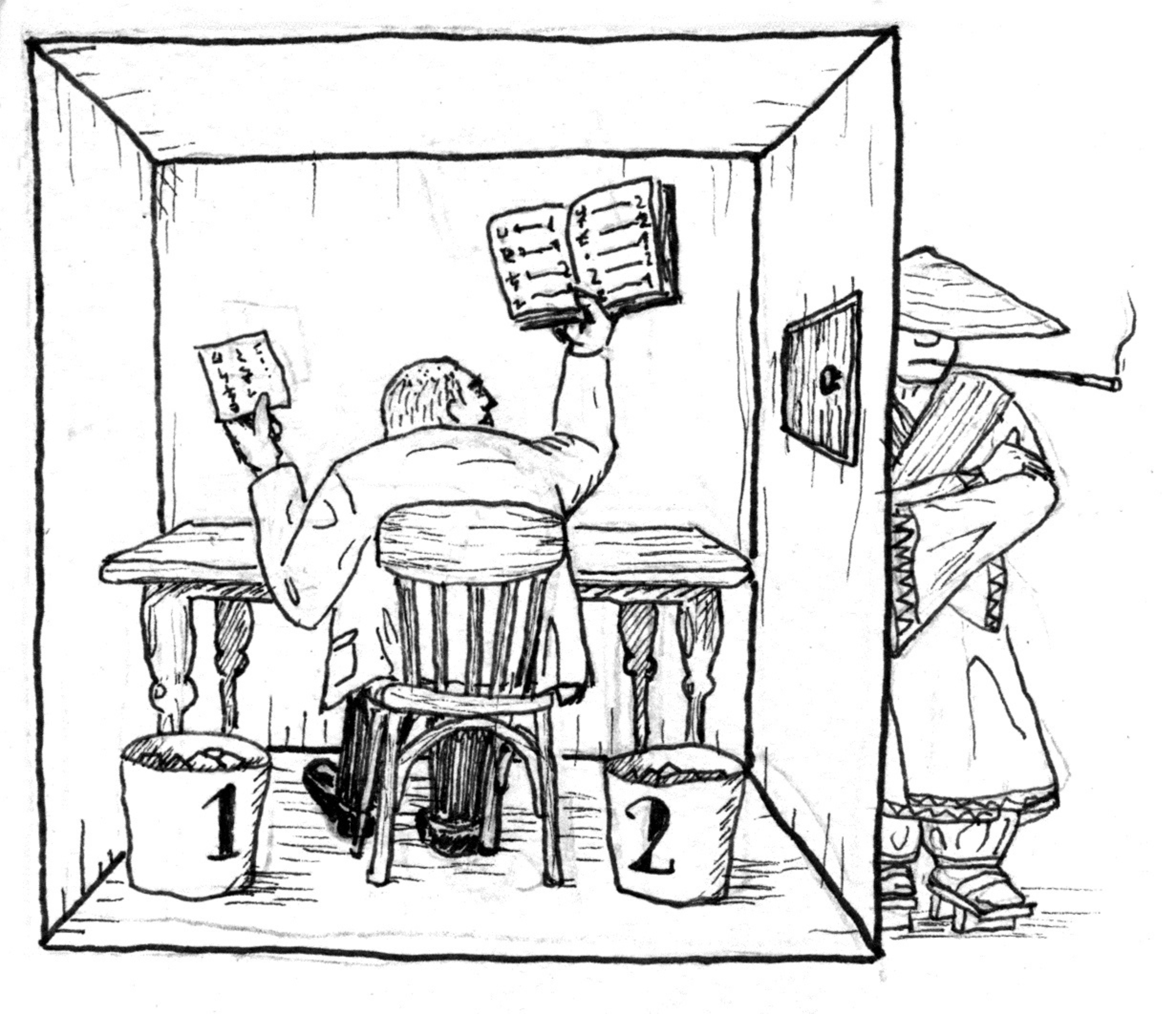
Today's generative AI is exactly such a room, only grown to global scale. But it does not carry its pain or delight through creativity, it does not experience catharsis when it puts a period at the end of the final chapter.
This is where the main question arises - is there a place for artificial intelligence in art? And if so, where is the line between a useful tool that expands the author's capabilities and a glossy surrogate that renders the very essence of creativity meaningless?
A Hitchhiker's Guide to Neural Networks
To roughly understand how a machine (does not) create (non)art, one needs to break down the mechanics of its actions. Every generative AI is in fact a grandiose statistical calculator - it does not invent anything. At least not in the sense we are used to. Its task is mathematical prediction, in other words, which word, pixel or note is most likely to come next.
Belcor's Chief Technology Officer Alexander Lee explains that neural networks can only compile what was laid into them during training. When a machine produces text or a melody, it operates on pure mathematical probability. In training datasets, the word "machine" with an enormous degree of probability means automobile and with a far smaller one - a jiu-jitsu fighter. AI models merely select the most suitable option from past experience.
In reality, a neural network does not lie - it simply does not know how. Its task is to produce a convincing and most probable result. So do not be surprised if Mercedes suddenly becomes a perfume brand with a lilac scent.
This mechanics has already spawned an entire cult, fueled by AI evangelists. Alexander notes that the market is currently going through a hype phase, when categoricalness and fanaticism take precedence over common sense in the workplace. Impressed by presentations, executives are already chaotically implementing AI into all processes, and the main catch here lies in the dangerous illusion of equality:
In my view, the most harmful myth about AI is not that it will replace people, but that it narrows the gap between an experienced specialist and a novice. On the contrary, that gap is widening.
An experienced specialist uses all his experience to critically evaluate the neural network's work, cut out the flaws and hidden mines, eliminate overengineering, while a novice with great faith in the new tool takes the first beautiful result at face value.
In the final analysis, a neural network is a wonderful imitator, but, alas, an absolutely blind creator. AI does not think in categories of concept, conformism or, conversely, cultural rebellion. And while we are busy confusing probability with inspiration, we risk sinking into a swamp of perfectly compiled average mediocrity.
How Not to End Up in a Fireplace at Six in the Morning
Cinema as an art form has always been voracious, so it is quite logical that neural networks burst into video production at full speed with the promise of a golden age. However, out of this Pandora's box the industry released movie slop, senseless and merciless.
Ravshan Abdusalyamov, founder and producer of R/A Production, does not see this as the death of cinema. From his experience in real video production, AI has already become a highly useful tool, but only where it fits well. One of the main breakthroughs in solving the headache of all producers came thanks to AI:
Locations have always been one of the main problems in production, now that is no longer the case. Live actors on AI locations look realistic, few can tell the difference.
The same thing is happening in commercial advertising with polished product videos, which used to require complex lighting work and large budgets. Now such videos are assembled far faster and cheaper. Neural networks take on the routine of generating concepts for pre-shoots, quick storyboards and adding individual elements to the frame.
But of course, taste and direction are still essential. It is not enough to know the tools, you need to use them with understanding.
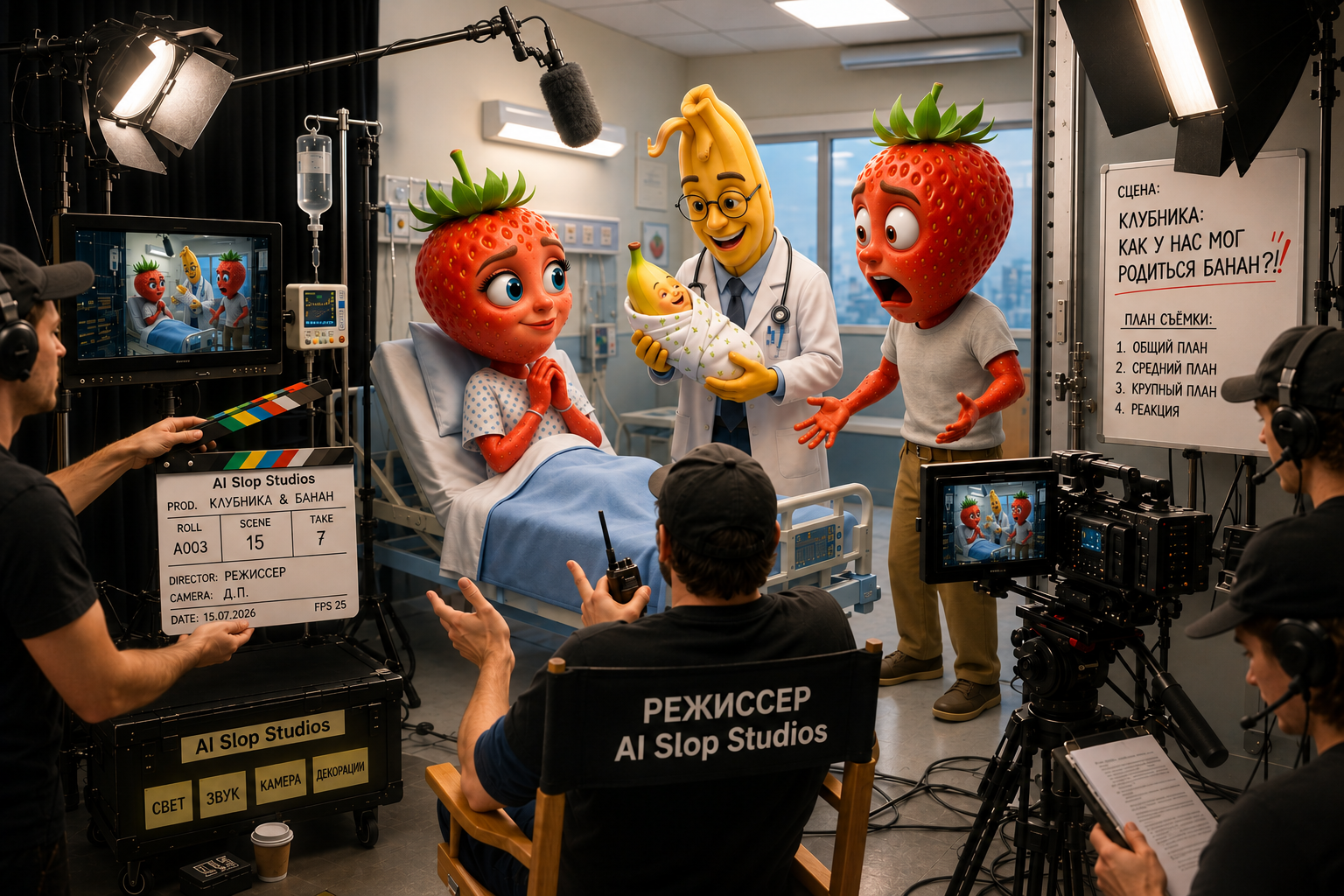
However, like everything, the accessibility of such a tool has its downside. Ravshan compares the current boom in neural network videos to the time when camera phones became widely available, giving rise to an army of mobile videographers. The moment a technology becomes public, it instantly floods the market with content of every possible quality.
I already see AI-generated posters on street banners, and it is immediately noticeable. Against that backdrop, live, even imperfect, videos start to be valued more. The average user's eye is already trained: a person immediately spots obvious AI and instinctively distrusts that product. Good AI is invisible and seamless - it is merely an optimization of human skill. Even if we generate a video entirely, the project still involves an art director, an AI creator who understands cinematographic techniques, an editor, artists. That is the difference of a professional approach. Good AI is just another tool. And the market will still filter out low-quality content.
A neural network knows nothing about dramaturgy, rhythm or a sense of proportion, so it needs a professional visionary at the helm. Without one, even the most powerful algorithm will produce another uncanny valley effect, sending the video straight into the fireplace at six in the morning.
I will generate this melody from a thousand tokens
At first glance, the idea of democratizing music sounds very tempting, because now anyone with access to AI and a couple of free minutes can feel like Sondheim or Morricone. However, the paradox is that if a melody can be created by anyone, then a melody can be created by anyone.
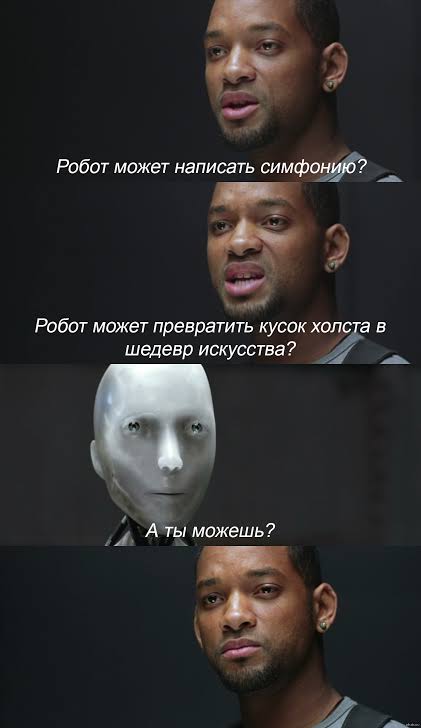
Will Smith's character in the film I, Robot challenges a digital mind, and now many are familiar with the question: "Can a robot write a symphony?". Composer and educator Igor Pinkhasov gives an unequivocal negative answer. And it comes down to the very nature of art:
What are most great symphonies about? About good and evil, peace and war, light and darkness - essentially, about the eternal struggle of opposing principles. Artificial intelligence does not feel this. It has no lived experience: it does not know what it is to be born, does not know what it is to die, has never lost a loved one. And without that, there is simply no access to the emotional source from which true music is born.
Read the full interview with composer Igor Pinkhasov:
Orchestra and Electronics: An Equation with Two KnownsInterview with composer Igor Pinkhasov.mag.humodoc.com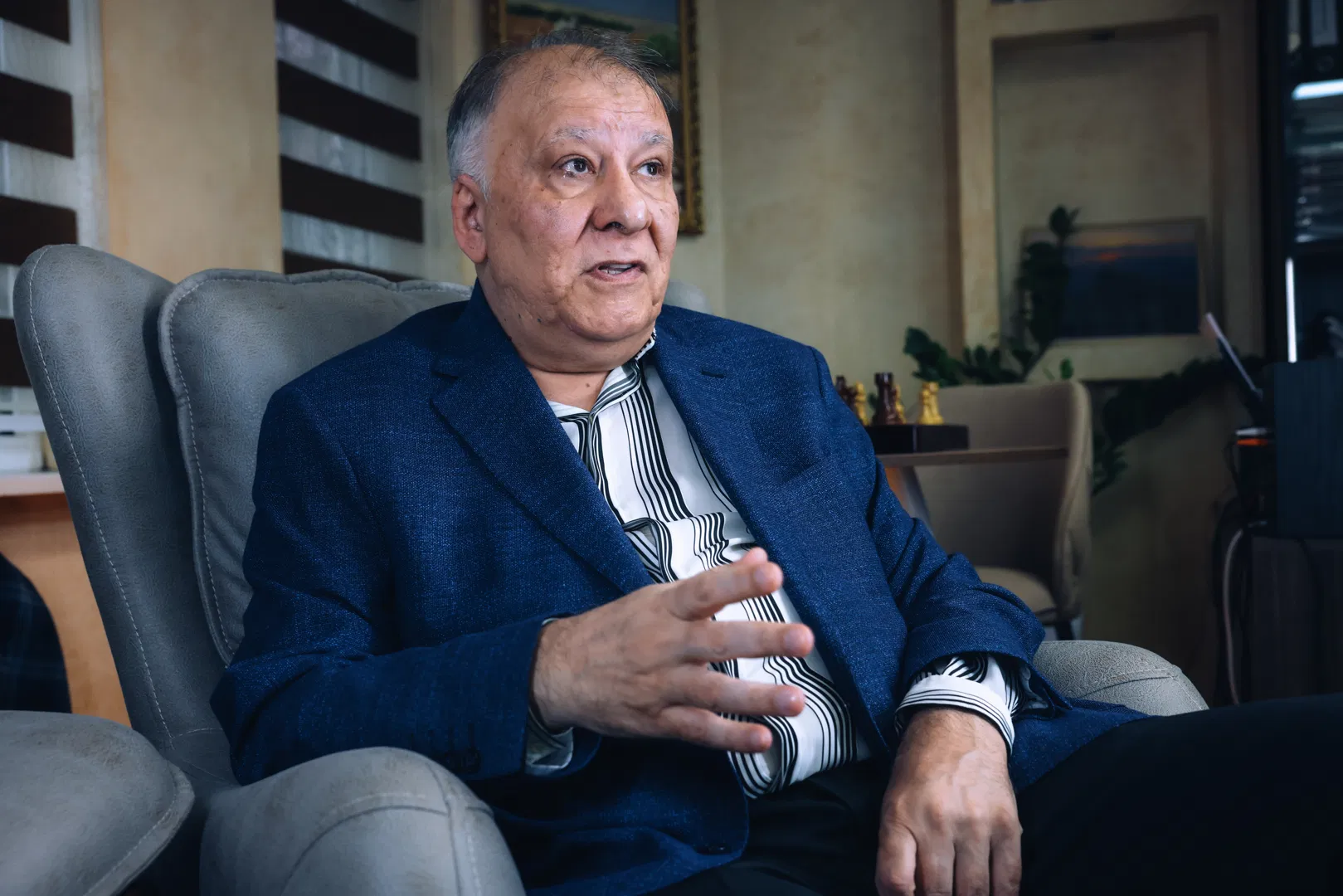
It is hard to argue that a short advertising jingle or even a simple track for a sitcom is exactly that local, functional niche where sound does not require deep philosophy, so AI can handle it there.
Neural networks can already produce quite a workable result today, but how do you get an algorithm to create a score at the level of John Williams or Philip Glass? Here the machine risks hitting its mathematical ceiling. One of the main flaws of such music is its surgical sterility.
Fully generated music is too technically good, too perfectly clean. The psychological and spiritual state the author was in - that state is encoded in the work and transmitted to the listener. That is exactly where the territory begins that no tool, including AI, can penetrate. Once at a Vladimir Spivakov concert at the Palace of Forums, during the performance of a fragment from the ballet The Nutcracker, you will not believe it, tears simply streamed from my eyes on their own. I am absolutely convinced: music in a large, serious form can bring tears. From what a neural network creates, they will not come. That is one hundred percent certain.
A painting in machine oil
The expansion of generative networks caused perhaps the loudest hype in visual art. It seems as though tangible brushes and even the already familiar Procreate have lost the battle to AI, since the algorithm became capable of producing a canvas in the style of the Impressionists, concept art for a video game, or a glossy cover for a new blockbuster in a matter of seconds. But if you break down the mechanics of the process, you once again run into the same virtuoso imitation of form and lost content.
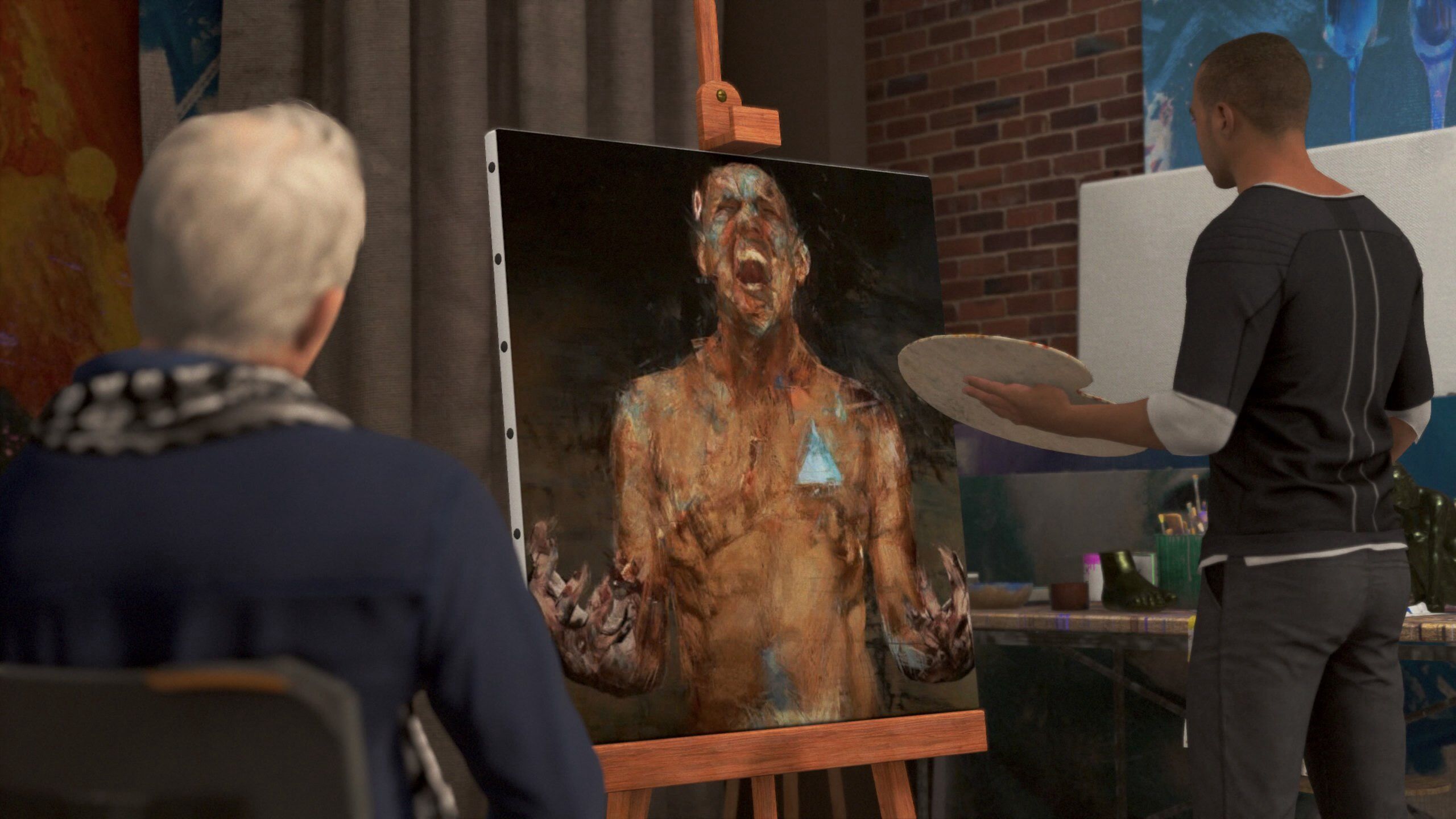
For the artist Anna Grigoryants AI is precisely a utilitarian assistant:
For me, artificial intelligence is first and foremost a tool: like a brush, a pen, a hammer, or a phone. It all depends on how we use it. The world moves forward, and AI gives us the opportunity to do basic things faster.
Read about Anna Grigoryants' exhibition in Japan in our article:
Amulets and Motherhood: Uzbek Artists Present Their Work in JapanOn November 28–29, Osaka hosted the final exhibition of the HAJINOSATO AIR 2025 art residency, “Embodiment and Conviction.” Uzbekistan was represented by artists Anna Grigoryants and Olga Kerimova, with the participation of composer Cyrill Grishin. The local collaborators were Naoko Murao and Toshihiko Murao.mag.humodoc.com
In Anna's practice, algorithms take on tasks such as finding materials while researching a topic, structuring information, or proofreading text dictated into a voice recorder. But attempts to entrust a neural network with creating a sketch or a visual concept inevitably hit a natural technological limit. No matter how many attempts are spent generating an idea born in the imagination, neural networks cannot come even close to the original vision:
Because AI uses already existing works, it cannot create something truly its own. It takes what is on the internet and connects it together. That is why artificial intelligence will not replace my own. After all, we do not just use technique for the sake of technique. A true artist finds a way to express their idea, inner state, or experiences. A person feels, sees, loves, hates. That is exactly what we convey through our works. Even tasty or tasteless food, a mood, a chance encounter - all of this can influence our work.
That is precisely why AI does not become a rival or an enemy to a master. AI cannot "understand" the intent behind the materials it was trained on, so it is incapable of meaningfully selecting suitable images, styles, or using metaphors or hints.
Verbiage and bravado
Text neural networks settled into our routine earlier than others. It was so easy to delegate work correspondence, posts, and turning scattered notes into a coherent text to them. And now it seems that a machine capable of producing smooth text without spelling errors in a second is the ideal author, yet behind complex syntactic constructions there is sometimes only an imitation of profundity and absolute semantic emptiness.
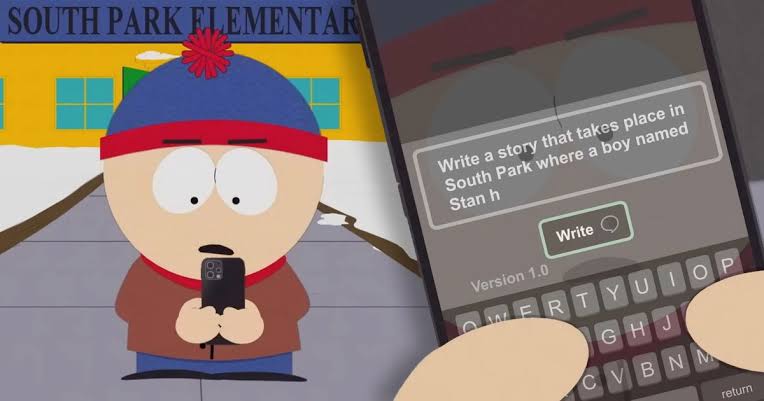
Why algorithms cannot be trusted to write turnkey articles, why they pour out absurd contrasts as if from a cornucopia, and where the real threat to the industry lies, explains HD magazine's chief editor Kirill Grishin:
"In the case of text, the situation is somewhat different from other types of generative AI. An author's style is unique, but the words themselves are, in a sense, public domain. That is why LLMs entered the daily life of the average user most smoothly, since chatbots and even text quests had already accustomed us to this.
I have been working with texts for almost 15 years. I remember when journalism was swept by a new wave of infostyle and how I had to explain to authors that not every text needs to be simplified. Now a new pandemic of inspired waffle has begun on every occasion, because AI does not understand context. Over the past year, I have probably handled several hundred texts touched by ChatGPT, Gemini, Grok, and even Claude. Sometimes it is visible immediately, sometimes only when you start editing and realize that the phrase is beautiful but has no meaning whatsoever.
Here is an example: "A stable name around a cultural object." Hmm... why not "a stable name in profile of a cultural object" or "a stable name over-and-above a cultural object"? Why restrain yourself in using completely inappropriate function words?
With AI, everything is "around," "through," and "as." Oh yes, and also "meetings about something." And that is exactly where the main problem lies, not in correct typographic dashes and parentheses. Or here: "The actress formulates this extremely directly, without attempting to set emphases or build a hierarchy: 'I think it was all at once. He lived for the theatre. He came in the morning and left at night.'" How can such a phrase even SET EMPHASES or, moreover, BUILD A HIERARCHY?
It sounds loud, beautiful, and artistic, but there is no meaning at all in this turn of phrase. AI loves to invent non-existent contrasts to make a phrase sound profound. You can go very far this way. "I was dusting without attempting to fold the space-time continuum." "Azamat stumbled and nearly fell, but not while trying to lead a shadow government." To what extent is it appropriate to keep escalating this degree of absurdity?
"The artist turns his works into a personal statement" - maybe I missed something? Did artists at some point start broadcasting a public statement? Or maybe an impersonal statement?
With AI, a "combination" is always "precise," and a "sound" is always "honest." Honestly, I would be very interested to hear a dishonest sound, to look at an imprecise combination. And I would certainly study an impersonal statement too.
At the same time, the problem is not the tool itself. AI is excellent at helping with structuring, identifying repetitions, and can even handle drafts of articles. If I use AI to create material, I rewrite about 85% of the content after it, because the generated text is no good.
But neural networks cannot be delegated the writing of full-fledged articles, because the output will be frankly poor material, even if the entire idea was fully thought out by you. AI will set the wrong emphases for you, embellish those parts of the narrative that serve only explanatory functions, and replace wordplay and quotes with soulless turns of phrase. I do not see a threat in AI texts today. I see a problem in the fact that many "authors" do not delve at all into what AI generates for them. That is where the real trouble is.
An infinite monkey - to court?
According to the theory, if you seat a countless number of primates at typewriters for an unlimited time, the moment will come when one of them accidentally types the great "To be or not to be?" But will that make the lucky primate Shakespeare? And who in that case would own the copyright to the great tragedy - the monkey, the owner of the typewriter, or the heirs of the great playwright?
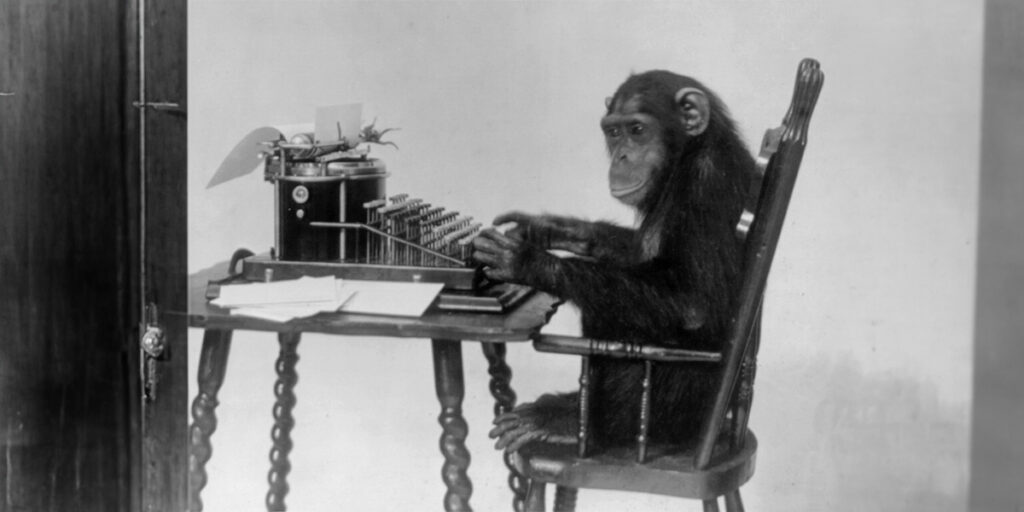
This hypothetical paradox is coming alive right now. Thanks to generative networks, such a super-fast monkey is capable of producing millions of combinations per second, except the "Generate" button has put world jurisprudence in a fundamental deadlock - what are we actually protecting when we talk about copyright?
The value of intellectual property has historically rested on two pillars - the idea itself, born in the author's head, and the labour of bringing it to life. In the case of AI, the user merely sets the direction, delegating the creation process, which turns the final result into a product of double borrowing - first AI takes as its basis other people's ideas and works on which it was trained, and then it uses the intellectual work of the neural network's own developers.
Lawyer Mansur Islamov emphasizes that today legislators and courts remain extremely wary of neural networks:
The attitude toward AI from a legislative standpoint is very ambiguous, I would say tense. On the world stage, the question of the legality of training AI on finished works without the consent of copyright holders is still the subject of active debate and litigation.
To understand where plagiarism actually begins, it is important to return to the very essence of law. Claiming authorship over specific results of creative activity or their substantial parts is always plagiarism. Here AI is similar to a human, because an algorithm trained on a dataset of tracks by, say, The Beatles and producing a new song in their signature style is almost indistinguishable from novice musicians who for centuries have drawn inspiration from their idols and adopted their style, harmony and artistic techniques. Imitation is not prohibited by law.
But the line is instantly crossed if the machine stops merely drawing inspiration and starts reproducing unique, legally protected elements of the original work.
Plagiarism is generally understood as claiming authorship over copyright objects and their substantial parts. Simply put, if AI accidentally generates a song nearly identical to a well-known hit, liability arises not because AI did it, but because the resulting work is too close to the protected original.
Ultimately, Themis does not care who exactly created the track or the painting - a human, code, or that hypothetical monkey. The focus always remains on the final result.
From a legal standpoint, the line is drawn not by the very fact of training AI on existing objects, but by the final result. The search for this line between training, inspiration and copying remains one of the main unresolved challenges in intellectual property law today.
The bottom line is that legal norms are still catching up with technology, but it is worth remembering that whether a statement becomes unique or remains banal plagiarism depends on how close the machine comes to someone else's "Hamlet."
The denouement of this digital drama is quite prosaic. The demise of humanity is still far off; for now we simply have a super-powerful assistant to which we mistakenly try to give powers beyond its reach. No sane business owner would entrust an assistant - even the smartest one - with running a corporation, especially by managing it through notes on colored sticky pads.
But in art we somehow decided that a prompt can replace years of training, a craft foundation, life experience, and most importantly, personal pain. An attempt to delegate catharsis will produce only polished digital nonsense and no human presence. Saving money, avoiding routine and expanding horizons through AI is certainly tempting, but such a tool works properly only in the hands of a person with vision.
The main thing in this technological race is not to lose the creator along the way. Algorithms can be infinitely perfect, but only someone with a beating and breaking non-artificial heart can write a symphony.
Newsletter
A letter from the HD editors
Once a week, we send the best stories, events, and cultural discoveries from Central Asia.