From the history of the State Museum of Arts of the Republic of Karakalpakstan, named after Igor Vitalyevich Savitsky. On the occasion of the museum's anniversary and the birthday of its founder.
The history of the Nukus Museum of Art named after I. V. Savitsky is replete with phenomena that emerged spontaneously, independent of the will of its staff and administrators. The unconventional nature of the museum and the singular personality of its founder gave rise to a wealth of myths and comparisons with the wonders of the world and sacred sites — Mecca among them — as a means of conveying the emotional experience of visitors.
The most celebrated work in the collection, "Bull" (1929) by the obscure Tashkent artist Vasily Lysenko, became the museum's "icon" through a combination of audience enthusiasm and international media attention, despite the remarkably scant information available about either the painting or its creator.
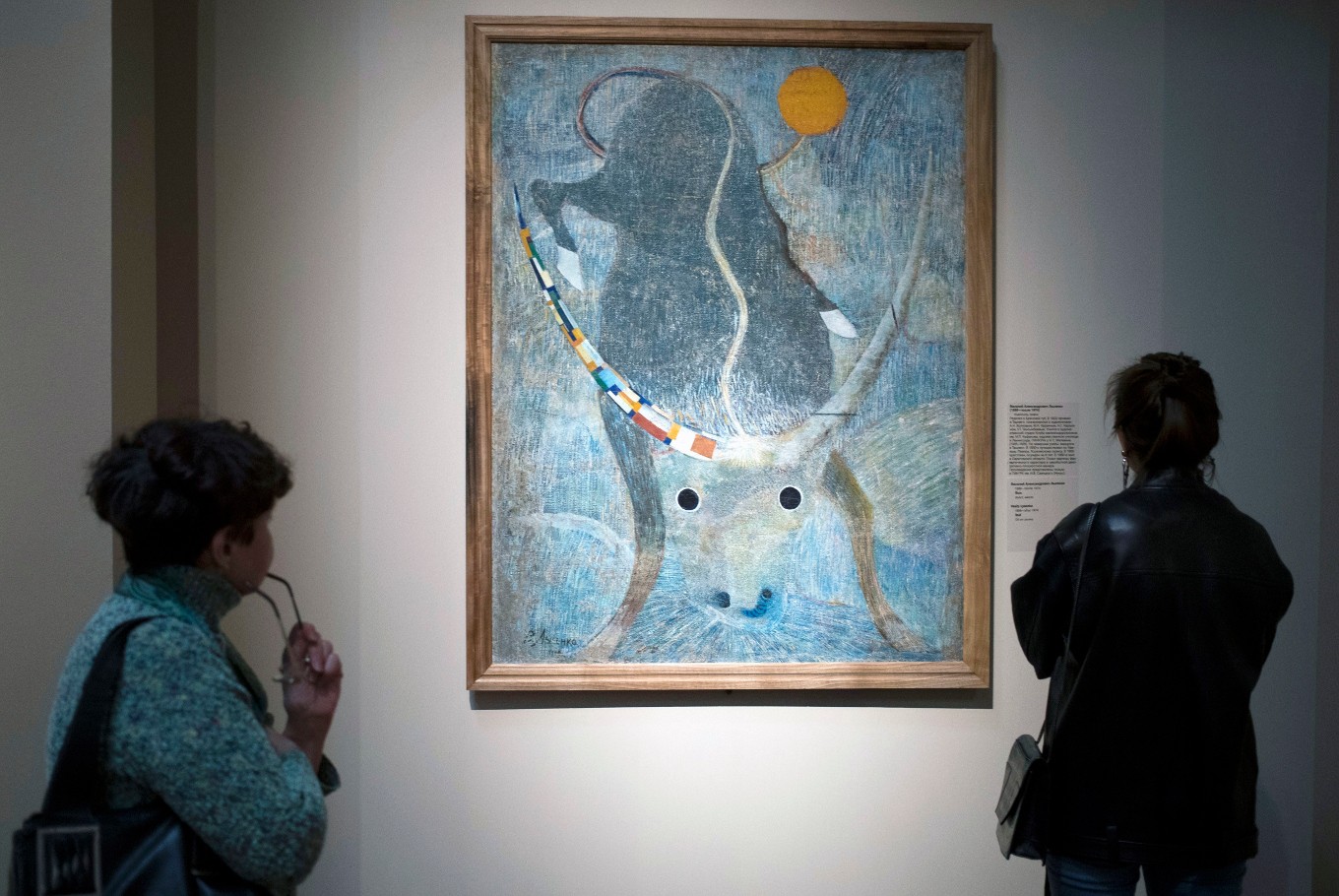 Photo: Pavel Golovkin
A widely repeated assertion among those who recount the story of the museum's phenomenon is that Savitsky built it single-handedly, using his own personal funds.
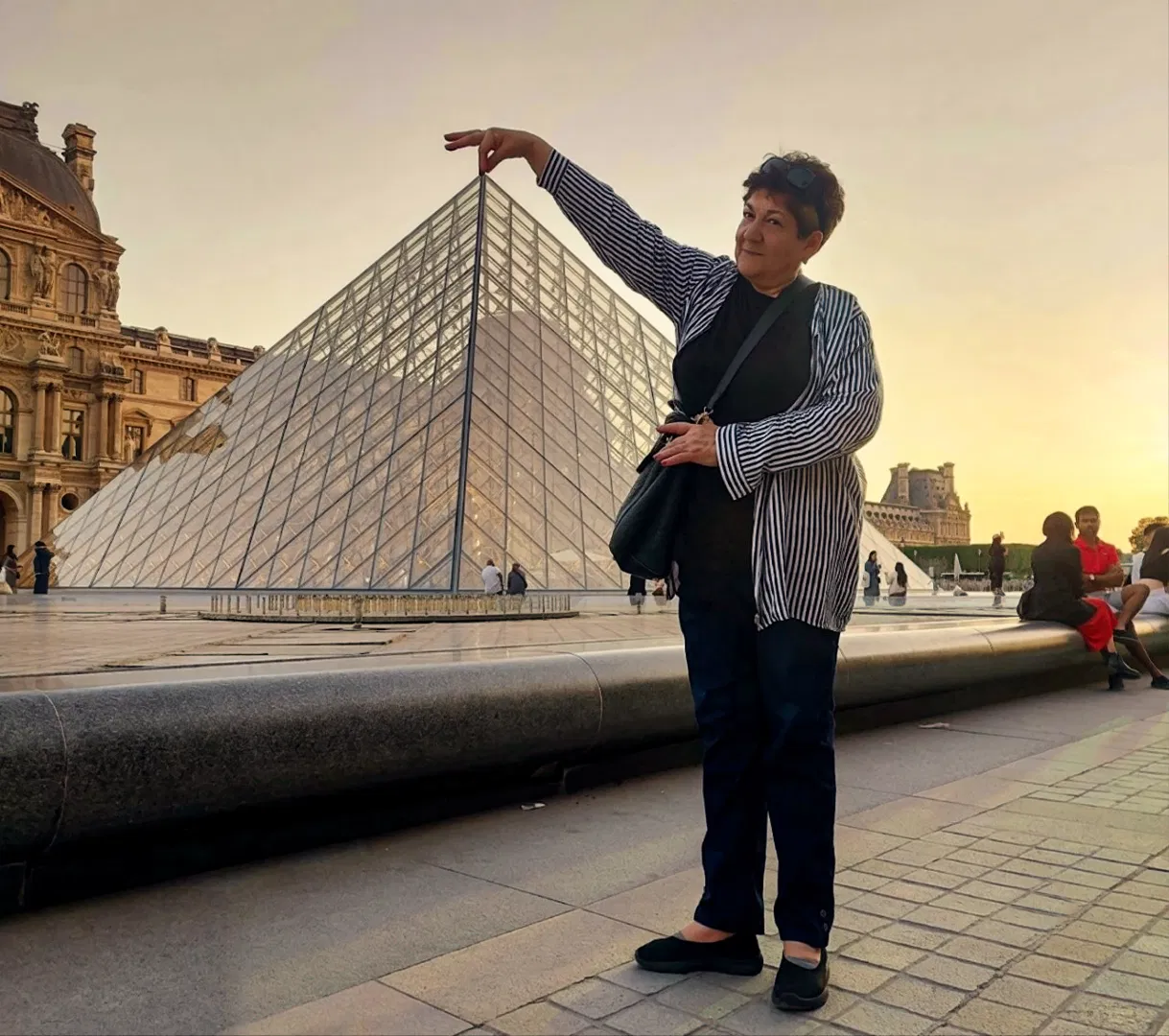
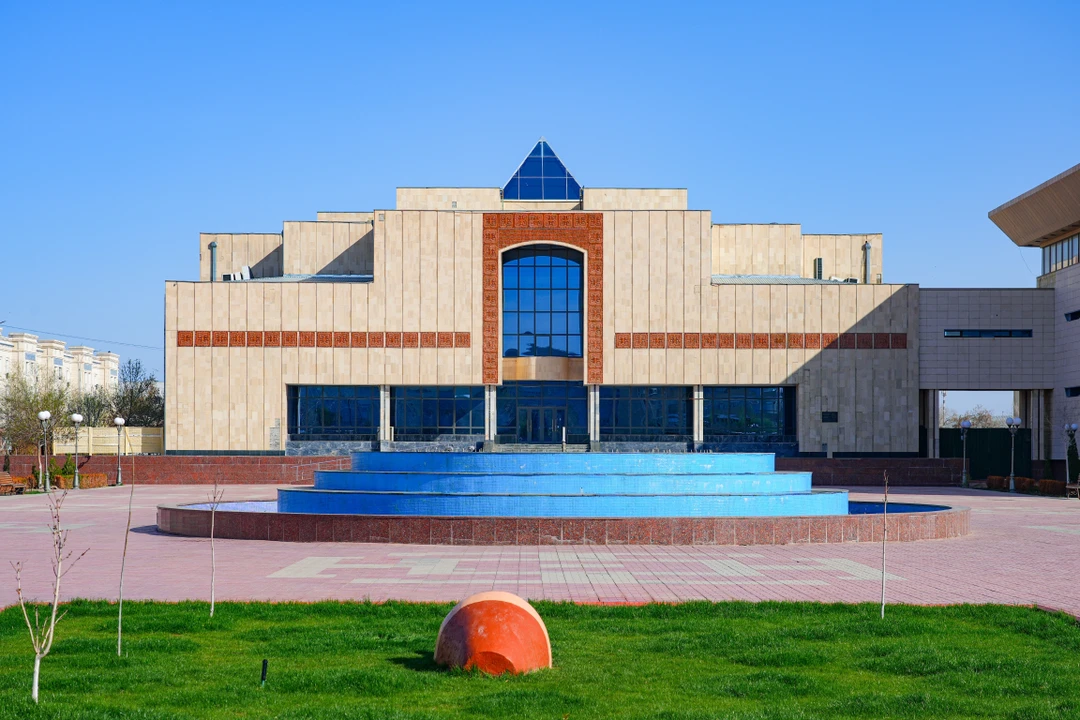
The metaphorical epithet "the Louvre in the Desert" — or "in the sands", "of the steppes", and so forth — has become firmly attached to the museum. It emerged in the early 2000s, and, curiously, following the inauguration of the new building in 2002, crowned with a glass pyramid dome in deliberate echo of Paris's own iconic landmark: the pyramid designed by architect I. M. Pei, which transformed the entrance forecourt of the Louvre in the late 1980s. In Nukus, however, this glass pyramid was conceived by Tashkent architects as a luminous "lantern shaft", flooding the exhibition galleries with natural daylight.
It is precisely this most recent deployment of the aforementioned metaphor-cum-cliché that we shall examine today, exploring the origins of this journalistic and popular turn of phrase.
What Has the Louvre to Do with It?
In the interest of fairness, it must be said that the museum's leadership has faced no shortage of reproaches for employing so presumptuous a comparison with a global institution, with many suspecting us of having coined it ourselves. Certain analysts and scholars of the Savitsky phenomenon, in critiquing our promotional endeavours during the museum's emergence onto the international stage in the 1990s and 2000s, have mocked what they perceived as immodesty — and among them were those who had never once set foot in the museum.
Matters reached such a point that local officials organising exhibitions as part of formal intergovernmental events, when preparing commemorative albums, demanded proof of the legitimacy of these lofty and ambitious rhetorical flourishes.
We were compelled to assemble the entire archive of international media coverage of the museum featuring the designation "the Louvre in the Desert". Among the authors of these publications, French writers were decidedly predominant: Brigitte Bréfour, Luc Debénois, Patrick de Saint-Exupéry (a grandnephew of the celebrated writer, author of The Little Prince, and aviator Antoine de Saint-Exupéry), Philippe Trétiak, Véronique Schiltz, and many others.
Western and domestic journalists alike took up the baton. It is worth noting how inventively the writers at the New York Times expressed themselves on the subject of Nukus in their regularly published ranking of the world's most extraordinary travel destinations in 1998, describing it as a "one must-see-before-I-die destination" — an indirect allusion to the celebrated phrase "see Paris and die". And all of this in reference to the Nukus Museum.
So why, then, "the Louvre in the Desert"? What lies behind this name beyond a striking comparison?
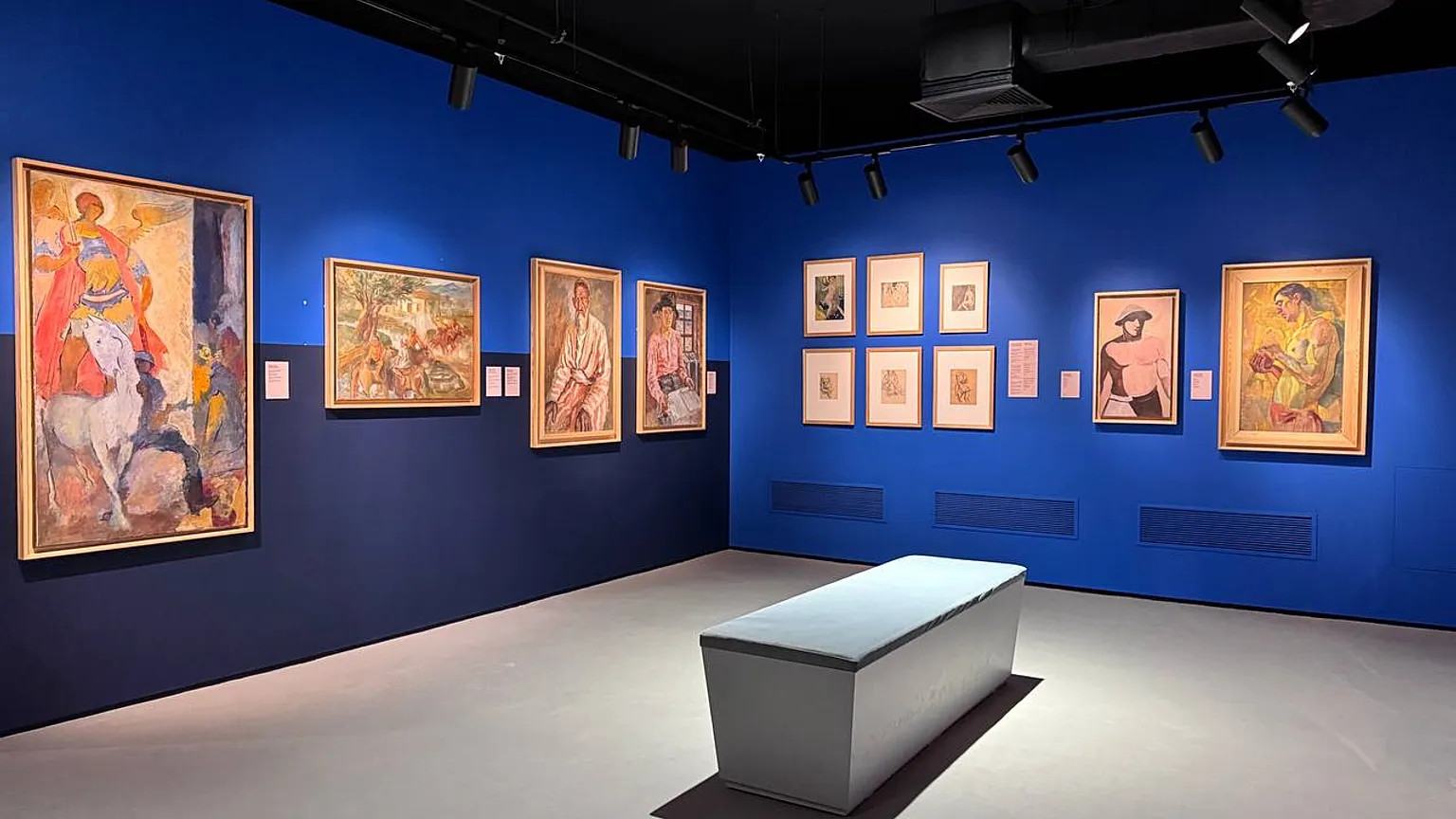
Having been at the very heart of all the museum's public relations campaigns, and having observed — or rather, participated in — the story of its rise to prominence and its "boom", one notes that the vast majority employ this epithet automatically, wishing simply to draw a parallel between two magnificent institutions. Undoubtedly, the most compelling analogy arises from the uniqueness and sheer scale of collections spanning several millennia of human civilisation.
I am aware that this assertion will surprise many who have grown accustomed to regarding the Savitsky Museum solely as "the second most significant and extensive collection of avant-garde art in the world". Regrettably, the departments of ancient, folk-applied, and fine art of the peoples of the Aral Sea region — closed now for more than eight years — leave visitors bewildered, as they encounter only exhibitions of modern painting and graphic art from the 1920s and 1930s, displayed in the exhibition wing of the museum complex, which comprises three separate buildings. Tourists depart in a state of delight, yet without having fully grasped the phenomenon of the Savitsky Museum.
For the broader public, the analogy with the Louvre in Paris is equally intelligible on account of the allure and desirability of this touristic marvel, situated at the epicentre of three deserts — the Karakum, the Kyzylkum, and the Aralkum. This geographical location, bound up with the desiccating Aral Sea, paradoxically lends an adrenaline-charged frisson for those in pursuit of singular experiences. It is difficult to dispute this, even taking into account the relatively modest history of the Nukus Museum, which this year celebrates its sixtieth anniversary, while its presence on the international tourist map and the art world stage spans a mere thirty years.
This view is shared by Brigitte Bréfour, one of the originators of the term, who holds that the sense of wonder inspired by the museum's richness, scale, and grandeur is only heightened by its extraordinary location — and that it is precisely this which gives rise to such elevated language. Virtually everyone who has visited Karakalpakstan says as much.
And yet the connection between Nukus and Paris — and France more broadly — is, in truth, a very real one, and it is entirely tangible to any more discerning and aesthetically sophisticated visitor or analyst of the Savitsky Museum phenomenon.
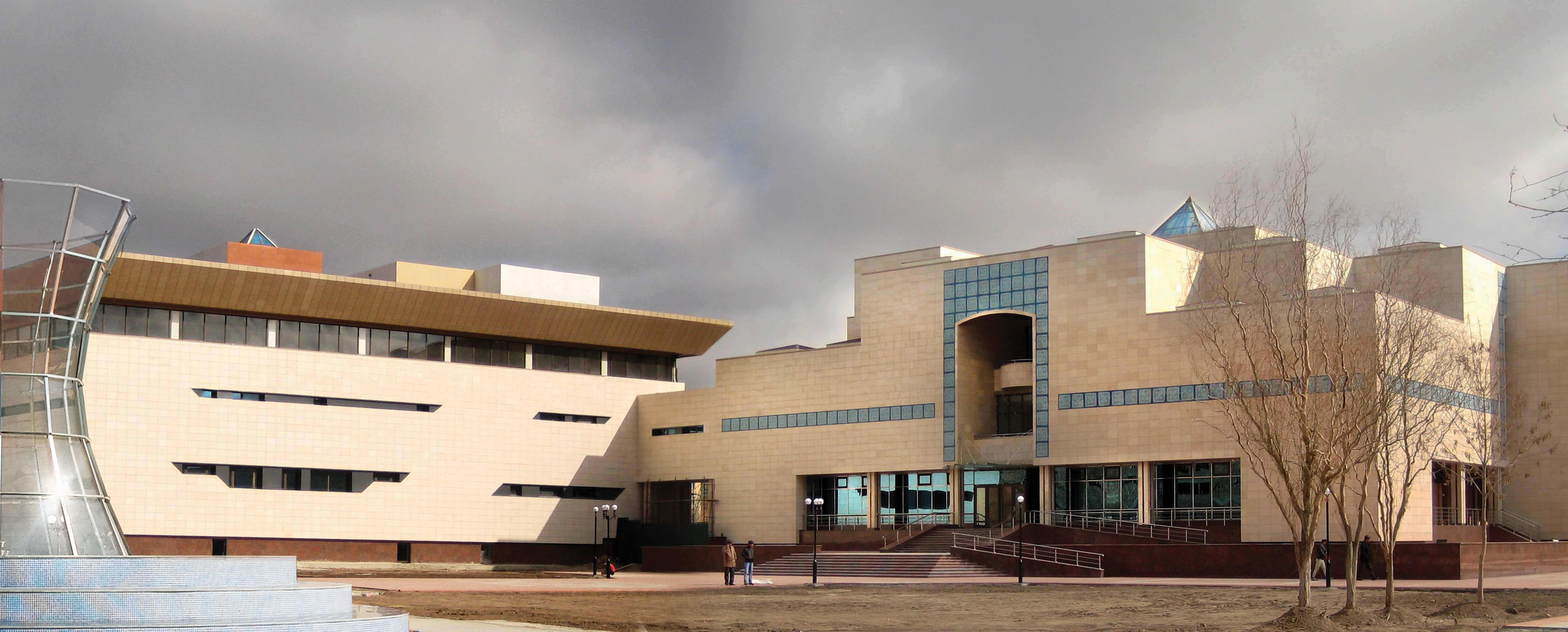 Source: Novotour.uz
The French Influence
The atmosphere of Parisian studios and galleries at the turn of the twentieth century permeates the canvases and drawings, sculptures and decorative arts of dozens of artists who had immersed themselves in the world capital of art — works that account for several thousand items within the museum's holdings. These artists visited Europe, studied and exhibited in Paris, and, having plunged into the thick of its cultural milieu, came under its direct influence — most notably that of the various currents of Impressionism and Post-Impressionism, as well as the diverse manifestations of Modernism.
To avoid mere assertion, let us mention but a few names: Kliment Redko, father and son Robert and Valery Falk, Lyubov Popova, Alexander Shevchenko, Pavel Benkov, Vasily Shukhayev, Alexander Yakovlev, Vera Pestel, Pavel Surikov, David Shterenberg, Vladimir Komarovsky, Maximilian Voloshin, the members of the "Group 13" — all followers of the celebrated School of Paris — Valery Volkov, Anatoly Slepyshev, and many others. Even those who had never been to Paris were captivated by this art: Ural Tansykbayev, Mikhail Sokolov, Antonina Sofronova, the sisters Nina and Nadezhda Kashiny, Igor Savitsky himself, and others.
It is therefore no exaggeration to say that the Nukus museum is a little Paris. Professor Yuri Vladimirovich Linnik — philosopher, writer, and collector — spoke of this on numerous occasions: at the vernissage of our museum in Petrozavodsk in 1989, in a broadcast on Karelian television during the days of our exhibition, and in his lectures delivered in Nukus and Petrozavodsk. Holding the second most significant collection of works by Russian Cosmist artists, on a par with the Nukus holdings, he wished to bequeath his portion to the Savitsky Museum, so that the group of avant-garde artists known as "Amaravella" might be reunited in a single place.
Shortly before his death in 1984, the museum's founder dreamt of a time when people would come from Paris to see our museum. This dream was bound up with the highest degree of recognition, on the part of the world's finest connoisseurs of art, for an art that had once been persecuted, and with a faith in the eventual just appraisal of the labours of gifted artists and those who gathered their works.
Savitsky was drawn to all things French for yet another reason — as a tribute to the fashions of his childhood era and to the manner in which he was raised.
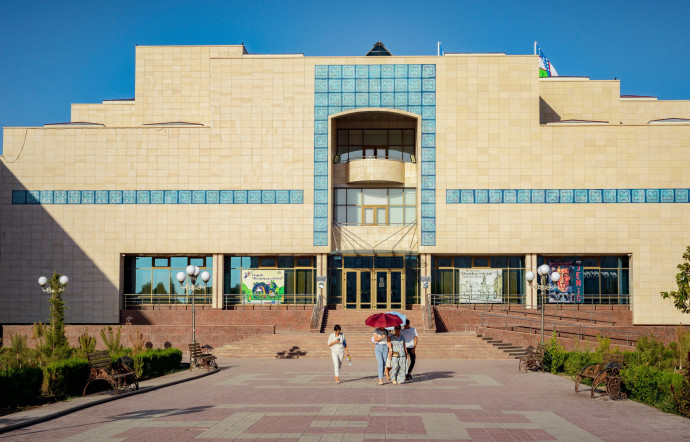
A Brief Prehistory
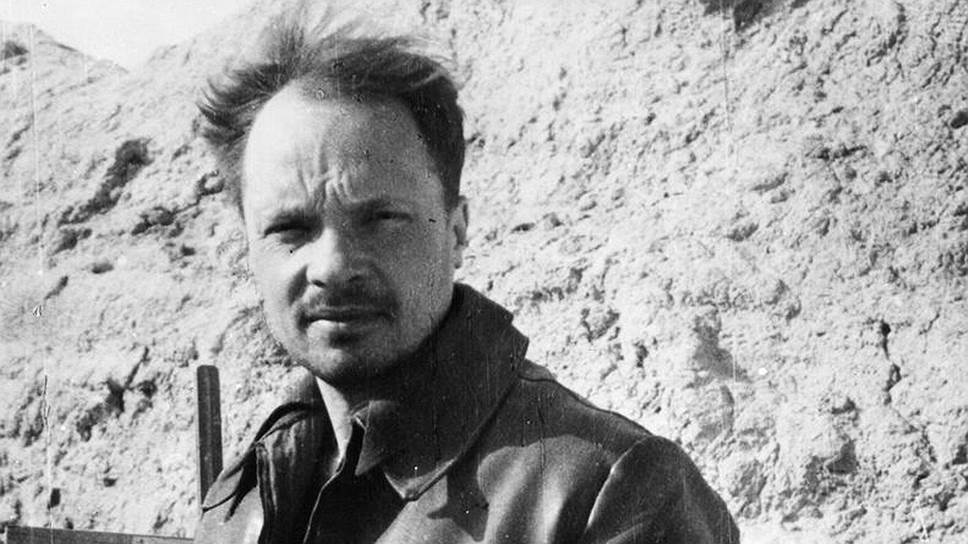
The young Igor had a French governess. Savitsky spoke the language of the world's capital of art with consummate fluency. In my youth I would see him at our home, reading Dumas novels in the original — a rather rare occurrence in the Soviet era. He gave me French lessons when I was studying the language at university. My father, a friend of Savitsky's and his supervisor during the pre-museum period, recounted how Igor led guided tours of an exhibition of Karakalpak folk and applied arts in French for foreign participants at a congress held at Moscow State University in 1961.
Savitsky's parents travelled frequently to Europe and raised their son with a profound respect for and understanding of art — not only that of France, but of world culture in its entirety. Their home housed a substantial collection, and his grandmother, who had emigrated to Nice, supported Igor's gift for drawing from afar, sending him drawing materials and offering her own counsel in the visual arts. The "Frenchness" of Igor Vitalyevich struck me as particularly remarkable against the backdrop of Soviet realities. It lent a distinctive quality to his personality in the eyes of those around him. When appraising the work of Konstantin Suryaev, an artist of the Moscow underground, Savitsky remarked: "I have never been to Paris, but I rather think the French would have liked this."
Even in his domestic and everyday life, nostalgic notes would occasionally surface — a wistful mention of some petit-four from his happy childhood, whenever I offered him homemade éclairs.
Returning to the museum's collecting and exhibition activities, one must acknowledge the freedom, refined taste, and bold spirit of experimentation that distinguished its founder. These principles placed the museum on an equal footing with many of the world's great art collections, not only those of France. Even in his characterisation of Karakalpak textile works, Savitsky discerned traces of Impressionism — he wrote of this himself in his texts on Karakalpak embroidery. His colleague and friend, the writer Militsa Izmailovna Zemskaya, described a curious episode in her 1963 novel about Savitsky, Time in the Sands.
Savitsky's friends tried to dissuade him from abandoning Moscow for a remote provincial outpost when he was preparing to leave for Karakalpakstan, having secured a position at the Academy of Sciences. One of their arguments was that there were no museums there with Matisse or other masterpieces of world art. To which Igor Vitalyevich replied: "Matisse?! I have him in the patterns of Karakalpak carpets and embroideries."
Igor Savitsky's Dream Fulfilled
The collection of plaster casts of world masterpieces from the workshops of the Louvre, which had belonged to the outstanding French artist Fernand Léger, represents the art of all ages and peoples. His widow, Nadia Léger, donated a portion of their family collection to the USSR in 1975. The Soviet Ministry of Culture, extending its support to the young museum and its fledgling director, invited Savitsky to select something for Nukus. Seventy-nine exhibits of the highest quality from the Louvre's atelier, bearing the corresponding stamp, were dispatched to the Karakalpak museum. Thus a singular "corner of the Louvre" came into being at the heart of the desert.
The epilogue to this brief account might be as follows.
Savitsky's dream of a Parisian audience was realised. For many years, French visitors held the distinction of being the most numerous among the foreign guests of the Nukus museum. One of the museum's first international exhibitions took place in France in 1998, under the distinguished patronage of the Presidents of France and Uzbekistan. The exhibition, accompanied by a catalogue of the same name, was entitled Les Survivantes des Sables Rouges — "Survivors of the Kyzylkum" (literally, "of the Red Sands").
French specialists of the highest calibre from the studio Chevalier Conservation rescued Karakalpak textiles from pest damage, training us in conservation and storage techniques. I was fortunate enough to complete a month-long internship at the Louvre and to carry out a number of collaborative projects with French partners, and was even honoured with a distinguished French accolade — the Ordre des Arts et des Lettres — for bringing Karakalpak culture to the attention of the French public in 2013. Together with the celebrated French actor Gérard Depardieu, we filmed a segment about the Nukus Museum for his documentary My Uzbek Dream in 2019. In 2022, the museum presented its paintings at the Institut du Monde Arabe in Paris, and a dedicated exhibition at the French capital's foremost museum is forthcoming in the near future.
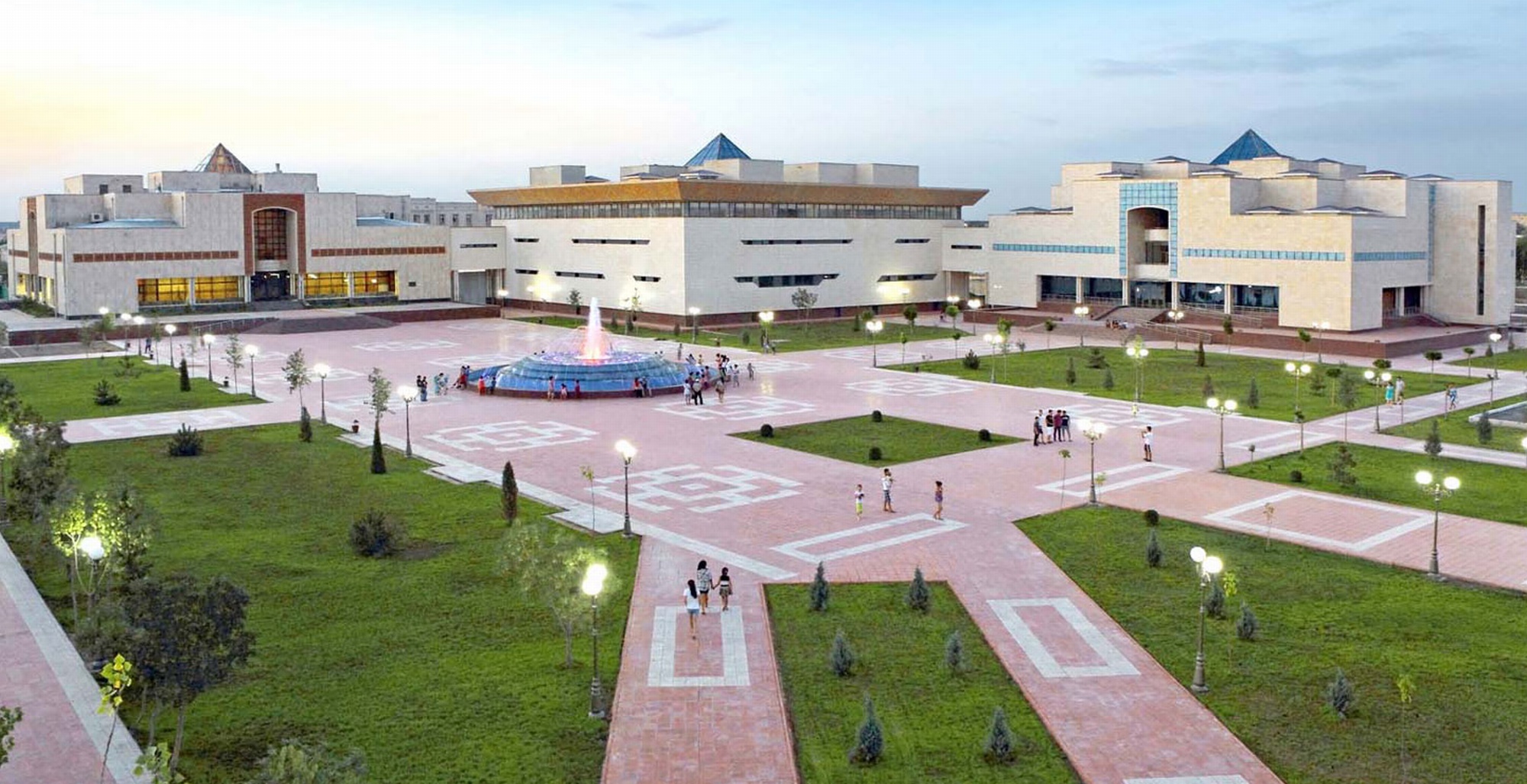
One might venture to say that even these few facts from the museum's history shed light on and lend credence to the oft-invoked comparison of a "Louvre in the desert" — a designation that bears no resemblance whatsoever to the Louvre Abu Dhabi.
Patrons of a patron: who helped Igor Savitsky create the “Louvre in the desert”Igor Savitsky is firmly associated with the Nukus treasury of avant-garde art, but even he could not have created the “Louvre in the Desert” alone. On the 110th birthday of the legendary devotee, we tell the story of those who defended him in the corridors of power, helped organize the first exhibitions, and issued (bureaucratically questionable) orders to allocate millions from the republican budget.mag.humodoc.com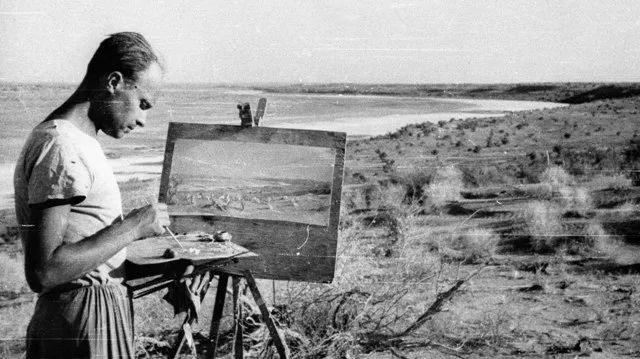
Newsletter
A letter from the HD editors
Once a week, we send the best stories, events, and cultural discoveries from Central Asia.