Art
Patrons of a patron: who helped Igor Savitsky create the "Louvre in the desert"
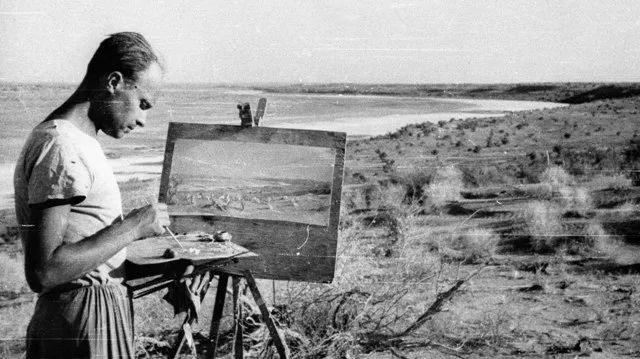
Igor Savitsky is firmly associated with the Nukus treasury of avant-garde art, but even he could not have created the "Louvre in the Desert" alone. On the 110th birthday of the legendary devotee, we tell the story of those who defended him in the corridors of power, helped organize the first exhibitions, and issued (bureaucratically questionable) orders to allocate millions from the republican budget.
How a Kyiv native Savitsky ended up in Nukus
Igor Savitsky, a descendant of Kiev's professorial intelligentsia, found himself in Central Asia during the Second World War. In 1941, he enrolled at the Moscow State Academic Art Institute named after Surikov, with which he was evacuated to Samarkand. There, he not only immersed himself in the region's cultural heritage but also met Konstantin Istomin and Robert Falk — the works of these artists would later adorn the collection of the Nukus Museum.
The turning point in Savitsky's biography is considered to be his participation in the Khorezm expedition, initiated by archaeologist Sergei Tolstov even before the war. In 1950, Savitsky was invited to the expedition as an artist — he made sketches of the excavations, the ancient fortresses of Khorezm, and scenes from the life of the Karakalpaks.
In the late 1950s, Savitsky moved to work at the Karakalpak branch of the Academy of Sciences of the Uzbek SSR, where he participated in ethnographic research under the guidance of the young scientist Marat Nurmukhamedov. Their acquaintance in the mid-1950s became fateful for the future museum.
Nurmukhamedov headed the Karakalpak branch of the Academy of Sciences of the Uzbek SSR. Savitsky was initially listed there as an artist, but in fact began forming the foundation of the future museum collection. In a small office at the Academy of Sciences, Savitsky stored the first exhibits — samples of ancient ceramics, terracotta figurines, Karakalpak national costumes and jewelry, and most importantly — paintings.
It was during this period that Savitsky conceived the idea of creating an art museum in Nukus, which would show the world both the treasures of this region and the then-banned masterpieces of the avant-garde.
"Not everyone understood Igor," — recalled Nurmukhamedov. — "Many considered him strange because he himself stoked the stoves in the museum, opened the windows at dawn for ventilation, gave his apartment to others, and lived in the collection himself." By refusing a career in Moscow to work in remote Karakalpakstan, Savitsky seemed like an eccentric to some.
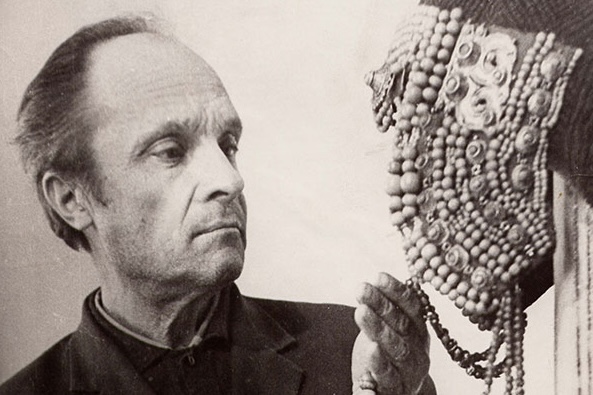
His hands looked like the hands of a laborer, with black ingrained dirt under his nails — a consequence of work in foundations and expeditions. Yet he remained an extraordinarily responsive and generous person: from his modest salary he helped those in need, gave more than he took, and a significant portion of his own funds he invested in museum work.
"Well, what kind of administrator is he? Thin, disheveled, in a tracksuit — like a mad professor," recalls Marinika Babanazarova, who directed the museum from 1984 to 2015.
"Sometimes really funny stories happened. Once he was going to the regional party committee unshaven, without a jacket, and kept looking for his tie. And his assistant told him the tie was on him, it was just draped around his neck. That's what he was like, absolutely not of this world, a creative person, a white crow. And they tolerated him, forgave him a lot—including financially."
From 1957 to 1966, Savitsky organized numerous expeditions across the districts of the Karakalpak ASSR, amassing a vast collection of folk embroideries, yurts, household items, and clothing. At the time, almost no one was interested in this — traditional art was perceived as a relic of the past. But Savitsky, a professional artist, had a unique vision: he understood that behind these objects lay an entire cultural world that could disappear.
In the early 1960s, Savitsky took the first steps to popularize his collection. With the support of friends, he managed to organize several exhibitions of Karakalpak folk art: first in Nukus, then in Tashkent, and in 1960 — in Moscow.
The Moscow exhibition was a great success: for the first time, the capital's audience saw the distinctive carpets, embroidery, and jewelry of the Karakalpaks. This event attracted the attention of specialists from across the Soviet Union and became an argument in favor of establishing a separate art museum in Karakalpakstan. Savitsky began petitioning the authorities to establish a museum of arts in Nukus.
Initially, the museum was conceived as a collection of Karakalpak applied art and antiquities — Savitsky himself was interested in paintings last of all. However, over time, it was painting, especially avant-garde, that became the museum's hallmark, shaping its tourist image.
"We are currently, as it were, captives of the term 'avant-garde'... Savitsky himself never called this part of the collection 'avant-garde'; he said: 'art of the 1920s–30s'," emphasizes Babanazarova. "For him, it was simply art not included in the official canon. There were both forbidden and simply unrecognized artists... His task was to show the real picture of the 1920s–30s, not the sterilized, ideologically cleansed one, as in the museums of the USSR."
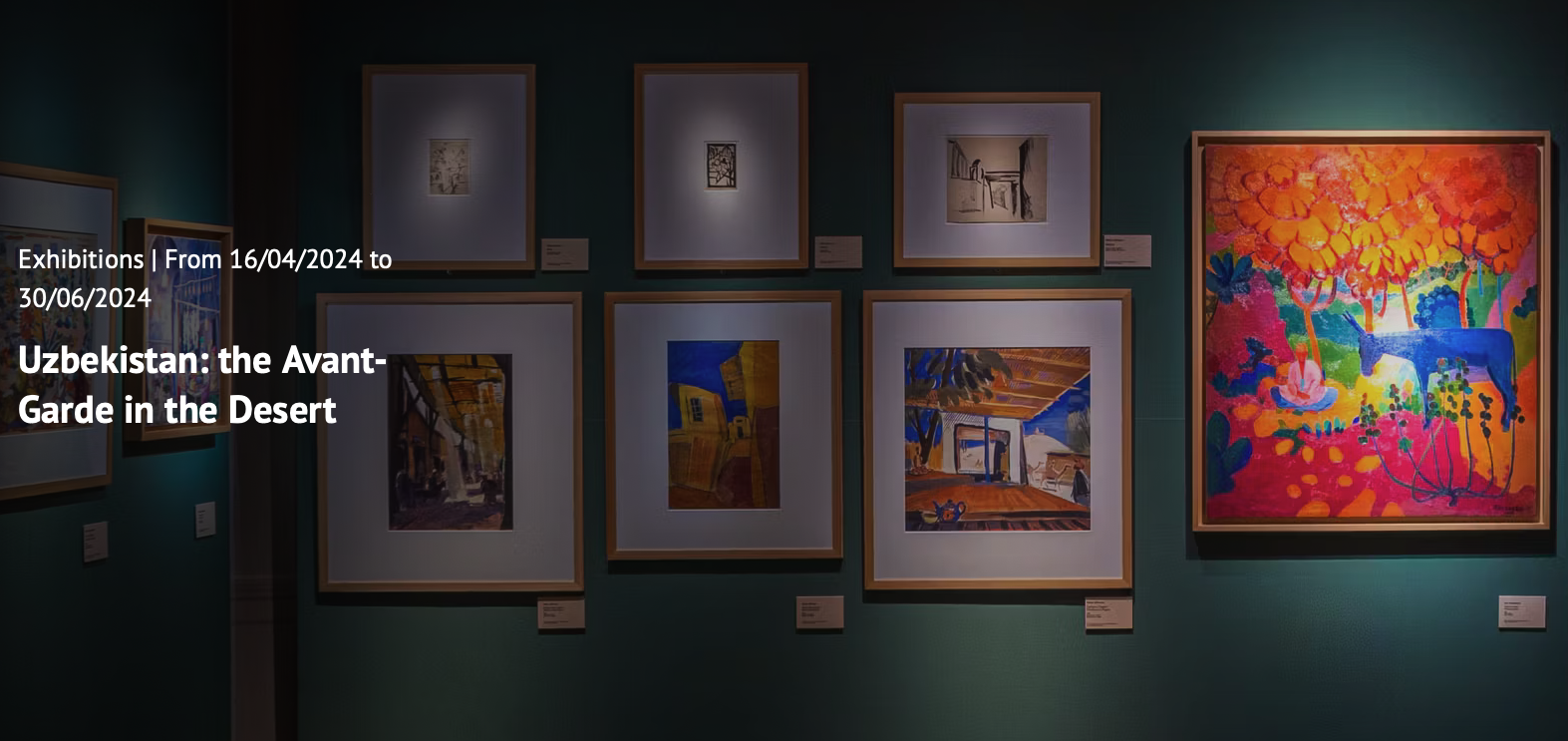
Exhibition "Avant-garde in the Desert" at the Uffizi Gallery.
The reputation of the largest avant-garde collection of the Savitsky Museum, located outside Russia, was formed at the beginning of the perestroika period. "And it was at that time that the term avant-garde suddenly became popular, turned into a super trend. And we had many works in this genre! After all, it was that layer of art that had disappeared elsewhere or was being kept in private collections," recalls Babanazarova.
Such an idea could not be realized on its own—it required an official permit and significant funds. But here too, Savitsky was helped by his companions.
Nurmuhamedov and Other Contemporaries
In addition to his scientific activities, Nurmukhamedov played a prominent role in public life: he was not only an academician but also the secretary of the Karakalpak regional party committee for ideology. It was Nurmukhamedov who helped arrange the first exhibitions and persistently convinced the leaders of the significance of Savitsky's work.
According to contemporaries, in the domestic setting, Nurmukhamedov supported Savitsky, who spoke unfavorably about the Soviet government. Babanazarova recalled that such liberties went unpunished thanks to Nurmukhamedov's patronage and Nukus's remoteness from the Union Center. In those years, the Karakalpak ASSR was a remote province, and Nukus — a closed military town, where planes almost never flew and trains did not run.
To expand his collection, Savitsky was willing to go to great lengths. Money for new acquisitions was chronically short, and Savitsky often went into debt to purchase valuable finds. At times, he was deceived, the museum's accounting was convoluted, and the financial reports — were far from ideal.
Nurmuhamedov jokingly said: "After Igor Savitsky's death, the museum should be named only after him, but during his lifetime — put him in prison for two years for financial chaos." There was a grain of truth in these words: to save art, Savitsky indeed sometimes broke formal rules.
In addition to Nurmukhamedov, other cultural figures of Karakalpakstan from those years are also named among Savitsky's closest assistants.
Artist Kydyrbay Saipov and some local enthusiasts supported the idea of creating an art museum and, together with Savitsky, went through official channels in search of premises for the exhibition. Among the first employees of the museum was the young sculptor Zholdasbek Kuttimuratov — later a renowned master and academician. Working as a restorer for Savitsky, he learned a great deal and later gained fame as a sculptor, creating an entire gallery of images of the Karakalpak people.
A circle of associates formed around Savitsky — the creative intelligentsia of Karakalpakstan in the late 1950s and early 1960s was inspired by his ideas.
However, a museum — is not just about enthusiasm, but also political will and funding.
Three Million for the Museum
Kallibek Kamalov, who headed the Karakalpak ASSR from 1963 to 1984, became the person without whose involvement and administrative resources the Savitsky Museum might not have come into being. In the early 1960s, Savitsky approached Kamalov with a request to allocate an enormous sum for that time — 3 million rubles.
Kamalov conveyed Savitsky's request to the Minister of Finance of the Karakalpak ASSR (KKAASSR), to which the latter replied in horror — the superior Minister of Finance of the Uzbek SSR would "have his head taken off" for exceeding the budget. Then the First Secretary remarked: "What difference does it make to you who takes your head off — the Ministry of Finance of Uzbekistan or me? You'll still be walking around without a head...".
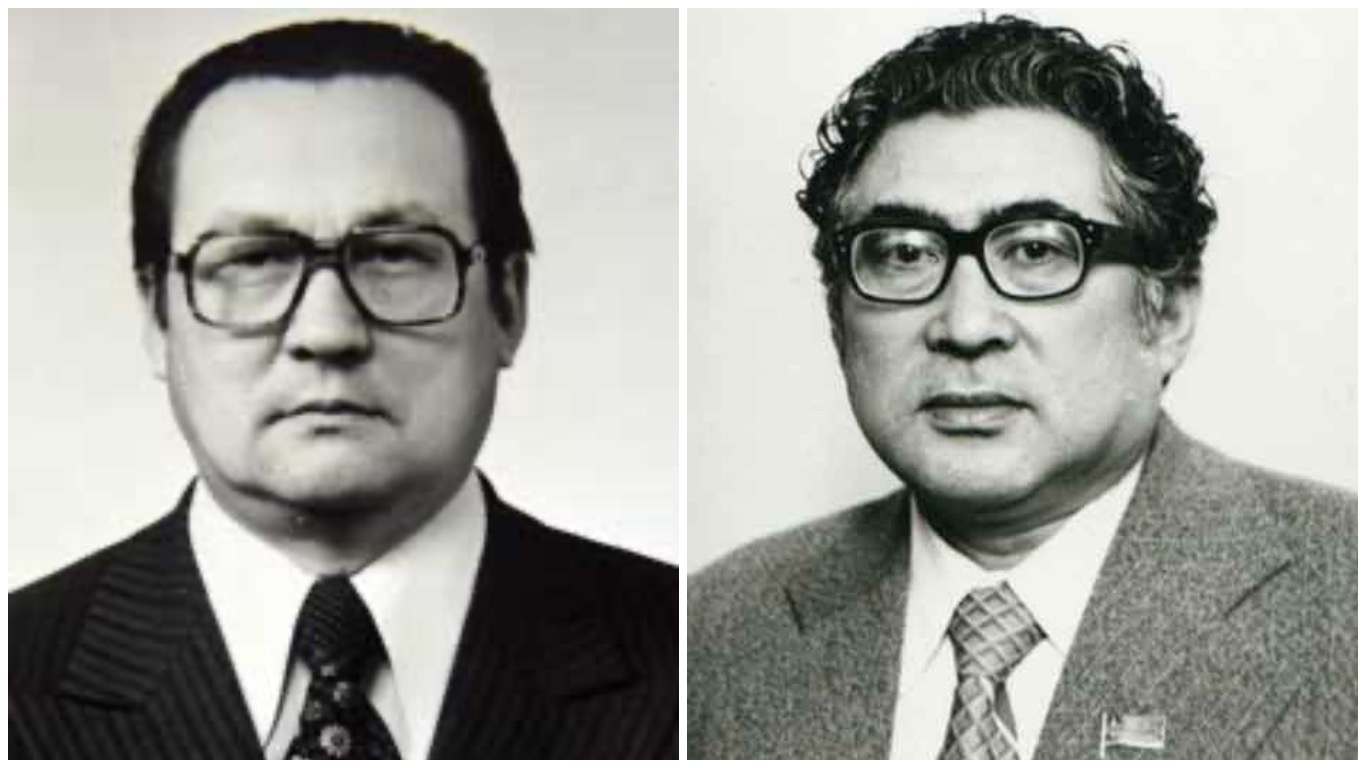
Left: Kallibek Kamalov, right: Marat Nurmukhamedov.
"That's how we semi-legally created the museum," — Kamalov recalled with a laugh. The editorial team could not verify the accuracy of this story, but according to some data, the very same 3 million rubles were indeed found.
Babanazarova calls Kamalov a "competent, pragmatic leader." It is important to understand the political context here: authoritative representatives of the scientific community visited the republic, for example, Academician Alexander Yanshin: "They genuinely influenced our leaders. They were not ordinary guests, but academicians, professors, major Moscow figures."
The money allocated by Kamalov did not go towards opening a museum, but towards purchasing artworks. Babanazarova recounts that the final decision was influenced by Kamalov's doctor, Professor Sergei Yefuni—"an influential, respected man who said directly: 'Give the money to this Savitsky, he is doing a great thing.'"
Allocating such a large sum for an obscure art museum in a remote autonomous republic could have angered the higher authorities. Nevertheless, Kamalov took that risk. With this money, Savitsky and his staff began purchasing exhibits and arranging premises in the building of the Karakalpak Regional Museum in the center of Nukus. Subsequently, the Council of Ministers of the Kara-Kalpak ASSR began annually allocating funds for the acquisition of art objects for the Nukus Museum.
Kamalov not only personally oversaw the project's implementation but also essentially sanctioned the storage and exhibition of avant-garde art works that were questionable from the Soviet ideological standpoint. He later admitted: "No Karakalpak has done as much for the [Karakalpak] people as Savitsky did."
Savitsky gave his health and life to the museum: by the early 1980s, his health was completely undermined by formaldehyde fumes, in which he cleaned archaeological bronze. He died on July 27, 1984, while undergoing treatment in Moscow, — but even from the hospital he tried to sneak out to art studios to arrange new acquisitions for his museum.
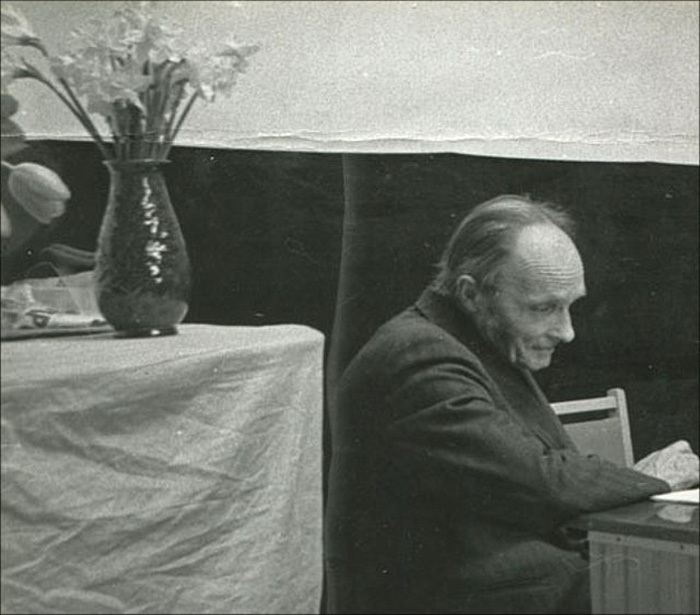
Igor Savitsky. Photo from the archive of Erkin Zholdasov / fergananews.com
Only after the master's death did his friends learn the true scale of the collection: two railway carriages with works of art departed from Moscow for Karakalpakstan. The creator of one of the best post-war Soviet museums was buried at the Christian cemetery in Nukus. Nurmukhamedov himself outlived his friend by only two years (he died in 1986), but he lived to see Savitsky's brainchild named after him in 1984. In Karakalpakstan, Nurmukhamedov is considered one of the co-founders of the museum.
The political fate of Kamalov unfolded dramatically — in 1984 he resigned from his position, and in 1989 he was sentenced to 15 years in prison in the "cotton affair" and stripped of all awards, including the title of Hero of Socialist Labor. He was released in an already independent Uzbekistan.
After Savitsky
"When Savitsky died, he left behind a debt of one and a half million rubles. This debt was covered by the museum. And then, in 1988-1989, when we were preparing a major exhibition, unpaid debts and unsettled accounts began to come to light. Perestroika had already begun, tastes changed, prices skyrocketed — everyone suddenly realized we had a real treasure... We worked under enormous pressure, did everything we could, pulled everything possible to show from the storerooms," says Babanazarova.
During Savitsky's lifetime, there was no hype around the avant-garde, and those who supported it were "considered strange." Ironically, these same people later began to call themselves his students, she says.
"Now there are so many 'hangers-on' who at one time played the opposite role. I remember how they tried to get rid of us, accused the museum of being too 'Russian'. They wrote denunciations, complained, demanded to remove the emphasis on Russian artists. Back then, Savitsky was not perceived as the 'father of the museum,' as is now customary".
Babanazarova emphasizes that this trend continued into the years of independence: "We were told directly: 'Do not utter Savitsky's name,' we were summoned and given instructions."
In 2025, the new government of Uzbekistan proposed to include the tombstone, on which Savitsky is called a "genius savior of beauty," in the list of additions to the register of tangible cultural heritage.
Did you like the story? Support us by reposting on Instagram and Telegram — there's even more interesting content there.
Newsletter
A letter from the HD editors
Once a week, we send the best stories, events, and cultural discoveries from Central Asia.