Today, we're heading to an area that was once on the outskirts of the city but is now part of the Mirzo Ulugbek district's Nodirabegim mahalla, home to the Lunacharsky Centre. Our destination is the former village of Nikolskoye.
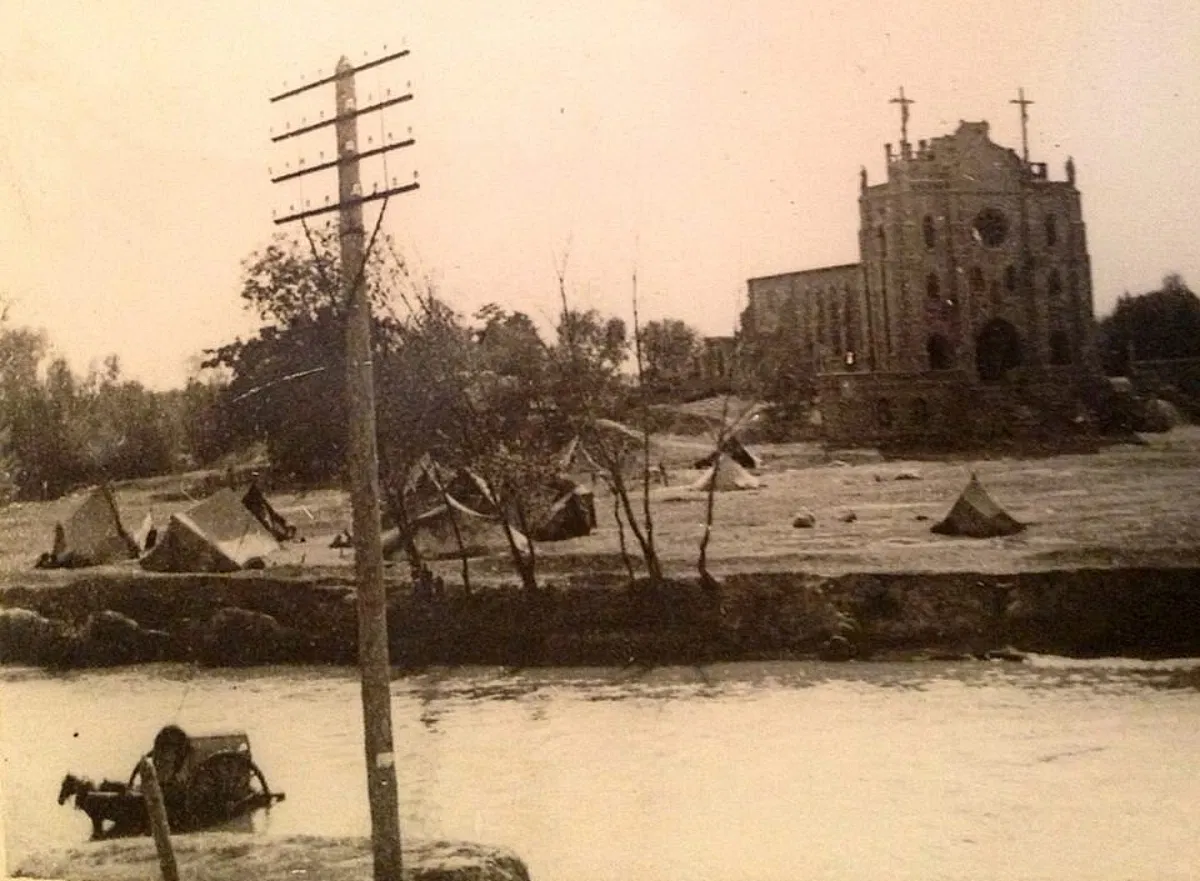
In practice, these were dacha settlements, and Tashkent's respectable society, along with its less respectable fringes, would frequently make their way out here. Some came for a few days, while others rented dachas for the whole summer. Having a dacha in precisely this spot was considered, if not prestigious exactly, then certainly very desirable. After all, it was closer to Chimgan. By modern standards, the journey was not particularly long. But just think where the city itself ended in those days: at Darkhan, around the site of the former Kazakhstan cinema, and near the railway station. And that was when people travelled on horseback...
The Village of Nikolskoye
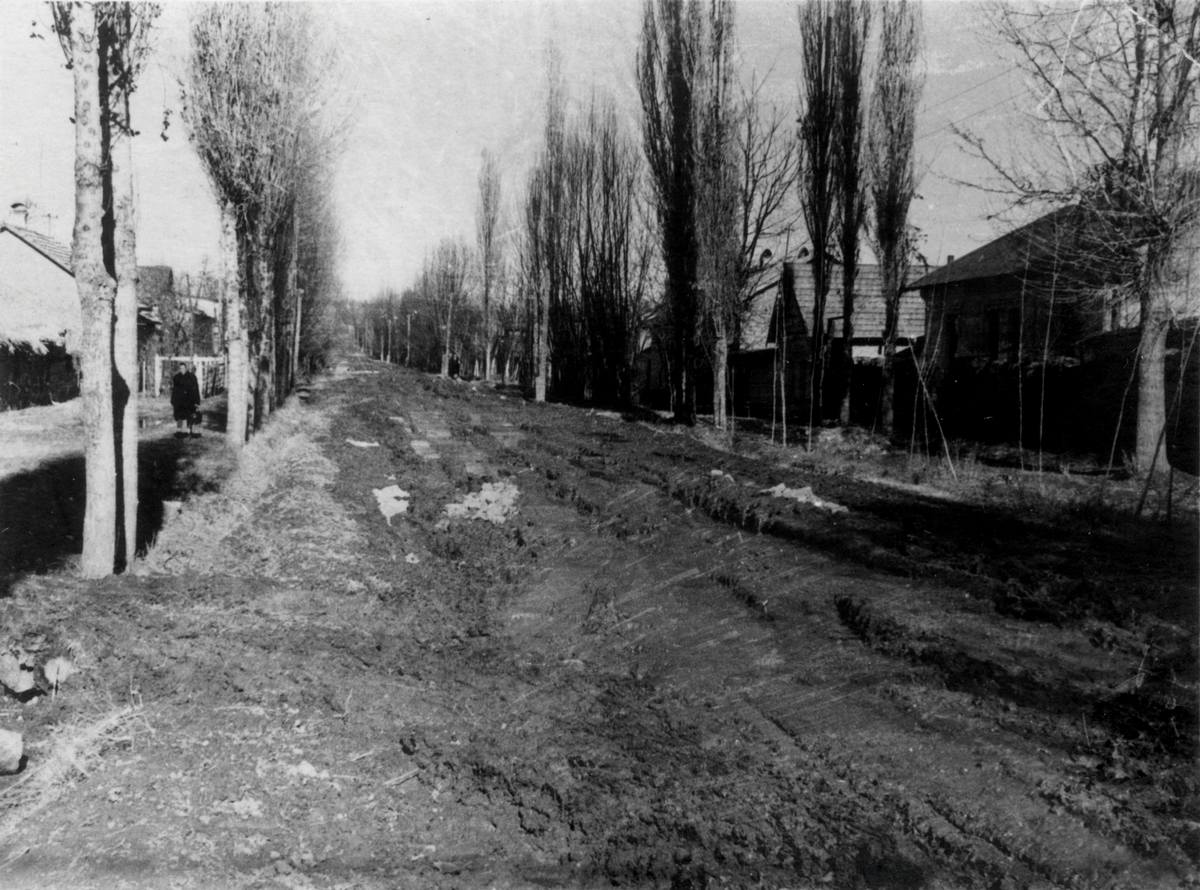
These days, it would probably be impossible to find any trace of it. Although, so the stories go, some people still have remnants of old buildings in their courtyards. The village appeared soon after Tashkent became part of the Russian Empire. Initially, it was decided to establish the settlement near Shortepa Hill, where the Orthodox cemetery in the Karasu area is now located. But the site was overgrown with reeds, making malaria a very real threat, so the idea was soon abandoned. Instead, the new village began to take shape on the very spot that lives in Tashkenters’ memory as the Lunacharsky Centre. The first residents of the new settlement were migrants: Cossacks from the Orenburg Cossack Host and settlers from central Russia.
Naturally, the settlement did not appear overnight. The newcomers arrived gradually, and little by little houses and outbuildings sprang up across the extensive area. Large fruit orchards and vegetable gardens were planted as well. Land was allocated on a simple principle: you got as much as you could manage.
Some took up poultry farming, while others produced dairy goods. Fortunately, local produce in Tashkent was of excellent quality and always found eager buyers. And the air! What air it must have been here: clean and pleasant, the sort you could breathe in all day and never fall ill!
The Settlers
Even today, if you look carefully, you might still come across some of the old plane trees planted by the settlement's first residents, and perhaps even traces of those first orchards, which once delighted their owners with delicious fruit. And, as part of the natural course of things, everyone wanted to live a little better. The more prosperous townspeople were therefore keen to buy a small plot on which to build a dacha, or at least rent one for the summer for their families and children.
The same wish was shared by Nikolai Ivanovich Ivanov, a first-guild merchant and philanthropist who was already well known in Tashkent by that time. Soon after arriving, Nikolai Ivanovich noticed that the settlement did not have even the humblest little church. History credits him with the selfless effort of building a church dedicated to St Nicholas of Myra, the Wonderworker. And yes, that is probably how it happened. The eminent merchant cared about anything that could benefit both himself and the people around him.
A solemn prayer service and the laying of the foundation stone for the future church were conducted by Bishop Neofit on 8 November 1883, in the presence of numerous senior officials from the regional and city administrations. But that was only the beginning.
As the sole organiser of the construction, Nikolai Ivanovich knew perfectly well what local buildings were made of, and he immediately rejected local materials such as adobe and reeds. He had decided to create a kind of monument to himself, one that would serve the community for decades to come.
To be fair, nowhere on the church walls was there any mention of the merchant Ivanov’s leading role in its construction. He was, after all, a modest man. And for four whole years, not a single piece of work was carried out at the site where the church was to stand.
Building the Church
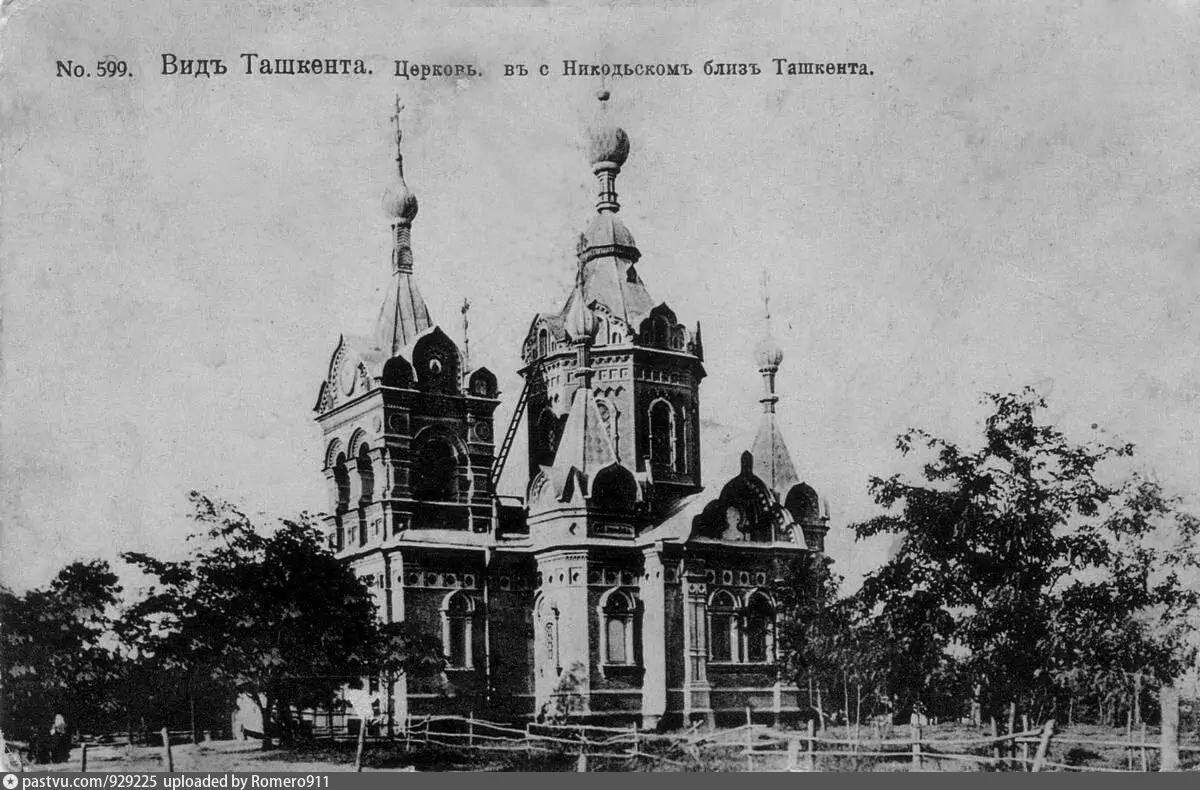
I keep looking at the photograph of the old five-domed church and cannot shake the feeling that the celebrated architect Wilhelm Solomonovich Heinzelmann had a hand in its design. The style certainly looks like his: Russo-Byzantine, with various additional touches.
Construction of the church finally began in the autumn of 1887. This was when that unforgettable first-guild merchant really showed what he was capable of.
He purchased excellent-quality bricks and roofing materials, ordered a huge number of icons and finishing materials, and bought stone to pave the area around the church. He even personally paid for the gold used on the domes and crosses. The church turned out to be both austere and beautiful, even stylish, unlike any other building of its kind in the Turkestan region.
But Nikolai Ivanovich cared not only for the parishioners, but also for the future priest who would serve as rector of the new church. He therefore ordered a six-room house to be built next to it, where the first rector lived from the very beginning of his ministry.
That first rector was Pyotr Alexandrovich Ostroumov, nephew of the renowned educator and Orientalist Nikolai Petrovich Ostroumov. All in all, this remarkable monument of architecture and art cost Nikolai Ivanovich the considerable sum of 55,000 roubles, a fortune at the time. Until the end of his life, the merchant continued to take a keen interest in the beautiful building.
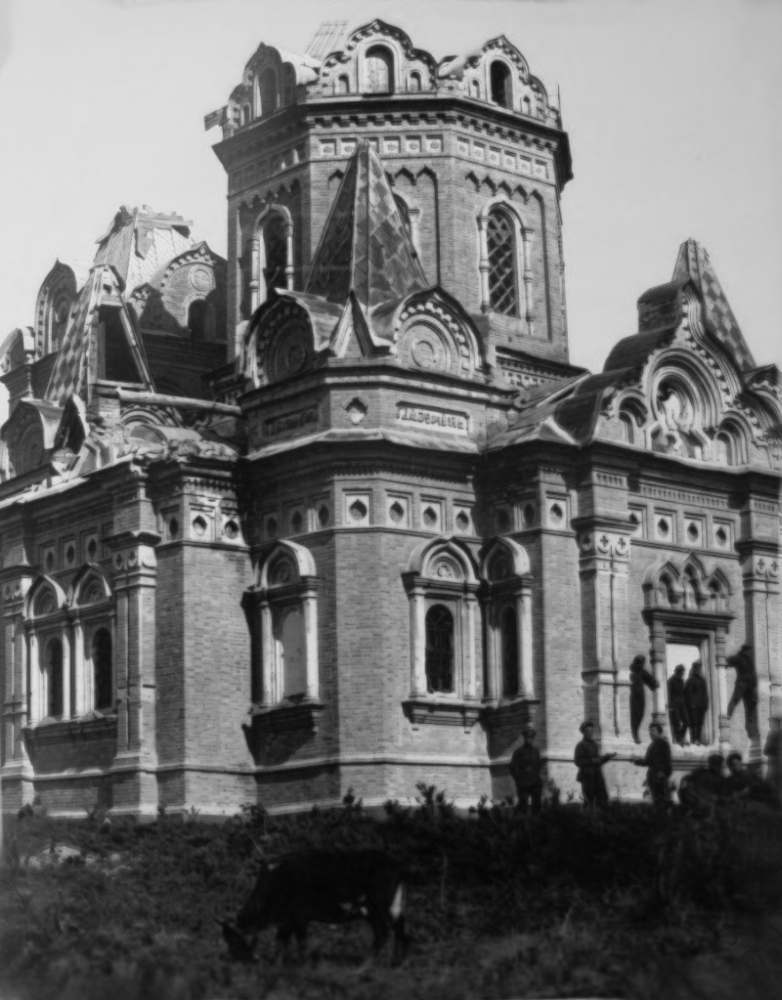
The Church Site
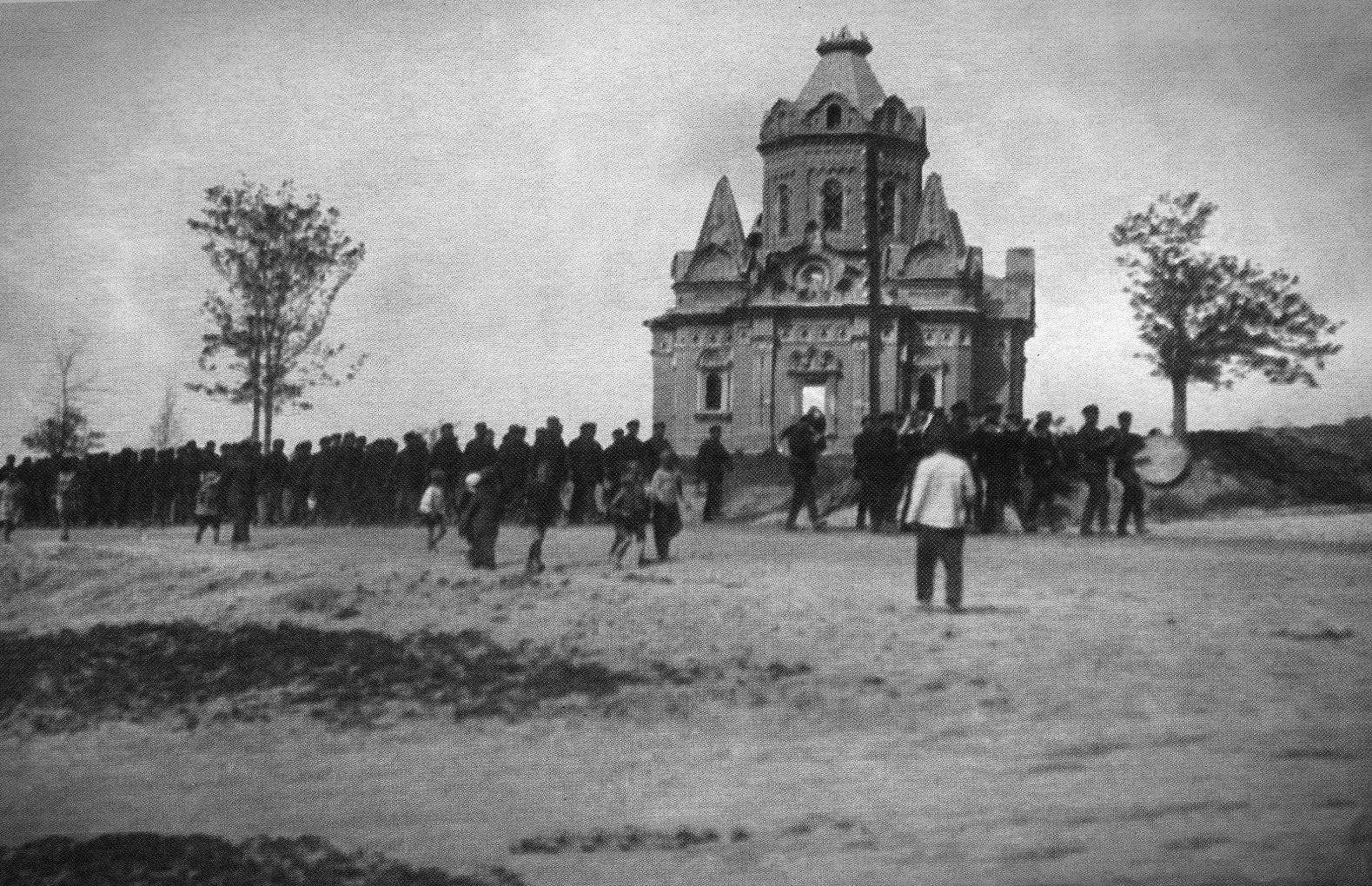
Finding the site where the church once stood is quite straightforward. One crosses the first bridge and, across the road, sees a small rise — to the left of the bus stop for those travelling "into the city." Today the site is occupied by a four-storey administrative building, said to be a departmental hotel, which bears a vague resemblance to the Sayokhat Hotel.
To its right, the very house where the priest once lived is still standing. Whether the people living there today have any inkling of the history of the house they inhabit, I cannot say. The church itself was demolished in the 1930s at the insistence of the so-called "God-fighters."
The Sad Fate of the First Priest
While the renowned Orientalist Ostroumov died of natural causes, his nephew Pyotr Aleksandrovich was not so fortunate. Here is how Tashkent historian Yury Flygin describes what happened to him:
It was largely thanks to his efforts that a garden was planted around the church, which he personally looked after.
After the February and October Revolutions of 1917, many parishes found their church councils filled with dubious, commercially minded figures whose primary concern was certainly not their faith. These people actively interfered in the work of priests, often attempting to manipulate them and influence parishioners in whatever direction suited them.
The same situation developed in Nikolskoye. Father Pyotr was eventually forced to leave the Nikolskoye parish. In the first half of the 1920s, he spent some time as a supernumerary priest at the Tashkent Church of St Alexander Nevsky, now known as the "Botkin" Church. He was then sent to Ashgabat to serve, where he was arrested. He died in custody.
Previous articles in our series on Tashkent's mahallas can be found on the author's page.
Svyatoslav Morskoy | HD MagazineReal name: Stanislav Balashkin. “I love my Tashkent and can’t stand it when the history of our city is rewritten.”mag.humodoc.com
Newsletter
A letter from the HD editors
Once a week, we send the best stories, events, and cultural discoveries from Central Asia.