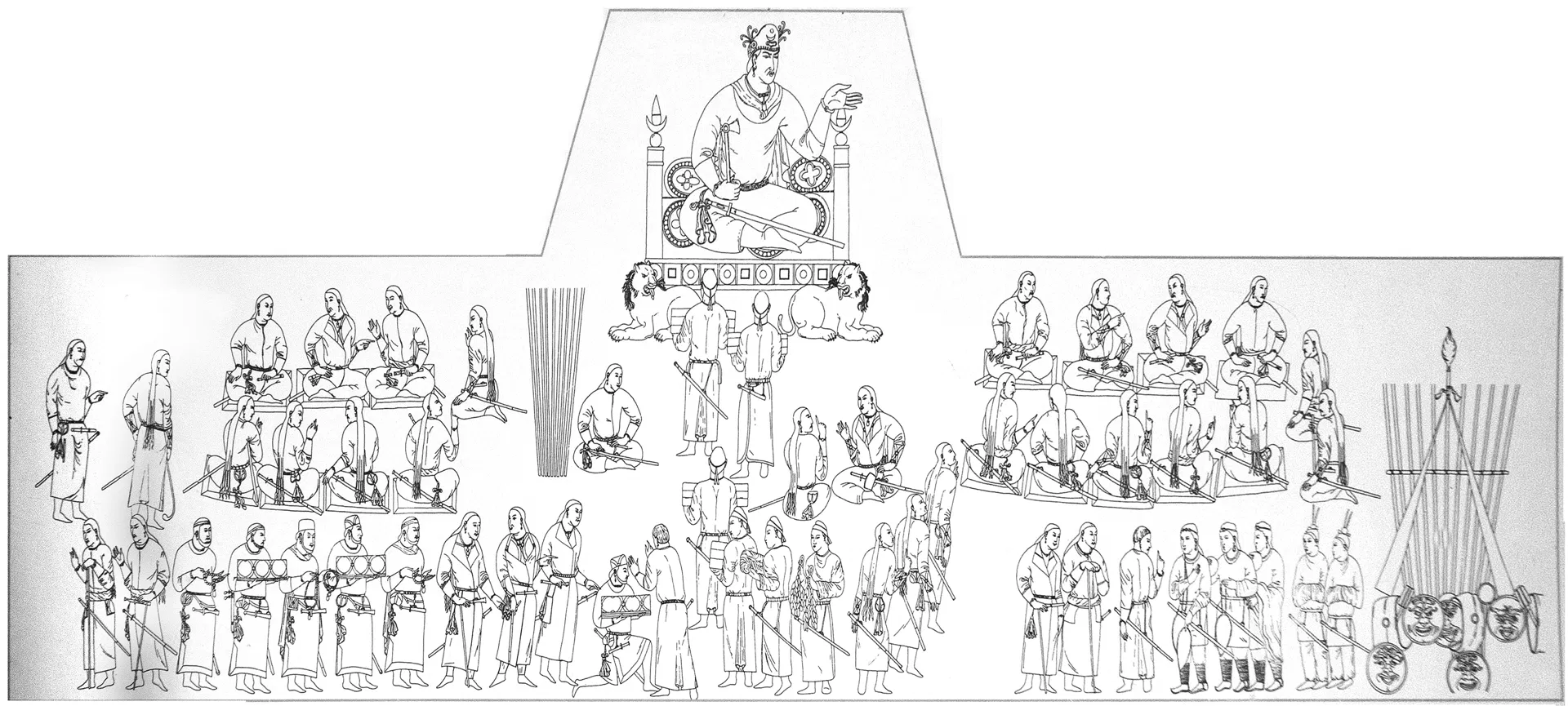
Herodotus described the Massagetae as a nomadic people whose way of life, traditions (consumption of mare's milk) and rituals (horse sacrifice) largely resembled those of the Scythians, while the cult of the sun held a special place in their beliefs. In turn, the ancient Xiongnu and Wusun developed the concept of sacred power: they were convinced that a ruler received his status directly from the Eternal Sky. This idea of heavenly legitimation became the foundation of the political culture of many nomads.
Heavenly Legitimation of Power
The durability of this idea is evidenced by the titles of medieval Turkic rulers, which included the concepts of "Tengri" (Heaven) and "Kut" (divine grace, charisma, mandate). Notably, according to the chronicles of Ban Gu, the word "Heaven" itself in the Xiongnu language, recorded as "Chengli," is phonetically reconstructed as țäŋ-rə̄j.
Some researchers believe that Tengrism is one of the oldest religions in the world. This may indeed be the case, but at this stage supporters of this version would do better to rely on reliable written evidence. Judging by the sources, even the ancient Wusun and Xiongnu believed in the afterlife and the immortality of the soul; they also had a pronounced cult of ancestors and veneration of nature
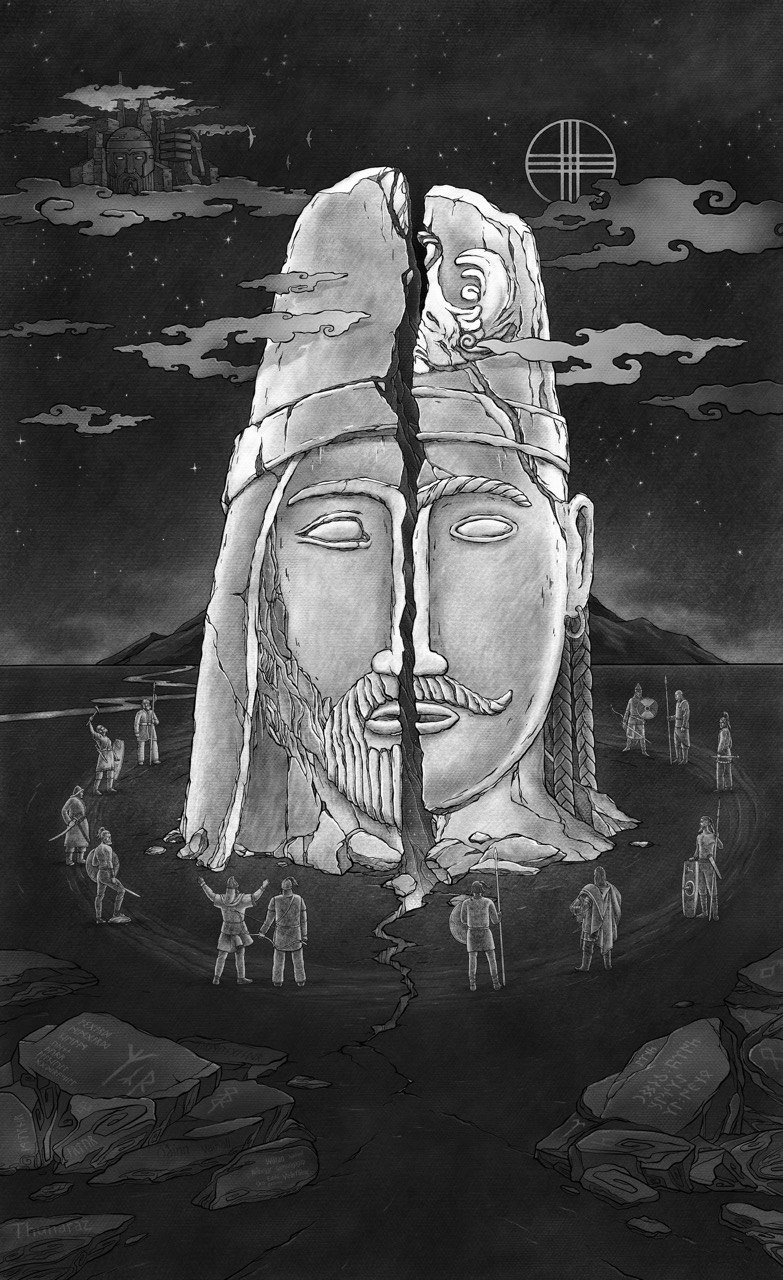
From "Tengrism" to Yosun
The term "Tengrism" is a late scholarly term introduced by Russian and European researchers. The nomads themselves - Turks, Mongols and Manchus - called their system of views differently. At the foundation of their life lay concepts of heavenly law, customs and orders, which were designated by the terms Törü and Üsün (Chagatai "Yosun," Manchu "Yoso," Mongolian "Yoson," Tatar "Yusyn," Kazakh "Üisin").
The latter word was multifaceted: it simultaneously meant law, custom, faith, ceremony, and even rules of conduct. It is believed that "Törü" and "Yosun" were synonyms.
Yosun as a source of religious law was known to the nomads of Asia since the era of the ancient Xiongnu and Wusun.
Since the ethnonym "Wusun" has been most clearly preserved to this day among the Kazakhs of the Senior Zhuz, and is also found in the names of certain clans among other peoples, an impression may arise that only they lived according to the ancient Tengrist law - "Yosun." However, such a conclusion would be erroneous. The mere preservation of an ethnonym does not yet testify to the exclusivity of its bearers - just as the names Islam, Islamkhan, Islambek, Muslim or Musulmankul do not mean that only their bearers are true Muslims.
Hence among the nomads there is a known expression "yosuncha" - "to act honestly, according to law, according to conscience." In the Old Turkic language, similar concepts "törüsün" and "törüsüncha" were recorded. In certain regions, the designations "Abaqlyq," "Törülük" or "Bögülük" were also used.
In my view, the common Turko-Mongol-Manchu Tengrist steppe culture could be designated in official scholarship as the "Yosun Civilization."
European scholars believe that the scholarly term "Tengrism / Tengrianism" was first used by the Kazakh scholar Chokan Valikhanov. Nevertheless, he merely recorded the name "Tengri." Later, the definition "Tengrism" was also applied by the French orientalist Jean-Paul Roux and Olzhas Suleimenov.
According to the scholar Nurmagambet Ayupov, Tengrism can serve as an element of cultural and civilizational self-identification in the context of the emergence of a multipolar world - both for the Kazakh people and for all Turko-Mongols as a whole.
Tengri and Political Unity
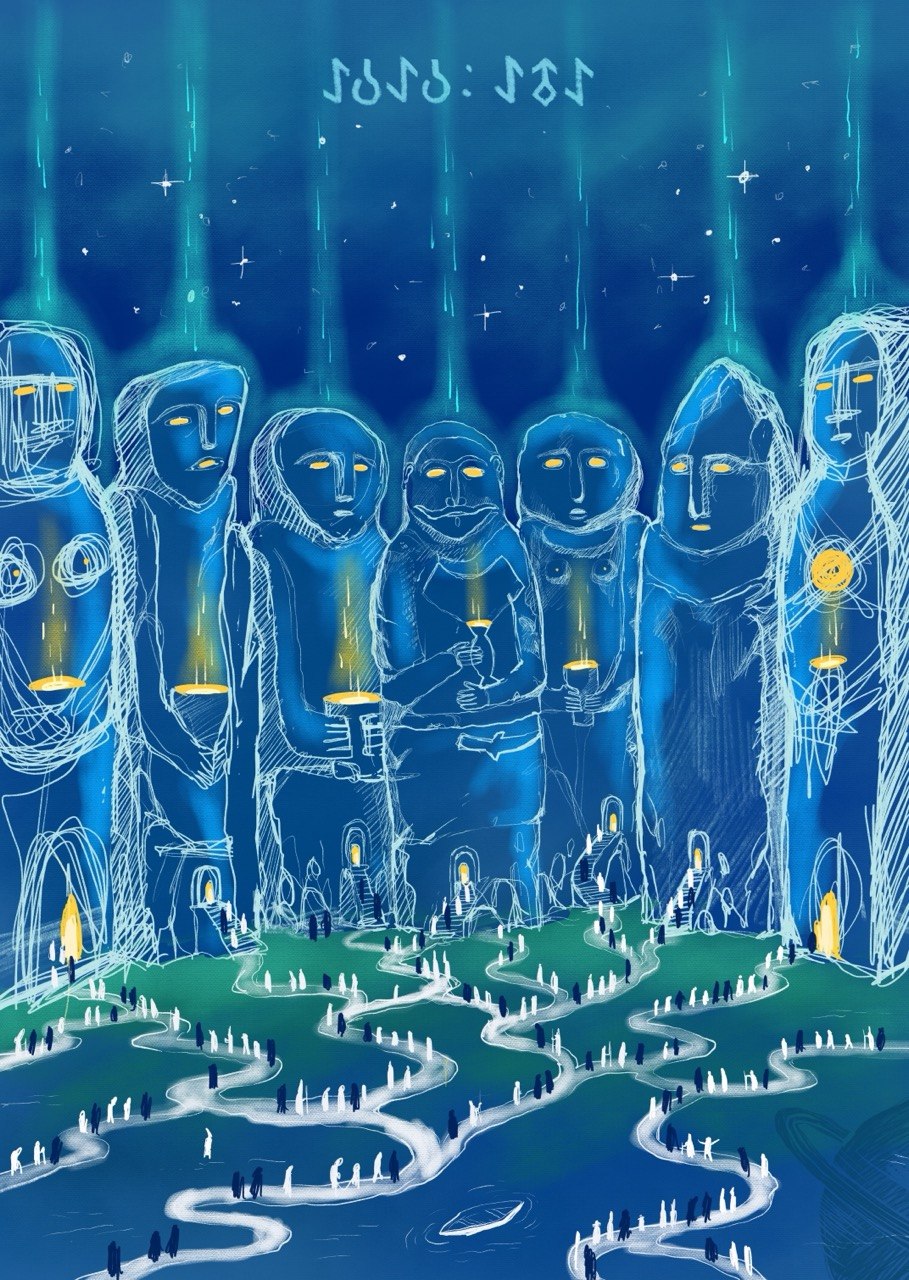
Ancient Turkic culture, by virtue of its geographical position at the very center of Eurasia, was essentially a "bridge" between Western and Eastern civilizations. During the formation of the Turkic Khaganate, Tengrism acquired a monotheistic form to ensure political unity.
According to Turkic kam shamans, the god Tengri was associated with the planet Jupiter. In ancient Germanic myths, the god Thor also occupies a place analogous to the Roman Jupiter. This is no coincidence, since both of them descend from a common ancestor - a mighty thunder god from the mythology of the ancient Indo-Europeans.
It is not surprising that among many peoples whose ancestors spoke Indo-European languages, Thursday bears the name of this supreme god. For example, in Latin Thursday is the "day of Jupiter" (Jovis dies), and from this came the names of this day in French (jeudi), Italian (giovedì), Spanish (jueves) and other languages. And the German Donnerstag and English Thursday are directly connected with the name of Thor or his Germanic analogue Donner.
Turkic kam shamans called Thursday "Täŋri küni." The planet Jupiter completes a revolution around the Sun in 11 years and 8 months, and therefore the Turks used it to calibrate the "müşel" calendar.
Tengrism and Shamanism
Despite their common origin, it is important to immediately emphasize the difference between Tengrism and shamanism. Shamans (baqsy, kam), in addition to Tengrism, played a notable role in the social life of many cultures.
Shamanism is a body of religious and ritual beliefs and practices in which a special role is played by a specialist intermediary (the shaman), who interacts with spirits, ancestors and other supernatural entities through rituals, altered states of consciousness, sacrifices, divination, healing and protective practices. In scholarly classification, shamanism is usually considered primarily as a religious and ritual complex, rather than as a world religion with a unified dogma.
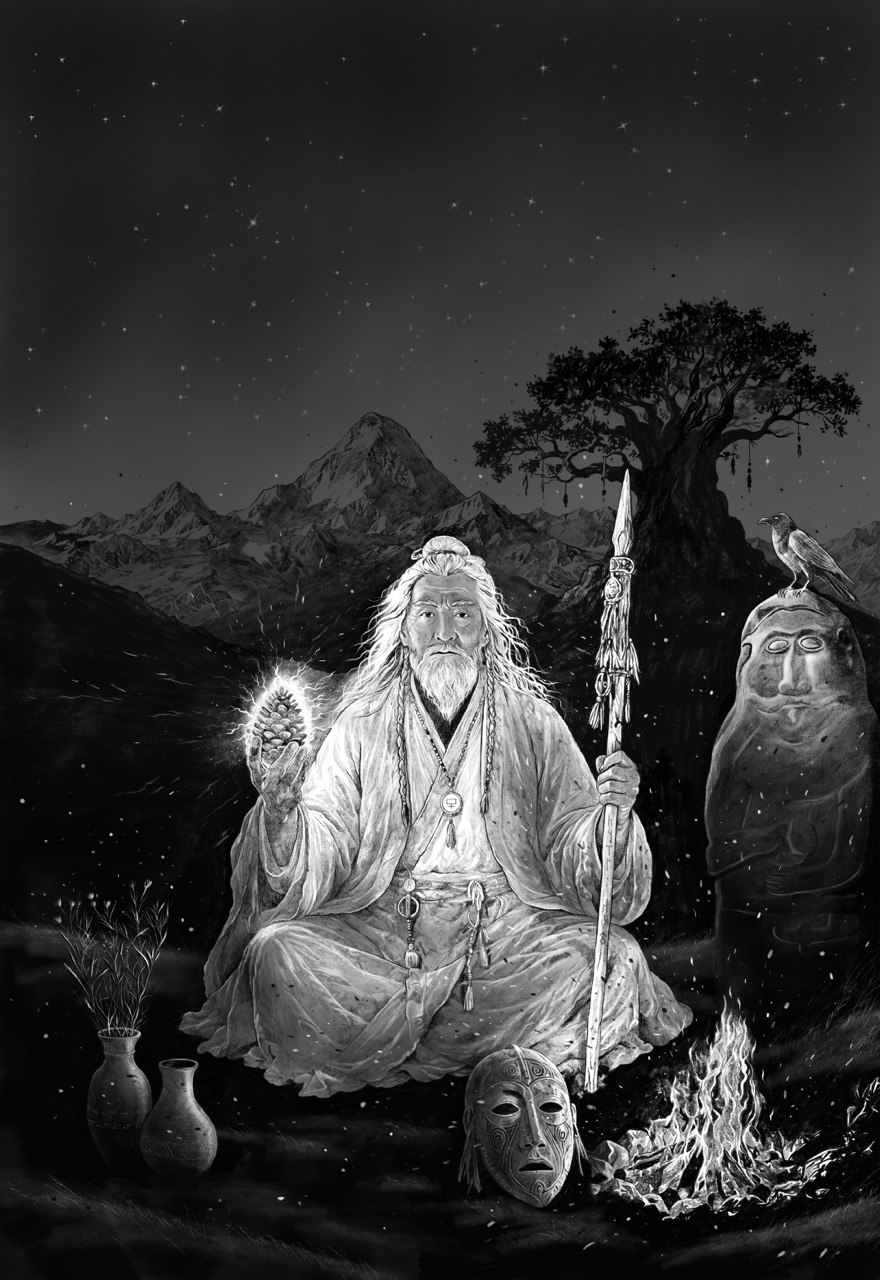
Before the appearance of the concept of "Tengrism" in scholarly terminology, Russian and European researchers routinely labeled the cultic rites of large khanates and khaganates as shamanism.
Literally, the following can be said: shamanism is merely a belief in the shaman's ability to enter into contact with the world of spirits and receive certain answers to requests, whereas Tengrism is a conventional modern designation for a complex of ancient Turko-Mongol religious and worldview traditions, in which the central place was occupied by Tengri (Heaven), Umai, the sacred order of the world, the cult of ancestors and ideas connected with nature and political power.
In ancient times, Tengrians gathered not only in specific sacred, often remote, places for ceremonies and rituals, but also in Tengriligs (temples) with clergy (Tengrichi, Tengriken). According to Mahmud Kashgari's dictionary, "Taңrikän" means "wise," "pious."
Tengri in ancient Turkic tradition
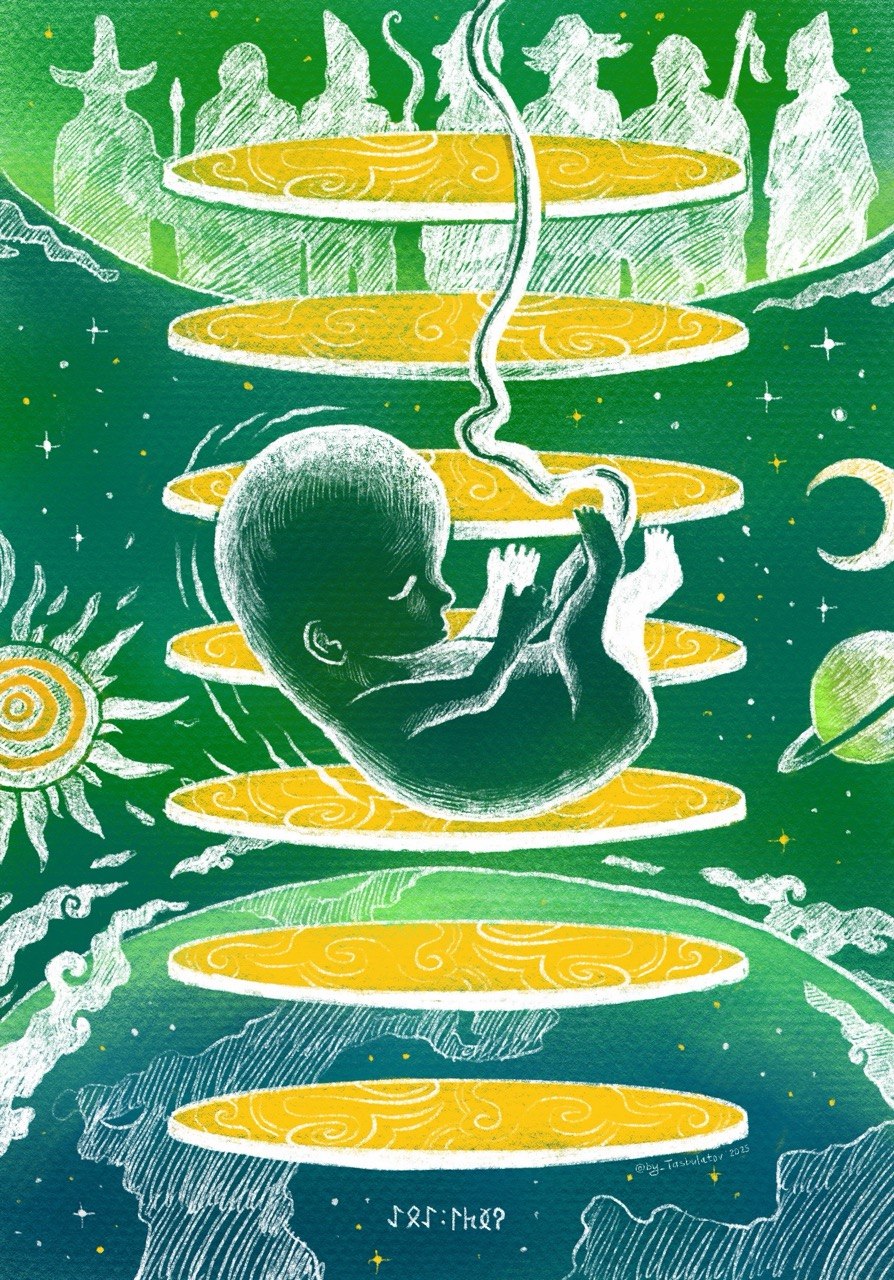
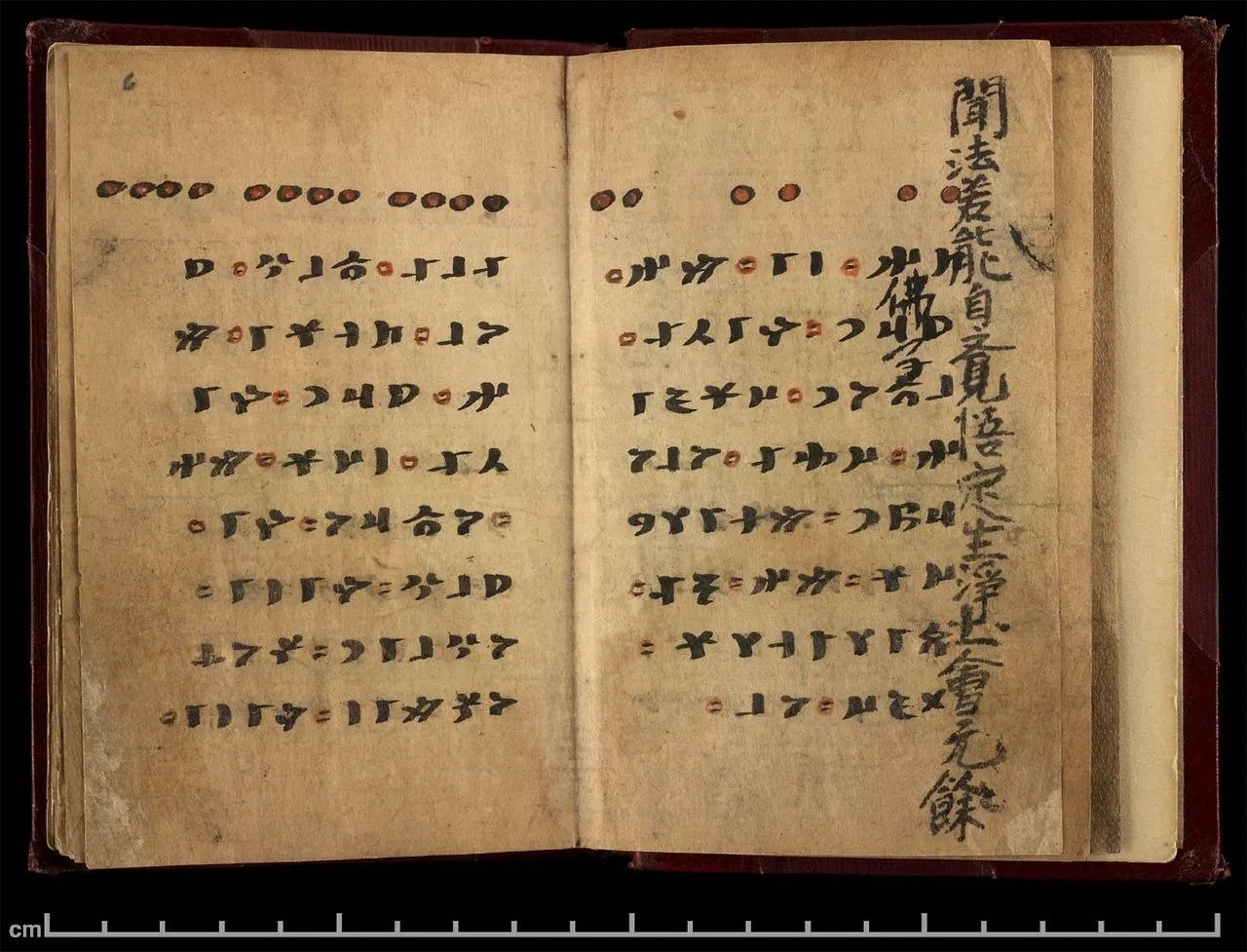
The name "Tengri" from the ancient Turkic 𐰃𐰼𐰭𐱅 "Täңri" is recorded in ancient Turkic runic monuments and appears more than 150 times.
For millennia, tribes of Turkic-Mongolian origin, followers of shamanism, have worshipped the sky (Tengri), which personifies all the higher forces of nature. In modern terminology, Tengri means "Sky," "Heavenly Spirit" and "God."
Sometimes the Turks also used the term "Kök" (ancient Turkic 𐰚𐰇𐰚), which meant not only the colors "blue" and "heavenly," but also "sky" and "firmament" themselves. In philosophical understanding, the word "Kök" often served to designate things created by nature.
It is symbolic that it was thanks to the decipherment of the first two words in the Orkhon-Yenisei texts - "Tengri" 𐱅𐰭𐰼𐰃 and "Turk" 𐱅𐰇𐰼𐰜 - that Danish Turkologist Vilhelm Thomsen in the late 19th century was able to prove to the world scientific community that the ancient Turks had their own writing system.
As an example, we can examine the first line of the Kultegin stele:
"Өзе Көк Тәңрі асыра жағыз жер қылынтақұда екін ара кісі оғұлы қылынмыс кісі оғұлынта өзе ечүм апам Бұмын қаған Істеми қаған олурмыс олурупан Төрүк боданығ елін төрүсүн тута берміс іті берміс".
"When the Heavenly God (Tengri) above and the brown Earth below arose, a son of man was created between them. My ancestors Bumyn Kagan and Istemi Kagan, having ascended the throne, gave the righteous subjects (people) a code of laws and rights."
The Törü Law and the Great Turkic Khaganate
According to ancient Turkic sources, the ancient Turks also revered Mother Nature Umai, Erlik (the spirit of the otherworld), ongons (ancestral spirits) and Kut (a special life force), and called their empire "Beңgü el" (Kaz. "Mäңgi el"), which translated meant "Eternal State."
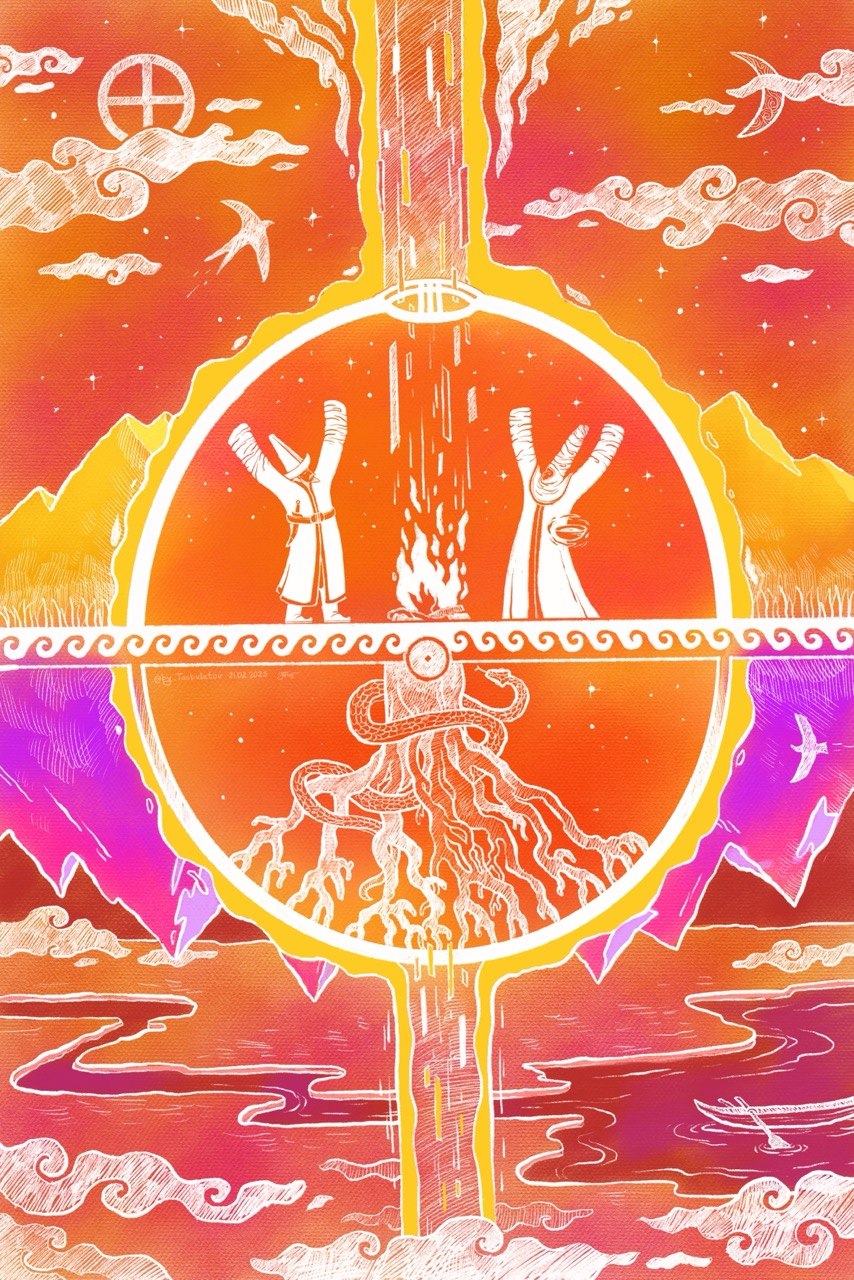
In 552, having united numerous tribes, brothers from the Ashina dynasty Bumyn Kagan and Istemi Kagan became the founders of one of the largest empires in human history - the Great Turkic Khaganate. Judging by historical documents and folk legends, the first khagans were considered direct "executors" of Tengri's will, through whom the law "Törü" was revealed to the peoples of the Great Steppe.
Most likely, the tribes that accepted the suzerainty of "Bodan (Budun)" were united under the collective and religious-ideological designation "Törük" or "Törük bodan."
After conducting a comparative-historical and etymological analysis of the ethnonym "Turk" (ancient Turkic "Törük"), one can assume that it originally meant "Lawful," "Righteous," being essentially a synonym of the modern neologism "Tengrian."
Memory of Tengri
Unfortunately, in our state, most officials and figures of science and culture practically do not attach special significance to the religious affiliation of all the main actors in the history of nomads.
For example, followers of the faith in Tengri were Attila, Bumyn, Istemi, Kultegin, Bilge Kagan, Tonyukuk, Suluk, the founders of the Bulgarian Khanate Asparukh and the Hungarian Kingdom Arpad, Barsbek, Moyan Chur, Genghis Khan, Jochi, Chagatai, Ögedei, Batu, Güyük, Möngke, Ariq Böke, Maiky Bi and Mukhali Jalair.
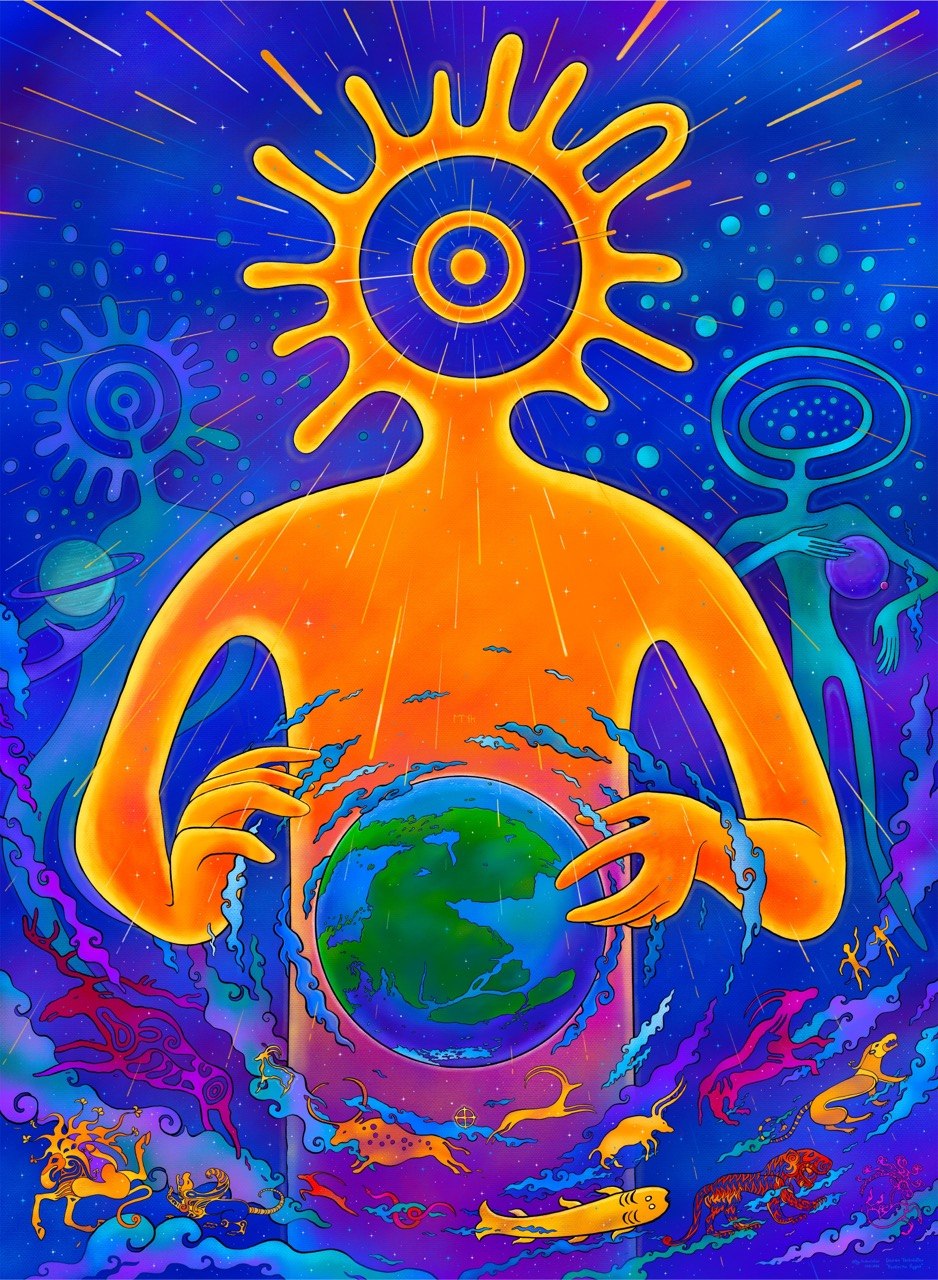
The Mongolian khagan and grandson of Genghis Khan, Güyük, himself represented power given to him as something divine. He wrote in a threatening tone to the Pope of Rome himself on behalf of the Eternal Sky (Mangu Tangri), as if he were the supreme representative of divinity and an arbiter of various faiths.
The first Kazakh scholar, a descendant of Abylai Khan, Chokan Valikhanov, back in the mid-19th century noted that the basis of Kazakh culture consists of shamanic motifs. For example, ordinary Kazakhs called Allah "Kök Täңri," and their aruakhs they called ongons.
Turkic-Mongolian peoples traditionally used the term "ongon" to designate ancestral spirits, rather than the Arabic "aruakh." It is quite possible that the word "oңғan" (oңgon) may derive from the verb "oңu" - "to fade," "to shed" (about fabric), "fading"; "to improve" (about a matter).
In my opinion, symbolically this may mean that the body of the deceased dissolves in the physical world, but his spirit continues to live in another space and, if necessary, to influence the lives of descendants in the future.
The main spiritual-religious and cultural-political center of Turkic-Mongolian civilization for 2,000 years was Tengri Tag (Tian Shan) in Semirechye (Zhetysu). This is clearly evidenced by the presence of hydronyms (rivers, lakes) associated with the names of the founders of the Turkic Khaganate.
For example, according to scholars Iakinf Bichurin and Kemal Akishev, the Ili River is named after Bumyn's title "Ili Khan," and the water bodies and localities "Issyk," "Issyk-Kul" and "Kegen" - after the names of Isigi Kagan and Mukhan Kigin Kagan.
Ethical order and prohibitions
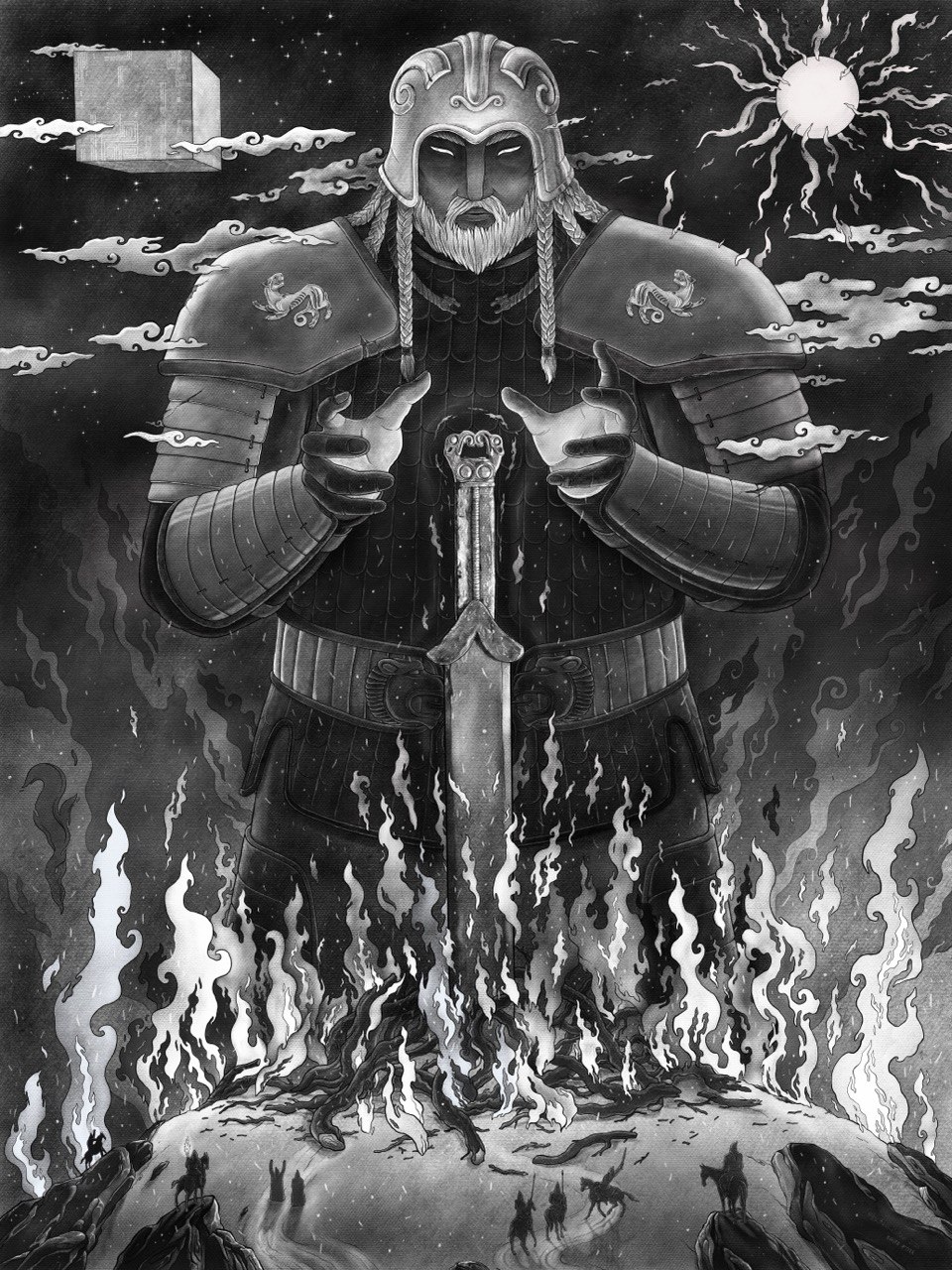 Artist: Dauren Tasbulatov
Despite the fact that Tengrian teaching is ecocentric and liberal in its structure, it has quite strict taboos and prohibitions: violation of cosmic order, suicide, usurpation of power without kut (heavenly blessing), renunciation of ancestors and destruction of ancestral memory, false oath or deception, distortion of truth for profit, desecration of the sacred (spitting into fire, polluting water, etc.), as well as close-kin marriages up to seven generations, homosexuality, pedophilia and bestiality.
Religion, worldview or spiritual tradition?
By its nature, Tengrism is an ethical and philosophical doctrine that became part of the religious complex of the nomadic Turkic-Mongolian and Tungus-Manchu peoples of Eurasia, and, according to various views, it is also a worldview, a social ethic, a political ideology, a scholarly tradition, and a way of life. Sometimes it is regarded as a philosophy, and sometimes even as a religion.
From the standpoint of modern religious studies, Tengrism possesses most of the main features of a religion: belief in the supernatural, a developed cosmology, a system of rituals, sacred places, religious ethics, ancestor worship, religious specialists, and a community of believers.
Therefore, many researchers regard it as the ancient traditional religion of the Turkic and Mongolian peoples, although discussions continue as to whether it should be understood primarily as a religion, a worldview, or a broader spiritual tradition.
Newsletter
A letter from the HD editors
Once a week, we send the best stories, events, and cultural discoveries from Central Asia.