Cinema and Performing Arts
Aigul Kulbekova: Building Cultural Continuity
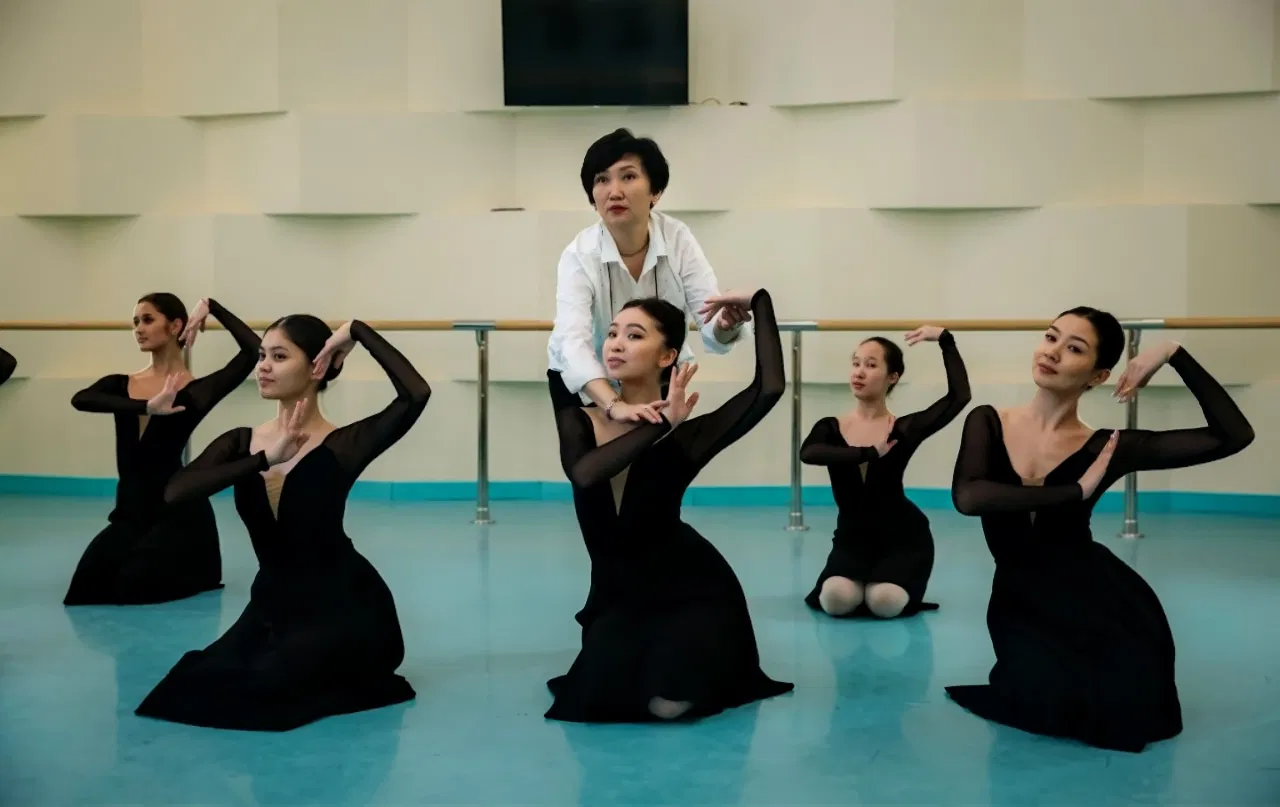
There are professions whose results cannot be seen straight away. We can judge a performance by the audience’s applause, a book by its sales, or an architect by the building they have designed. But there is another kind of work whose impact only becomes visible decades later. It is the work of people who ensure that culture does not end with the generation that created it, but continues to live, evolve and be passed on.
We rarely stop to think about how this happens. When we talk about preserving cultural heritage, we most often think of museums, archives, festivals or state programmes. In the case of intangible heritage, we think of performers, teachers and researchers. Each of these roles is important, of course, but one question somehow almost never becomes a subject of discussion in its own right: what exactly turns one person’s talent into a sustainable cultural system?
It’s a question I’ve often found myself returning to as I’ve followed the professional journey of my teacher, Aigul Kulbekova. Much has been written about her. Performer, teacher, professor and researcher, author of textbooks and holder of a doctoral degree. All these descriptions are accurate, yet over time I found myself thinking that each one captures only a particular stage of her biography, without answering the central question: what role did she play within the Kazakh dance school?
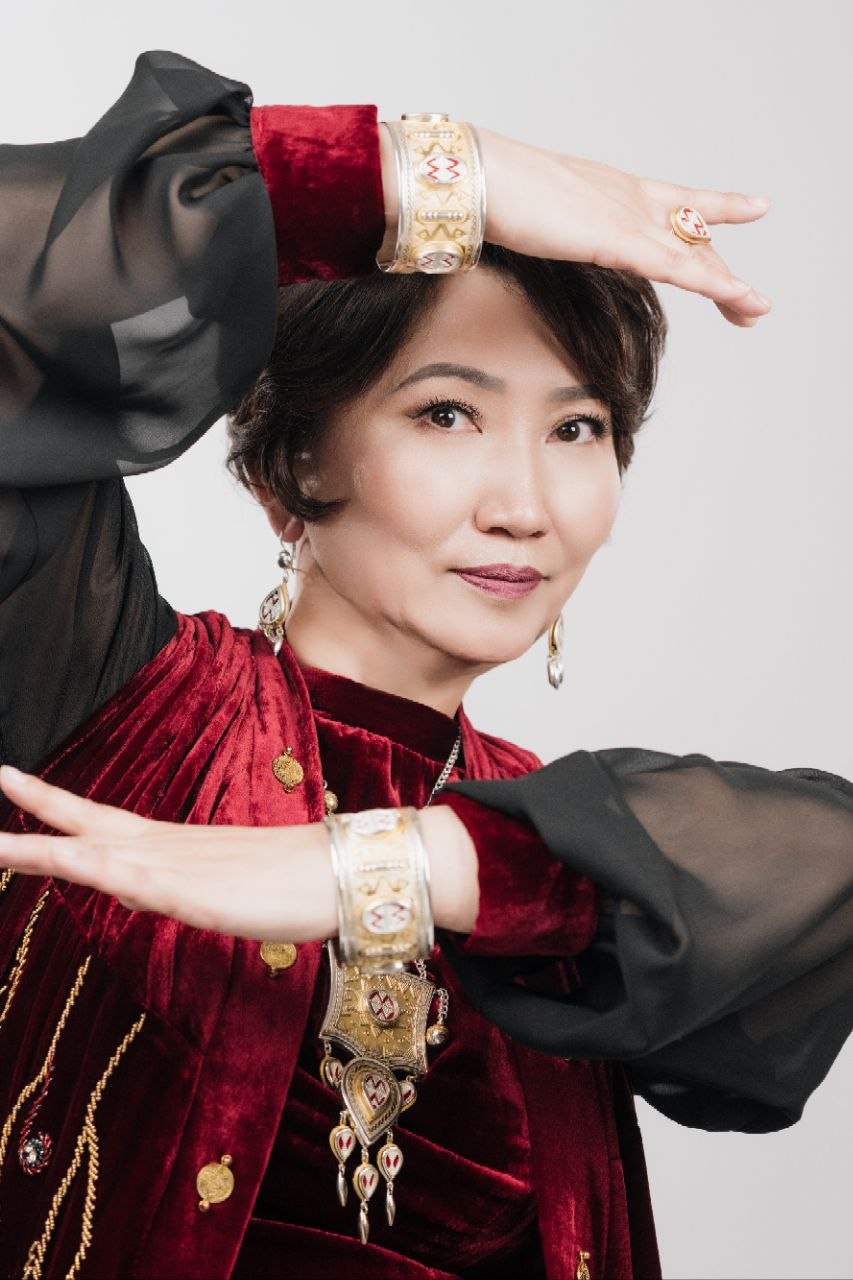 Source: Alfiya Kalmaganbetova’s personal archive
Once I began looking at her work from this perspective, the familiar biography started to reveal an entirely different picture. It became a complete mechanism for preserving culture. Where exactly does dance live? Architecture can be preserved, a painting can be restored, and a book can be republished. Even an archaeological site can survive for centuries. Dance is different, because it disappears the moment there is no longer anyone who knows how to perform it.
Dance is one of the most fragile forms of cultural heritage. It cannot be preserved in the same way as an ancient city or a museum collection. A movement can be recorded on video, described in a scholarly article, or documented through its metre or sequence of steps. But without someone capable of filling that movement with meaning, character, physical expression and an inner understanding of the tradition, all of this remains little more than a record.
This creates a paradox: the primary repository of dance is human memory. A performer’s memory preserves the manner of movement, the sense of rhythm, the work of the body, the character of a gesture and an understanding of the image. This is how I have always remembered Aigul Kulbekova’s Kazakh dance classes, the very qualities that distinguish a living tradition from a mere sequence of movements. Yet human memory is finite.
Every new generation faces the same challenge: how can a national school be made less dependent on the memories of its masters? This is where the real work of preserving culture begins.
A Defining Figure
When we tell the story of an outstanding person, we usually list the stages of their professional life, from performer to international expert. But viewed through this logic, such a trajectory explains the career while saying very little about Aigul Kulbekova’s true role. Over the decades, only the tools of her work changed. The central task remained the same: to preserve the Kazakh dance school.
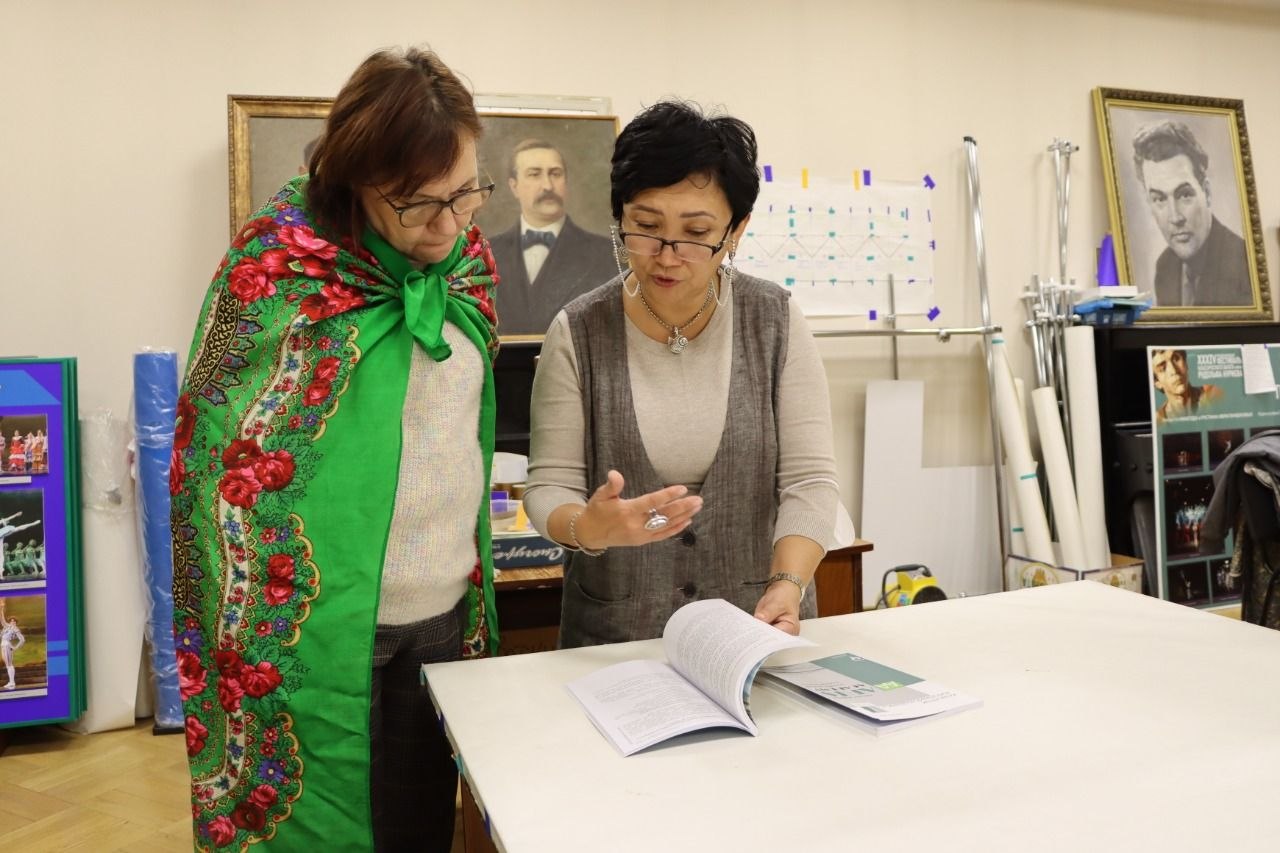 Source: Alfiya Kalmaganbetova’s personal archive
Once you look at her journey as a whole, it becomes clear that each successive stage did not replace the one before it. Instead, it expanded the space in which Kazakh dance could continue to exist. At first, that knowledge lived within her as a performer. Then it lived on through her students, and later through her research, textbooks and the wider professional community.
Today, Kazakh dance is entering the international cultural sphere through the breadth of her work, and this progression is far more significant than any list of titles or awards. It shows how personal experience can gradually become part of a shared cultural legacy.
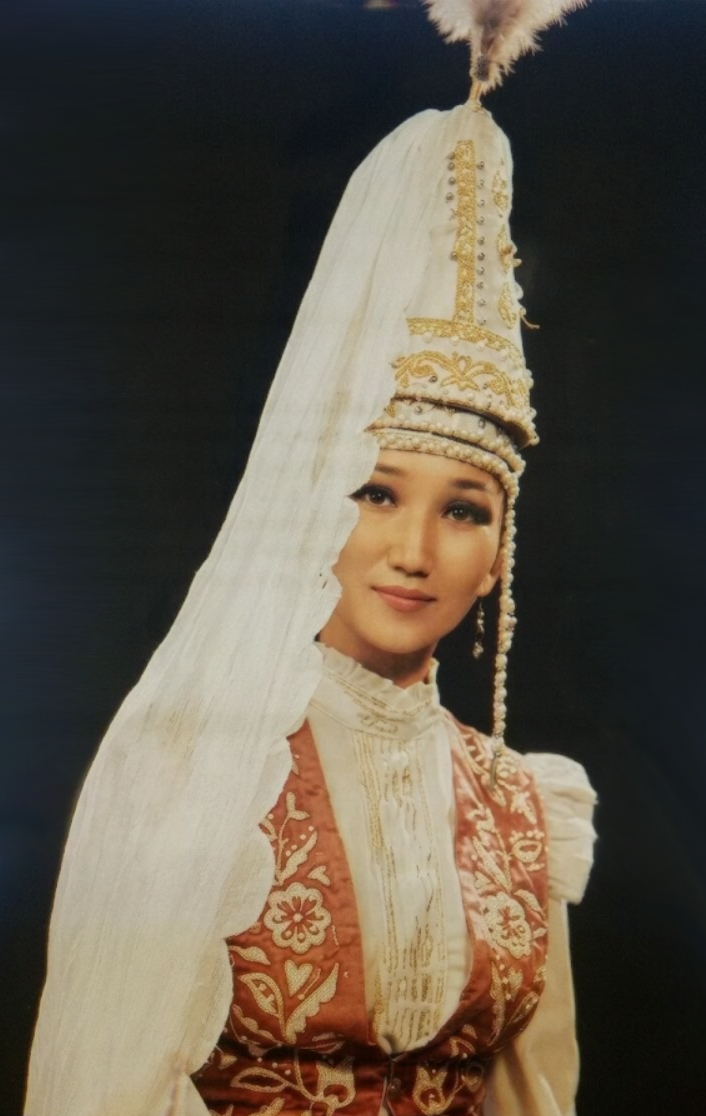
The roots of this journey can be traced back to the years when Aigul Kulbekova was establishing herself as a soloist with the Altynai State Ensemble. Before research can begin, there is always someone who has lived a tradition through their own body. To me, this performing stage of her professional life was not simply the beginning of her biography, but the foundation for everything that followed.
There is a fundamental difference between a researcher who studies dance through archival sources and someone who has spent many years immersed in that culture as a performer. One analyses, while the other first feels, and although this difference is difficult to measure, it often determines the depth of understanding. Working on stage allows a person to perceive something that cannot be fully conveyed in a scholarly text: what makes a dance distinctly Kazakh rather than simply beautiful.
These things cannot easily be put into words. They become part of professional experience. That is why, in Aigul Kulbekova’s scholarly work, dance is never treated as a collection of isolated movements. I believe the stage became the starting point for her research. Yet even the most gifted performer faces an inevitable limitation.
Lost in Transmission
Personal experience can never be passed on in its entirety. Every student perceives it in their own way; every new generation inevitably preserves some things, reinterprets others and loses something along the way. This is where the need arises to translate living experience into the language of teaching.
 Source: Alfiya Kalmaganbetova’s personal archive
Teachers do more than simply demonstrate a movement. They have to answer a far more difficult question: how do you teach someone else to understand a national school as deeply as you do yourself? The difference may seem small, but it shapes the future of any cultural tradition. You can teach someone to perform a particular dance, or you can pass on a way of seeing, feeling and understanding it.
In the latter case, what is being reproduced is no longer an individual work, but the school itself. This is why I see Aigul Kulbekova's teaching as a natural continuation of her performing experience. What is preserved here is not movement alone. It is the logic of artistic thinking, and this is the point at which the memory of one master begins to become the memory of an entire professional community.
Even the strongest teaching tradition remains vulnerable as long as knowledge exists only in the relationship between teacher and student. A teacher may leave, students may choose their own paths, methods may gradually change. A natural question then arises: how can we preserve not individual movements, but the very logic of a national school?
The answer lies in research. Research makes it possible to translate the language of the stage into the language of analysis. It reveals patterns that previously existed only in practice. At this point, the performing experience ceases to belong to one person and becomes a subject of professional study and reflection.
 Source: Alfiya Kalmaganbetova’s personal archive
This is where Aigul Kulbekova’s professional journey takes on particular significance. She did not abandon practice in favour of research. She made research a continuation of practice. Her experience as a performer allowed her to recognise the patterns of Kazakh dance; her work as a teacher raised the question of how that knowledge could be passed on; and her research made it possible to explain why these particular principles make a national school resilient.
The result was not simply a series of studies, but an entire language through which Kazakh dance could be discussed as a field of knowledge in its own right. If knowledge was once passed on only through personal contact with a master, it can now reach hundreds of students and teachers regardless of time or place.
This is why the creation of textbooks cannot be seen as ordinary teaching work. In effect, it means shaping the future of a national school. Every teaching method addresses not only the question of “how should this be taught?” but also the more fundamental question: “what needs to survive for decades to come?”
Alongside her research and teaching, Aigul Kulbekova’s work developed within higher education, and its significance extends far beyond her own students. What is at stake is a much larger process. A ubiversity department becomes a place where the focus shifts from training individual performers to shaping a new generation of teachers, researchers and choreographers. At this point, the educational environment itself becomes a living repository of memory.
And this is where the pattern I recognised while looking at her professional journey as a whole becomes particularly clear. Each successive stage did not replace the one before it. It simply expanded the scale on which Kazakh dance could be preserved.
The evolution of the space in which the Kazakh dance school exists
| Stage | Where cultural memory resides | What Aigul Kulbekova does | What culture gains |
|---|---|---|---|
| Performer | In the master’s body | Learns and embodies the national tradition | A living tradition |
| Teacher | In the student | Passes on artistic thinking | Continuity |
| Researcher | In academic knowledge | Identifies and interprets patterns | A scholarly foundation |
| Author of textbooks | In teaching methodology | Systematises knowledge | Reproducibility |
| Head of department | Within the institution | Trains specialists | New generations |
| Organiser of competitions | Within the professional community | Creates an environment for the exchange of experience | A professional school |
| International expert | In the international cultural sphere | Represents Kazakh dance | International Recognition |
Looking at this journey as a whole, what emerges is a gradual expansion of the space in which a single cultural tradition continues to live. I cannot fail to mention the Shara Zhienkulova Competition for professional performers of Kazakh dance, which Aigul Kulbekova revived in the early 2000s.
We often think of competitions, festivals and conferences as individual events. For culture, however, they serve a much deeper purpose: they create spaces where different generations can meet. Competitions bring different performing schools into dialogue and provide an opportunity to discuss teaching methods. They become places where professional standards and artistic reference points take shape.
As long as a professional community exists, a national school can continue to develop. It ceases to belong to a single department or ensemble and becomes part of the profession itself.
Expanding Influence
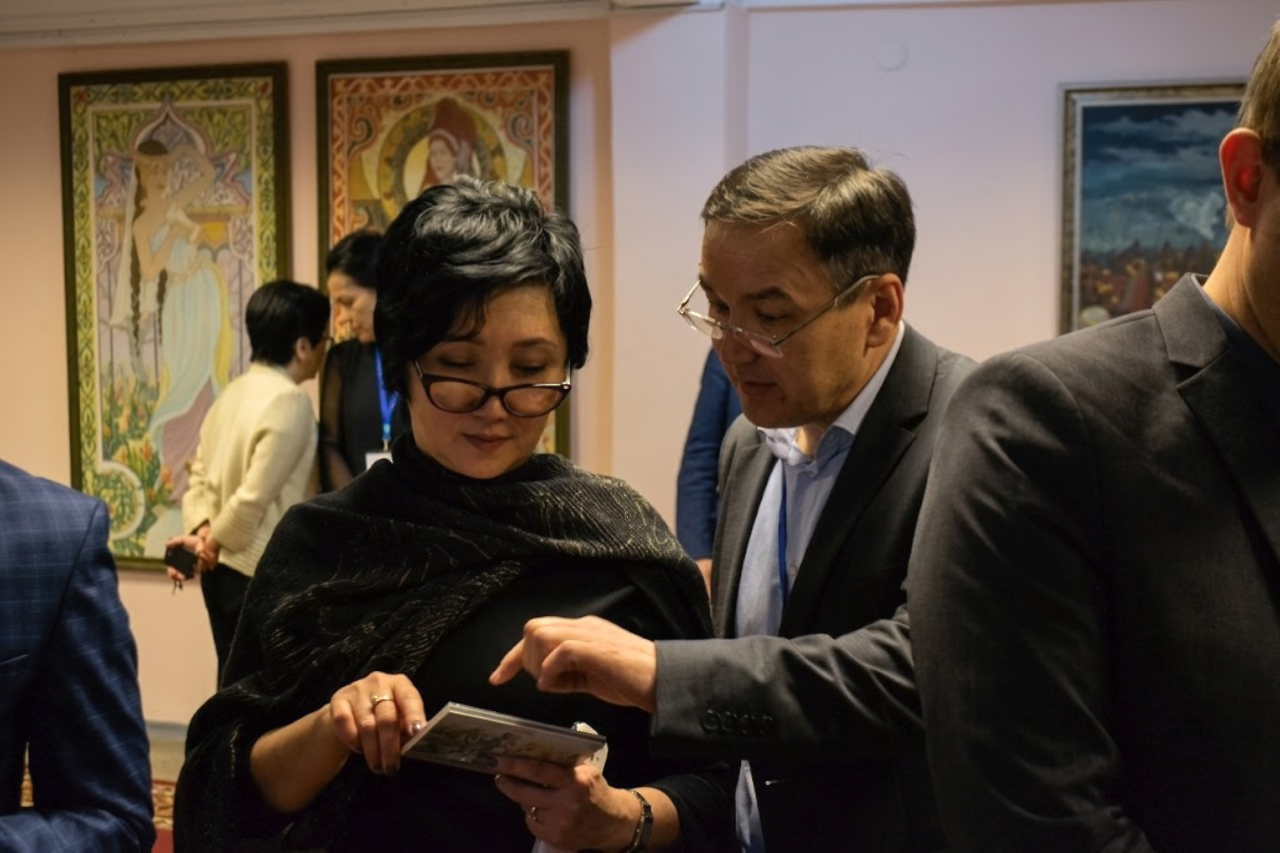
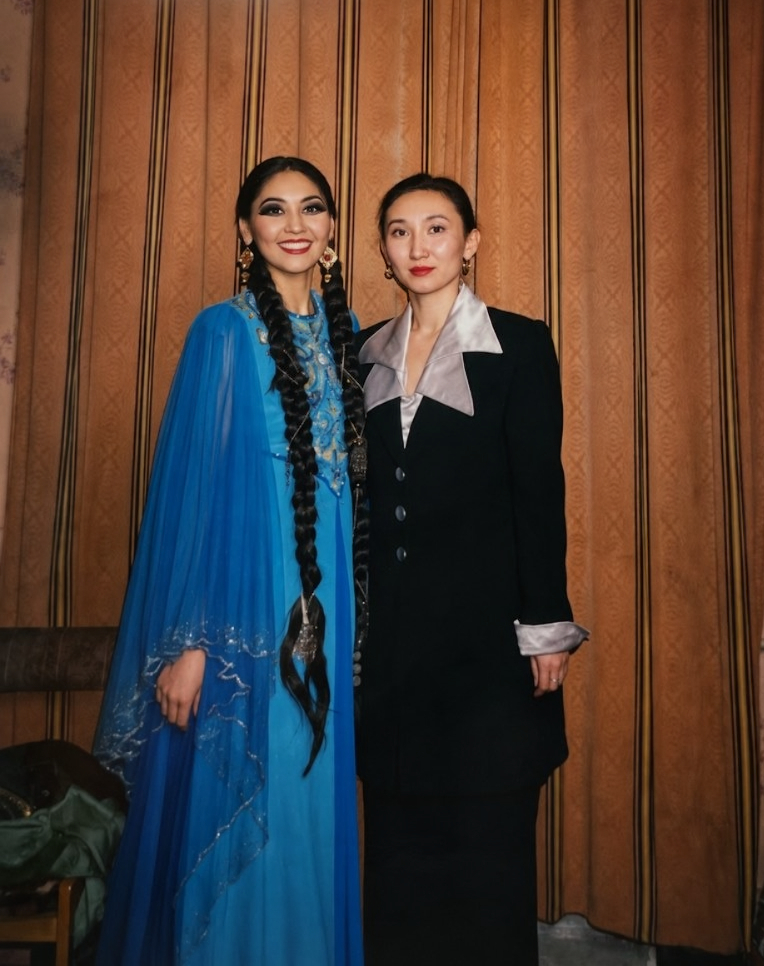
Every culture is born within its own community, but it becomes truly resilient when it enters into a global cultural dialogue. Aigul Kulbekova's work has long extended beyond Kazakhstan. Her involvement in international projects and research into the dance heritage of the Turkic world opens up a new dimension in cultural preservation.
 Source: Alfiya Kalmaganbetova’s personal archive
This is no longer simply about passing knowledge on within a single national school. It is about bringing Kazakh dance into a broader cultural memory. This transition is particularly significant: the more cultures know about one another, the greater the chance that each can preserve its own identity. International dialogue does not erase differences; it gives them value.
While working on this article, I kept returning to the thought that we tend to measure a person's contribution by the number of students they have taught, academic publications they have produced, performances they have created or state awards they have received. But there is another way of understanding the significance of an individual: through the roles and systems that continue to function even when that person is no longer there.
Aigul Kulbekova is not simply a teacher or researcher. Each successive stage of her work expands the space in which the Kazakh dance school can exist. From the memory of a single performer to the memory of a generation. From a generation to an educational system. From a system to a professional community. From a national school to international cultural dialogue.
I think this is why her contribution lies not only in preserving Kazakh dance, but in creating the conditions that have allowed the tradition to live in several forms at once: on stage, in the classroom, in research, in textbooks, within institutions and in the international cultural sphere.
Perhaps this is how genuine cultural continuity comes about. Not when one person preserves a tradition, but when their work allows that tradition to stop depending on a single individual and become part of a living system capable of carrying its own history forward.
In different countries, there have been people whose contributions have ensured that traditions survived and became part of educational and cultural institutions. Whatever the country, the mechanism is remarkably similar: individual mastery is transformed into a system for passing knowledge on. Aigul Kulbekova’s professional journey allows us to see this universal mechanism at work in the preservation of intangible cultural heritage. This is how human memory becomes cultural memory.
Newsletter
A letter from the HD editors
Once a week, we send the best stories, events, and cultural discoveries from Central Asia.