Cinema and Performing Arts
Blue Is the Colour of Resentment: The Other Side of the Tale
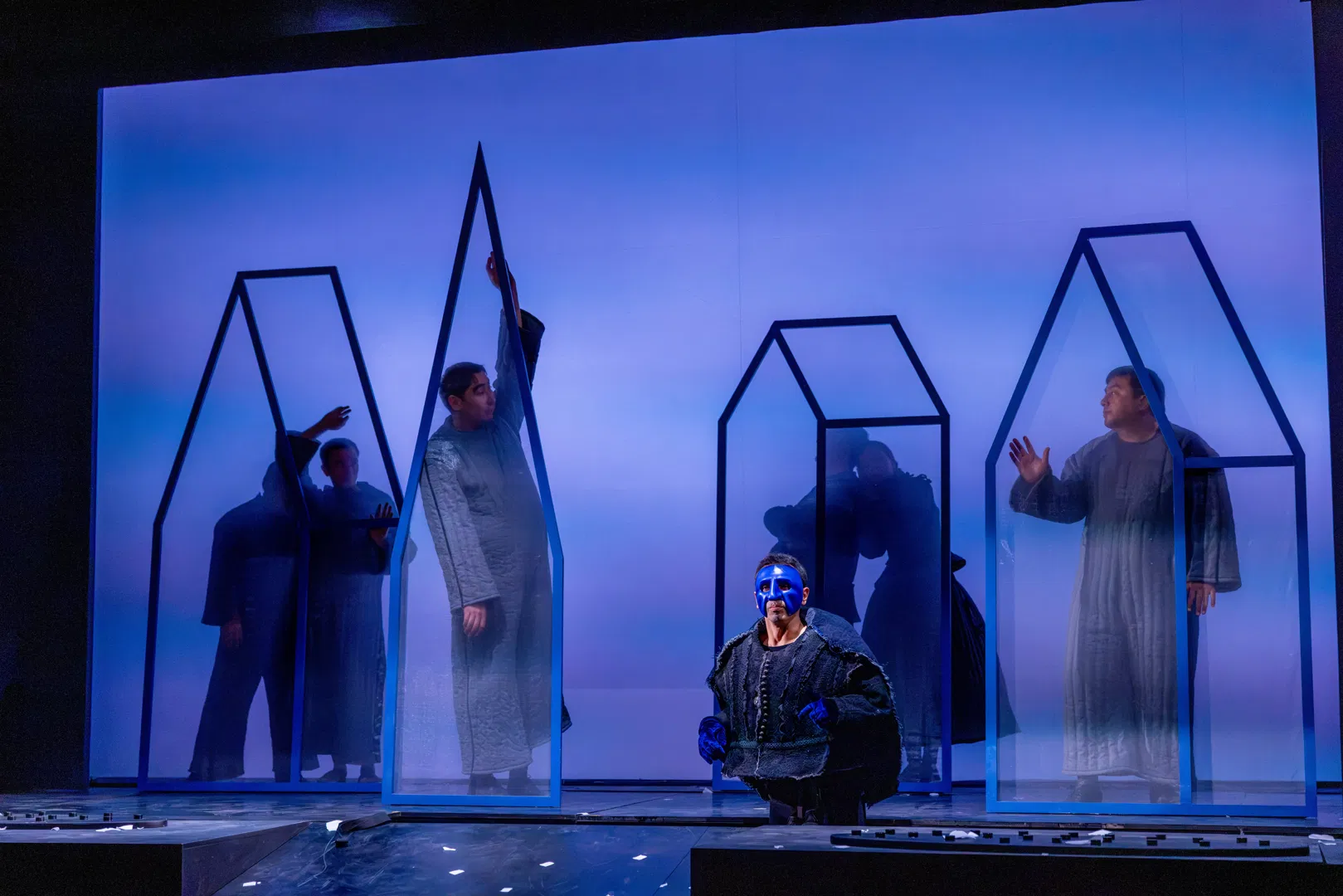
In fairy tales, the roles are usually assigned in advance: the hero and the villain. But what happens inside someone who is cast as the villain from the very beginning? Where do envy and resentment come from when it feels as though life itself has dealt you an unfair hand? These reflections gradually gave rise to The Blue Dwarf, or The Pearl Heart, a new production by the Uzbek National Puppet Theatre. Its author, director and composer Stefania Garaeva-Zhuchenko, set designer Alina Korytova and choreographer Alina Mikhailova-Lomans tell the story of how a tale came to be, not about the victor, but about the one who is expected to lose.
It is not easy to be different from everyone else: small among the tall, awkward beside the confident, unlucky next to those who seem to have everything come easily. Harder still is the moment when you see yourself through someone else’s eyes and begin to believe that you really are worse, weaker or less beautiful than everyone around you.
Two Brothers
The story’s protagonists are a mother and her two sons. By the conventions of the fairy tale, one is handsome, tall and successful, while the other is small, awkward and, to make matters worse, has... blue skin. People laugh at him, and his brother is always there beside him, a constant comparison that never works in his favour.
While their mother is alive, the two brothers are equal in her eyes. There is no beautiful son and ugly son, no lucky one and unlucky one. But one day she is gone. The brothers grow up, and life itself increasingly highlights the difference between them: one seems to be given everything with ease, while nothing ever seems to work out for the other.
The theme and driving force of the production is resentment towards life.
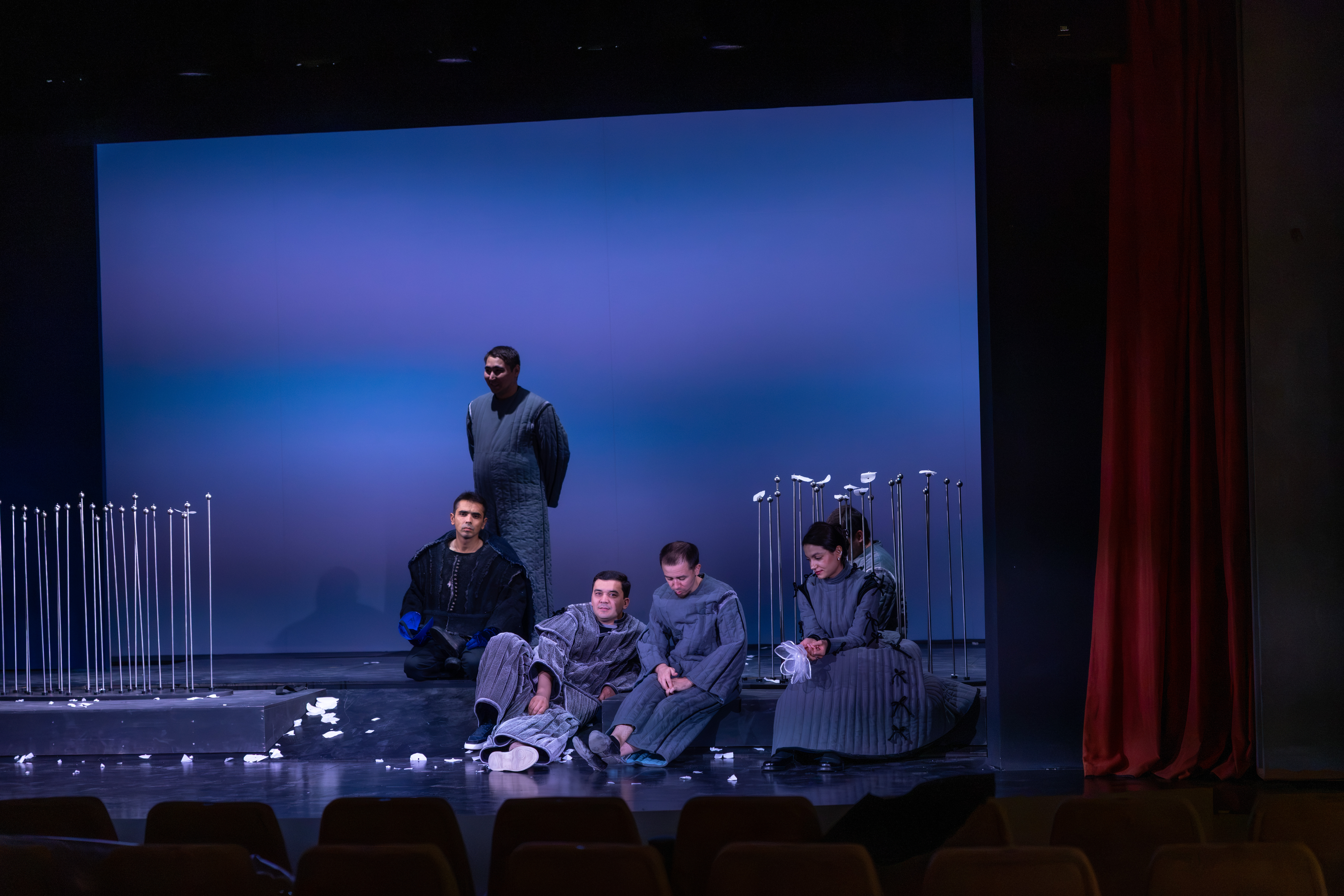 Photo: Igor Mazurkevich
The Blue Dwarf did not emerge fully formed. At first, the director planned to work with Pushkin’s poem Ruslan and Lyudmila, trying out roles for actors from the Tashkent troupe and imagining Ruslan, Lyudmila and their rivals. Then another thought occurred to her:
I started thinking about Chernomor. Why did he become the way he is? What if he were made the central character? Someone who is resentful towards the world. Why does he kidnap the most beautiful women? He is always simply the villain, but what if he is just deeply unhappy?
The dwarf Chernomor has a giant brother. Beside him, his own physical shortcomings become even more apparent, and over time envy turns into hatred.
Almost a century and a half before Pushkin, a similar character appeared in the work of the French writer Marie-Catherine d'Aulnoy. Her Yellow Dwarf is small and ugly, but endowed with magical powers, and also desires a beautiful woman who has already chosen a handsome and worthy man. A wedding, abduction, magic and a struggle for the beauty echo Ruslan and Lyudmila, although d'Aulnoy's direct influence on Pushkin has not been established.
The motifs of both fairy tales became part of a shared imaginative tradition, but gradually a character of his own began to emerge. He is neither a villain seeking to be justified nor a victim who is allowed anything simply because he was once wronged. This leads to the central question: what does a person do with their resentment?
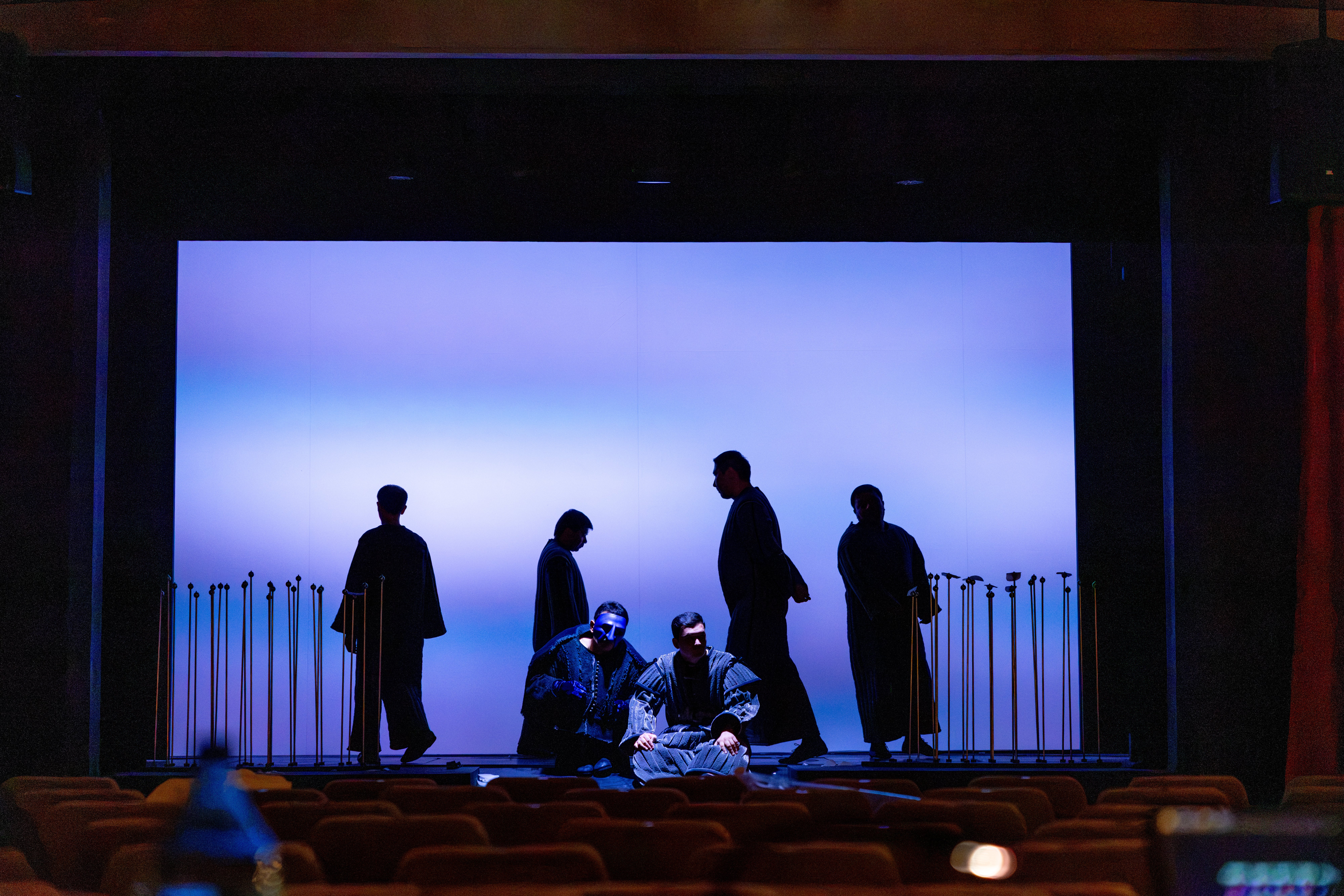 Photo: Igor Mazurkevich
When a Fairy Tale Shows the Other Side
Contemporary cinema increasingly invites us to look at the stories of characters we once knew only as antagonists. Maleficent explores the life of the famous sorceress before she cursed Sleeping Beauty, while Cruella takes us back to the youth of a character audiences have traditionally regarded as an unequivocal villain.
The point is not to justify evil, but simply to explain how it came to be.
In The Blue Dwarf, however, the protagonist is still standing at a crossroads. He is in pain. He feels deprived when he looks at his brother, who has been given everything he himself lacks. Then the Dwarf meets a Witch who offers him a choice: why carry a heart inside you if all it brings is pain? Better to give it away and receive strength, wealth and power in return, so that you can claim what life did not give you willingly.
And this is where the real story of the Blue Dwarf begins.
When the Heart Turns Black
The fairy tale's first working title was The Tale of the Black Heart. According to Stefania, it captured what happens to the protagonist when resentment consumes him:
You become resentful, you cannot accept certain things that happen in life, and that is how the heart turns black.
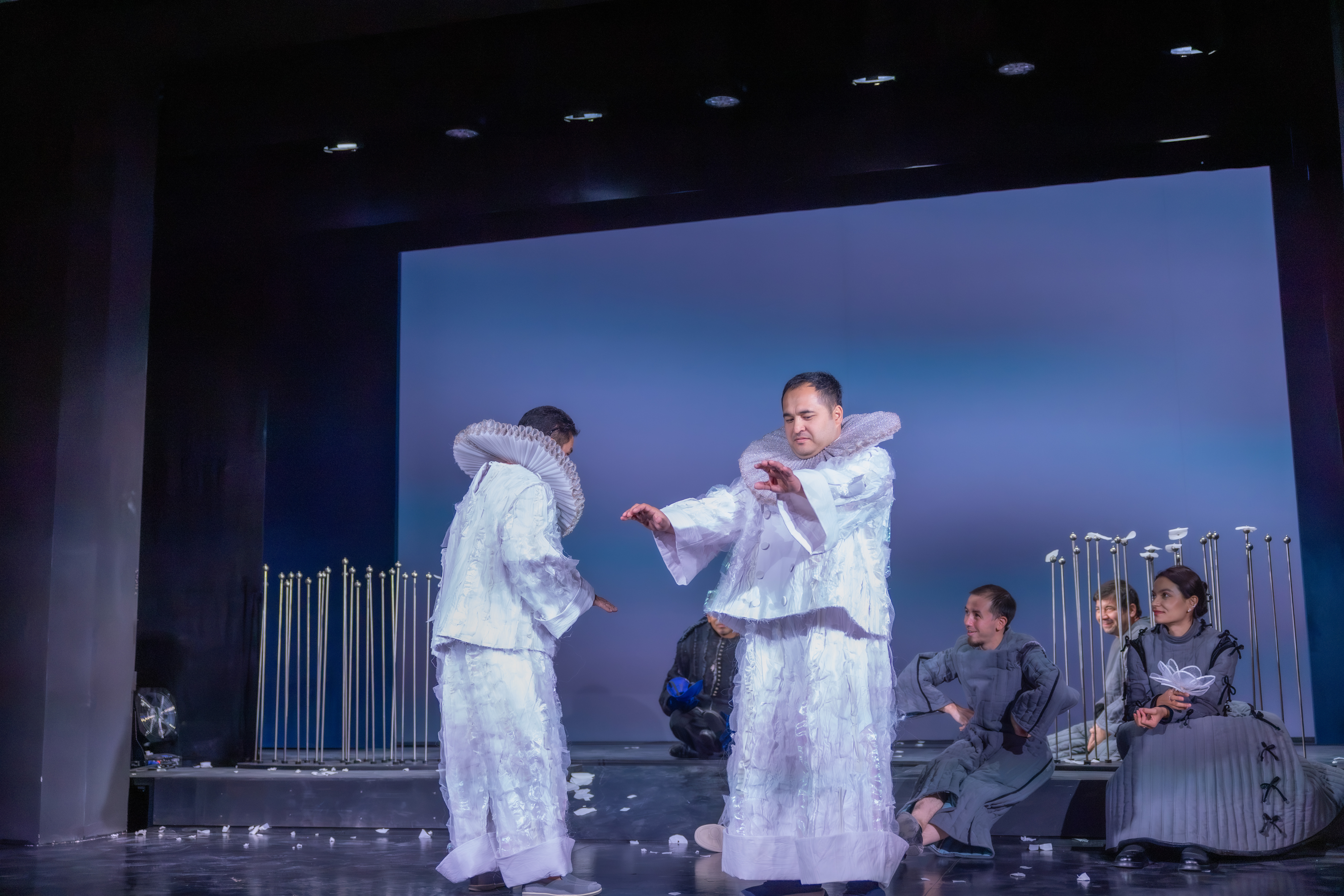 Photo: Igor Mazurkevich
Stefania's children immediately understood the image. As they listened to the tale of the Dwarf whose heart grew heavy as a stone because of his resentment, they began to relate it to their own feelings.
And my children would say to me, “Mum, my heart is black right now. It really is turning black.” They took that image very much to heart.
But in the production's final title, the heart is no longer black. It is made of pearl. Perhaps this is the fairy tale's most beautiful metaphor: a pearl is born from trauma. A foreign particle enters a shell and irritates it, then is gradually covered in layers of nacre.
Any wound, any resentment, if you work through it, give it time and accept it, becomes your experience, your gift.
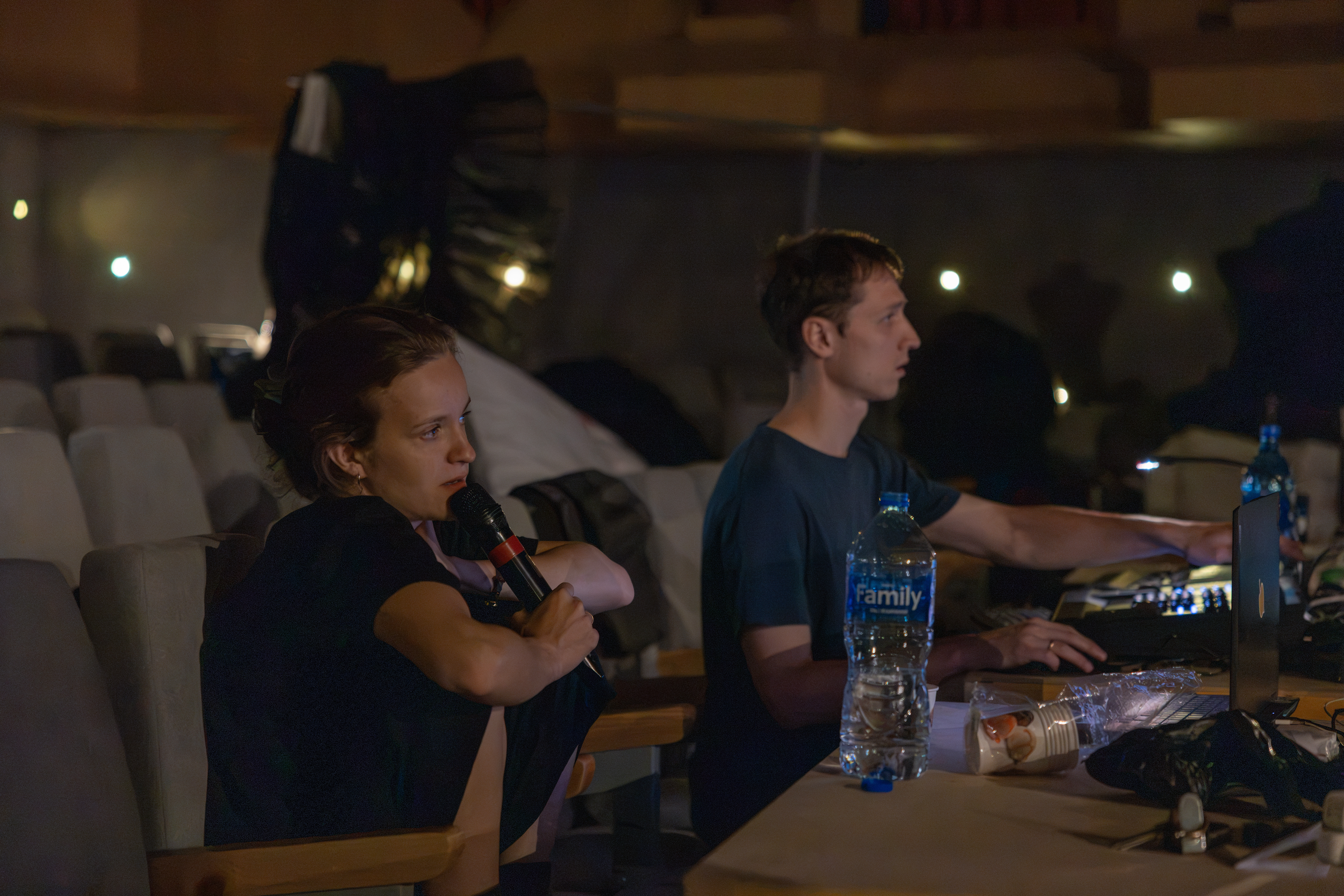 Photo: Igor Mazurkevich
The creators have deliberately avoided an explicit moral.
The performance is not a lesson. We need to create an environment in which the audience, children first and foremost, will be interested, and offer them certain images that they can interpret in different ways. For me, success is when a father who has brought his child to the theatre puts his phone away and starts watching the stage himself.
A Language That Cannot, and Does Not Need to, Be Translated
To tell children and their parents a story about resentment, envy, loss and inner choice without turning it into a moral lesson, the creators have almost entirely abandoned conventional speech. The characters in The Blue Dwarf speak in a made-up, nonsensical language. Some of the words are written into the script, while others emerge during rehearsals and improvisation.
The sounds are not important. What matters is the intonation and the inner meaning. When children are little, they make up their own words. And in a way, we are appealing to the “inner” child.
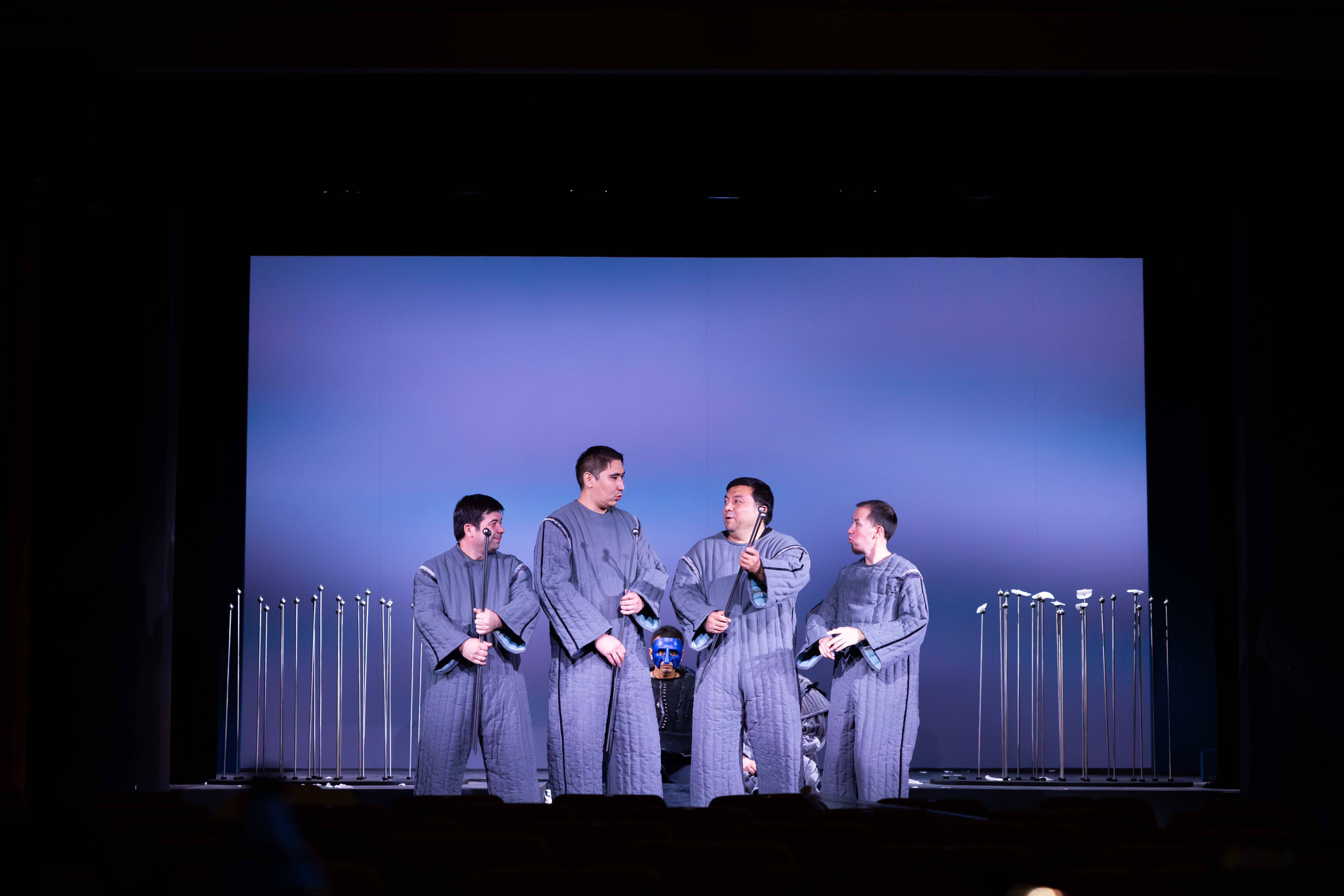 Photo: Igor Mazurkevich
There is also a practical reason behind this decision. The production team has come from another country, the actors speak different languages, and at times they themselves have had to find ways to understand one another.
They don’t understand me, and sometimes I don’t understand them. And we want to find a common language. Simply to find a common language.
Choreographer Alina Mikhailova-Lomans compares the approach to returning to the natural language of children’s play. A child can pick up a toy, give it a voice and even invent words that do not exist, creating an entire story in which it is perfectly clear, even without translation, who is arguing, rejoicing or feeling hurt.
Children are always giving voices to toys and objects. They give them living qualities. Stories emerge from the way they construct dialogue, from a kind of dramaturgy. The words do not matter here. We still know what is happening.
The production contains no dancing in the conventional sense, so the choreographer's task is to find an individual language of expression for each character.
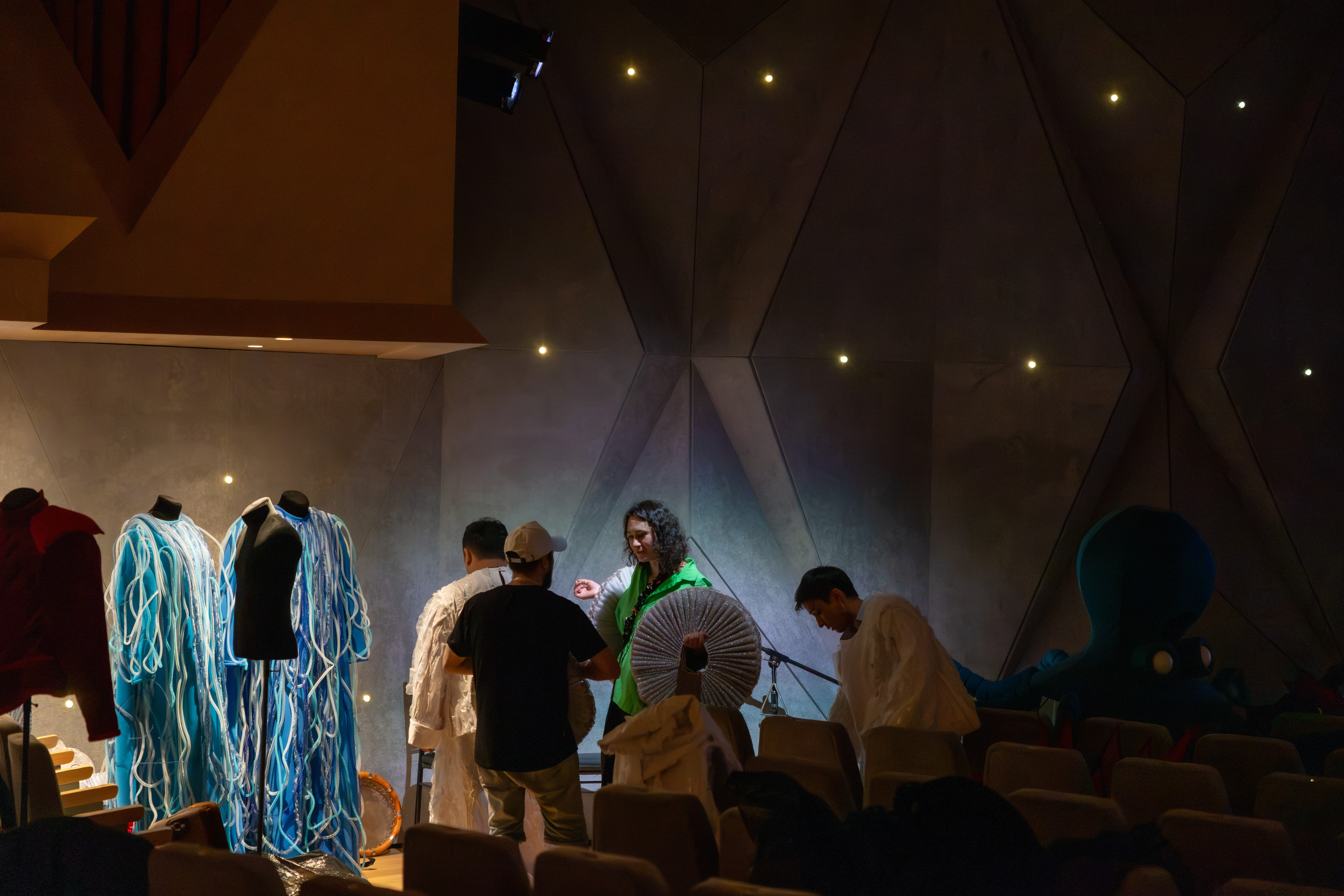 Photo: Igor Mazurkevich
The performer steps onto the stage, yet he is used to working behind a screen. Suddenly he finds himself fully exposed before the audience, but his body seems disconnected from the action: he does not know how to move, where to look or how to present himself. For us, everything matters: where to hold the gaze, when to turn, how to shape every gesture. Children “read” the body and emotions. Adults do too. Someone simply walks in, and we immediately see what’s wrong with them.
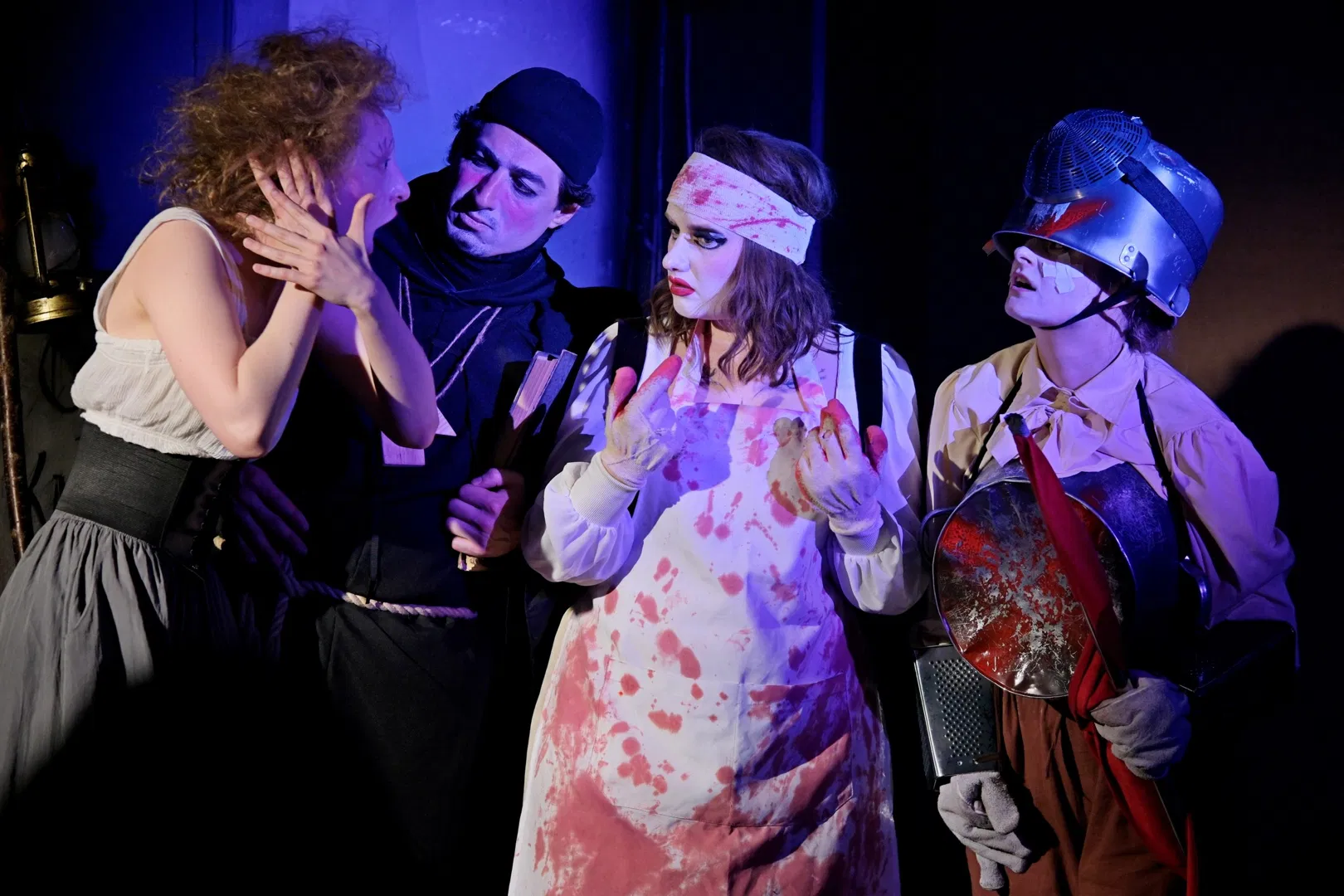
Set designer Alina Korytova is working to erase the boundary between human and puppet. In the live-action scenes, human proportions are distorted, shoulders are enlarged, extra bulk is added, and silhouettes become grotesque.
And the main leitmotif is metamorphosis and transformation.
Plants bloom on the Mother’s skirt and wither when she falls ill. The Witch changes her appearance. Everything that happens needs to be understandable even without sound.
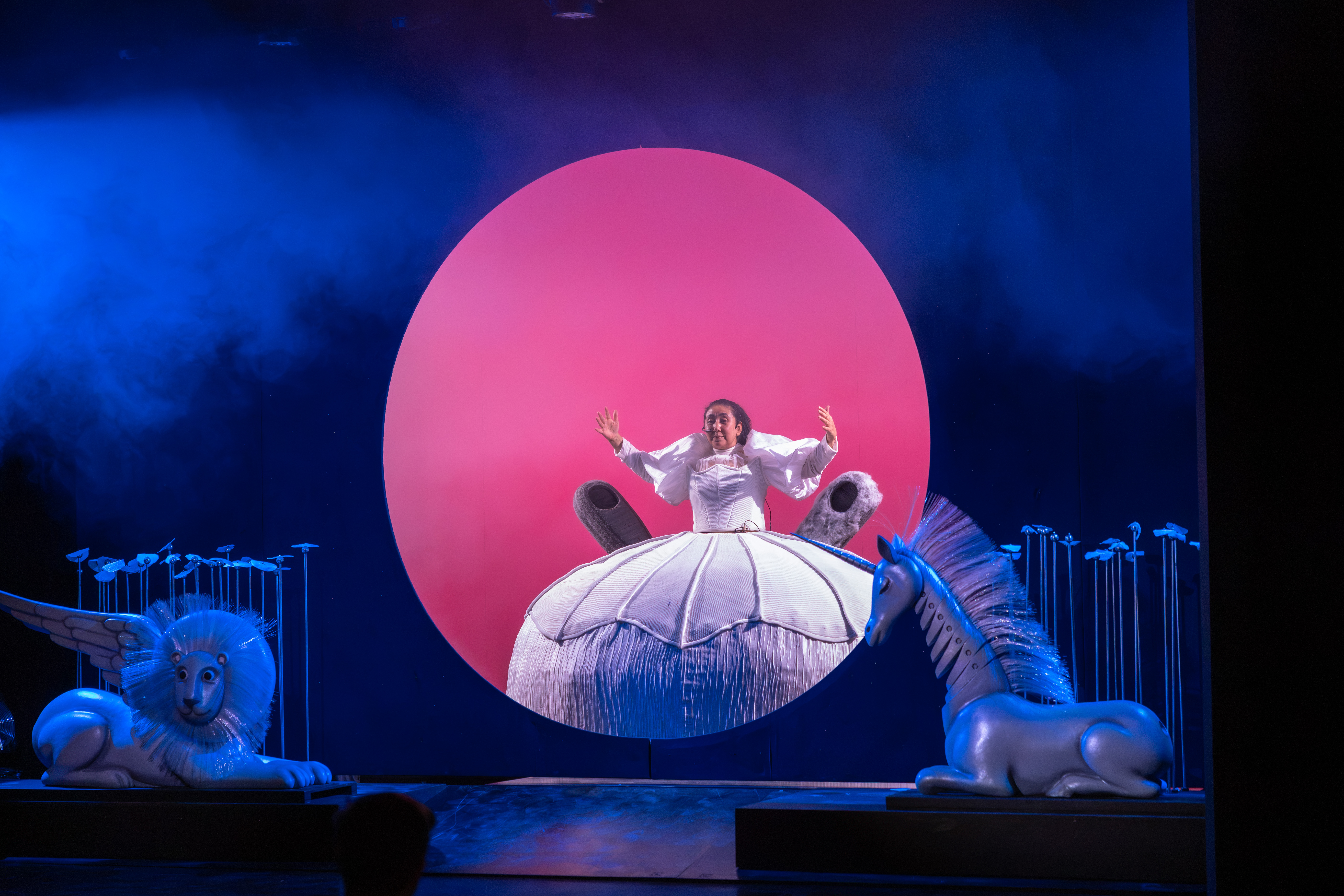 Photo: Igor Mazurkevich
This brings us back to the question of the Dwarf’s appearance. Is he truly ugly, or have those around him convinced him that he is? It recalls Alexander Kuprin’s fairy tale The Blue Star, in which ideas of beauty depend on who is looking: someone considered plain in one world turns out to be beautiful in another.
The creators did not settle on the protagonist’s colour immediately either. At first they considered yellow, the colour of irritation, bitterness and inner resentment, but ultimately chose blue.
It is the most mystical, mysterious, beautiful and mesmerising colour.
The Dwarf also proved to be the most technically demanding character. Several stage versions of him have been created, while the stage itself helps alter familiar human proportions.
The Dwarf puppet is the most challenging of all, and work on it is still ongoing.
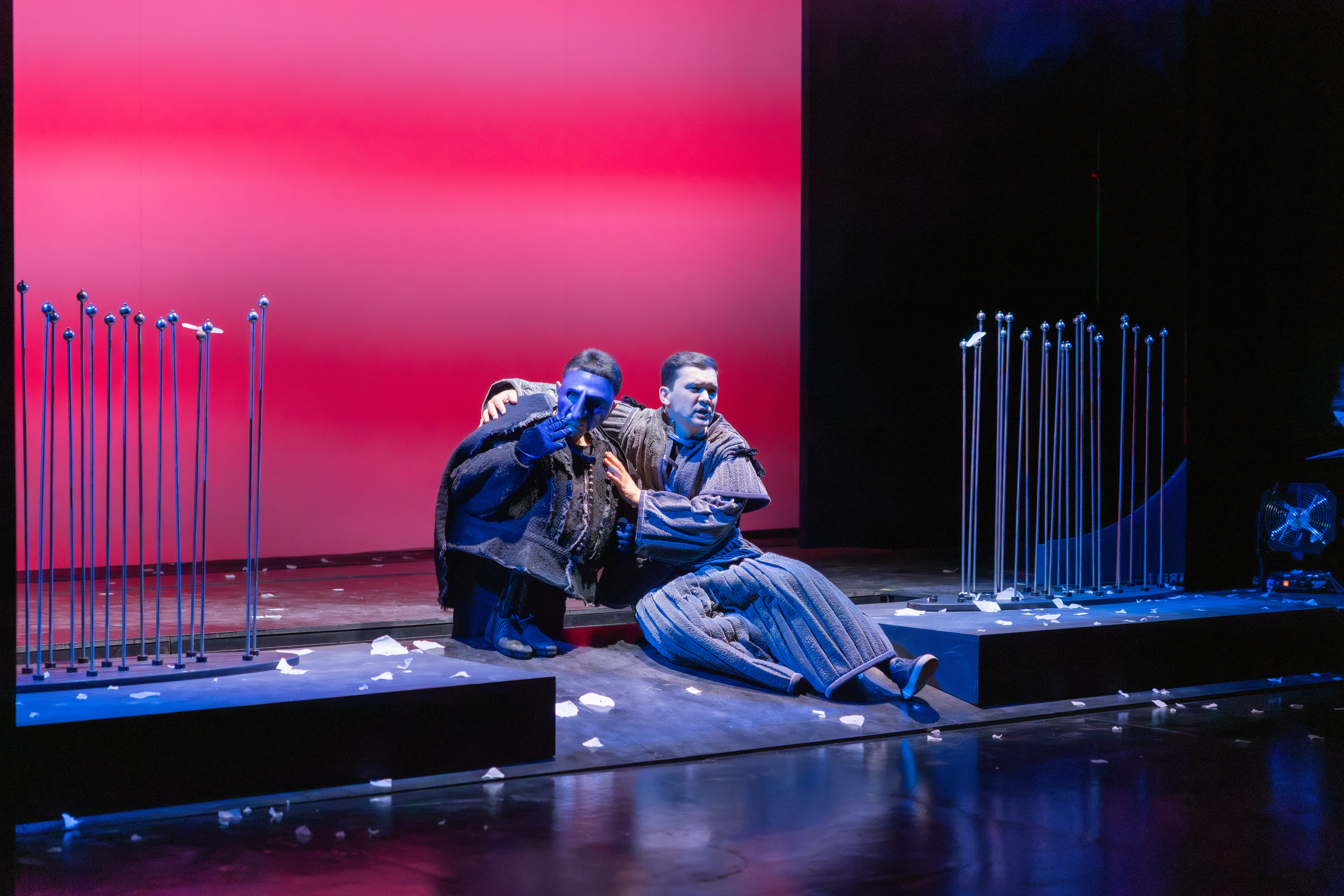 Photo: Igor Mazurkevich
Music That “Listens” to the Story
Another language of the production is music. Stefania has combined recorded sounds of classical instruments with live Uzbek instruments. Alongside the harp, flute, violin, cello and clarinet, there are the nay, dutar, gijak, koshnay, doira and qayroq. The possibility of adding the chang was even discussed.
Until the very end, I was worried about how my music would sound with Uzbek instruments, how everything would come together. Music is that very kindness that helps the characters through difficult moments.
It seemed to me that this is music that listens to the story itself, and listens to the people who are on stage.
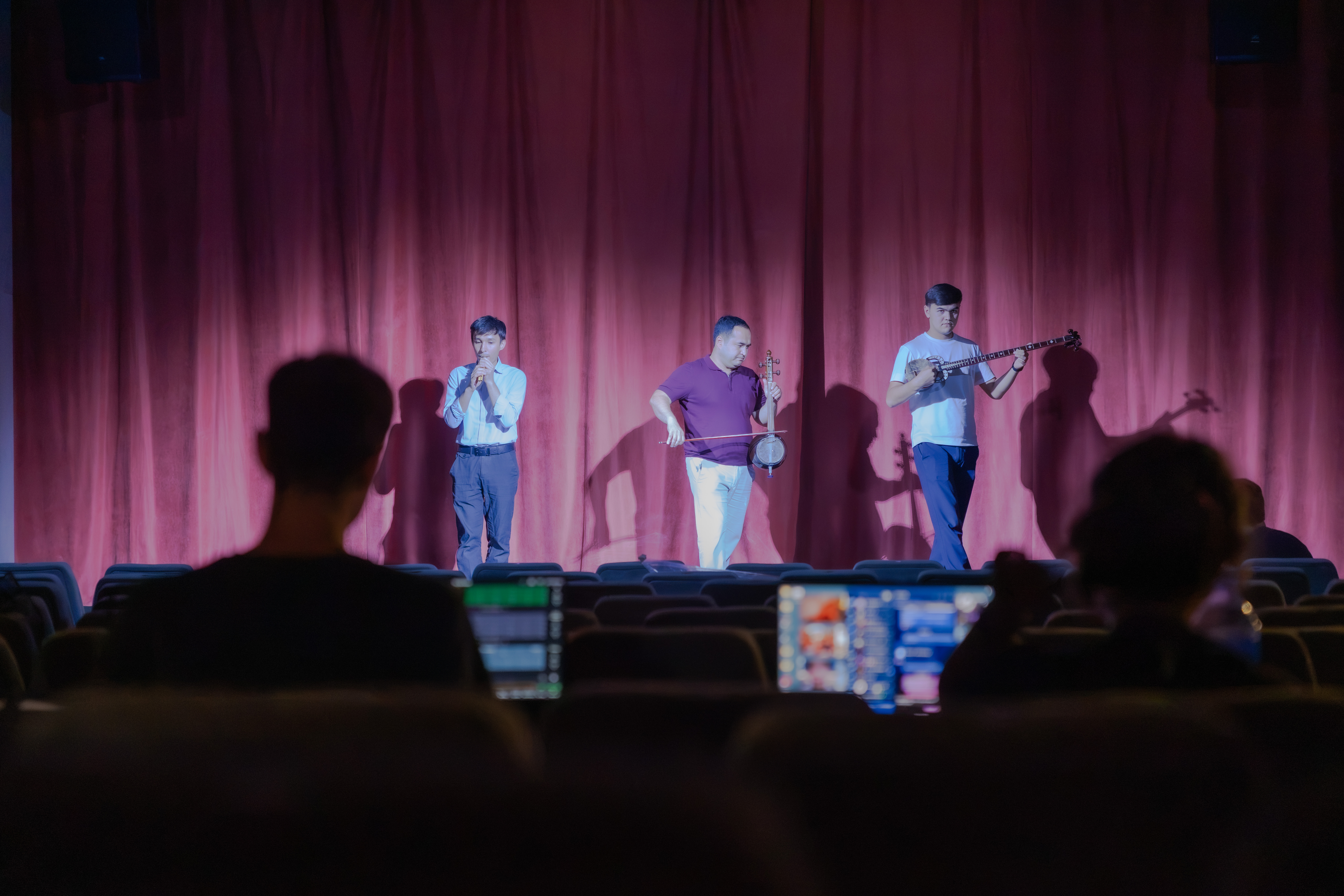 Photo: Igor Mazurkevich
Resentment and Fate: Who Holds Power Over Whom?
It is easier to create a world on paper than to make it come alive on stage. When sketches have to be transformed into wood, fabric, mechanisms and puppets, and imagination adapted to the human body, every image has to be fought for to the very end, because even the smallest detail can become an important part of the overall concept.
When you are not bound by any scale or material limitations, you can allow yourself anything. Then comes the process of anchoring it to reality.
The feeling of being different does not disappear when a person grows up. We continue to compare ourselves with others who are more successful, more beautiful or stronger. The production invites the audience to consider where deep-seated resentment can lead. Is the world really so unfair, or is it our own perception that poisons us from within? Is there a way out of this trap?
The answer will reveal itself on stage.
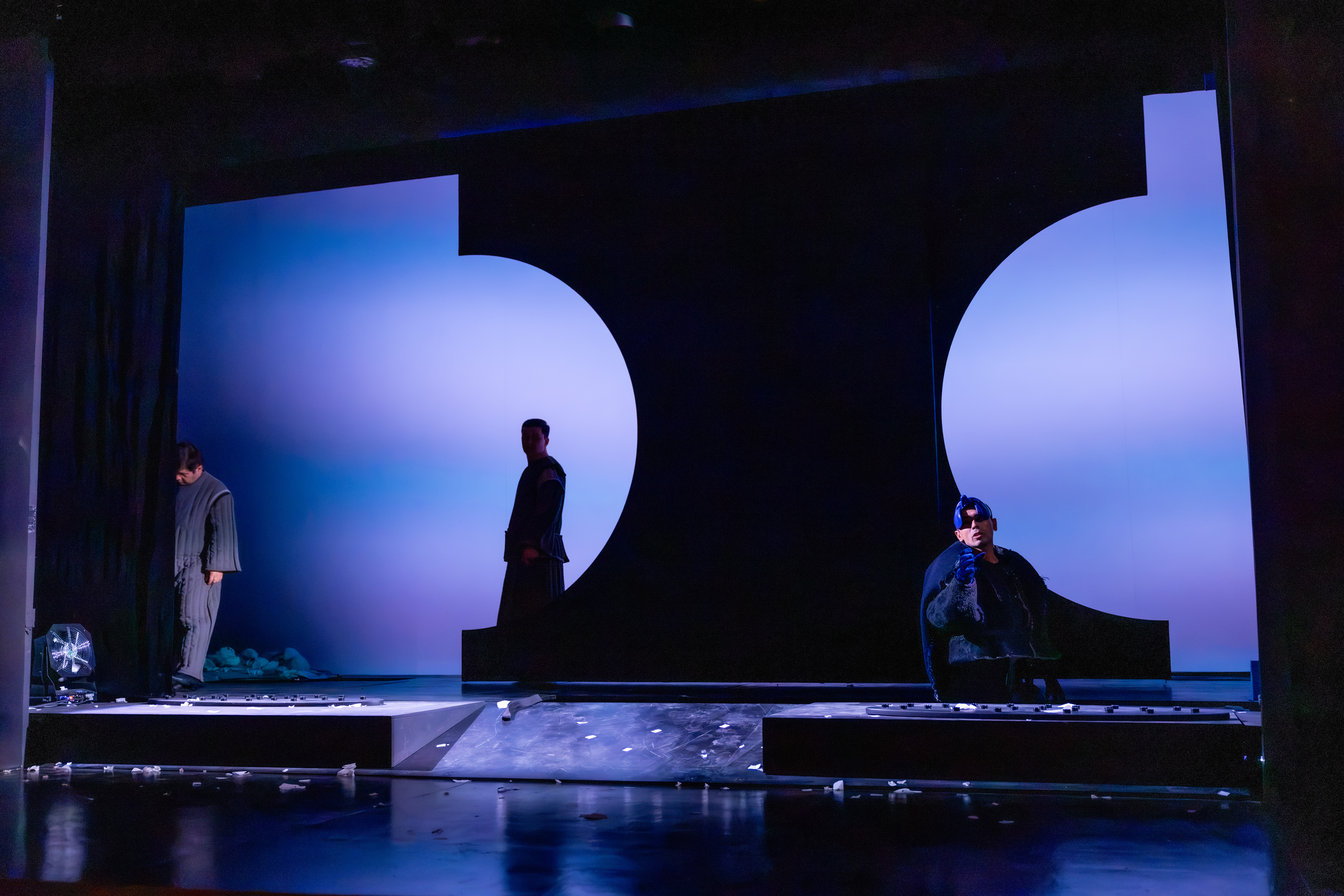 Photo: Igor Mazurkevich
Read also
Newsletter
A letter from the HD editors
Once a week, we send the best stories, events, and cultural discoveries from Central Asia.