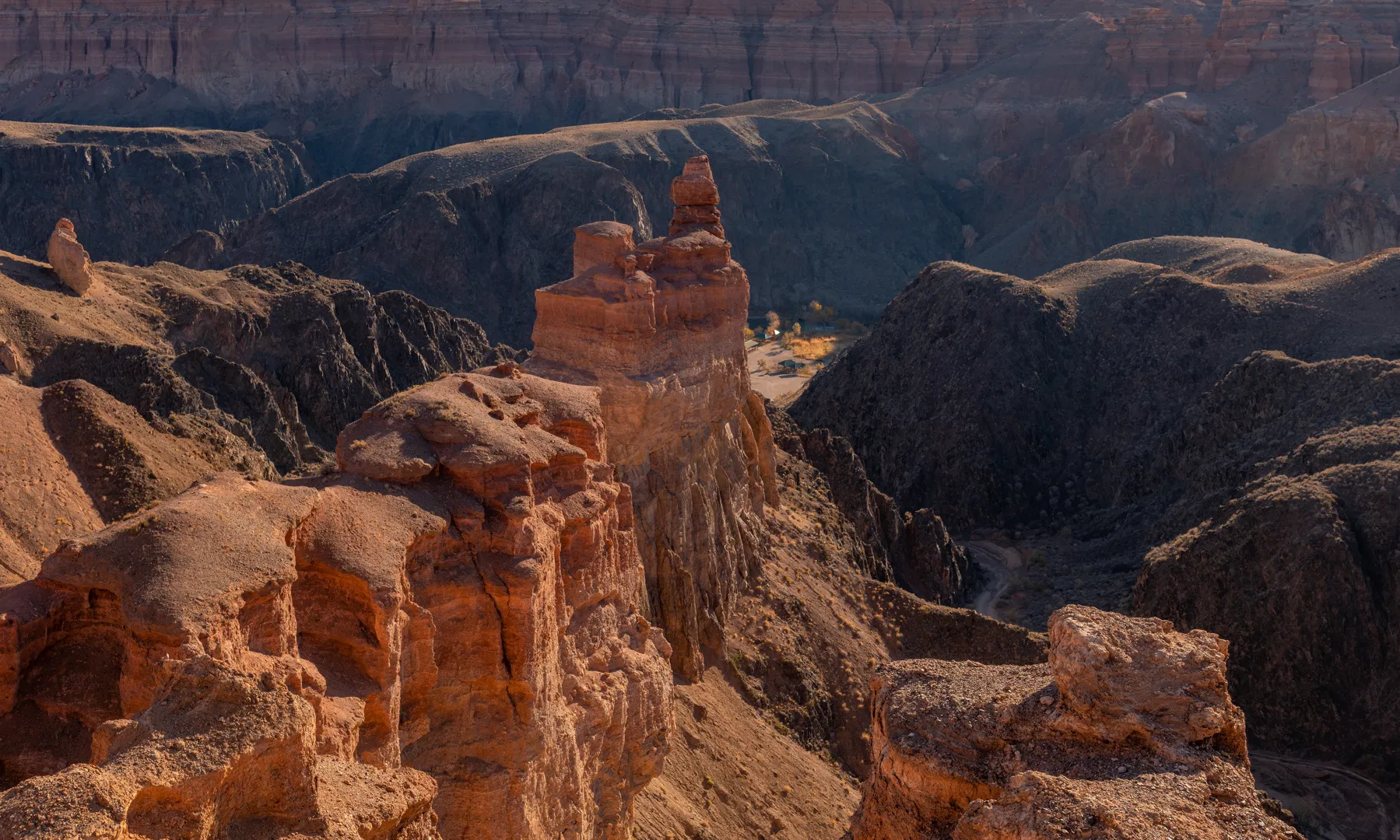
There are places where nature seems to try on the role of architect. It chooses the material, builds up the volumes, cuts through passages and creates forms that cannot be reproduced from drawings. The Charyn Canyon is one of those places. Here wind and water worked on the landscape for millions of years, turning sedimentary rock into bizarre towers, walls and labyrinths. The result is a natural ensemble in which scale, texture and colour obey laws that require no human intervention.
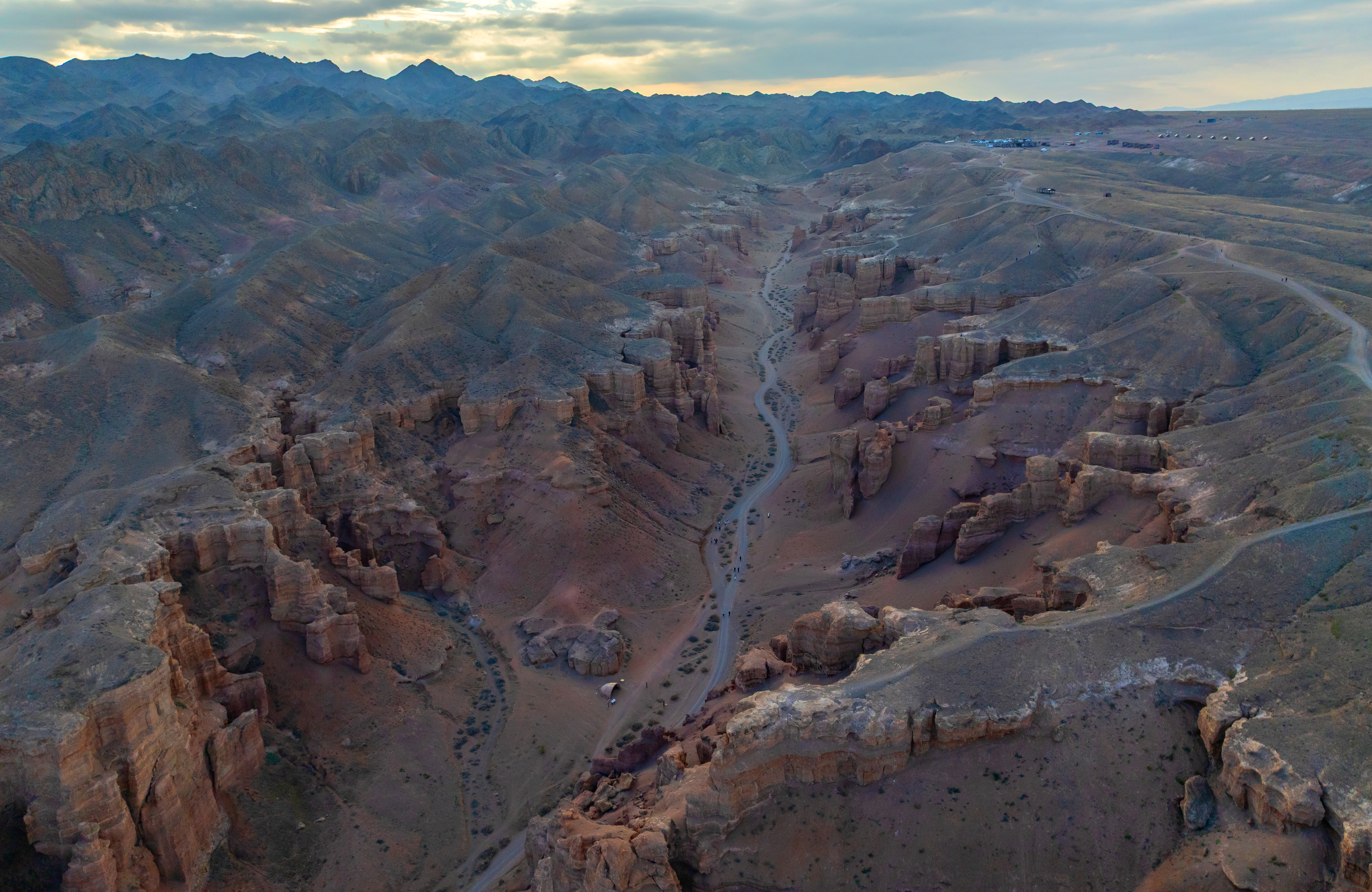
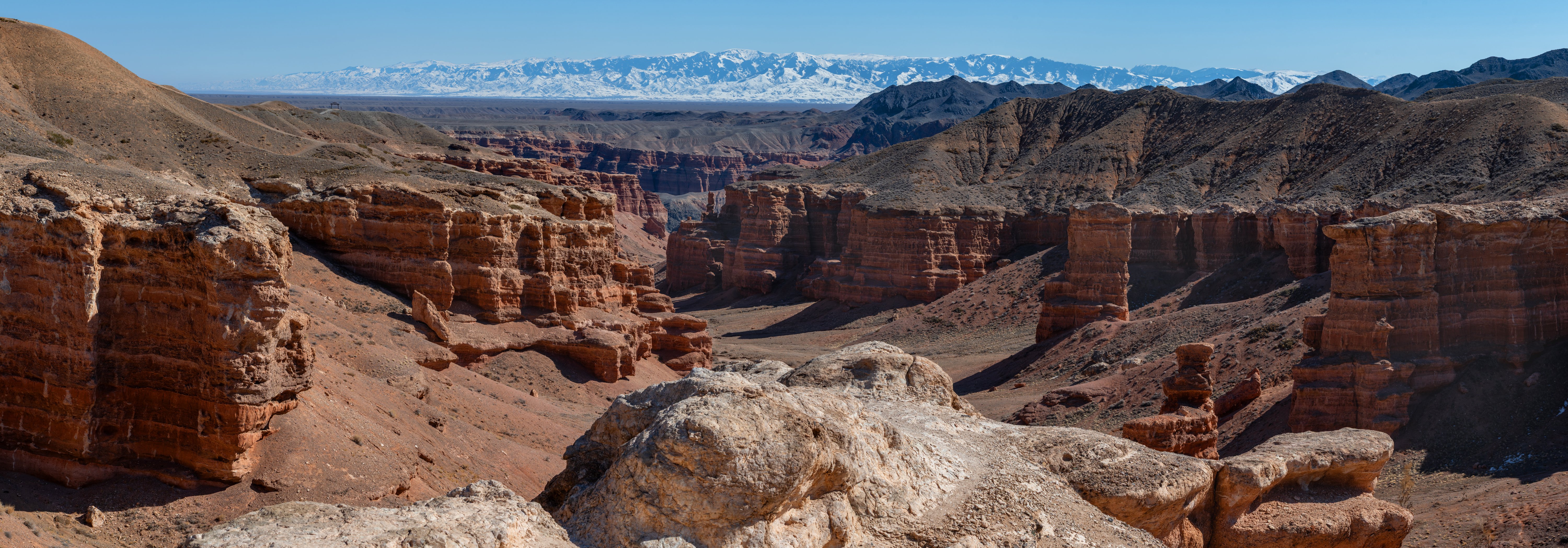
The Charyn Canyon is located in the south-east of Kazakhstan, about 200 kilometres to the east of Almaty, in the Charyn River valley. It forms part of the Charyn State National Nature Park, created to preserve unique geological landscapes and natural ecosystems. It is not a single rift in the earth but an extensive system of gorges, valleys and rock formations stretching for tens of kilometres.
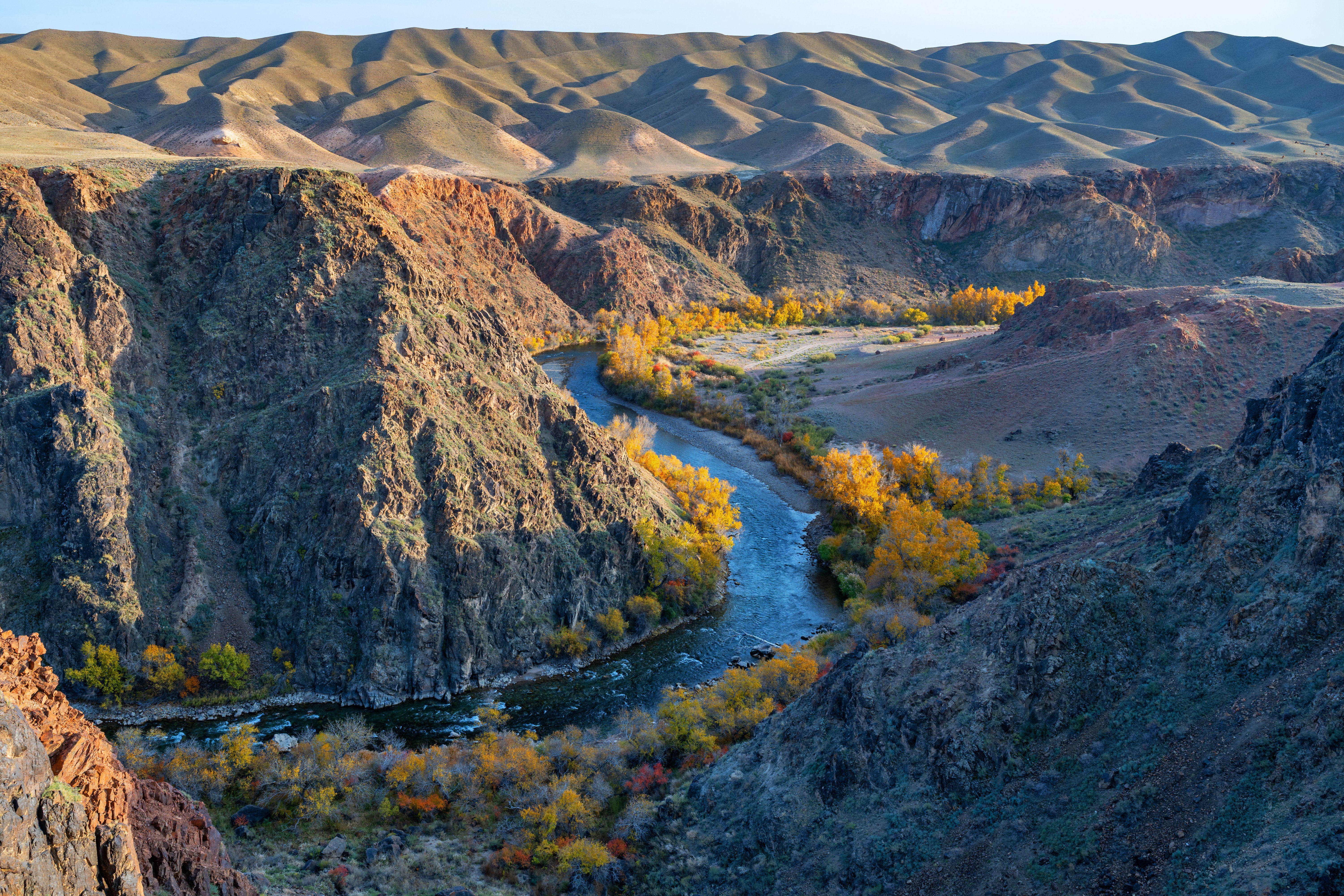 Photo: Maxim Zolotukhin
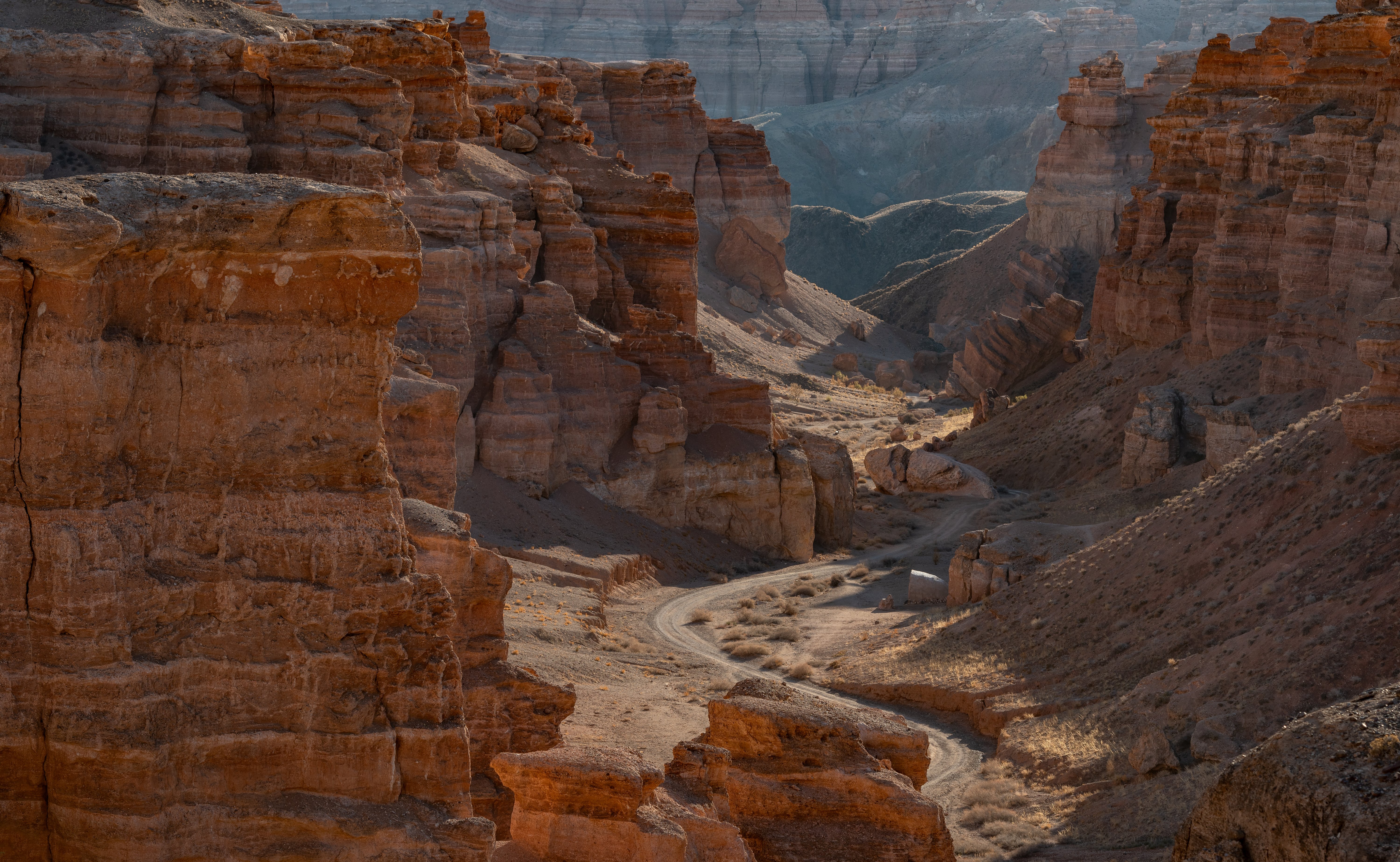
The canyon is often compared to the American Grand Canyon, primarily because of its striking relief and impressive changes in elevation. But Charyn has a character of its own. Its recognisable appearance is made up of reddish, ochre and brown shades of rock, deep shadows in narrow gorges and sheer walls that look as if they were assembled from individual stone blocks. Depending on the time of day and the weather, the landscape changes: morning light emphasises the relief, midday sun makes the colours brighter, and before sunset the cliffs take on soft copper and terracotta tones.
Осень в Алматы – фотоэссеОсень в Алматы — это особенное время, когда город словно преображается, наполняясь теплом золотых красок, мягким светом и тихим очарованием уходящего лета. Природа щедро раскрашивает улицы и парки в оттенки жёлтого, оранжевого, багряного и золотого, превращая привычные городские пейзажи в настоящие картины. Листья кружатся в воздухе, ложатся разноцветным ковром на тротуары, а солнечные лучи, пробиваясь сквозь кроны деревьев, придают всему вокруг удивительную мягкость и уют. Фоторепортаж Максима Золотухина и Гульсары Кенбаевой.mag.humodoc.com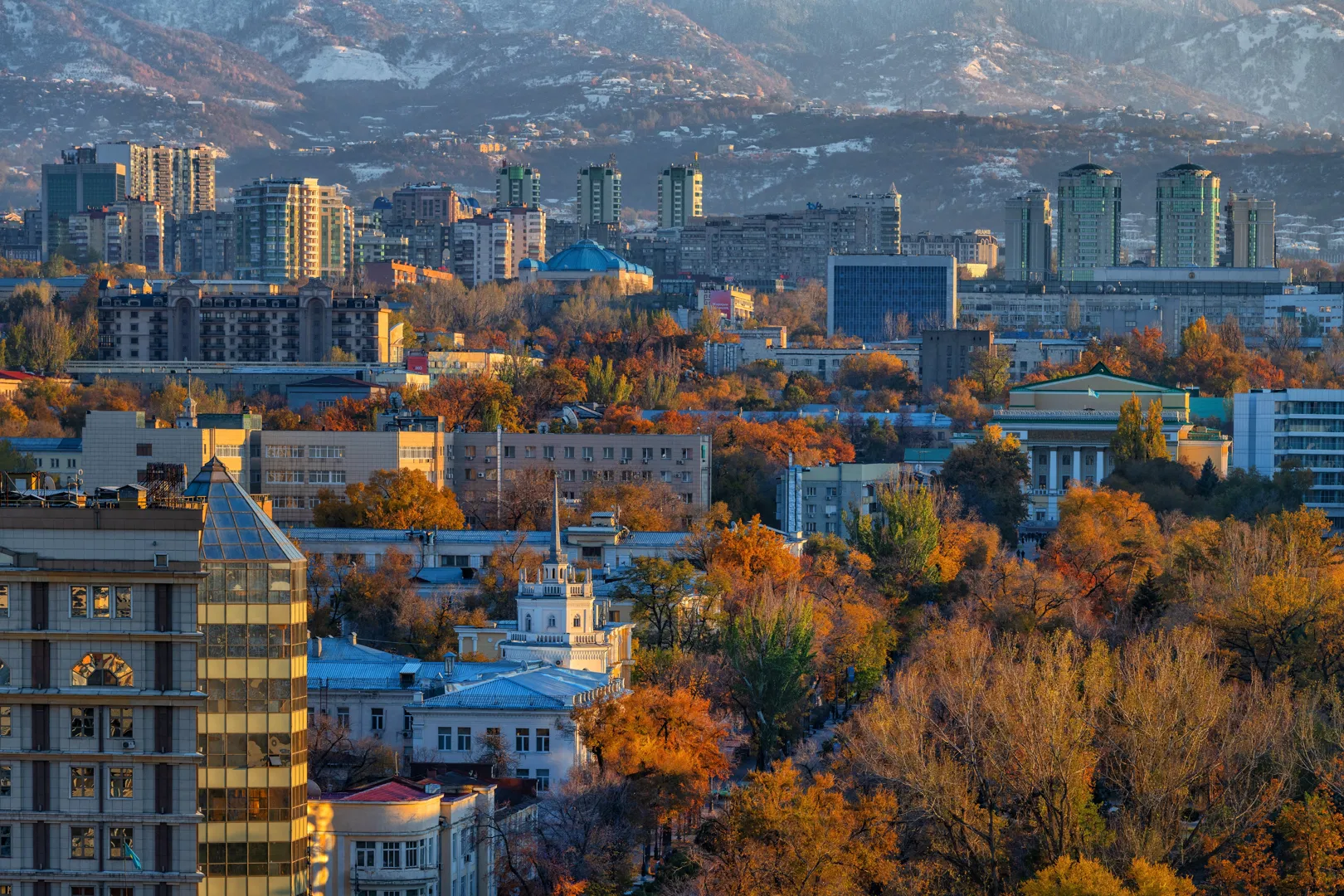
A labyrinth of stone castles
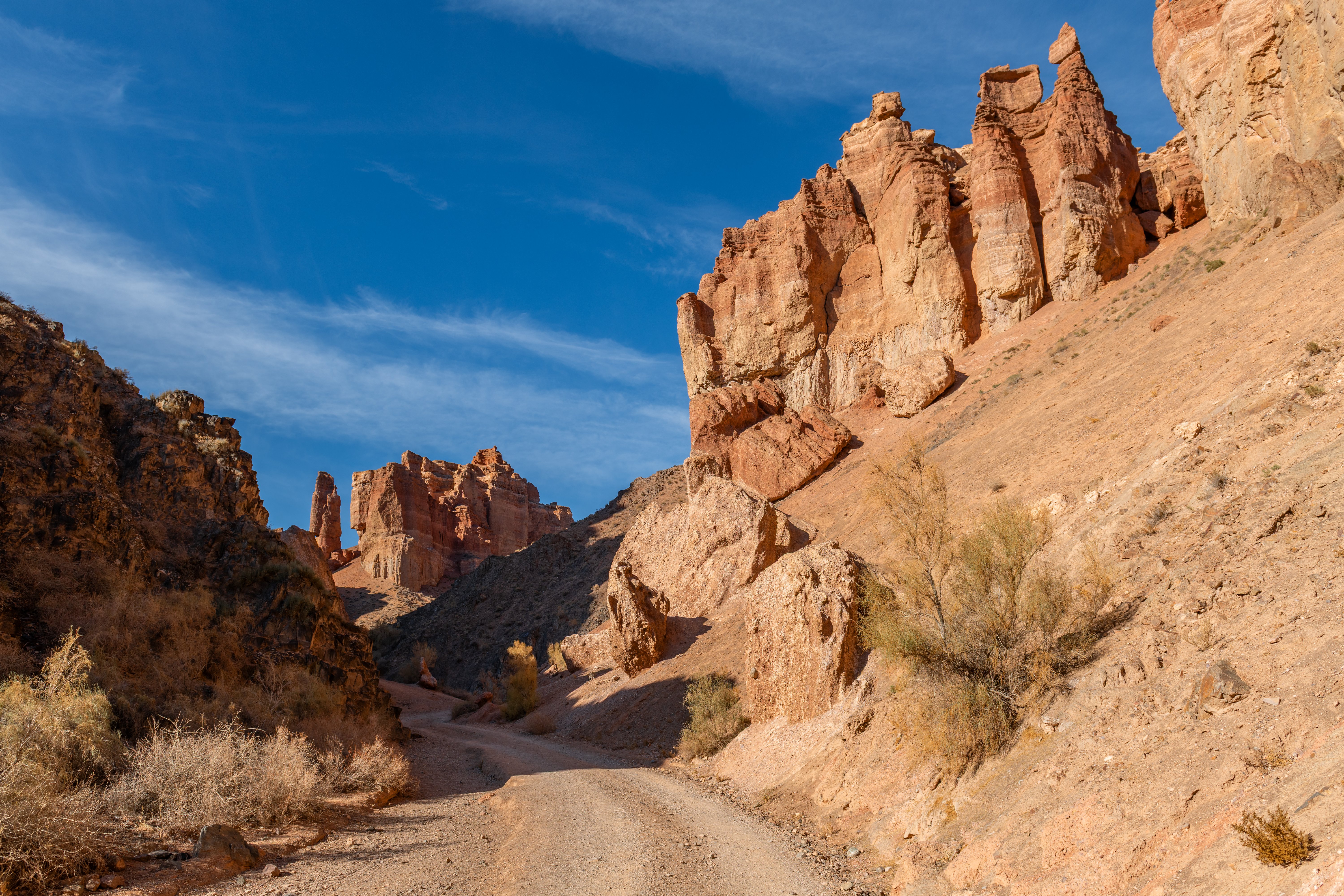
The most famous part of the canyon is the Valley of Castles. For several kilometres, rock outcrops rise here that resemble towers, fortress walls, columns and the ruins of an ancient city. It feels as if the architecture of a vanished civilisation is opening up before your eyes: every stone structure has its own silhouette, its own proportions and a unique pattern on its surface.

But these forms have neither an author nor a single design. They were created by natural processes. Wind gradually polished the surface, water eroded the more pliable sections, and temperature changes and the weathering of rock altered the outlines of the cliffs. Where the material proved more resistant, ledges and pillars emerged; where the rock yielded to erosion faster, narrow passages and hollows formed.
This is where Charyn's particular expressiveness lies: here you can see how complex spatial compositions arise from relatively simple material, sedimentary rock. The cliffs form natural corridors, open out into squares and suddenly narrow into passages where a person feels their own scale especially acutely.
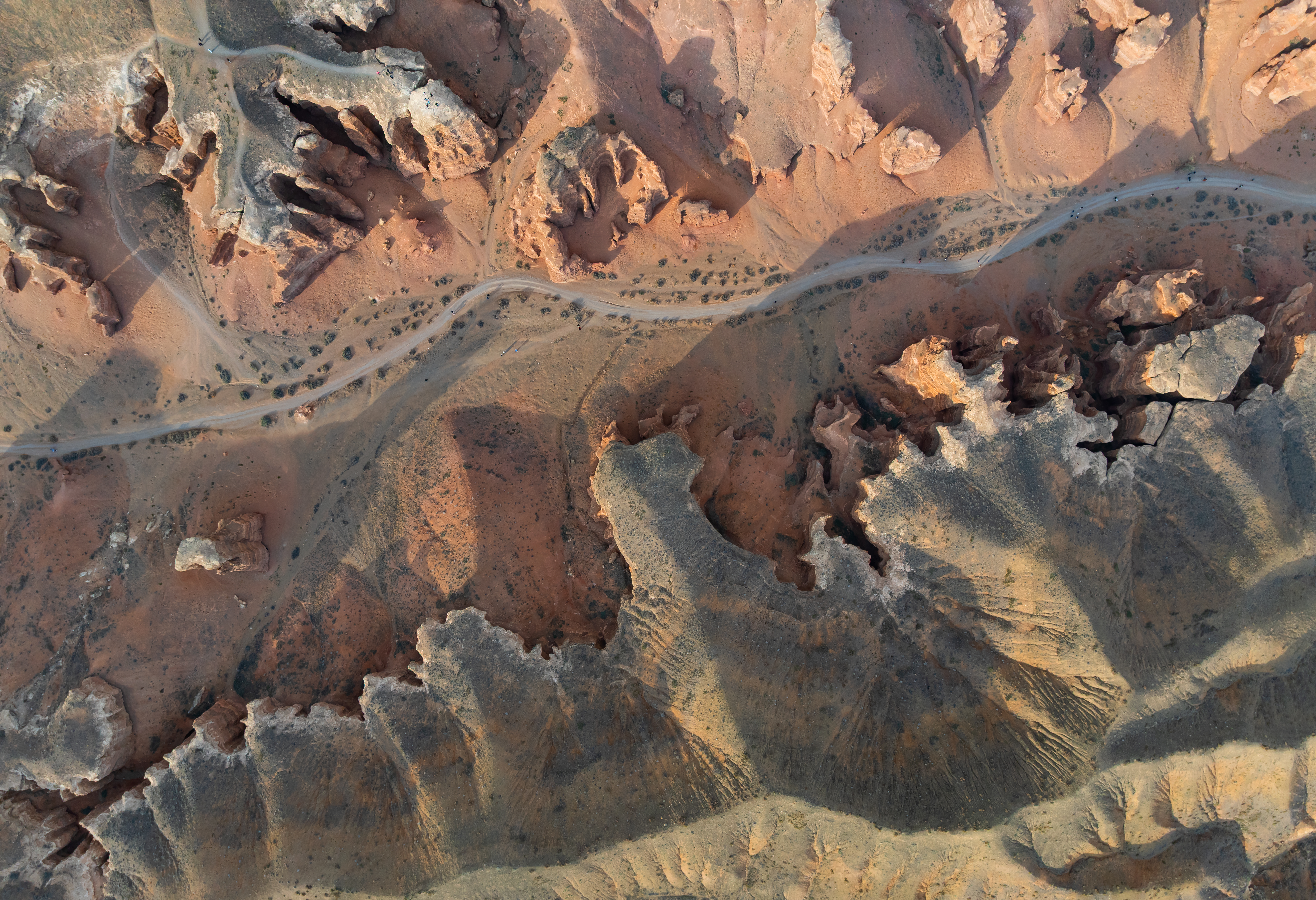 Photo: Maxim Zolotukhin
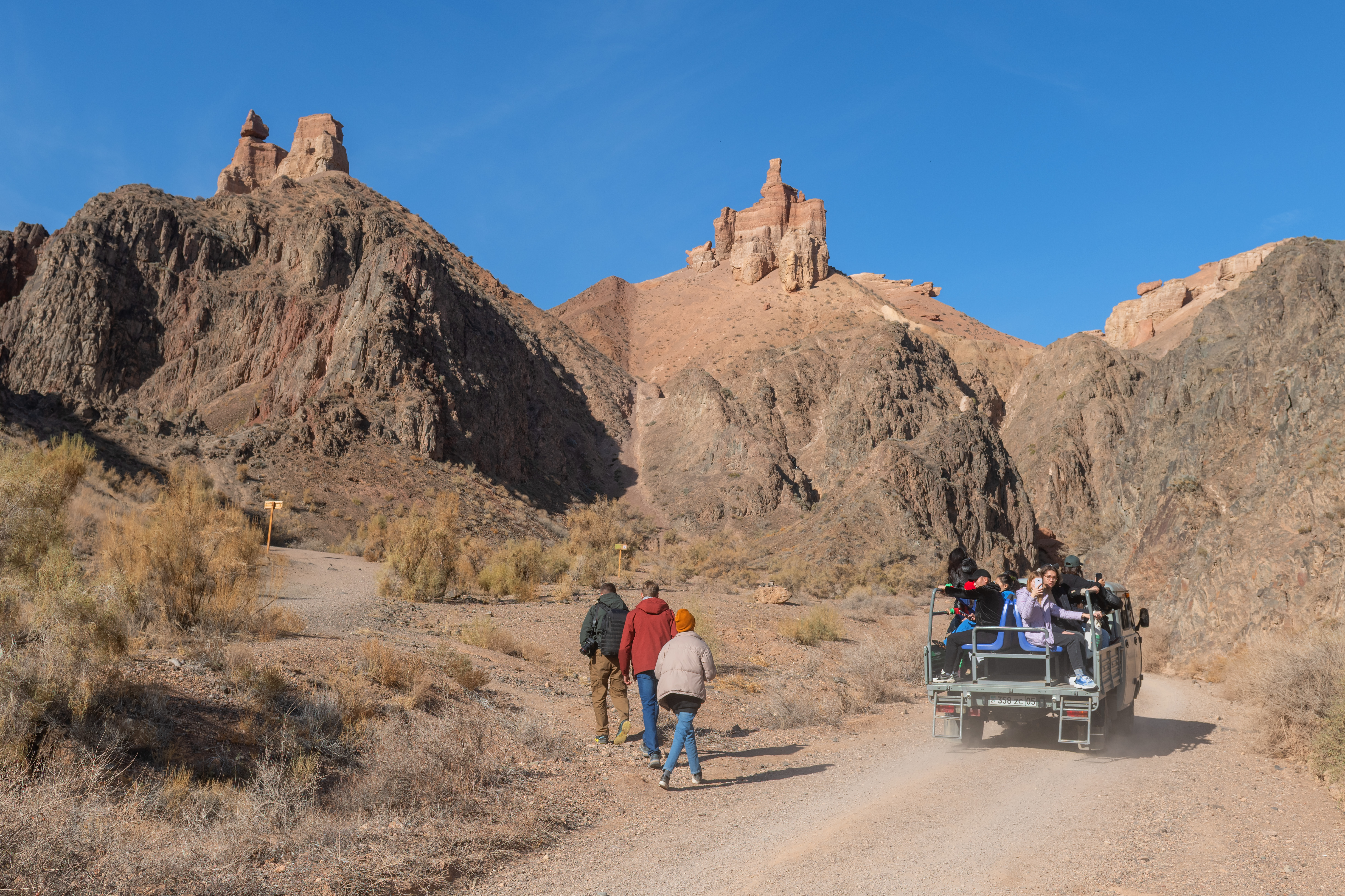
A journey through the Valley of Castles is like a walk through a city without streets or roofs. It has its own logic of movement, its own perspectives and viewpoints. Move a few steps and the familiar silhouette falls apart, revealing a new composition. What looked from a distance like a solid tower turns up close into a multi-layered surface with cracks, grooves and traces of destruction.
Time frozen in rock
The Charyn Canyon is interesting not only for its forms but also for the history of their origin. Its landscape took shape over millions of years, and the exposed rocks hold evidence of ancient geological processes. The cliffs that today look like the set of a science-fiction film are the result of the long work of water, wind and other forces of nature.
At the same time, the canyon is not a frozen monument. Erosion continues today: stone surfaces gradually change, individual fragments collapse, and the outlines of the cliffs become different over time. Charyn's natural architecture is constantly in the process of being created and disappearing.
There is also another timescale here, far more ancient and fragile. Within the national park, a relict Sogdian ash grove has survived. The Sogdian ash is a rare species, and natural groves like this have great scientific and conservation value. The grove in the Charyn River valley is known as one of the places where representatives of ancient vegetation that survived major climatic changes of the past have been preserved. Against the harsh rocky slopes, this green strip seems an unexpected counterpoint: where stone speaks of time through destruction, the trees tell of it through life and continuation.
 Photo: Maxim Zolotukhin
A landscape that changes with the light
Charyn cannot be seen the same way twice. Its appearance depends on the season, the cloud cover and the position of the sun. After rain, the shades of the rock become deeper and the contrasts between light ledges and shaded crevices more striking. On a clear day, the sky emphasises the monumentality of the cliffs, and in the evening hours the warm light seems to gather the scattered forms into a single whole.
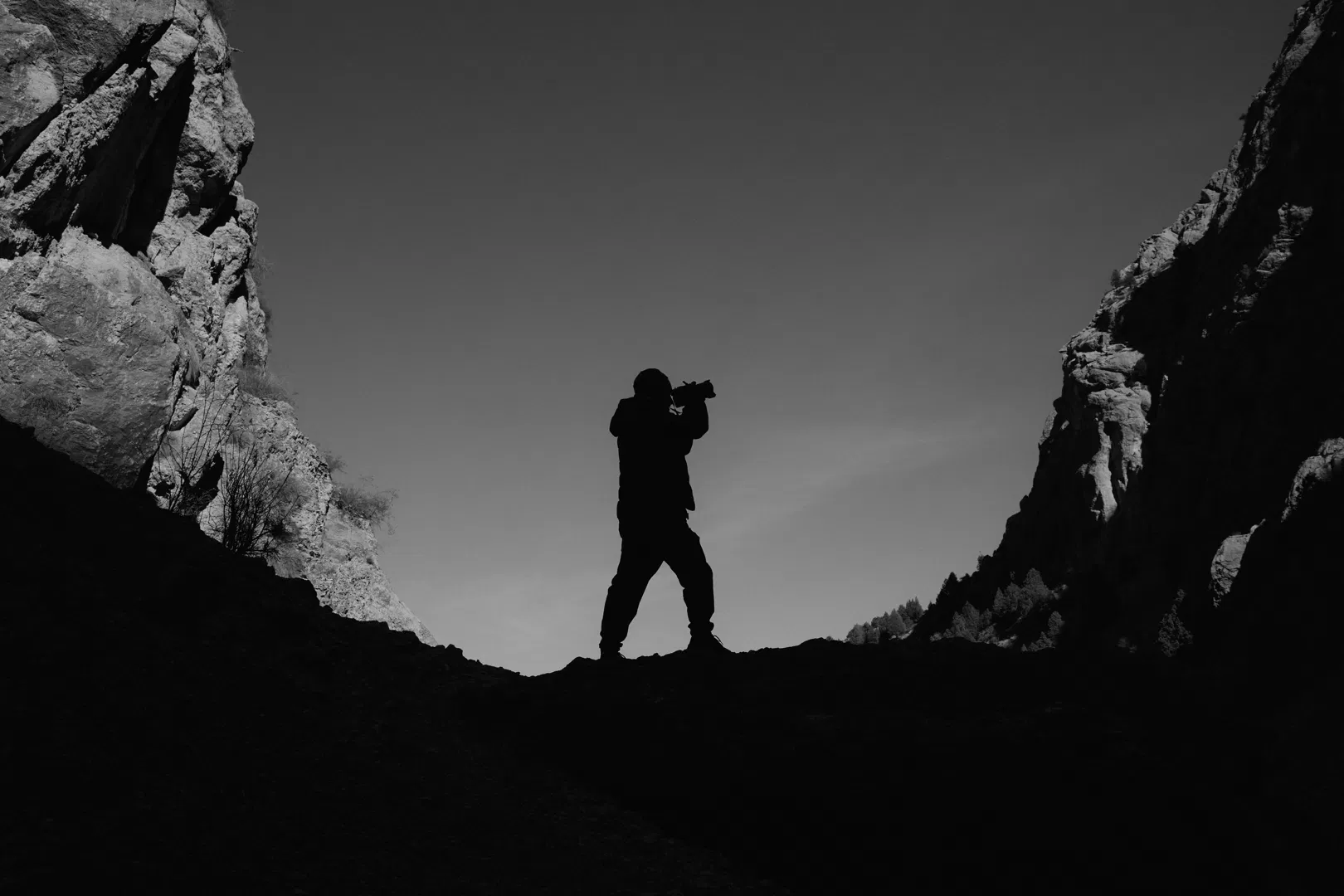
For a photographer, the canyon is a constant search for relationships: between people and stone, light and shadow, the near and the distant. Details matter especially here. The rough surface of the rock, the fine lines of cracks, the scree at the foot of the cliffs and the sharp boundaries between lit and dark areas tell you as much about the place as panoramic views do.
But Charyn's main feature is not how grand it looks in photographs. It lies in the sense of space that arises beside these cliffs. The usual ideas of scale change here: a person becomes just one point in a vast composition, and time stops being measured in years and decades.
The Charyn Canyon does not try to make an impression - it simply exists, gradually changing under the influence of natural forces. Its walls were not built, its towers were not designed, its routes were not laid out according to a plan. And yet there is an astonishing harmony in this freedom of form. Perhaps that is why Charyn is perceived at once as a wild landscape and as a perfect work of architecture, created without an architect but subject to the strict logic of nature.
Newsletter
A letter from the HD editors
Once a week, we send the best stories, events, and cultural discoveries from Central Asia.