"In the East, in the East, what is life without a chaikhana?" goes a well-known song. Yet, as it turns out, even a cultural institution as enduring as the chaikhana can have its successor. After all, the chaikhana was never merely a place to eat and drink. It was a place for conversation, negotiation and community. And as generations change, so do the places where those conversations happen. This is the story of how, in little more than a decade, Tashkent went from instant coffee to specialty coffee... and to something much bigger.
There is a simple way to see how Tashkent has changed. You do not even need to look at the city's new neighbourhoods or count the shopping centres; we've already covered that in another article:
Why Tashkent Is Changing Faster Than Other Cities in Central AsiaOver the past few years, Tashkent has become one of Central Asia’s most talked-about cities. Investors, architects, developers, tourists and residents alike all have something to say about it. New neighbourhoods are taking shape, public spaces are emerging, modern retail and entertainment centres are opening, while streets and parks are being renovated. Yet the city’s most significant transformation is not in its physical fabric, but in the way people are beginning to use it.mag.humodoc.com
Just ask yourself a simple question: where do you go when you want to meet someone? Chances are, you'll say, "Let's grab a coffee." It is hard to believe that only fifteen years ago the very idea would have seemed unimaginable.
Nothing has really changed about coffee itself. People drank it then, just as they do today. What has changed is the way coffee is perceived in our traditionally tea-drinking society. Along with that, the reasons people visit cafés have changed, as have what they do there and how long they choose to stay.
Where Speciality Begins…
It all began rather modestly. Most people drank coffee at home, making instant coffee in mugs, or even in pialas, the traditional Central Asian tea bowls. In cafés and restaurants, coffee was often made from exactly the same sachets. Some places had espresso machines, but they catered mainly to aesthetes, intellectuals and devoted coffee lovers. Dedicated coffeehouses simply did not exist. Why? There was no demand, so there was no supply. A classic market story. Going out "for a coffee" simply was not part of everyday life.
The pioneer of Tashkent's coffee culture was the now well-established chain Bon! It was soon joined by Beans & Brews Coffee House, better known as B&B, and Chaykof. At the time, coffee was beginning to attract attention on their menus, but it was still nowhere near challenging the city's deeply rooted tea-drinking traditions.
An even bolder step came in 2016, when Black Bear Kofi opened the country's first coffee roastery, a place devoted entirely to roasting coffee beans. Customers could buy freshly roasted beans to take home or enjoy them brewed on the spot. I still remember writing for the chain at a time when we were introducing people to the very idea of specialty coffee, explaining what it was and why a Chemex wasn't the same thing as a French press.
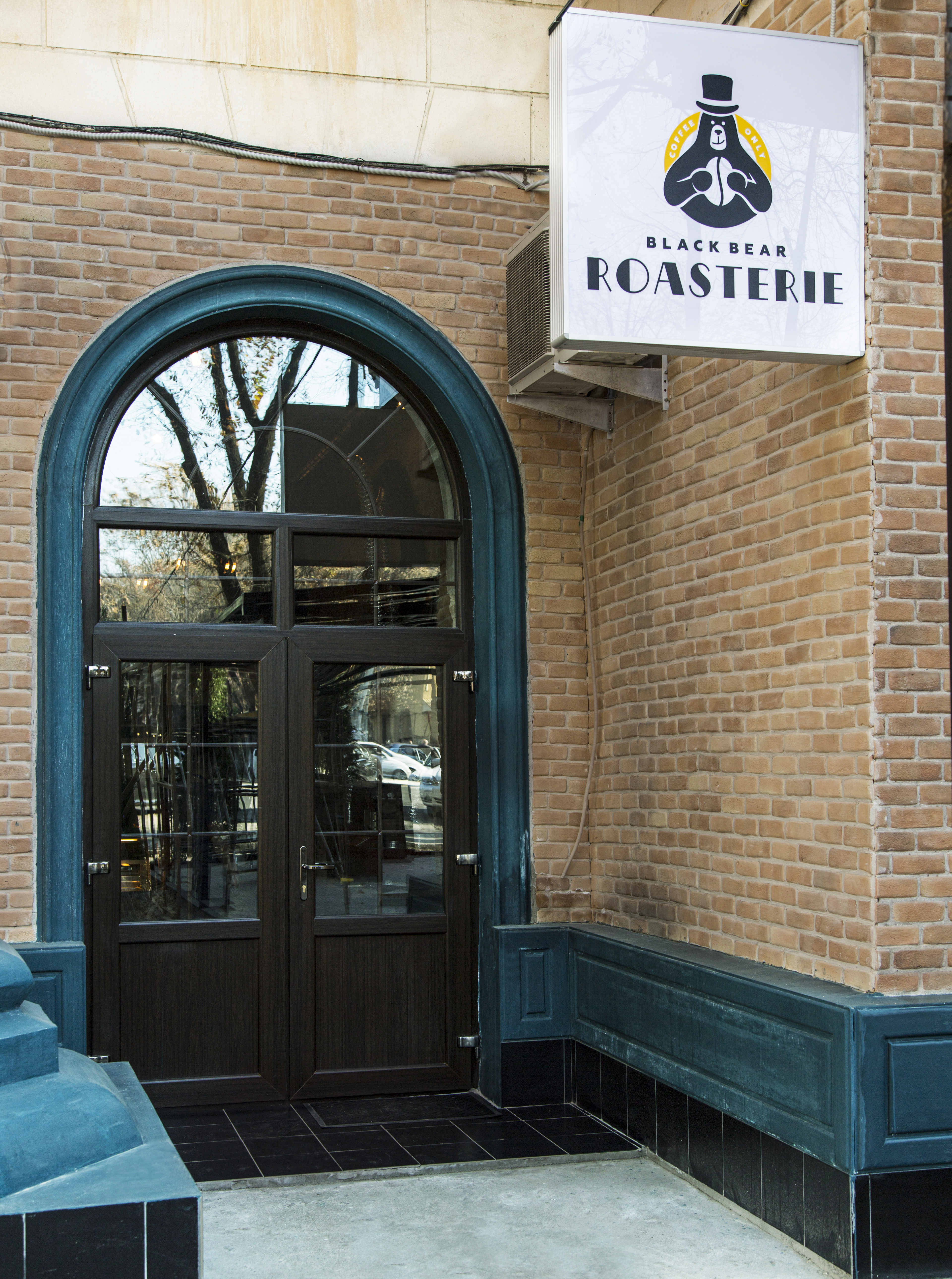 Source: Black Bear Kofi photo archive
Needless to say, the audience for that kind of content was vanishingly small.
The Mistake That Changed Everything
A year later, however, the owners of a small independent café called Milly Coffee & Pastry decided to take things even further. Few people now remember just how bold, if ultimately ahead of its time, the experiment really was. The café served coffee exclusively roasted by Double B, one of Russia's pioneers of specialty roasting, and invested in top-tier equipment, including a Victoria Arduino Black Eagle espresso machine, the very model used at the World Barista Championship. By the standards of Tashkent at the time, it was rather like opening a wine bar in a German town where people had always preferred something else to drink.
The experiment, however, did not end well. Without a proper kitchen, customers struggled to take the café seriously. By the time it reinvented itself as a restaurant, it had already lost its momentum. Not even its signature fresh blueberry pie, made with berries that were almost impossible to find anywhere else in those days, could turn things around.
 Source: Milly Coffee & Pastry photo archive
Tashkent simply wasn't ready for a concept-driven coffeehouse. Not because people in the city understood coffee any less than those in Berlin, but because every market evolves in stages, and very few succeed in skipping them. Milly was not alone. Other ambitious coffee projects faced the same reality: high operating costs, a niche audience and too few returning customers. Some reinvented themselves; others quietly disappeared.
Markets tend to reject complex products before gradually growing into them. The real challenge is surviving long enough for demand to catch up. Sadly, Milly never did.
The Turning Point
And yet someone was buying beans from the country's first roastery. Someone was filling the rooms at masterclasses on alternative coffee-brewing methods. The seed of interest had been sown; all that remained was to wait for it to take root.
And then the most interesting thing happened — the market finally "sorted itself out" and identified a gap that could not be left unfilled. It is worth recalling here a similar type of establishment that briefly illuminated the city's cultural horizon during this period before disappearing rather abruptly: the anti-café. The most significant anti-café in Tashkent could rightly be called… well, Antikafe itself. Guests gathered there primarily to spend time together, rather than for food or drink.
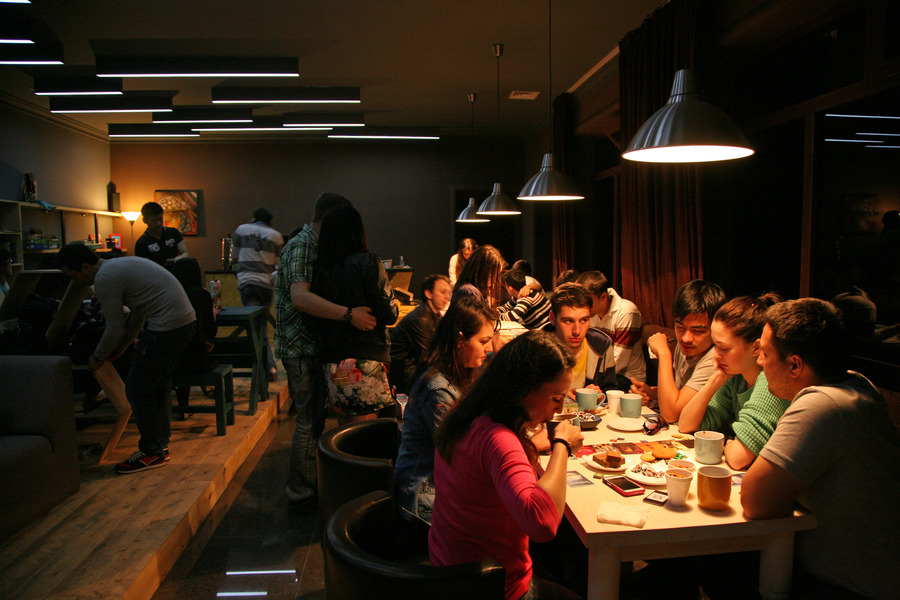 Source: personal archive of Askar Nasyrov, co-founder of Anticafe
These spaces attracted poets, musicians, film enthusiasts, book lovers and board game enthusiasts, recreating the atmosphere of the informal apartment gatherings that almost everyone in Tashkent's creative circles had heard about. For a variety of reasons, however, anti-cafés proved unsustainable in their original form. Today's anti-cafés look very different and serve a different purpose. Some adapted more successfully than others, taking different paths to survival. For a number of them, the most successful transformation turned out to be... becoming a coffeehouse. But with a twist.
Why a Coffee Shop That Only Serves Coffee Is a Tough Business
Here's an inconvenient truth that rarely makes it into stories about coffee culture: the profit margin on a cup of coffee is surprisingly slim. Especially if you're using high-quality beans, paying city-centre rent, investing in skilled baristas and maintaining high standards across the board. A coffee shop that sells nothing but coffee either relies on exceptionally high footfall or struggles to survive.
The logic is almost inevitable: you have to offer something else. But what? The answer is as old as civilisation itself: bread and circuses. Before long, your coffee shop is serving steaks alongside flat whites and hosting stand-up comedy in the evening. There is nothing uniquely Tashkent about that. Coffee shops in London, Berlin and New York went through much the same evolution. But Tashkent added its own distinctive twist, rooted in the city's Eastern traditions.
There is a popular saying in the city that the most important business meetings take place not in offices, but over morning plov. Like many good jokes, it contains more than a grain of truth. For centuries, the dastarkhan was where rulers and their viziers discussed affairs of state, while ordinary people gathered to exchange news, rumours and stories.
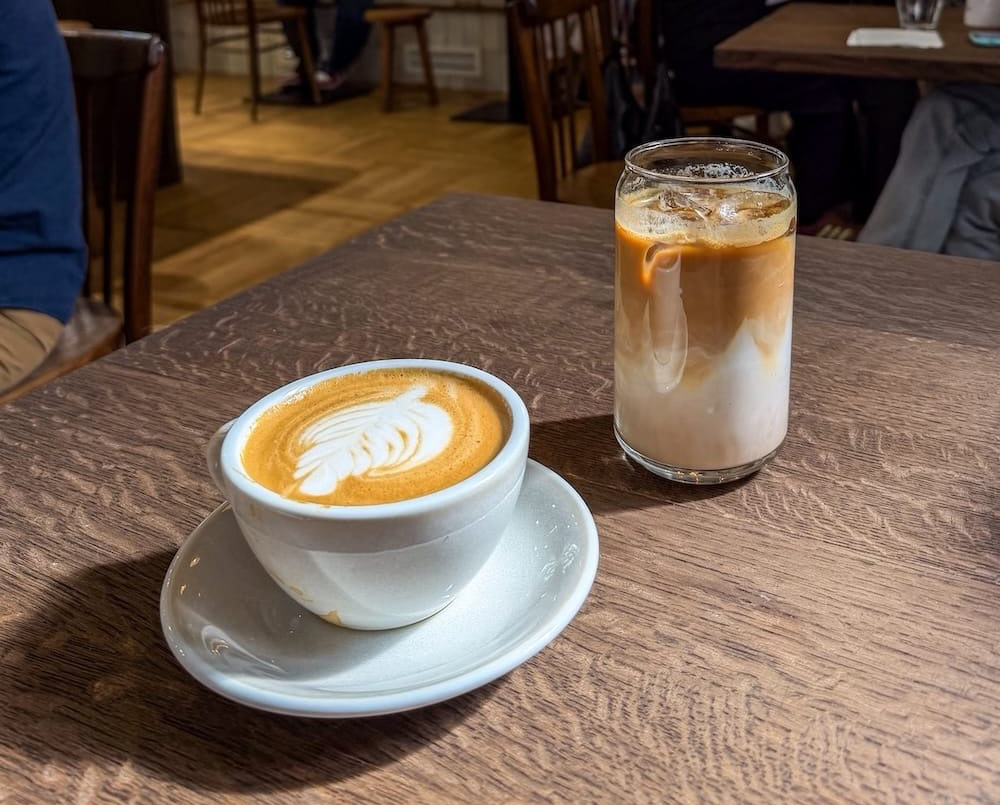 Source: Megan Starr's blog
It took modern Tashkent a long time to find a new place for conversation and hospitality to replace the age-old chaikhana. But today, everything seems to have fallen into place. We arrange business meetings in coffee shops, catch up with friends there, and stop by with our families after a concert or another evening out.
Then, of course, the pandemic played its part too. During those years, we learned not only to queue outside pharmacies because customers were no longer allowed inside, but also to work remotely because going into the office was no longer an option. Yet working from home is not always ideal. Sometimes it is simply too distracting, and sometimes it creates problems of its own. A coffee shop terrace, on the other hand, offers the perfect place to settle in with a laptop, order your favourite drink and work your way through the day's tasks.
What Is Life Without a Cappuccino?*
*A playful twist on the famous Yalla lyric "What Is Life Without a Chaikhana?" (Translator's note)
Of course, to say that coffee shops have completely replaced the chaikhana would be an exaggeration. The chaikhana tradition is far too old and too deeply rooted in our culture for that. But traditions belong to their own time. They evolve, adapting to new ways of living and changing social needs.
 Source: photo archive of Milly Coffee & Pastry
The chaikhana is a great lagan of plov, shared by everyone around the table. A coffee shop is a shared table where everyone has a drink of their own choosing. Perhaps that is the best way to sum up this quiet transformation. Alongside the tradition of the collective came a tradition of the individual. Alongside long, unhurried gatherings came a culture of lighter, more fleeting encounters.
And the drink? It is merely the most visible, the most tangible variable in that social equation.
Green tea, red tea party: why the USSR tried to turn the teahouse into a political lecture hallThe teahouse is not only the most ancient public institution of the peoples of Central Asia, but also a club for shared interests, an informal parliament, and a folkloric stage. In the early USSR, attempts were made to turn it into a platform for ideological work, but neither slogans nor agitation could displace the main thing from there—and that main thing was not always about tea.mag.humodoc.com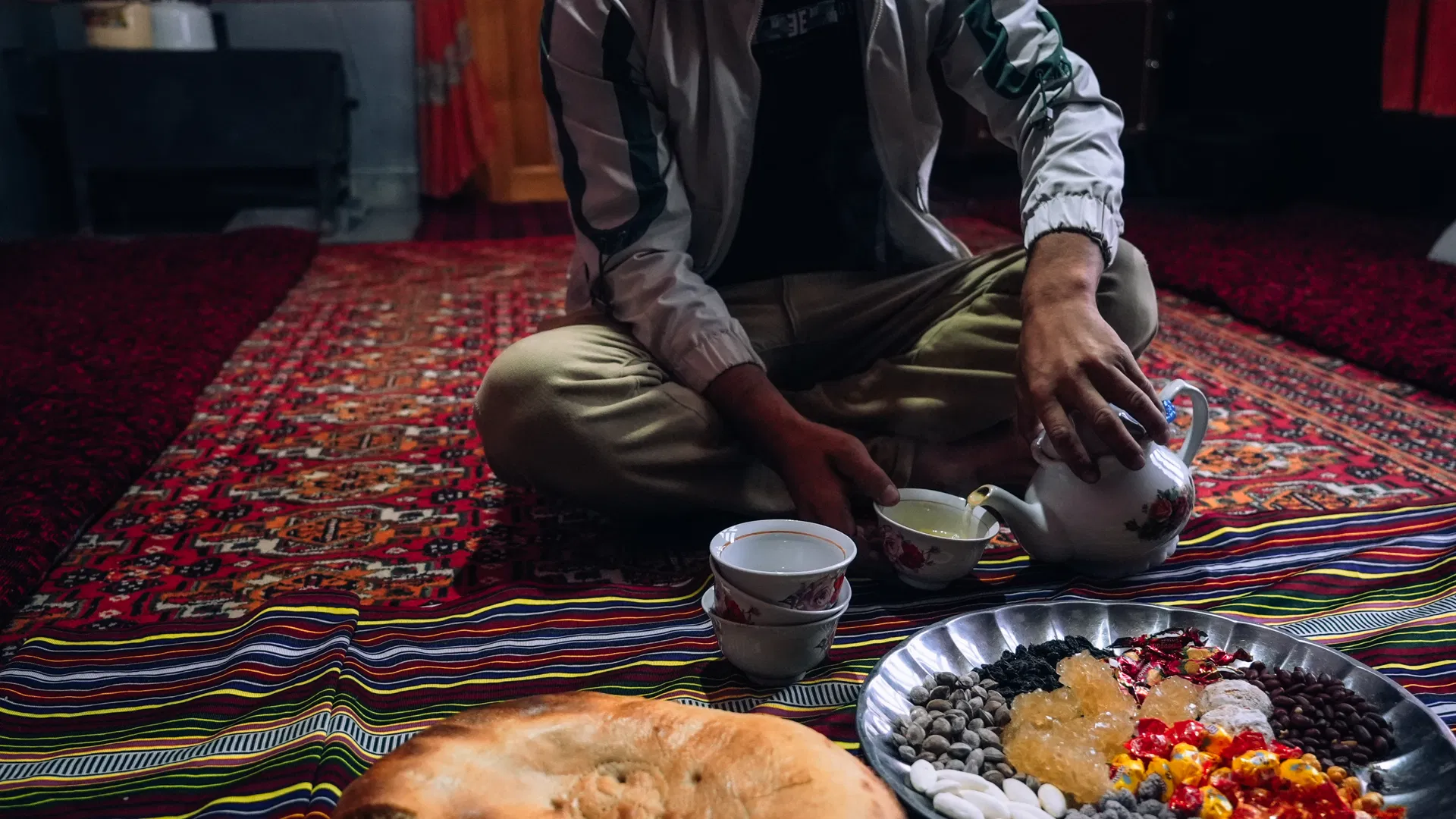

Newsletter
A letter from the HD editors
Once a week, we send the best stories, events, and cultural discoveries from Central Asia.