For some theatre lovers, the very idea of contemporary theatre sounds almost like an oxymoron. They regard theatre as a temple of art, complete with heavy drapes, champagne and sandwiches during the interval, and, above all, a suitably academic interpretation of the classics.And any attempt to breathe new life into the classics strikes them as little short of sacrilege.
The debate over whether classical works should be modernised has raged for decades. Yet some directors have found ways to marry timeless works with contemporary interpretation, creating productions that resonate with broad audiences. Almaty has no shortage of such directors, each with a distinctive approach to the classics.
Deutsche Welle
Perhaps one of the finest examples of this kind of innovation is Natasha Dubs, Artistic Director of the Republican Academic German Drama Theater. We need look no further than her project from last year: the so-called "masculine" trilogy I vsyo pro... (And It's All About...) Over the course of its three productions, audiences encounter some of the most iconic figures in world literature: the soldier Woyzeck, King Lear and Eugene Onegin. Except there isn't a Onegin at all. Instead, we get thirteen Tatyanas. Dubs quite literally turns conventional ideas of masculinity on their head, removing the central male character altogether and leaving the audience surrounded by a baker's dozen of women in kokoshniks.
Dubs's productions are intensely visual and richly metaphorical. In Woyzeck, the audience is plunged into a military barracks rife with hazing, thundering heavy rock, and a cross-sectional model of an enormous human figure. In Lear, we find ourselves peering around a corner at a frail and deranged king who can no longer distinguish the walls of his own castle from those of a psychiatric ward. In Onegin, we are transported to an enchanted forest on the threshold between dream and waking, in the company of a bear and singing old women. Yet Woyzeck even slips into a monologue by Barash from the animated series Kikoriki, while in Lear the royal retinue gives way to towering chess pieces.
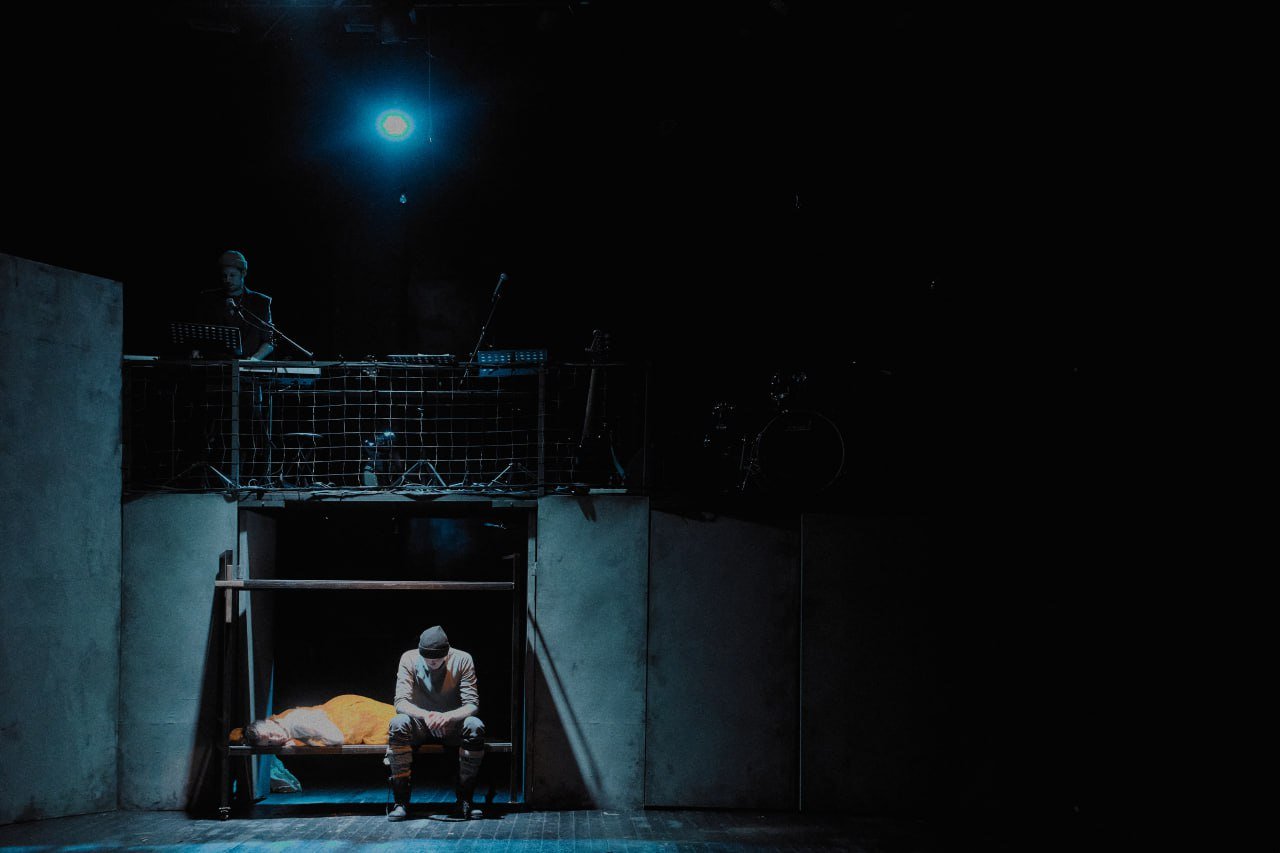 Photo: Olga Li
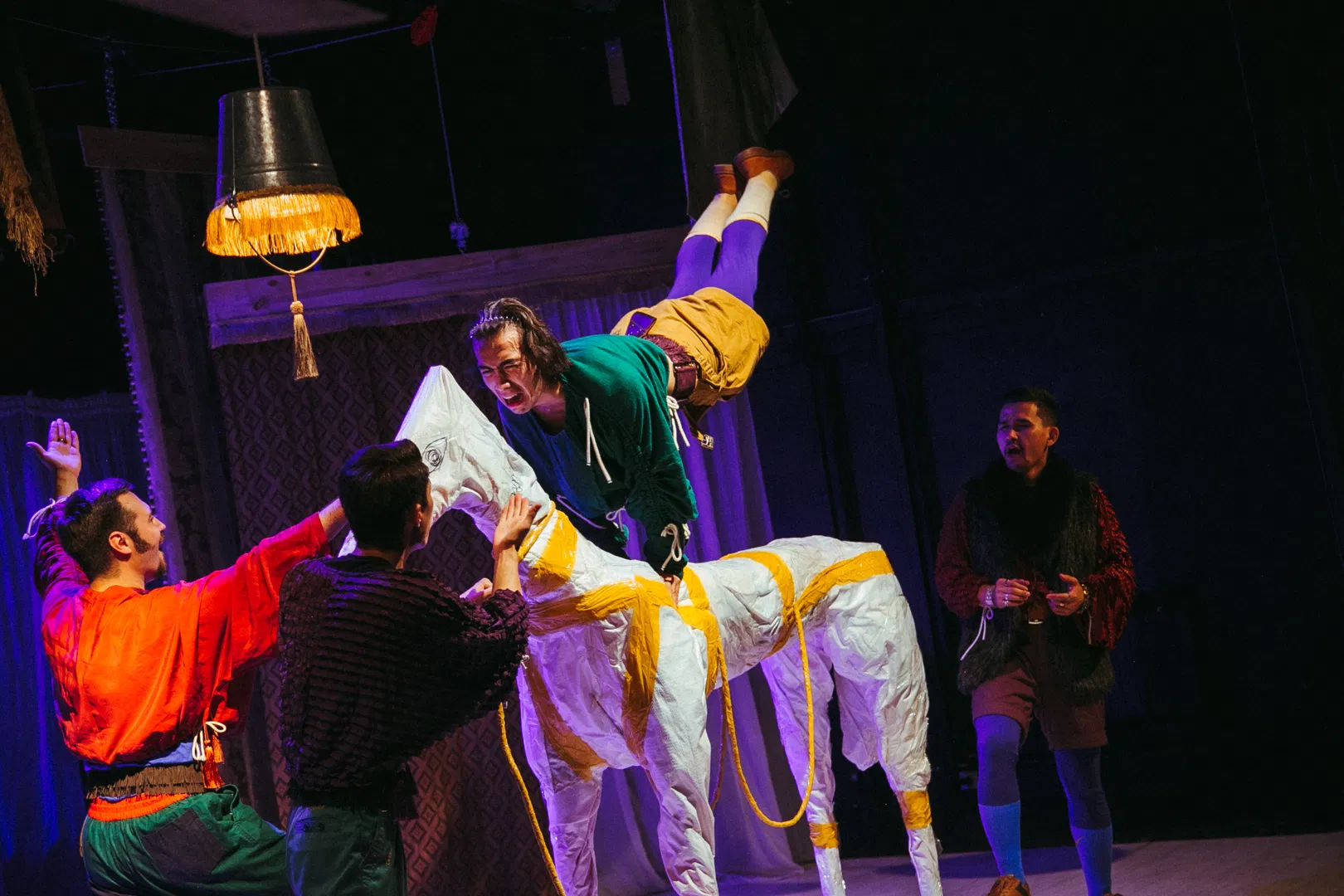
 Consider another example. The same German Theater has been staging A Midsummer Night's Dream successfully for several years. Its genre alone is enough to spark curiosity: a Shakespearean club night. The production was created by six directors as part of the German Theater's Laboratory, an experimental space where actors and emerging directors can test their ideas. And the term "club night" is no accident.
It is, in every sense, a production staged as a nightclub. Before the performance begins, audiences are welcomed with cocktails, while the action unfolds simultaneously in the present day and in Shakespeare's enchanted forest. Lysander and Demetrius settle their rivalry in a rap battle, while Hermia livestreams on Instagram.
Classics for Grown-Ups
Another leader in unconventional readings of the classics in Almaty is the Gabit Musrepov Kazakh State Academic Theatre for Children and Young People. Its walls have been graced by a variety of directors, and their perspectives on the classics differ entirely. A telling comparison can be drawn between Hamlet. Soңғy Künder (Hamlet. The Final Days) by Dina Zhumabayeva and Shiye Baғy (The Cherry Orchard) by Rachi Makhataev, staged just a matter of months apart.
Another Almaty theatre renowned for its unconventional takes on the classics is the Gabit Musrepov Kazakh State Academic Theatre for Children and Youth. With a diverse roster of directors, the theatre embraces a wide range of approaches to the classics. That diversity is best illustrated by two productions that premiered just a few months apart: Dina Zhumabayeva's Hamlet. Soñğy Künder (Hamlet. The Last Days) and Racha Makhataev's Shie Bağy (The Cherry Orchard).
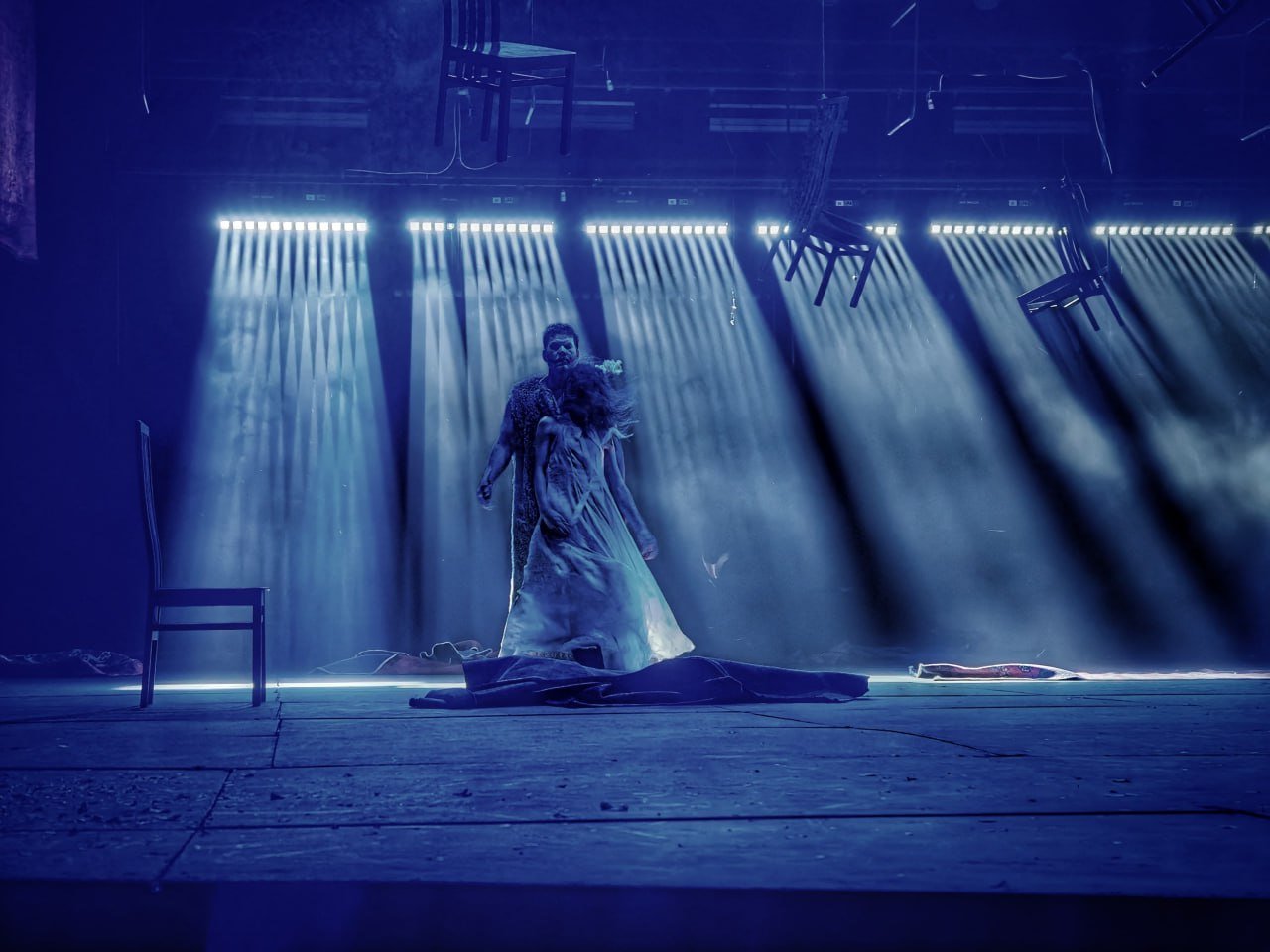
Zhumabayeva's production is vivid, provocative and, at times, gleefully absurd. Instead of crossing swords, Hamlet and Laertes face off over a game of ping-pong to the unmistakable sound of Kiss, while Rosencrantz repeatedly glides onto the stage on roller skates. An almost biblical crucifixion sits alongside whirling dervishes, with richly patterned Oriental carpets dominating the stage design. It makes a compelling counterpoint to Racha Makhataev's sombre, unsettling interpretation of Chekhov's classic. Here, the stage is filled with coffin-like crates and lifeless saplings. Grotesque theatricality blends with noir as Charlotta Ivanovna, reimagined as a circus performer, twists and bends across a table while spinning hoops as everyone around her sinks deeper into despair. And when the cherry orchard finally goes under the hammer, every exaggerated blow seems to reverberate through the entire auditorium.
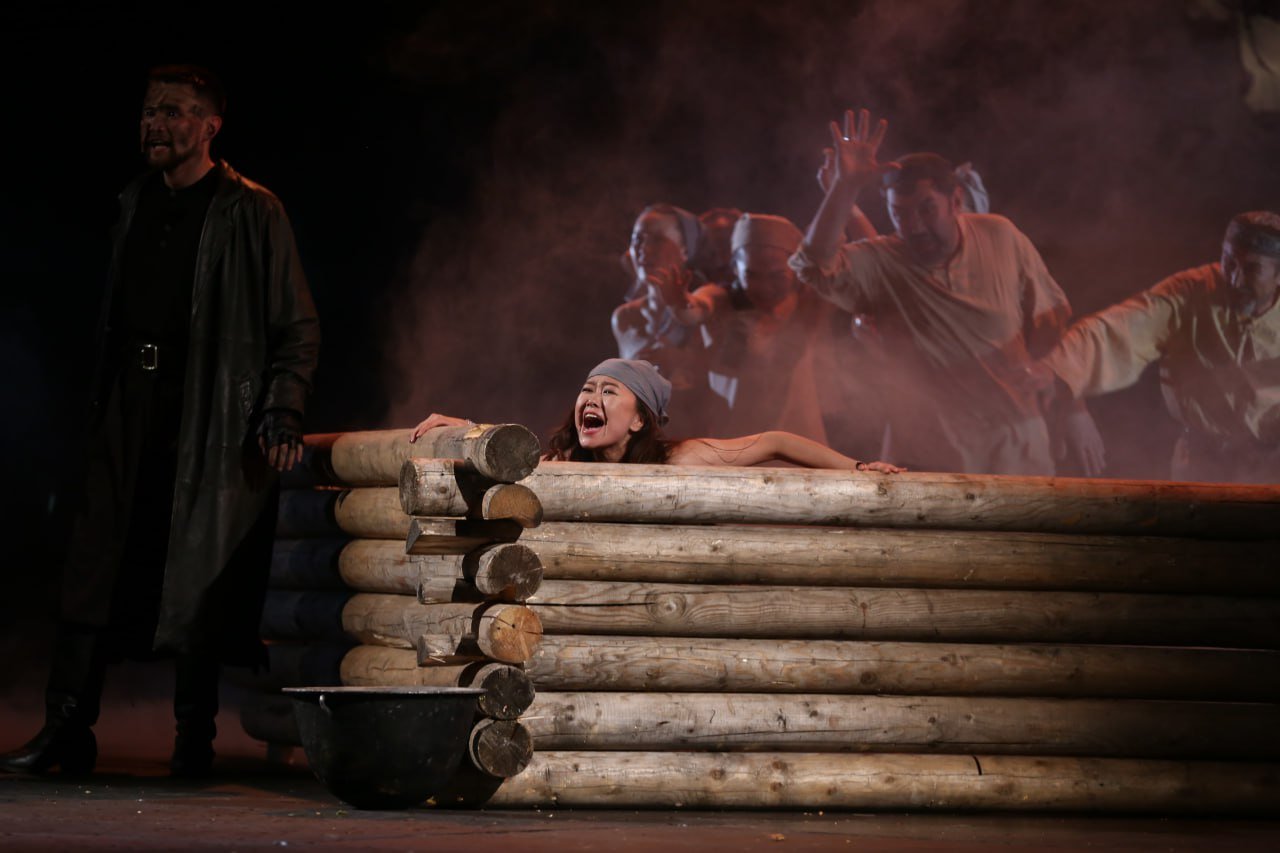
The theatre's growing repertoire of reimagined classics also includes Gulnaz Balpeisova's Ulpan, based on the novel of the same name by Gabit Musrepov, one of the towering figures of Kazakh literature and the theatre's namesake. The story of a resilient woman of the steppe, tested by one hardship after another, unfolds to a soundtrack featuring Genesis, Pink Floyd and Michael Jackson. And if the bathhouse goes up in flames in the novel, why not recreate the scene with complete realism by setting a wooden bathhouse ablaze on stage?
The Theatre of Cultural Shock
No discussion of Almaty's bold reinventions of the classics would be complete without ARTiSHOCK, the city's undisputed home of theatrical culture shock. One of its biggest hits is The Musketeers. Perdeler, inspired, as the title readily suggests, by Alexandre Dumas's famous novel. Director Galina Pyanova describes the production as "Kazakh Baroque": a wry comment on a society that so often mistakes the glitter of imitation luxury for genuine prosperity while overlooking what truly matters. The production's central theatrical device is right there in the title. Perde means "curtain" in Kazakh, and curtains become a fluid, ever-changing set that allows the characters to move, at the snap of a finger, from the splendour of Versailles to an Almaty flea market.
ARTiSHOCK has also developed a whole series of productions that reinterpret literary classics through what it calls "artist's theatre." They are the work of the company's chief designer, Anton Bolkunov, whose growing body of work includes One Hundred Years of Solitude after Gabriel García Márquez, Crime and Punishment after Fyodor Dostoevsky, The Raven after Edgar Allan Poe, and most recently The Tin Drum after Günter Grass, which premiered in July 2026.
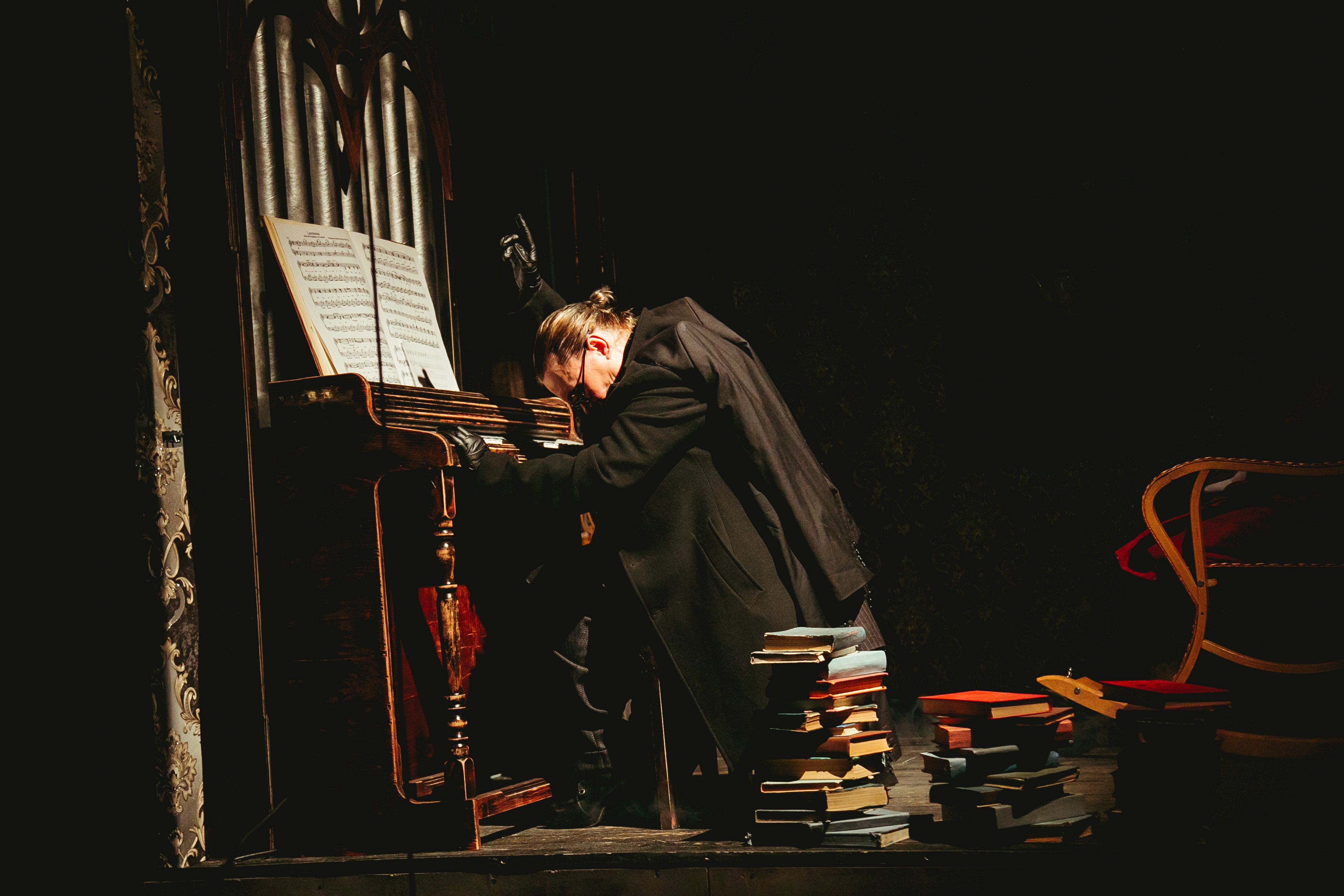 Photo: Alina Bagautdinova
Bolkunov's productions scarcely need any introduction. Most are performed with little or no dialogue. Their expressive force comes from the visual language of the stage: the set design, the choreography of movement, the music and the performers' physicality. In The Tin Drum, for example, the novel's young protagonist can shatter glass with his voice. On stage, the actors recreate that effect through a range of extreme vocal techniques. Another defining feature of Bolkunov's "artist's theatre" is its use of the body, often the naked body, which appears in one form or another throughout his work.
Unlike the productions discussed earlier, ARTiSHOCK rewards audiences who know the source material. Many of its productions are built around details whose significance only becomes fully apparent if you've read the original. In One Hundred Years of Solitude, for example, even the audience is drawn into the action: the production opens with the execution of Colonel Aureliano Buendía, and those in the front rows are handed raw eggs and invited to pelt the character with them.
Take Crime and Punishment. Porfiry is forever chewing celery, while Svidrigailov obsessively shaves himself and, for good measure, his wife as well. The fact that Arkady Ivanovich is played by a woman only makes the scene more provocative. Return to Dostoevsky's novel and those seemingly eccentric choices begin to make sense: Porfiry is trying to give up smoking while coping with the pressures of his work, while Svidrigailov's marriage of convenience has developed into a disturbing obsession. They may seem like minor details, but they are precisely what unlock the productions' artistic logic.
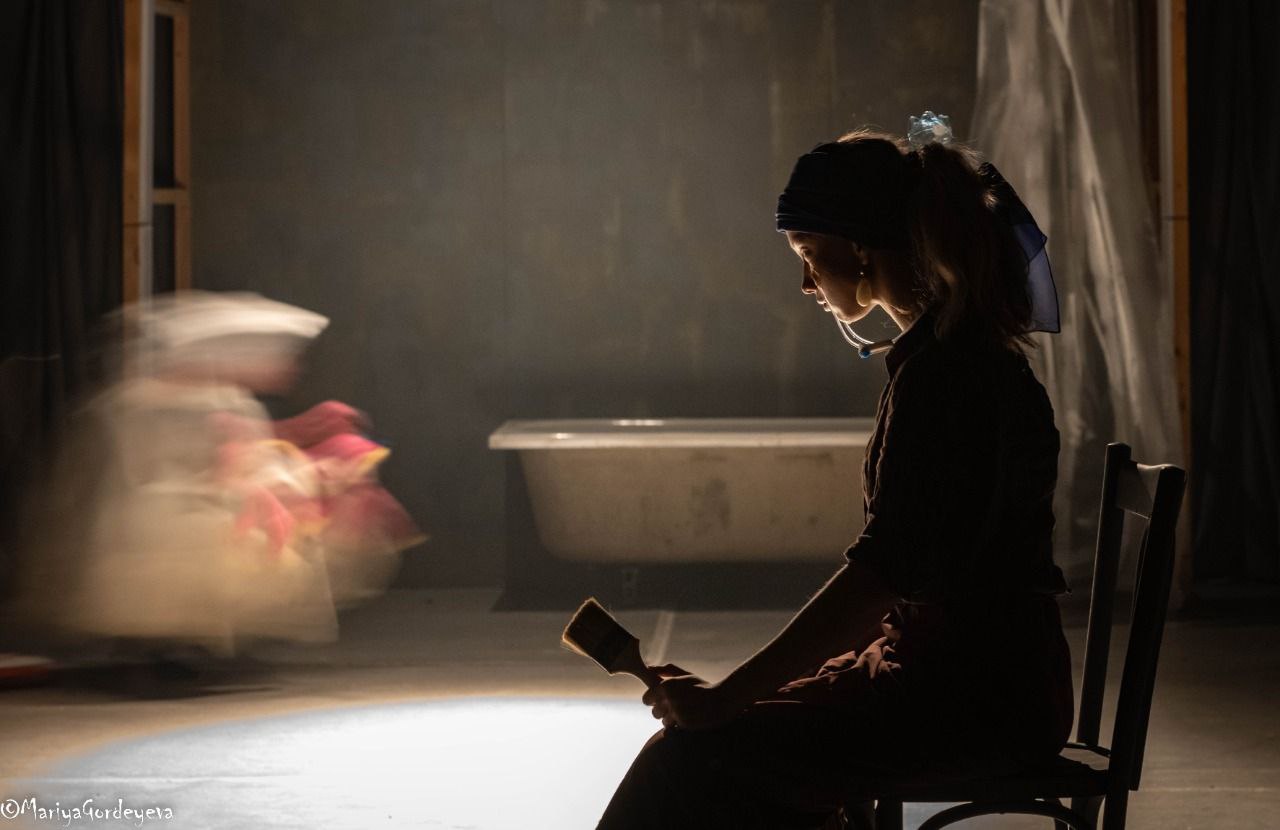 Photo: Maria Gordeeva
Do these interpretations provoke resistance from the very audience we were talking about at the beginning? Of course they do. But theatre also takes on the important task of educating its audience and finding new artistic forms through which to engage with timeless questions. And suddenly, stories written two hundred years ago become strikingly relevant to the world we live in today.
But what if you simply want something more straightforward?
That raises another obvious question: where can you see “proper” classical theatre in Almaty if this kind of approach to the classics isn't for you? The answer is simple: at the city's two main drama theatres, the Mukhtar Auezov Kazakh National Drama Theatre and the M. Yu. Lermontov National Russian Drama Theatre. They stage very different productions too, and visiting directors sometimes bring surprisingly unconventional ideas to the stage. But by and large, both theatres take a more traditional approach to the classics, making them accessible to a broad audience.
What's more, some timeless stories are staged at several theatres, each offering its own take. Gogol's The Government Inspector is a case in point: until recently, you could see a classic staging at the Lermontov Theatre, then a darker, more noirish European version at the German Theatre, and finally round things off with the Uyghur Theatre's wonderfully playful take on the play as an Eastern toy.
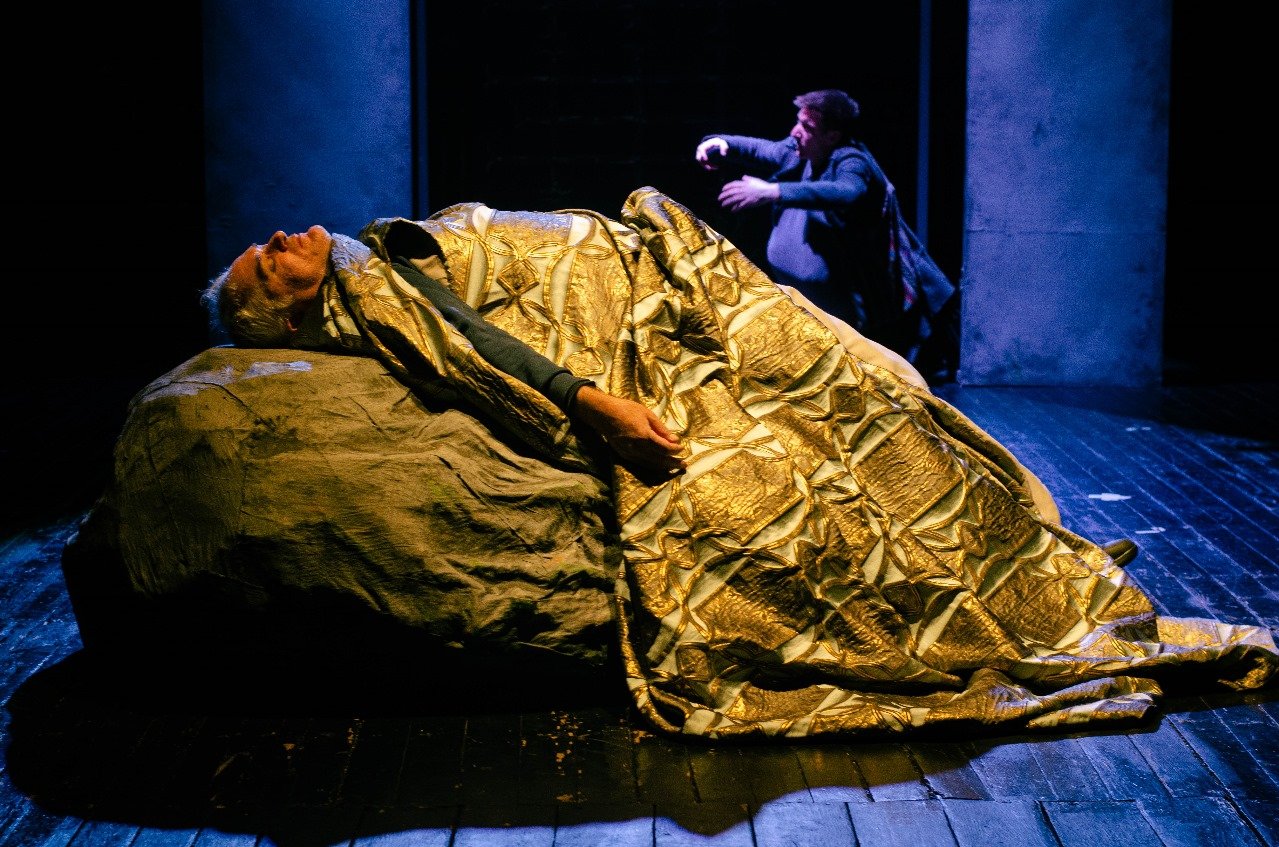 Photo: Irina Pisaryuk
So Almaty's theatres offer classic works to suit every taste. The only question is whether audiences are ready for the classics to surprise them.
Read also
 Cinema and Performing Arts
Blue Is the Colour of Resentment: The Other Side of the Tale
Diana Ibatullina
 Cinema and Performing Arts
Aigul Kulbekova: Building Cultural Continuity
Alfiya Kalmaganbetova
 Cinema and Performing Arts
Kurak: Those Who Oppress, Those Who Suffer, and Those Who Turned Away
Cyrill Grishin
Newsletter
A letter from the HD editors
Once a week, we send the best stories, events, and cultural discoveries from Central Asia.