Eight years ago, the peacefully living and unsuspecting residents of Tashkent were suddenly hit by a new word — "mural". No one knew what it was: one acquaintance said she thought it was some kind of deer, the word being unfamiliar to neither the Uzbek nor the Russian ear. Everyone rushed to Google it and then spoke of the new phenomenon as casually as if it had been growing here among us for 400 years.
The first mural, if you remember, appeared on the side of the Grand business centre building on Shota Rustaveli Street—it was an event that was written about by the media and by city residents on social media.
 Source: Dima FATUM's Facebook page
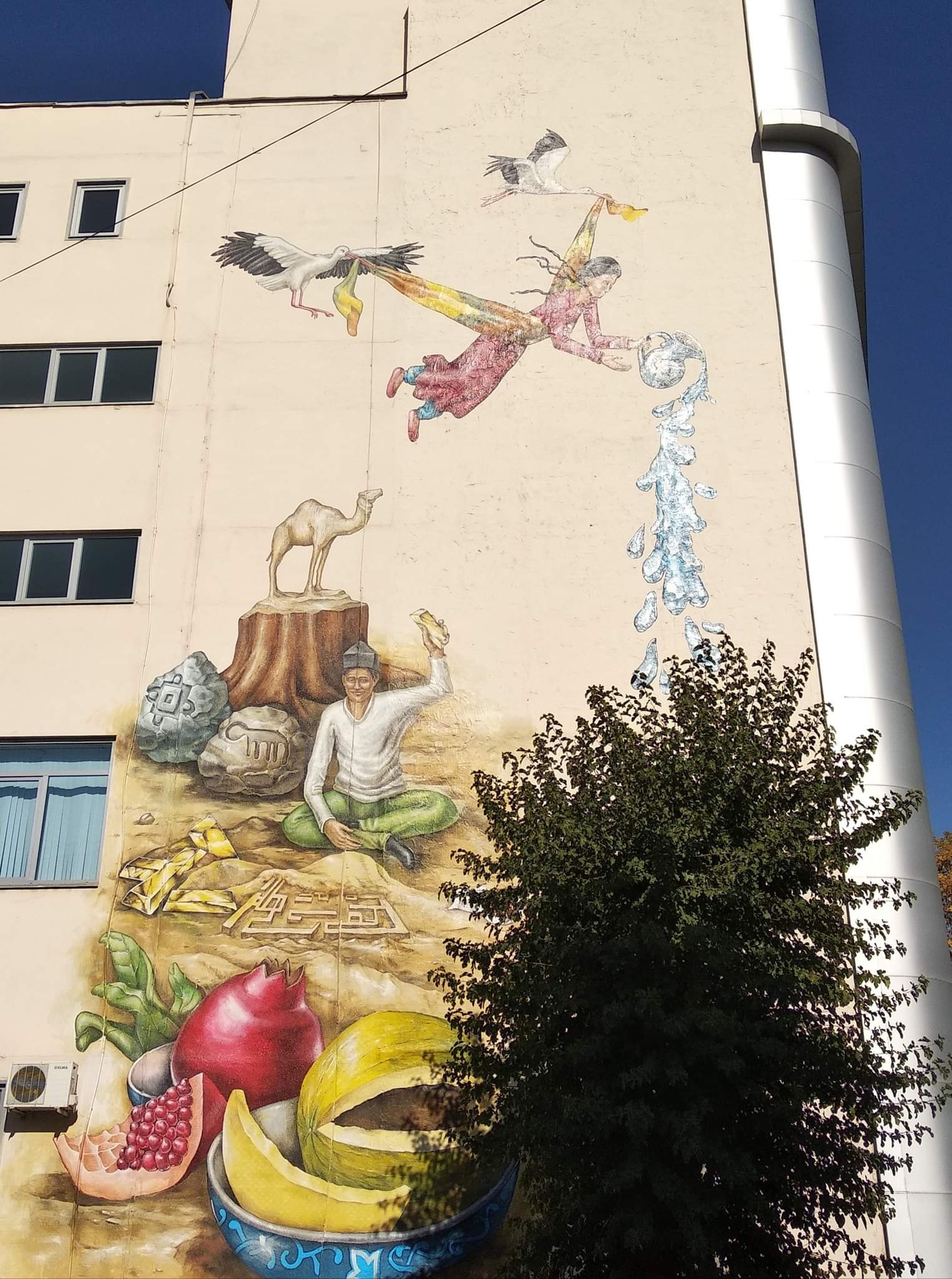
The author—is the Kyiv-based artist Dima FATUM, known for his wall paintings (not indoors, but on the exteriors of buildings) in many cities across Europe and Asia. The artist worked together with curator Maria Uvarova to create a mural with a connection to Uzbekistan.
It is worth noting that they succeeded in making that "connection", and the word here carries a double meaning: figuratively—as a connection to the identity of Uzbekistan's people, and literally—to the location of the mural. The thing is, the tree in front of the wall is part of the composition.
Here is what Dima FATUM himself writes about it on his Facebook page:
The central part of the composition is a real object—a tree growing in front of the building. This is where the narrative of the artwork originates. This technique in street art is known as site-specific art, meaning that the artwork was created for a specific place, taking its particular features into account. The narrative plays on this element of the surrounding environment as the most important one. So, we see two storks (a symbol of the city) raising aloft a girl with a jug in her hands, who is watering the tree. The jug in this case is an allusion to the fountain—another of Tashkent's distinctive features.
Besides the storks, the composition also features an ornament in the form of cotton, adras, the excavations of Tamerlane's ancient fortress, and a gold miner. There too is a camel, the indispensable pomegranate and a sliced melon, as well as the stump of a felled tree—straight down the list of identity attributes. This mural is fantastically beautiful; you want to study it, discovering hidden signs. On the one hand, according to critics, it represents an established European view of the so-called "East"; on the other hand—that is a good thing: local masters with an "insider" perspective will also be given the opportunity to "speak out" through their art.
It is important that the first mural introduced city residents to this word and this phenomenon, opened the way for a new artistic direction and slightly changed perceptions of the urban environment.
What is this word "mural"?
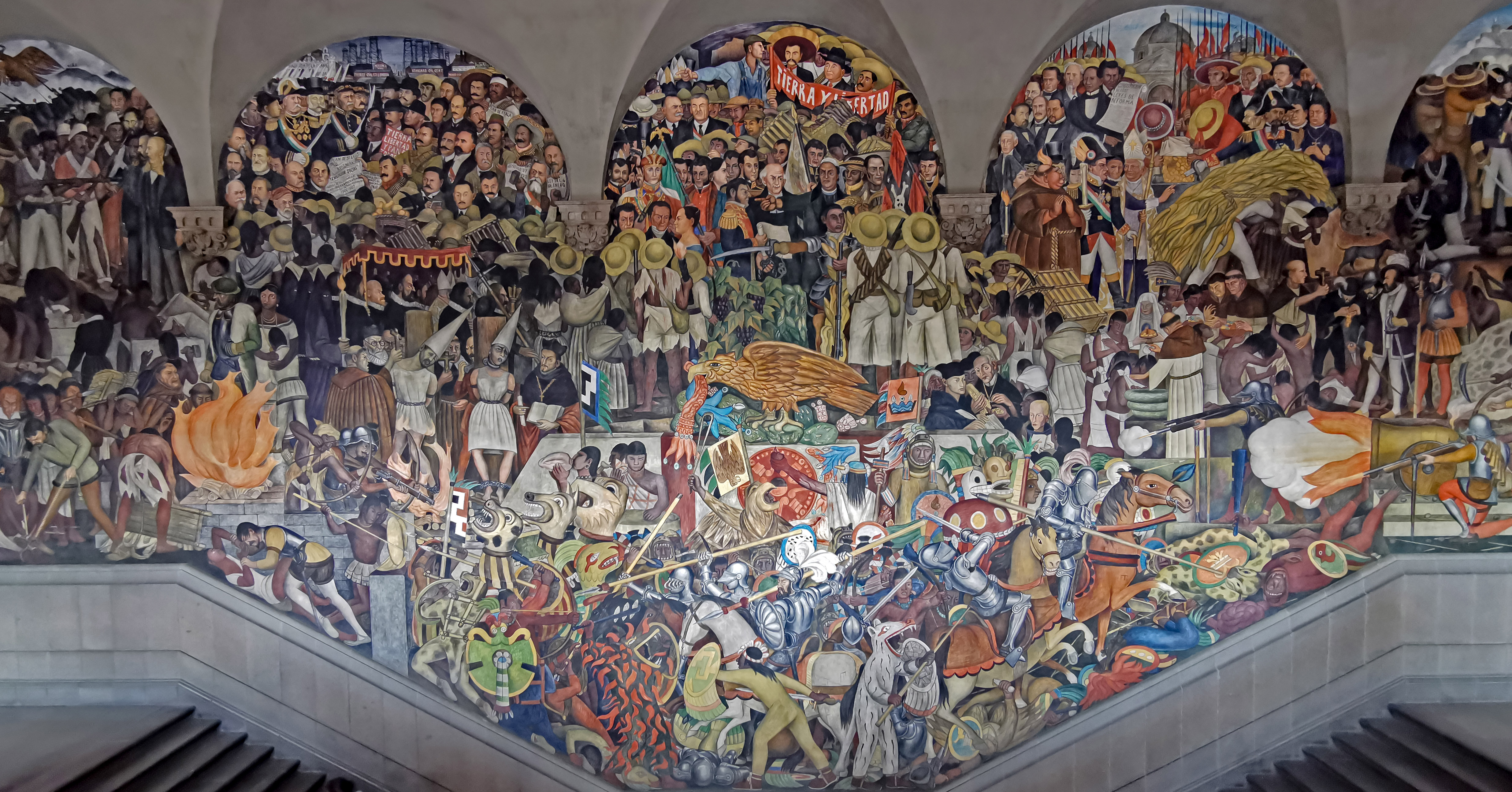
It is high time to recall how this concept came about. The mural—painting on walls—emerged as a separate art form in Mexico during the revolutionary events of the 1920s. As we recall from Soviet history, after the 1917 revolution artists too tried to make sense of and reflect on what was happening, experimenting with new forms and formats of visual art.
 Source: Za Rubezhom newspaper
In Mexico, the government supported with funding the creation of monumental paintings reflecting the changes in the country's life, the ideals of the revolution and the renunciation of the old world at the dawn of the phenomenon; large drawings in the style of political posters illustrated protest against the "old" life. Gradually, wall paintings organically entered the urban environment and became popular in many cities around the world, retaining the Mexican name of the phenomenon, derived from the word "muro", which translates as "wall".
The protest origins have largely "faded away", giving way to beautiful, pacifying images. At the same time, murals often respond to the social problems of cities: environmental, economic and others.
This kind of "hollowing out" can be seen in other art forms too, for example in music: rock or rap originally emerged as protest movements, but became popular and later the protest element faded away or became "cartoonish"—after all, what protest is there in Russian rock or Uzbek rap? Just fashionable music, popular among a certain generation.
Likewise, Tashkent's murals can be roughly divided into pacifying ones with doves in a blue sky and conceptual, thematic ones. On this subject, naturally, there is a whole spectrum of opinions on social media: some write that doves and sky have become tiresome and they want something serious in the composition, to which others respond that after watching international news, what you want is precisely a blue sky with doves.
We have previously written about how murals adorn neighbouring Almaty:
Almaty’s Murals: An Open-Air GalleryA mural is a large-scale work of art created directly on the wall of a building, a façade or another architectural surface. Unlike ordinary graffiti, a mural is more often conceived as a standalone work of art tied to a specific place and the urban environment. It can tell the story of a neighbourhood, reflect cultural traditions, be dedicated to notable people, or simply change the mood of a familiar urban space. The murals of Almaty have become an important part of contemporary urban culture. They transform blank walls into distinctive open-air galleries and make art accessible to everyone — there is no need to seek it out in a museum or gallery, you simply have to step outside.mag.humodoc.com
When wall painting is mentioned, of course, one recalls the works of the artist hiding under the nickname Inkuzart. They appeared in Chilanzar during the coronavirus lockdown and continue to appear to this day. A recent much-discussed work is dedicated to the FIFA World Cup and is located on a fence on Shota Rustaveli Street. All of Inkuzart's works carry a subtext; many are devoted to social and environmental issues. Unfortunately, the master's works are disappearing—around 40 have been painted over—but tours are still conducted based on his pieces, and interest in them does not fade.
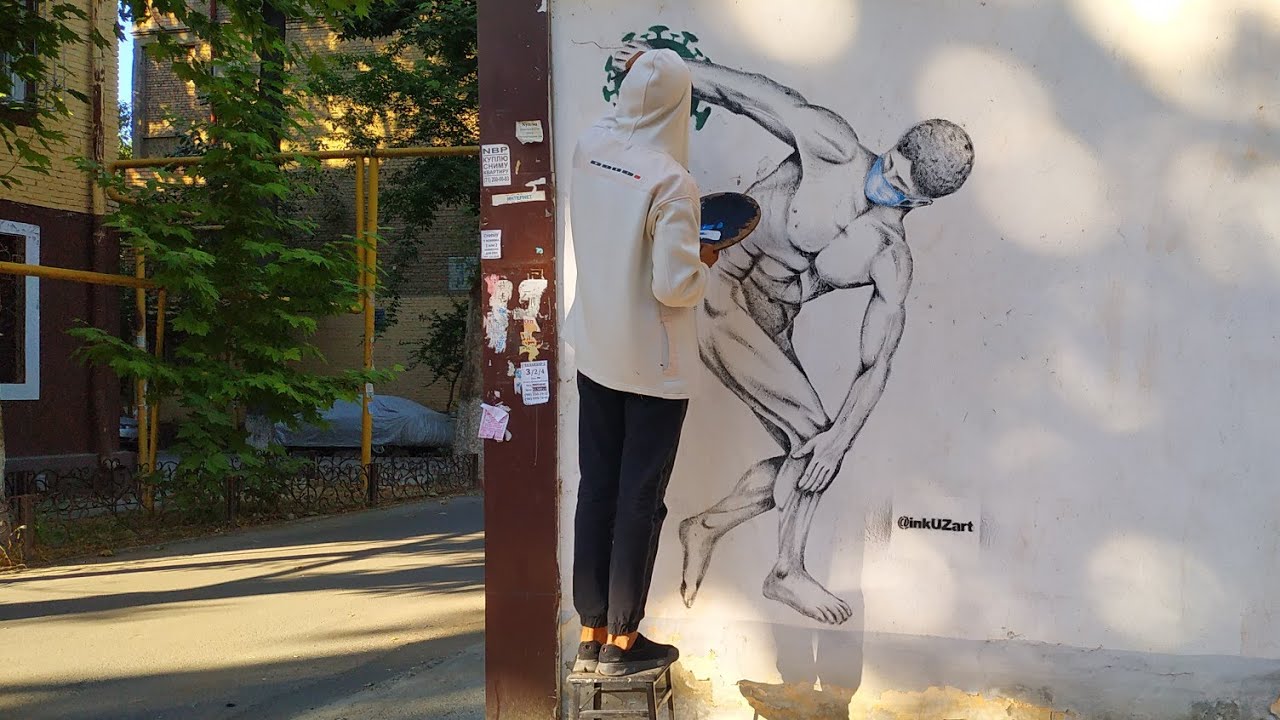
Do Inkuzart's works qualify as murals, or are they graffiti? The question is largely contrived, since there is no clear boundary between murals and graffiti. But there are certain conventions, for example:
1. A mural —usually a large-scale image with a complex composition; graffiti—usually a smaller, unauthorised, quickly created drawing on any surface.
2. A mural is usually created on commission from a city or a business, whereas graffiti —is the author's own initiative.
3. Both murals and graffiti use similar techniques: poster style, grotesque, bright colours from spray cans, recognisable signature techniques.
As we can see, the distinction is blurred, and one of Inkuzart's works could well be classified as a mural—these are the portraits, familiar to Tashkent residents, of three enlighteners and literary figures: Abdulla Qadiri, Chulpan and Abdurauf Fitrat. The composition occupies the first floor of the end wall of a building facing Mukimi Street and, besides the portraits, includes a poem by Abdulla Qadiri that remains relevant to this day.
It is worth noting that the creation of this composition, which appeared in 2021, was the first in a series of events to restore the memory of the Jadids; it was followed by exhibitions and lectures by Maksud Askarov, a remarkable multimedia display at Tashkent City Mall and a number of publications by Nadira Khidoyatova.
And in 2024, on the wall of the office of the Museum of Memory of Victims of Repression on the Bozsu side, a new mural on the theme of the Jadid movement appeared, in the composition of which—are portraits of the enlighteners Abdulla Qadiri, Mahmudkhoja Behbudi, Munavvar Qori Abdurashidkhanov, Abdurauf Fitrat, Abdulla Avloni and Abdulhamid Chulpan. This time the mural was created on the initiative of the Public Foundation for the Support and Development of National Mass Media and the State Museum of Memory of Victims of Repression.
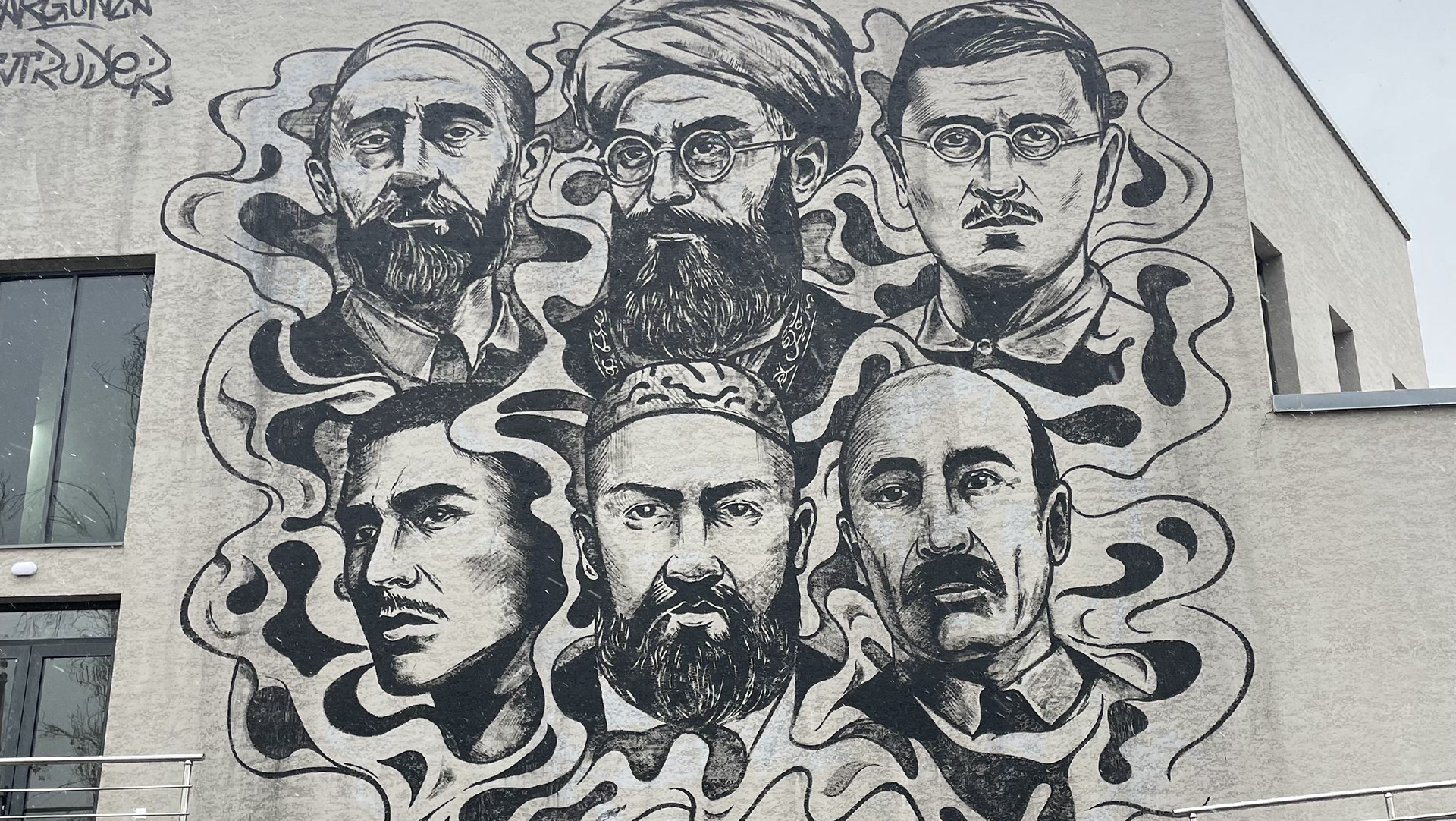 Photo: Intruder
Continuing the theme of support for murals and graffiti, let us recall that in the spring of 2022 the idea of developing street art was supported by the hokimiyat. Furkat Makhmudkhodjayev, who at that time held the post of deputy hokim of Tashkent — head of the department for the support of the mahalla and family, gathered enthusiasts and activists to discuss ideas. At the start of the project "Mahallada duv-duv gap: Drawings on the Walls of Mahallas", it was decided to collect proposals for suitable locations for the drawings. The main outcome of the initiative—was that all the activists understood that "it is already possible", the city had given permission, and you would not be taken away by representatives of the internal affairs bodies for creating a drawing.
We recall the support "from above" when travelling around Tashkent's murals— most of them are located in the Sergeli district and appeared with the support of Elbek Shukurov, the district hokim from 2020 to 2025. And almost all the murals are not "pass-through" but interesting.
6 notable murals
 Source: Anons.uz
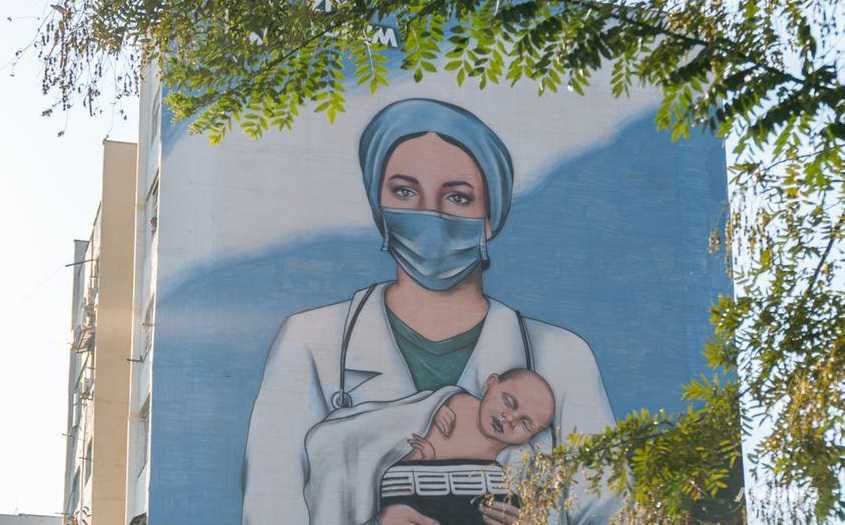
For example, an emotional work depicting a female doctor holding a skullcap with a baby in her arms. The subject, echoing the Christian Madonnas, is dedicated to the tragedy of the coronavirus pandemic. The mural was initiated by the Ziyo Forum Foundation for the Development of Science and Education and the district hokimiyat as a tribute to the medics who saved the lives of children and adults. The creation of this mural, located at the intersection of Yangi Sergeli and Lutfkor streets, took 720 litres of fuel for automotive equipment, 53 kg of paint and 80 hours of the artist's work at height.
 Source: mytashkent.uz
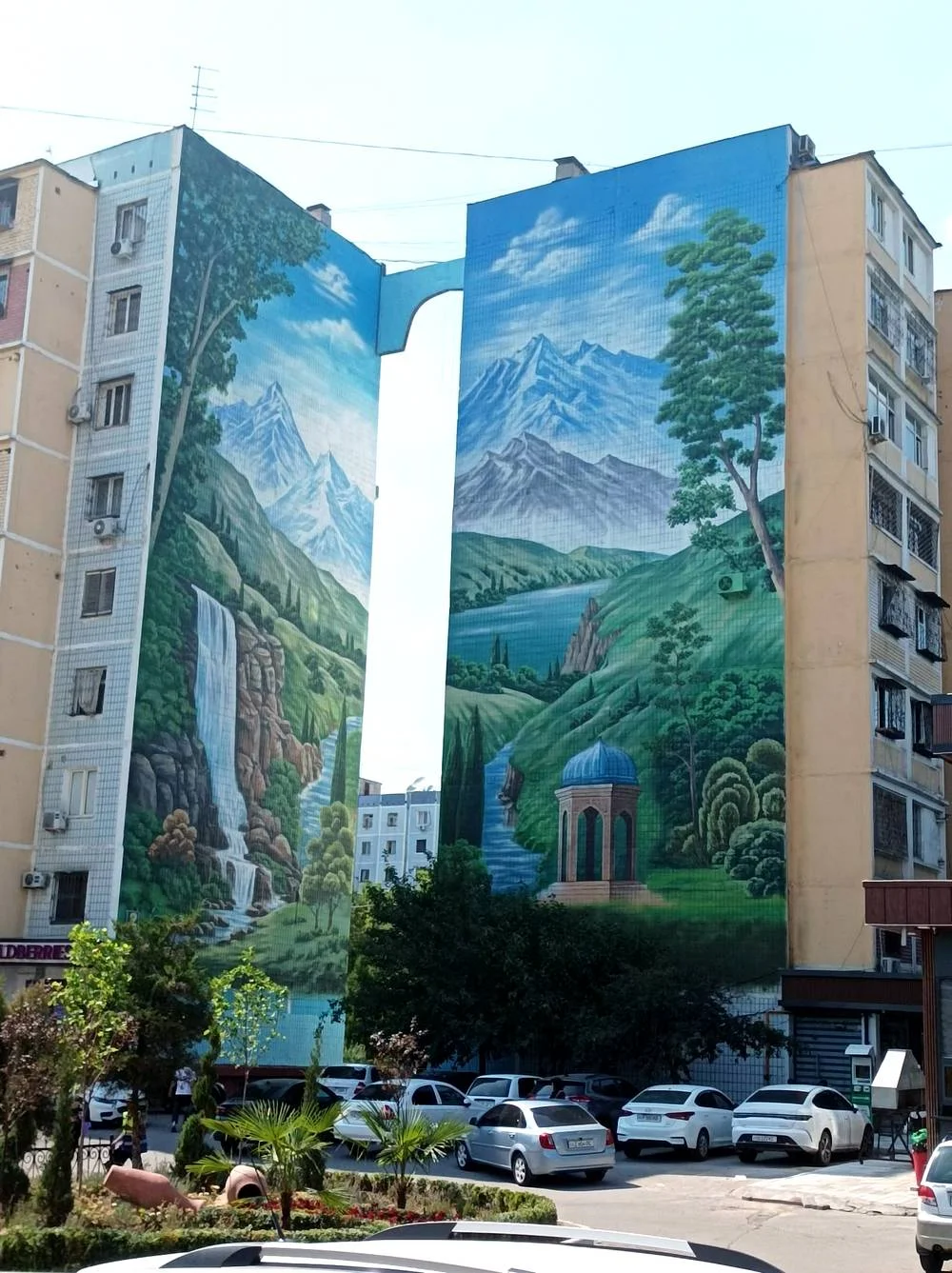
A mural with a landscape, located on two mutually perpendicular walls at the address: Sergeli-8A massif, buildings 2 and 3, looks unusual.
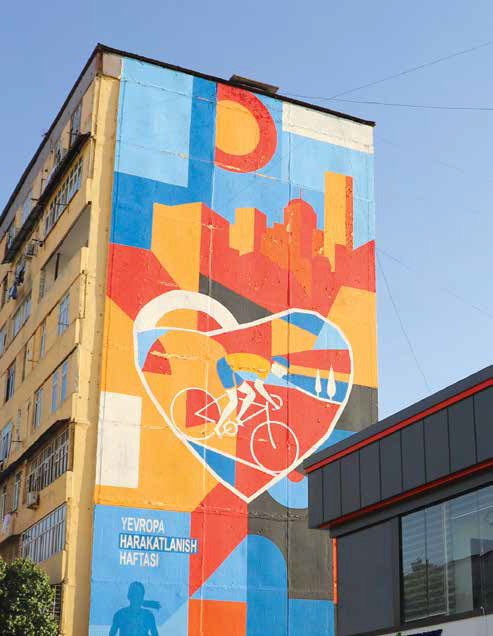
The mural that appeared for World Car-Free Day looks bright and festive. A heart and a cyclist call for a healthy lifestyle. This appeal is located near a metro station on the border of the Sergeli and Yangihayot districts. The creators— are the creative union of young artists Brushers.
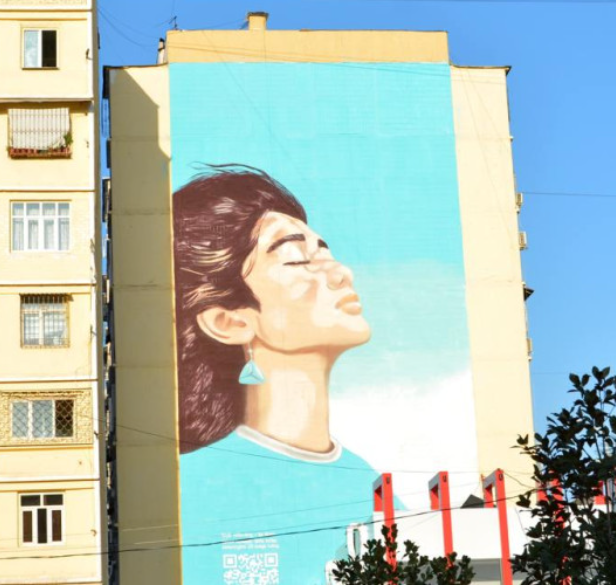 Source: Darakchi
The most unusual Sergeli mural, however, is known for purifying the air! It is painted with Airlite paint, which, under the action of sunlight, neutralises harmful particles in the atmosphere, converting nitrogen oxides into harmless nitrates. According to the organisers, TBC bank and the artist Nadezhda Riksiyeva, the purification efficiency of the 250-square-metre mural is comparable to that of a forest of the same area and neutralises the air pollution of 50 cars.
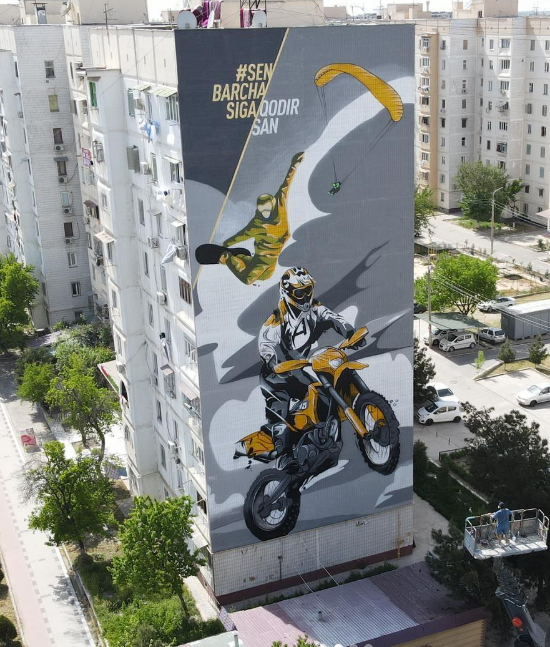
And one more Sergeli mural stands out from the general row for its conceptuality, bordering on aggressiveness. It depicts, in contrasting black-white-yellow colours, a speeding motorcyclist—the embodiment of every lad's dream. The inscription in Uzbek, "Sen barchasiga qodirsan", translates as "You are capable of anything". So there you have it, a motivating art object that urges you to keep moving.
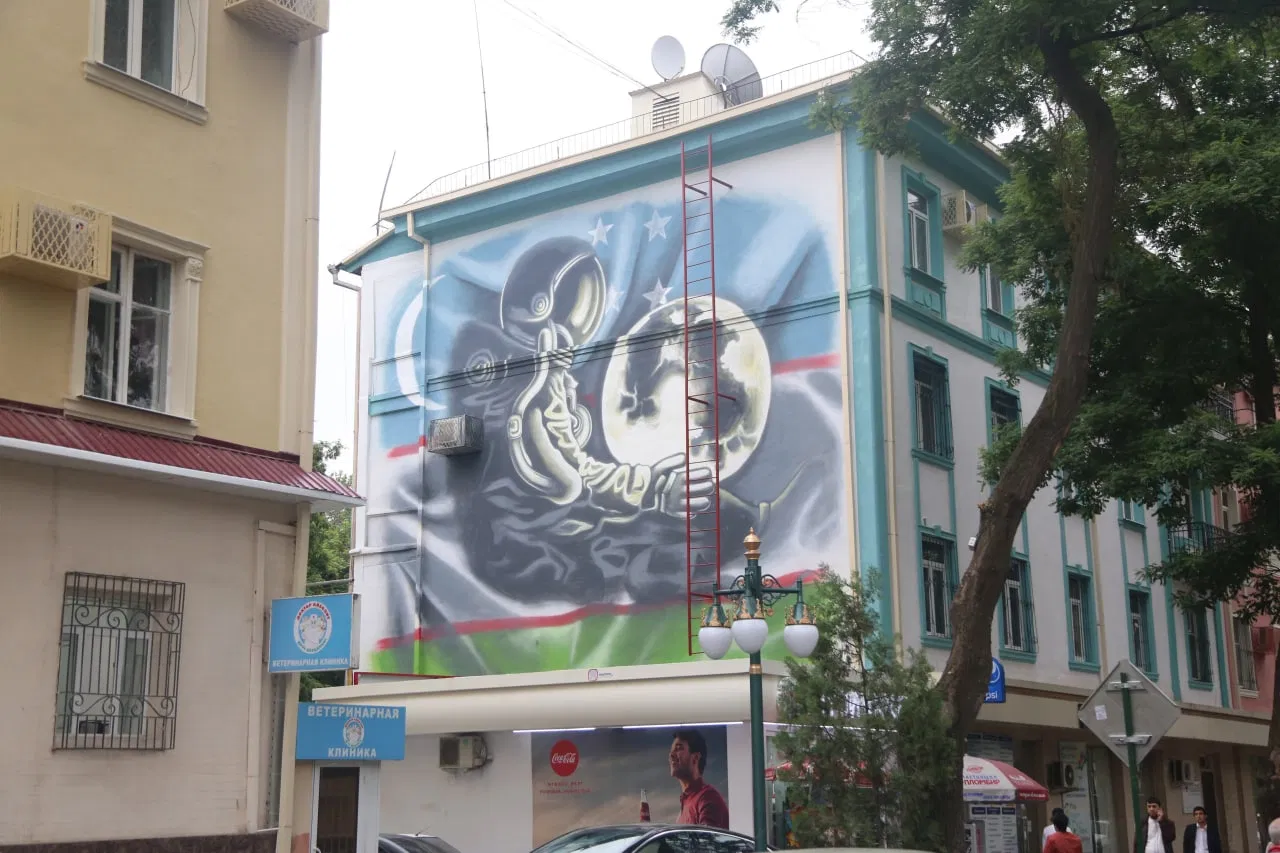
Besides the Sergeli district, there is another place in Tashkent with a concentration of murals: they appeared here in 2022 after the reconstruction of Gagarin and Chilanzar streets. On Gagarin Street, on the end walls of old — built in 1958 — multi-storey buildings, two interesting works unexpectedly turned up, connected, naturally, with space. Both were created with a considerable sense of humour. In one of them, a cosmonaut sits on a crescent moon as if on a piece of cheese, while in the other— he holds our planet in his palms. Two more murals on Chilanzar Street are located on the walls of buildings facing each other: in one, doves fly in the sky among the clouds, while the second also features a stele installed for the 30th anniversary of Independence. Incidentally, one of these buildings—is the very one on which the three portraits of the Jadids are depicted.
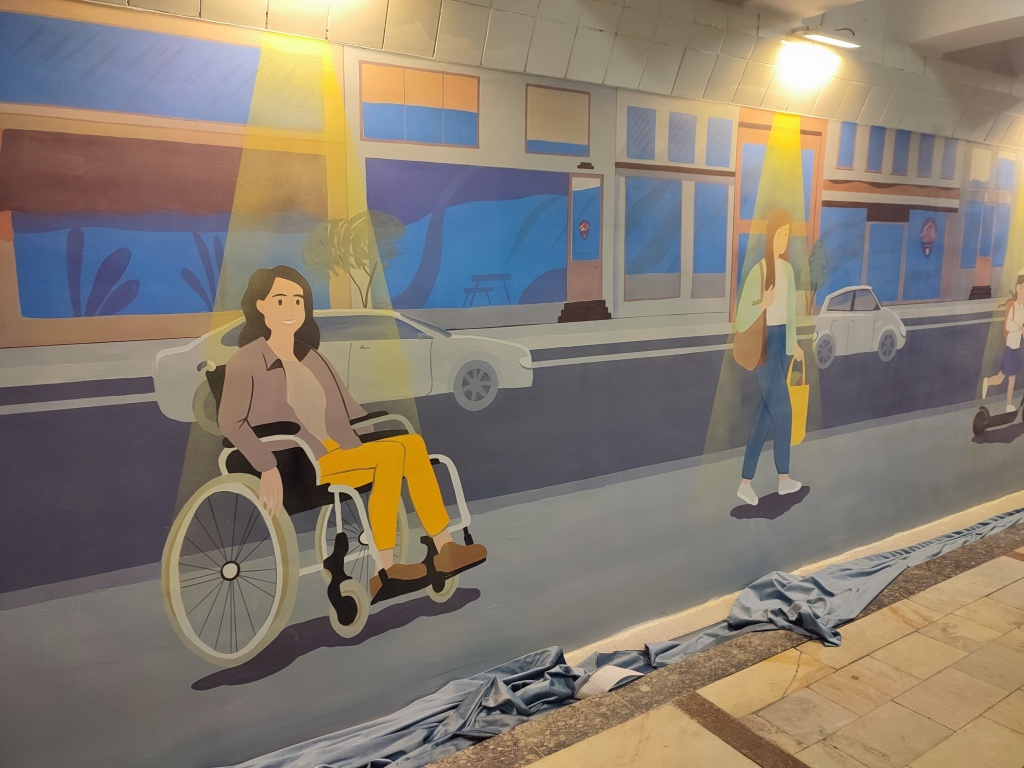
It is also worth mentioning the mural on the wall of the underground passage near TSUM, created in 2023 by the artist Diyora Mamadaliyeva with the support of the UN Development Programme and the Department for Family and Women's Affairs of the Tashkent hokimiyat. The mural is dedicated to the project "Call Umida", connected with a safe street for girls, women and children with disabilities.
Here we shall conclude our review, otherwise it would become boundless. Beautiful murals are constantly appearing in the capital, for example, in the 9th quarter of Yunusabad, in the former Panel massif, on Maktumkuli Street and in other places.
As we have seen, Tashkent's murals respond to various needs of the city's residents: social and environmental, aesthetic and even psychological, as they soothe.
In conclusion—three remarks
First. Tashkent's murals, of course, appeared on prepared ground, thanks both to ancient ornaments and panjara and to the remarkable mosaics adorning our buildings.
Second — the sad part. Not everything is so rosy; for example, here is a comment from Natalya Petrovna:
In our Chilanzar, in the 23rd quarter (Uchtepa district), a mural was painted. But our joy was short-lived. After the rain, it all peeled off. In Sergeli it is very beautiful, and ours was beautiful too. It is a pity that ours is not durable.
We should not end on a sad note; the urban environment of the capital is increasingly pleasing and growing with new paintings. Therefore, there is also a third observation.
To all who think there is little visual creativity in Tashkent, we invite you to take a stroll through the streets of Tbilisi: all buildings, fences, underpasses and any surfaces are covered in graffiti. At first it delights, but then it tires you out and you even want to wash it all off or paint over it to get rid of the visual clutter. Better in moderation and with quality, with soul.
Newsletter
A letter from the HD editors
Once a week, we send the best stories, events, and cultural discoveries from Central Asia.