Art
Jamila Taken: "I want to make the world a little kinder and more beautiful"
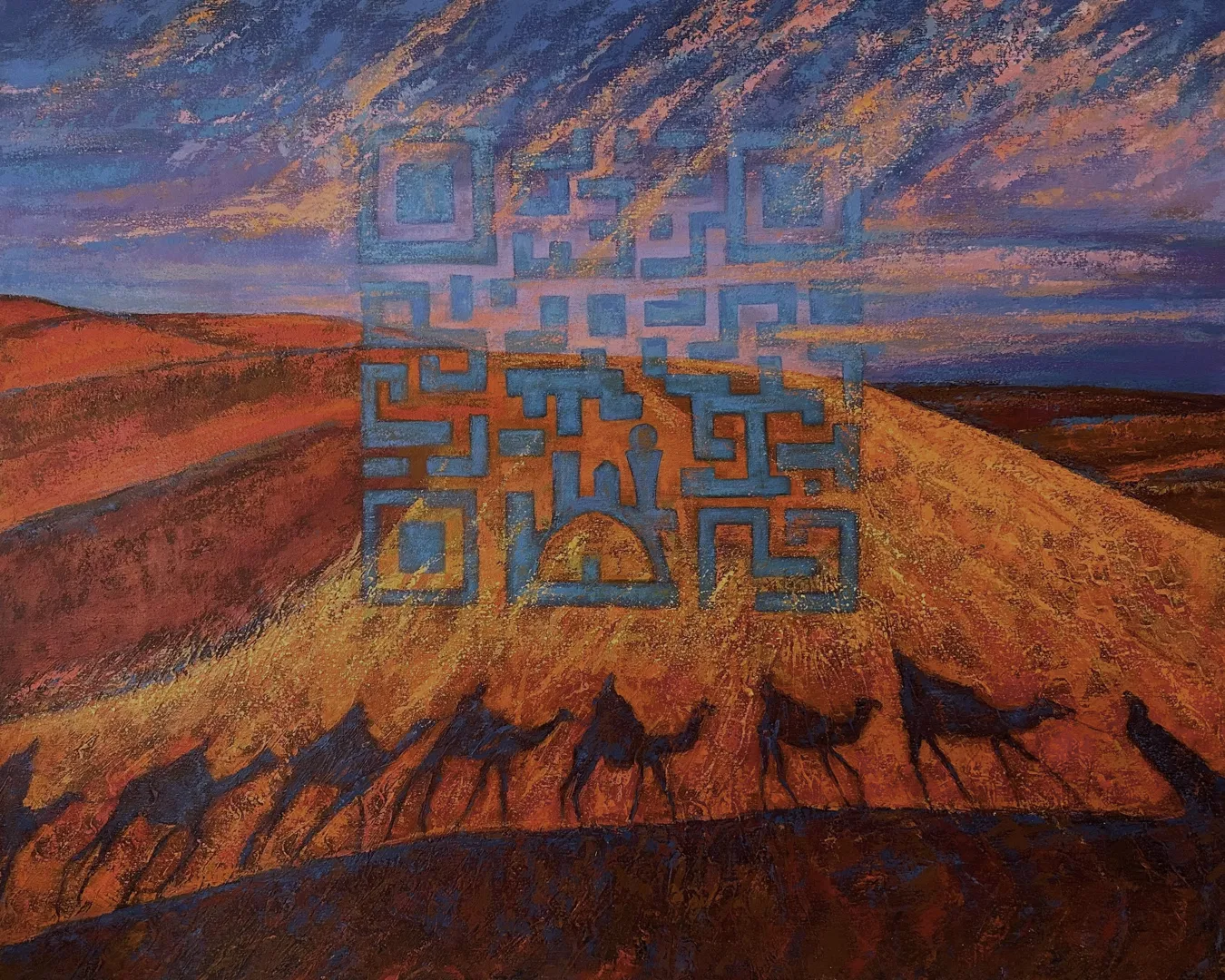
Artist and founder of the International Women's Independent Artists' Fund "Taң-Sholpan" told HD magazine how her art has changed, why it is especially hard for a woman artist to combine creativity and family, what going international gives artists of Kazakhstan, and why artificial intelligence cannot replace a living author.
You came to art back in Soviet times. What shaped you in the first years of your professional path?
In Soviet times, the tasks facing an artist were somewhat different from today: socialist realism existed, you had to depict workers, peasants, production - what we see around us, in an academic realistic manner. These were plein air works, studio painting, portraits, genre compositions, but I was interested in the work of the Peredvizhniki, world classics, impressionists, post-impressionists, I absorbed all of it like a sponge, figurative painting and composition were especially interesting.
Today everything has changed - both the style and the themes, and the very concept of the artist. But the main thing has remained unchanged: you need to constantly create, work and show the reality that surrounds us, without simple copying, to convey the artist's inner worldview.
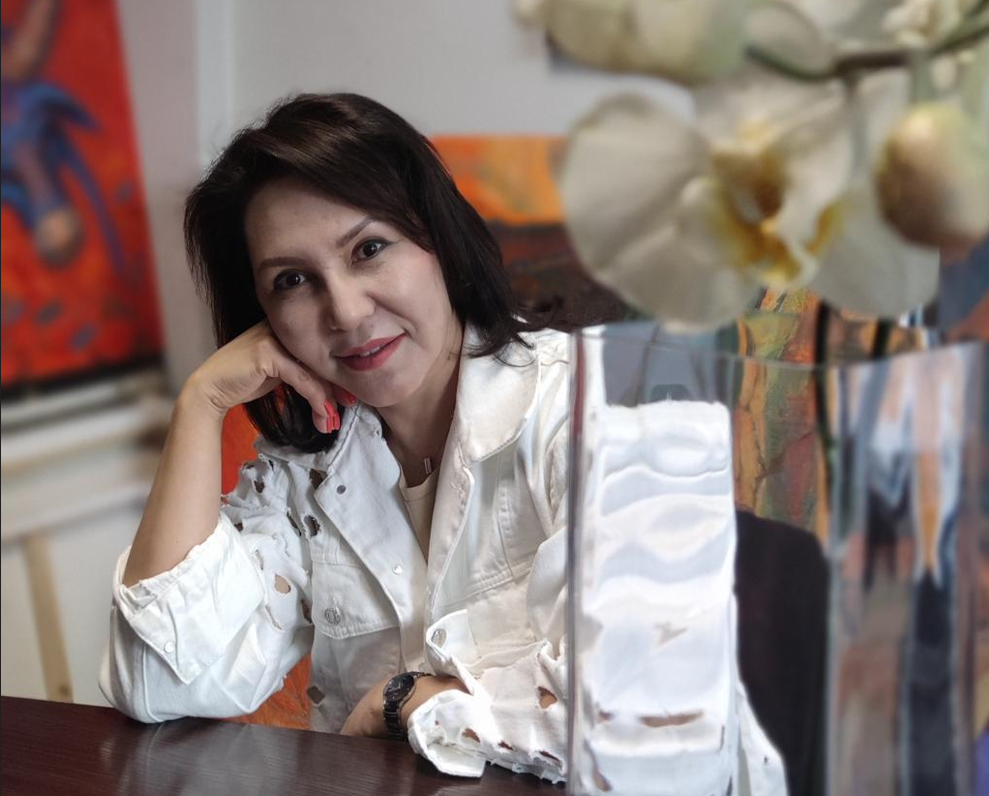
Now, when big geopolitical processes and natural disasters are happening, art is changing too. We are increasingly interested in deep processes, the emotional and spiritual component, the inner psychological state.
The female image occupies an important place in your work. What continues to attract you to this theme?
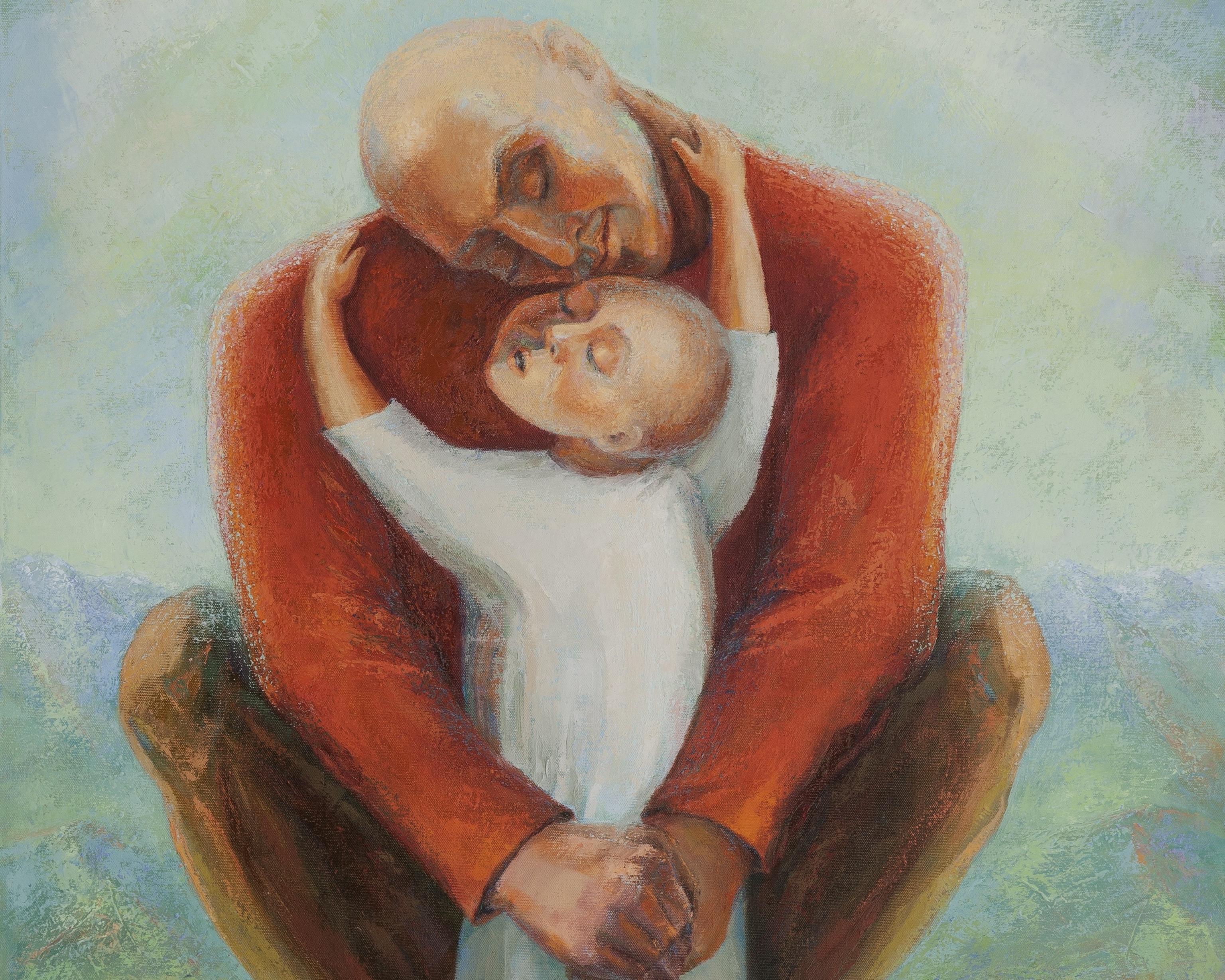
The modern woman differs from the one who lived in Soviet times. But at the same time there is a single component: a woman is first of all a mother, a continuer of the family line. A woman is a support on which much rests, despite the fragility of her shoulders. Raising children, the family hearth - all of this is still largely connected with a woman.
I have always been interested in the inner state of a woman, her spiritual component. How does she feel the world around her? What does she want to convey? How, through plasticity, line, color, can this state be shown? For me, a woman is first of all a woman-creator, a woman-mother, a woman-maker.
What is born first - the image, the feeling, the color or the idea of the future painting?
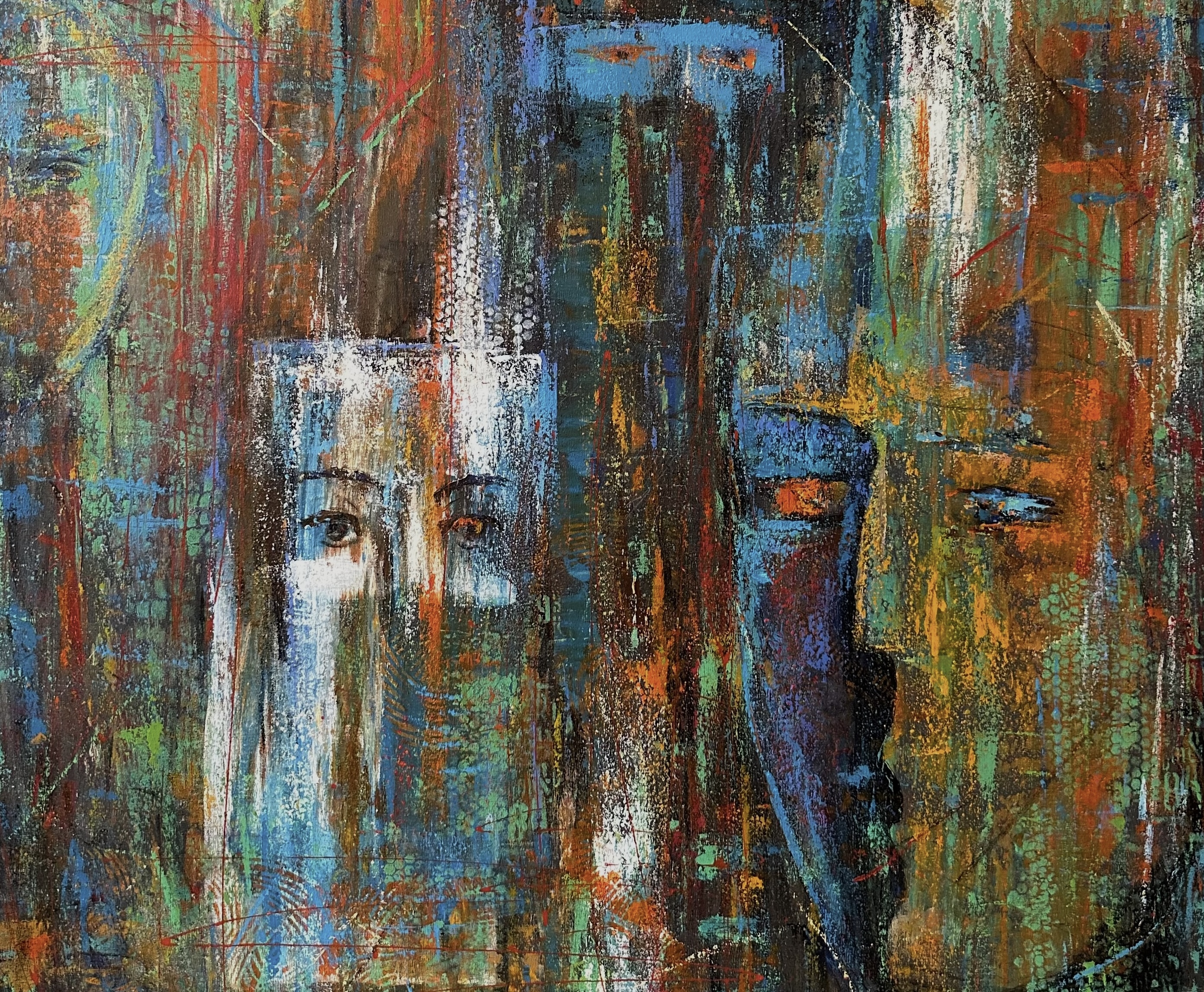
Always differently. Sometimes it is a feeling that instantly stirred me - and I want to show it precisely through color. I have such a work - "Confusion of Feelings."
In my palette, red often predominates. I love it because it is the color of passion, love, fire. It can evoke both positive and negative emotions. It is the color of youth and beauty.
I have always wanted to interpret red, to show its energy. Sometimes through it I convey the intensity of passions, the energy that seethes within me. And sometimes some thought arises, and I want to convey it. You take a canvas, a brush - and then the hand leads itself. Gradually, from one small stroke, a composition, some concept is born.
What does the Kazakh landscape say to you personally?
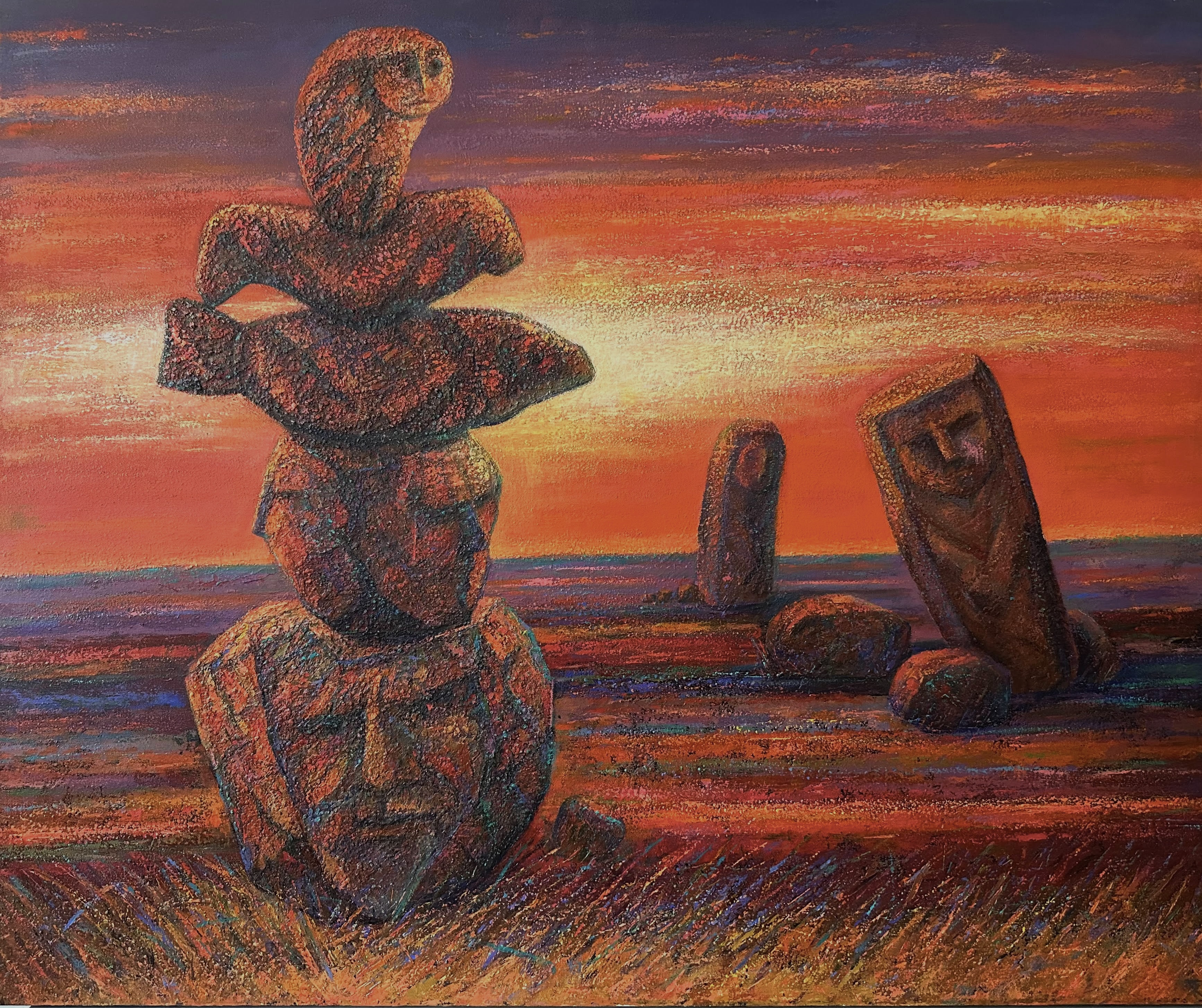
The Kazakh landscape is very rich: we have steppes, mountains, lakes, forests. It is incredibly picturesque, which is why artists turn to it so often.
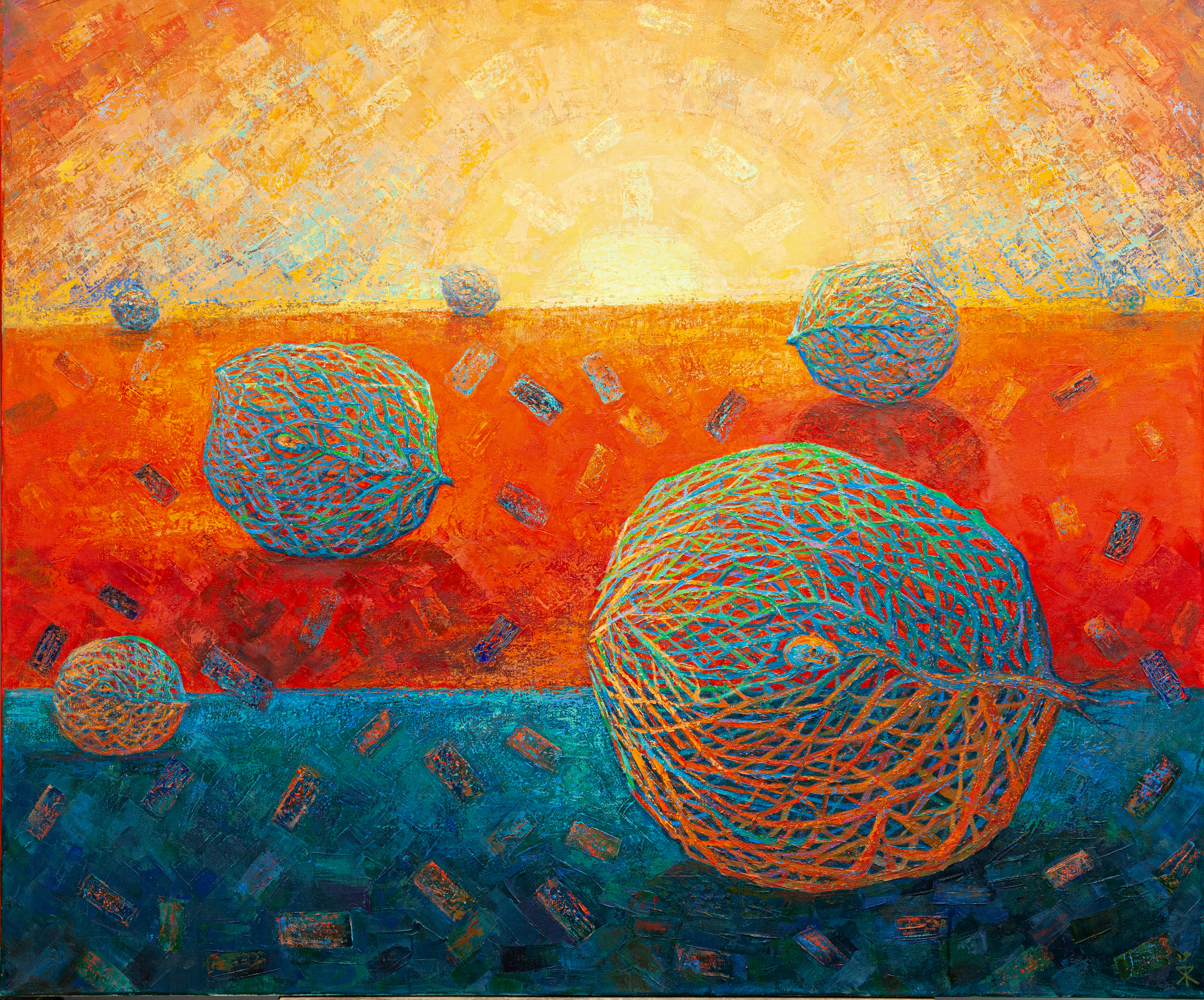
We are nomads, children of the steppes. Since childhood I traveled to my grandmother and grandfather, who lived in Semirechye. I remember those steppe fields, the tumbleweed. This image in many of my works has become a symbol of our life.
In Kazakh, tumbleweed is "қаңбақ". I even had a personal exhibition with that name. Human life is also similar to this movement: we seem to roll on and do not know where the future will lead us. I have always liked distant horizons, space, the sky, the steppe.
Recently we went to the Аral, to Lake Zhaksykylysh, where salt is extracted. It is a very beautiful place, I saw incredible shades of earth there. We passed Baikonur, and I finally understood the meaning of this word - "baikoңyr," I understood why it is translated as "rich valley," "rich land." This land - with all the shades of brown, red, ochre - is so picturesque and energetically strong that I wanted to convey this in a work. I do not yet know its name, but I am working on it.
It seems to me that it is generally important for Kazakh artists to show our steppes, expanses, this breadth - the whole spirit of our identity. Freedom, the striving for the new, for what lies beyond the horizon. For me this is part of our genetic code.
In 1998 you founded the "Tan-Sholpan" fund. Why specifically a women's association?
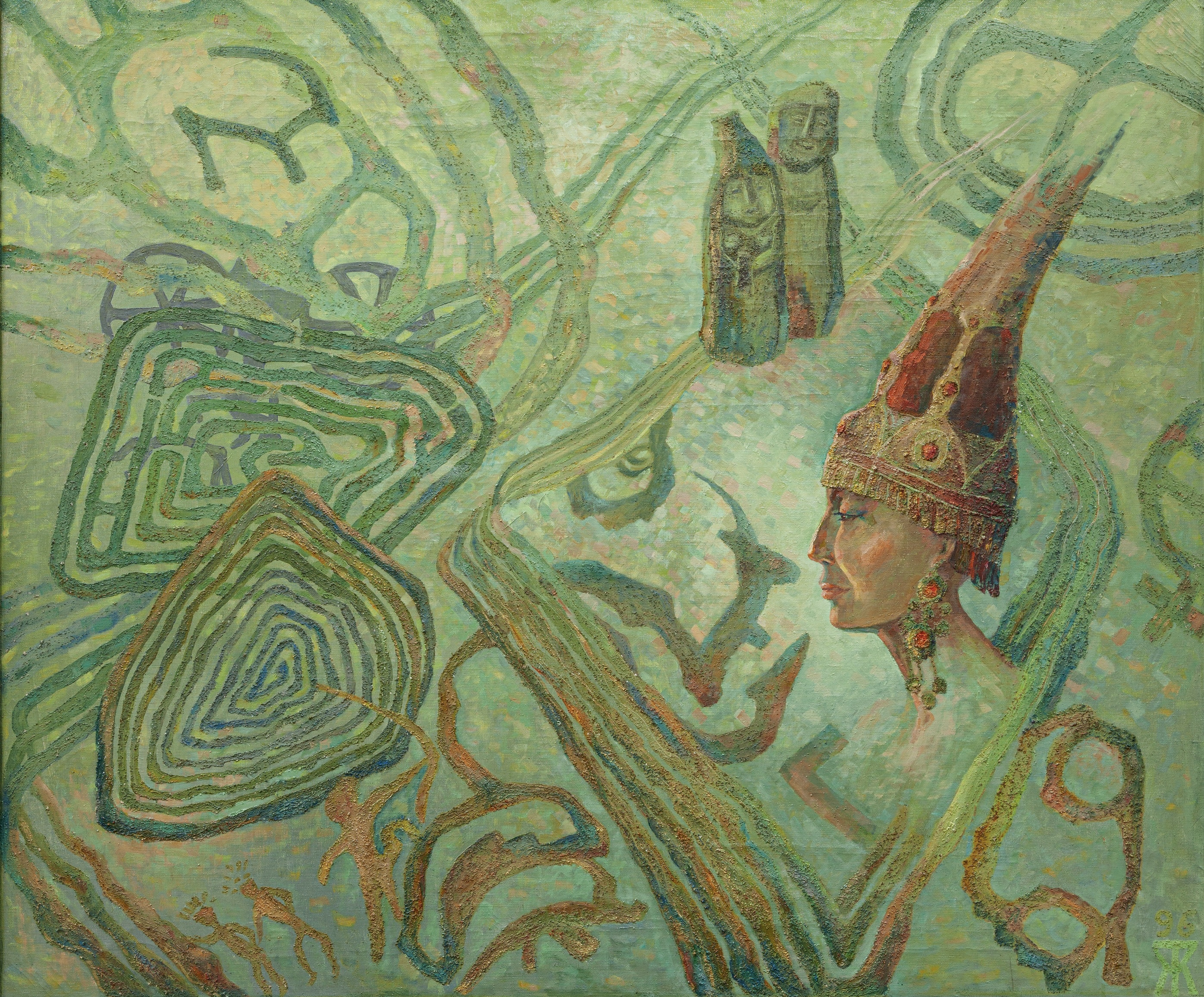
I had been a member of the Union of Artists since 1996 and at that time taught at the Republican Art College. We worked a lot with girls, and I wanted to give them the opportunity to exhibit more often, but when there are small children, creating constantly is very difficult. To make a personal exhibition, you need to have at least 50 works, and then choose the best ones from them. This is not always possible, so in 1998 I had the idea to create a women's fund so that we could exhibit as a group.
I was often asked: why specifically women? Why not create a general fund for men and women? But the Union of Artists already exists, and we are all members there. I wanted specifically to unite women for whom it is difficult to immediately make a personal exhibition because of family and children.
If you unite, each can present five or six works, and already you get a big exhibition. This can be done much more often. A personal exhibition sometimes takes 5-10 years to assemble, while in a group you can show your new works every year.
This is enormous motivation for a female artist - an incentive to work and assert herself.
In 1998 we made the first exhibition, and then, after a long break, since 2020 we began holding them annually, sometimes even several times a year. We exhibited not only in Almaty, but also in Astana, at the National Museum, in Shymkent, and took part in international symposiums.
I see how our artists have grown during this time.
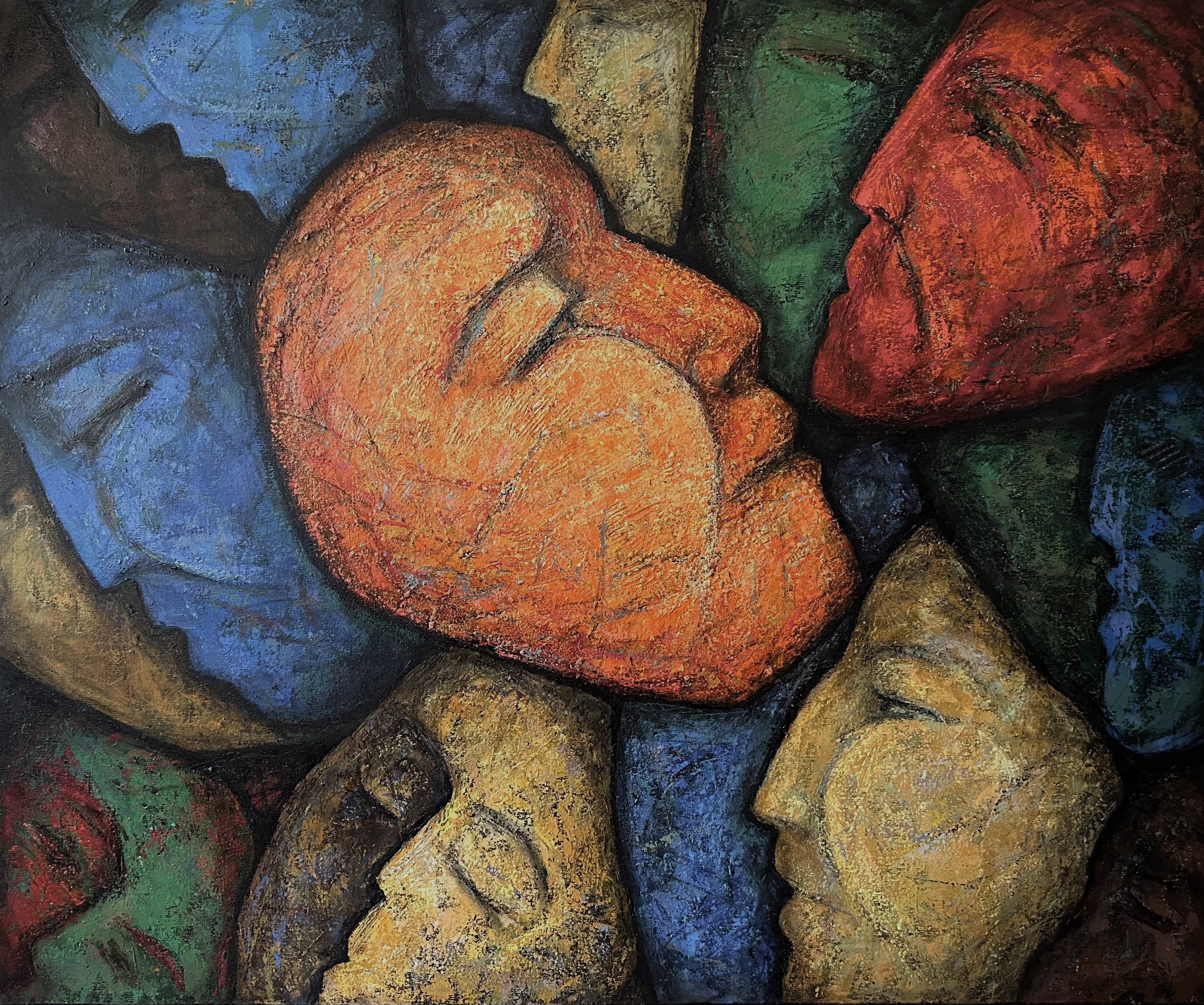
You are simultaneously an artist, an educator and an organizer of the artistic environment. Which of these roles turned out to be the most difficult?
Everything brought me pleasure. It's just that each pursuit had its own period.
At first I formed myself as an educator. I was interested in teaching, in seeing students grow - and together with them I grew and developed myself. At some point I realized that I had outgrown this path and had to continue working creatively myself. I devoted 20 years to pedagogy, headed the department of painting, sculpture and graphics at the Republican Art College, but later I realized that I had to become an artist first and foremost - to realize my ideas and plans, to experiment.
I traveled a lot, visited exhibitions, saw genuine works by world artists. This "visual literacy" helped me find my own theme, and despite this, I am still experimenting. I am interested in finding new forms and styles. For me this process is endless.
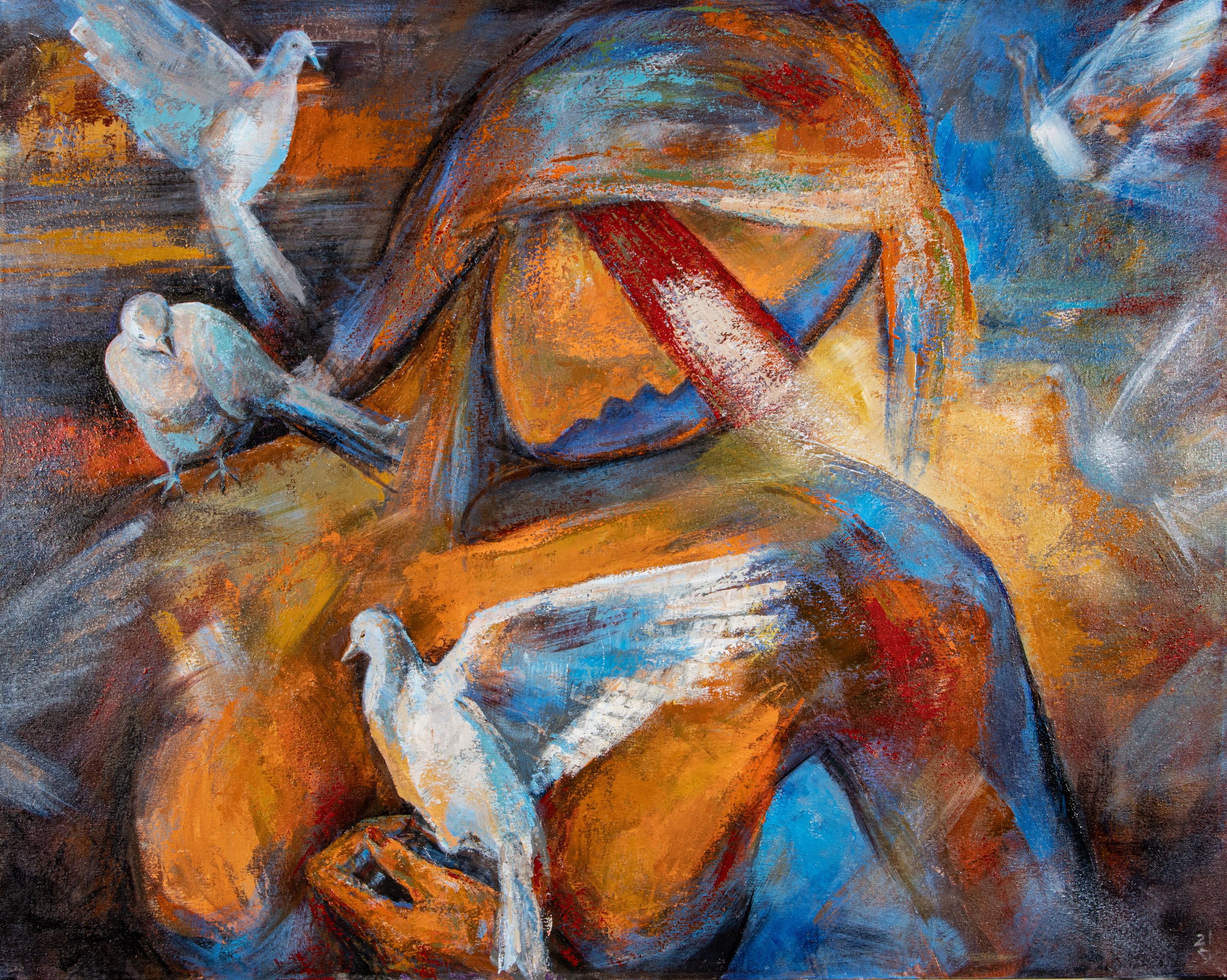
In 2021 your exhibition was called "I Closed My Eyes to See." What does this inner vision mean to you?
With our eyes wide open we often see only ordinary things. When we immerse ourselves in ourselves, we feel and see the subtle world more deeply, we sense its fragility. I wanted to show my understanding of the world, my sensations, my inner world.
Kamilla Li on Zhamilya Taken:
Zhamilya Taken is a special phenomenon in contemporary Kazakhstani art, a bright, independent and very recognizable creative person. She not only built her own artistic practice, but also became the leader of the community of women artists "Tan-Sholpan," creating an international platform for them. For me her work began with pieces from the series "Qanbaq." In the image of the tumbleweed, familiar to every inhabitant of the Kazakh steppe, I suddenly saw human faces. This became a strong metaphor for me: as if all of us today are being carried away by the wind of change. In her works there is generally this feeling of a complex transitional time - a moment when the old is already leaving, the new is only forming and it is not yet fully clear what it will be. At the same time, in each of Zhamilya's works there always lives a very personal, almost confessional intonation addressed to the viewer: the artist seems to invite you to see something of your own in these creative messages. Her painting is distinguished by density, complex coloristic texture and strong energy. It is hard to walk past such works, they make you stop, look closely and ask yourself what exactly is happening before us, what the artist is transmitting, what is so important for her and for us.
What distinguishes an artist from Kazakhstan today from an artist of previous generations?
Opportunities have become completely different. Thanks to social networks we can show our works to the whole world. I was invited to participate in online exhibitions in New York, London, Turkey, China. This incredibly expands the boundaries.
Previously, in Soviet times, we were in a fairly closed space. Now the horizons are enormous. Artists from Kazakhstan participate in international exhibitions, symposiums, send their works abroad, but difficulties remain. These are primarily the financial situation of artists and their professional status.
We constantly talk about the need to return full professional status to the artist. This year an important event took place - the title "Honored Artist of Kazakhstan" was restored, and we are very happy about this.
You simultaneously speak about nature, the human being and the future of the planet. To what extent is the ecological theme becoming part of your art?
The theme of nature, the human being and the future always occupies an important place in my work. Even if I work abstractly, through colors, spots and lines, I still try to show something. Sometimes it becomes similar to a rebus that the viewer still has to solve.
The same "Qanbaq" for me is connected with the human being and our present time - so fragile, in which there is no complete confidence in the future. I am very concerned about the current state of our country. I am a patriot and I worry about its future: I have children, grandchildren, and it matters to me what their future will be. Sometimes through images I try to convey this too.
Do digital art and artificial intelligence pose a threat to painting?
For some, new technologies certainly expand opportunities. For example, for designers, artists working with book illustration? but for an artist who creates a painting, artificial intelligence, in my view, cannot replace creativity. I am not afraid of it.
Yes, artificial intelligence can create a perfect drawing, but it will be work without a soul. And an artist can draw a crooked line, make a nervous brushstroke - but this brushstroke was made by his hand, it comes from the heart, from his feelings.
Emotion, warmth, the artist's state of mind - artificial intelligence is not capable of conveying these. Therefore we should not fear it, but I would not want artists to pass off images created by artificial intelligence as their own works. It is immediately noticeable.
Is there among your works one that speaks especially accurately about you today?
My "Blue Cow" is close to me. I am a Taurus myself, and the cow has a QR code on its forehead and is pregnant. For me, it combines modern technology and what remains unchanged: I am a woman, I am a mother, I am the backbone that holds my family together. And I love life, despite any hardships.
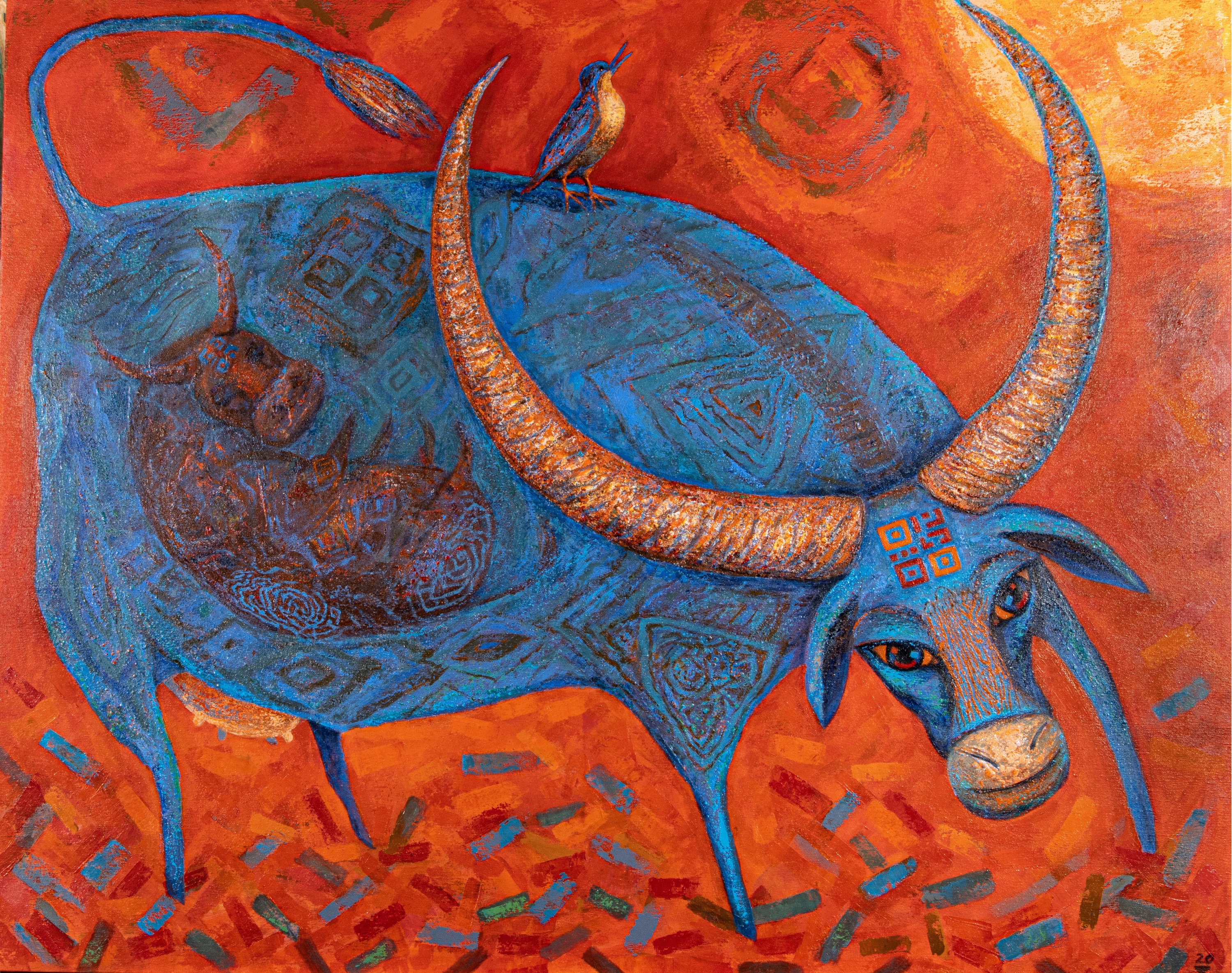
This blue cow has huge horns pointing to the sky, and a bird sits on its back. It stands firmly on its feet, it has faith in a bright future. But I don't want to repeat myself, I like to constantly revive myself, seek new solutions, ideas, plans, develop, move forward, do something new, surprise people and, perhaps, inspire my fellow members of the "Tan-Sholpan" foundation.
The creative process is always constructive. It helps a person develop. For me, as an artist, it is sometimes easier to show than to say. That is probably why I continue to paint.
Newsletter
A letter from the HD editors
Once a week, we send the best stories, events, and cultural discoveries from Central Asia.