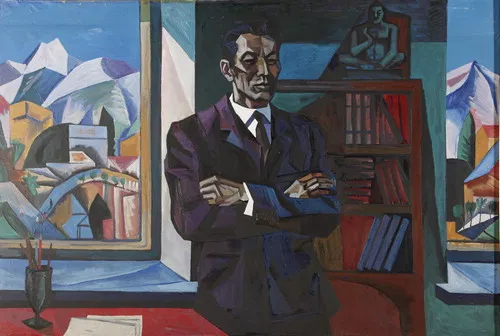
"Who are we, where do we come from, and where are we going?" For the generation of Kazakh artists of the 1960s, these questions were not only philosophical but also creative. They sought to speak about national culture in a modern language, without abandoning tradition yet moving beyond the confines of conventional realism.
The 1960s marked a period of significant renewal in Kazakh art. While artists of the previous generation largely worked within the framework of the classical realist school and under the indirect influence of socialist ideology, younger artists sought to rethink the very principles of pictorial representation, exploring the constructive organisation of form, expressive colour, stylisation and symbolism through their own artistic vision. They drew on the achievements of the Impressionists, Post-Impressionists and Constructivists, combining these influences with the philosophy and aesthetics of nomadic culture. Their vision was shaped by a national cultural code, yet they sought to express it in the language of the twentieth century.
From Steppe to Canvas: The Birth of Fine Art in KazakhstanThe Kazakh school of fine art seems today a natural part of the national culture. However, professional painting, graphic art and art education in the sense we understand them have a comparatively recent history here. How did a country that had no classical artistic tradition of the European type of its own form a professional art and its own artistic language within a few decades?mag.humodoc.com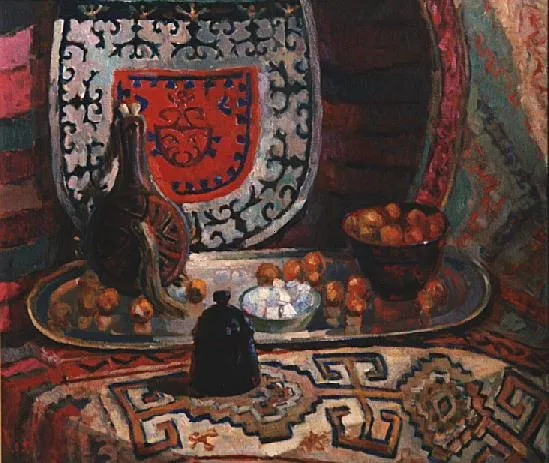
The generation commonly referred to as the shestidesyatniki (the Sixtiers) was not a homogeneous group with a shared artistic programme. Each artist followed their own path, but they all had one thing in common: they differed from the preceding generation of the 1950s, represented by artists such as Mambeev and Telzhanov. Without rejecting the foundations of classical realism, each sought new possibilities for artistic expression through form.
In 1966, at the All-Union Exhibition in Moscow, Salikhitdin Aytbayev presented his painting "Happiness", depicting a young Kazakh couple against the backdrop of the steppe. It was a pure image of youth, of love for one another and for their homeland. The painting contained none of the details characteristic of naturalism; instead, it featured generalised forms and pure, almost flat areas of colour. It caused a sensation: its simple, concise style was bold in the context of the Socialist Realism that dominated at the time, yet remained deeply accessible and human. Aytbayev thus became the unofficial leader of the Kazakh Sixtiers.
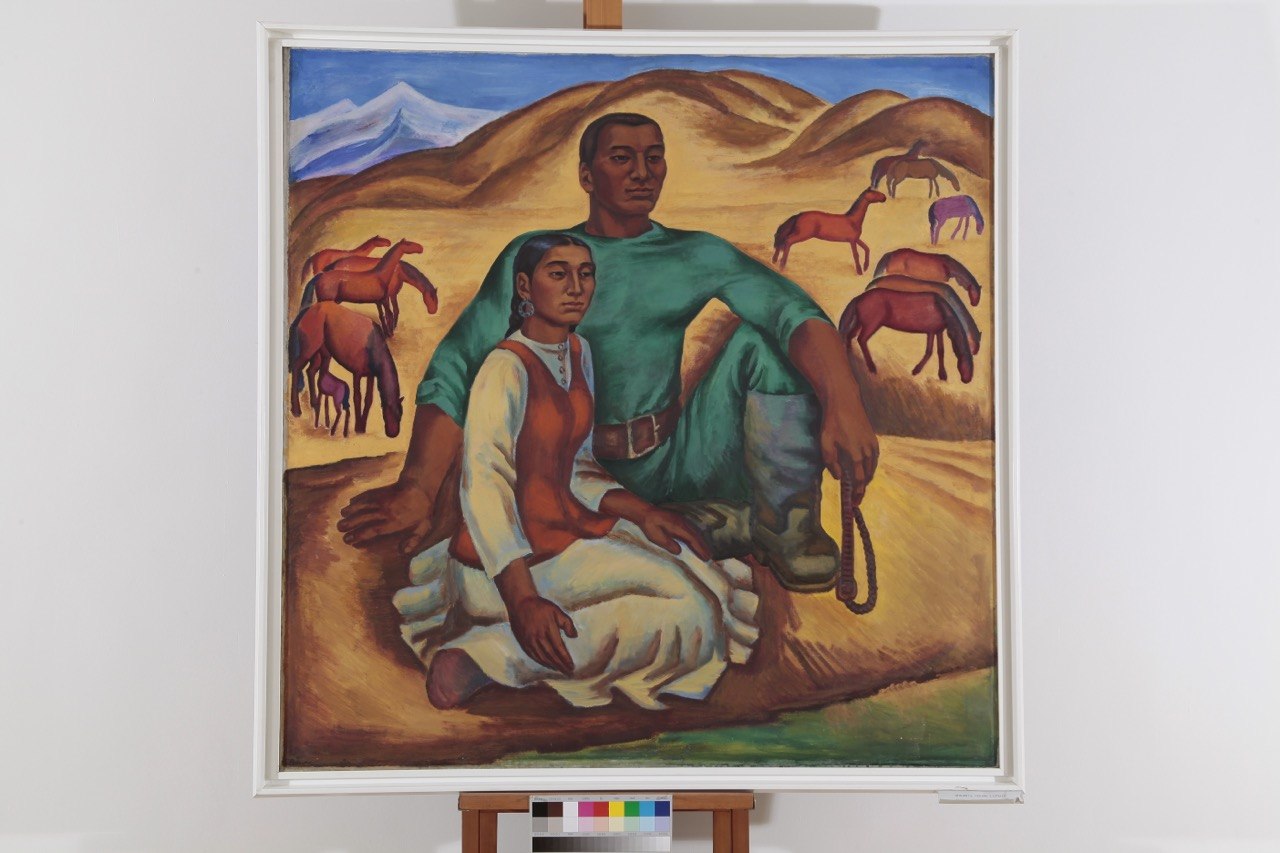 Photo provided by the Abylkhan Kasteyev National Museum of Art of the Republic of Kazakhstan
Alongside Salikhitdin Aytbayev, the key figures of this movement included painters Shaimardan Sariyev, Tokbolat Togusbayev, Bakhtiyar Tabiev and Abdrashit Sydykhanov; graphic artists Makum Kisamedinov, Isatai Issabayev and Adil Rakhmanov; and sculptors Yerkin Mergenov, Tolegen Dosmagambetov and Vagif Rakhmanov. Each of these artists deserves a monographic study of their own, examining their work both in the context of their time and in relation to the present and the future.
The National Theme: More Than Just a Subject
The search for national self-identification has been a constant thread running through the history of the Kazakh art school. It was evident long before the Sixtiers. In Kasteyev's work, it found expression in the scenes of people's lives and changes in their traditional way of life that he observed; in Mambeev's, in the poetic portrayal of nomadic life; and in Telzhanov's, in monumental compositions such as "Kokpar" and "On the Land of Our Forefathers".
The Sixtiers continued this search, but changed the very way they approached the national theme. For them, it was important not only to depict Kazakh life, but also to find a form capable of expressing its inner structure. Hence the generalised figures, large areas of colour and expressive compositions. These reveal the influence of Kazakh ornamental art, particularly the colours and patterns of traditional tekemets, transformed into pictorial motifs. In his "Sign Painting" compositions, Sydykhanov used symbolic tamga signs, conveying their meaning through colour, texture and accompanying details. In his illustrations for the Kazakh translation of Goethe's "Faust", Kisamedinov drew on the tradition of European engraving, combining it with imagery from the Saka animal style. He also incorporated tiny self-portraits in the form of symbols, reminiscent of Rodin's "The Thinker" or figures from European literary classics.
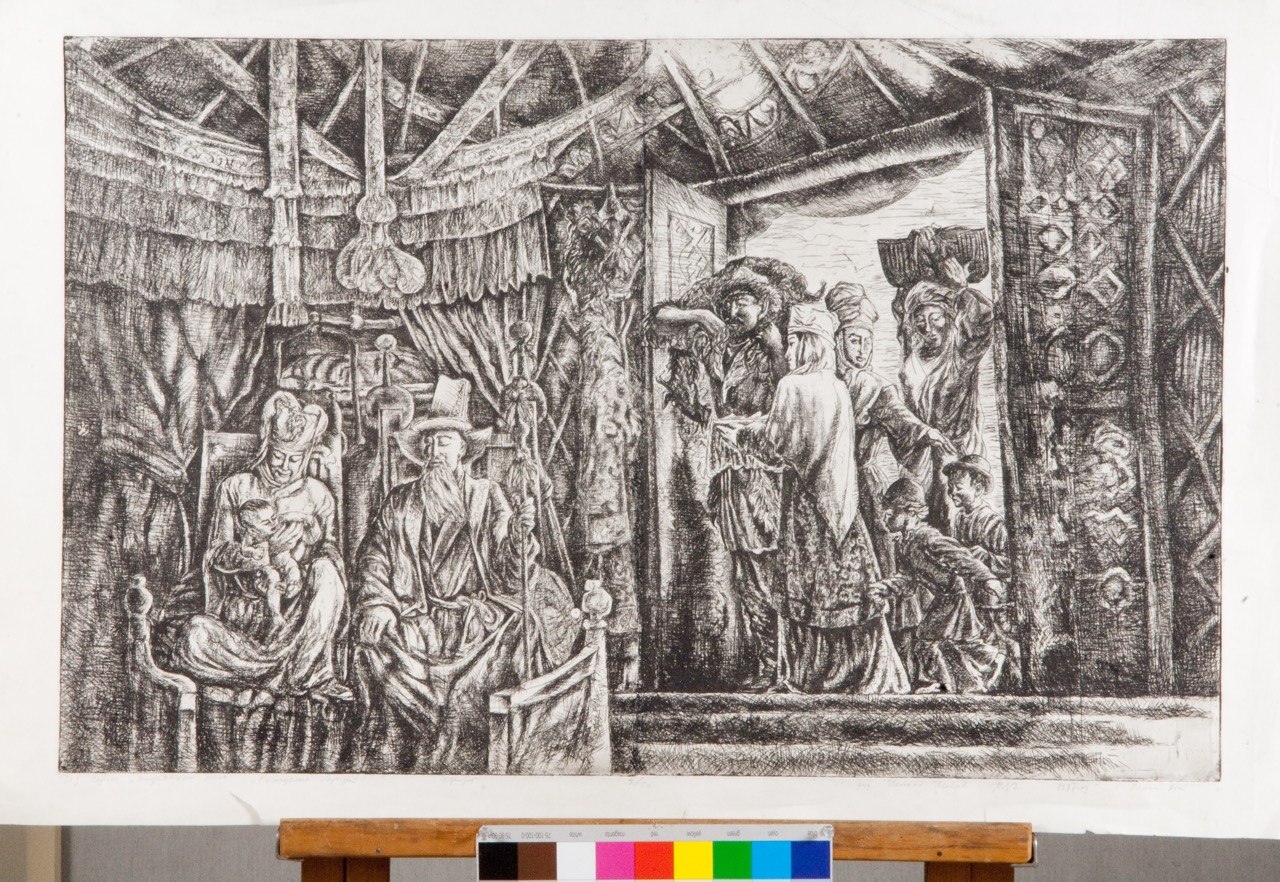 Photo provided by the Abylkhan Kasteyev National Museum of Art of the Republic of Kazakhstan
From Socialist Realism to Freedom of Form
In the work of the previous generation, the national theme was often associated with recognisable scenes of labour and everyday life.
Young artists sought to free themselves from such established conventions. This did not necessarily mean abandoning themes of labour or life in the aul; rather, they were looking for new ways to express them. The subject became an opportunity for artistic experimentation and an expression of the artist's own position, rather than an illustration of a predetermined idea.
One of the main tendencies of the period was an engagement with international artistic experience. The new art looked to other artistic traditions, but not in order to imitate them. Instead, the artists sought to develop a language of their own, bringing together a national worldview and a range of contemporary artistic explorations.
Among those who remained closest to the Russian-European realist tradition were Tolegen Dosmagambetov and Bakhtiyar Tabiev. Dosmagambetov created a number of monuments to prominent figures in Kazakhstan, including Shokan Valikhanov in Kokshetau and Kanysh Satpayev in Almaty. Yet even his monumental sculpture reflected the spirit of the times, with its large, simplified forms and emphatically dynamic figures. Tabiev, meanwhile, turned to ordinary scenes from the everyday lives of ordinary people. Together with other artists, he travelled to auls for plein-air painting sessions, making sketches that would later develop into paintings depicting people's lives. His refined use of colour and attentive observation reveal his affection for the people he portrayed, the surrounding landscape and their traditional way of life.
For other artists, an important source of inspiration was the work of renowned masters of international art, from the Post-Impressionists to the Cubists and Constructivists. Following the success of "Happiness", Aytbayev created "Lunch. Brigade Meeting" for the All-Union exhibition "Glory to Labour". This time, however, he approached the subject in a Cubist style, from what he described as a Picasso-inspired perspective. Mergenov, too, produced several sculptures influenced by the work of the celebrated Swiss sculptor Alberto Giacometti. This earned him considerable criticism for imitation, although in fact he was exploring an entirely different sculptural language.
Each artist followed an individual path. Adil Rakhmanov embraced modernist tendencies, expressing them through portraits of his contemporaries. Isatai Isabayev studied the Kazakh epic tradition closely, while his etchings on epic themes also reveal the influence of both European and Russian graphic art. The exceptionally talented Tokbolat Togusbayev, in his compositions depicting the colourful interiors of yurts, sometimes made striking references to Matisse, particularly his fondness for combining blue with lemon yellow.
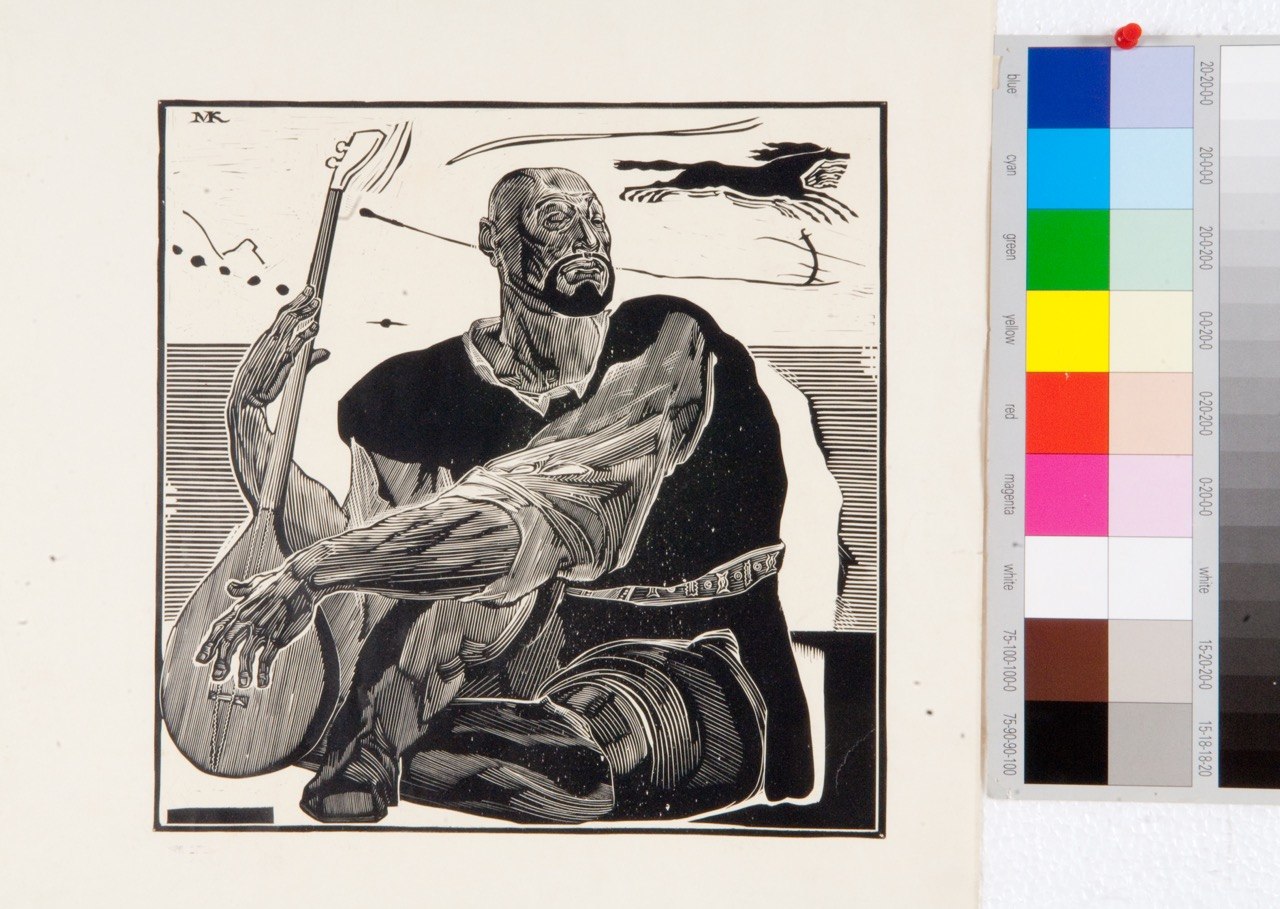 Photo courtesy of the A. Kasteyev State Museum of Arts of the Republic of Kazakhstan
The significance of the Sixtiers extended beyond their formal experiments. They raised anew the question of how national culture could find a place in contemporary art. They were not interested in merely imitating traditional forms, but in exploring the deeper imagery and principles of visual composition.
This artistic approach extended beyond the visual arts. Tradition moved beyond the realm of historical heritage to become a source of material for new artistic solutions.
A telling example is the ballet "Frescoes", staged in 1981 and based on Olzhas Suleimenov's poem "The Clay Book". The set design was by Yevgeny Sidorkin, the costumes by Gulfairus Ismailova, the music by Timur Mynbayev and the choreography by Zaurbek Raibaev. In this production, ancient imagery and historical memory found new expression through the language theatre and movement.
The Legacy of a Generation
This was a period marked not only by a shift in artistic approaches, but also by a change in worldview. Young artists challenged the older generation, sought new points of reference in international art, travelled to Moscow to present their work and asserted their right to develop a visual language of their own. What united them was a desire to speak about Kazakhstan not as a subject imposed from outside, but as a cultural world they sought to understand and interpret on their own terms.
In the decades that followed, the art scene became increasingly diverse. New generations emerged, each with their own artistic strategies and ways of relating to national tradition. Yet the question posed by the Sixtiers remained relevant: how can one become part of the wider art world while retaining their own perspective?
Their work embodied the answer. National identity could be expressed not only through subject matter or recognisable imagery, but also through composition, rhythm, colour and a distinctive way of seeing the world. It was this search that established the artists of the 1960s as one of the defining generations in the history of Kazakh art.
Read also:
Jamila Taken: "I want to make the world a little kinder and more beautiful"Artist and founder of the International Women's Independent Artists' Fund "Taң-Sholpan" told HD magazine how her art has changed, why it is especially hard for a woman artist to combine creativity and family, what going international gives artists of Kazakhstan, and why artificial intelligence cannot replace a living author.mag.humodoc.com
Newsletter
A letter from the HD editors
Once a week, we send the best stories, events, and cultural discoveries from Central Asia.