Art
Life Beyond Measure: Zurab Tsereteli and the Art That Remains in the City
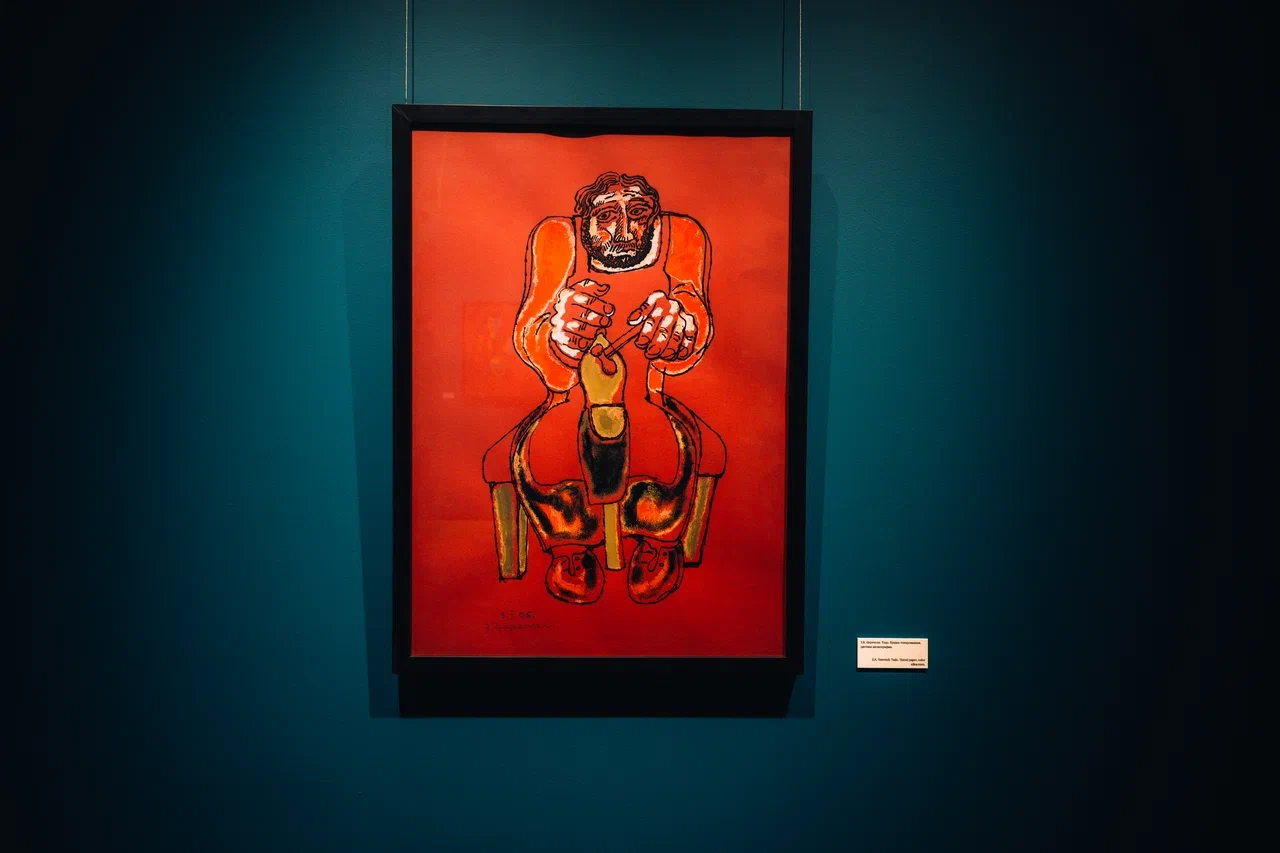
A new exhibition of Zurab Tsereteli’s work has opened in Tashkent, bringing together more than 80 pieces spanning painting, graphic art, sculpture and enamel. Through a personal response to the exhibition and the recollections of his grandson, Vasily Tsereteli, we explore why art was such a powerful source of energy for the artist, how flowers became one of the defining motifs of his work, and what connected him with Uzbekistan.
The opening of the exhibition Life Beyond Measure at the Gallery of Fine Arts of Uzbekistan was marked by the donation of one of Zurab Tsereteli’s paintings to the Tashkent Centre for Contemporary Art. The gesture carries a special symbolism: the exhibition will close, visitors will leave, the works will be taken down, but one painting will remain in the city, allowing the artist’s conversation with his audience to continue beyond the museum walls.
Perhaps this is the clearest way to understand the exhibition’s title: art that reaches beyond gallery walls, outlives the exhibition itself and is not bound to its own time.
Vasily Tsereteli, the artist’s grandson, suggests that Life Beyond Measure is a key to understanding Zurab Konstantinovich’s personality and artistic approach. Art was not simply his profession, but his main source of vitality, shaping both his destiny and his inner life. He devoted every spare moment to creating: making sketches, searching for new forms, experimenting. For him, creativity was never confined to the boundaries of a canvas, a studio, an exhibition space or a single country.
This becomes especially clear when you find yourself surrounded by his work.
A Universe to Explore in Your Own Way
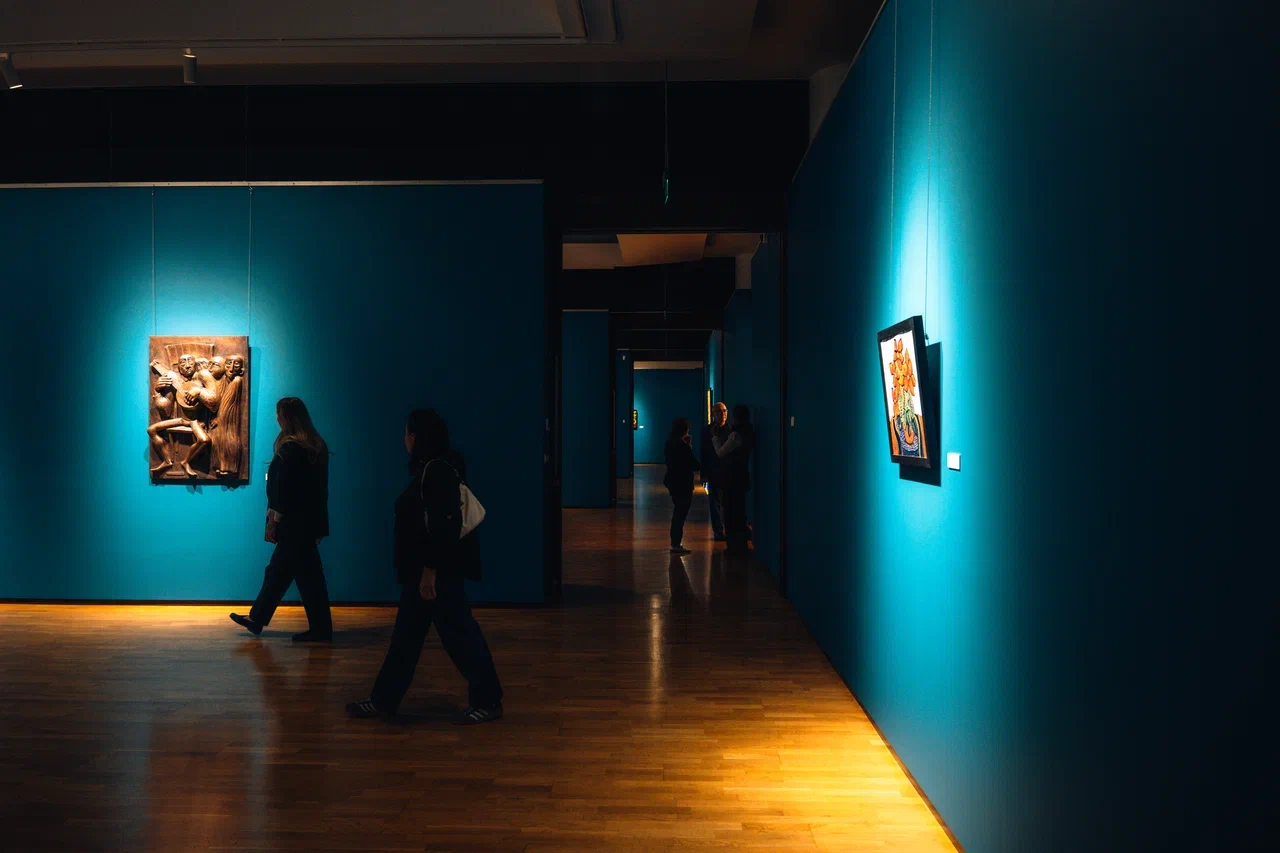 Photo: Ildar Sadykov
The exhibition in Tashkent was my first encounter with Zurab Tsereteli’s work. On the opening day, the galleries were busy, but visitors moved unhurriedly, pausing in front of the works. I found myself stopping at almost every piece, too. I moved naturally from one work to the next, gradually finding my own way through the exhibition, without a set order or a curatorial narrative to follow.
As Vasily Tsereteli explains, the exhibition is designed to give visitors precisely this freedom. They can explore it at their own pace, discovering different facets of the artist’s work and encountering themes that remained close to him throughout his life: his homeland, his family, the beauty of nature and the joy of being alive.
The exhibition brings together more than 80 works, ranging from paintings and graphic art to sculpture and enamel. The large-scale monumental works could not be brought to Tashkent because of the technical challenges involved in transporting them. Even so, the works on display give a clear sense of how freely the artist moved between different forms and media.
A richly varied, intense palette, broad, textured brushstrokes, precisely judged lines and a monumental sense of composition. These are the defining features of his grandfather’s artistic language, as described by Vasily.
In the galleries, such descriptions stop being just art-historical observations and become something you can see and feel for yourself. Rich colour, expressive textures, volume and movement come together in the works, creating a palpable sense of inner energy. Their scale never makes them feel remote, and their expressiveness goes hand in hand with emotional openness.
Tsereteli’s artistic language took shape at the intersection of Georgian, Russian and Western European traditions. Yet his work remained recognisable and accessible without translation, wherever it was exhibited. Perhaps his ability to bring different cultural influences together and speak to universal emotions is one of the reasons his art continues to hold such lasting appeal.
Colour That Reaches Beyond the Canvas
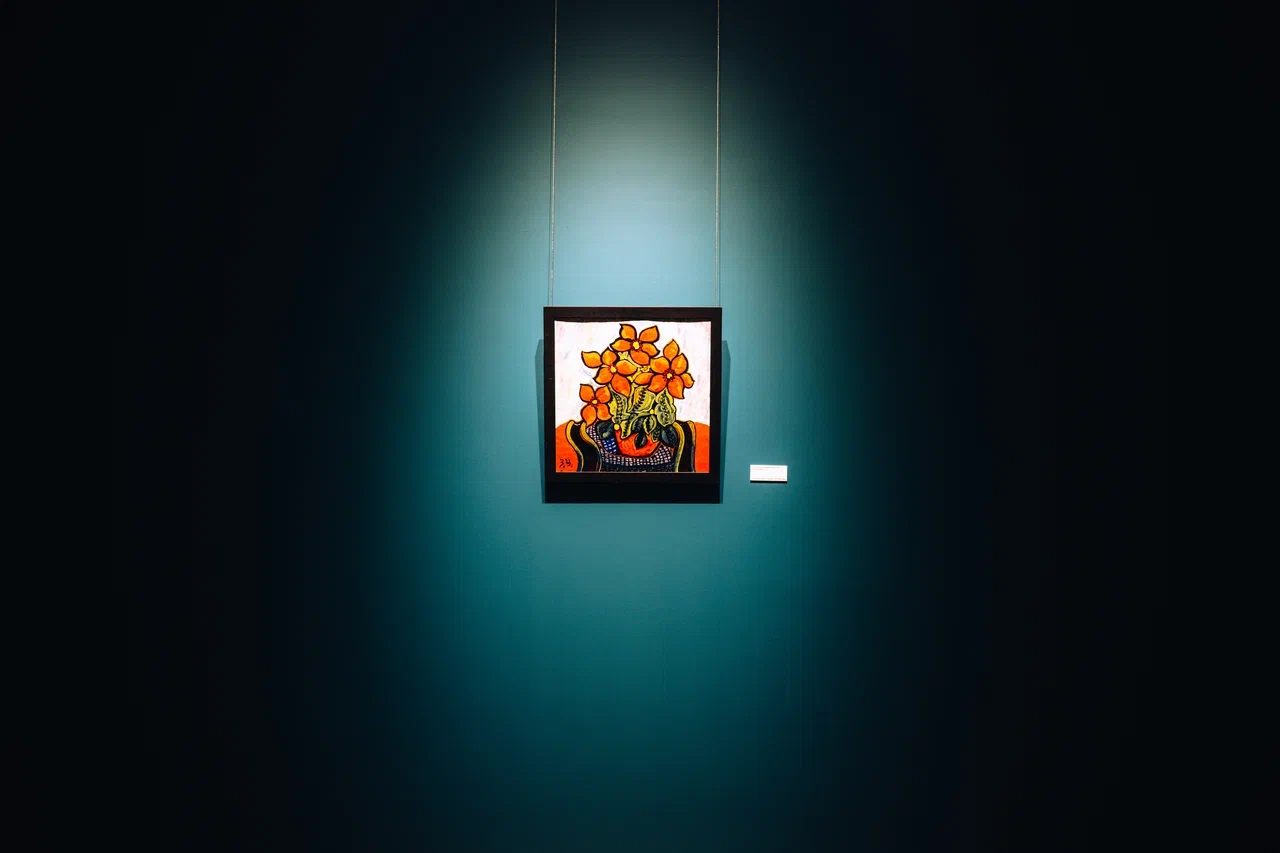 Photo: Ildar Sadykov
Tsereteli’s artistic versatility comes into particularly vivid focus in his enamel works. I later learnt that he had pushed the boundaries of traditional cloisonné enamelling, using the technique to create three-dimensional works. Yet in the gallery, this felt less like a biographical detail than an encounter with colour that seemed to spill beyond the flat surface.
Here, the material itself becomes an integral part of the artistic expression. Light, relief and shades of colour interact, changing the way a work is perceived depending on how long you look at it and the angle from which you view it.
Yet to feel the vitality of Tsereteli’s art you do not need to search for complex interpretations. Sometimes, all it takes is to stop in front of his flowers. They became one of the central motifs of his work and inspired an extensive series of paintings entitled I Was Born a Gardener. Sunflowers, irises, poppies and orchids: in these works, nature is not simply something to look at, but a source of joy and creative energy.
Flowers express the inner warmth and light that filled my grandfather, and he shared that light generously with those around him.
Behind the variety of colours, shapes and sizes lies a simple but important idea: true beauty is often found in the most ordinary things.
I gazed in admiration at the three-dimensional flowers and sunflowers. I wanted to examine them closely, following their lines, shades and forms. I felt an almost physical urge to touch their surfaces, to experience the works not just as images, but as objects that occupied space.
These works do not attempt to overcomplicate the obvious. On the contrary, the artist seems to invite us to look afresh at the things we so often pass by in everyday life. A flower becomes a reminder of our ability to notice, to marvel and to take joy in the simple fact of being alive.
Two Perspectives on One Exhibition
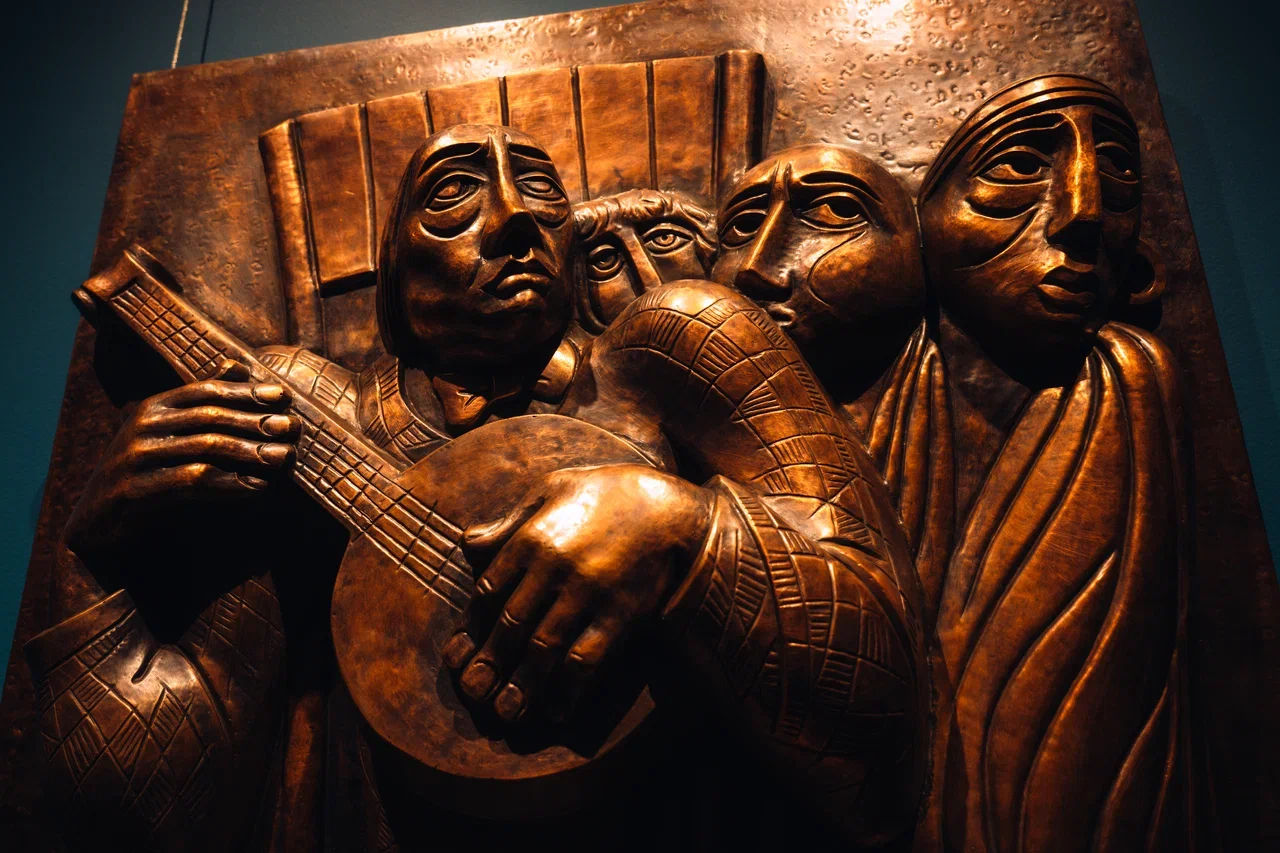 Photo: Ildar Sadykov
Photographer Ildar Sadykov saw the exhibition from a different perspective. Each of his photographs seemed to create a small exhibition of its own. In some, a painting was framed by a field of turquoise, accentuating its presence in the gallery; in others, a close-up of a bronze figure revealed its volume and sculptural form. Sometimes a visitor entered the frame, turning the artwork into part of a larger scene: a person encountering art. This was another way of seeing the exhibition, less as a sequence of works than as a series of individual observations, details and pauses.
The special thing about this exhibition is that there is no set route. Each visitor finds their own way of engaging with the works, discovering what resonates with them personally.
Perhaps this is one of art’s greatest strengths: its ability to bring people together without asking them to see things in the same way.
Tashkent as the Fulfilment of a Dream
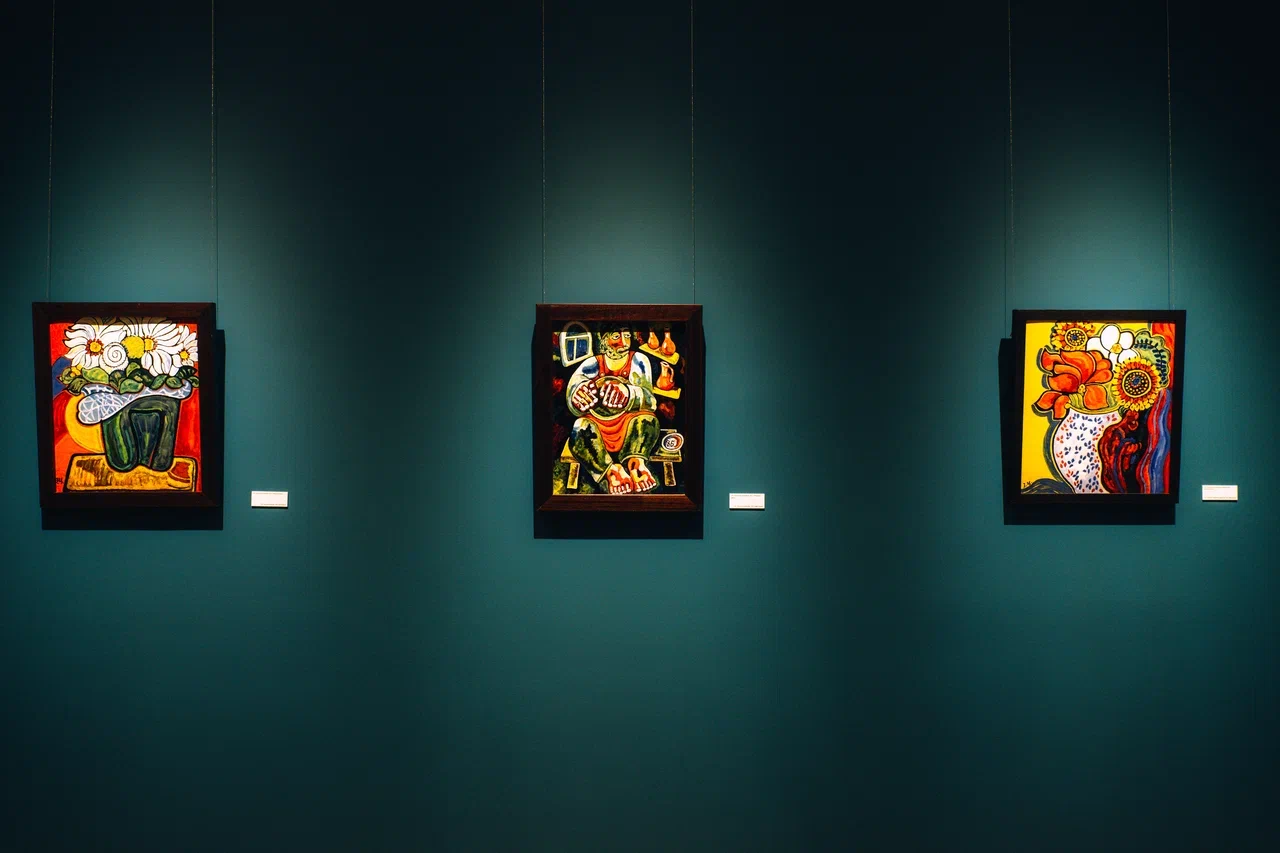 Photo: Ildar Sadykov
Speaking about Zurab Tsereteli’s connection with Uzbekistan, Vasily recalls his grandfather’s special regard for the artistic heritage of the East. Tsereteli deeply admired its distinctive aesthetic and centuries-old traditions of sculpture and monumental art. The exhibition in Tashkent was therefore more than another stop on the artist’s international exhibition circuit. It was also the fulfilment of a long-held dream.
The master's special connection with Uzbekistan lies not so much in specific works as in the mood, character and life-affirming spirit that run through his art.
In 2023, a monument to Saint Luke of Crimea, created by Zurab Tsereteli, was installed in Tashkent. It has since become part of the cityscape and the spiritual life of the local diocese. Now, a painting donated to the Tashkent Centre for Contemporary Art adds another dimension to the artist’s presence in the city.
There is an important difference between the monument and the painting: one stands in an open public space, while the other will continue its life within an art institution. Yet both become part of Tashkent’s cultural memory, linking the city to the artist’s name.
So the exhibition goes beyond its own halls. It leaves behind not only visitors’ memories, photographs and impressions, but also a work of art that a different public will be able to see.
Vasily Tsereteli believes that what matters most to an artist is the public’s attention and the emotional response their work inspires. For decades, his grandfather’s art has brought people together across different countries, finding points of connection with a wide range of cultures. Its appeal endures thanks to its scale, sincerity and the life force that viewers can feel, whether or not they know the story of the artist’s life.
Art That Lives On
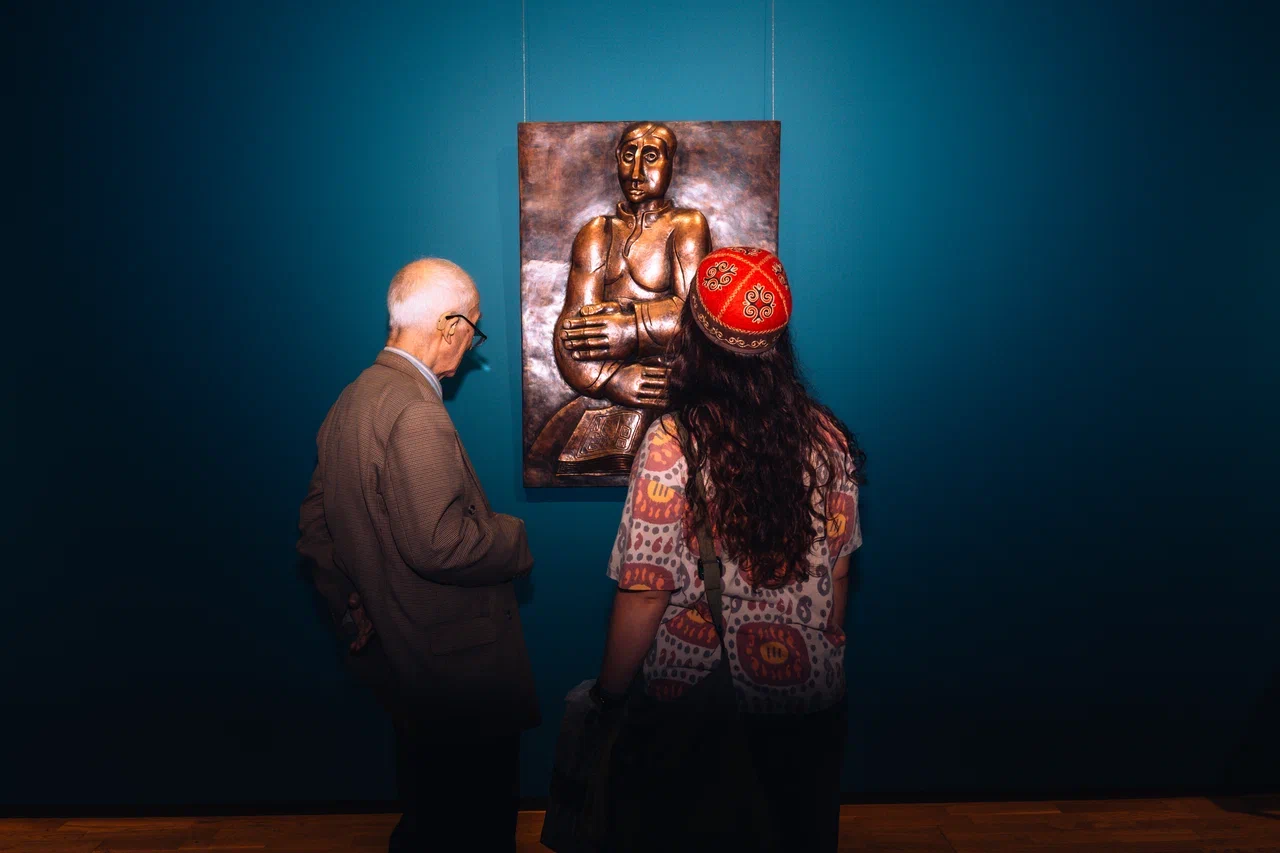 Photo: Ildar Sadykov
As I left the gallery, I found myself wishing that one day I might encounter a work by Tsereteli in the course of everyday life. Not only in an exhibition, where visitors arrive prepared to look closely, but somewhere familiar, a place I could return to and discover something new each time. Perhaps this is the special value of an encounter with art. It may begin with curiosity, draw us in through colour or form, and then quietly become a personal experience that stays with us long after we leave the gallery.
In this sense, Life Beyond Measure is more than a description of the scale of Zurab Tsereteli’s work. It speaks to art’s ability to transcend its physical form, enter into dialogue with different generations and cultures, live on in our memories and change the way we see the world.
The exhibition in Tashkent will come to an end. But one of the paintings will continue its journey through the city, while visitors take away their own stories of encountering the artist’s work.
And perhaps this is the most telling answer to the question of what remains after an exhibition. Not only works of art that move from one space to another, but also the sense of vitality they awaken in those who encounter them.
Newsletter
A letter from the HD editors
Once a week, we send the best stories, events, and cultural discoveries from Central Asia.