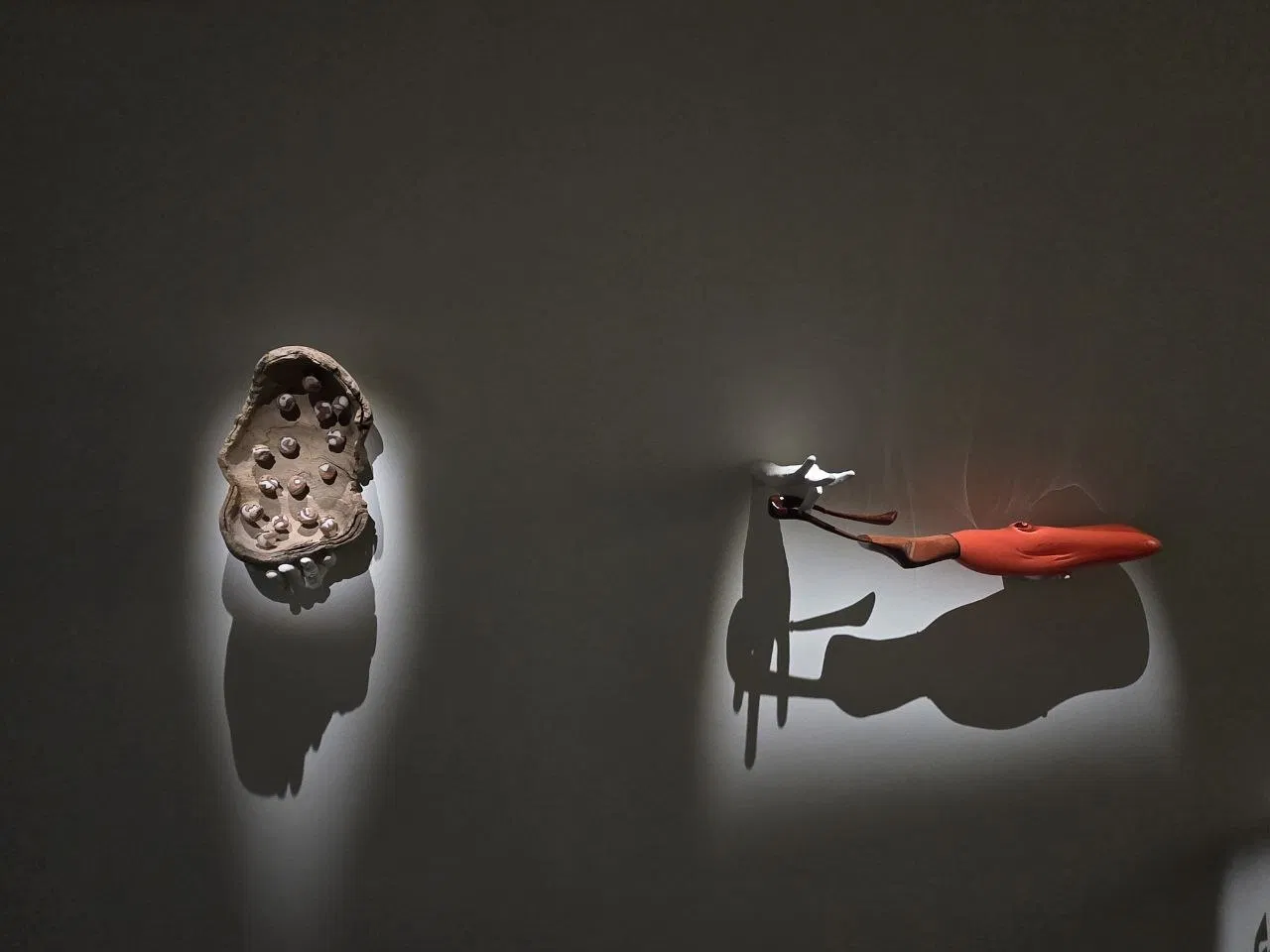
Memory does not always live in books and archives. Sometimes it survives in a language children have stopped understanding, in a ritual whose meaning has gradually been lost, or in a family story that never made it into any historical document. The international exhibition Himoya, which opened on 15 October 2026 at the Tselinny Centre for Contemporary Culture in Almaty, explores these fragile forms of heritage, not as relics of the past, but as resources for understanding the present.
There is a familiar way of speaking about cultural heritage: listing monuments, collecting artefacts, restoring architecture, documenting disappearing crafts. Himoya proposes expanding this understanding. What if heritage is not only what can be placed behind museum glass, but also the ways of feeling, remembering, caring and transmitting knowledge that exist outside official institutions?
The exhibition, curated by Natasha Ginwala, takes its name from concepts of protection, refuge and shelter. Twenty-one artists and thinkers from Central Asia and other parts of the world participate in the show. Their practices differ in materials and artistic languages, but are united by an interest in kinship, spiritual traditions, historical memory and cultural forms under threat of disappearance.
Himoya does not seek to present the past as an ideal world to which we must return. Rather, it explores what accumulated generations of experience might offer in helping us rebuild our relationships with ourselves, with others and with the environment around us.
Not a Museum of the Past, but a Space for the Future
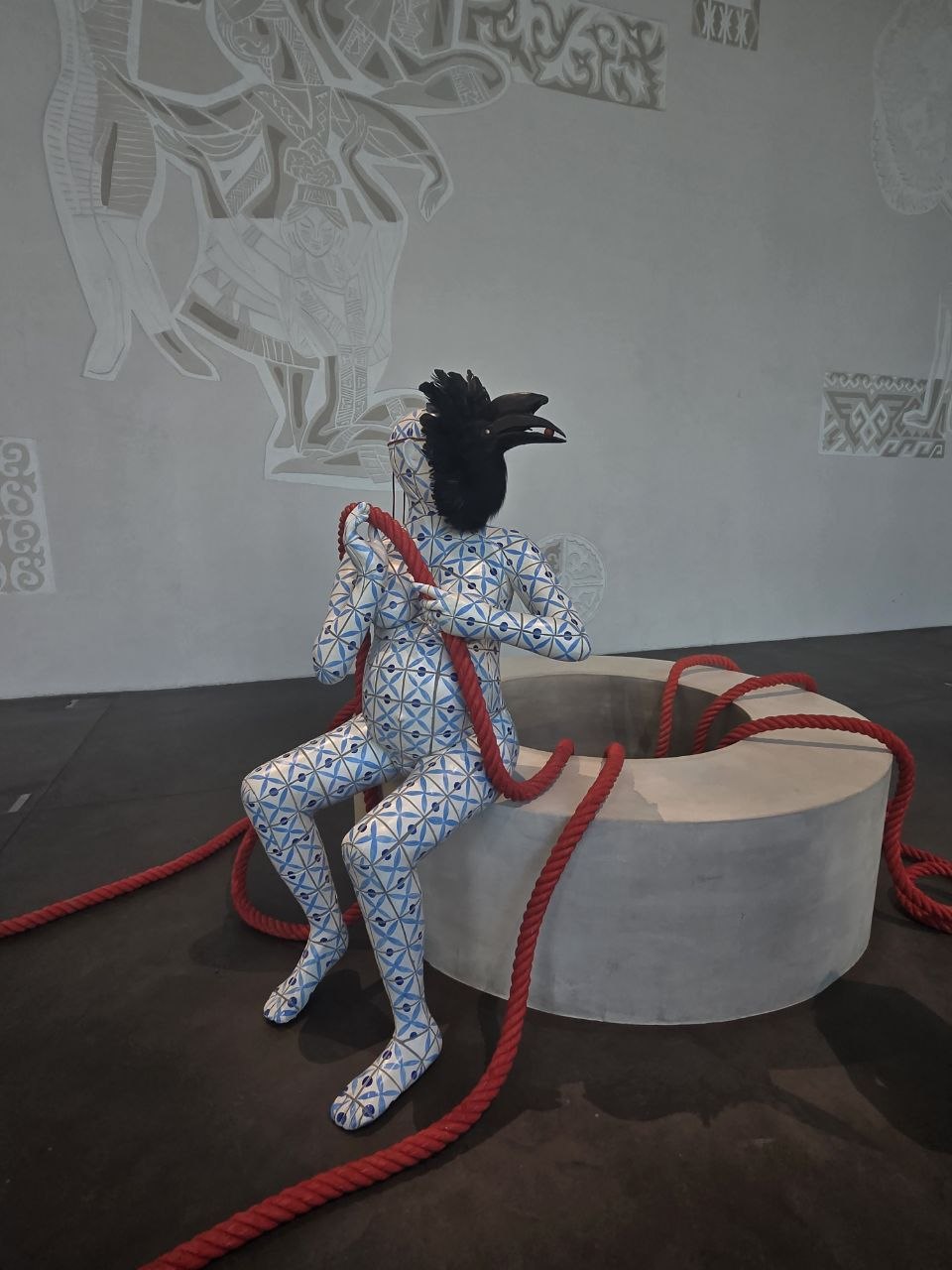
The curatorial concept places particular emphasis on matrilineality: the transmission of memory and cultural knowledge through the female line. This is about more than family ties. Women have historically been custodians of oral histories, everyday knowledge, rituals and practices of care. Yet their contributions have by no means always found a place in official accounts of the past.
Focusing on women’s heritage shifts the usual perspective. History can be seen not only through political events and the decisions of state institutions, but also through everyday life, bodily experience, family relationships and the ways knowledge is passed on.
But Himoya is not limited to motherhood. It explores different forms of kinship, including communities bound together not only by blood ties, but also by shared experiences, spiritual practices and mutual support. In doing so, the exhibition asks what creates a sense of belonging and whether it can exist beyond familiar social models.
Cultural Memory as a Territory of Resistance
For Central Asia, this conversation carries particular urgency. Historical transformations, colonial relationships and ideological ruptures have shaped not only political institutions, but also languages, religious practices, rituals and local ways of organising life.
When a language disappears, it can take with it subtle shades of meaning, ways of describing the world and forms of knowledge that cannot be fully translated into another language. When a ritual is no longer passed down, what is lost is not simply a sequence of actions, but a whole system of relationships between people, their communities and the world around them.
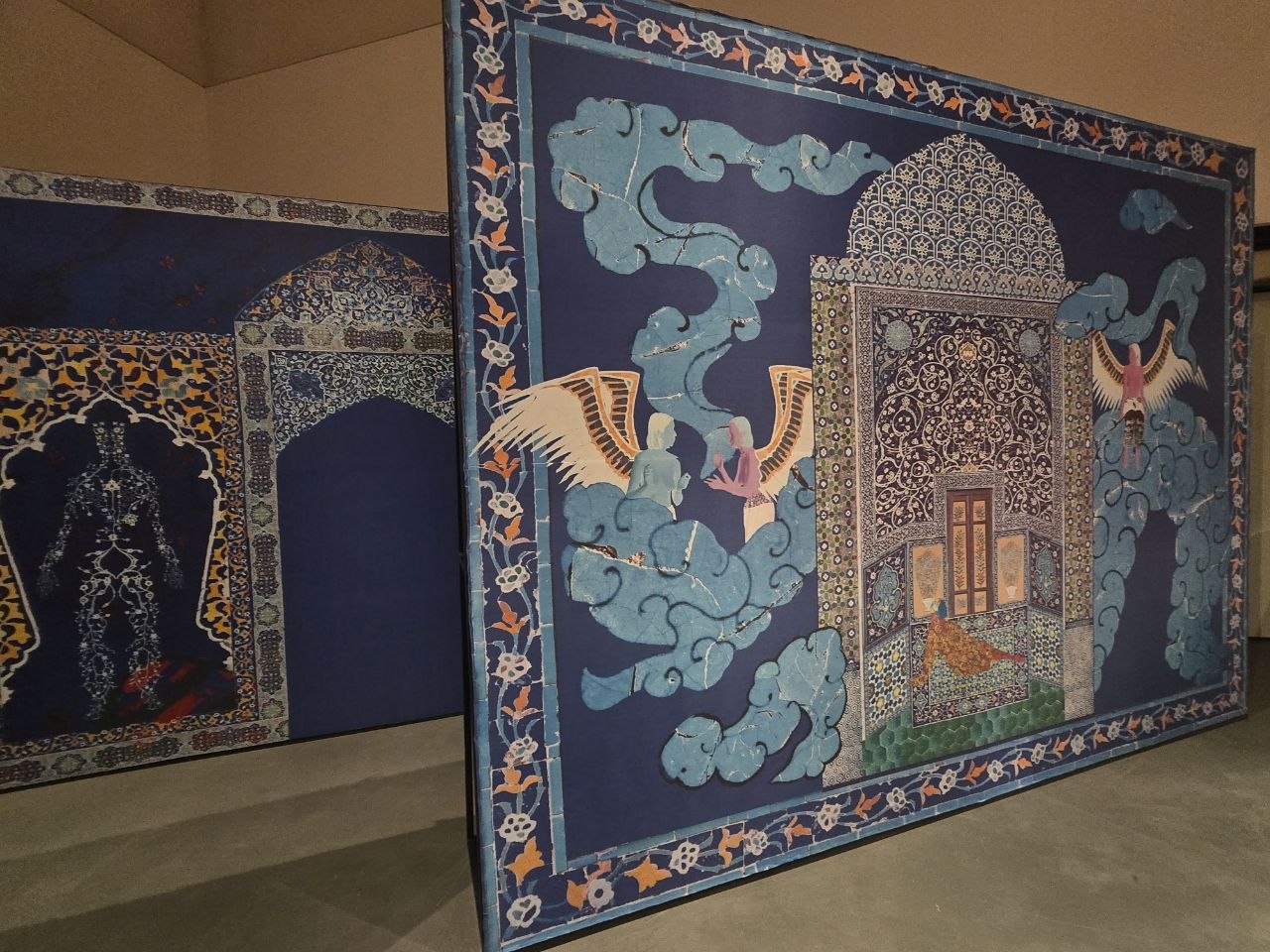
This is why Himoya brings Sufi and Zoroastrian traditions together with shamanic practices, Tengriism and ancient Turkic worldviews. The exhibition does not attempt to merge them into a single spiritual system. On the contrary, the diversity of these sources reveals just how varied the ways in which we understand and interpret reality can be.
There is another important point: turning to tradition does not mean turning away from the present. The artists work with video, sound, installation, textiles, sculpture and new technologies. Historical imagery and inherited knowledge become the material for contemporary artistic expression, rather than a decorative backdrop.
When Memory Reaches Beyond Regional Boundaries
The international line-up of artists places the Central Asian experience in a broader context. The exhibition includes works by Kazakhstani artists Almagul Menlibayeva and Nara Beibit, Korean artist Haegue Yang, and Sudanese-Norwegian artist Ahmed Umar, among others.
The diversity of cultural contexts is significant. It shows that questions of heritage, identity and spiritual continuity are not exclusive to any one region. At the same time, the universal nature of these themes does not diminish the specificity of particular historical experiences.
Haegue Yang’s work, in particular, explores cultural imagery and sound traditions, including the history of Koreans in Kazakhstan. Her sound installation incorporates the voices of participants, including speakers of Koryŏ-mar, the language of the Korean community that took shape in Central Asia. This adds another dimension to the conversation about cultural memory: heritage is preserved not only in material objects, but also in the sound of the human voice.
Such artistic approaches remind us that cultural identity is not fixed. It is shaped by migration, encounters, loss and new connections. Sometimes art allows us to hear what is gradually fading from everyday life.
Citra Sasmita: Restoring Women's Place in Myth
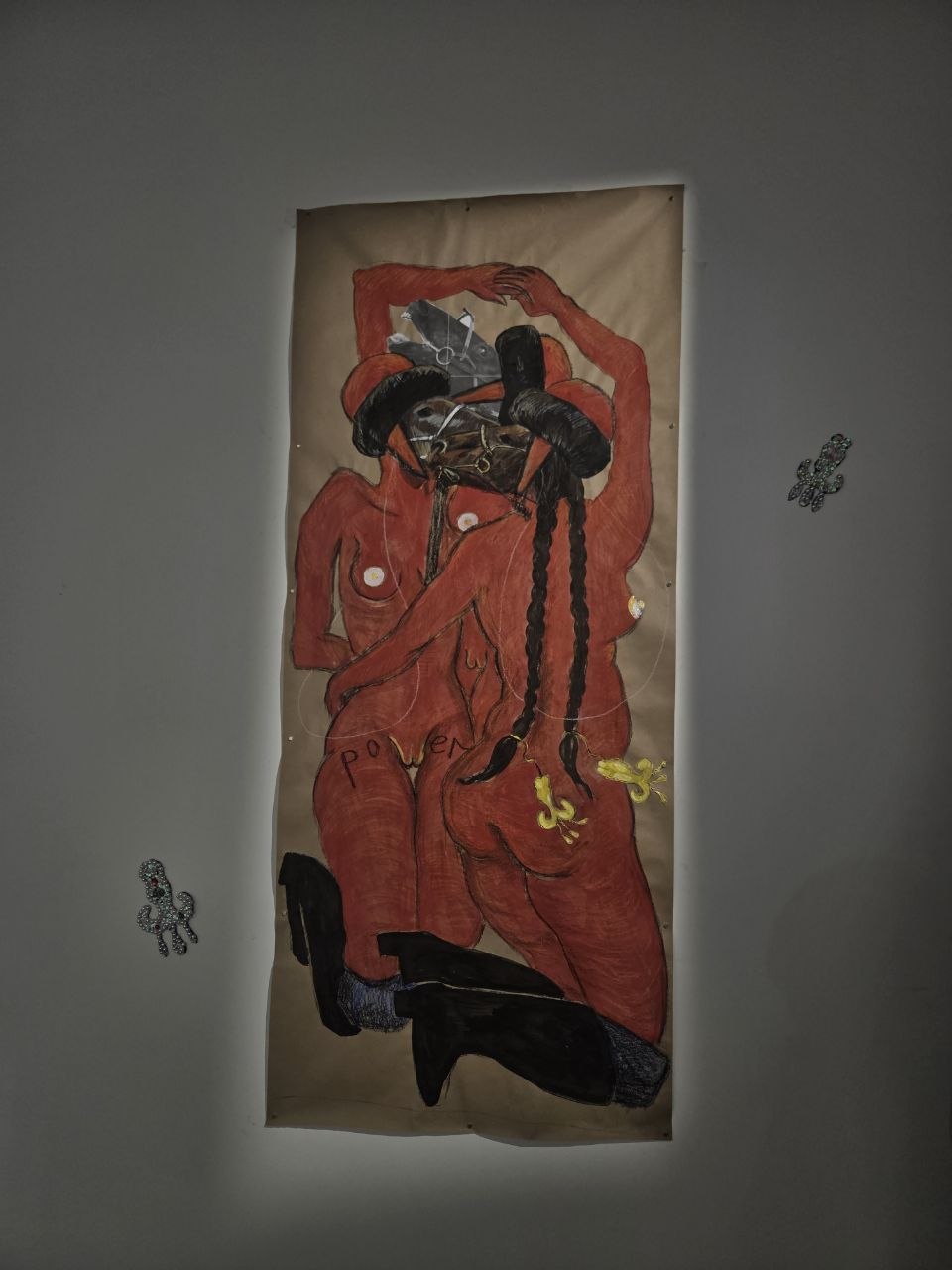
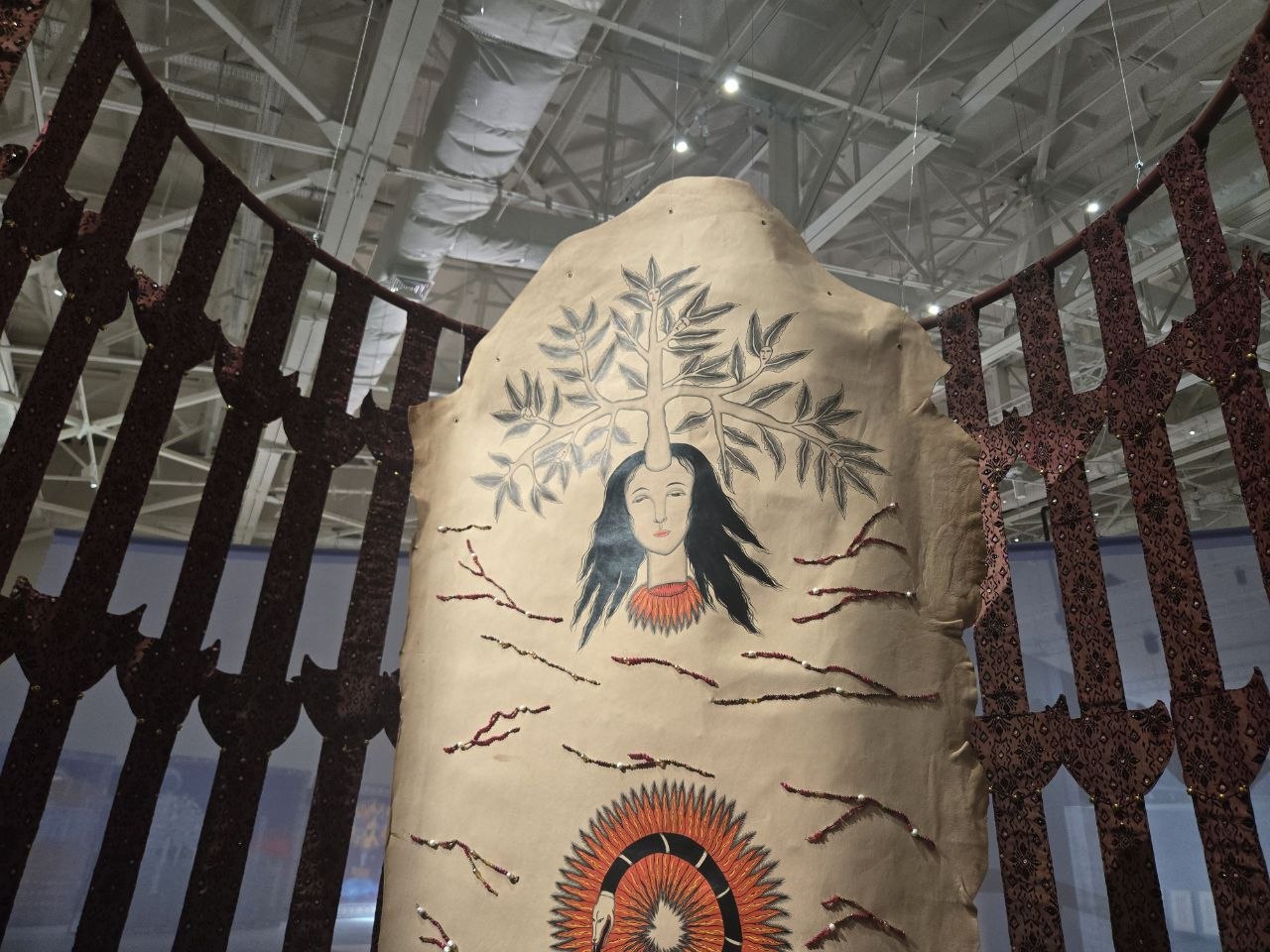
The theme of women’s cultural continuity finds particularly vivid expression in the work of Indonesian artist Citra Sasmita, whose practice engages with Bali’s cultural heritage. She is less concerned with preserving tradition unchanged than with re-examining it from within, uncovering meanings in familiar images and narratives that have gradually been suppressed or subordinated to patriarchal ideas.
Her artistic language is rooted in Kamasan, a traditional Balinese painting style associated with narrative depictions of myths, epic tales and religious subjects. Sasmita draws on this historical visual tradition but shifts its established power dynamics: in her work, female figures emerge as independent bearers of knowledge, spiritual strength and resistance.
In the context of Himoya, this approach takes on particular significance. Matrilineal memory is not just a matter of family stories passed from mother to daughter. It is also an opportunity to reread cultural narratives and ask whose voices have been heard in them, and whose have been silenced. This perspective resonates with the theme of protection embedded in the exhibition’s title. Protecting heritage does not necessarily mean shielding it from change. Sometimes, it means restoring forgotten meanings and allowing those who have long remained in the shadows to take centre stage in their own history.
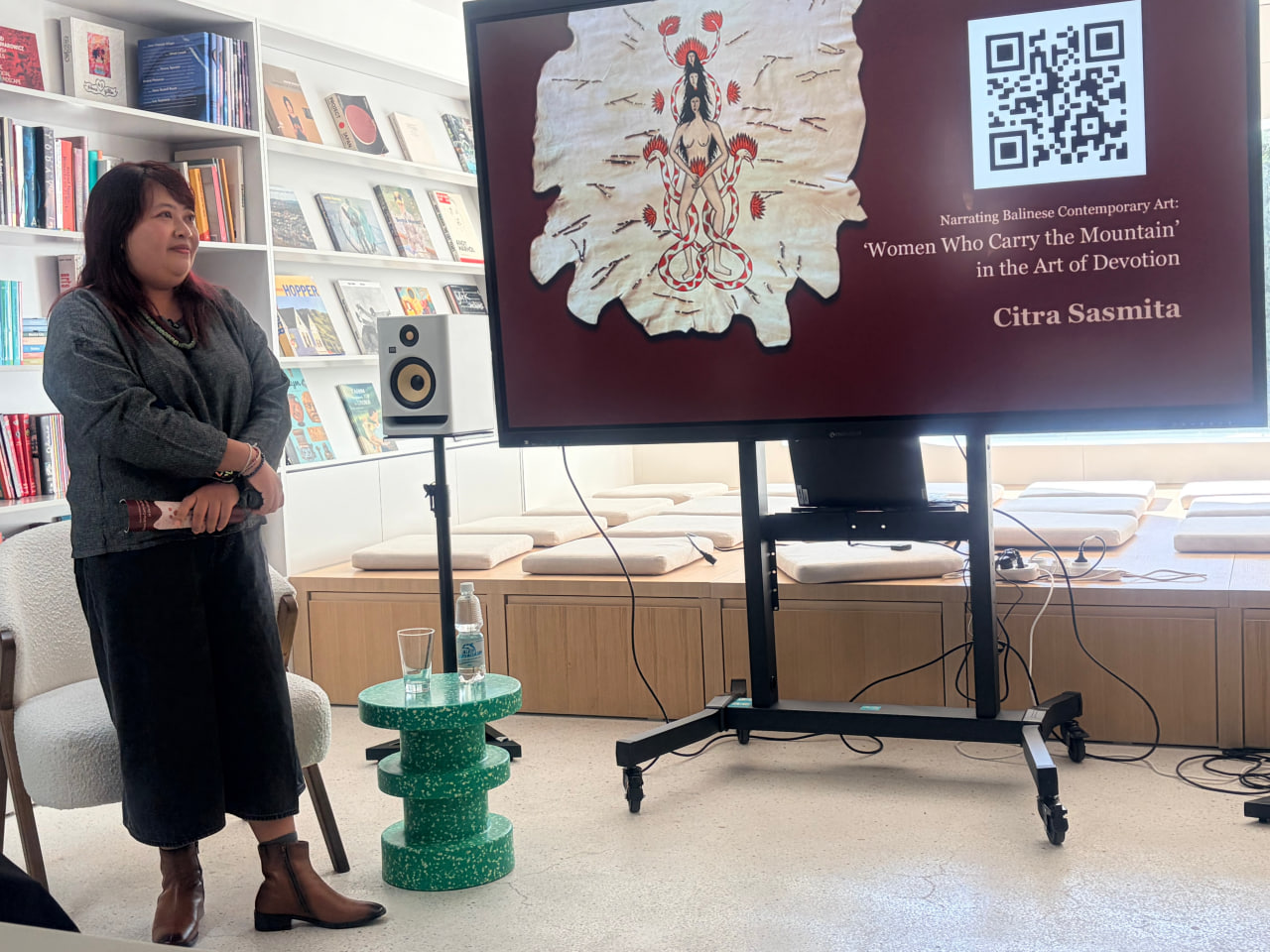
On 16 October 2026, Citra Sasmita met with the public at Tselinny for a talk entitled Women Who Carry the Mountain: Balinese Rituals, Cosmology, and the Art of Devotion. She explained that tradition is not a neutral set of forms passed down from one generation to the next. It also embodies ideas about social order and the restrictions that have shaped women’s position in society. By reinterpreting traditional imagery, she brings together painting, sculpture and installation. The visual power of traditional art becomes a means of addressing gender inequality, power and historical erasure.
The meeting offered an opportunity to discover Sasmita not only as an artist re-examining gender roles, but also as a researcher of Balinese rituals and spiritual beliefs.
At the end of the talk, the artist led a practical workshop on the Sigar Mangsi drawing technique on Kamasan canvas.
Architecture That Reframes the Past
The exhibition space itself deserves particular attention. The architectural concept and scenography were developed by Diogo Passarinho Studio, which worked with the history of the building, formerly a Soviet cinema.
The cinema was originally a space of collective viewing: audiences gathered before a screen to encounter stories, images and visions of the world created by others. Today, the building has become a centre for contemporary culture, and its history is seen in a new light.
Within Himoya’s curatorial framework, this transformation carries symbolic significance. A space once associated with a particular cultural and ideological system has become a setting for artistic expressions that explore alternative historical perspectives and forms of knowledge.
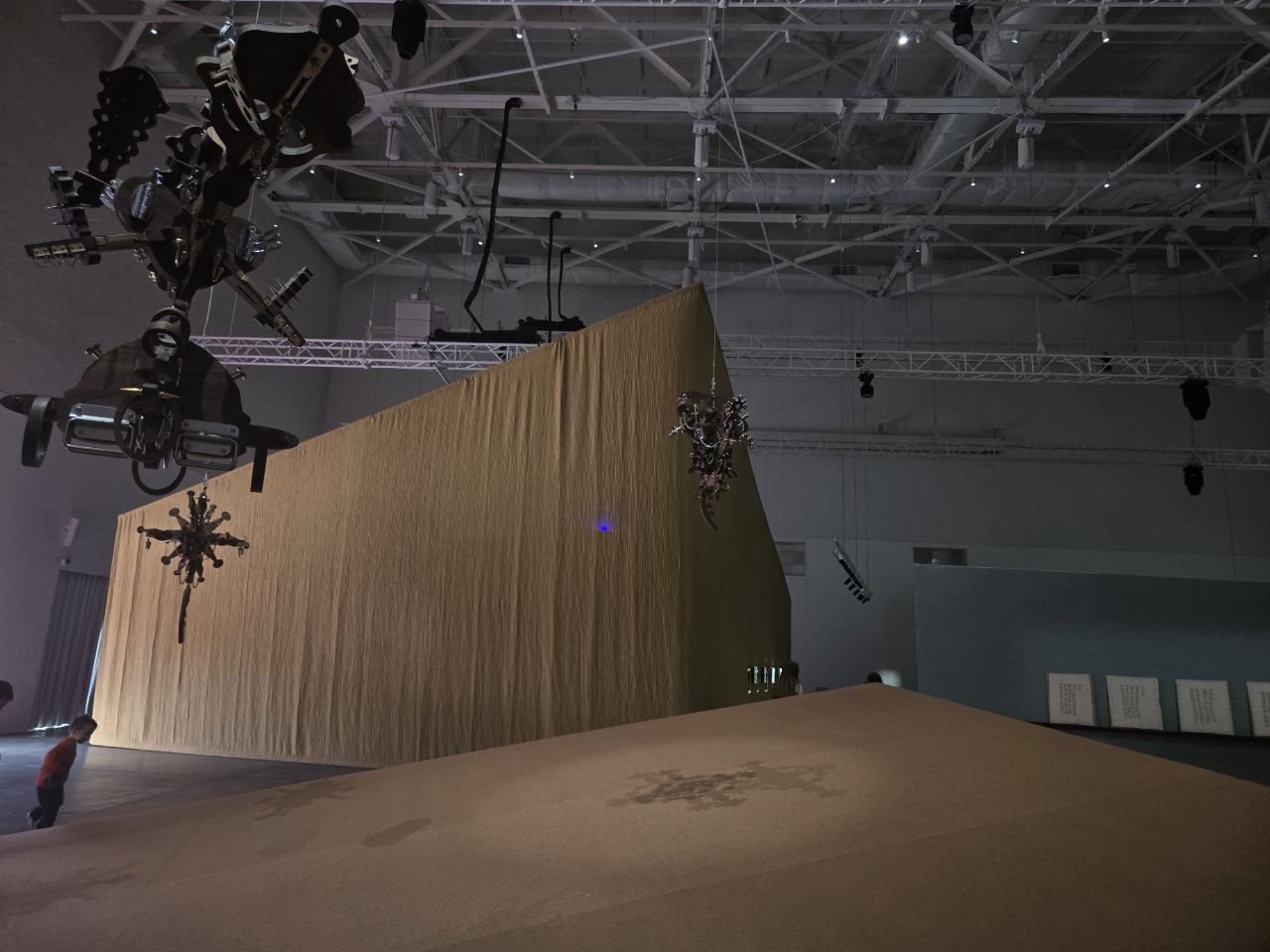
The architecture, meanwhile, does more than provide a neutral setting for the works. It brings them together within a shared environment where different stories can coexist without losing their distinct identities.
What Does It Mean to Protect Heritage Today?
Himoya offers no ready-made answer to the question of how we should relate to tradition. This is one of the project’s strengths. Here, preserving heritage does not mean freezing it in time. Cultural practices remain alive only when they can engage in dialogue with a changing world.
Protection, in this sense, is not an attempt to shield the past from the present. It means creating the conditions in which forgotten stories can be heard, endangered languages can receive attention, and knowledge passed down outside official institutions can become part of public discourse.
The exhibition also reminds us that memory is not always comfortable. It can bring us back to traumatic events, challenge familiar understandings of history and expose contradictions within families and communities. Yet it is precisely the ability to address these contradictions that keeps heritage alive, rather than reducing it to a collection of symbols stripped of meaning.
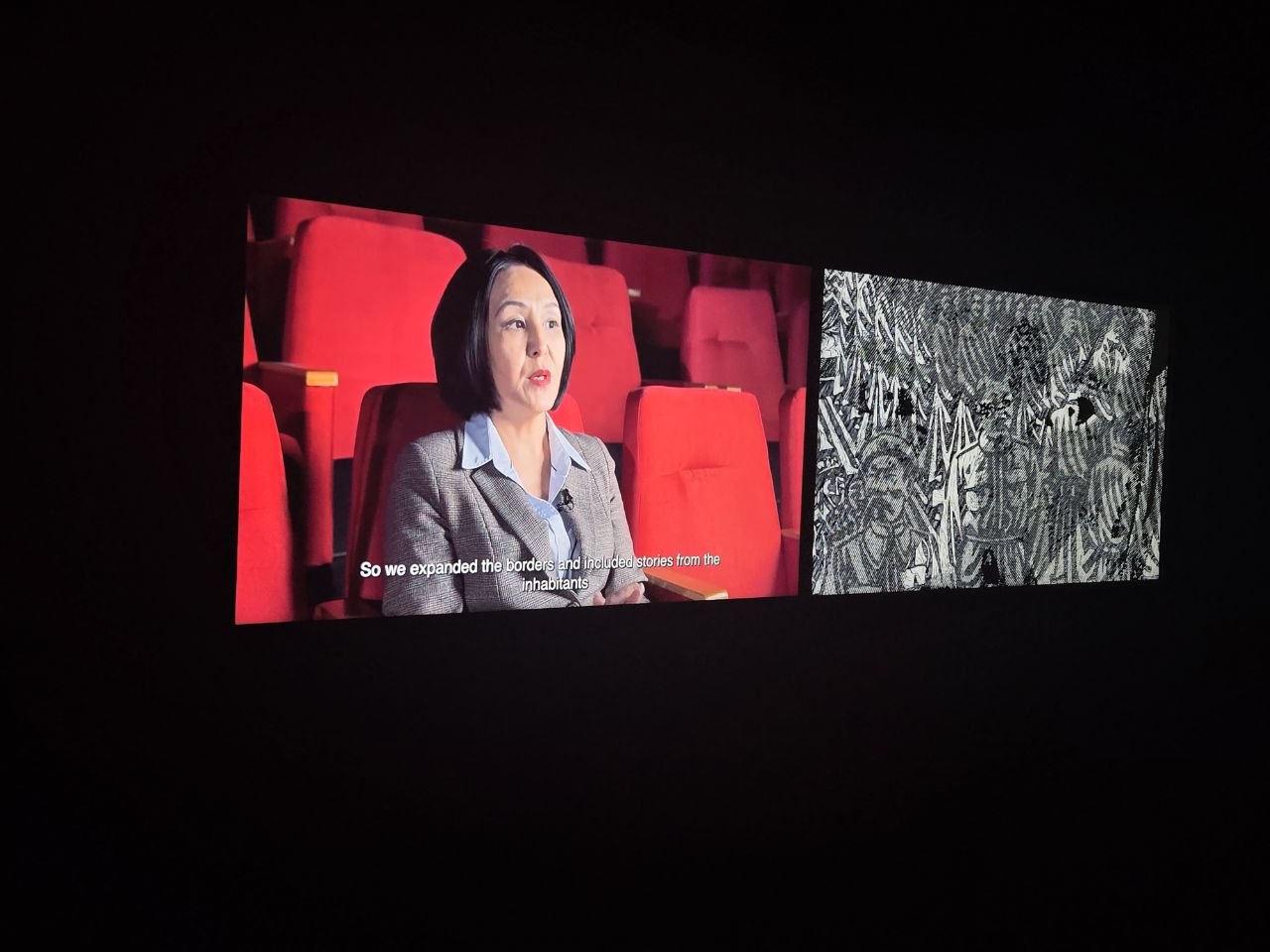
Ultimately, Himoya invites us to see art as a space where different ways of remembering can meet. Here, the past does not end when its material traces disappear. It continues to exist in gestures, voices, images and the relationships between people.
Perhaps the exhibition’s central question is not what exactly should be preserved, but whether we are prepared to recognise the value of forms of knowledge that have long remained outside the scope of official attention. After all, protecting cultural heritage begins with more than archiving and restoration. It begins with the ability to listen to others and understand that their memories, too, are part of our shared future.
Newsletter
A letter from the HD editors
Once a week, we send the best stories, events, and cultural discoveries from Central Asia.