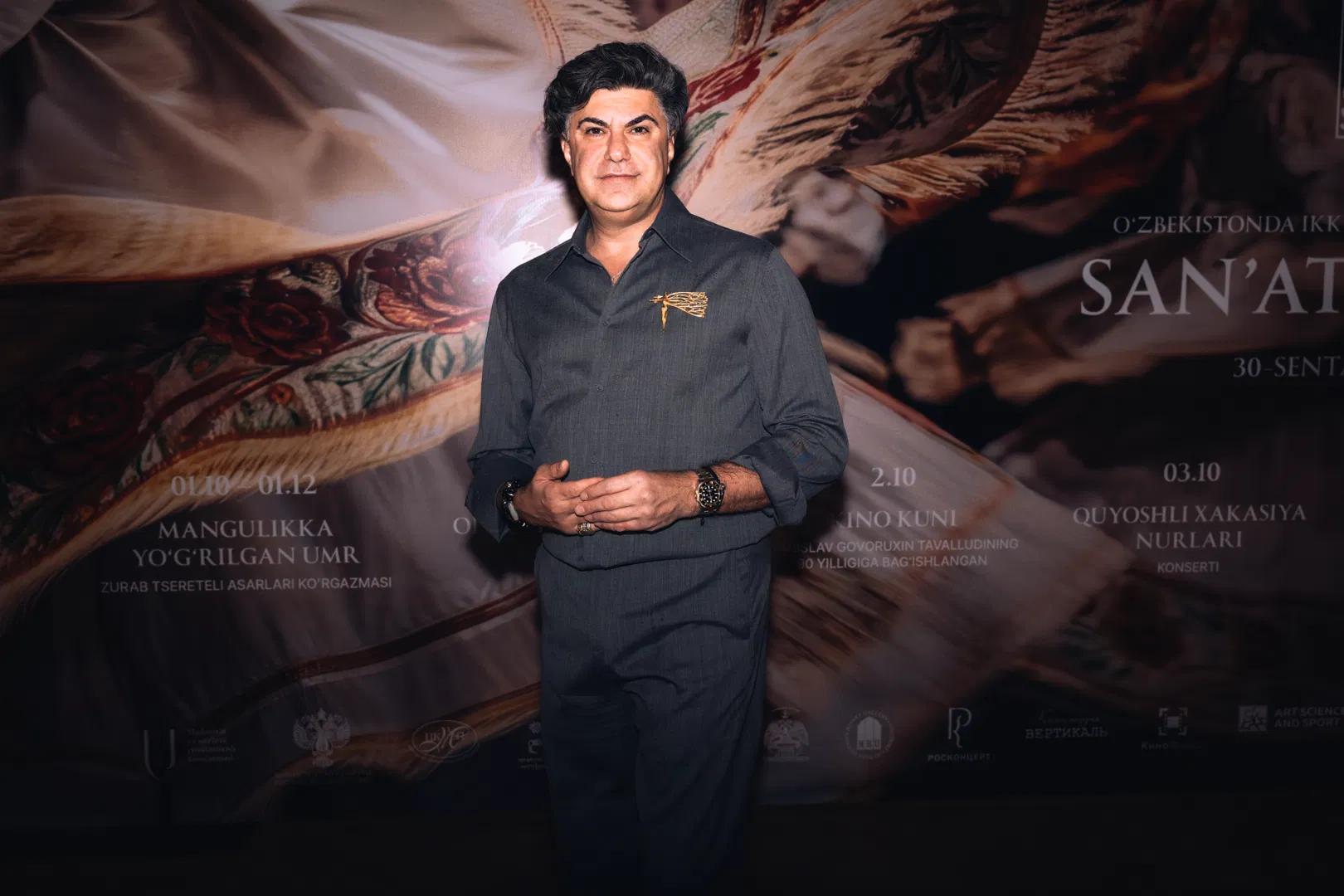
In conversation with Nikolay Tsiskaridze about true mastery, great teachers, leading by example, dramatic theatre and social media as a space for cultural enrichment.
Today, Nikolay Tsiskaridze’s professional life extends far beyond the ballet stage. He heads the Vaganova Academy of Russian Ballet, works with students, performs in dramatic theatre, writes books and engages with audiences on social media. Yet across all these pursuits, the same principles remain central: a deep commitment to his profession, high standards and a desire to share his knowledge.
We spoke to Tsiskaridze shortly before a concert by young soloists of the Vaganova Academy of Russian Ballet in Tashkent.
I went into ballet because I wanted a fairytale.
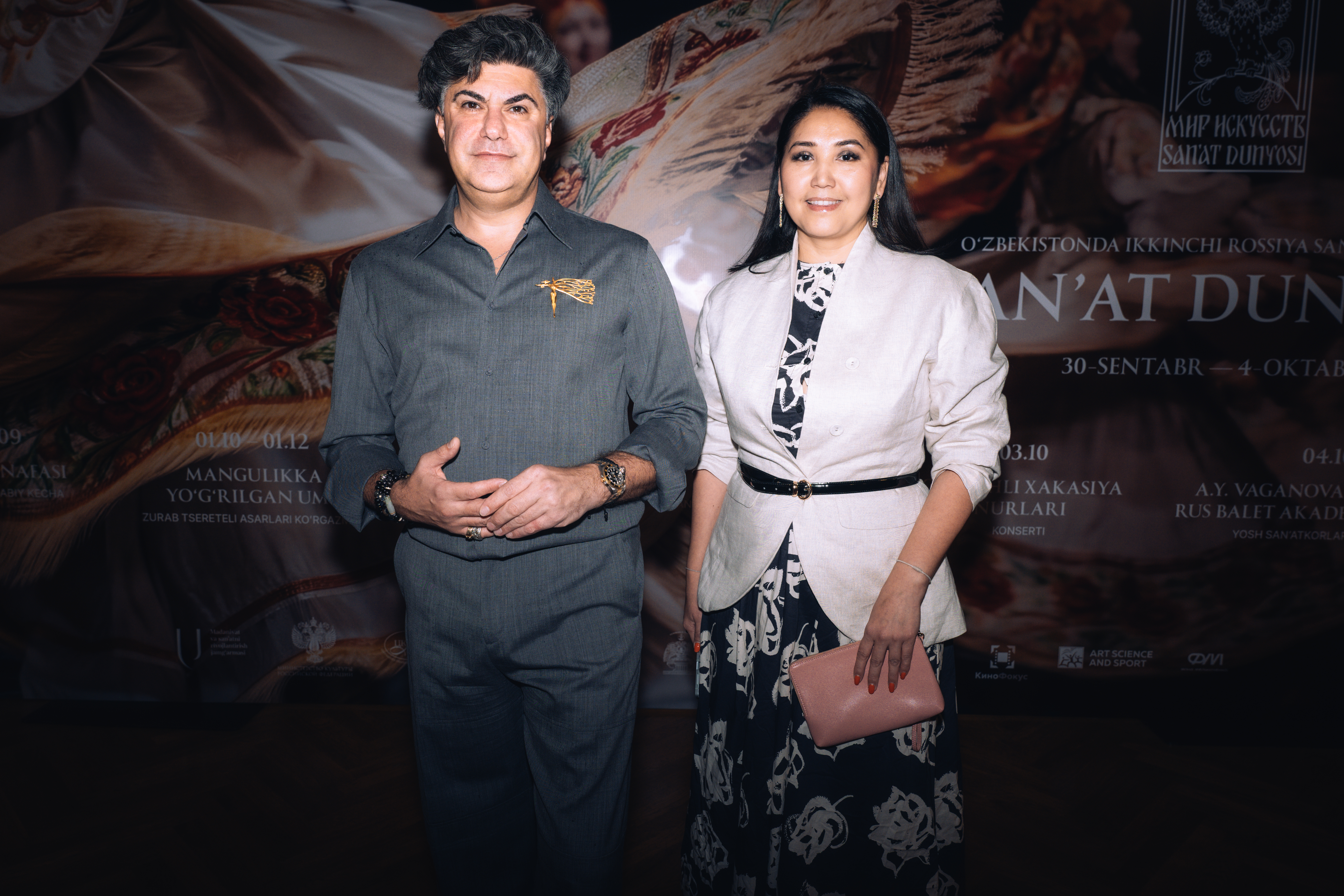 Photo: Ildar Sadykov
- Nikolay Maksimovich, how does a person become famous? Have you ever consciously pursued popularity?
- I never thought, ‘I’ll take up ballet and become famous.’ I went into ballet because I wanted a fairytale. At the time, I wasn’t thinking about a profession, a career or anything of the sort. I was fortunate that my abilities matched the requirements of the school I enrolled in. After that, things worked out rather well and, I would say, harmoniously, and fame came naturally. I became a People’s Artist first, and only afterwards did I start appearing on television. Today, I see so many young people who want fame and recognition, but they don’t always achieve what they hope for because they don’t know what they can offer the world or what new things they have to say. Let me give you an example of a wonderful thought I once came across: a writer is not someone who writes, but someone who is read. It’s very important to understand that. You can give a thousand interviews and nobody will watch or read them, while someone else can say just three words and they’ll spread everywhere.
- How do you tell a true master from someone who merely looks convincingly like a professional?
- A true master is usually visible at once. There are people who do their work so easily that they don't need long to think, explain or show what they command. Behind that ease lie vast experience, knowledge and inner culture.
I have been very lucky in life: on my professional path I met brilliant teachers, and in the theatre I was surrounded by remarkable people: they were artists, staff of the make-up and costume departments, musicians, prop makers. Many of them were so much older than me that I could have been their grandson, yet they were true masters of their craft. I watched them and learned a great deal. When you are very young and receive approval from people who themselves know the workings of the theatre perfectly, you begin to understand the value of true professional recognition.
An artist is the tip of the iceberg, because for the curtain to rise and a performance to take place, a huge company works. And if you are respected by people who know the theatre from the inside, that is worth a great deal.
- You speak of your teachers with particular respect, but they had other students too. Why did they give so much attention to you?
- One of my main teachers at the Bolshoi Theatre was Nikolay Fadeyechev. He taught three students at the same time, and all three later became People's Artists. I was the youngest. Once I asked him: “Nikolay Borisovich, why don't you make Seryozha and Andryusha do the same as me?” He explained to me that he demanded of me as much as I could give. That is a very important lesson. A true teacher does not necessarily make the same demands of everyone. He must understand each student's capabilities and see what that student is capable of. And I would not reduce everything to talent alone. Talent must be developed. And here much depends on who happens to be beside you at the right moment.
I was lucky to meet people who knew not merely how to teach, but how to shape an attitude to the profession. That is exactly what stays with a person for life.
- Today you are not only an artist but also the head of the Vaganova Academy of Russian Ballet, a teacher, an author of books. Your acting career continues in the drama theatre as well. How organic is this expansion of your professional space for you?
- It seems to me that everything in life takes shape gradually. I never set myself the task of trying myself in every possible field without fail. Circumstances simply arise, opportunities, people with whom you find it interesting to work.
Ballet gave me a great deal: an understanding of the stage, discipline, an attitude to the profession, but art is not limited to a single genre. I find it interesting to observe how the theatre is put together, how artists work, how a performance is created.
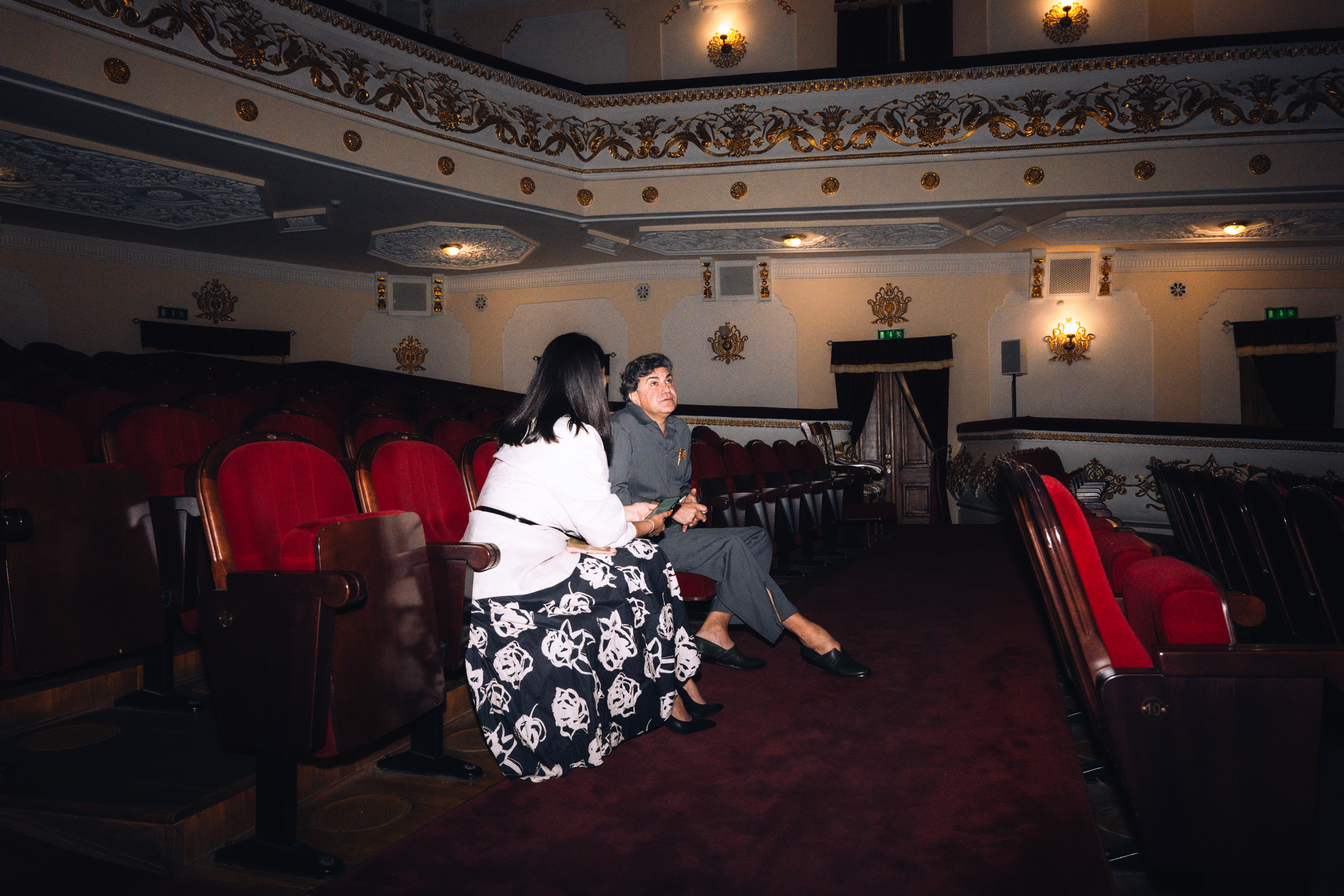 Photo: Ildar Sadykov
- In the Chekhov Moscow Art Theatre's production of “The Cabal of Hypocrites” you play Louis XIV, while Konstantin Khabensky plays Molière. For your debut in the drama theatre you chose the name Maxim Nikolayev. Why was it important for you to begin in a new genre under a different name?
- For me it was a chance to start with a clean slate. I wanted the audience to judge this particular work, and not to perceive it solely through my name and past achievements.
When a person has worked in one profession for many years, the public forms a certain idea of him, but in a new genre it is important to give yourself the chance to be judged anew. It seems to me this is useful for any artist. You cannot live your whole life on past successes alone, you have to keep working, learning and testing your own capabilities.
- Your book “My Theatre” allows a look at the profession from the inside. What does the chance to talk about your experience through text rather than from the stage mean to you?
- A book gives you the chance to speak in more detail. On stage everything happens here and now, while in a text you can pause, recall people, circumstances, explain why something mattered. For me the theatre is not only roles and performances. It is the people I met along the way, teachers, colleagues, situations that taught me something. All of this makes up a professional life. And if my experience can be of interest to readers, why not share it?
The two-volume book “My Theatre” has given many readers a chance to get to know my story and see the theatre world from the inside. The interest in the book shows that people care not only about the finished results but also about the path that leads to them.
What matters is not how many people saw you, but what remains after your work
— Today social media lets you become popular almost instantly. You yourself have become a prominent figure in the digital space, although initially, as far as I understand, you did not strive for it. How did it all begin?
— I actually rejected social media and for a long time did not want to engage with it. During the pandemic one of my students began introducing me to social media, registered me and showed me how it all works, and then it turned out that I very quickly gained a huge number of followers. At first I did not even understand what to do with it, but then I began to think about what to write.
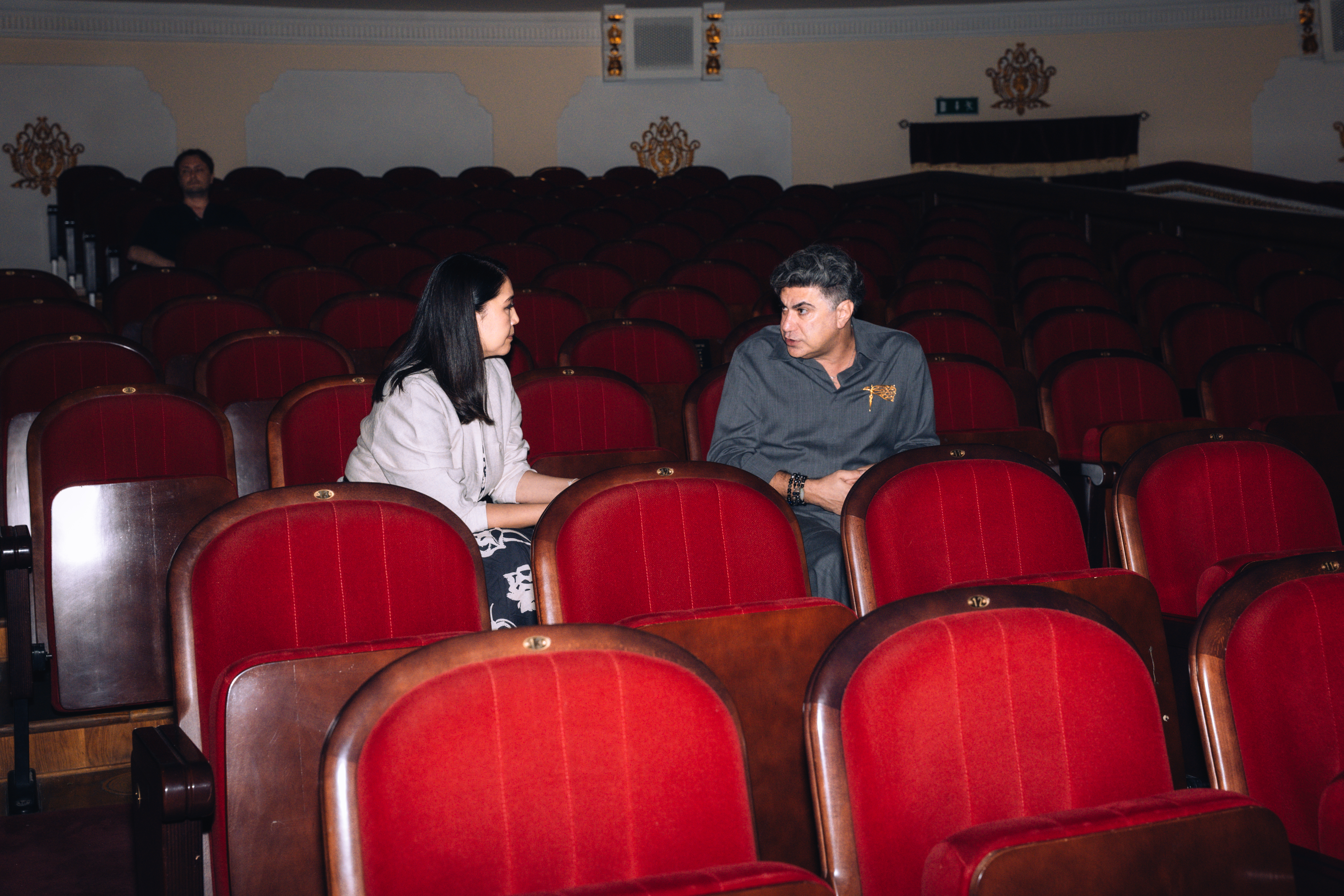 Photo: Ildar Sadykov
I noticed that among my followers there are many school-age children and I realised that I must take this circumstance into account. I wanted children to be interested in watching a good film, reading a book, learning something new. Probably the fact that my mother was a teacher played a role here too. She went to the hairdresser several times a week, and I thought it was completely unnecessary, but she explained that children watch very closely how a teacher looks. They notice whether he has come in neat, what mood he is in, and when I myself became a teacher, I understood how right she was. Children really do notice everything, they sense when an adult's words diverge from his actions.
— What today shapes a child more: the teacher, the family or the information environment in which he grows up?
— It seems to me that everything around him shapes him. I have extensive teaching experience, and I can say with absolute certainty: actions shape far more than words. You can tell a child a million times not to do something, but if he sees that you yourself act exactly that way, your words will change nothing. Besides, one must be able to set boundaries. Not simply demand: “You can't, and that's it!” You need to explain where the permissible ends and why one must not cross a certain line. It is important for a child to understand not only the prohibition but also its meaning. He may be mischievous, try new things, make mistakes, but he must know where the boundary lies. And, of course, one must take character into account. All people are different. Sometimes a child will not hear you straight away, however hard you try. You need to have patience and understand that some things take time.
Before the First Movement: A Photo EssayAn Open Class by the Vaganova Academy of Russian Ballet in Tashkent: Alfiya Kalmaganbetova Reports from the Alisher Navoi State Academic Bolshoi Theatre.mag.humodoc.com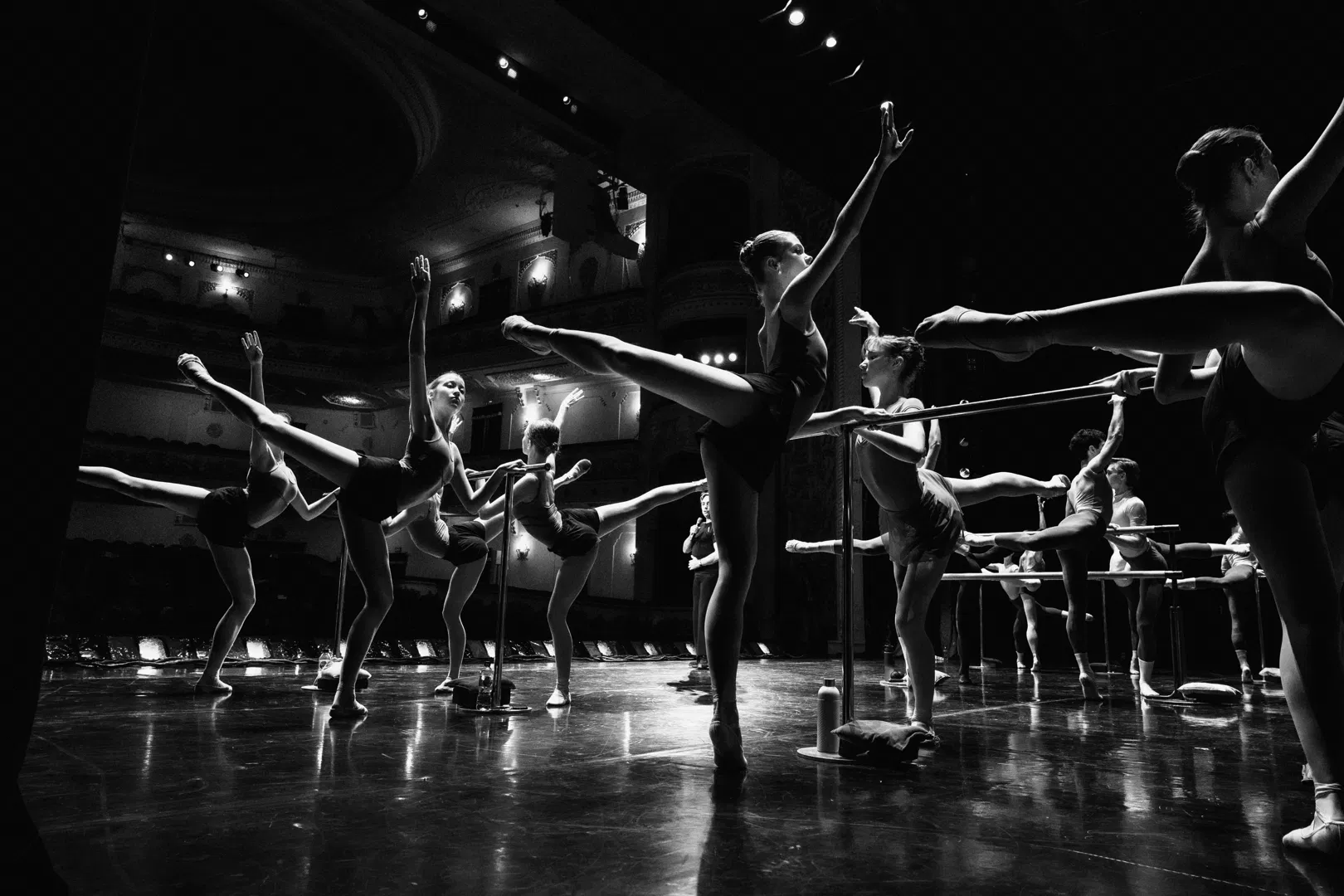
— So social media for you are a continuation of your teaching work?
— In a certain sense yes, but I do not want to turn it into a separate mission that must be constantly declared. I simply try to talk about what I consider interesting and important. If a person after reading wants to watch a performance, open a book, learn the history of a city, then that is already good. I understand that people are interested in certain topics, and I try to share what may be useful to them. For me it is above all a tool of communication, not an end in itself.
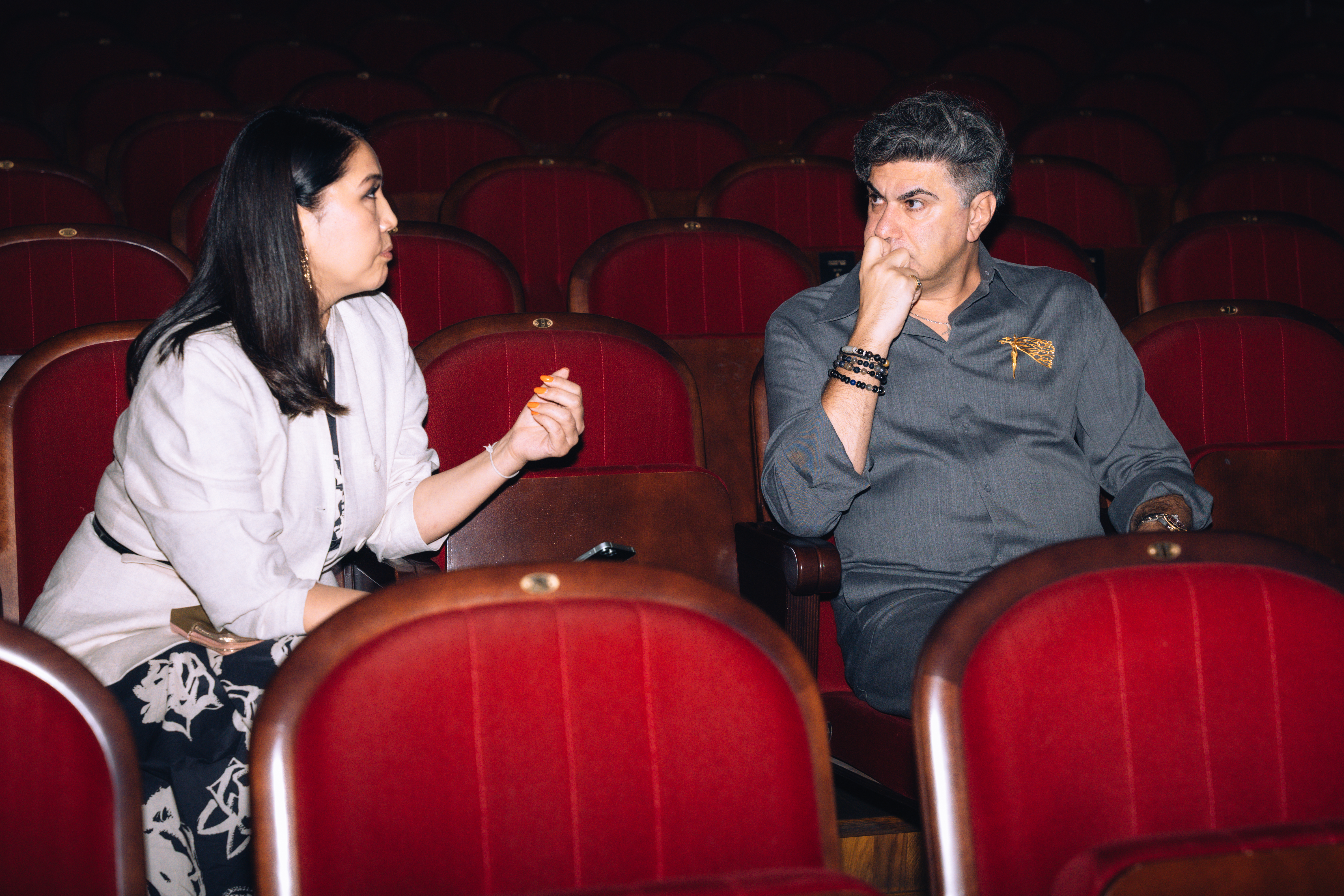 Photo: Ildar Sadykov
For public figures, a presence on social media has indeed become important. It is a way to communicate with an audience, share one's ideas, talk about one's work, but something else worries me: a huge number of people begin to imitate a life they do not actually live. They try to create the image of a successful, in-demand, interesting person, although behind this image there is sometimes nothing at all. At first such a strategy may work, a person attracts attention, gains followers, becomes a subject of discussion, but then someone else quickly replaces him and with that come disappointment and anxiety. If you build your life exclusively on external attention, then you inevitably begin to depend on it. You need to understand why you need this attention, what you want to say, what idea you carry, otherwise it turns into a chase after fashion.
Sometimes visual content and reality differ greatly. Once I came to London and visited an exhibition at Hampton Court Palace, where costumes from the film “The Favourite” were on display. On screen they seemed to be made of expensive fabrics: brocade, silk, magnificent French lace, but when I saw them up close, it turned out that many details had been created from completely different materials: from paper and denim, dyed in the required colours. All of it looked completely different in the cinema! I was struck by how convincing an illusion can be - you look at the screen and believe that before you is expensive fabric, a complex texture, a luxurious costume. Then I thought about how many things we today perceive exclusively through a screen, we see an image and take it for reality, yet a screen is capable not only of showing reality but also of changing it, of creating a completely different world.
Social media are not my goal, they are my tool
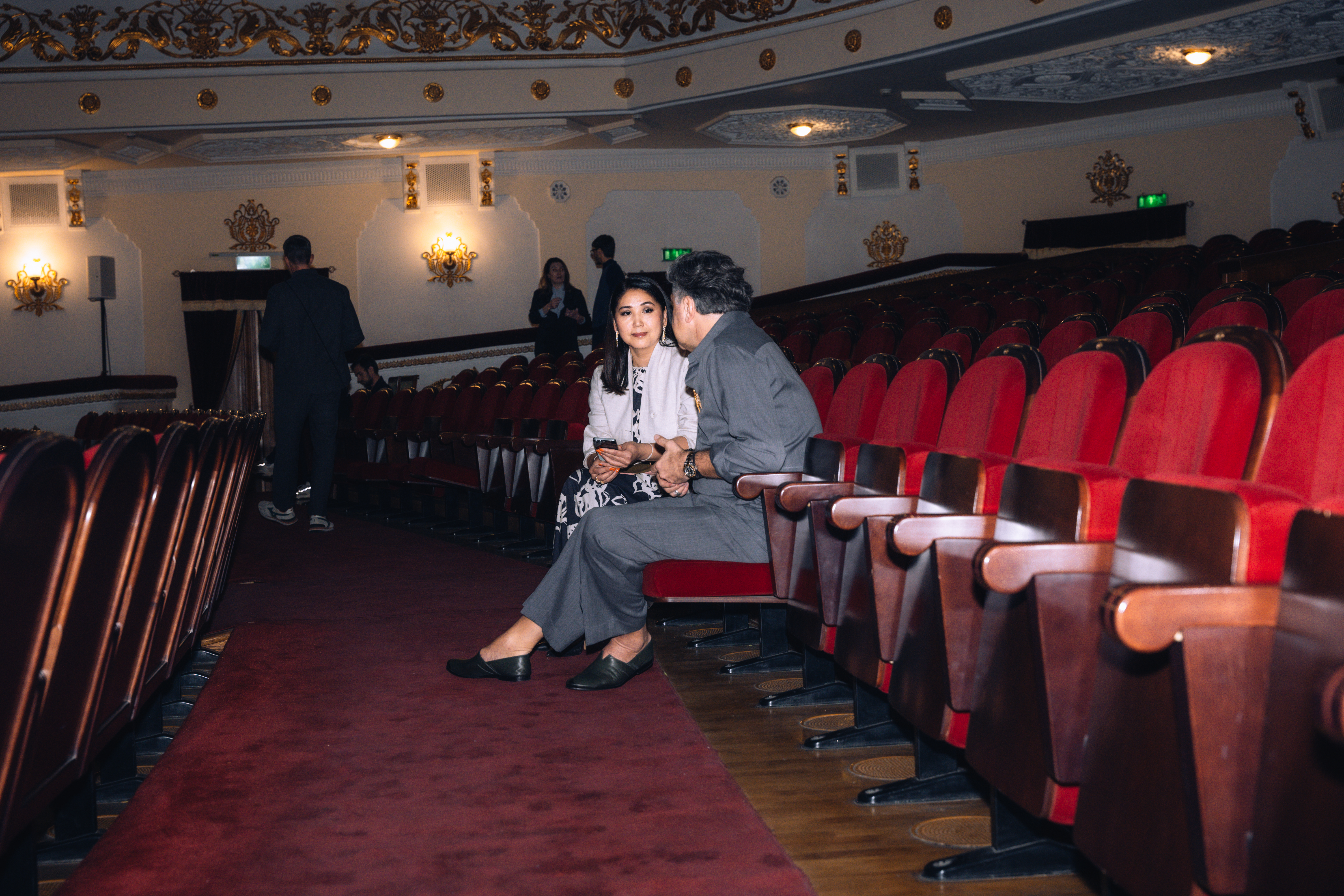 Photo: Ildar Sadykov
— So we are gradually being taught to trust an image more than our own feelings?
— I think that is largely what is happening. We grew up in a different time. I remember how we could determine the quality of a fabric simply by touching it. We felt the difference between silk and its imitation, between a natural material and a fake. Today many people get most of their impressions through a small screen. They see a beautiful picture but cannot always compare it with reality. And here an interesting problem arises: if a person constantly encounters a carefully created image, he begins to think that this is how life should look, but real life is arranged differently. It is not always beautiful, not always convenient, not always in line with our expectations. And real art does not always have to be a beautiful picture. It can be complex, unexpected, sometimes requiring effort and inner work.
It is important not to lose the ability to distinguish reality from its on-screen version
— Is it true that for you the most important value is authenticity? In your profession, in relationships, in art.
— I think so. It seems to me that in life it is very important to match what you do. If you are an artist, be an artist; if you are a teacher, understand the responsibility you take on. If you step out before an audience, think about why you are doing it and what you want to say to them. You do not have to become famous, to be the centre of attention, you do not have to prove your own importance to others every day. It is far more important to do your work well, to respect the people who work alongside you, and not to forget that behind any genuine result lies enormous effort.
The world is changing, new technologies appear, new ways of communicating, new forms of popularity. All of this is natural, but there are things that must not lose their value: professionalism, respect, responsibility, the ability to learn and the desire to do your work well.
— If you had to formulate the main piece of advice for a young person who today wants to achieve success, what would you say?
— I would advise first of all to work out what he is genuinely interested in. Not to start with the question of how to become famous, how to get on television or gain more followers. You need to start with something else: what do I want to devote my life to, what do I want to learn, what can I become a true professional in?
Popularity may come, and it may not. It depends on a great many circumstances, but if you have knowledge, abilities, diligence and respect for your work, that is already a foundation on which you can build a life.
And one more thing to remember: not everything that looks successful is in fact a success. And not everything that goes unnoticed is devoid of value.
In the end what matters is not how many people saw you, but what remains after your work.
Newsletter
A letter from the HD editors
Once a week, we send the best stories, events, and cultural discoveries from Central Asia.