Traditions
The Perfection of Straight Lines | A Photo Essay
Ildar Sadykov, Maria Maksimycheva, Sergey Pogosyan
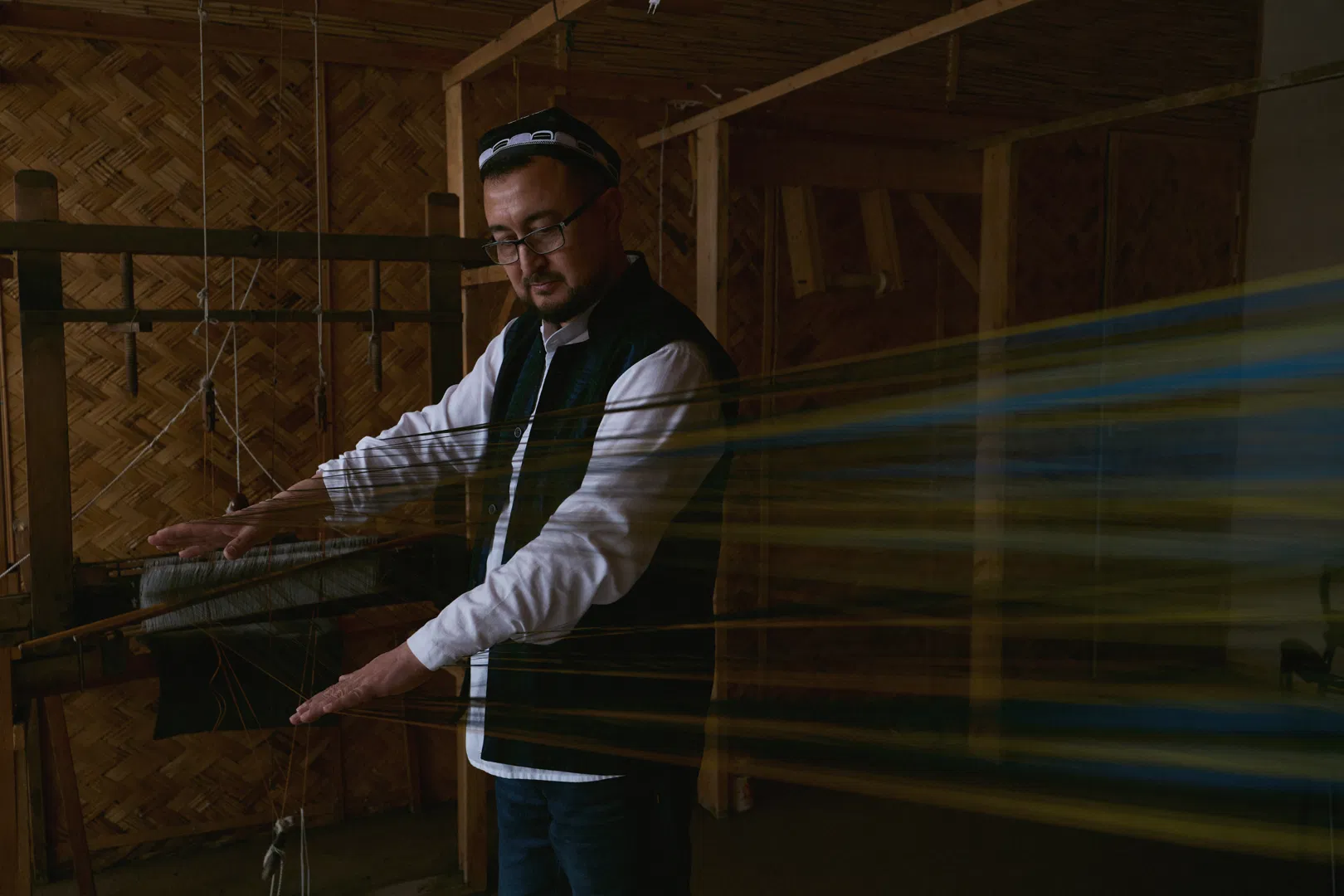
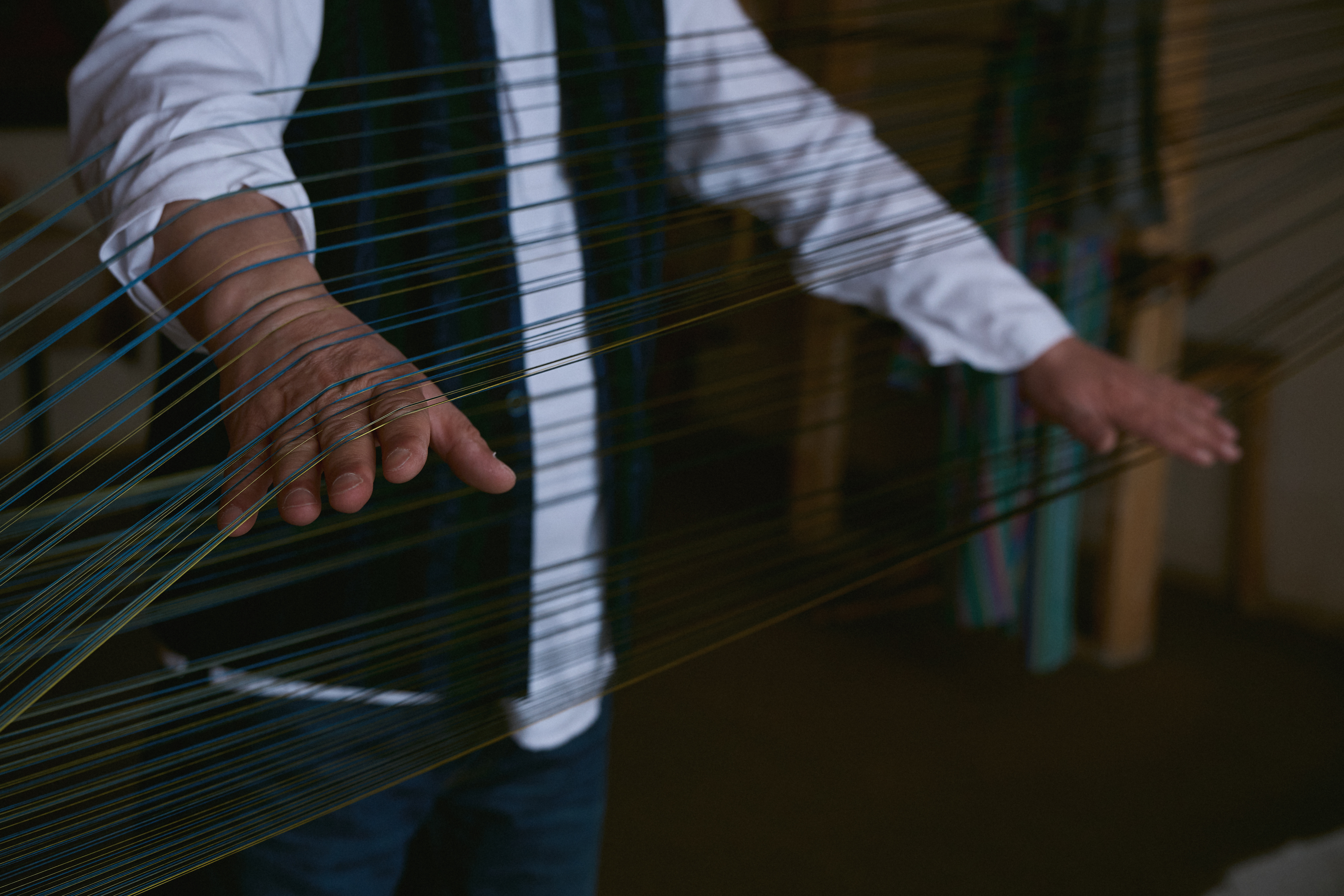
The craft of weaving, or the profession of the abrband, is historically male. Only in the 20th century did the conservative tradition, yielding to the demands of the times, allow women to take over the looms en masse. It is believed that only a man can create fabric of perfect quality, working for many hours without slackening the pace and without being distracted from his work… The magic of the art of hereditary weaver Abdulvokhid Karimov is in the photo essay by Ildar Sadykov and Sergey Pogosyan.
The Jami Mosque is a masterpiece of 19th-century Islamic architecture from the heyday of the Kokand Khanate. Once the centre of the city's religious life and a symbol of the greatness of the Kokand people's faith, this unique monument has become home to the traditional crafts for which the Fergana Valley is famous.
One of them is the creation of silk fabrics of heavenly beauty.
 Photo: Ildar Sadykov, Sergey PogosyanPhoto: Ildar Sadykov, Sergey PogosyanPhoto: Ildar Sadykov, Sergey PogosyanPhoto: Ildar Sadykov, Sergey Pogosyan
Continuity in craft is traditional in these parts. Abdulvokhid Karimov has spent his whole life making bekasam, a traditional striped silk and cotton fabric. This fabric is officially considered "men's", but it has long spread around the world, periodically appearing on the catwalks in collections by European couturiers.
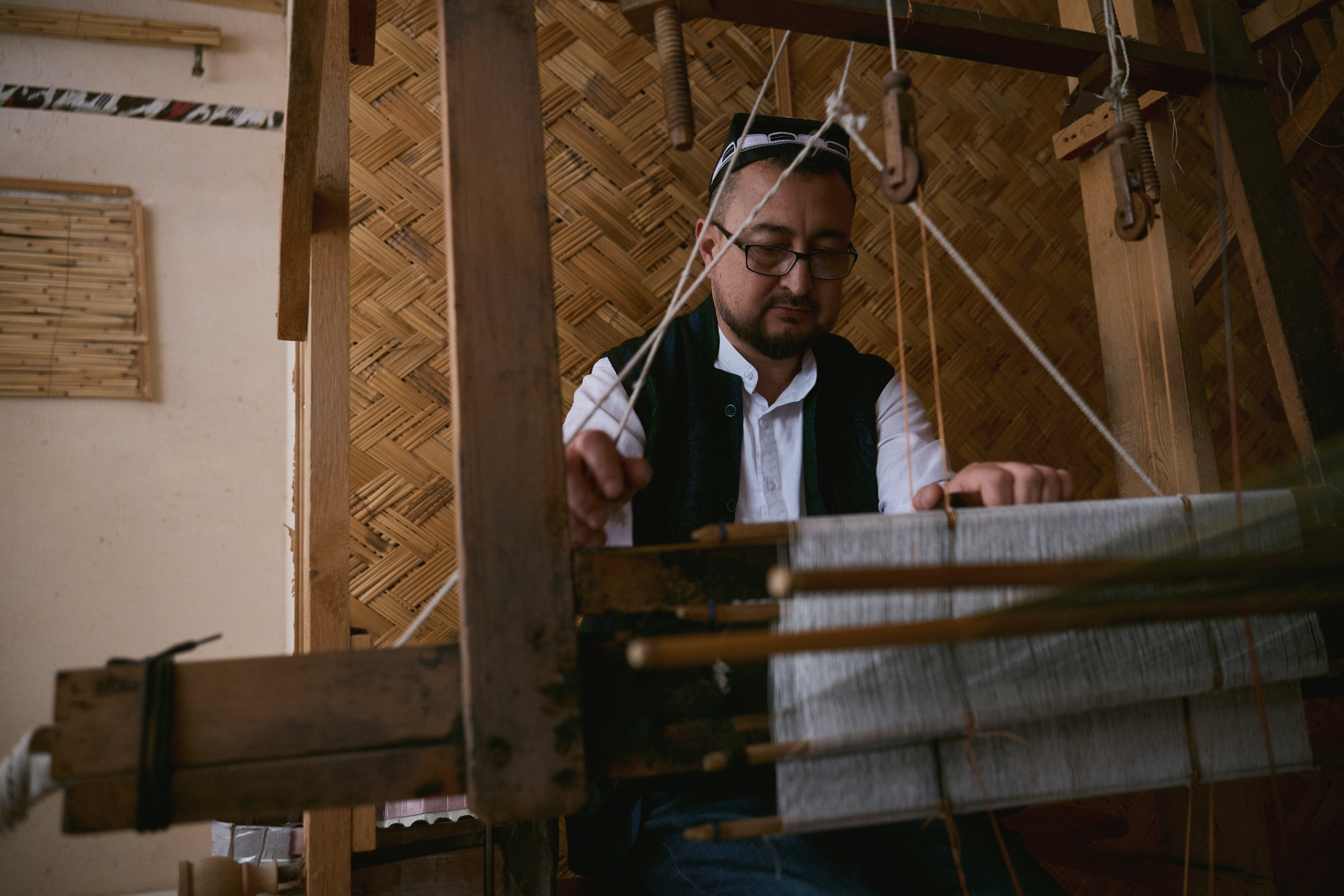 Photo: Ildar Sadykov, Sergey PogosyanPhoto: Ildar Sadykov, Sergey PogosyanPhoto: Ildar Sadykov, Sergey PogosyanPhoto: Ildar Sadykov, Sergey Pogosyan
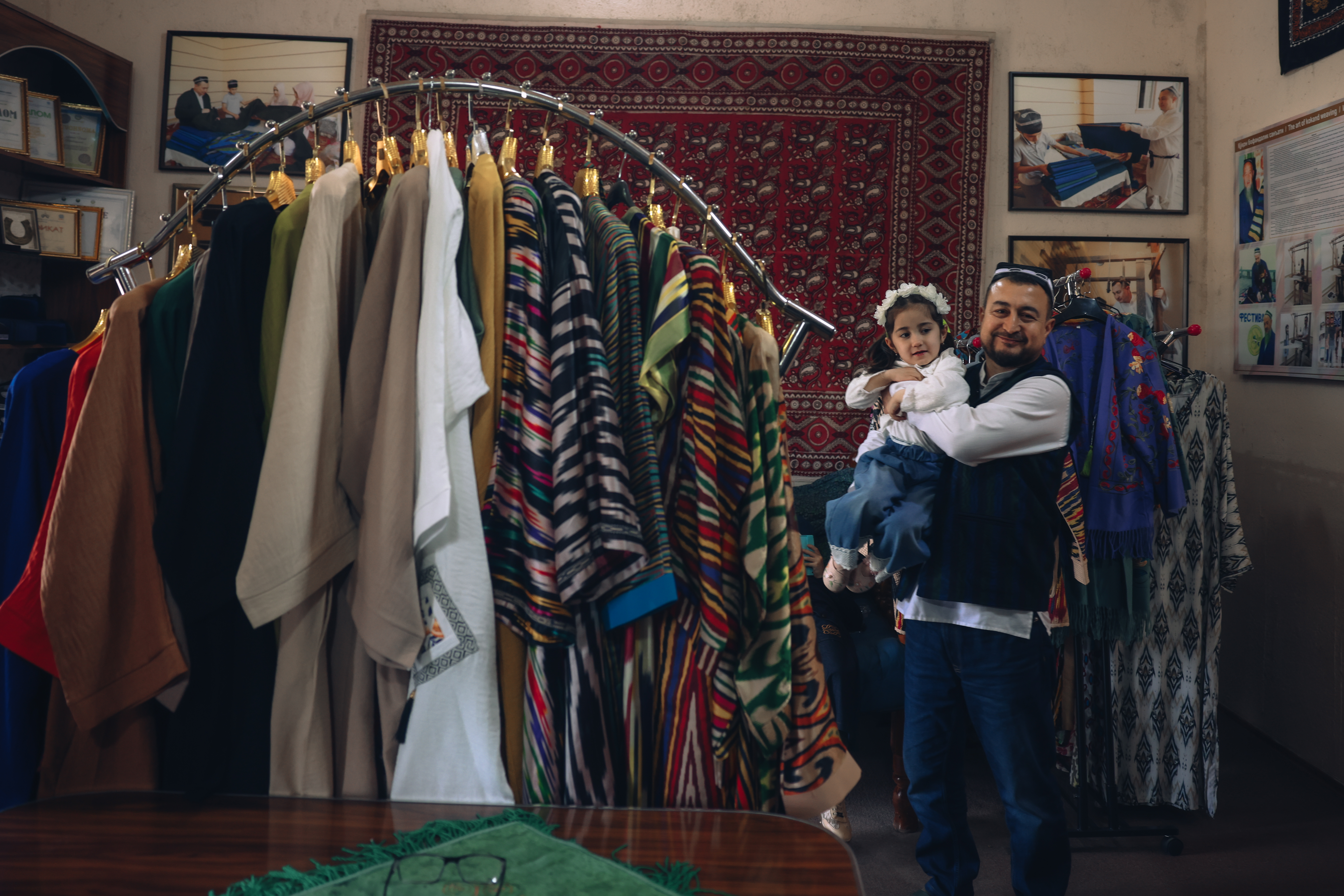
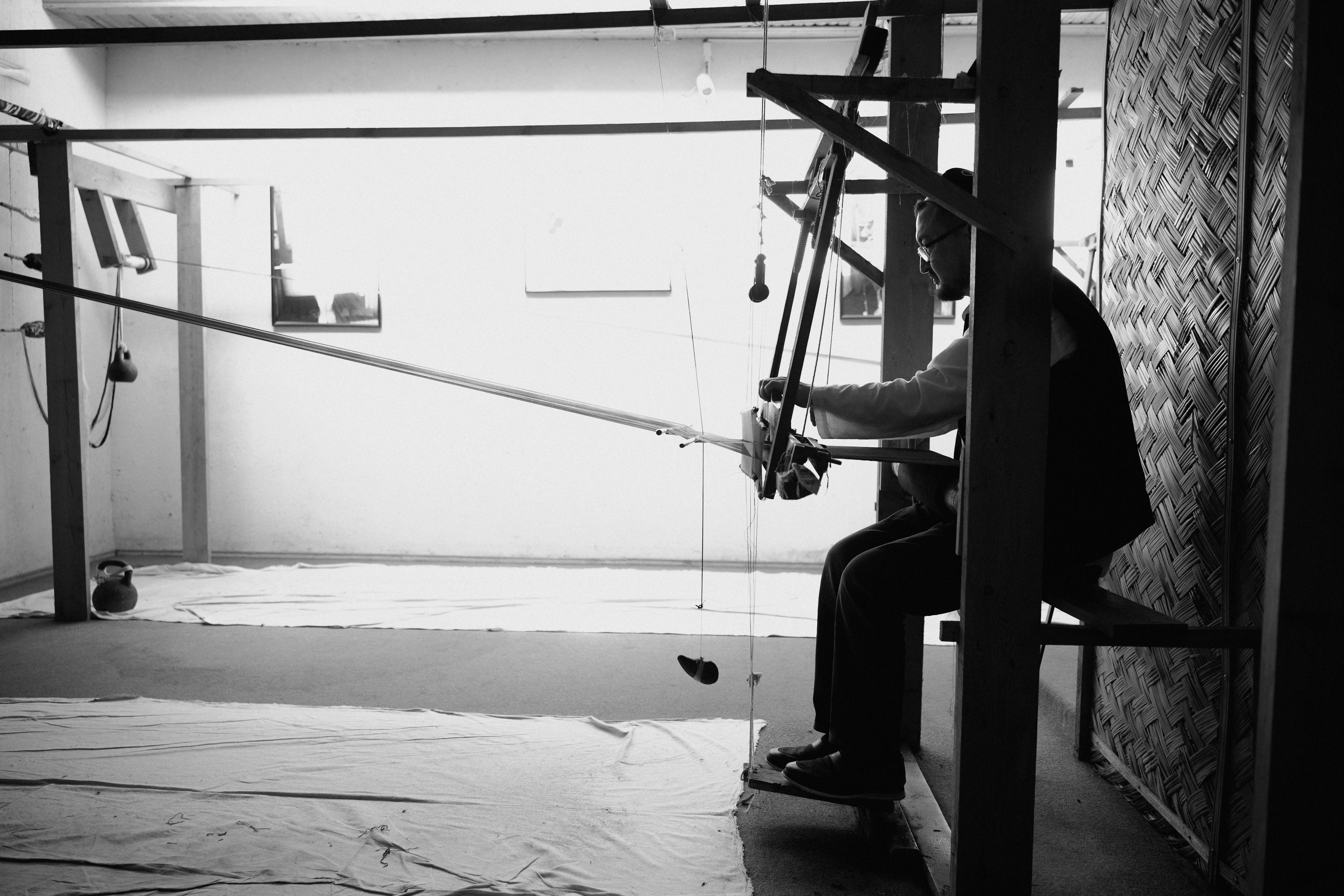
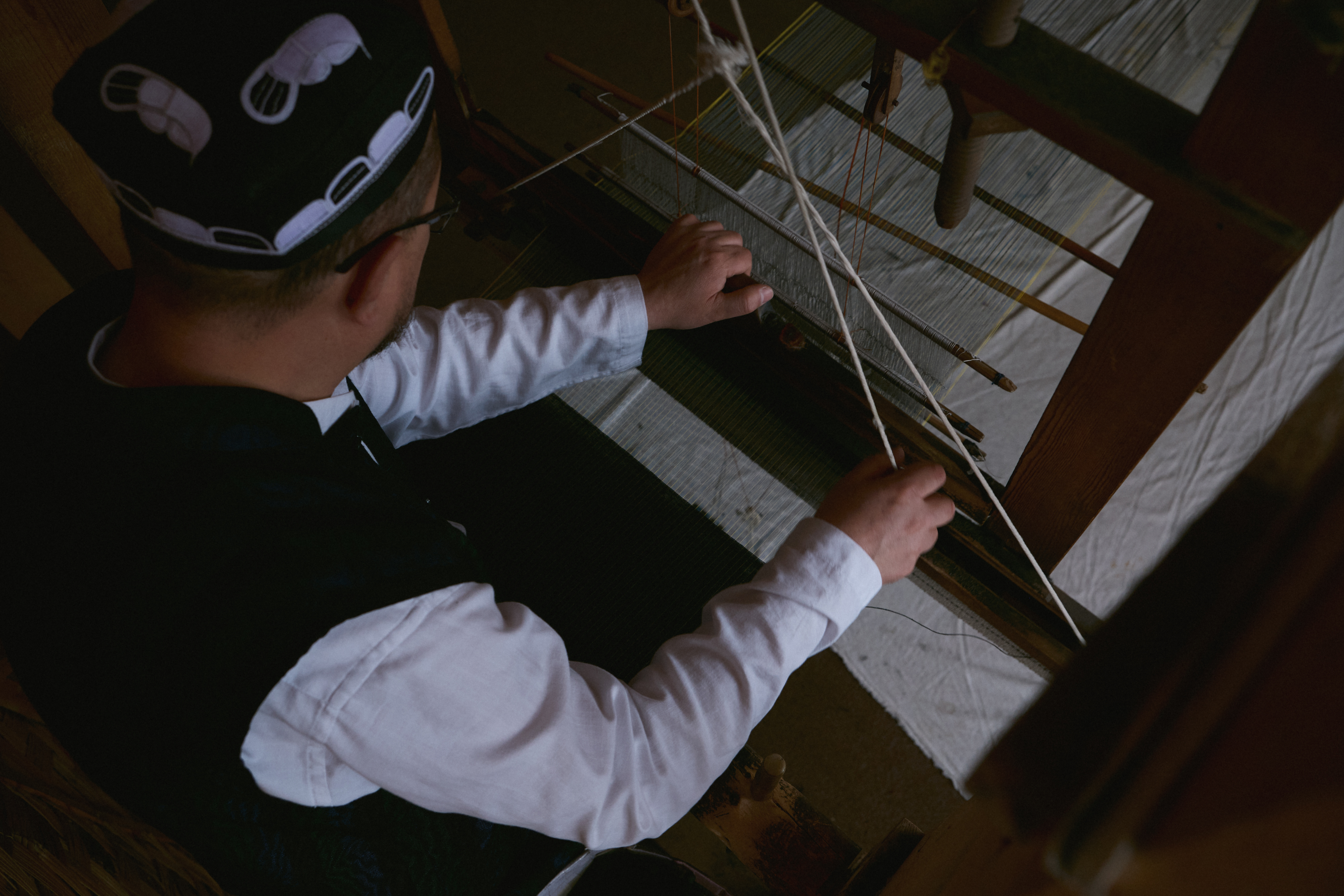
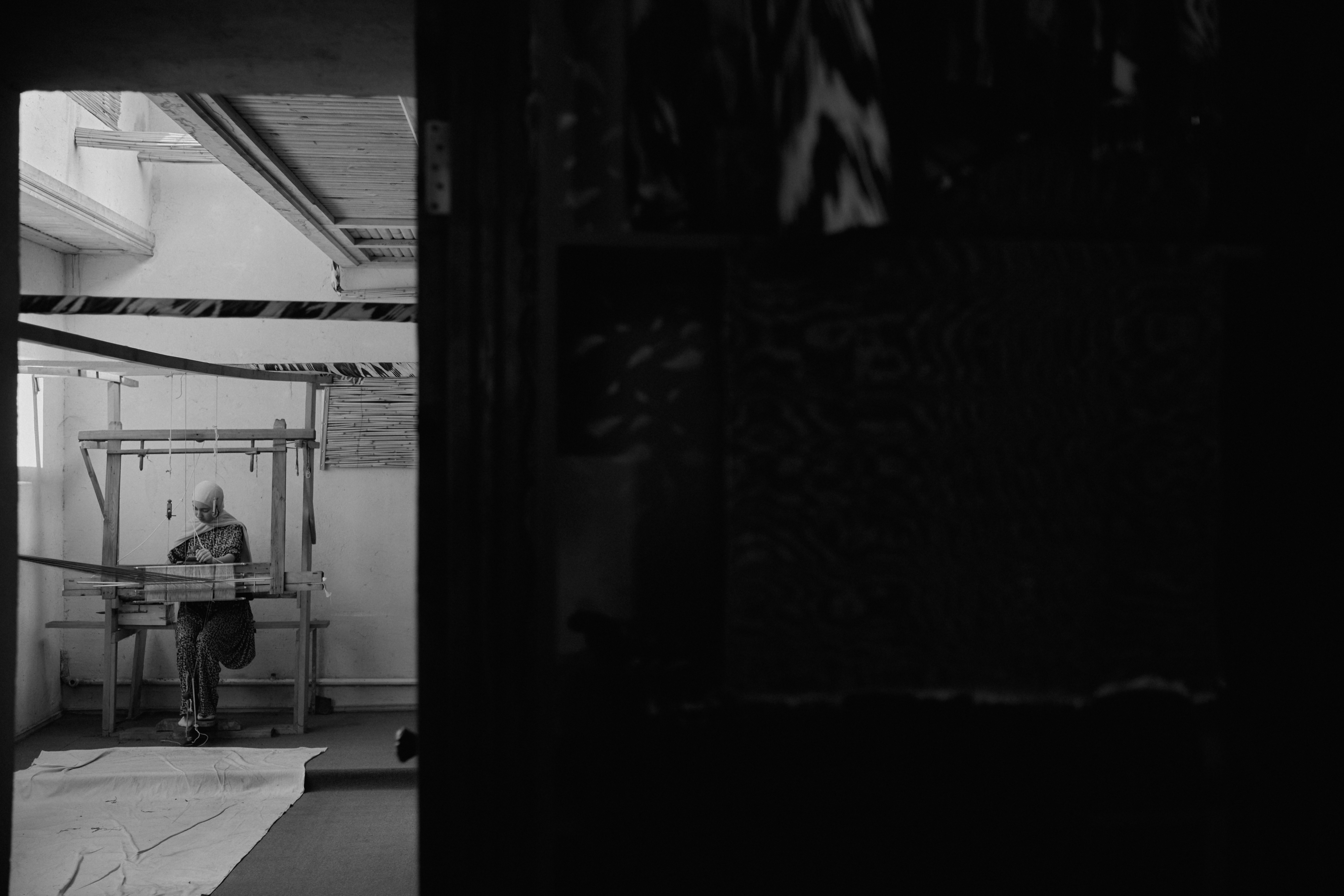
In Abdulvokhid Karimov's world everything is beautiful: the fabrics themselves, the ancient loom on which the cloth is born, made entirely by hand; every item, garment, skullcap or accessory, made with taste and love for their future owners.
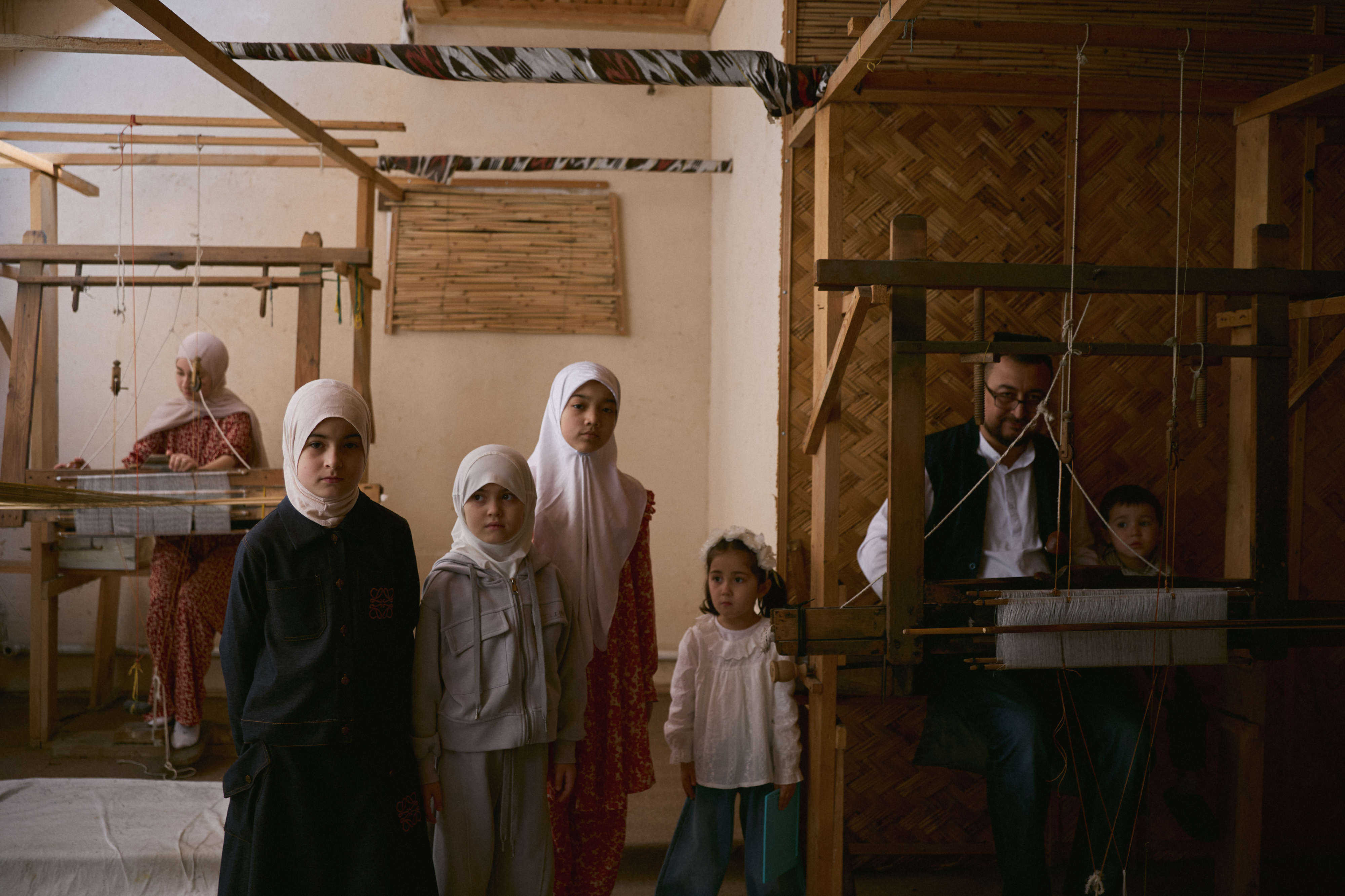 Photo: Ildar Sadykov, Sergey PogosyanPhoto: Ildar Sadykov, Sergey PogosyanPhoto: Ildar Sadykov, Sergey PogosyanPhoto: Ildar Sadykov, Sergey Pogosyan
Religion forbids Muslim men to wear silk garments. Resourceful Fergana craftsmen came up with the idea of mixing cotton and silk threads to produce adras, a blended fabric no less beautiful than pure silk. Bekasam spread throughout the region as a material emphasising a man's status. Nowadays, though, everyone wears it.
The combinations of coloured stripes in bekasam cloth are some special, unsolved magic. Silvery, pink, green in various shades, blue, purple, they harmonise surprisingly well with one another without creating an impression of inappropriate brightness.
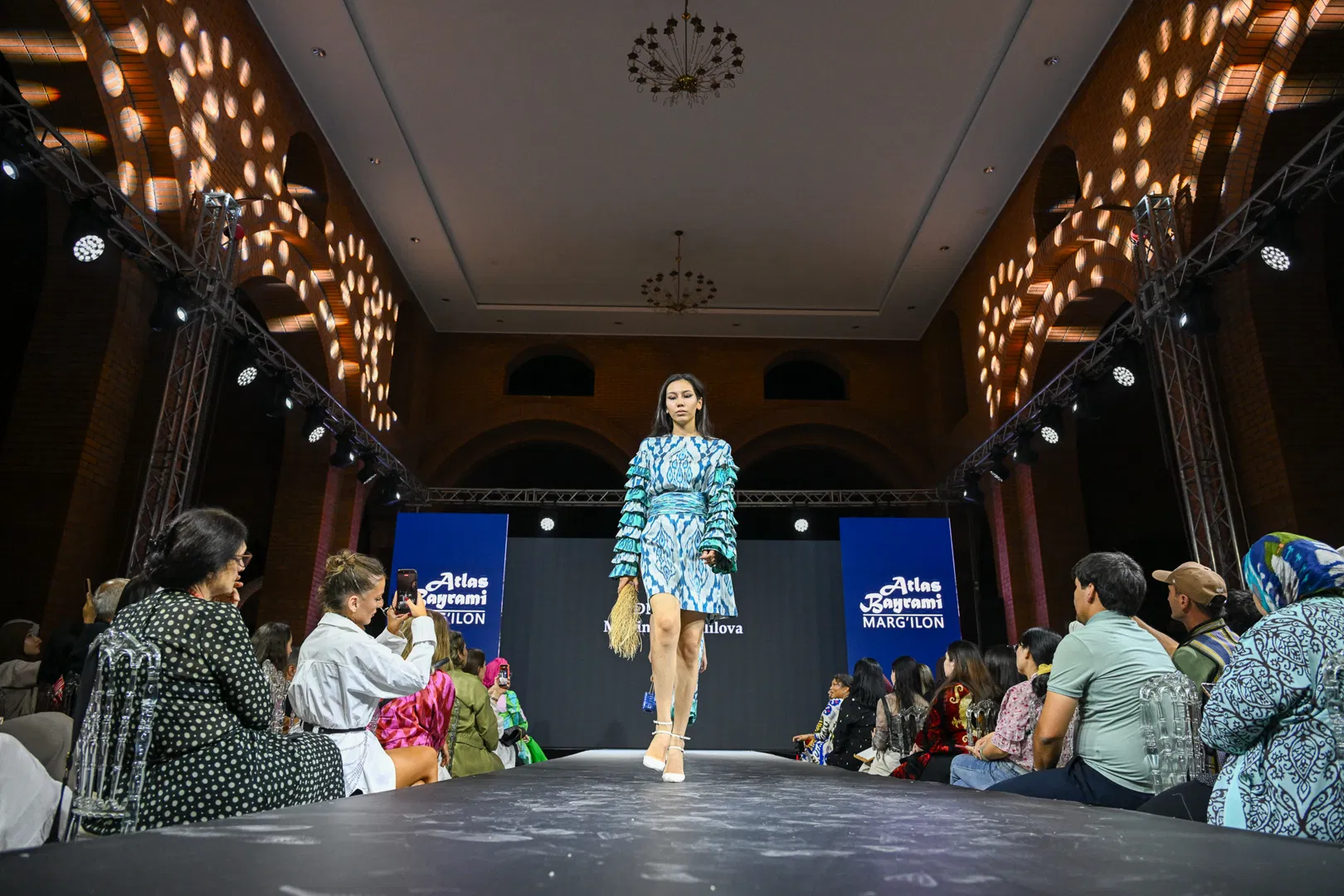
The Art of Binding Clouds — photo essayWoven into the very DNA of our culture, khan-atlas comes alive in the ceremonial dress of Uzbekistan’s state celebrations, takes pride of place at craft and fashion festivals, and stands as one of the nation’s most treasured cultural legacies.mag.humodoc.com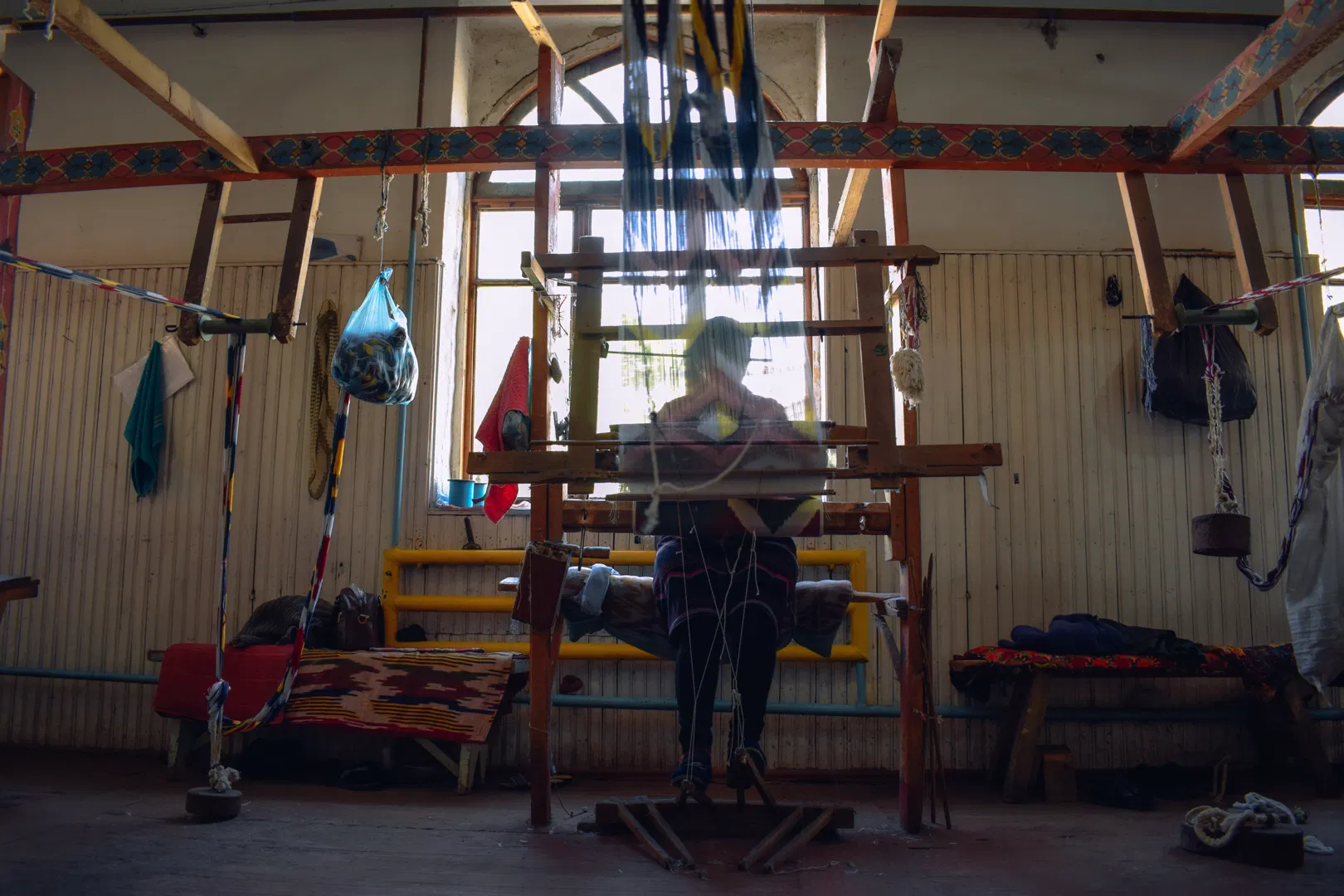
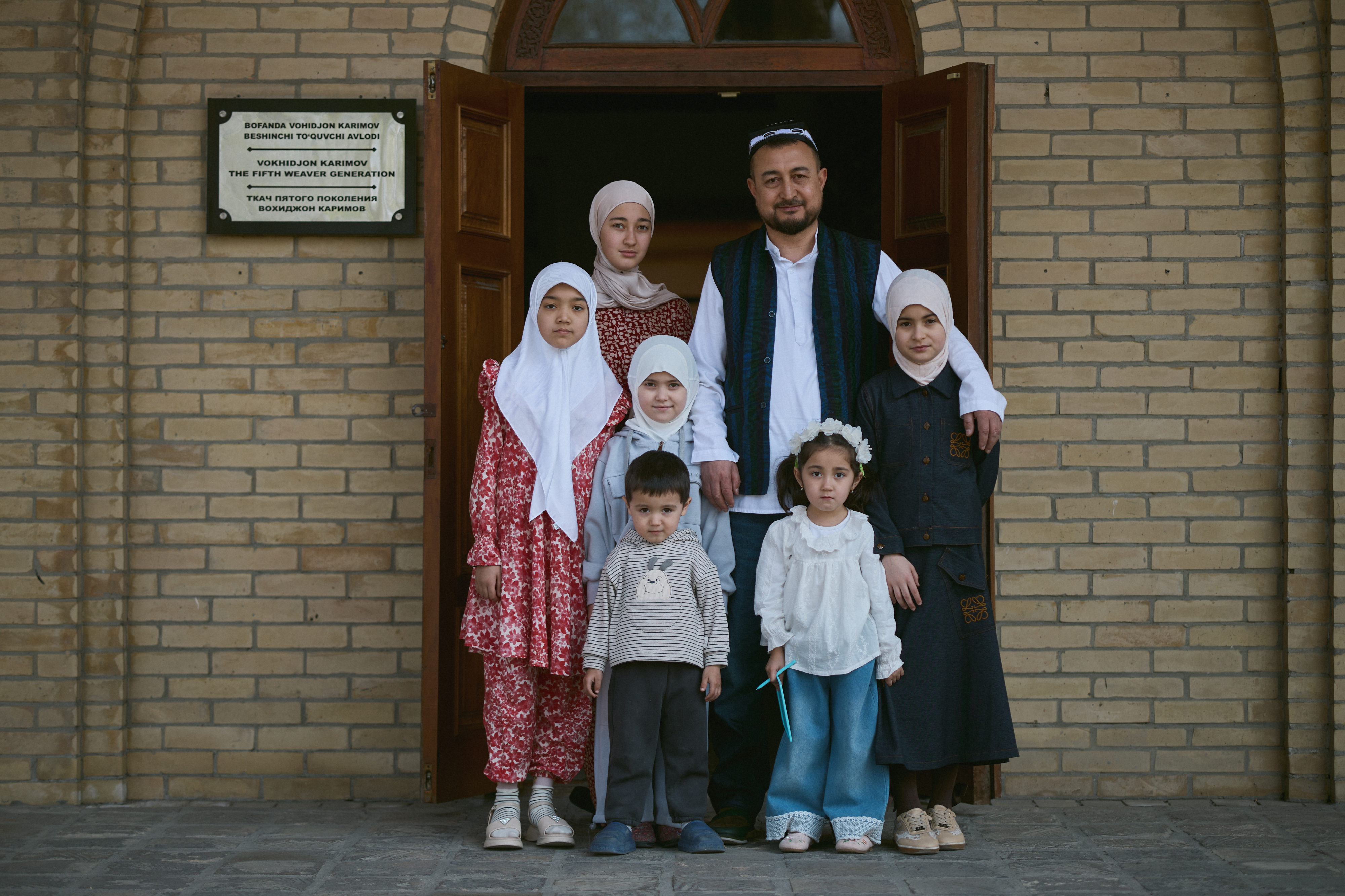 Photo: Ildar Sadykov, Sergey PogosyanPhoto: Ildar Sadykov, Sergey PogosyanPhoto: Ildar Sadykov, Sergey PogosyanPhoto: Ildar Sadykov, Sergey Pogosyan
I have visited Vokhidjon's workshop many times, but always on the run. This time I wanted to capture him at work. The master's grandchildren came running at once, and then his youngest daughter sat down at the loom. I have no doubt that they will continue the tradition and devote themselves to weaving too. I myself bought a waistcoat from Abdulvokhid. And as a gift I received a skullcap for my collection. The item immediately became precious to me.
The recent boom in chapan seems to have subsided somewhat, but the cut, the tradition of wearing them and the garments themselves are something from the realm of eternal values in Uzbek culture. And a chapan is traditionally sewn from bekasam. And although fashion is cyclical, the popularity of Uzbek fabrics, whose variety astonishes the Western imagination, is not fading yet.
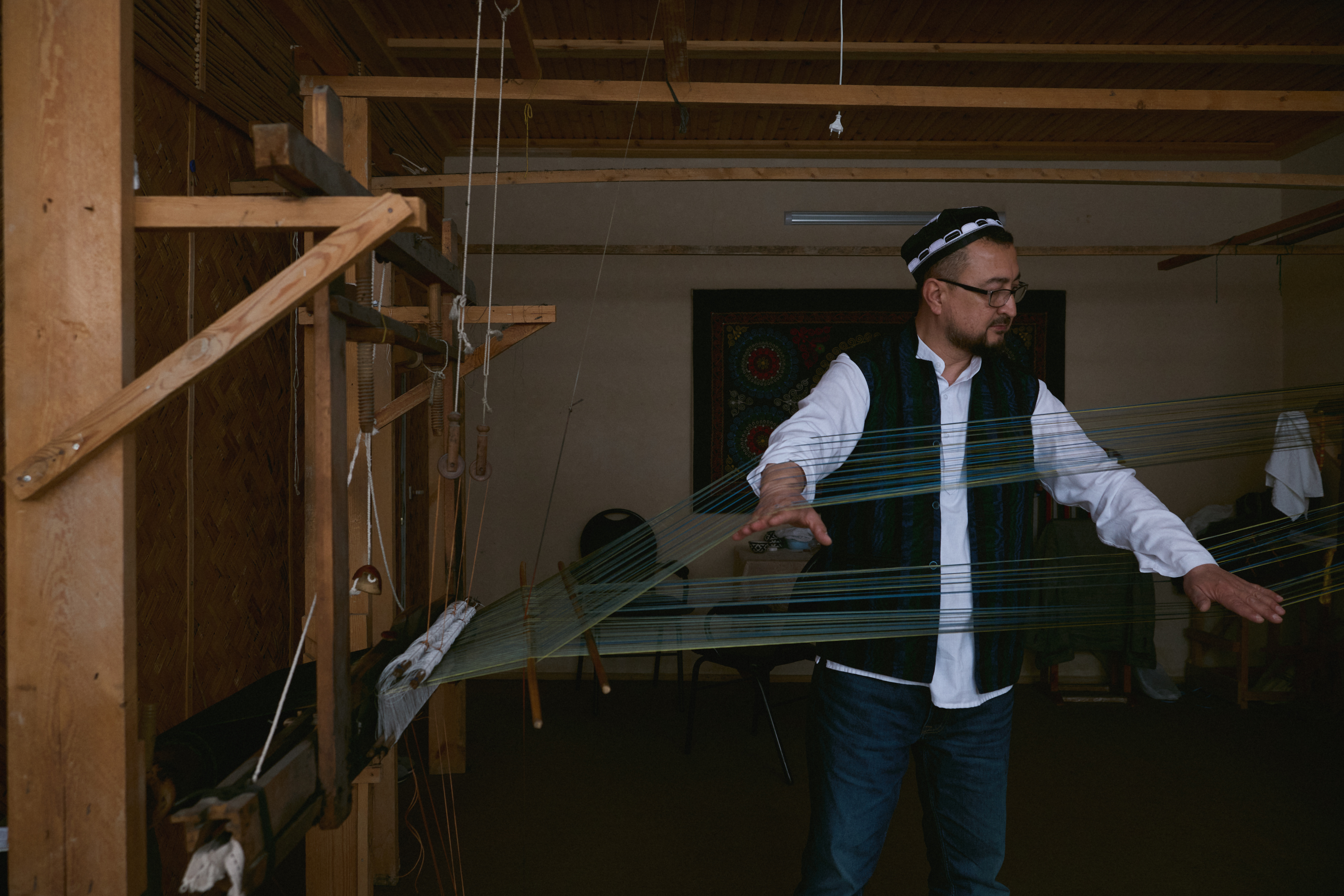 Photo: Ildar Sadykov, Sergey PogosyanPhoto: Ildar Sadykov, Sergey PogosyanPhoto: Ildar Sadykov, Sergey PogosyanPhoto: Ildar Sadykov, Sergey Pogosyan
However, the guardians of tradition very often remain in the shadows. Right now, when the market is flooded with pseudo-Uzbek synthetic fabrics from Chinese mass production, we should treat more carefully and attentively those who have carried the tradition into the new digital age in their own hands, in the most literal sense of the word, who preserve the technique by continuing the work of their ancestors.
Newsletter
A letter from the HD editors
Once a week, we send the best stories, events, and cultural discoveries from Central Asia.