Architecture & Urban Environment
Sport at Height: How Rooftops Are Becoming New Growth Hubs in Almaty
Alfiya Kalmaganbetova, Gulsara Kenbaeva
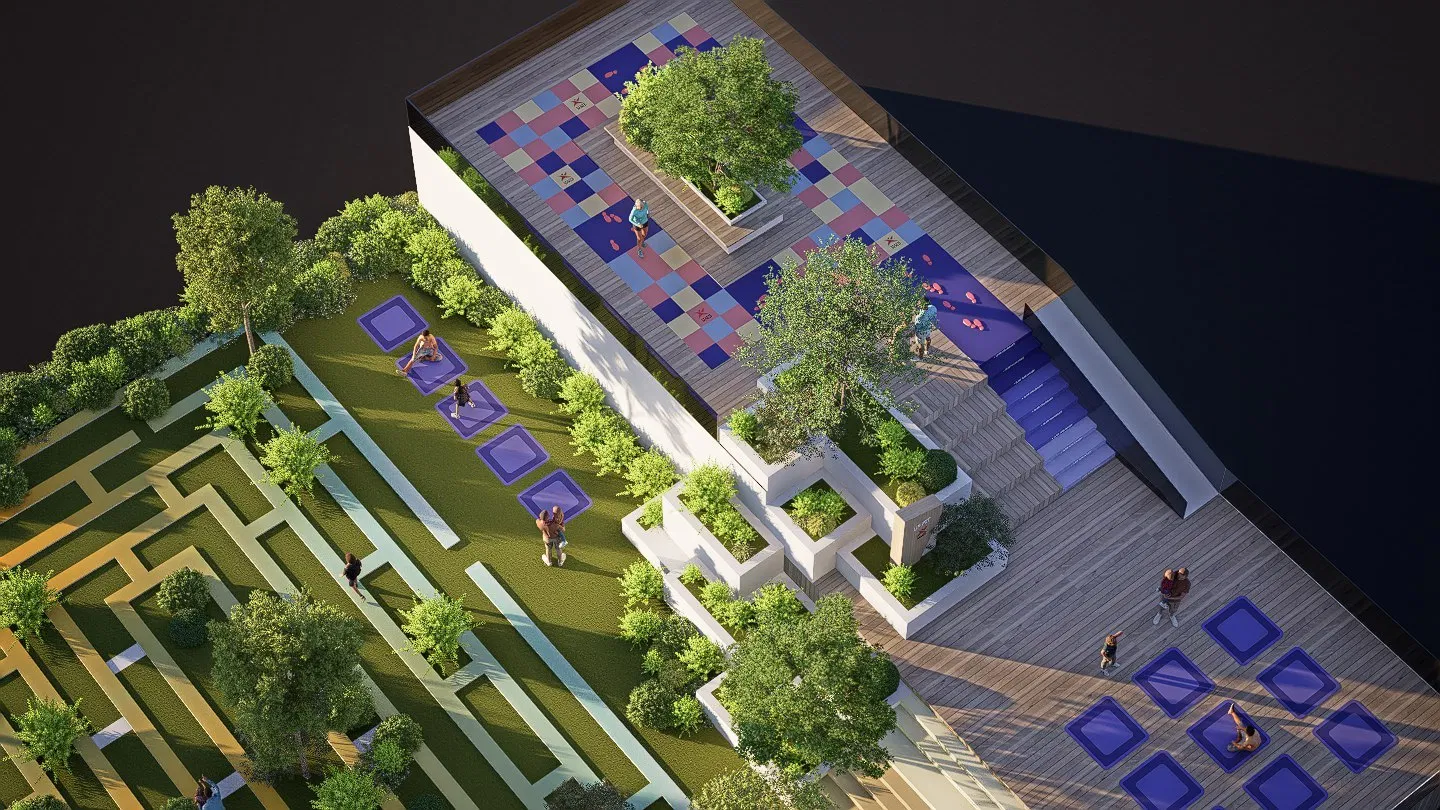
A new high-rise urbanism is emerging in Almaty: the roofs of residential buildings and car parks are being turned into full-fledged sports and recreation spaces. The Sport at Height concept, developed by Alfiya Kalmaganbetova, offers the city a different development scenario - not to expand, but to rise upwards, creating ecosystems for movement and rest where previously there were only technical voids. This is not just a sports project, but a new code for the city, in which every square metre works towards quality of life.
Alfiya Kalymaganbetova — author and developer of the concept “Sport at Height”. She holds 23 copyrights, 2 patents and a trademark in the field of physical education, urbanism. IAKS expert, head of Tafisa Central Asia, member of the executive committee of IFMS, MWF, author of the standard and classification of play and sports areas Sport in Square Playground Code, CEO MoveScape Forum Central Asia/Almaty and CEO MoveScape Central Asia Forum/Tashkent
— Alfiya, how did it all begin? How was the idea for the “Sport at Height” project born?
It was not a flash of inspiration - rather, a chain of observations and circumstances. 2019, in connection with the pandemic COVID-19, became for everyone a global point of reassessment of values. For me it became the moment when my first sports multifunctional dynamic mat Sport in Square, just 1 sq. m in size, was born. Its task was simple: to make it possible to train in any conditions, especially when we did not understand how long the isolation would last. The mat worked excellently in the Federation that I headed, and then grew into a two-year programme of the Almaty Department of Education and Sports Committee - more than 37 thousand schoolchildren took part in it.
But the most important thing was the feedback from parents. It pushed me to expand the idea and create mats for all age groups. That was also when I first wondered: what if limited space is a new reality rather than a temporary phenomenon?
— You began to talk about the space of the courtyard and housing. What exactly in modern urban development seemed problematic to you?
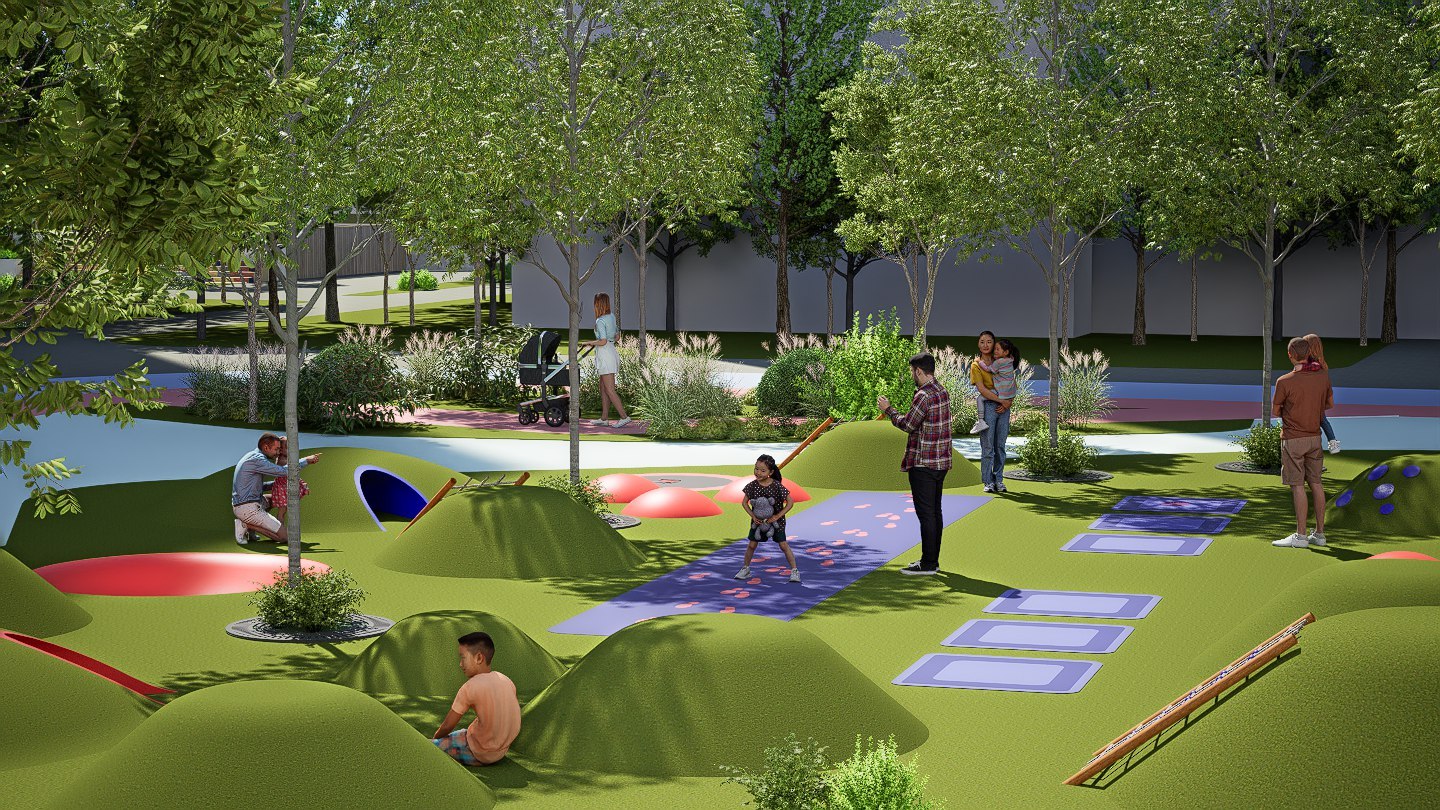
We live in conditions of dense development, where the courtyard is, in essence, a space of scarcity. For an entire residential block - 2–3 slides, a couple of horizontal bars, one sandpit. And that is in the best case. The first “mum conflict” happens precisely on the children's playground - all parents know about this. But the main thing is that there is no understanding of the very idea of a sports courtyard, and the developer often has no tool that meets this demand. At the same time, above us there are empty roofs forgotten by planners. These are dead square metres that could work for the benefit of people.
— And the roof became the starting point?
At first the roof was an observation. Then - a concept. And then development began: functional zoning, safety, usage scenarios, landscape integration. That is how the “Sport at Height” project appeared - an eco-park and a multifunctional sports and dynamic zone located on the roofs of buildings, car parks or in courtyards.
— What is unique about your approach?
I create space based on the different-age, psychological, social and physical characteristics of residents. The basic needs are the same for everyone: movement, safety, accessibility and the possibility of choice. That is why the project includes: — stairs as an accessible exercise machine with the Up Fit programme; — meditation and stretching zones (a roof is ideal for this - silence, air, horizon); — logical dynamic markings; — inclusive playgrounds, which are practically absent in modern courtyards; — active puzzle zones.
The main idea is to compete with social networks and bring back interest in the streets. That is why any space can be static, but through a QR code it can turn into a dynamic one, with exercise programmes of different levels of difficulty
— So “Sport at Height” is more than a sports zone?
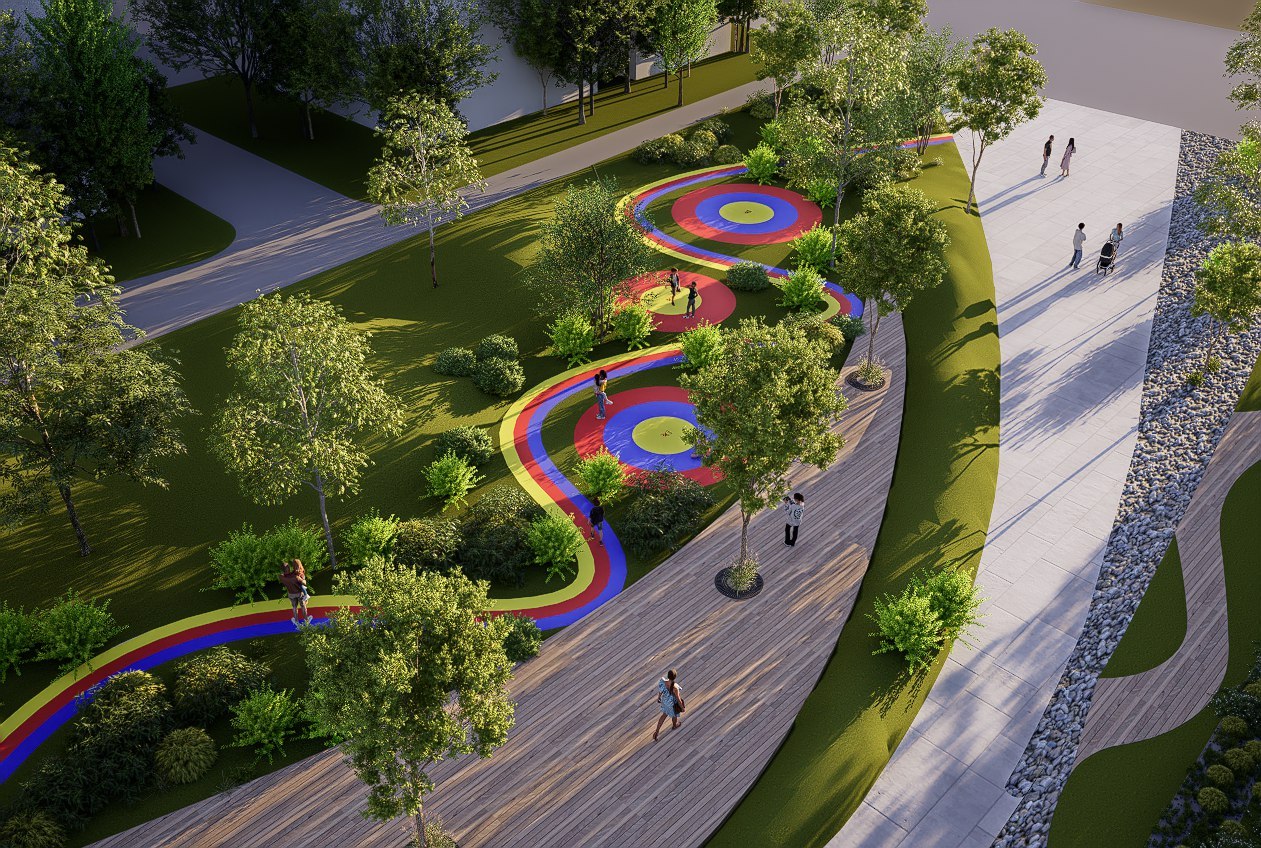
Yes. It is a new ecosystem of urban activity, created so that the elements do not interfere with each other but are part of a single organism.
At the city level this solves several tasks at once: — it compensates for the lack of public spaces without expanding development; — it improves the quality of life in a residential complex; — it integrates sport, nature and architecture in one vertical space; — it gives developers a scalable solution with individual design.
— That is, the roof becomes not just a surface but a new growth point for the city?
Absolutely. We look for space for change somewhere far away, but it is right above us. “Sport at Height” is a step towards a sustainable, living metropolis, where every square metre works for health, for communication, for quality of life. It is the opportunity to be closer to nature and to oneself without leaving the city.
— And yet, what is the philosophy of your project?
In a simple principle: cities of the future are not about technology but about people.
About health, nature, architecture and their interaction in one living system. And this system can start right from the top of a building.
Examples of modern rooftop sports spaces:
- CopenHill / Amager Bakke - Copenhagen, Denmark
This is a waste incineration plant, but its roof has been turned into a recreational zone: here there are walking routes, a running track, a climbing wall and even a ski slope. copenhill.dk+2World-Architects+2
The project reflects the idea of sustainable architecture: an industrial building becomes a place for recreation and sport, as well as a symbol of the city's ecological transformation. archello.com
- Tiantai No. 2 Primary School - Zhejiang, China
A school with a 200-metre running track on the roof. New Atlas
The project was designed by LYCS Architecture to preserve more ground-level space while providing full facilities for children's physical education. en.lycs-arc.com
Safety is ensured through three-layer barriers, and the rooftop track has shock absorption to reduce noise and vibration inside the building. Designboom
- Kaufland Sports Roof - Erfurt, Germany
A sports roof above the Kaufland supermarket: it has an artificial football pitch, a 400-metre running track, jumping sections (long jump, triple jump) and volleyball courts. sports.regupol.com
This is a full athletics complex - not just a “green area” but a serious sports facility on a roof, with stands and areas for coaches. sports.regupol.com
- US - Seventeenth Street Rooftop Court (Denver, Colorado) This is a basketball court on the roof of a building in central Denver, with views over the cityscape. Courts of the World
- US - Rooftop Basketball Court in Houston, Texas On the roof of the Pearl Greenway residential complex there is an open-air basketball court for residents of the building. Pearl Greenway
- US - Case Gym “The Roof”, Boston University The roof of the gymnasium is used as a sports arena: a basketball court with stands for around 1,800 spectators. Boston University Athletics
- Japan - HOOP CITY / 3×3 court on the roof of the Shinjuku ALTA building, Tokyo This is an indoor (but open-air) 3×3 basketball court on the roof of a commercial building in the Shinjuku district, very popular and with an urban spirit. Kyodo News PR Wire+1
- Japan - adidas SPORTS PARK on the roof of Toyota Arena, Tokyo A themed sports park: a basketball court is located on the roof of the arena on the 4th level. TOYOTA ARENA TOKYO|トヨタアリーナ東京
- Japan - Adidas Futsal Park, Tokyo A unique futsal court is located on the roof of the Tokyu Toyoko shopping centre in Shibuya - one of the first urban projects of its kind.
Read also
 Architecture & Urban Environment
The Architecture of Tomorrow: New Identities, Emerging Technologies and the Human Factor
Damir Ussenov
 Architecture & Urban Environment
A Pretty Facade Doesn’t Make a Business
Maxim Shabashov
 Architecture & Urban Environment
Walking Almaty’s Modernism: Architecture Against the Mountains | A Photo Essay
Alfiya Kalmaganbetova, Amira Kassenova
Newsletter
A letter from the HD editors
Once a week, we send the best stories, events, and cultural discoveries from Central Asia.