Architecture & Urban Environment
Saken Narynov: An Artist with a Philosopher’s Mind
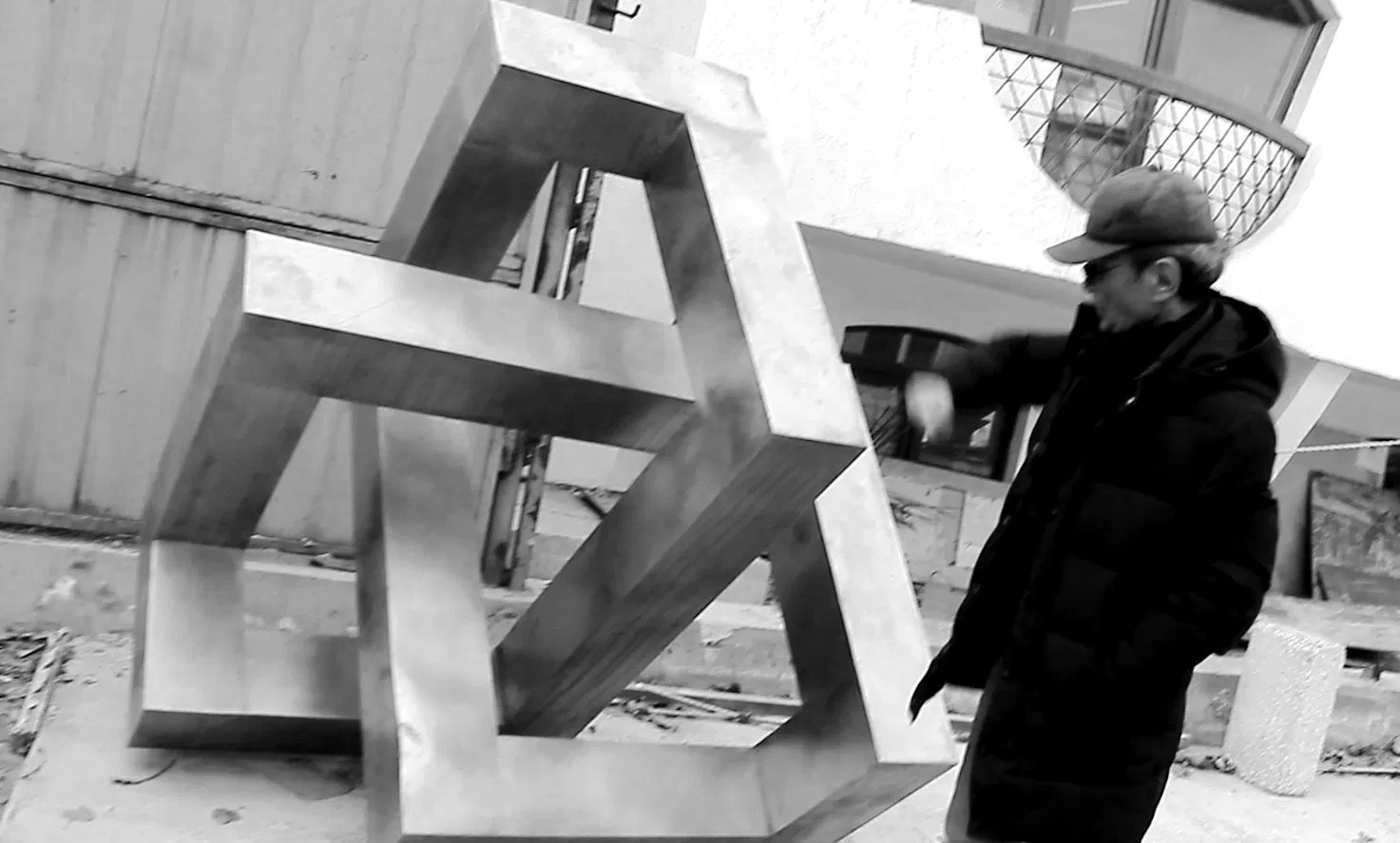
Saken Narynov is a unique master whose creative genius has found expression in many scientific and applied fields. An internationally recognised sculptor and researcher, an architect who has entered the top twenty architects of the world, whose work emerged at the intersection of art, architecture, engineering, mathematics and ancient mythology. His efforts - artistic and scientific - were directed towards comprehending the laws of existence, understanding the patterns and hidden nature of phenomena, exploring the world and the human being within it, while his passion for the exact sciences, the study of mathematics, topology and astrophysics paradoxically revealed the essential unity of infinitely small and large forms, such as the molecule and the galaxy. Purely speculative concepts acquire incredible visual incarnations in the artist's interpretation.
Saken Zhomartovich Narynov (16.10.1946-5.08.2023) - Soviet and Kazakh architect, author of five inventions and 34 scientific articles published in domestic and foreign press. He created more than 80 design developments in various fields of architecture, construction, applied geometry and topology, industrial design; he founded and headed the design forecasting laboratory of the Union of Designers of Kazakhstan (now called Saken Narynov's studio “Kopkyrly” (“Multifaceted”)
Narynov combined rationality and intuition, scientific experiment and artistic gesture, creating objects that are at once aesthetic forms and complex spatial models. He thought like a scientist, acted like an architect and experienced reality like an artist-philosopher. In his works, space - is not a backdrop but an independent character, a living organism with its own laws, metamorphoses and secrets.
The key to understanding his works is topology, the branch of mathematics that studies forms which preserve their properties under deformation: stretching, compression, bending. Saken Zhomartovich turns to the simplest topological objects - the torus, the sphere, the Möbius strip, the Klein bottle - and complicates them into unprecedented spatial structures. They turn inside out, flow into one another, lose the distinctions of “inner” and “outer”, as if modelling the very principle of the universe's motion.
The master works as if exploring the world from within: dissecting space, studying its elements, building logical connections and translating all of it into visual formulas. His objects can be seen as a kind of model of reality - eternal, changeable, in a constant process of transformation.
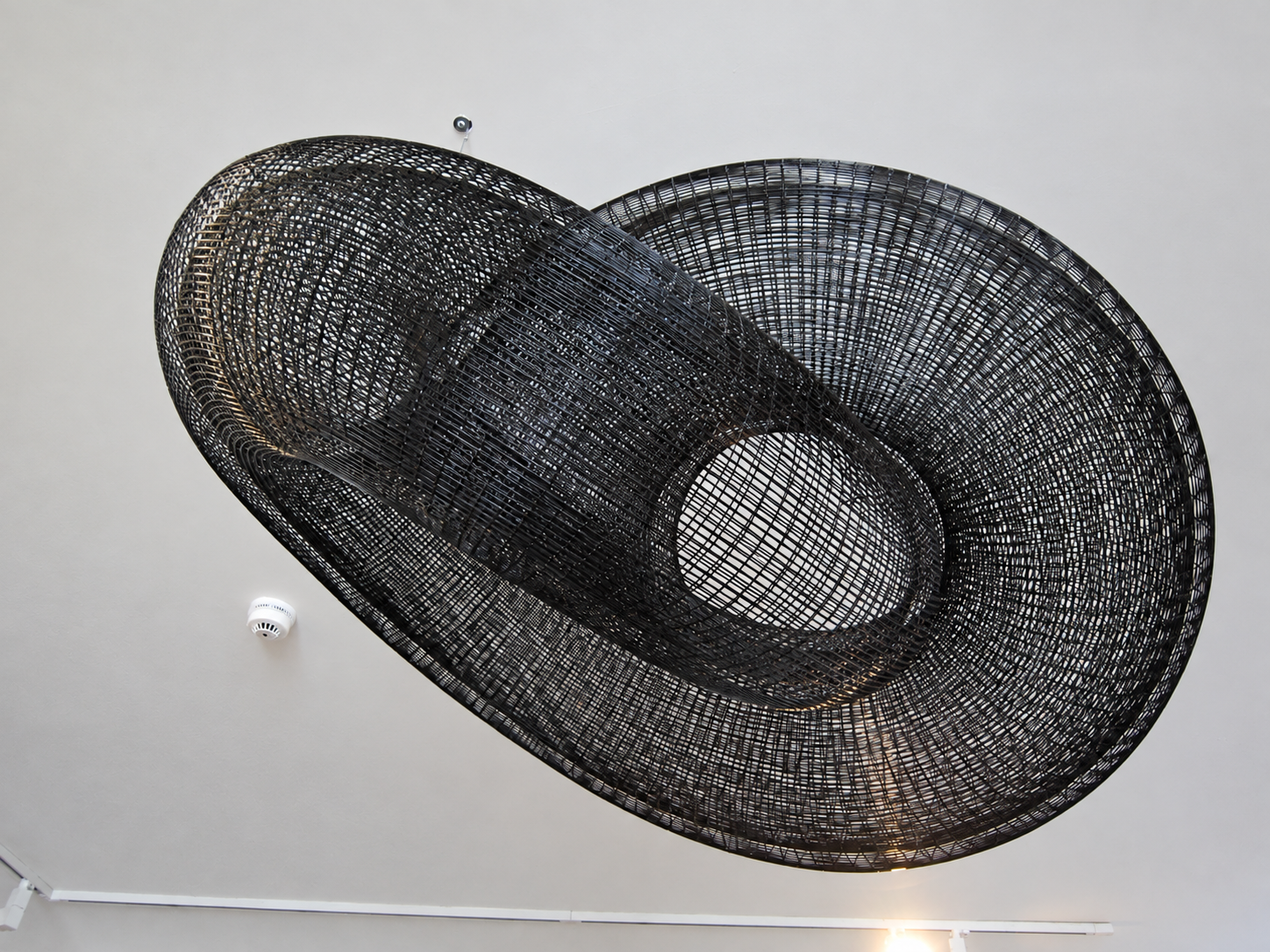
One of Narynov's central works is “The Kazakh Bottle” (1989) - a kind of model of the Universe, a variation on the theme of the Klein bottle, but reworked so deeply that it became an independent invention that received an international patent. This object is a kind of philosophical declaration by the author, embodied in material.
The Klein bottle is a topological form in which there is no distinction between inner and outer space. In the classical model the body closes in on itself, creating a structure with a single surface. Having studied this form experimentally and intuitively, the artist turns it into a spatial metaphor of the Kazakh worldview, into a model of infinity and the interpenetration of worlds.
“The Kazakh Bottle” is not simply a variation of a mathematical body, but a visualised philosophical experience: in it transverse lines pass into longitudinal ones, the outer becomes inner and vice versa. This is the main nerve of his work - the search for the point where boundaries disappear and space becomes continuous, alive, fluid.
The object has an unusual pull. The viewer wants to penetrate inside, walk along this closed path, feel the movement between worlds. In this desire lies the ancient motif of travelling through the cosmos, wandering across the steppe, passing between levels of being. “The Kazakh Bottle” becomes a modern interpretation of the traditional Kazakh world order, where reality is endless, fluid, passing from one state to another.
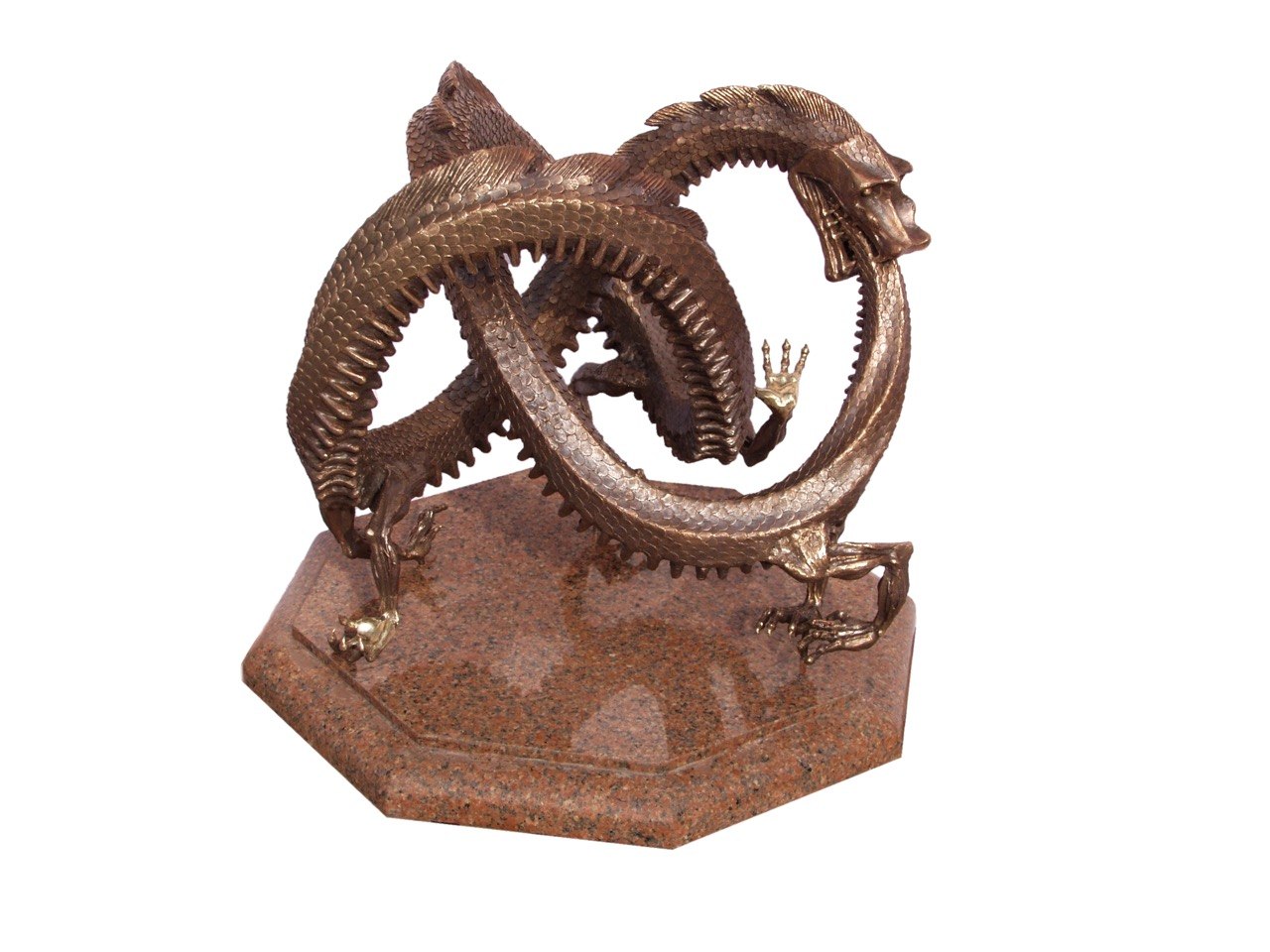
If “The Kazakh Bottle” is a scientific-topological model of space, then “My Grandfather's Universe” (1998) draws on ancient mythological ideas, but here too Narynov does not abandon the language of topology: he unites myth and mathematics, turning legend into geometric form.
The composition is based on the image of a dragon devouring itself. This ancient symbol, known in numerous cultures, reflects the idea of the eternal cycle, destruction and rebirth. In the Kazakh tradition it is embodied by the dragon Aidahar - a creature that unites the three parts of the world: water, earth and sky. This is not simply a character - it is a metaphor for the cosmos and time, their cyclicity and striving to preserve balance.
The master transfers the mythologeme into modern space, resolving the dragon's body as a complex topological knot - the “trefoil knot”, which belongs to the class of continuous knots. Thus the myth of infinity, of eternal self-renewal, receives a strict mathematical form. The dragon becomes a symbol of the world, which every night restores itself so as to enter the cycle of transformations again in the morning. The work embodies the law of universal balance: everything disappears in order to be born again. This very idea is the foundation of his philosophy. Narynov's world is not static. It lives, breathes, moves, changes configurations, but preserves harmony - like a complex structure that cannot be destroyed because it is continuous.
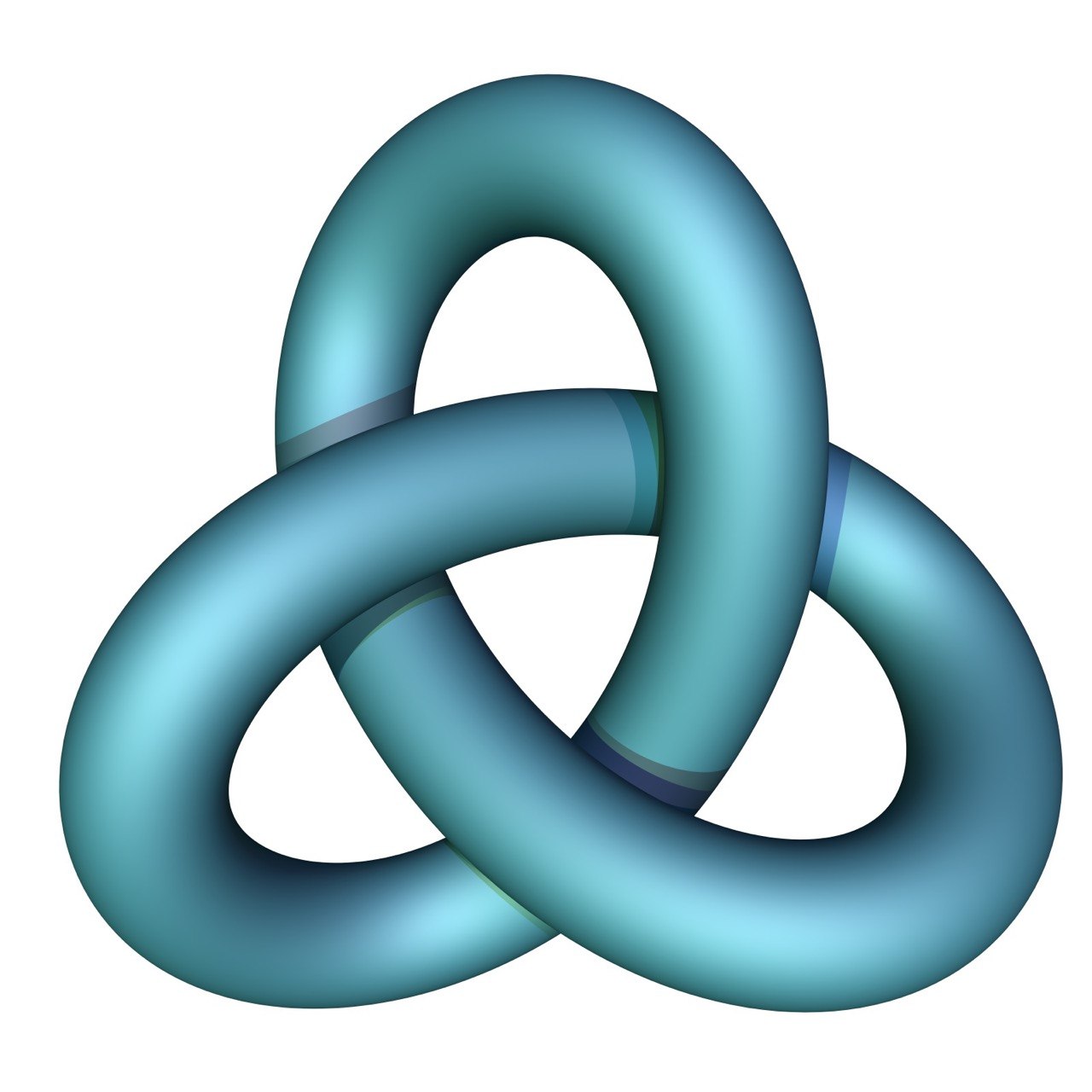
Narynov's philosophical quest is an attempt to unite three levels of understanding the world: scientific, artistic and mythological. It is a movement from abstractions to concrete forms and back, in the course of which a visual language is created in which one can speak of infinity, the cosmos, time and human existence.
“The Kazakh Bottle” and “My Grandfather's Universe” are the two poles of his reflections. One is about space as a mathematical structure, the other about the cosmos as a living mythology. But both speak of the essential: the world is one, it is continuous, it is bound by internal laws that a person can grasp not only with reason but also with feeling. Thus Saken Narynov, while remaining an artist of modernity, returns us to an ancient experience: the understanding of the universe as a living organism, where every element is connected to all others, and life is an endless movement through space, time and meaning.
Read also
 Architecture & Urban Environment
A New Life for Industrial Heritage: An Interview with Studio KO on the Tashkent Centre for Contemporary Art
Alfiya Kalmaganbetova
 Architecture & Urban Environment
Zaha Hadid: Architecture Beyond Convention
Gulsara Kenbaeva
 Architecture & Urban Environment
Sport at Height: How Rooftops Are Becoming New Growth Hubs in Almaty
Gulsara Kenbaeva
Newsletter
A letter from the HD editors
Once a week, we send the best stories, events, and cultural discoveries from Central Asia.