Art
Kazakhstan’s Sixties Generation: In Search of a Distinctive Artistic Language
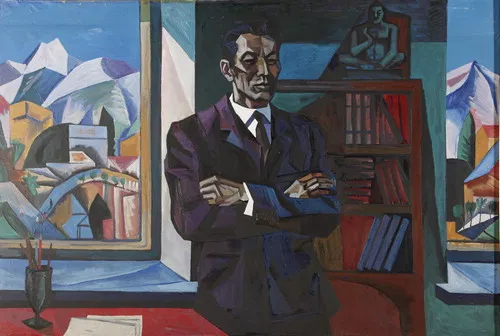
Who are we, where do we come from and where are we going? For the generation of Kazakh artists of the 1960s, these questions became not only philosophical but also creative. They sought a way to speak about national culture in a modern language, without abandoning tradition but going beyond the bounds of conventional realism.
In Kazakh art, the 1960s became a time of noticeable renewal. While artists of the previous generation mostly worked within the framework of the classical realist school and under the indirect influence of socialist ideology, the young masters sought to reconsider the very principles of pictorial representation. They were interested in the constructive building of form, the expressiveness of colour, and convention and symbolism as seen through their own personal vision. They explored the achievements of the Impressionists, Post-Impressionists and Constructivists, linking them with the philosophy and aesthetics of nomadic culture. The national cultural code genetically governed their creative vision, but they sought to speak of it in the language of the 20th century.
From Steppe to Canvas: The Birth of Fine Art in KazakhstanThe Kazakh school of fine art seems today a natural part of the national culture. However, professional painting, graphic art and art education in the sense we understand them have a comparatively recent history here. How did a country that had no classical artistic tradition of the European type of its own form a professional art and its own artistic language within a few decades?mag.humodoc.com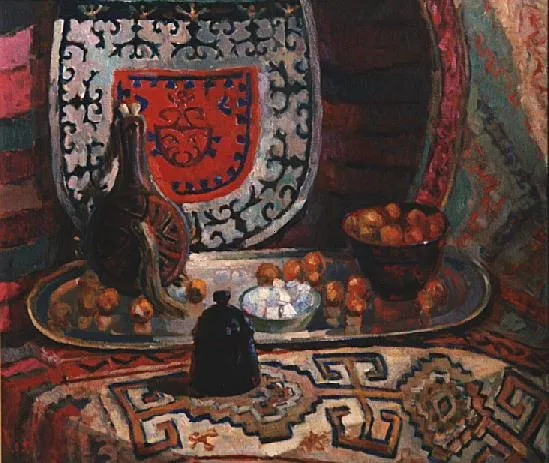
The generation usually called the shestidesyatniki was not a homogeneous group with a single programme; each of them followed his own path, but one thing united them - they did not resemble the previous pyatidesyatniki (Mambeyev, Telzhanov and others). Without rejecting the basis of classical realism, each of them sought new possibilities of plastic expressiveness.
In 1966, at the All-Union exhibition in Moscow, S. Aytbayev's canvas “Happiness” appeared - a young Kazakh couple against a steppe landscape. It was a pure image of youth, of love for each other and for their homeland. There were no details or particulars characteristic of naturalism; on the contrary, there were generalised forms and pure, almost local, colours. The painting caused a sensation; its simple and laconic style was at once bold enough for the socialist realism then dominant and at the same time very understandable and human. Thus Aytbayev became the unofficial leader of the Kazakh artists of the shestidesyatniki.
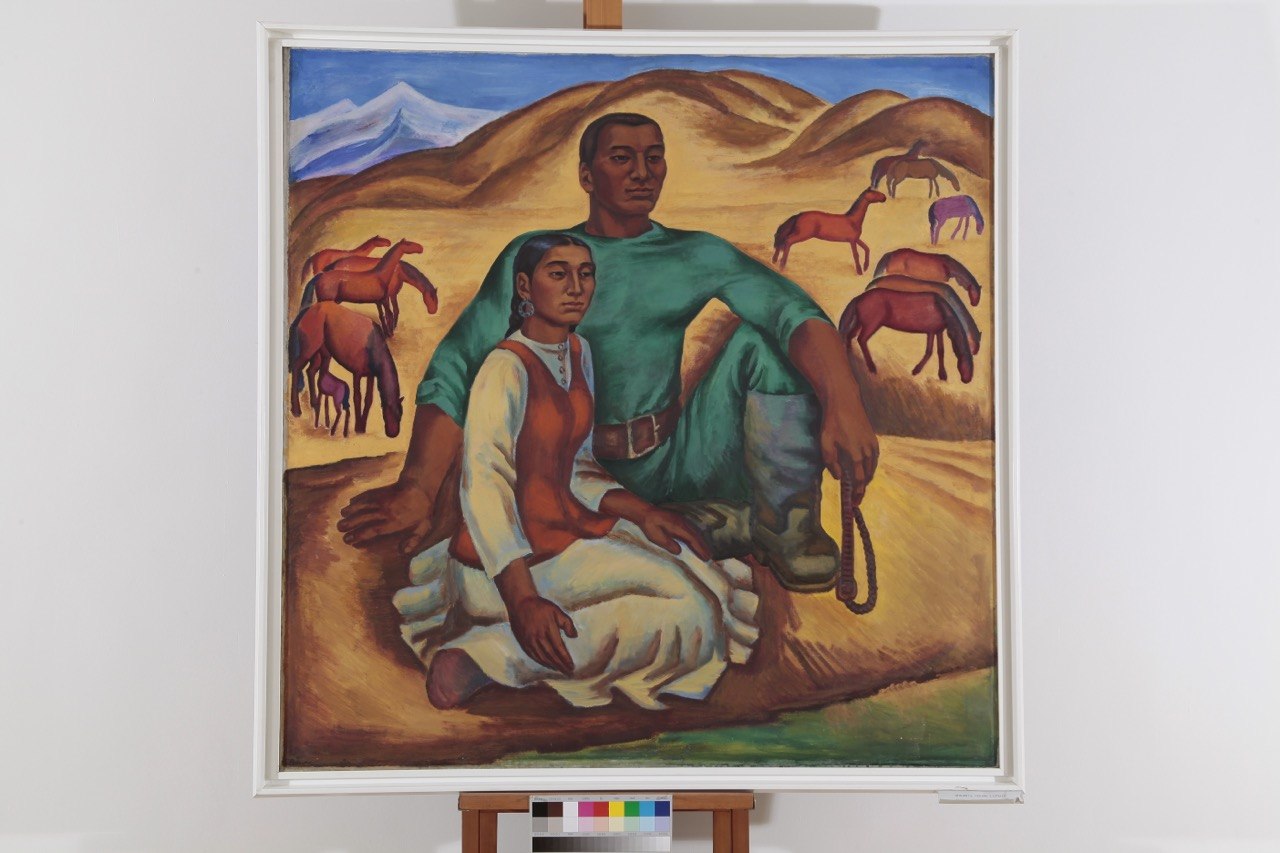 Photo provided by the Abylkhan Kasteyev National Museum of Art of the Republic of Kazakhstan
Among the key names of this movement, besides Salikhitdin Aytbayev, were the painters Shaimardan Sariyev, Tokbolat Togusbayev, Bakhtiyar Tabiyev, Abdrashit Sydykhanov, the graphic artists Makum Kisamedinov, Isatay Isabayev, Adil Rakhmanov, and the sculptors Yerkin Mergenov, Tolegen Dosmagambetov and Vagif Rakhmanov. The work of each of them deserves a separate monographic study, both in the context of that time and in the mainstream of the present and the future.
The national theme is not only a subject
The striving for national self-identification ran through the entire history of the Kazakh art school. It manifested itself before the shestidesyatniki too. In Kasteyev's work these are the scenes of the people's life he observed and the changes in its traditional way of life; in Mambeyev's - the poeticising of nomadic life; in Telzhanov's - the monumental compositions “Kokpar” and “On the Land of Our Forefathers”.
The shestidesyatniki continued this search, but changed the very way of speaking about the national. It was important for them not only to depict Kazakh life but also to find a form that would express its inner structure. Hence the generalised figures, large colour planes and expressive composition - here the influence of Kazakh ornamental art (especially in coloured tekemets) shows itself, transformed into a pictorial motif. In his compositions of “Sign Painting”, Sydykhanov used the symbolic signs “Tamba”, conveying their meaning through colour, texture and accompanying details. Kisamedinov, creating illustrations for the Kazakh translation of Faust, drew on the traditions of European engraving, but the illustrations executed in that style were supplemented by images of the Saka animal style or by his own tiny self-portraits-signs reminiscent of Rodin's “Thinker” or of someone else from the European literary classics
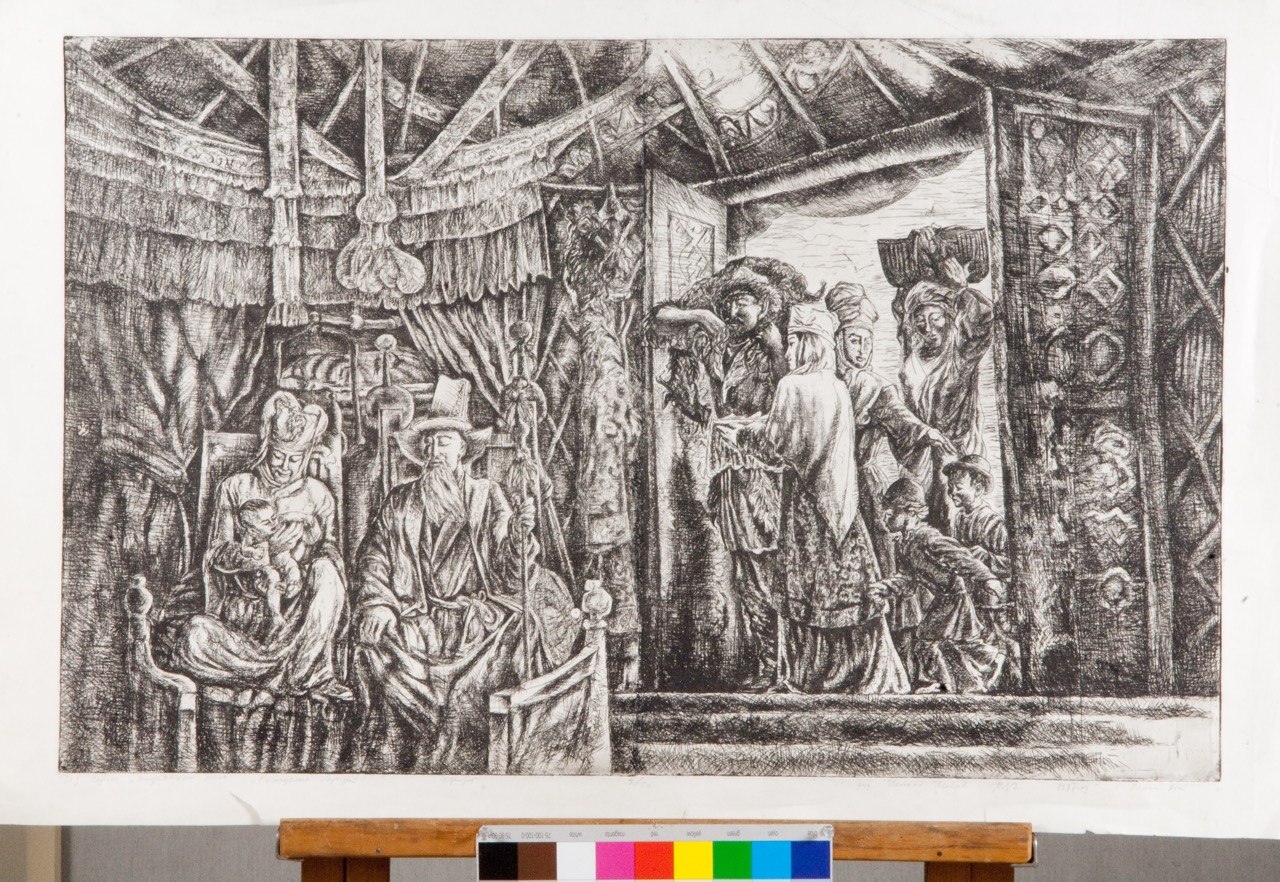 Photo provided by the Abylkhan Kasteyev National Museum of Art of the Republic of Kazakhstan
From socialist realism to freedom of form
In the work of the previous generation, the national theme was often combined with recognisable subjects of labour and everyday life.
Young artists sought to free themselves from such predetermined themes. They did not necessarily abandon the theme of labour or aul life, but sought other expressive means for it. The subject became an occasion for artistic experiment, a statement of the author's position, rather than an illustration of a predetermined idea.
All of this constituted one of the main tendencies of the era: the new art turned to international artistic experience, but sought not imitation of other schools but its own language, and strove to unite the national worldview with various artistic searches.
The most faithful to the Russian-European realist school at that time remained T. Dosmagambetov and B. Tabiyev. Dosmagambetov created a number of monuments to well-known figures of the country: Shokan Valikhanov (Kokshetau), Kanysh Satpayev (Almaty) and others. But in the monumental sculpture of his works the spirit of the time also shows itself - large generalised forms and emphasised dynamism of images. B. Tabiyev, for his part, turns to ordinary everyday scenes from the lives of simple people. Together with other artists he travelled to auls for plein-air sessions, made sketches which later turned into paintings about people's lives. In the refinement of the colour palette and the attentiveness to every scene, one can feel the author's love for the people living there, for the nature around them and for their traditional way of life.
An important reference point for other artists was the search of well-known masters of world art - from Post-Impressionism to Cubism and Constructivism. After the triumph of “Happiness”, Aytbayev painted the composition “Lunch. The Brigade's Gathering” for the All-Union exhibition “Glory to Labour”, but in the style of Cubism, from the standpoint, as he put it, of Picasso. Mergenov also produced several sculptural works in the style of the famous Swiss sculptor Giacometti, for which he received many reproaches for imitation. Although in fact it was simply an exploration of a completely different plastic language.
Each of them followed their own path. Adil Rakhmanov embraced modernist tendencies, embodying them in images of his contemporaries. Isatay Isabayev studied the Kazakh epic closely, but in his etchings on the theme of the Kazakh epic one can also see the influence of both the European and the Russian graphic school. The incredibly talented Togyzbayev in his compositions of the colourful decoration of the yurt interior would suddenly show a clear reference to Matisse with his love of combining blue with lemon yellow.
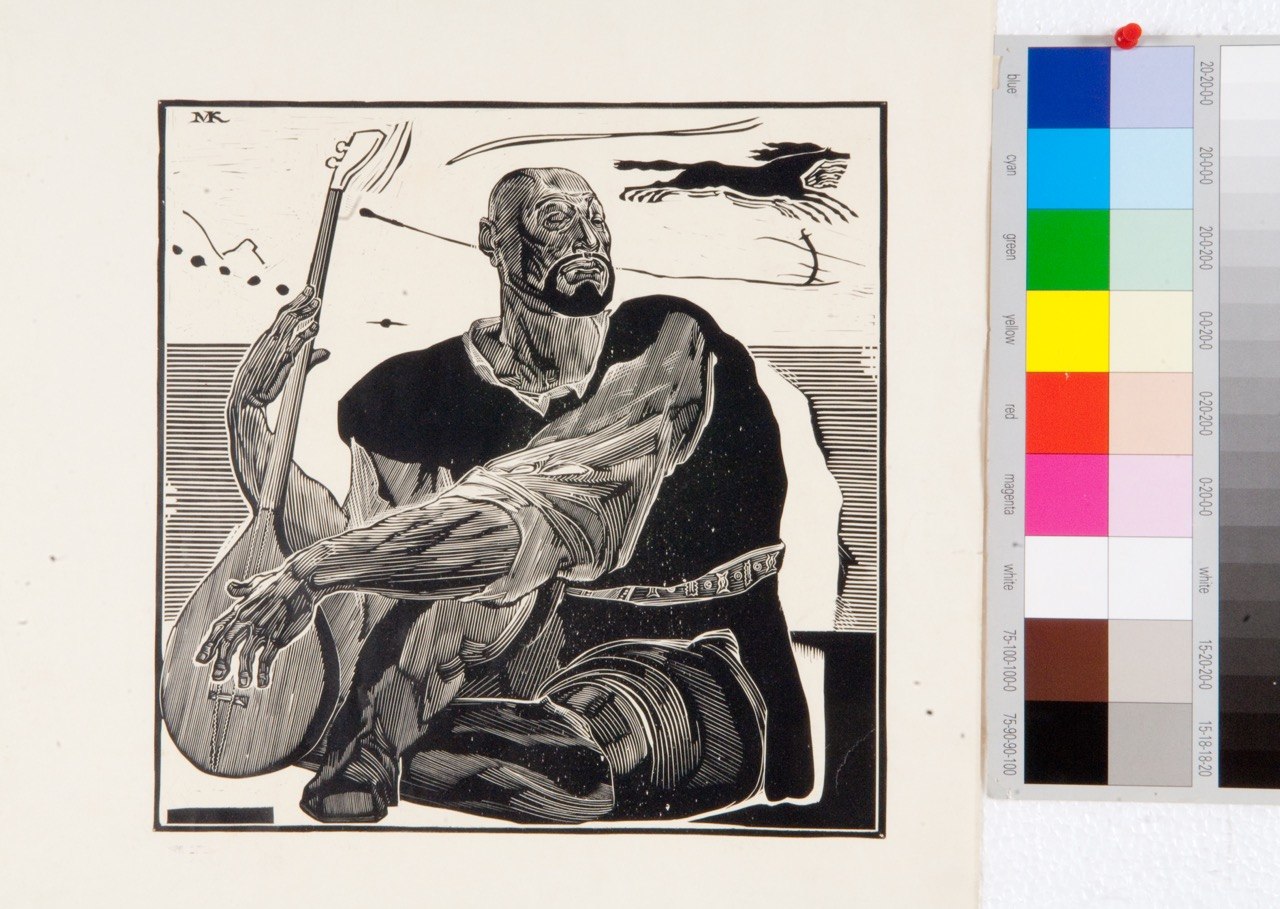 Photo courtesy of the A. Kasteyev State Museum of Arts of the Republic of Kazakhstan
The significance of the sixtiers lies not only in formal experiments. They raised anew the question of how national culture can be present in contemporary art. They were interested not in external stylisation of tradition, but in its deep images and plastic principles.
This line continued beyond the visual arts. Tradition moved beyond the framework of historical heritage and became material for new artistic solutions.
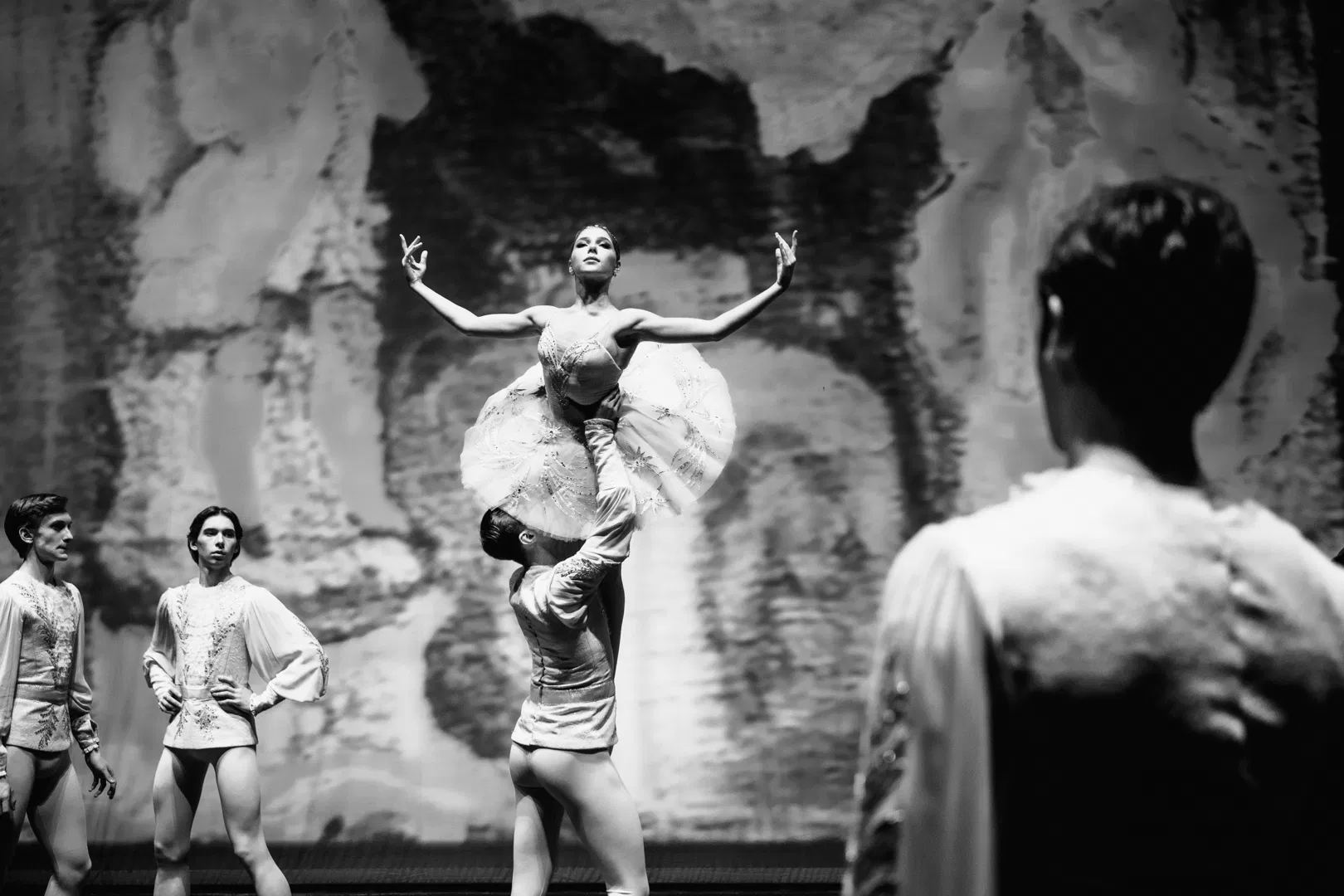
A telling example is the ballet “Frescoes”, staged in 1981 after Olzhas Suleimenov's poem “The Clay Book”. The set design was created by Yevgeny Sidorkin, the costume designer was Gulfairus Ismailova, the music was written by Timur Mynbayev, and the choreography was by Zaurbek Raybayev. In this production, ancient images and historical memory received a new embodiment through the means of theatre and plastic art.
The Legacy of a Generation
This was a period not only of changing artistic techniques, but also of a changing worldview. Young artists argued with their elders, sought new reference points in world art, travelled to Moscow to show their work and defended their right to their own language. What united them was the desire to speak of Kazakhstan not as a theme set from outside, but as a cultural world that they themselves sought to make sense of.
In the following decades the art scene became more complex: new generations, individual strategies and different relations with national tradition appeared, but the question formulated by the sixtiers remained relevant: how can one be part of world art and at the same time preserve one's own optic?
Their answer lay in the work itself. National identity can be expressed not only in subject matter or a recognisable object, but also in composition, rhythm, colour and the way of seeing the world. It was this search that made the sixtiers one of the key generations in the history of Kazakhstani art.
Read also:
Jamila Taken: "I want to make the world a little kinder and more beautiful"Artist and founder of the International Women's Independent Artists' Fund "Taң-Sholpan" told HD magazine how her art has changed, why it is especially hard for a woman artist to combine creativity and family, what going international gives artists of Kazakhstan, and why artificial intelligence cannot replace a living author.mag.humodoc.com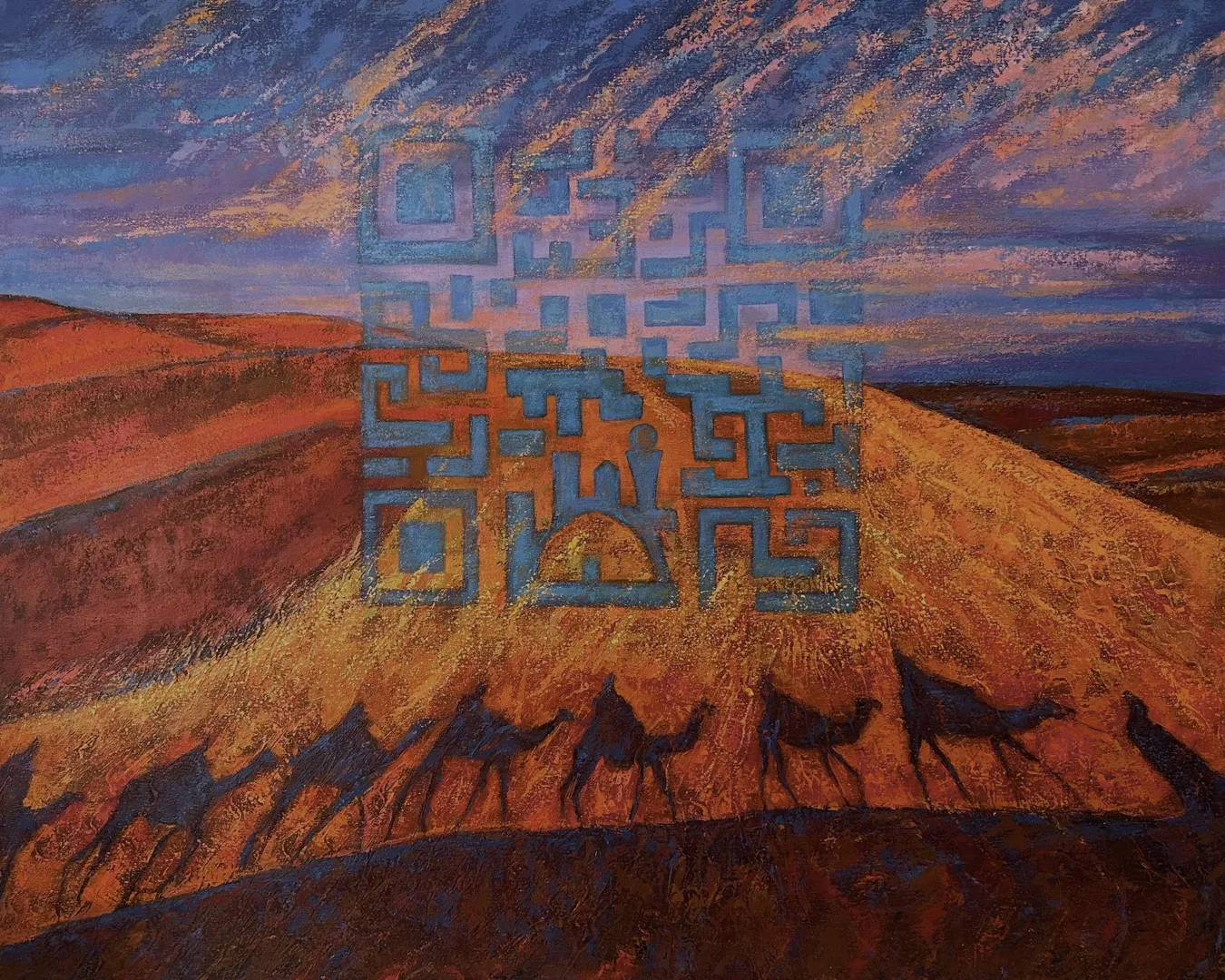
Newsletter
A letter from the HD editors
Once a week, we send the best stories, events, and cultural discoveries from Central Asia.