Ecology and Economics
The Silk Road, Two Thousand Years On: How a Historic Crossroads Became the Region’s Logistics Network and Why TITF 2026 Is Once Again Bringing Its Key Players to Tashkent
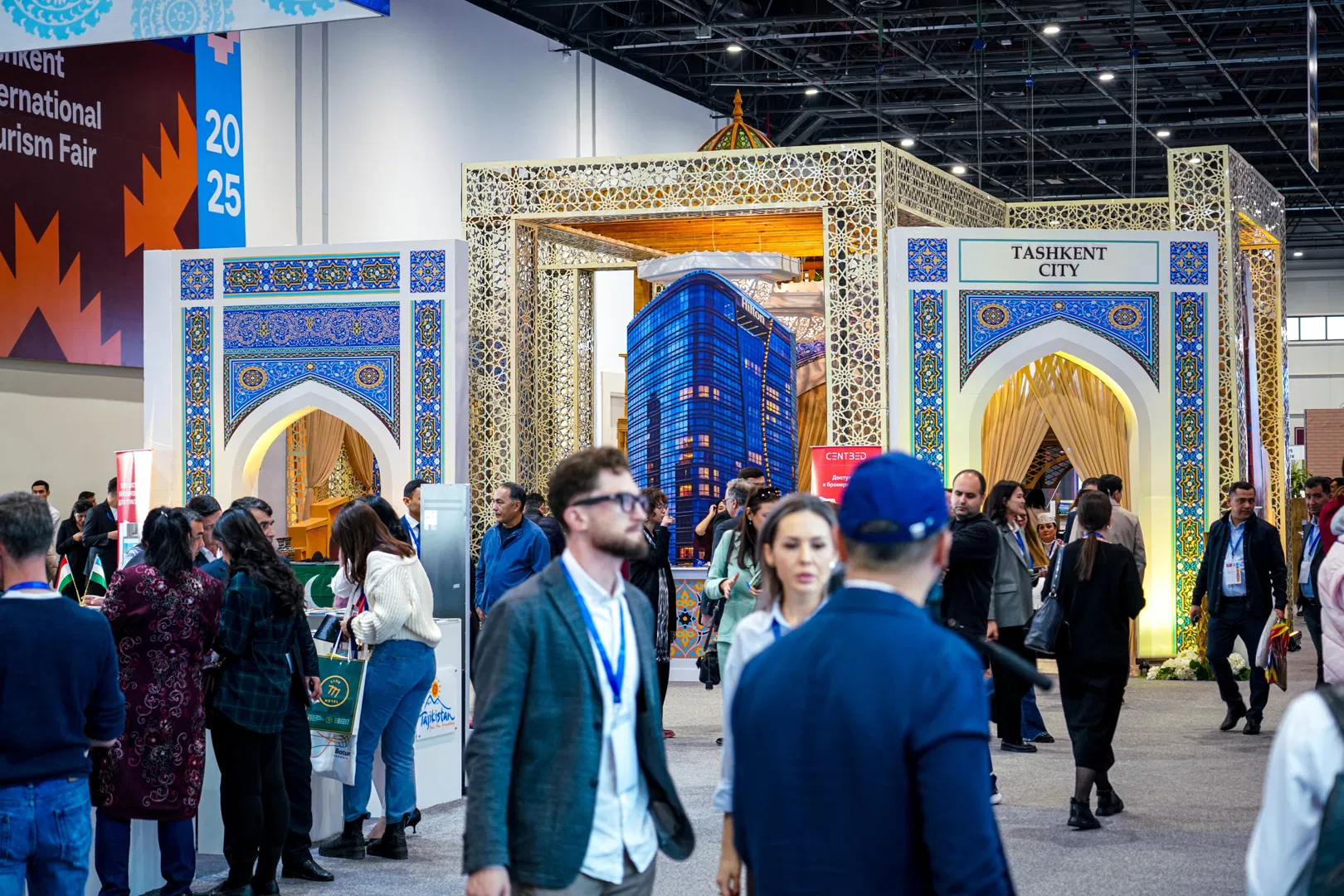
From 25 to 27 November, CAEx Uzbekistan will host the 31st Tashkent International Tourism Fair, “Tourism on the Silk Road - TITF 2026”. The name has deep roots. Two thousand years ago, the first transcontinental logistics network in history ran through here. Today, container trains, Caspian ferries and millions of travellers follow in its tracks.
The Road That Was Always a Network
The Silk Road began with diplomacy, not trade. In 138 BCE, Emperor Wu of the Han dynasty sent the envoy Zhang Qian west to seek allies against the Xiongnu. The journey lasted 13 years, and Zhang spent ten of them in captivity. But he returned with information about Central Asia, Fergana and Parthia, and soon caravans began moving through the Hexi Corridor.
The name appeared almost two thousand years later. The term “Great Silk Road” entered scholarship at the end of the 19th century, after the German scholar Ferdinand von Richthofen published his book “China” in 1877. Individual stretches of the route were in use long before Zhang Qian. From as early as the 3rd millennium BCE, the “lapis lazuli road” carried lapis from Badakhshan to Mesopotamia and India.
By modern standards, it was a logistics system on a continental scale. The main overland routes stretched for roughly 6,400 km, and together with the branches through Central Asia, India and the Caucasus, for more than 11,000 km. The system worked on a relay principle. Cargo travelled from East to West in anywhere from six months to several years. A merchant usually covered only part of the road, and goods were resold many times along the way.
The network's key nodes were cities: Chang'an, Dunhuang, Kashgar, Samarkand, Bukhara, Merv, Baghdad, Damascus, Constantinople. The logistics were served by infrastructure: under the Han dynasty, fortresses, caravanserais and watchtowers were built to protect caravans. The caravanserai was effectively the prototype of a logistics hub. It had a warehouse, an inn, a market and a point for exchanging information. And besides silk, the route carried everything else: porcelain, tea, glass, carpets, cotton, spices, gold, silver and horses, and along with goods, technologies, religions and cultural traditions.
From Caravanserai to the Middle Corridor
The caravan network linked the countries of Eurasia from the 2nd century BCE to the 15th century. Then trade moved to sea routes, and the region found itself on the sidelines of the main flows for centuries. Today the logic of the Silk Road is returning in the form of transport corridors.
The main one is – the Trans-Caspian route, or Middle Corridor. In 2025, more than 4.7 million tonnes of cargo were carried along it. Over five years, the volume of Uzbek cargo on this route doubled and by the end of 2025 reached 1.3 million tonnes. The corridor's share of Uzbekistan's freight with EU countries grew from 12% in 2021 to 28% in 2025. Transit through Uzbekistan in 2025 reached 15.3 million tonnes, 54% more than in 2021. The country's foreign trade turnover for the same year amounted to $81.2 billion.
The goal sounds familiar too. Tashkent has long sought to turn a country twice cut off from the sea into a transit hub for flows from east to west and from north to south. It is the same role Samarkand and Bukhara played two thousand years ago, only now dry ports, terminals and multimodal routes have replaced caravanserais.
A Heritage You Can Travel Through
The Silk Road has a second dimension today – a cultural route. In 2014, the 5,000 km Chang'an-Tianshan Corridor was added to the UNESCO World Heritage List. In 2023, UNESCO also listed the Zarafshan-Karakum Corridor – 886 km of route with 31 sites in Tajikistan, Turkmenistan and Uzbekistan.
In July 2026, Tashkent gained its own place on this map. Ten buildings of Tashkent modernism, from the Museum of History to the Kosmonavtlar metro station, are now protected as part of UNESCO World Heritage. The nomination also included the State Museum of Arts, Chorsu Market, the Alisher Navoi Cinema Palace, the Palace of Friendship of Peoples, the Big Solar Furnace, the State Circus and the Zhemchug residential building. A city that was always a transit point is becoming a destination, and its 20th-century architecture – a reason in itself to visit.
The figures confirm this shift. In 2025, 11.7 million foreigners visited Uzbekistan for tourism purposes: 46.8% more than a year earlier. Exports of tourism services reached $4.8 billion. The Silk Road is once again working as a path between neighbours: most tourists came from Kyrgyzstan (3.3 million), Tajikistan and Kazakhstan (2.7 million each). Citizens of more than 90 countries enter Uzbekistan visa-free or under simplified rules.
TITF: Three Decades at the Crossroads
The fair has grown alongside this shift. It has been held since 1994-1995, and for all three decades it has been officially supported by the UN World Tourism Organization. In 2022, more than 11,000 people visited TITF, around 300 companies took part, and about 7,000 contracts were signed. In 2025, the format became more intimate and more professional: more than 85 participating companies, over 4,000 professional visitors and more than 60 publications in international media.
In 2026, the fair has a new organiser. Following an April tender, Iteca Exhibitions won the contract to hold the 31st fair. There will be more participants: more than 100 companies from 20 countries are announced, from Azerbaijan and Georgia to Malaysia, the Maldives and Czechia.
What is on the programme. The organisers promise forums and panel discussions with industry experts, regional presentations, B2B meetings, negotiations between tour operators and service providers, craft exhibitions and gastronomic presentations of national cuisine. The fair's thematic sections cover gastronomic, cruise, cultural and historical, digital, medical and wellness, industrial and international tourism, as well as MICE – business tourism.
The Fair's Programme and the Silk Road
If you place the TITF 2026 programme next to the history of the route, the parallels are visible in almost every section:
Crafts and gastronomy: what the caravans carried. Carpets, fabrics, spices and cuisine were the goods of the Silk Road, and today they are a tourism product. The crafts exhibition at TITF continues the bazaar tradition.
Cultural and historical tourism: UNESCO corridors, Samarkand, Bukhara, Khiva and now Tashkent modernism.
Wellness tourism: a direction that Belarus will present: sanatorium and spa holidays, ecological and gastronomic tourism. For the region this is a theme of the architecture of health: cities and resorts that heal through their environment.
MICE and international tourism: the role of the caravanserai as a place of negotiation. B2B meetings and contracts at TITF - are a direct continuation of the trade deals made along the route.
The participants' stands show how differently countries sell their own road. Adjara brings resorts and new tourism products. Belarus will show heritage, sanatoriums and gastronomy. Malaysia will come with the Visit Malaysia 2026-2027 campaign, counting on a growing flow of travellers from Uzbekistan. Hong Kong will present the "Only in Hong Kong" project: in it the city itself is the main tourism product. The Azerbaijan Tourism Board also plans to take part in TITF 2026. For Azerbaijan this is a logical step: it links the Middle Corridor with Europe.
A city that knows how to welcome
Every route has an end point - a city that receives the guest. How convenient it is to get there from the airport, whether the wayfinding is clear, whether there is shade on the pedestrian streets, whether the old quarters are alive, - this too is tourism. And above all, all of it serves the residents themselves.
Tashkent is changing in precisely this direction. It has received UNESCO status for its modernism and is building a new metro line: 21 km and nine stations from Tekhnopark to New Tashkent. The Silk Road taught the region a simple rule: the route passes where the city knows how to welcome. For three days TITF 2026 will bring together in Tashkent those who are charting these routes today.
Dates of TITF 2026: 25-27 November 2026
More details: https://titf.uz/ru/visit-the-exhibition

Read also
 Ecology and Economics
From Transit to Property Values: How Logistics Shapes Our Cities
Alfiya Kalmaganbetova
 Ecology and Economics
Building Cities for People or Selling Square Metres? What Was Discussed at TajBuild 2026
Alfiya Kalmaganbetova
 Ecology and Economics
Between Design and Construction
Farid Idekeshev
Newsletter
A letter from the HD editors
Once a week, we send the best stories, events, and cultural discoveries from Central Asia.