Traditions
Anime and Islam: How Uzbek Otaku Strike a Balance Between Faith and Fan Culture
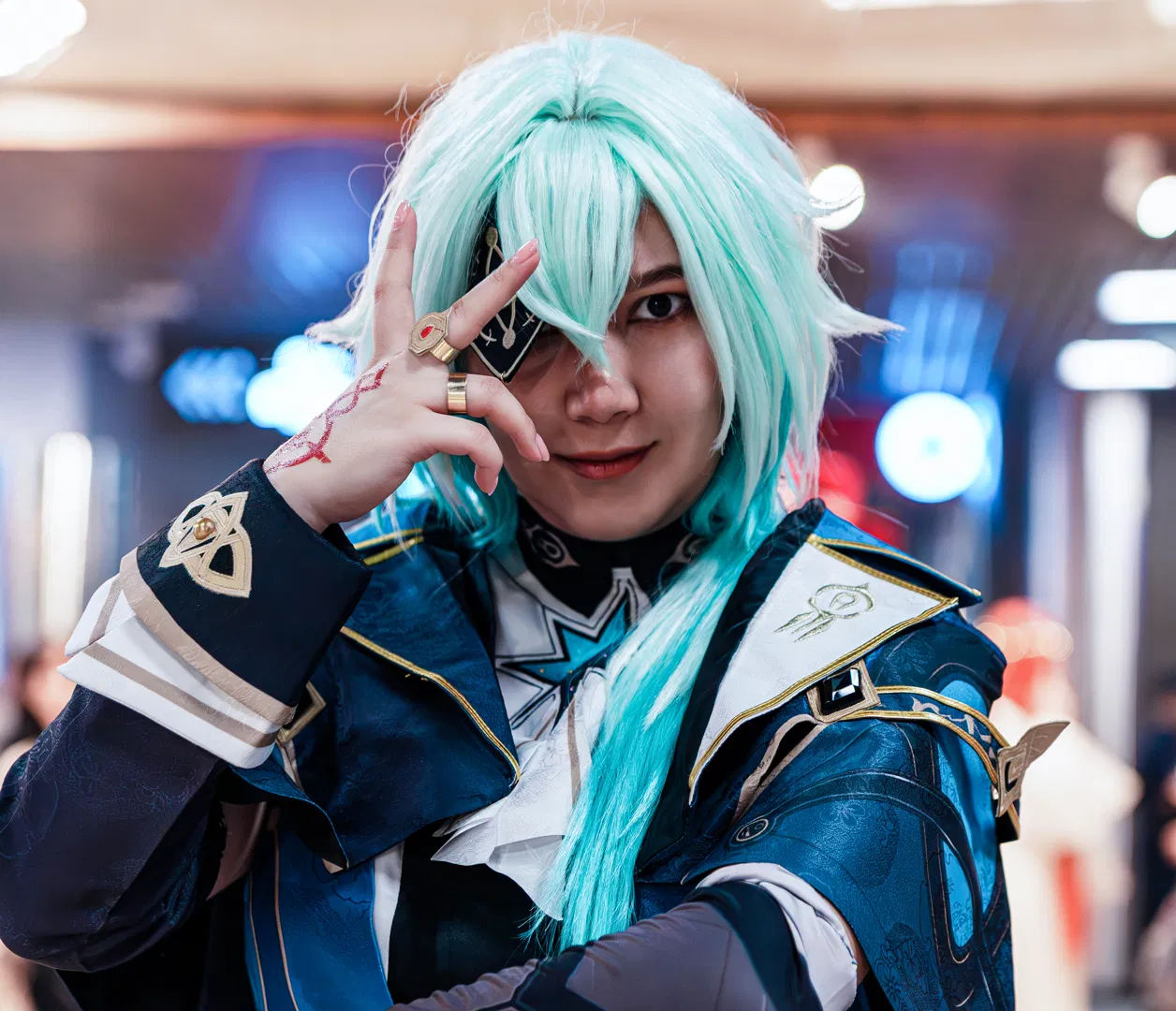
On 15 and 16 August, Tashkent will host another edition of Comic Con. Even a decade ago, it would have been hard to imagine a celebration of geek culture and anime fans on this scale. But times change, and so do attitudes towards geek culture. The stigma around video games has largely faded, while animation in general now elicits little more than a shrug from mainstream audiences. Anime, however, remains a sticking point for many, as some of its characteristics sit uneasily alongside aspects of Muslim culture. But is the picture really that clear-cut? How do parents and religious leaders see it? This article looks at the real stories, opinions and challenges faced by Muslim anime fans in Uzbekistan.
On a Tashkent evening, after the Maghrib prayer, a teenager settles back in with his favourite episode of Naruto. In the corner of the room hangs a poster of a ninja in orange. In Uzbekistan, where Islam is an important part of everyday life, scenes like this are becoming increasingly familiar: a new generation has grown up with anime and manga, embracing Japanese animation alongside the traditions of family life. But can a love of Naruto really coexist with the five daily prayers?
Prayer Between Episodes
Anime first found its way into Uzbekistan back in the 1990s, with Sailor Moon, Candy Candy and Pokémon. Sailor suits, flying creatures and fantastical adventures fired the imaginations of the first local otaku, sometimes even sparking arguments over whose waifu, their favourite female character, was the best. By the early 2000s, Naruto, Bleach, Shaman King and Death Note had arrived in force, bringing with them a fully fledged anime culture.
By 2023, geek festivals, cosplay shows and anime clubs had become a familiar part of life in Tashkent. But popularity brought new questions with it: is it acceptable for Muslims to watch anime featuring magic, fighting and revealing imagery? Parents worry, while fans respond that they are not compromising their faith, but drawing inspiration from the courage, kindness and perseverance of the characters they admire.
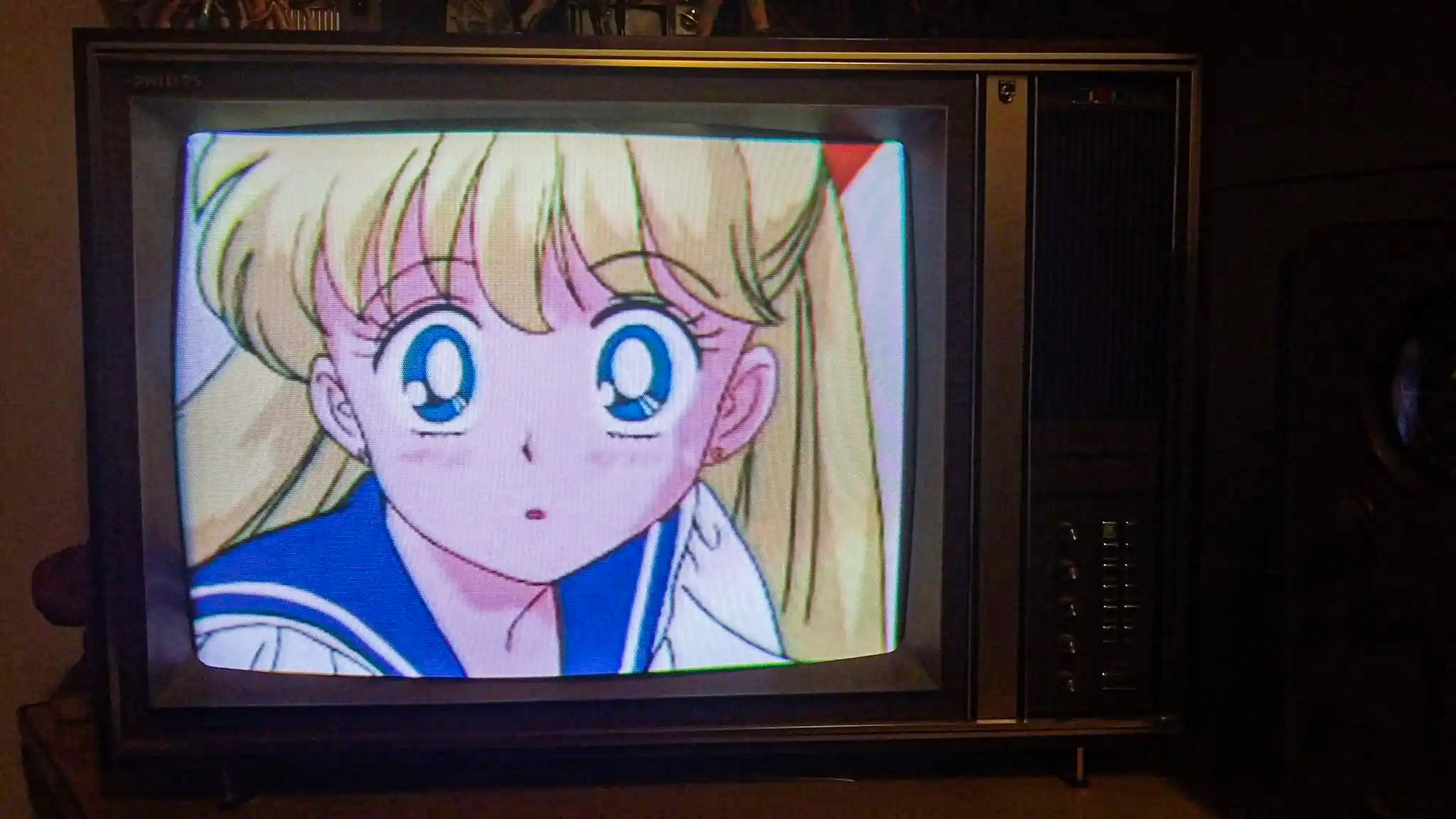 Photo: Mr. Braun
Many Uzbek fans see no conflict between anime and religion. On the contrary, in stories such as Naruto, they find values that resonate with Islamic principles: perseverance, loyalty and justice. For a practising Muslim fan, the basic rule is simple: prayer first, then the next episode.
My name is Zuhra, though online I’m known as “Cyber Kakletka.” I only started watching anime when I was 13, which was a little late compared with the people I grew up around. They had been into anime since childhood, especially Naruto, which was at the height of its popularity at the time. I came to it later, and at first I watched lighter stuff: school romances and slice-of-life series.
My first anime was Kimi ni Todoke, or From Me to You in English. A friend recommended it to me, and I fell in love with it straight away. It was romance, shōjo, school life: a light, warm story about teenage relationships. It still has a special place in my heart. There was no toxicity, aggression or anything too heavy, just gentle, innocent feelings between schoolchildren. It was all very sweet and soft, and I think that’s exactly why it stayed with me so strongly.
I still think about that anime and consider it the perfect introduction to the genre. I think it had 12 episodes and two seasons, if I remember correctly. I didn’t understand everything back then, and then things got much more hardcore: Tokyo Ghoul, Hunter × Hunter, more serious titles like that. I’ve been completely immersed in it ever since.
I watched a huge amount of anime, then started reading manga, manhwa and manhua. I’m pretty well versed in all three. I even started learning Japanese because I wanted to go to Japan to study. I studied for a year, reached N5 level and recently renewed my certificate.
But the last four years of my life have been about esports. I’ve played games since childhood, but for a long time anime was at the centre of everything. Then my focus shifted. Esports became more than just a hobby for me. It became a way of making my voice heard in a society that doesn’t always accept people like me. My brothers, for example, used to tell me that “gaming isn’t for girls” and tried to talk me out of blogging and getting involved in the industry altogether.
But it was precisely because of those stereotypes that I went into esports. Now I’m building a career as a media blogger in the field, and I genuinely love what I do. Esports has become a huge part of my life. I’ve been seriously involved in it for four years now.
Some, however, choose to give up anime altogether for reasons of faith. “I gave it up two years ago, and I’d recommend you do the same,” one former fan says. But such cases are rare. Most people find their own balance: “Faith comes first; anime is just a hobby,” they say.
The Controversial Side of Anime: Magic, Dress and Fight Scenes
Even so, certain themes in anime remain contentious among practising Muslims. Magic, demons and sorcery are at the top of the list. Some believers feel that such storylines can promote occultism or even polytheism. Naruto is mentioned particularly often, as its characters use techniques resembling spells and seal away demons. More hard-line critics go further, arguing that all anime is haram because Japanese culture is too permissive when it comes to magic and sexuality.
There are some anime I don’t particularly like. For example, High School DxD. It was quite popular when it first came out. I must have been about 14 or 15. I read what it was about and didn’t really like the fact that there was so much erotic content and stuff like that. I can filter all of that in my head and, of course, it doesn’t affect my worldview, which is already formed. I just don’t understand it and find it unpleasant to watch anime where the whole focus is on eroticism. And High School DxD was the first anime I came across in that category.
I’m 24 now, but even today I sometimes deliberately skip certain anime simply because I don’t see the point in spending time on something I have nothing to take away from. Maybe every anime does have its own meaning, as I said before. But if that meaning gets buried under 12 episodes of explicit content, then, weighing it all up, I’d rather give it a miss.
Anime also frequently sexualises its characters through short skirts, revealing outfits and fan service. This can clash with Muslim standards of modesty. Even back in the 1990s, Uzbek families would watch Sailor Moon with a mixture of fascination and surprise, sometimes covering their children’s eyes during the transformation scenes. Today, many practising Muslim men acknowledge that overly revealing images on screen can be a temptation they would rather avoid.
Fans themselves disagree. They see magic in anime as part of a fictional world, not an invitation to practise it. “It’s simply a convention of the genre,” they argue, “like superpowers in comics.”
Read more on the subject:
Cosplay in Tashkent: Dress up to become yourselfFrom the first masquerades to costume battles at Comic Con. HD magazine tells the story of how cosplay in Tashkent went from three people in a park to a community of thousands of heroes in armor and wigs.mag.humodoc.com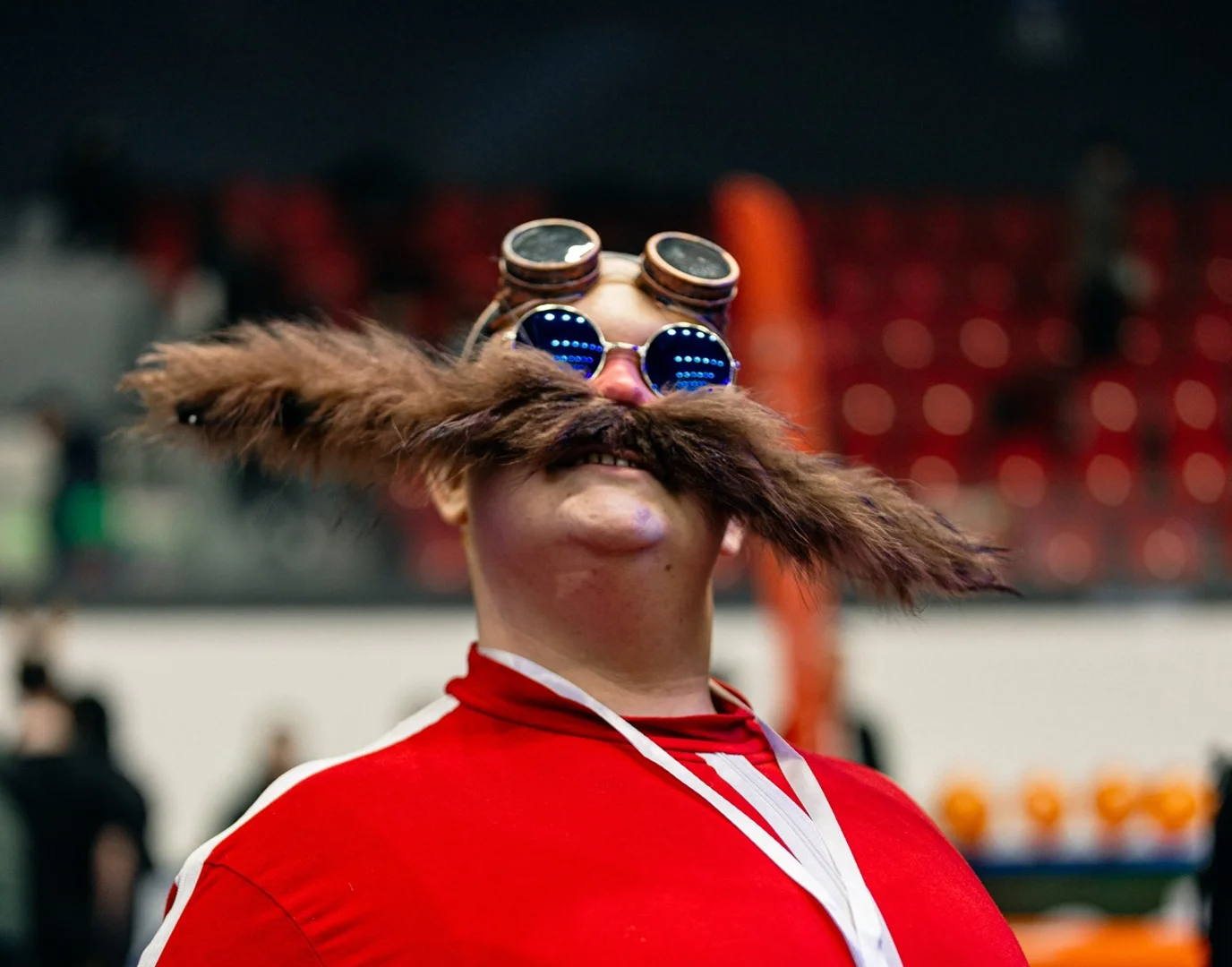
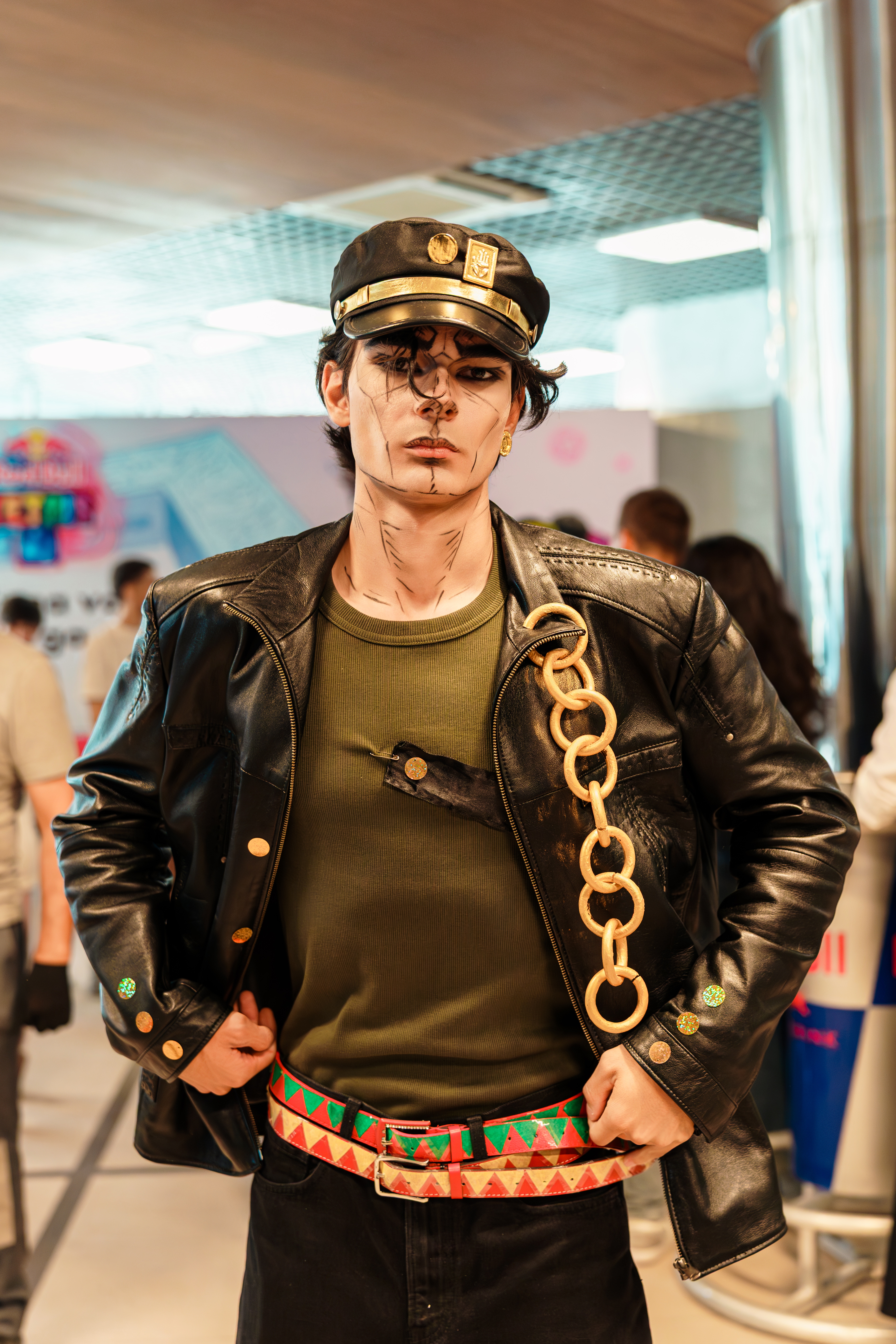
If anime arouses lust, it becomes forbidden. To avoid crossing that line, practising fans tend to choose shōnen titles without erotic content and steer clear of genres such as ecchi and hentai. Girls who are into cosplay adapt their costumes to fit their beliefs, wearing leggings under short dresses, adding capes or covering their hair.
As for religion and anime, my whole family is religious, but no one has ever had a problem with me watching anime. The only thing they would say was not to take it too far or watch anything explicit. But overall, it was always up to me. I think what matters is how you perceive it and how well you can filter things. You decide for yourself: I’ll take this part from the anime because it interests me, but that part isn’t for me because it doesn’t fit with my beliefs.
It’s like books. You wouldn’t stop a child from reading non-fiction just because they’re a child, would you? If they’re interested, they’ll read, learn and take things in. Every anime has a meaning. To me, it can be just as valuable as a book.
And I’ve always loved books too. I was a real bookworm as a child. I don’t have as much time now, of course, but there’s still a pile of books at home that I go back to whenever I get a spare moment.
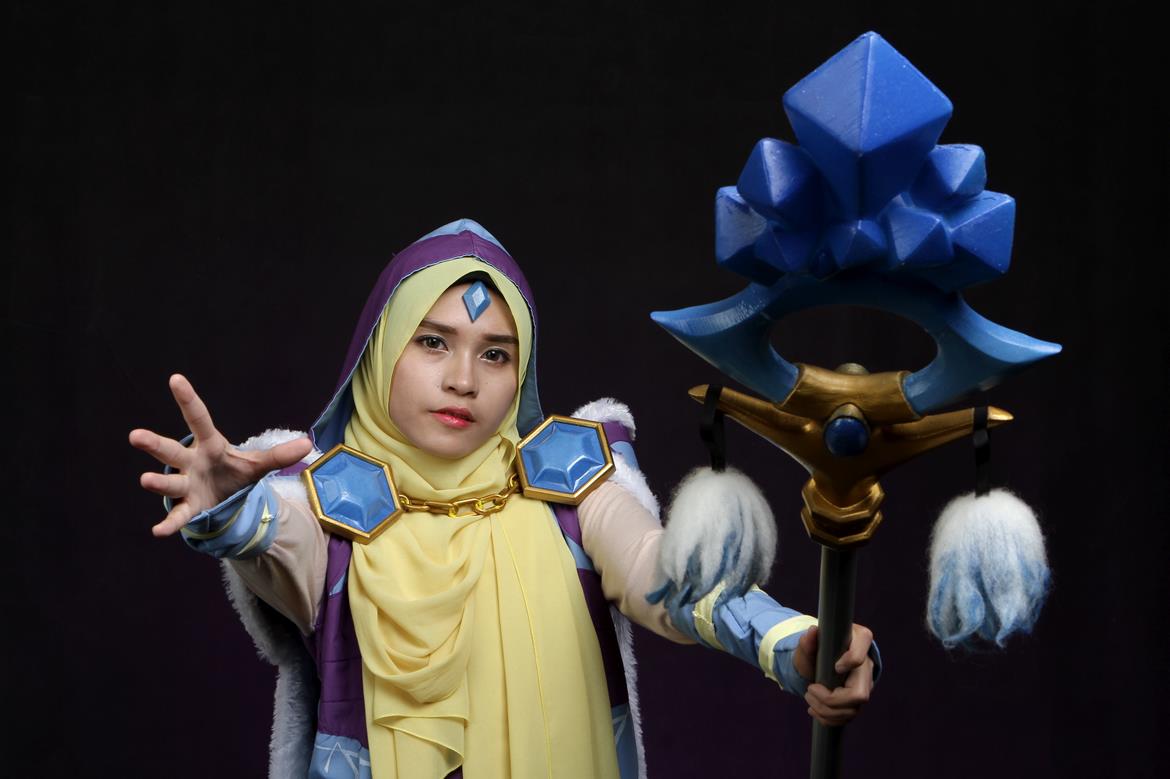
At Tashkent’s festivals, you can even come across cosplayers in hijab who creatively reinterpret characters while staying within the bounds of modesty. Within the community, this is actively encouraged: being a Muslim woman and an anime fan are perfectly compatible.
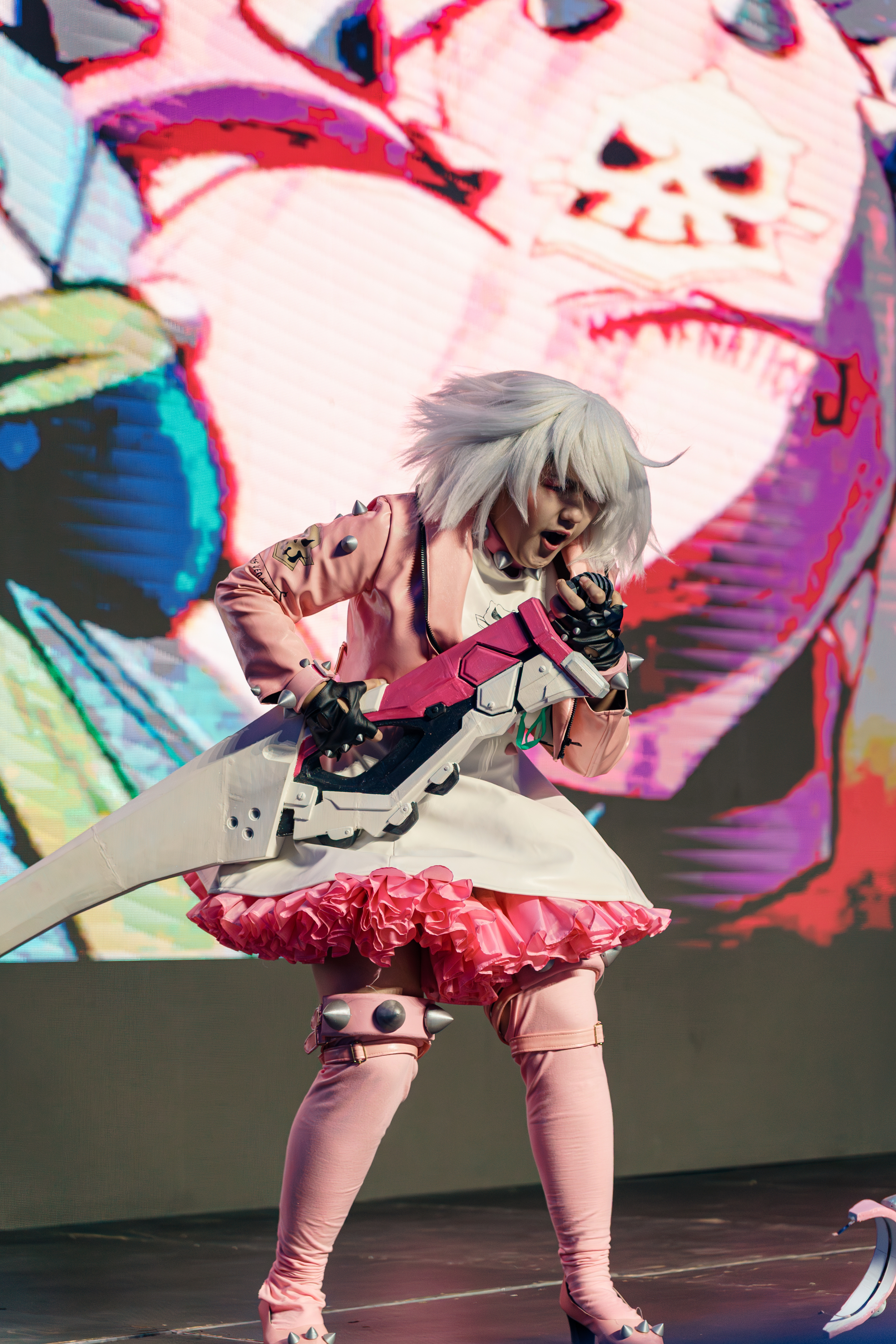 Photo: Timur Kholmatov
As for geek culture and cosplay, I’ve always felt very at home in that world. But when I started wearing the hijab, I thought I would have to give up cosplay. I simply cut it out of my life. Then one day I came across some Muslim women from Indonesia on social media who were into cosplay, wearing hijab and creating their own versions of characters. It inspired me so much. I realised I could do it too.
When I heard there was going to be a geek festival in Tashkent, I decided to try cosplaying for the first time. It was Powder from Arcane, I think... although maybe it was a character from Chainsaw Man. It was my first attempt at combining hijab and cosplay, and I thought it turned out brilliantly. I didn’t get any hate at all, apart from a little bit of confusion from the Russian-speaking community. But honestly, I’ve never really cared what other people think. I suppose that’s what allowed me to become a blogger, get into cosplay and do what I genuinely enjoy. I just do my own thing and don’t look around at what everyone else is doing.
But then I took it a step further. I contacted a make-up artist who, incidentally, knows my sister. And the most surprising thing was that my sister supported me. She helped me rather than judging me and was actually very understanding. That was completely unexpected and really lovely.
Then my mum found out about everything. She saw a video of my cosplay and, of course, her first reaction was, “Oh, that looks scary!” But she immediately added that the costume itself was beautiful and praised how well everything had turned out. She still doesn’t fully understand what cosplay is, but she was able to appreciate the effort that went into it and how it looked. And that meant a lot to me.
 Photo: Timur Kholmatov
The third point of contention is violence. Action anime is full of fights and graphic scenes. Islam does not prohibit depictions of war, but pointless violence is not condoned. Parents worry that action series might make teenagers more aggressive. In Russia, there was even discussion of banning Naruto from television, supposedly because of its harmful influence on children.
Anime has never been banned outright in Uzbekistan, but concern was raised by the so-called PMC Ryodan subculture, a movement that grew out of the Hunter × Hunter fandom and eventually reached Tashkent. In early 2023, rumours began circulating about groups of teenagers in black hoodies with a spider emblem gathering in shopping centres. They were not committing any offences; they were simply coming together around a shared interest. Nevertheless, the Tashkent City Police Department issued a warning to parents, urging them to keep an eye on the “anime fan movement” and possible provocations.
The situation caused a stir. Around 50 teenagers were detained over their “suspicious” clothing and gatherings in the city centre. They were all released after preventive talks, but were placed on a register. To fans, the whole thing seemed absurd: an innocent hobby had suddenly become a cause for suspicion. It exposed a deeper generational tension, with older people seeing something close to a cult in what were, to the teenagers, simply harmless ninja-inspired outfits.
Although there have been no reports of widespread fights or aggression among anime fans, who tend to be introverts with their own fandom chats, the fight scenes in Naruto are still used by critics as evidence that anime promotes violence.
How difficult is it to reconcile religion with a passion for anime and geek culture? Honestly, it wasn’t easy at first. My parents didn’t accept my interests. But as I grew older, things became calmer. Now I can watch anime while I’m eating, on the way somewhere or before bed. It has become such an ordinary part of my life that I only recently realised I hardly use YouTube at all. I don’t have the habit of endlessly scrolling through Instagram or TikTok. I just put an anime site on in the background. It has simply become part of my everyday routine.
My mum still sometimes asks, “Why are you watching those cartoons?” And every time, I explain that they aren’t just cartoons. Yes, the characters are drawn, but the ideas behind them are things a child wouldn’t understand. Anime can be deep, moving and serious. It can be about feelings, choices and life.
What Do Imams Say: Permissible or Forbidden?
What do Islamic scholars in Uzbekistan think about anime? Opinions vary, but the overall tone is cautious. In 2021, the religious website Zikr ahlidan so’rang received a question asking whether Muslims could watch Japanese cartoons featuring fantasy and fight scenes. The answer was gentle but instructive: “Spend your precious life on useful things.” It was accompanied by a hadith reminding believers that, on the Day of Judgement, they will be asked how they spent their youth, their body, their knowledge and their wealth. The message was clear: watching anime is not necessarily a sin in itself, but it is a form of idle entertainment for which one will ultimately be held accountable.
There are, however, more flexible views among Islamic scholars. Some believe that everything depends on the content: if an anime contains no haram themes, such as pornography, magic or blasphemy, it can be watched as harmless entertainment. “Everyone should seek guidance from Allah for themselves,” reads one such religious explanation. This approach is a reminder that Islam is not a religion of prohibitions for their own sake. If anime does not interfere with prayer or corrupt one’s character, it is no more problematic than any other film. That is especially relevant for teenagers, who often simply need something engaging and harmless to occupy their time.
Of course, anime can also contain positive themes. Friendship, self-sacrifice and the struggle against evil often resonate with religious values. Even the most tolerant scholars, however, make one qualification: cartoons containing nudity, polytheism or immorality are forbidden. And given how often such elements appear in anime, believers are advised to exercise caution. Broadly speaking, the rule is: if you really want to watch it, you can, but be careful.
I think this is particularly important for people who are used to holding themselves back, whether they are women in hijab or simply people who were taught from childhood not to draw attention to themselves. Anime seems to say: you can live a full life, be vibrant, stay true to your values and still be happy, loved and yourself. And, in my view, there is nothing haram about that.
 Photography: Timur Kholmatov
When I hear someone say, “Anime is haram,” I don’t even raise an eyebrow anymore. Under practically every post of mine, especially the cosplay ones, someone will inevitably write, “Oh my God, that’s haram!” I used to get comments like that all the time, especially when I was open about my interests. These days, most of my audience doesn’t even know that I still watch anime. Every now and then, someone will ask, almost by accident, “Wait, do you watch anime?”
I recently had a conversation about it with my brother. He said that, in his view, anime can slightly “reprogramme” the way you think, especially if you watch a lot of it. That it can gradually influence the way you see things, draw you in, and even subtly shift your priorities, including when it comes to religion. I partly agree with him. Yes, if you immerse yourself in any kind of content without thinking, it will start to influence you. But I now consider myself mature and self-aware enough to know where I stand. I have clear views, a clear understanding of my faith and my own boundaries, and none of that simply switches off. I filter everything and keep things separate: this is my faith, and this is my hobby. They don’t overlap.
I still keep to my boundaries and don’t let anime cross into territory where it interferes with my religious beliefs. And I don’t think there’s anything wrong with that. I’m still young, and perhaps one day I’ll come to the conclusion myself that it would be better to give these things up altogether. But for now, I don’t see it as a threat. Anime is, after all, about creativity. It gives you a chance to express yourself. Almost every anime has an important message: you shouldn’t be afraid to be yourself. Don’t be afraid to express yourself. Don’t be afraid to show the world who you are.
I think this is particularly important for people who are used to holding themselves back, whether they are women in hijab or simply people who were taught from childhood not to draw attention to themselves. Anime seems to say: you can live a full life, be vibrant, stay true to your values and still be happy, loved and yourself. And, in my view, there is nothing haram about that.
Interestingly, Islamic tradition in the region has generally taken a cautious view of depicting people and animals, particularly in sculpture. Some believers ask: if drawing a character is sinful, why should watching one be permissible? Strict scholars remain cautious on this point too, but most ulama distinguish between idolatry and fictional animation, particularly when the characters are entirely imaginary. In more conservative families, especially outside the major cities, any kind of imagery may still be discouraged or forbidden. For most Uzbek Muslims, however, anime is simply another form of animation: there is nothing wrong with watching it as long as the content is decent.
Can a Muslim Be an Otaku?
The stereotype of the “eternal child” still follows anime fans around. “Look at how people live instead of wasting your time on those silly drawings,” strict fathers grumble when they catch their sons watching yet another episode. Girls are not spared either: cooking, fine; pop music, perhaps; but “cartoons about wizards” at 20, plus a Naruto keyring, can be enough to raise eyebrows among relatives.
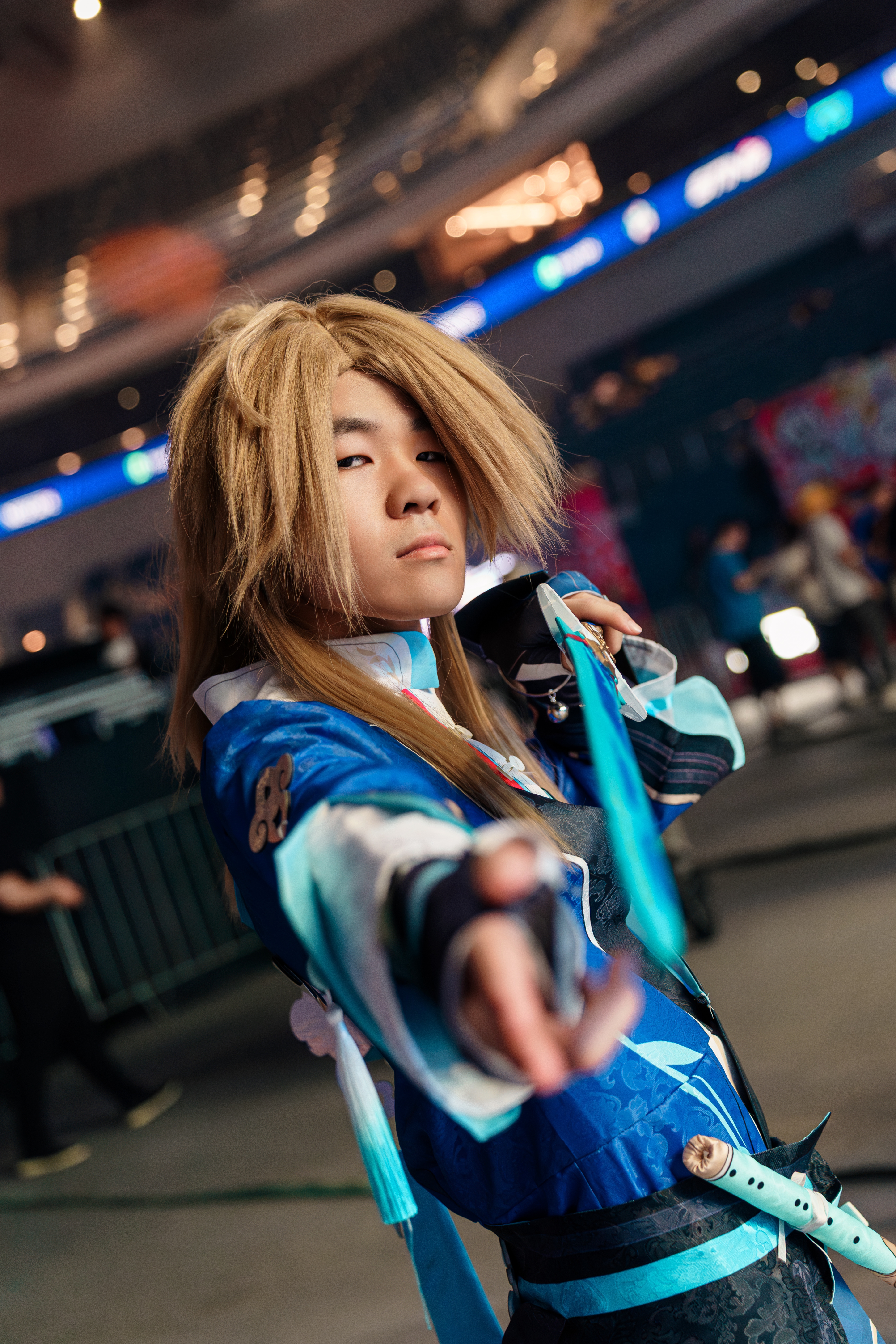 Photo: Timur Kholmatov
Even so, things are changing. Comic Con has shown that Uzbekistan’s anime fandom is active, creative and very much out in the open. The festival has attracted sponsors as well as families with children. A new image is emerging: the “Muslim otaku”. Young people are increasingly comfortable combining faith with fan culture: reading the Qur’an in the morning and watching Boruto in the evening.
Many people still assume that Muslims must be stern, tough and overly restrained. But that is not the case at all. Islam, on the contrary, encourages optimism, kindness and warmth in dealing with others. It is a religion of humanity. A true Muslim should be kind, compassionate and open-hearted, willing to help others regardless of their religion or background.
I believe we should be human beings first and representatives of a particular faith second. And that is probably what I try to convey through my blog: Muslims are not “stone walls”, closed-off people living under a rigid set of restrictions. We are alive, open and kind, and that is how we should allow ourselves to be seen.
Islam is not about fear or boundaries. It is not about being constrained or living in a cage. It is about a path: a way of living, a way of thinking and a way of doing what is right. And above all, it is about humanity.
The actor behind Franklin in GTA V, Shawn Fonteno, will headline Comic Con Tashkent 2026On 15–16 August, the Humo Arena complex in Tashkent will host Uzbekistan’s largest pop and geek culture festival, Comic Con Tashkent 2026. The headline guest of the event will be American actor Shawn Fonteno, who gained worldwide fame for his role as Franklin Clinton in the iconic video game Grand Theft Auto V.mag.humodoc.com
Newsletter
A letter from the HD editors
Once a week, we send the best stories, events, and cultural discoveries from Central Asia.