Ecology and Economics
A Roof That Holds the Rain: Why Water Management Should Start with the Building
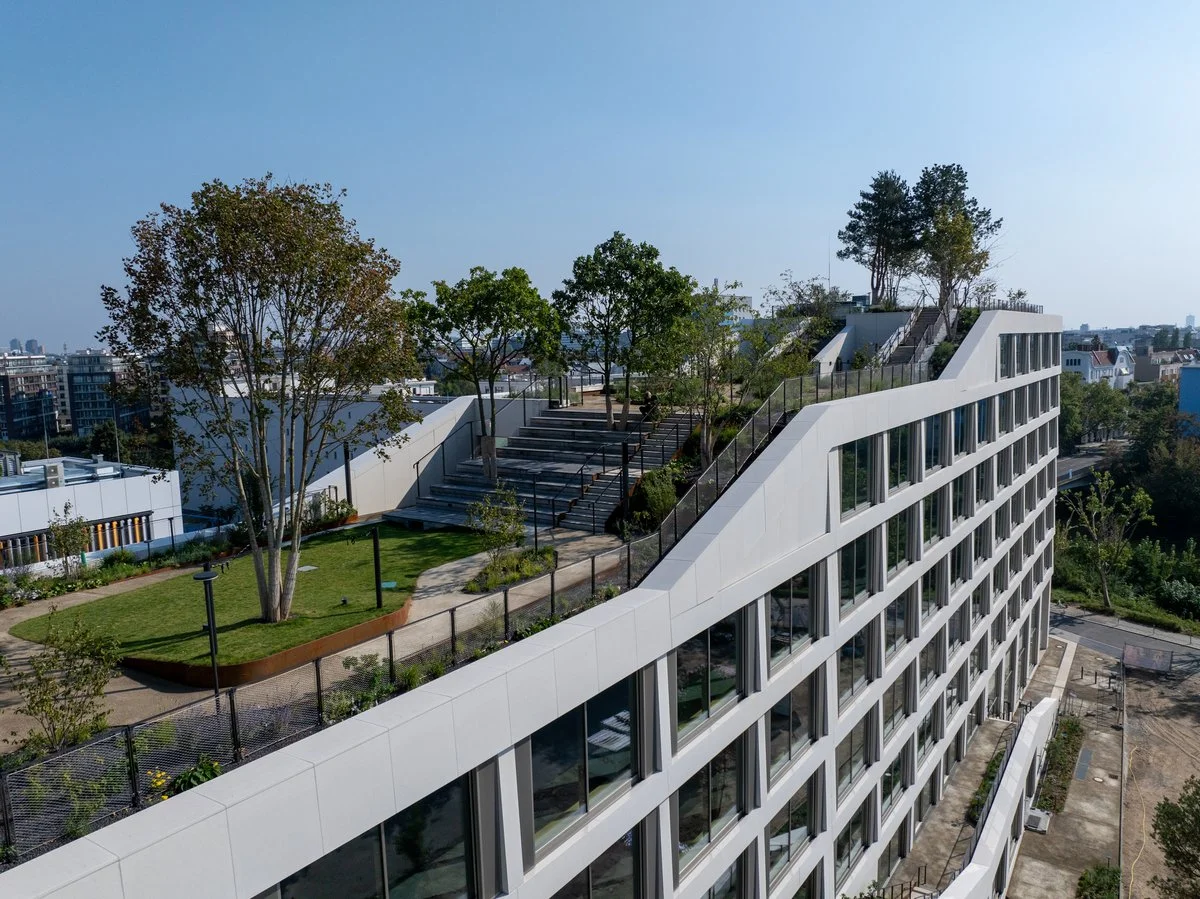
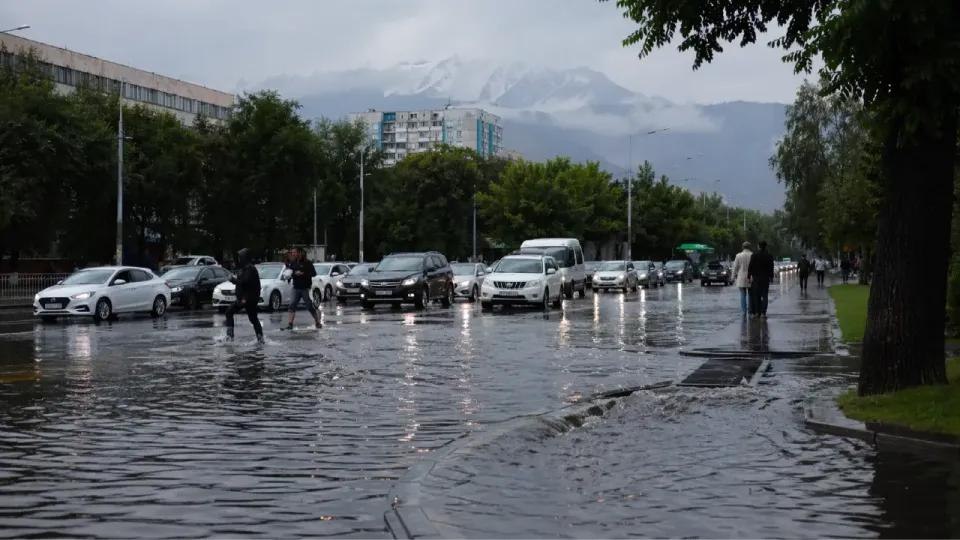
When streets flood after heavy rainfall, the conversation usually starts with the stormwater drainage system. Is it capable of handling the volume? Where do the pipes need to be enlarged? Why isn’t the water draining away quickly enough? Yet the important role played by urban rooftops is often overlooked.
Years of observing urban development, increasing building density and changing environmental conditions, including the growing incidence of unusually heavy rainfall, have made the problems of street flooding and rainwater drainage increasingly apparent. The main difficulty is that continued urban development eventually leaves little room to increase the capacity of existing stormwater drainage systems.
Reconstructing stormwater drainage systems in densely built-up areas is extremely costly for city budgets and, in some cases, simply impossible. There are, however, systems designed to manage the impact of rainwater on the urban environment by combining green roofs with rainwater management solutions.
I increasingly find myself asking a different question: why do we try to collect almost all the rainwater that falls as quickly as possible and send it into the urban drainage network or divert it along the terrain, assuming that by doing so we have solved the problem? In reality, we are doing something quite different: we are trying to address the problem without addressing its underlying cause, and in doing so, we are simply making the situation worse. Those causes emerge much earlier, at the stage when a building is being planned and, more broadly, when a city’s master plan is being developed.
From the Individual to the City
A modern city is made up of vast amounts of impermeable surfaces: asphalt roads, car parks and public squares where we stroll and enjoy the surroundings. The problem is not simply that heavy rainfall creates powerful flows across these surfaces. The water also fails to soak into the soil, is not retained by vegetation and does not return to the atmosphere through evaporation, which means it does little to cool the air. In densely built-up cities, rainwater quickly turns into heavy surface runoff, leaving streets under water. So let us return not simply to the problem, but to its cause.
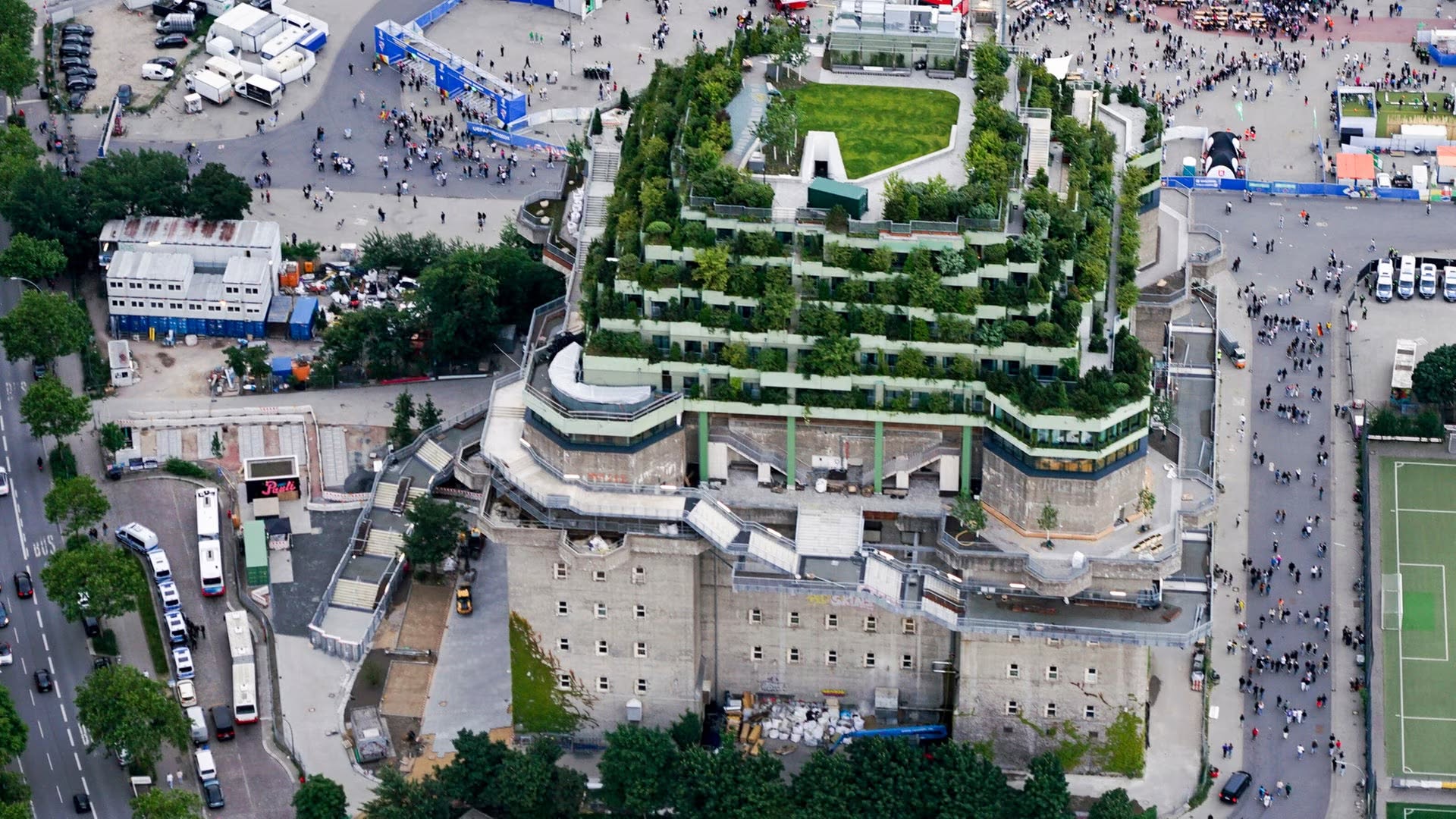
Urban stormwater drainage systems were designed around the street areas and pitched roofs of the past, which together determined the volume of surface runoff. No one anticipated that urban growth, combined with the rise of flat roofs, underground car parks and developer-friendly structures such as podiums that bring entire complexes together into a single residential development, would fundamentally alter this system. As we admire the architecture of modern buildings, we often overlook the role their design can play in reducing the burden of stormwater on the city's drainage network.
In reality, the more efficiently each individual building functions within the wider urban fabric, collecting and diverting huge volumes of water from its roofs and accessible rooftop areas, the more quickly, during intense rainfall, an enormous volume of water, exceeding the design capacity, reaches the city's drainage system. The result is overwhelming surface runoff and, ultimately, flooded streets.
This creates a paradox: what is considered an efficient solution at the level of an individual building can make the problem worse at the level of the city. Draining water away does not mean managing it. Traditional engineering logic has long been fairly simple: rain falls on a roof, so it needs to be removed as quickly as possible. But in conditions of dense urban development and changing rainfall patterns, this logic is no longer enough.
How Should This System Work?
Modern rooftop stormwater management is based on a different principle. The first priority is to retain water where it falls and, after directing it through preliminary treatment, put it to use, for example, for watering plants or other non-potable purposes. In this way, the impact of stormwater on the urban environment can be reduced to a minimum, or even eliminated entirely.
In this model, a building is no longer a passive surface but becomes part of the city's water infrastructure. This makes rooftops particularly valuable. In a densely built-up city, there is often little or no space available for creating new ground-level areas for retaining water. Yet millions of square metres of rooftop space within the urban environment remain underused.
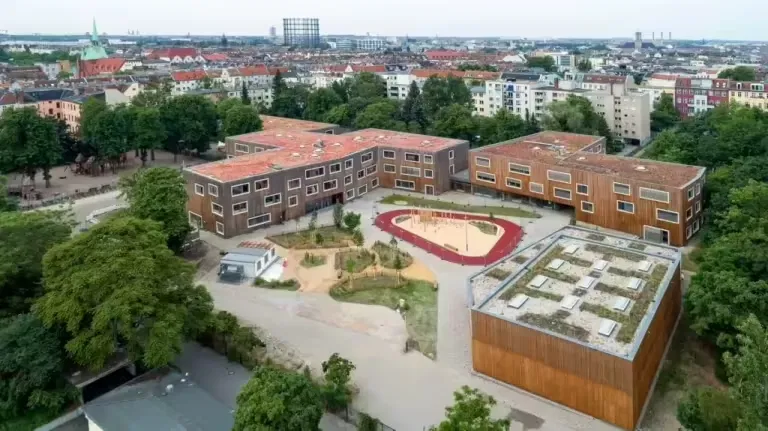
Around the world, roofs are increasingly being viewed both as green surfaces and as spaces for the temporary or permanent storage of stormwater. This is made possible by green and accessible roofs on residential and administrative buildings.
So what difference does a water-retaining roof make, whether it is green, usable or designed to accommodate vehicular access?
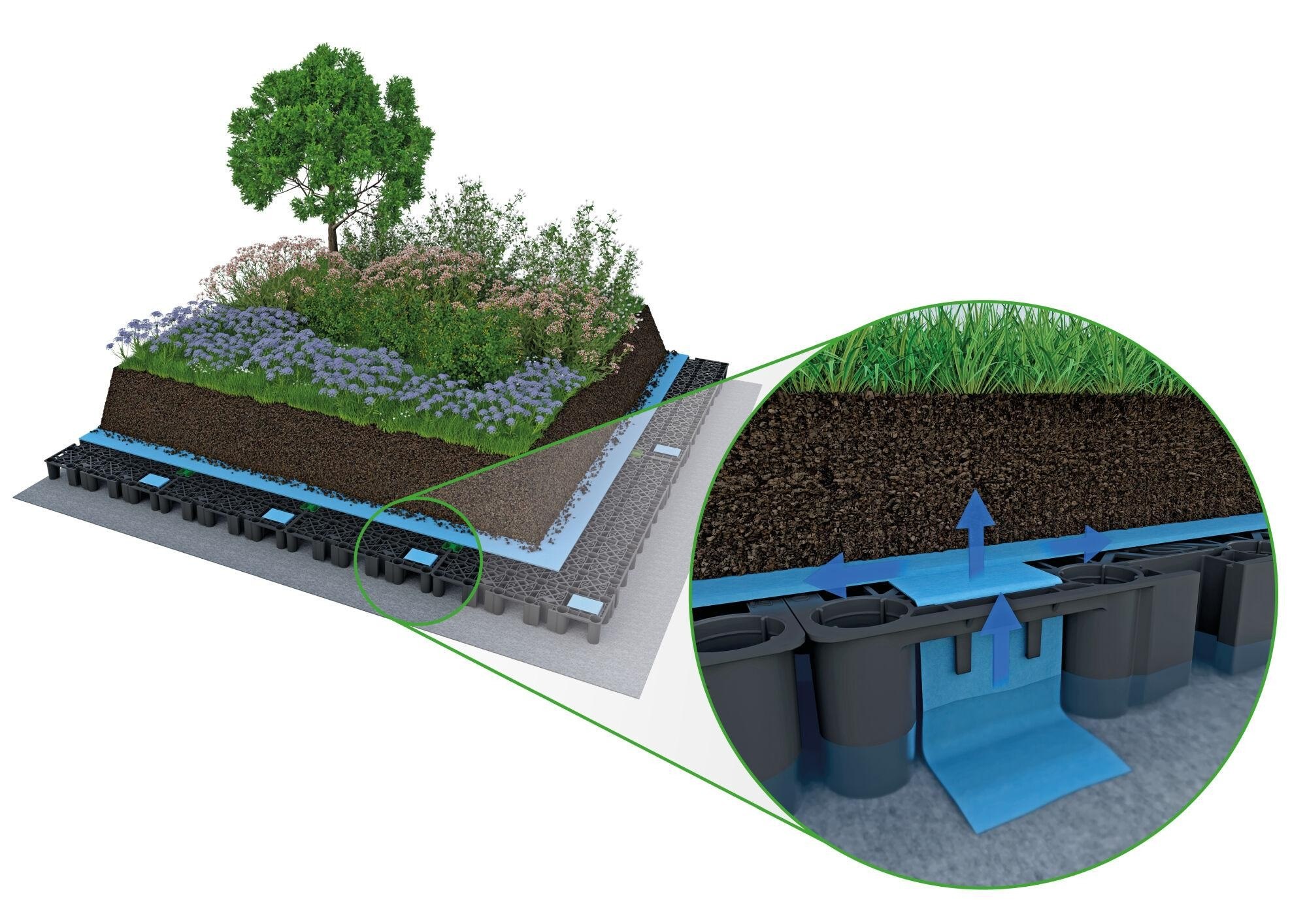
It is important to distinguish between a conventional green roof and a roof specifically designed to manage stormwater runoff.
A green roof on its own can retain some rainfall within its vegetation and substrate layers. An international meta-analysis of studies from 21 countries found that green roofs retained an average of around 62% of precipitation, although the results varied widely. Effectiveness depends on rainfall intensity, substrate depth, vegetation, season and climatic conditions. This is an important finding: a green roof is not a universal figure in a specification. It is an engineered system that must be designed for a specific building and a specific climate.
A water-retaining roof takes this a step further.
Its design incorporates additional capacity for the temporary or permanent storage of water. After rainfall, the water should not immediately flow into the stormwater drainage network. On green and accessible roofs, some of the retained water is absorbed by the vegetation and released through evaporation, helping to lower temperatures in the surrounding urban environment. Excess water can then be released at a controlled rate, reducing the load on the city's stormwater drainage system and, in some cases, bringing the impact down to zero.
What changes is not only the amount of water entering the system, but also the timing of its arrival, potentially delaying it until there is no runoff at all and no impact on the city. And for urban infrastructure, timing matters enormously.
Thousands of Local Water Reservoirs
When millions of square metres of pitched and accessible roofs discharge water almost simultaneously, they create a peak load. Once the stormwater drainage system becomes overloaded, it can shift into pressurised flow, forcing water back onto the surface. If some of this volume is retained on buildings and released gradually, or does not enter the drainage system at all, the load profile changes completely. This is very different from the situation we currently see on the streets of Astana, Almaty and other cities.
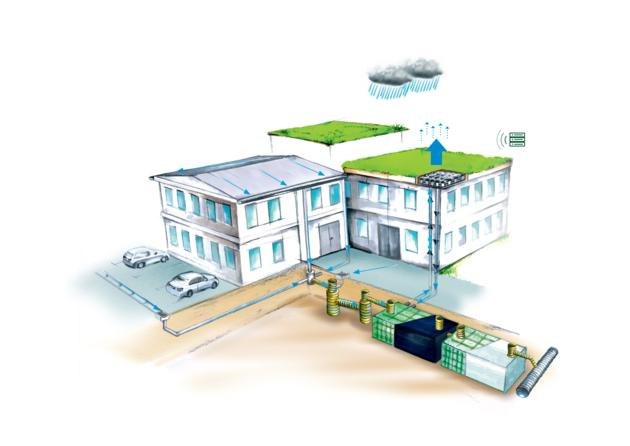
Research on green roofs confirms this effect: they can not only lower the overall volume of runoff, but also delay its onset and reduce, or even eliminate, peak flows. Every roof can become a small water reservoir, helping to relieve the pressure that flooding places on cities.
Perhaps the most interesting shift in recent years is that we are beginning to see the roof not as a place from which water needs to be removed, but as an engineering resource within the building.
A roof can temporarily retain water after heavy rainfall, regulate the rate at which it is released and even use stored water to support vegetation. Through evaporation, some of this water returns to the natural water cycle while also helping to cool the urban environment. And all of this takes place on a surface that already exists, without requiring the city to acquire additional land.
Professional practice already includes systems with dedicated water-storage layers and controlled outflow. For example, the solutions we use allow us to tailor the water-retention capacity to the specific requirements of each building. In these systems, water is stored beneath the green roof, while its release is regulated to reduce peak discharge.
Rainwater should become part of a building's design, rather than a problem that the building passes on to the city.
From a Single Green Roof to Blue-Green Infrastructure
A single water-retaining roof will not save a city from flooding. At most, it can address the problem locally for the developer of a particular building. But the fact that this developer is already thinking about the future problems their building may face is fundamentally important.
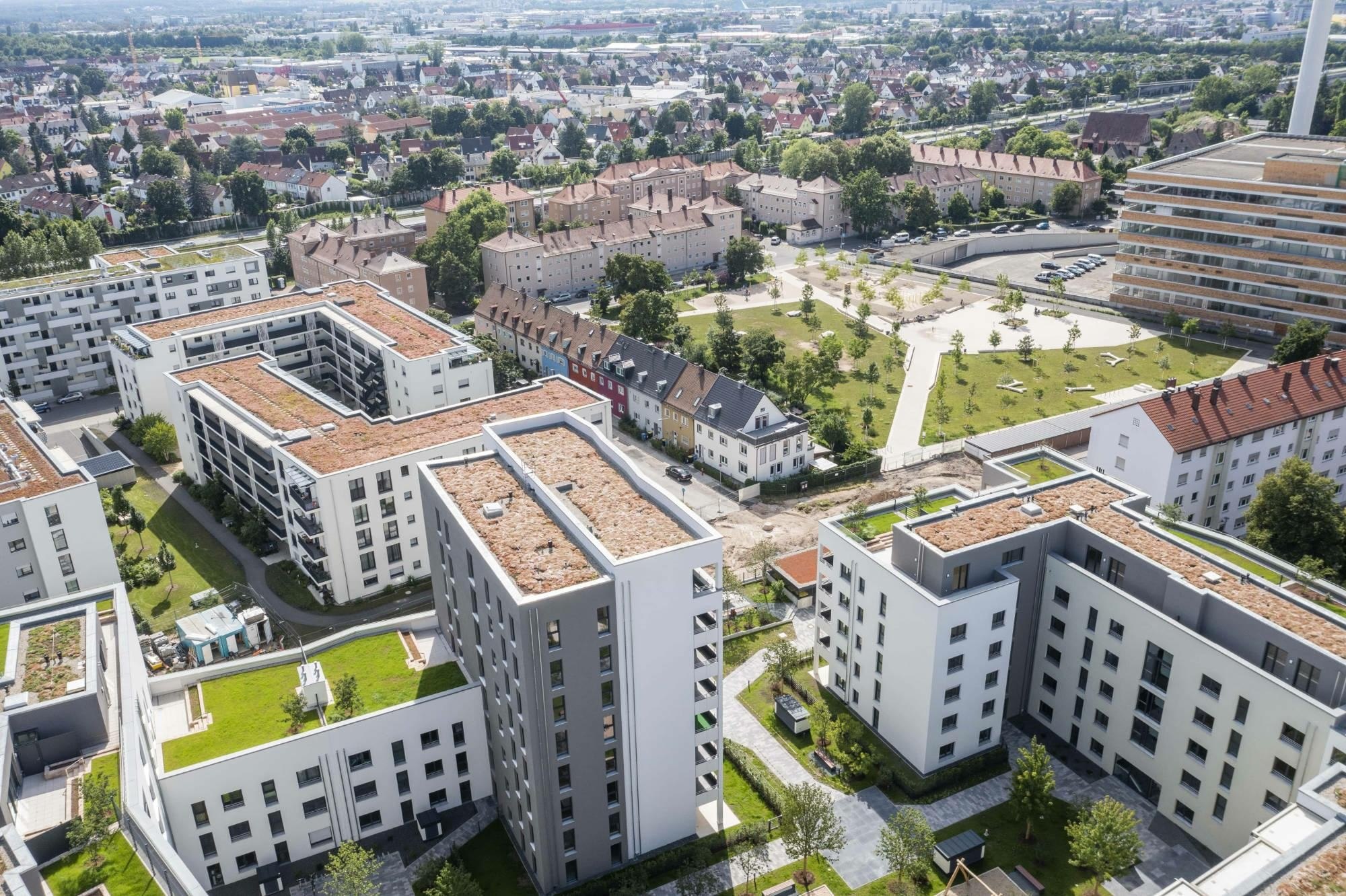
No single technology can replace an entire stormwater drainage system. It can, however, reduce some or all of the discharge that would otherwise overload the city's stormwater network. Proper site grading based on natural ground conditions, the use of permeable surfaces, the incorporation of rain gardens, street greening, water-retention tanks and other elements of water infrastructure can all help prevent surface runoff. Taken together, these measures create an entirely different model for how a city can be designed.
Roofs retain some of the water. Rain gardens collect runoff from surrounding areas. Permeable surfaces allow some rainfall to infiltrate into the soil. Green spaces retain and evaporate water, making the urban environment more comfortable and helping to lower temperatures. The drainage network then receives only the small volume of water that remains.
This is the logic of blue-green infrastructure: water management and green infrastructure are no longer designed as two separate systems.
Modern stormwater management in major cities is gradually moving toward this model. Central Asia cannot simply copy a European solution. For Almaty, Tashkent, Astana and other cities across the region, this is a particularly important area of research. But it would be a mistake to take a system developed in Germany, transfer it to a different climate and consider the problem solved.
Central Asia has its own conditions: high summer temperatures, prolonged dry periods, sharp temperature fluctuations, distinctive rainfall patterns, water scarcity, dust loads, specific requirements for vegetation and a completely different culture of building maintenance and operation.
Scientific research confirms that climatic conditions have a significant effect on the ability of green roofs to retain runoff.
Moreover, Central Asia remains significantly underrepresented in global research compared with Europe, North America and parts of Asia.
The next step for our region, therefore, is not simply to import technologies. We need to collect our own data.
How much water can a particular roof system retain in Almaty's climate? How quickly does it regain its retention capacity after rainfall? Which plants can withstand the heat and help return stored rainwater to the natural water cycle? How should storage capacity be calculated? What happens in winter? What will the operating costs be after five, ten or twenty years?
Without answers to these questions, a green roof risks remaining a beautiful design feature. With them, it becomes a measurable component of urban engineering infrastructure.
Who Is Responsible for the Rain?
There is another problem that, after twenty years of working in this field, I consider one of the most significant. Urban water management falls between several professions.
The architect designs the building. The landscape architect is responsible for the greenery. The structural engineer deals with loads. The engineer is responsible for drainage. The developer is responsible for the project's economics. The city is responsible for stormwater infrastructure. The property management company is responsible for the building's ongoing operation. But rain does not know these administrative boundaries.
Water runs through the entire project.
That is why true blue-green infrastructure does not begin with the choice of a particular piece of equipment. It begins when stormwater management becomes a distinct project objective at the concept stage.
We are accustomed to seeing heavy rainfall as an external threat to the city. But water is not only a risk. In an increasingly hot climate, it is also a resource that we often remove from the city as quickly as possible, only to spend water and energy later on irrigating plants and cooling the urban environment.
Perhaps, then, the most important shift in the years ahead will be from a logic of water drainage to a logic of water management.
And if thousands of buildings learn not simply to discharge rainwater, but to receive, retain, use and release it in a controlled manner, the city will develop an entirely different relationship with rainfall.
Not one large system expected to cope with everything. But thousands of small elements, each taking on part of the load. And that, in my view, is where the real work of building a “sponge city” begins.
Newsletter
A letter from the HD editors
Once a week, we send the best stories, events, and cultural discoveries from Central Asia.