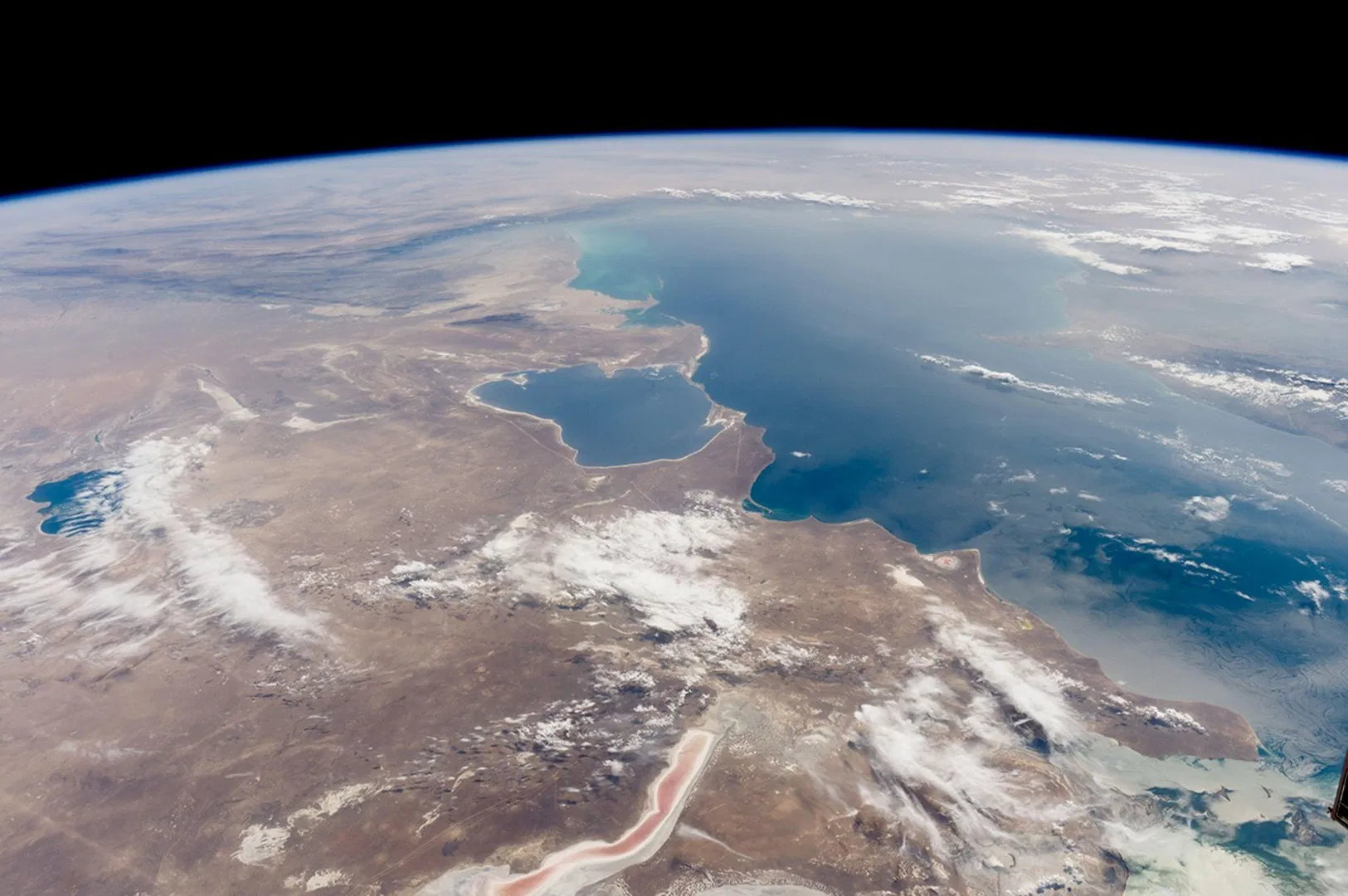
The level of the Caspian Sea continues to fall, changing the shape of the coastline, the conditions for shipping and the habitats of unique species. For Kazakhstan this is not only an environmental problem but also a question of the future of its ports, fishing and coastal cities. What processes lie behind the shrinking and how far can this crisis go?
The Caspian Sea is entering a period of serious hydrological change. The retreat of the water can no longer be seen solely as a temporary fluctuation in level: current research indicates that global warming could accelerate this process during the 21st century. The consequences will affect not only natural systems but also the economies of all five Caspian states, including Kazakhstan.
At the same time, a scientific forecast is not the same as an inevitable catastrophe scenario. The future of the Caspian depends on a combination of climatic processes, the state of river flow and the ability of states to prepare infrastructure and ecosystems for new conditions.
Why is the Caspian shrinking?
To understand what is happening, it is necessary to look at the sea's water balance. Unlike the oceans, the Caspian has no natural surface outflow to the world ocean. Its level is determined by the ratio of water coming in and water lost.
The main inflow comes from rivers, above all the Volga. It accounts for approximately 80% of the river flow entering the Caspian, although the exact share varies with hydrological conditions. Additional sources of replenishment are atmospheric precipitation and groundwater. The main loss is linked to evaporation from the sea surface and to water exchange through the Kara-Bogaz-Gol bay.
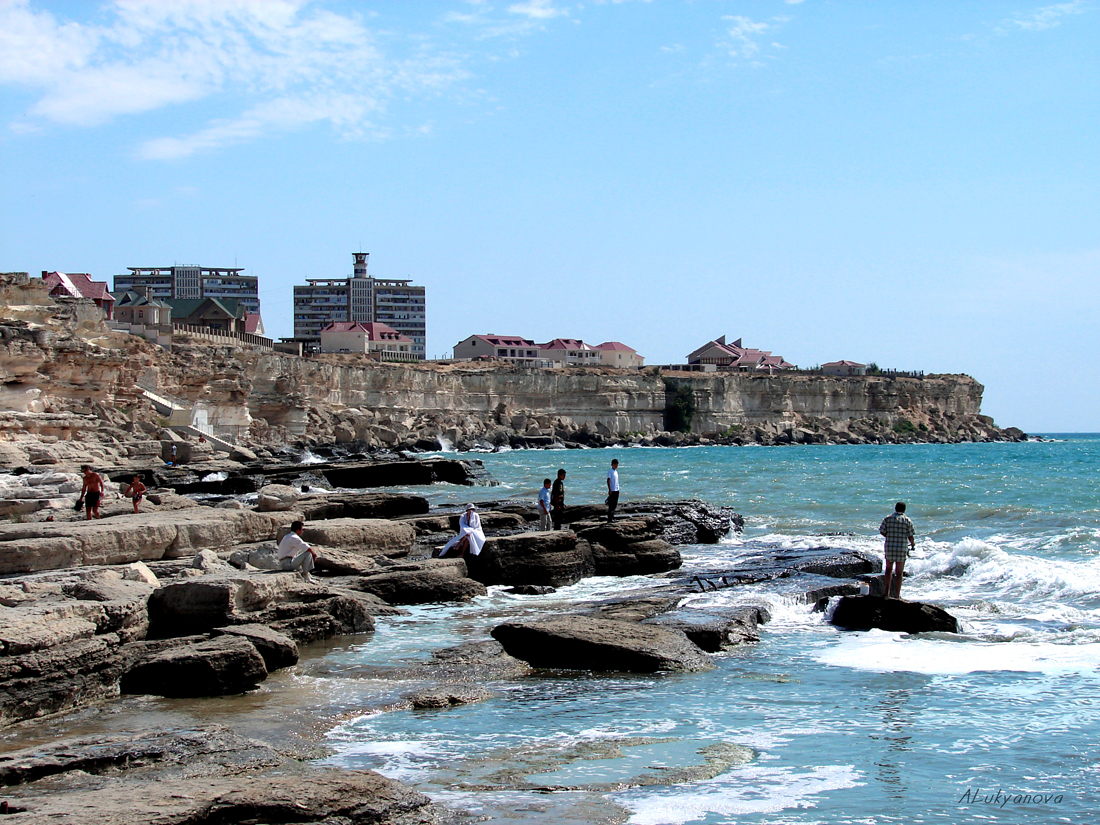 Photo: https://commons.wikimedia.org/wiki/File:Aktau_Light_house_Caspian_Sea.jpg
When total losses exceed the inflow of water, the level falls. Climate change can intensify this imbalance in several ways at once: by raising air and water temperatures, increasing evaporation and altering the pattern of precipitation and river flow.
A study by Rohit Samant and Matthias Prange, published in 2023 in the journal Communications Earth & Environment, showed that in climate models the increase in evaporation in the Caspian basin outpaces the growth in precipitation. The authors examined several scenarios of future greenhouse gas emissions and stressed that the long-term dynamics of the sea level are largely determined by climate change.
However, to explain the shallowing solely by warming would be an oversimplification. The state of the sea is also affected by the natural variability of river flow, the economic use of water in the Volga and other river basins, and the peculiarities of atmospheric circulation. The exact shares of each factor's impact depend on the observation period and the methodology used. Therefore, claims about a fixed percentage of influence from climate, water abstraction or tectonic processes require separate scientific substantiation.
Sea Breeze Uzbekistan: When Ecology Becomes an Economic AssetWhy Charvak’s future depends not only on what is built here, but on the value the natural resource creates for society, investors and the territory itself.mag.humodoc.com
What do research and forecasts say?
The history of the Caspian shows how variable its level can be. In the second half of the 20th century the sea experienced both prolonged periods of decline and a noticeable rise. In the late 1970s a rise began that continued until the mid-1990s, after which a downward trend emerged again. However, past cycles do not guarantee that in the coming decades the sea will return to its former marks on its own. Modern anthropogenic warming is changing the conditions in which the water balance forms.
Rohit Samant and Matthias Prange are German climate scientists from the University of Bremen; in October 2023 they published in the scientific journal Communications Earth & Environment a joint paper on the catastrophic fall in the water level of the Caspian Sea in the 21st century, in which they estimated a possible drop in the Caspian level by the end of the 21st century of about 8 metres under a moderate emissions scenario and 14 metres under high emissions. These estimates are based on selected climate models; the uncertainty ranges remain significant. This is a forecast to the end of the century, not a claim that the sea will necessarily lose that much water by 2040 or 2050.
A separate study, published in 2025 in the same scientific journal, addresses the consequences of the level fall for ecosystems, protected areas and infrastructure. The authors note that a drop of 5-10 metres is already capable of critically disrupting the functioning of important natural systems, including the habitats of the Caspian seal and sturgeon. Depending on the climate scenario, the long-term fall by the end of the century could be even greater.
For a nearer horizon - up to 2040 - it is important to consider not a single forecast figure but several possible trajectories. The outcome depends on how temperature, evaporation and river inflow change. Therefore, exact level values for a specific year should be treated as calculated scenarios, not as a guaranteed outcome.
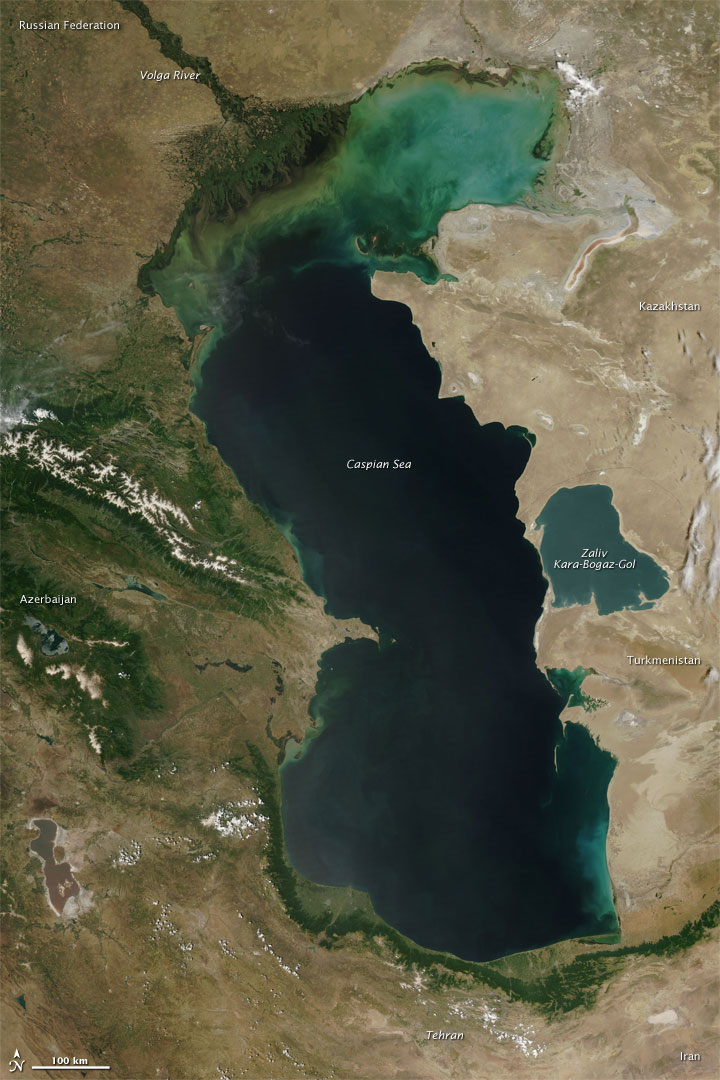 Photo: https://science.nasa.gov/earth/earth-observatory/caspian-sea-44253/
Why is the northern Caspian especially vulnerable?
For Kazakhstan the most acute consequences are linked to the northern part of the sea. Here large areas are shallow, and the coastline is especially sensitive even to relatively small changes in level.
As the water retreats, the configuration of coastal shallows changes, the distance to the former coastline increases, and access to certain parts of the water area becomes more difficult. This creates additional difficulties for navigation and the operation of port infrastructure. Where depths are initially small, even a moderate fall in level may require a review of approaches to operating channels, berths and shipping routes.
Economic risks are not limited to ports. A change in the coastline can affect fishing, the coastal economy and nature protection areas. For certain settlements and enterprises the problem lies not only in the direct retreat of the sea but also in the need to adapt infrastructure designed for different hydrological conditions.
The consequences, however, will not be the same along the entire coastline. They depend on the seabed relief, the geomorphology of the shores, the nature of economic activity and the rate of the level decline. That is why for Kazakhstan it is fundamentally important to assess risks at the level of specific coastal areas rather than to limit itself to an averaged forecast for the entire Caspian.
Ecological crisis: from spawning grounds to the Caspian seal
The Caspian ecosystem is notable for its high level of endemism: many species living here are adapted specifically to the conditions of this body of water. Changes in the sea's area and depth can disrupt established ecological links, especially in the northern areas.
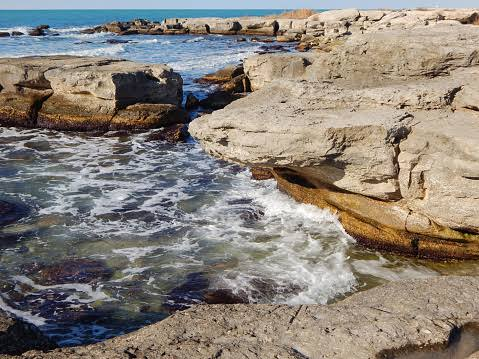 Photo: https://www.istockphoto.com/photo/rocky-shore-of-caspian-sea-gm503534612-82580711
The shrinking of shallow-water areas and changes in the seasonal regime of the body of water create risks for fish breeding grounds and the food base of animals. The situation of the Caspian seal, the only marine mammal of the Caspian, is a particular cause for concern. The northern part of the sea is of special importance for its life cycle: in winter, ice areas form here that the animals need for breeding and raising their pups.
Warming creates a double threat. On the one hand, the water level is falling; on the other, the conditions for the formation and preservation of ice are changing. That is why the consequences of climate change may manifest themselves not only through a reduction in the water area but also through a deterioration in the breeding conditions of animals.
A 2025 study published in Communications Earth & Environment shows that with a significant drop in the level, the habitats of endemic species will be under threat, and the area of existing marine protected areas may shrink substantially. The authors stress the need to revise conservation planning in light of the shifting of habitats.
Thus, protecting the Caspian requires not only combating pollution and poaching but also adapting to changes in the very geography of the sea.
Three possible scenarios up to 2040
The first is the inertial one. Climate trends persist, while measures to manage water resources and protect the coastline are taken gradually. The sea level continues to fall, and economic and environmental consequences accumulate. In this case, the main challenge will be not a single catastrophe but the prolonged rising cost of operating infrastructure and maintaining ecosystems.
The second is the unfavourable one. Warming turns out to be stronger than more moderate scenarios assume, and changes in river runoff intensify the negative water balance. In this case, the retreat of the water may accelerate, and the consequences for the shallow northern Caspian will be especially serious. Scientific models allow for a large-scale reduction of the northern water area in the long term, but its complete drying out by 2040 cannot be presented as an established forecast.
The third is the adaptive one. The Caspian countries develop joint monitoring, agree on the exchange of hydrological data, modernise their water management and adapt ports and protected areas in advance. These measures cannot on their own stop global warming or guarantee a rise in the sea level. However, they can reduce damage, increase the resilience of infrastructure and preserve the most important natural complexes.
It is important to bear in mind that these are analytical scenarios, not three equally probable forecasts confirmed by a single mathematical model. Their purpose is to show possible directions in which events may develop and the decisions on which the scale of the consequences depends.
When Ecology Becomes EconomicsOn 2 September, as part of Aquatherm Almaty, HD magazine held a panel discussion bringing together representatives of the public sector, architects, urban planners, engineers, and experts in green construction and finance. The central question was how to turn individual environmental solutions into a system with measurable impact, clear costs and a viable financing mechanism.mag.humodoc.com
What can the Caspian states do?
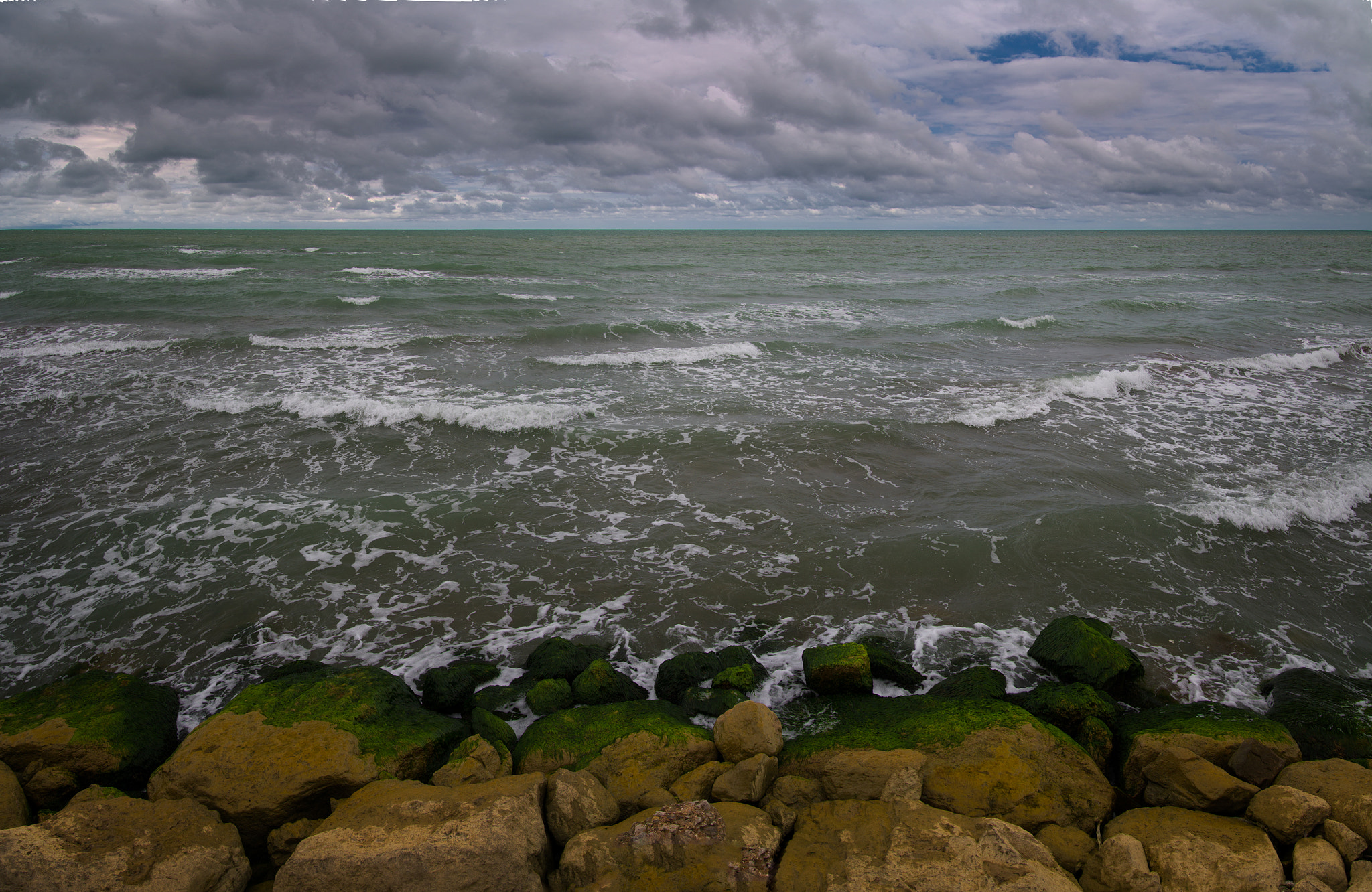 Photo: https://commons.wikimedia.org/wiki/File:Caspian_Sea_Panorama_(120425153).jpeg?utm_source=chatgpt.com
Reducing the climate component of the shallowing at the regional level is difficult: it is linked to global temperature changes. But the countries of the region are able to reduce additional pressures and prepare for the consequences.
The first area is a unified observation system. Comparable data on the sea level, river runoff, evaporation, the state of the coastline and the ice regime will make it possible to identify changes faster and adjust forecasts. Satellite observations must be combined with measurements at hydrological stations and studies of the state of ecosystems.
The second is more efficient management of river resources. Reducing water losses in irrigation systems, improving water-use efficiency and coordinating actions in the basins of major rivers can help reduce the additional pressure. At the same time, decisions on the Volga must take into account the interests of Russia and all users of the river basin rather than boil down to one-sided demands.
The third is adapting infrastructure. Ports and shipping require regular depth assessments, updated navigation charts, revised operational plans and calculation of the costs of maintaining approach channels. The construction of dams, breakwaters or the relocation of individual facilities should be considered only after local engineering and environmental studies: such measures are not universal and can themselves have negative consequences.
The fourth is dynamic nature conservation. Conservation programmes must take into account that the usual habitats of animals and fish may shift along with changes in the coastline and hydrological conditions. Of particular importance are the protection of the Caspian seal, the restoration of degrading habitats, the fight against pollution and control of fishing pressure.
Finally, joint work by all five Caspian states - Azerbaijan, Iran, Kazakhstan, Russia and Turkmenistan - is needed. The Caspian is a single natural system, so the consequences of the shallowing are not confined to national borders. Effective adaptation requires coordinated scientific assessments, data exchange and long-term planning.
Ecology as Capital: Why Central Asia Needs a New Way to Value LandCentral Asia possesses enormous natural capital: mountains, lakes, steppes, deserts and unique landscapes. At the same time, the region is entering a period of rapid tourism development, with roads, airports, hotels, resorts, housing and new infrastructure being built across the region. Yet construction does not necessarily increase the value of a place. As high-quality natural environments become increasingly scarce, they are also becoming more valuable assets.mag.humodoc.com
The Caspian after 2040: time to prepare now
The shrinking of the Caspian Sea is a challenge in which climate, the economy, infrastructure security and the preservation of biodiversity are intertwined. Scientific research gives grounds to expect the long-term decline in the level to continue if current climatic trends persist, but it does not allow the exact level of the sea in 2040 to be named without caveats, nor its subsequent rise to be guaranteed.
For Kazakhstan, the main question today is not only how much water the Caspian will lose, but also how prepared its coastal cities, ports, fishing industry and environmental protection systems will be for the changing conditions.
It is impossible to predict every stage of this process with absolute accuracy. But even now it is possible to improve monitoring, reduce water losses, update infrastructure plans and protect vulnerable ecosystems. It is largely the quality of these decisions that will determine whether the retreat of the Caspian becomes a manageable long-term challenge or grows into a large-scale regional crisis.
Read also
Newsletter
A letter from the HD editors
Once a week, we send the best stories, events, and cultural discoveries from Central Asia.