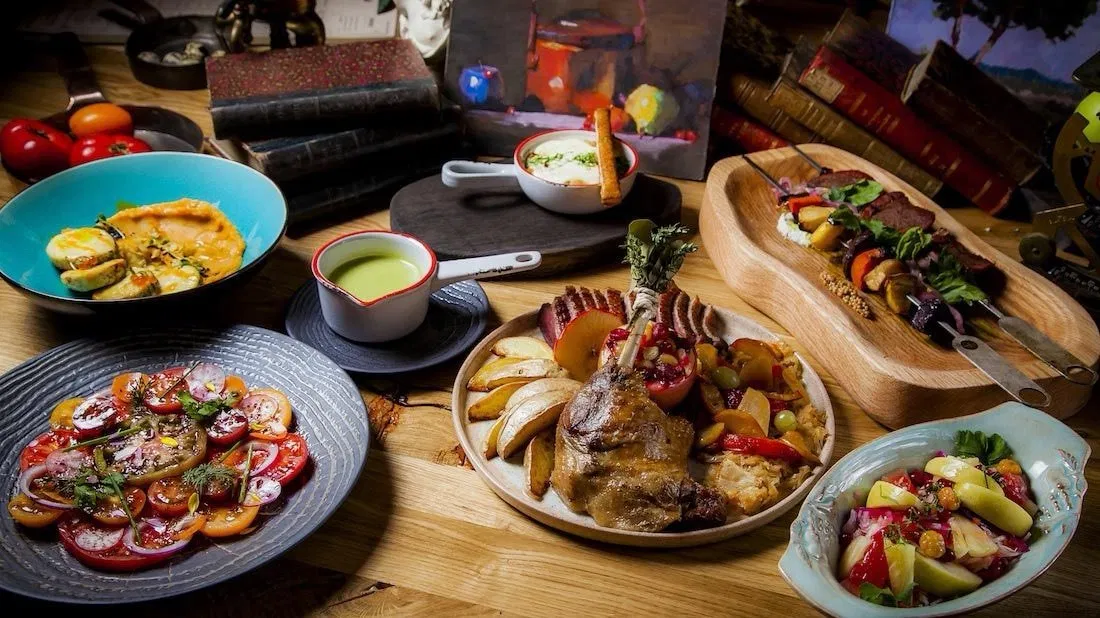
If we stop viewing a restaurant solely as a business, it becomes clear that public catering is a fully fledged part of urban infrastructure. Veronika Daugaliyeva, chair of the Self-Regulatory Association of Public Catering of the Republic of Kazakhstan (SOOP RK), told HD magazine why public catering should be regarded as a sector of the economy.
A few statistics
According to estimates by the QHA of the Republic of Kazakhstan, just over 2 million people are currently employed in food service establishments, but if you look at the entire infrastructure around food service — food production, textiles, tableware, equipment, packaging, logistics, IT, delivery, cleaning and other related industries — that already amounts to around 5 million jobs.
For example, food service accounts for about 20% of turnover in the textile sector, around 30% in tableware production and roughly 25–30% in equipment for the industry. And this is against the backdrop of Kazakhstan's tourism industry as a whole being a direct consumer of this same infrastructure: in 2024 the country welcomed 15.3 million foreign visitors and 10.5 million domestic tourists, the tourism sector itself currently employs more than 600,000 people, and investment in it over the past two years has exceeded 2.2 trillion tenge, according to the Bureau of National Statistics of the Republic of Kazakhstan and the government of the Republic of Kazakhstan.
The restaurant economy is significantly bigger than just the money a guest leaves at the table.
An industry that went unseen in the figures for too long
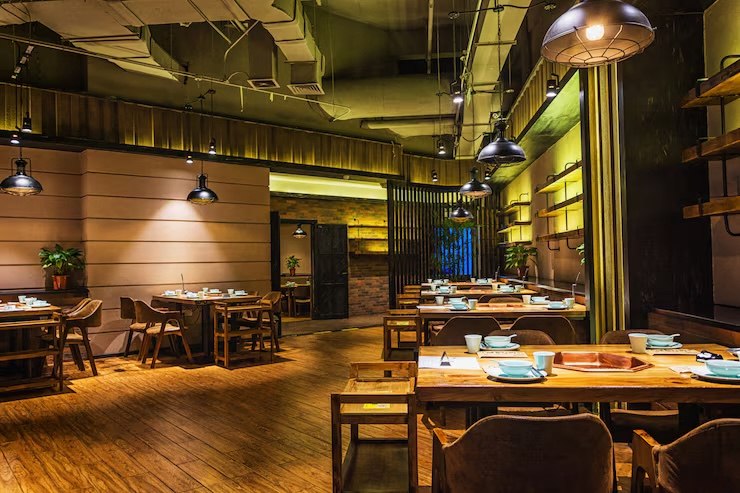
For many years, statistics did not reflect the real scale of the industry. In 2019, I was asked to sign a document stating there were around 18,000 food service establishments in Kazakhstan. I said at the time: "That's not true. There are far more than 100,000."
And then 2020 came. The pandemic, the lockdown, the Ashyq programme — and only in the process of legalisation did we identify around 46,000 establishments. By our industry estimates, that represented about 40% of the sector at the time.
Today the Bureau of National Statistics keeps records of certain indicators for food service enterprises, but I am confident that once the market is fully digitalised and entrepreneurs correctly determine their primary OKED code, the statistics will come much closer to reality.
And the pandemic demonstrated very clearly that a restaurant is genuinely urban infrastructure. When offices closed and people switched to remote work, coffee shops took on an entirely new lease of life. They became offices, meeting rooms, places to meet: today a person builds part of their urban route around food service.
Why a "pure" coffee shop is a bad business — we wrote about this earlier:
How the Coffeehouse Became Tashkent’s New Chaikhana“In the East, in the East, what is life without a chaikhana?” goes a well-known song. Yet, as it turns out, even a cultural institution as enduring as the chaikhana can have its successor. After all, the chaikhana was never merely a place to eat and drink. It was a place for conversation, negotiation and community. And as generations change, so do the places where those conversations happen. This is the story of how, in little more than a decade, Tashkent went from instant coffee to specialty coffee... and to something much bigger.mag.humodoc.com
A gastronomic street doesn't begin with the number of restaurants
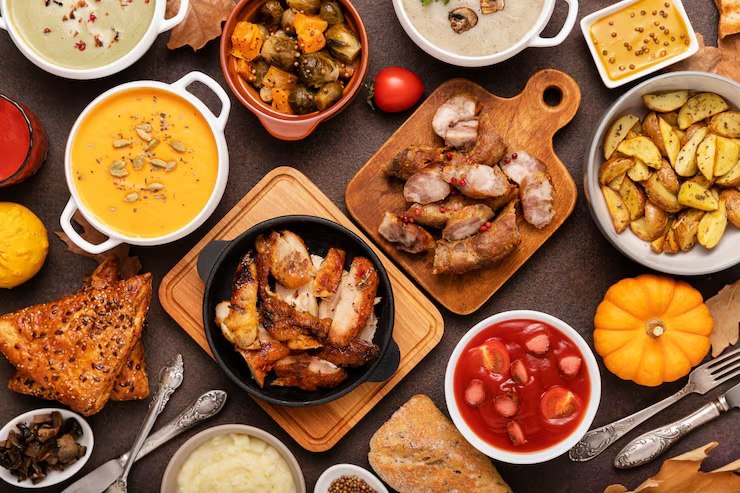
A true gastronomic street begins with a gastronomic environment. Every district has its own energy, its own character, its own atmosphere. And establishments can emphasise that character.
Look at Almaty: Panfilov Street, Arbat and other urban spaces already show how cafés and restaurants can complement the life of a street. And the figures confirm it. In 2024 Almaty welcomed a record 2.3 million tourists — 14.8% more than the previous year: 686,000 foreign visitors (+27%) and over 1.6 million domestic tourists (+10.4%). The volume of tourism services grew by 30% to reach 96.3 billion tenge, tax revenues from the sector amounted to 90.7 billion tenge — nearly double the previous year — and investment in the city's tourism infrastructure totalled 110.9 billion tenge. The sector itself employs 83,500 people with an average salary of 480,000 tenge (Almaty akimat).
According to city authorities' forecasts, the flow of foreign tourists alone in 2025 was expected to grow by a further 10% — to 750,000 people — and under agreements concluded by Almaty tour operators, by 2027 the city expects to welcome more than 110,000 additional foreign tourists with an average spend of around $1,500 per trip — that is about $165 million in expected economic impact.
In Astana, this is Turan Avenue, Kunayev Street, Nurly Zhol Boulevard, the new alley opposite Abu Dhabi Plaza and other areas. Each is already developing its own taste, its own flavour, its own audience: the city's own tourism resource calls the Turan stretch the "Restaurant Alley", and it genuinely features a large number of establishments in various formats (Visit Nursultan). The capital is also gaining: in 2025 it welcomed more than 1.6 million tourists (+7%), the city has over 310 hotels and 2,255 food service establishments, of which 525 are restaurants.
Forums, visits, business trips — the second, invisible tourist
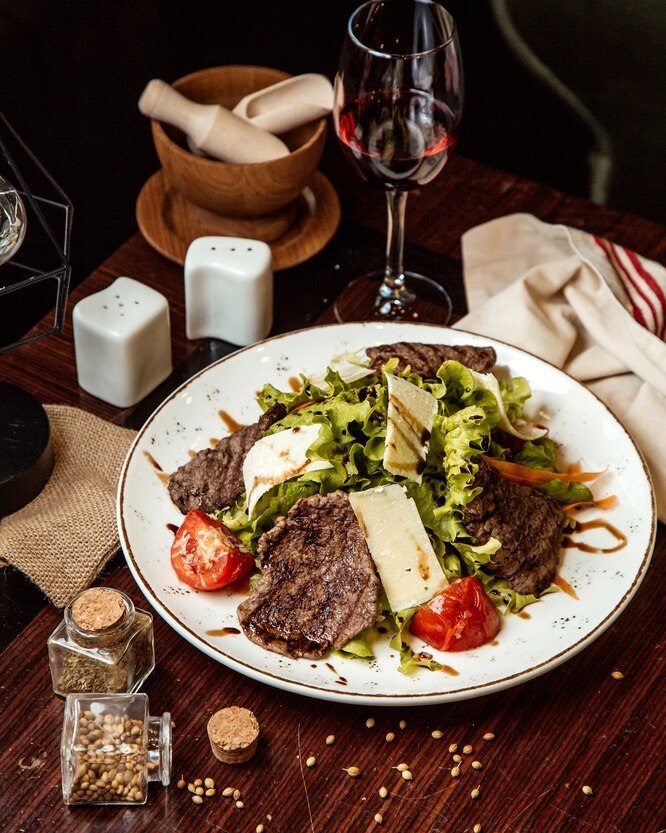
The tourist who comes on holiday is only part of the picture. The second, no less lucrative part is the business flow: forums, summits, exhibitions, working visits by corporations and government bodies. Over the first nine months of 2025, Astana hosted 56 major international events that together brought in more than 300,000 participants (data from the Astana city akimat) — that is more than one major event per week throughout the year, not counting the dozens of smaller industry conferences and exhibitions that run in the city almost without pause.
And the scale of individual venues confirms this. The Digital Bridge technology forum (from 2026 — AI & Digital Bridge) in 2025 brought together over 30,000 participants over three days; in 2026 the organisers expected more than 20,000 (Astana Hub). The Astana International Forum — a platform at the level of heads of state and big business — annually unites around 600 delegates from 70 countries. Astana Finance Days in 2025 welcomed more than 5,000 participants at the EXPO business complex (QazExpoCongress). Kazakhstan Energy Week / KAZENERGY Eurasian Forum also draws its own audience, as do dozens of industry exhibitions — from KazBuild to Electronica Expo Kazakhstan. Add to that major one-off events: concerts by Jennifer Lopez (around 30,000 spectators) and the Backstreet Boys (27,000), the PGL Astana esports tournament (over 20,000 people offline) — and it turns out that almost every week the city hosts an audience of several thousand people who need to eat, unwind in the evening and go somewhere after the programme.
At the same time, at the national level, the share of business and professional trips among domestic tourists remains modest — 5.9–6.7% of the total number of trips, or around 700,000 people a year (data from the Bureau of National Statistics of the Republic of Kazakhstan for 2024–2025). But, as industry experts note, Astana within this structure is a city of short business trips, unlike resort destinations: people come here most often not to rest but to work — for a forum, a meeting, a business trip.
For the restaurant business, this is a separate economy with its own rules: not prolonged leisure, but concentrated demand over a few days. Each such forum means additional catering, receptions and business lunches, show programmes and entertainment for delegations, rental of LED screens and sound equipment, and technical fit-out of venues. It is no coincidence that Kazakhstan's entertainment and leisure market, which includes event organisation, shows and animation, reached a record 523 billion tenge in 2026, with the concert market alone at 48 billion tenge (Kapital.kz). A gastronomic street designed for such traffic is not merely handsome facades but infrastructure that captures the money of a forum delegate just as it does the money of a tourist with a backpack.
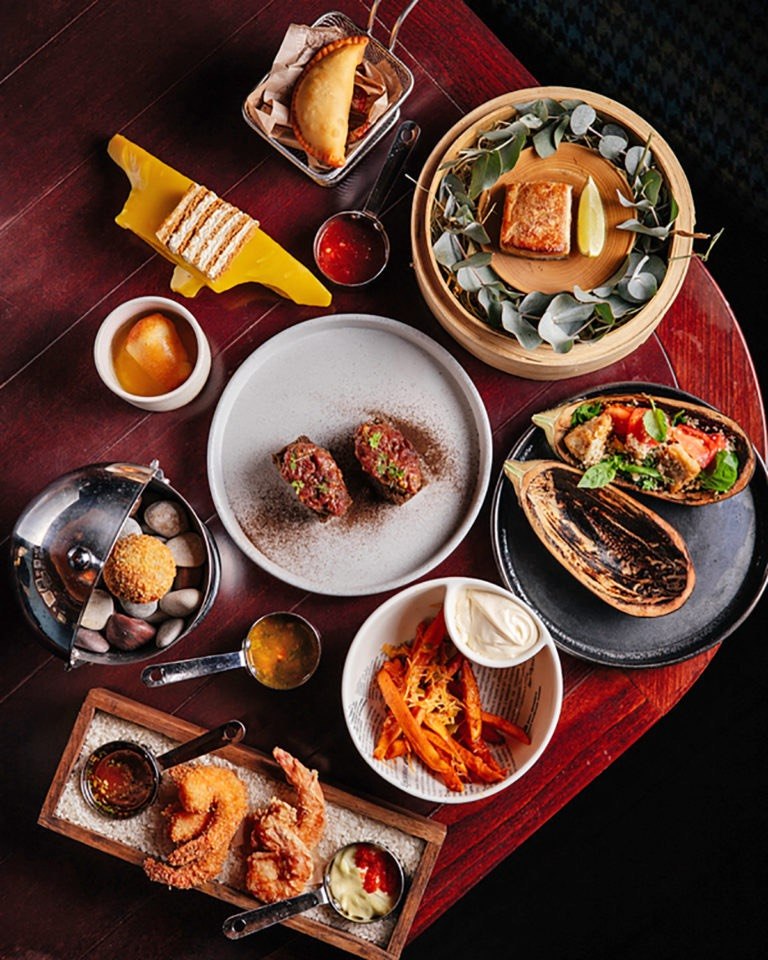
This is not a uniquely Kazakhstani practice. The global gastronomic tourism market is already valued in the hundreds of billions of dollars and, according to Research and Markets forecasts, could grow to 3.5 trillion dollars by 2032. In Italy, according to the national tourism board, at least 10% of tourists choose the country specifically through gastronomic and wine routes. This is a benchmark: if a similar logic were applied to the domestic and business tourism flows of Almaty and Astana, a gastronomic street would cease to be an ornament of the city and become a growth point for taxes, employment and business activity on the days when a forum, congress or exhibition is held in the city.
We need not restaurants but an environment
But we need to go further. A gastronomic street must have proper pavements, landscaping, lighting, terraces, pedestrian traffic and well-organised transport.
Moreover, short-stay bays are essential — say, up to 30 minutes. These are needed by visitors, taxis, couriers and suppliers alike. Otherwise we ourselves create a conflict between business, cars and pedestrians.
And above all, business and residents must live in symbiosis. An entrepreneur must not disturb residents' peace or create problems with smells or noise. But the city, too, must create conditions enabling an entrepreneur to meet the requirements technically. If it is impossible to install proper extraction after the building has already been constructed, we get a conflict out of nowhere.
That is precisely why I have been telling developers for several years now: this must be thought about not when the restaurant has opened, and not even when a restaurant has already been operating on the site for 20 years. It must be thought about at the design and construction stage.
If premises are intended for public catering, they must be designed from the outset with the appropriate designated purpose and engineering solutions — capacity, water, drainage, ventilation and supply air. Current sanitary rules explicitly set requirements for these systems, and in 2026 they were amended by Order No. 34 of the Minister of Health dated 16 March 2026. This is precisely the area where building norms, sanitary requirements and business interests must correlate with one another.
We wrote here about how Asian cuisine won the hearts of Slavs:
“On the plate are manti, and in it two parts of lamb”: How Russia penetrated Asia, and Asian cuisine penetrated RussiaIt’s no secret that the most common fast food in Russia is of Asian origin. The overall popularity of pilaf and shashlik, lagman and baklava is not only equal to, but often surpasses, Russians’ love for shchi, buckwheat porridge, or kulebyaka. Writer and culinary historian Pavel Syutkin, exclusively for HD magazine, explained how the infiltration of Asian cuisine elements into Russian gastronomy began.mag.humodoc.com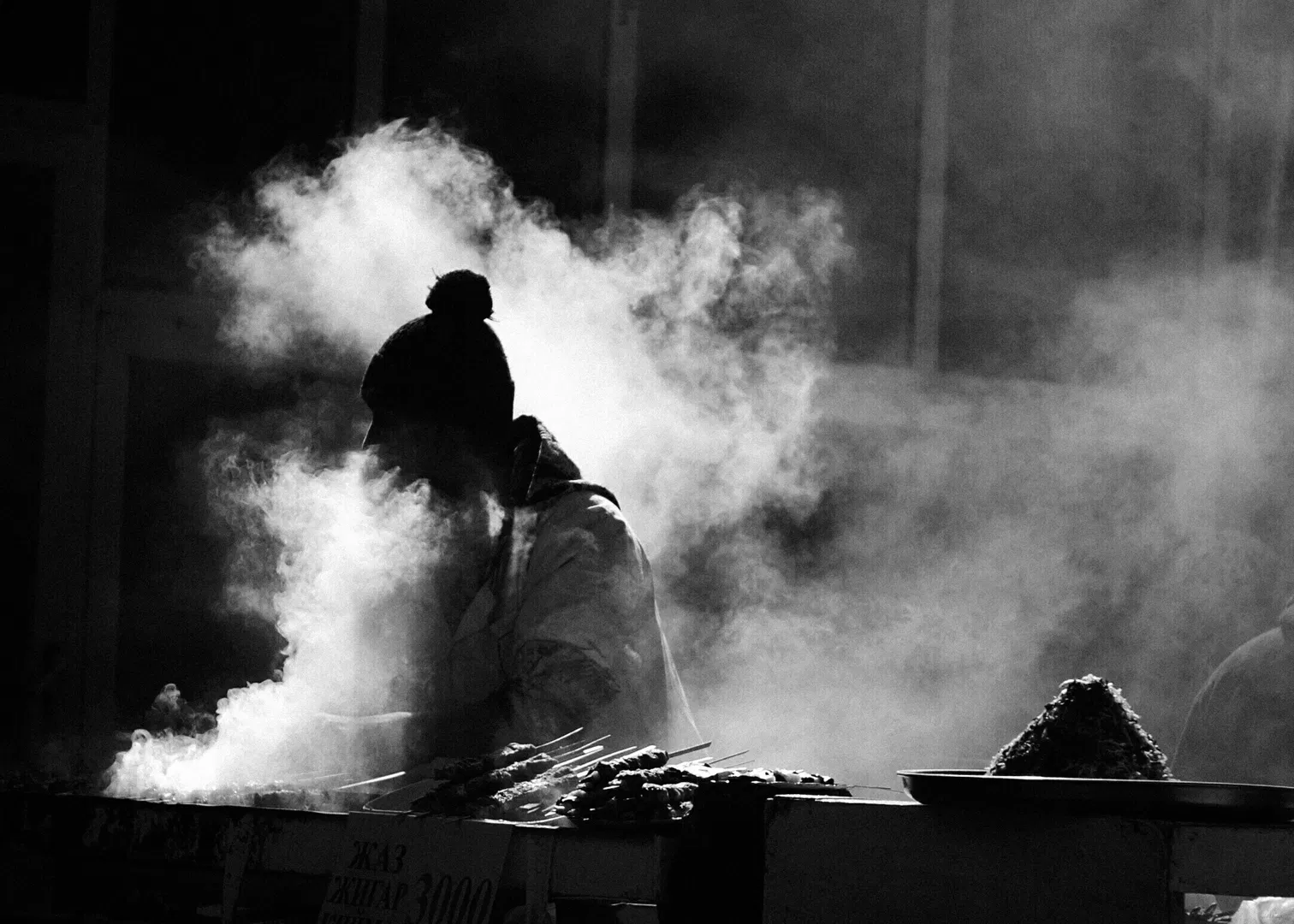
Invest in order to earn later
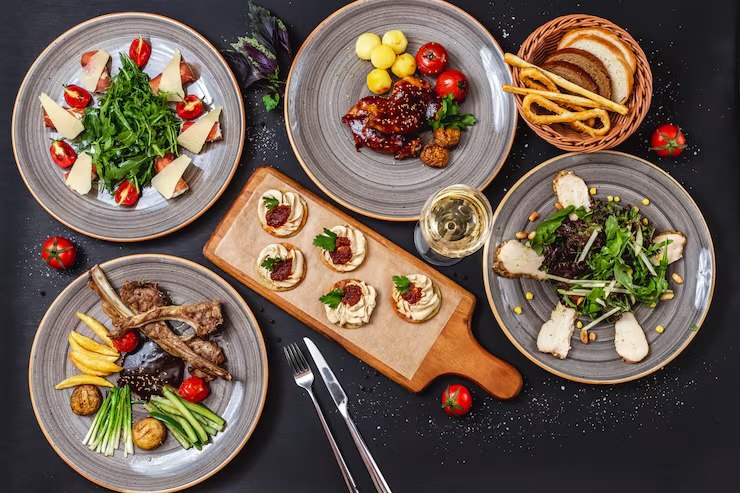
The Chamber of Entrepreneurs of the Republic of Kazakhstan does not merely explain to entrepreneurs which norms they must comply with. We work to make these norms themselves clearer, more systematic and more logical.
Today, of the roughly 20 enquiries we receive daily, about 18 are related to inspections. That is why we created the Restaurateur's Folder, in which we have compiled 1,427 norms and requirements, 13 critical points and 7 state bodies.
But here I always tell entrepreneurs plainly: ignorance of the law is no excuse. Our task is to help an entrepreneur learn their obligations and rights, and our GR task is to secure regulation that is reasonable and does not contradict itself.
First you need to invest in order to fit out, and only then to profit from it.
And this principle works not only inside the restaurant itself. Every new gastronomic street is also an order for local production: facade cladding, paving slabs and kerb stones, small architectural forms, lighting, landscaping. There is as yet no official industry statistics on the number of new jobs in this segment specifically, but the scale of the cycle is already visible in capital investment: in 2024 alone, 110.9 billion tenge was directed into Almaty's tourism infrastructure, and this sum is growing along with the tourist flow, while across the country as a whole more than 2.2 trillion tenge has been invested in tourism over two years. The logic is simple: first, improvement works and orders for construction and manufacturing enterprises; then, new jobs in public catering itself, new taxes and a new urban economy.
Read about Asian products in Russian cuisine in our article:
Tatar buckwheat and Arabic rice. Pavel Syutkin — about Asian products of Russian cuisineThe history of national cuisines rarely aligns with state borders—especially at the crossroads of Europe and Asia. Buckwheat and rice, familiar and seemingly native to Russian gastronomy, actually entered it from the East and became part of the mythological narrative. Especially for HD magazine, historian and author of the book “The True History of Soviet Cuisine” Pavel Syutkin explains how Asian products became the basis of the daily diet in medieval Russia—and why discussing the traditional inevitably leads to a dialogue of cultures.mag.humodoc.com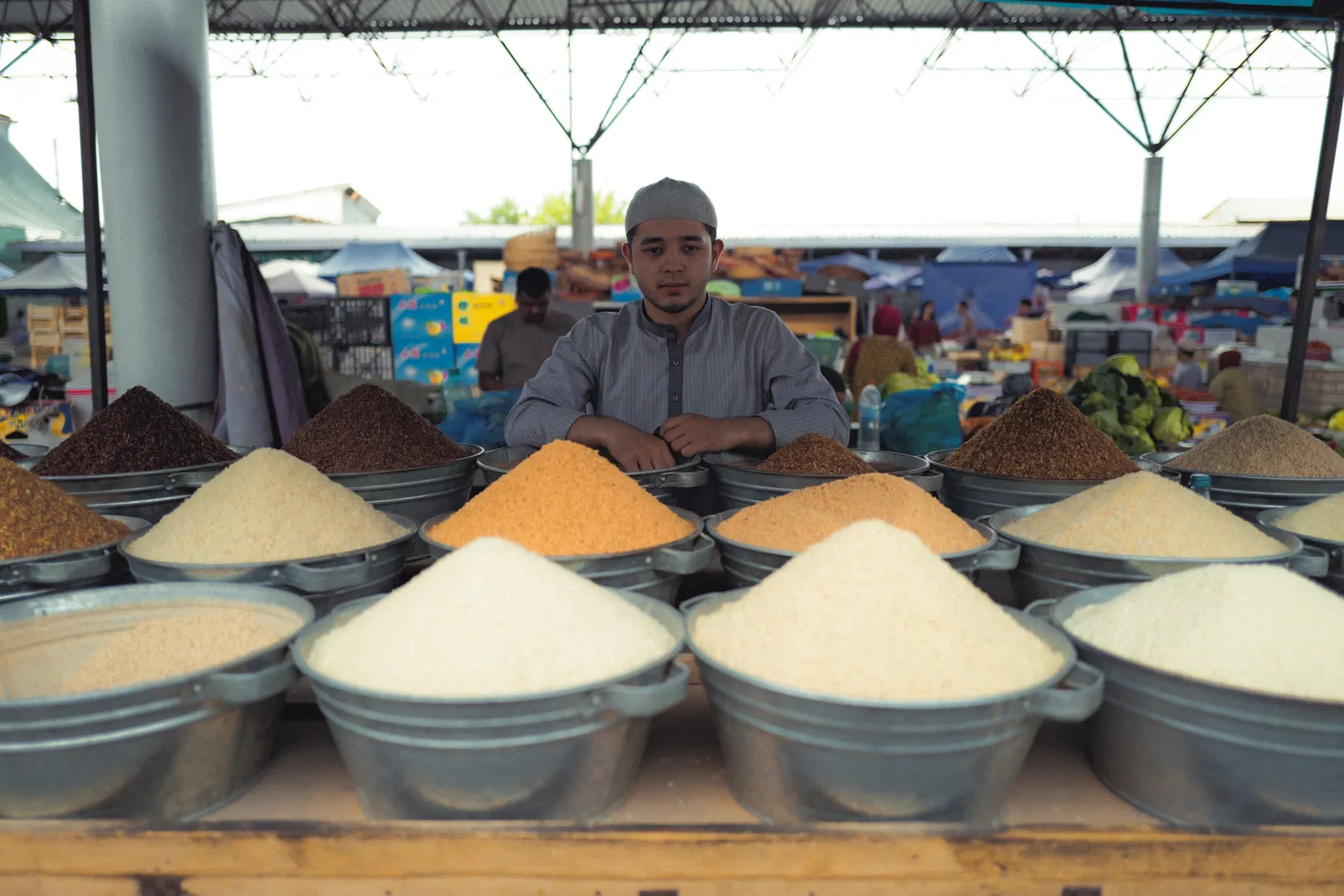
Almaty or Astana
As for Almaty and Astana, I would not say that one city is better than the other. Almaty formed its gastronomic culture and its own urban routes far earlier. But Astana has an enormous advantage: entirely new models of urban environment can be created here. And this is embedded even at the level of the capital's General Plan. In it, public catering is treated as a separate infrastructure indicator: 111,682 seats for the baseline period, 147,074 for 2030 and 159,454 for the longer term — that is, the city itself is telling us: public catering is part of the infrastructure.
What my gastronomic street would be like
If I were given the opportunity to create one exemplary gastronomic street, I would make it in Astana.
I would create a mix: coffee shops, bakeries, fast food, fast casual, bistros, family cafés, restaurants and national cuisine. I would certainly create a fully pedestrian environment, greenery, lighting, terraces and pockets of short-term parking, and turn this street into a landmark that people travel to specifically.
And with modern Kazakh — not neo-Kazakh — cuisine. We already have strong people developing this direction: Mukhtar Toybazarov in Kamenogorsk, Artyom Kantsev in Astana, Artyom Marchenko, Aigerim Musagadzhinova, Askar Baitasov and others.
And it is very important to understand here: Kazakh national cuisine is not only beshbarmak and kuyrdak. It is above all the cuisine of a specific region. Somewhere it is mushrooms (saffron milk caps), somewhere fish (peled), in the west — fishbarmak and completely different gastronomic traditions. This is precisely the enormous field for the development of modern Kazakh gastronomy.
And I very much hope that it is precisely such principles that will be implemented in new projects in Astana, including in Sfera Park. Because we need not just another street with restaurants. We need a street that will become part of Astana's identity and a place where people from all over Kazakhstan and from other countries will come.
Then the restaurant will cease to be just a business. It will become part of the economy, culture, urban environment and tourist appeal of the city.
Read also
GastronomyHow the Coffeehouse Became Tashkent's New Chaikhana
Cyrill Grishin
 Gastronomy
Uzbek Plov, Soviet Style: How Central Asian Cuisine Conquered the USSR
Павел Сюткин
Gastronomy"On the plate are manti, and in it two parts of lamb": How Russia penetrated Asia, and Asian cuisine penetrated Russia
Павел Сюткин
Newsletter
A letter from the HD editors
Once a week, we send the best stories, events, and cultural discoveries from Central Asia.