The final show offers a chance to see the results of the work, and it looks impressive: in just a few minutes the audience gets to know the collections, and the photographer captures successful shots. But we, together with the organizers and the UNESCO office, understand that one show is not enough. What matters is that participants can apply the skills they have gained and continue working on their projects after the program ends.
A show captures the state of a project on a specific day. The professional result emerges later: whether the designer keeps working, whether they develop their own brand, whether the quality of their products changes, whether they pursue further education, whether they can pass on knowledge to others.
Over seven years of working with young designers, I have observed different trajectories. Some continued to develop their own label. Some moved into another creative profession and became sought-after fashion photographers. Some participants continued their education in Italy. One graduate later began teaching a fashion course herself.
For me, these results matter more than the number of items created during the course. A good educational program leaves a person with tools they use after finishing work with a mentor.
Quality Starts from the InsideHow Markhamat Umarova helps young designers take an idea from a sketch to a finished product — through materials, mock‑ups, and technology.mag.humodoc.com
The program must listen to the group
I prepare the program in advance, but I do not treat it as a closed structure. The content must match the real level of the participants and their professional goals.
In one of the recent groups, a preliminary survey showed that participants needed different knowledge. Some wanted to understand brand building: setting goals, positioning, pricing and promotion. Others needed to understand how a collection is built, what stages the work consists of and where an idea begins to turn into a product.
I had already prepared the branding block. The materials on building a collection had to be added during the course itself. For me, this is a working principle. A teacher is responsible not for preserving a pre-written plan, but for making sure the group gets the knowledge it needs.
At the end, we hold a practical defense. Participants split into groups: some develop a brand, others assemble a collection concept. Then we review the solutions, look at construction, materials, quality of execution and the logic of the product.
This work quickly reveals the difference between talking about an idea and understanding the process. A designer has to make decisions, explain them and see the consequences. At this point, the educational program becomes a professional test.
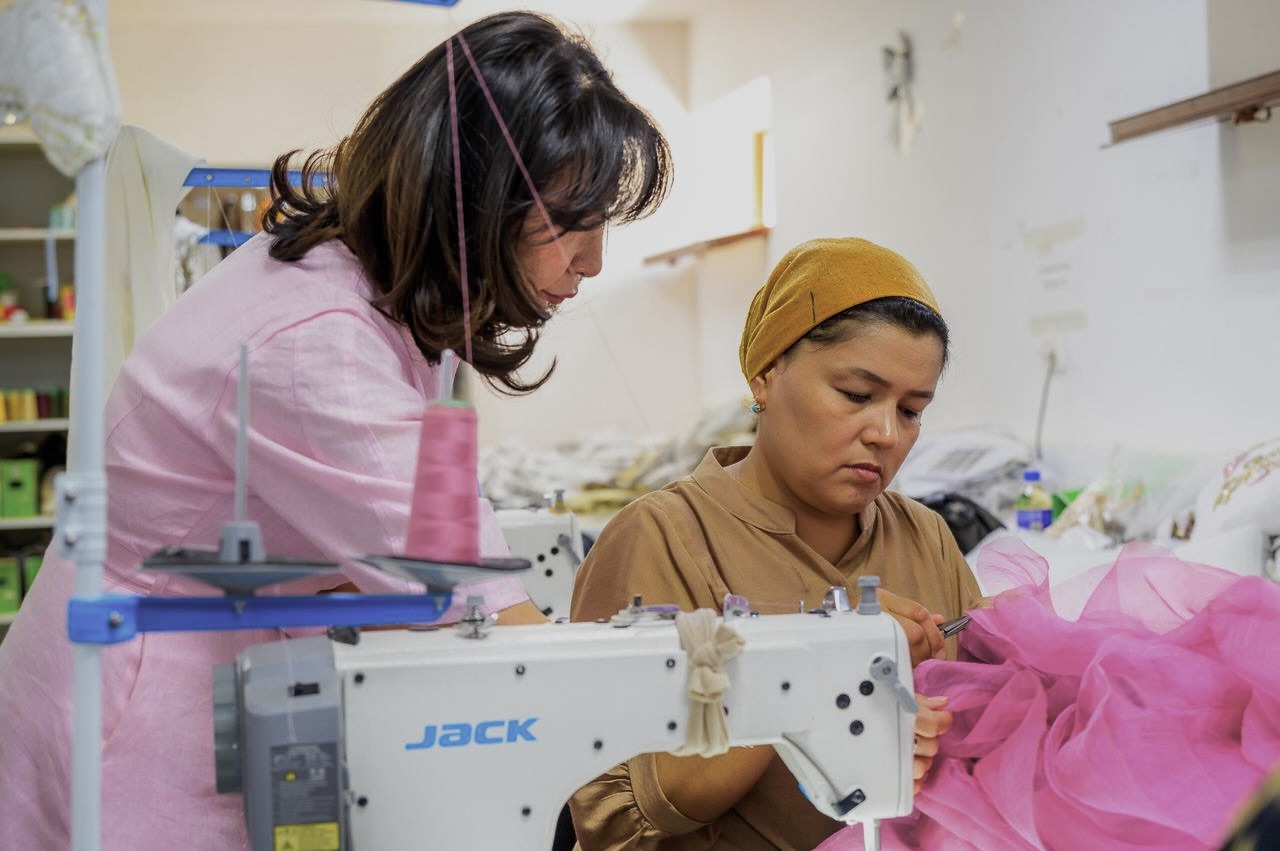 Photo: Khusniddin Ato
An author's language is tested by independence
A designer's own language emerges before a full collection. It shows in the choice of form, the attitude to material, the ability to work with limitations and the willingness to make independent decisions.
One participant stood out to me for the precision of her inner direction. Already during classes it was clear that she heard her own idea and could develop it without constantly relying on the teacher.
As a result, she created two different collections. The first was connected to Korean culture, volume and symmetry. The second addressed melting glaciers and water conservation. The themes barely overlapped, yet both works retained her authorial intonation.
For a mentor, this is one of the most important results. A participant uses the tools they have received on their own material and forms a system of decisions that belongs to them.
Such development happens at the moment of professional testing of an idea. It goes through form, material, construction and the need to explain who the product is created for.
Tradition is Not DecorationWhy work with Uzbek textiles starts with knowing the technology and ends with the marketmag.humodoc.com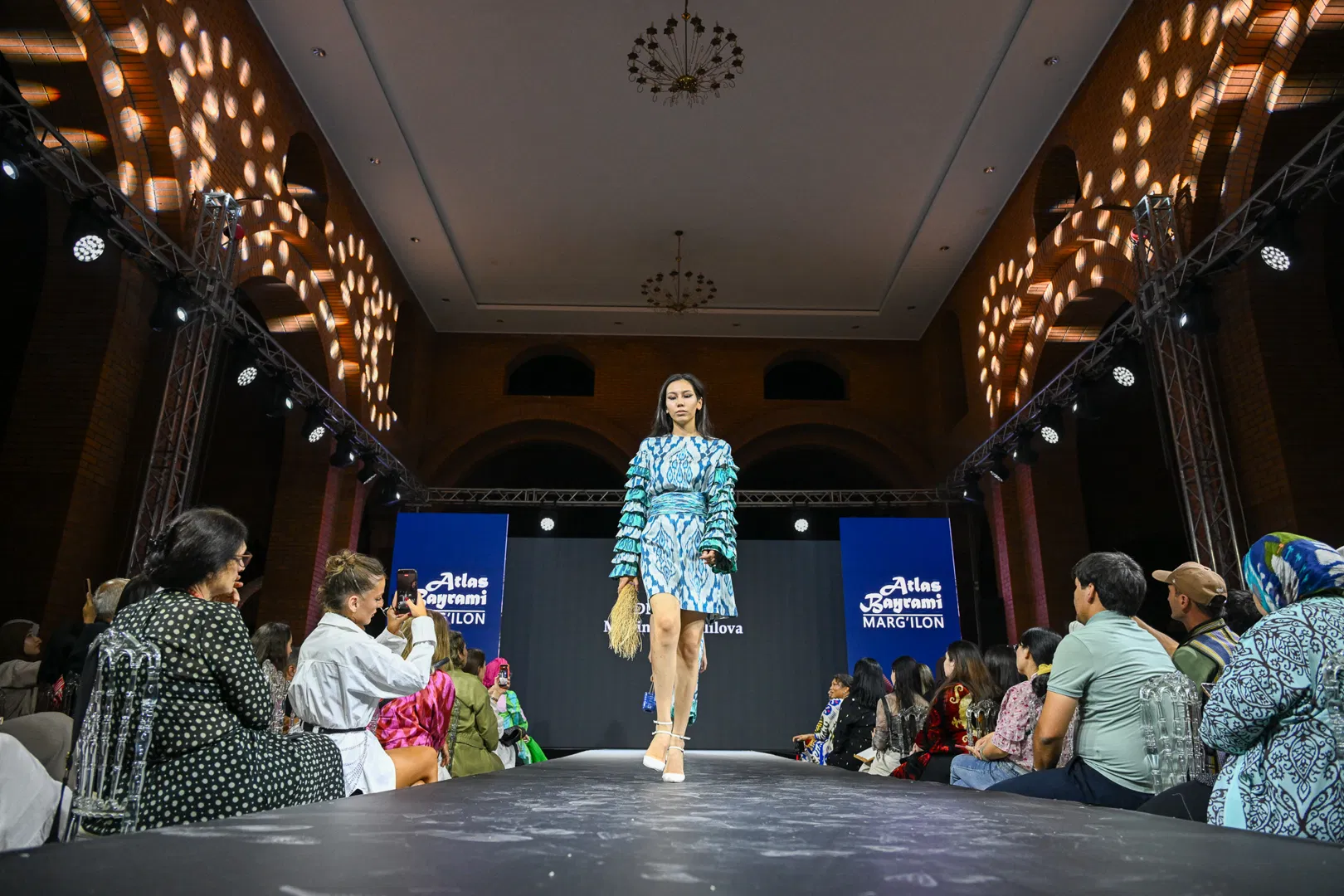
A teacher increases the scale
This year, teachers from professional colleges were included in the mentoring project as course listeners. Sometimes it takes more time than working with students. A person already has professional experience and often assumes that the main topics are familiar to them.
During classes, areas that previously received less attention come to light: quality of finishing, properties of materials, ways to involve students in practical work, analysis of mistakes and the connection between theory and the finished item.
We discuss not only design but the teaching methodology itself. A student must understand the principle that led to a mistake and learn to apply that knowledge in the next work. Simply correcting a specific item is not enough for this.
Some teachers said during the training that they would use the new materials with their students. This concerned technological techniques, approaches to finishing and ways of structuring a practical assignment.
The full effect of such work becomes visible later. One trained designer changes their own practice. A teacher who has mastered new methods can change the work of an entire group of future designers. Through them, the educational program continues and begins to scale.
 Photo: Khusniddin Ato
After the course, a professional route is needed
A gap remains between education and the market. We can teach a designer to work with material, build a collection, explain the principles of branding and show finished items at a festival. After that, a young author often finds themselves alone again in the face of real working conditions.
They need to define their audience, find a buyer, test the price, organize production and understand which items are in demand. These tasks require separate support.
That is why educational programs should be linked to platforms that work with local designers and can bring a created product to sale. After mentoring, an author needs the next stage: a professional presentation, feedback from a buyer, price testing, the opportunity to repeat a successful model.
The market quickly reveals weak points. It shows how precisely the audience is defined, whether the price is clear, whether the item is convenient to use, whether the buyer is ready to pay for handmade work and whether the designer can repeat production without losing quality.
For authors who use traditional textiles, this transition has particular significance. The high cost of handmade fabrics must be justified by the quality of the product, its origin and professional execution. Sustained demand supports the work of artisans and preserves techniques.
I evaluate an educational program by what remains after the mentor leaves. If a participant continues to work, creates a brand, goes on to study further, changes direction within the creative industry or begins teaching themselves, the course gave them more than one collection.
The next stage in the development of such programs is a clear connection between education, production and the market. Then a show becomes the first public point on a professional path, rather than the final event of a course.
This material was prepared in partnership with the UNESCO Office in Uzbekistan



Newsletter
A letter from the HD editors
Once a week, we send the best stories, events, and cultural discoveries from Central Asia.