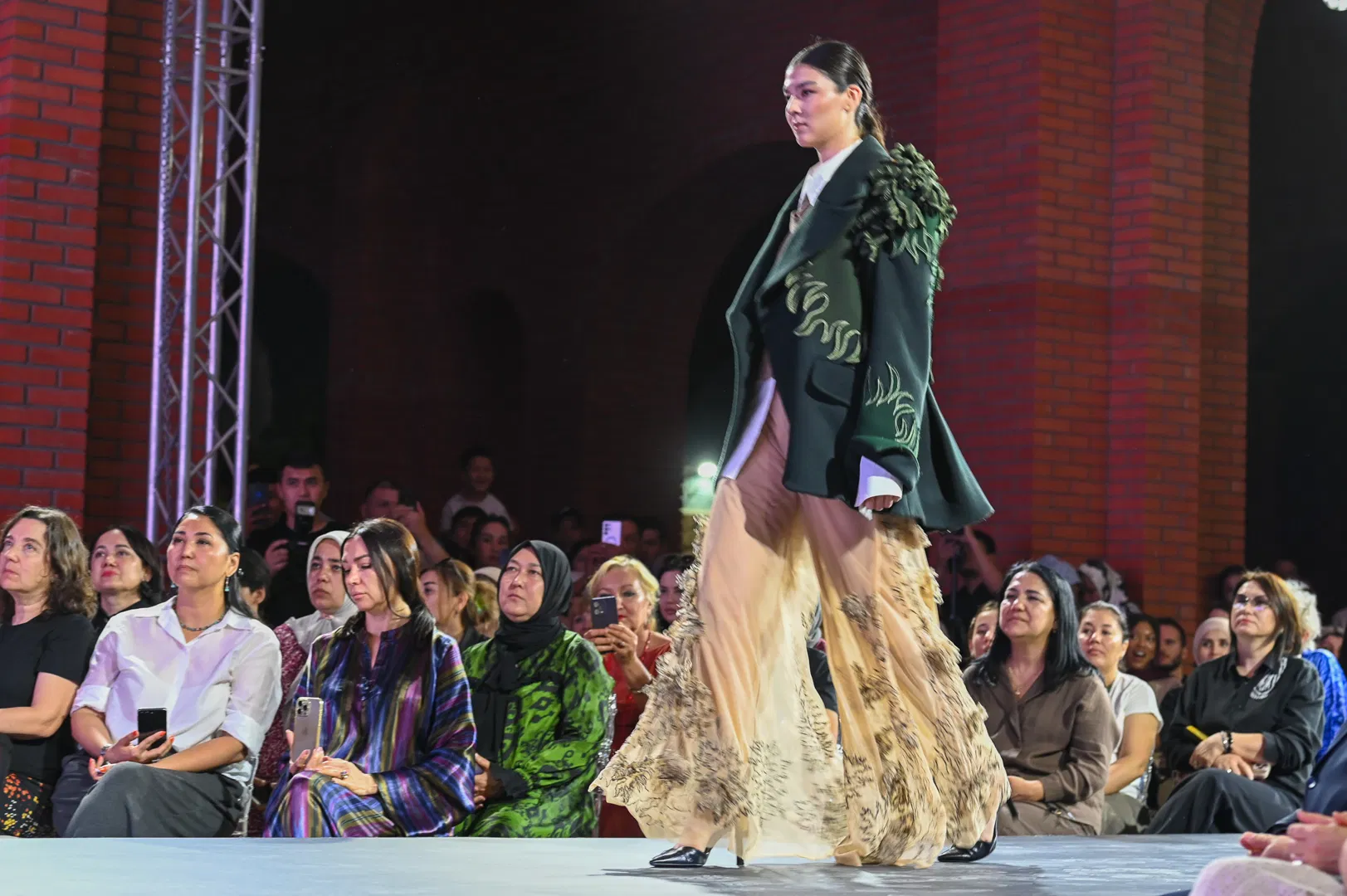
How Markhamat Umarova helps young designers take an idea from a sketch to a finished product — through materials, mock‑ups, and technology.
In design there is a part of the work that almost never makes it into the frame. It lives inside the garment: in the fit, the finishing of seams, the choice of lining, the precision with which fabric meets construction. That is where an idea meets reality and where the professional level of the author shows.
Over seven years of working with young designers on UNESCO projects I have watched the composition of participants in educational programmes change. In the early years, people came who had to be taught the basics of the profession. Now the selection is more precise: many already create collections, take part in shows, and develop their own labels. They have motivation, experience and a point of view of their own.
Experience and a collection, however, do not automatically produce an understanding of material. A designer can speak confidently about a brand concept and show work in another country while struggling with materials science, technology, construction and quality control. These gaps appear the moment a sketch has to withstand an encounter with fabric.
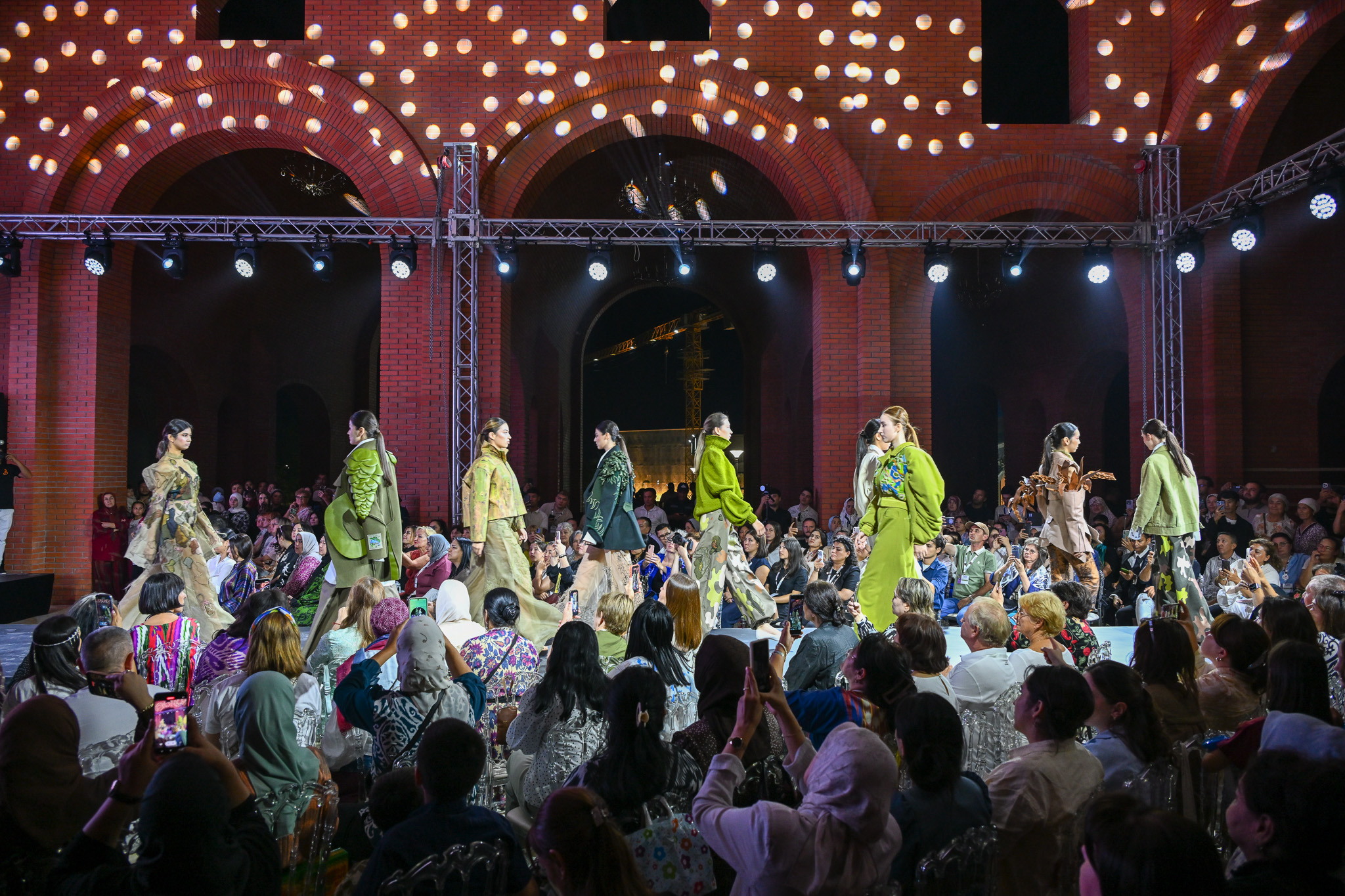 Photo: Khusniddin Ato
That is why I include quality control in the programme of every training. For some participants it becomes the most unexpected exercise. Designers who have already taken their collections onto the runway come up after the review and say they have seen their own mistakes for the first time. They begin to look differently at fit, the inside of a garment, the joining of materials and whether the fabric suits the construction.
Quality is formed at every stage of the work. At the end it can be checked, but it can no longer be attached to a finished collection as a separate property.
Material sets the limits of the solution
Material must first be understood, then its surface and function changed. This matters especially when working with natural satin, silk, hand-made textiles and fabrics with a pronounced texture. Every cloth has its own density, drape, direction, load limit and way of behaving in a construction. A sketch that ignores these properties remains an image.
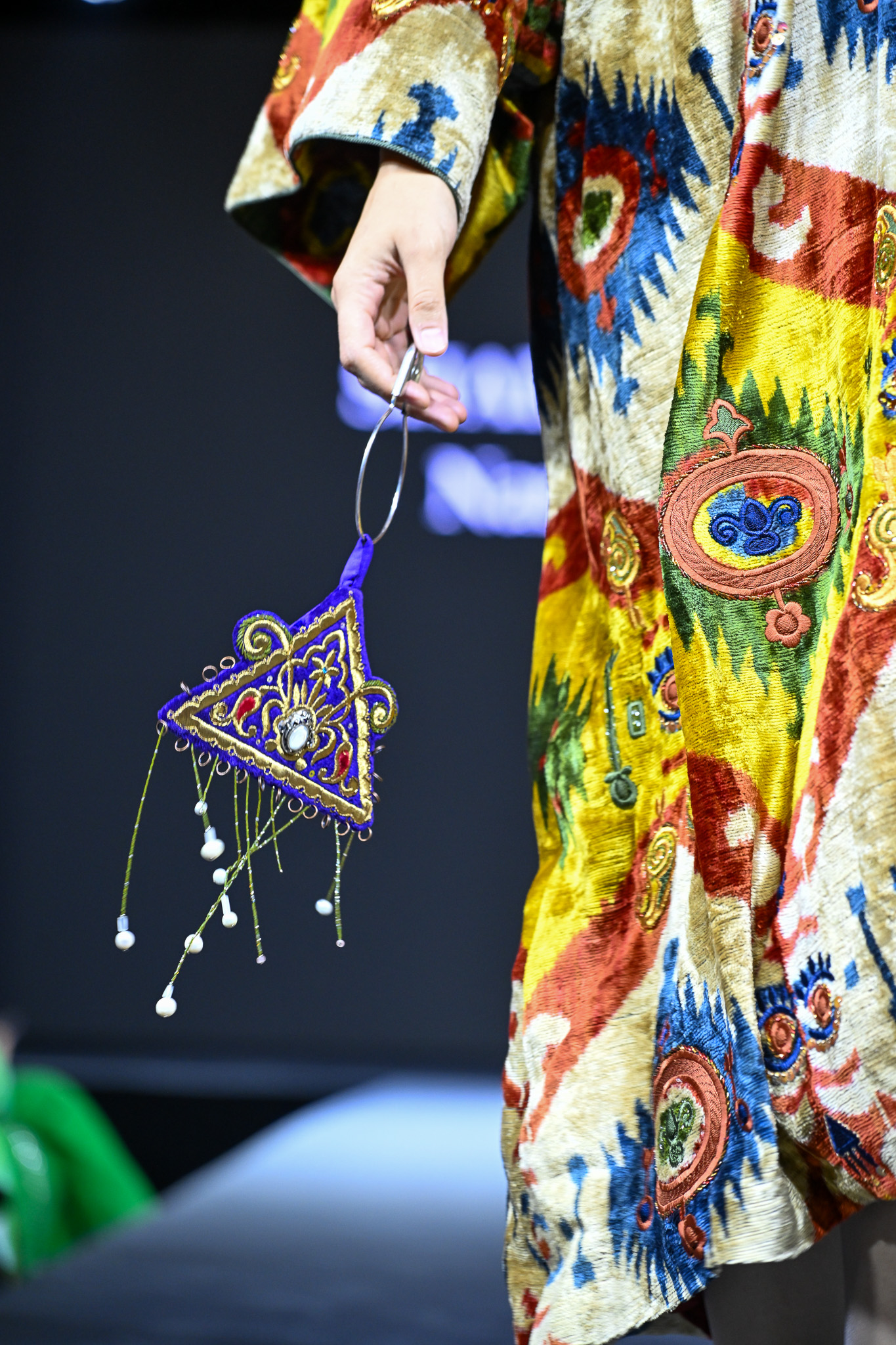 Photo: Khusniddin Ato
A telling example is lining. I regularly see garments made from good natural satin or hand-made silk with the cheapest synthetic material inside. Outwardly the piece may look striking, but inside the logic of the garment breaks down. A valuable fabric is joined to a solution that lowers the quality of the whole work. Lining determines comfort, service life, how the shape behaves and how the garment feels when worn.
The same precision is required in finishing seams, choosing embroidery and working with ornament. Handwork alone does not make a piece convincing. It must be tied to the construction, the material and the purpose of the garment. When a decorative technique exists separately from the form, it overloads the surface and hides the original fabric.
Margilan. How atlas is becoming more than just textileThe first day of the Atlas Bayrami festival showed how history, education, design and the local economy come together in traditional textiles.mag.humodoc.com
The mock-up shows the truth
A sketch gives direction, but a designer's professional language emerges in working with material. Almost any form can be drawn on paper. The next stage shows whether the author can build it, hold the proportions, organise volume and carry the solution through to a wearable result.
A good example is the Mukarnas collection. Its author began with sketches that were hard to imagine as a strong collection. We selected directions to develop and moved on to work on toile fabric. Volume, drape and architectural form emerged on the mock-up. Weak initial drawings gained strength through cut, construction and consistent testing of the solution.
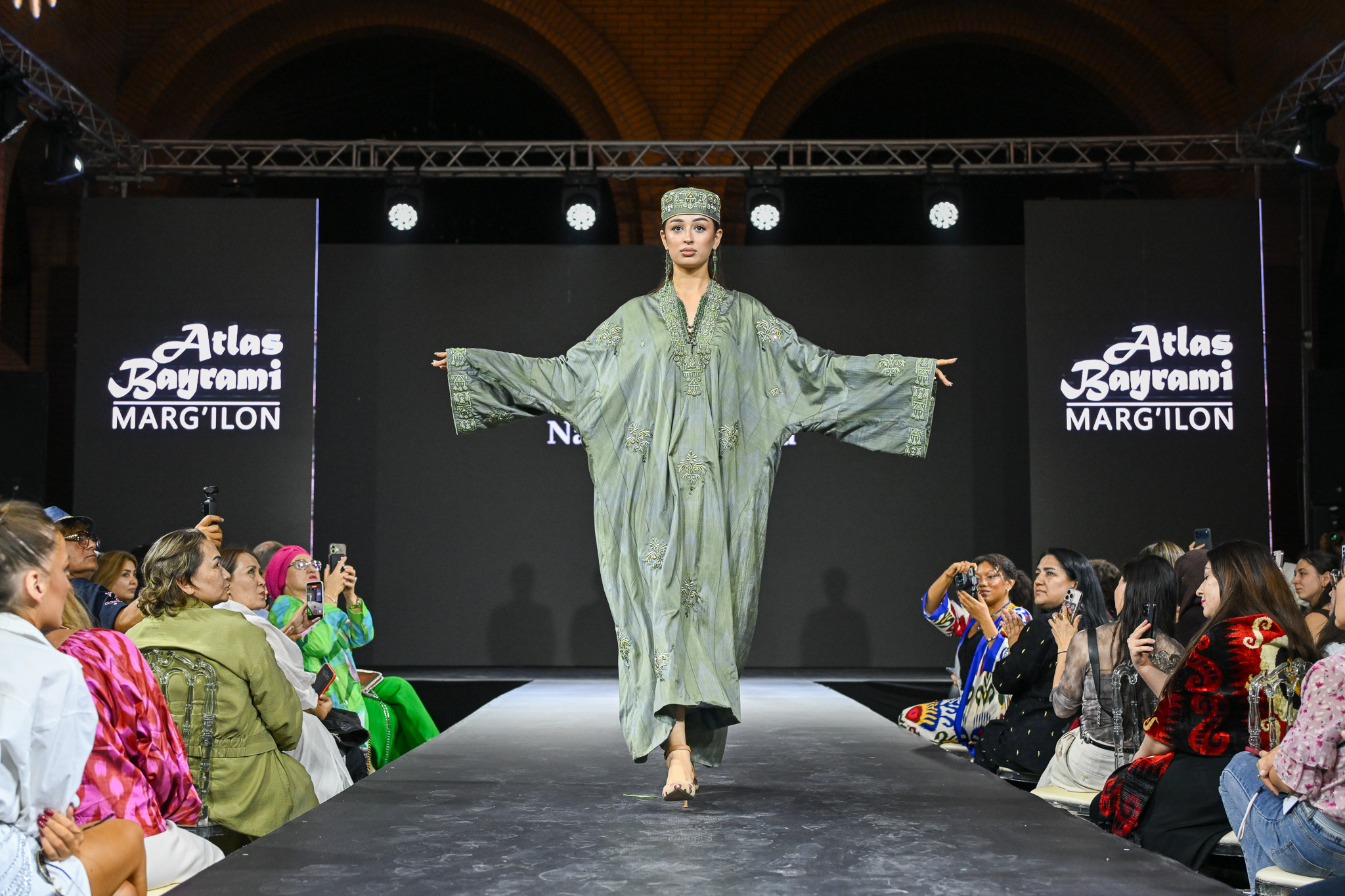 Photo: Khusniddin Ato
For another participant, professional language showed through the ability to work with different themes. In one collection she turned to Korean culture, volume and symmetry; in another, to melting glaciers and water conservation. The themes were different, yet both works showed an author who can translate her own interests into a visual system.
The mentor's task in such a situation is to fine-tune the eye. It matters to help a designer see the strengths of their own approach, test an idea in material and gain the tools to realise it. A single aesthetic is not needed for this process. What is needed is professional discipline that allows each author to carry their own solution through.
From training to product
In the educational programmes on innovative design that I worked on in spring and summer 2026, the sequence of sessions was built around one transition: from concept to product. We began with the history of costume and traditional textiles, colour, silhouette and style, then discussed the target audience, the client profile and brand DNA. After that, participants assembled visual references, approved sketches, calculated materials and formulated a technical brief.
In the following stages the work became concrete. In Samarkand we examined traditional Uzbek costume of the late XIX and early XX centuries, the history of textiles and the possibilities for their contemporary use. In Tashkent, participants worked with mock-ups, fit and construction, visited museums and exhibitions, as well as the studio and showroom of Madina Kasymbayeva. They chose fabrics provided by the Hunarmand association and prepared documentation for production. In the practicum, participants calculated fabric and hardware consumption, made technological decisions, and worked with interlining, pleats and cutting.
This order matters for the designer. It shows where an idea needs refinement, where material dictates an adjustment, and where a solution is already ready for production. In a conversation about a brand, positioning, price, promotion and the buyer are added to this. A collection exists in the real economy and must withstand its demands.
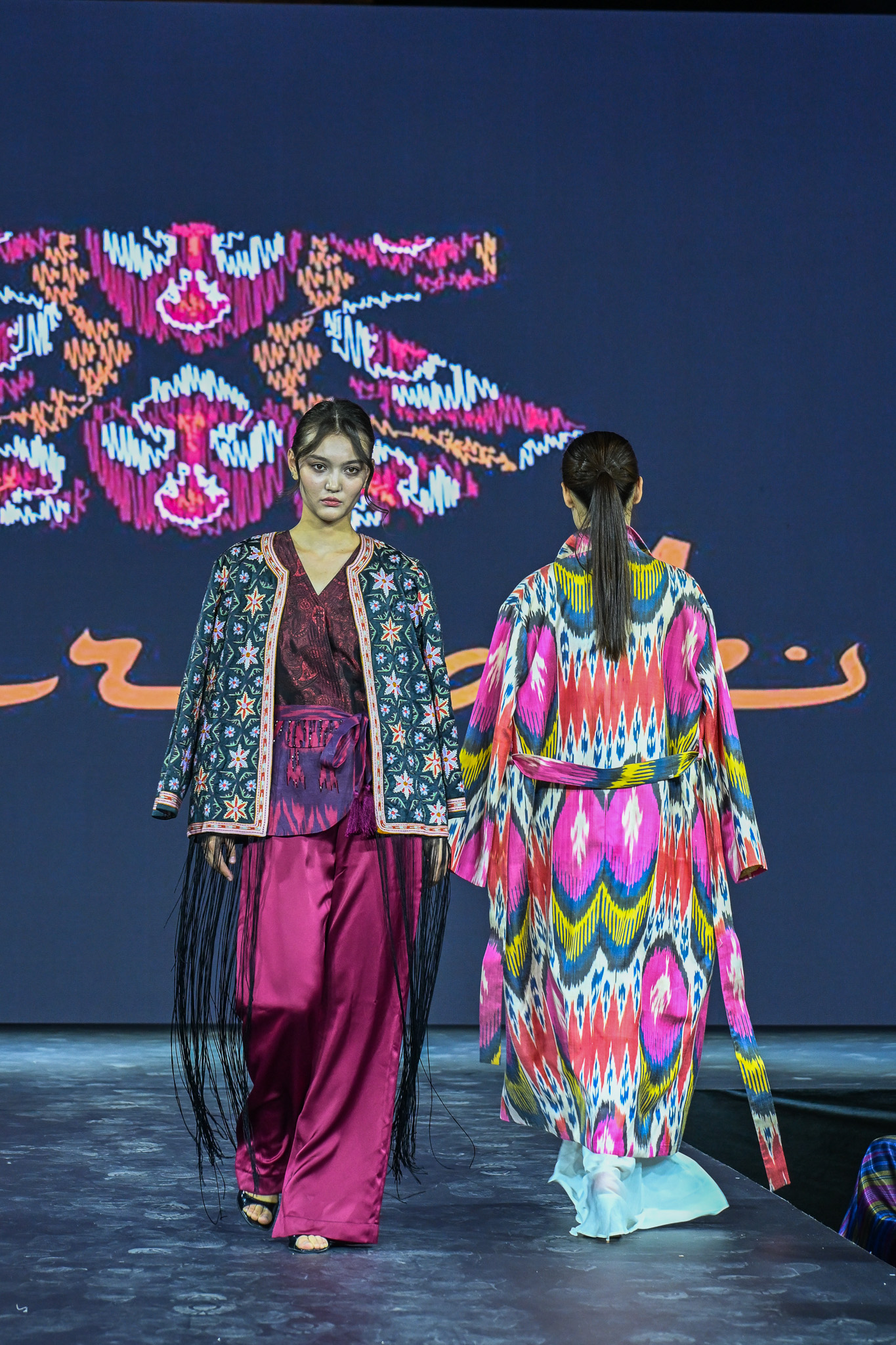 Photo: Khusniddin Ato
The market here acts as an extension of professional work. The buyer reads quality through surface, fit, the inside finish and durability, even if they do not put it into words. The designer shapes this experience with every garment. They determine whether handwoven fabric will be perceived as an expensive ornament or as a material with history, technology and justified value.
Tradition is Not DecorationWhy work with Uzbek textiles starts with knowing the technology and ends with the marketmag.humodoc.com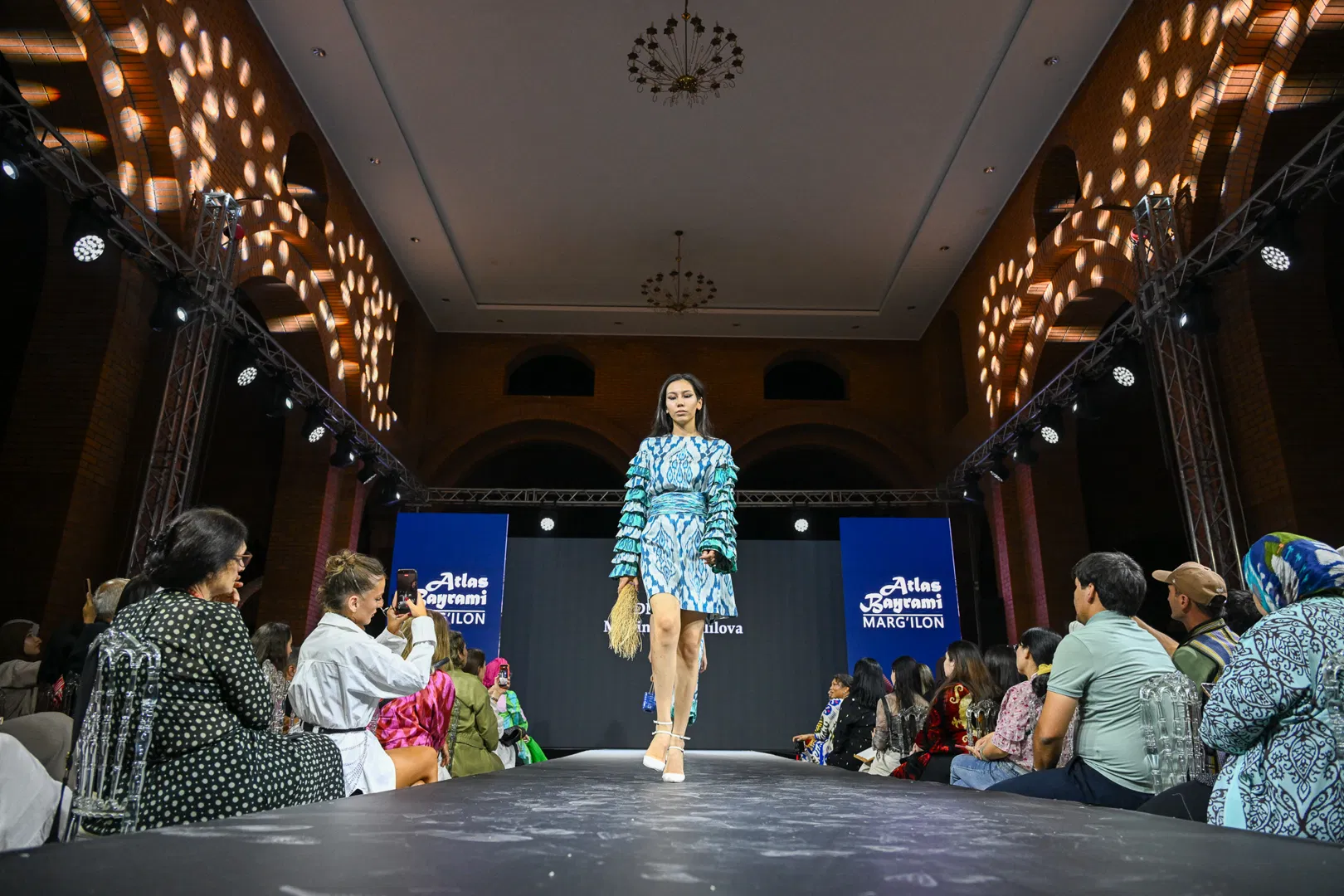
My task as a mentor is to bring the participant to the point where an original idea becomes a precise construction, a garment and an offer for a specific person. The sketch in this process remains the beginning. A professional result begins where the designer takes responsibility for every decision, including what the viewer will see only after the item is in their hands.
This material was prepared in partnership with the UNESCO Office in Uzbekistan

Read also
 Fashion and Style
Liliya Palyunina: When Talent Becomes a Brand
Alfiya Kalmaganbetova
 Fashion and Style
Modesty is the new black. What is modest fashion and why is it gaining popularity?
Alesya Kichko
 Fashion and Style
From "ethnic chic" to boutiques in yurts: how Central Asia is becoming an object of cultural appropriation
Feride Mahsetova
Newsletter
A letter from the HD editors
Once a week, we send the best stories, events, and cultural discoveries from Central Asia.