Traditions
A Sip of Water Among the Silk Dunes: How Hadi Pourjahan Bridges Ancient Traditions and Contemporary Art
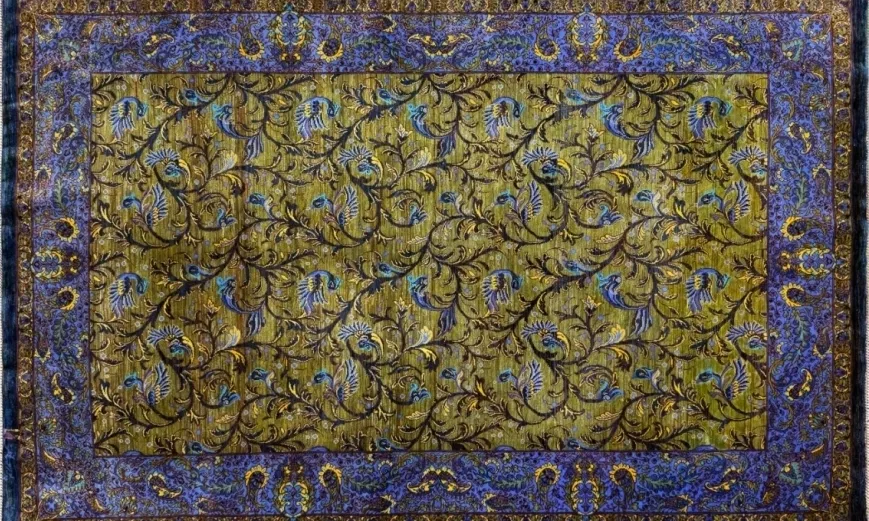
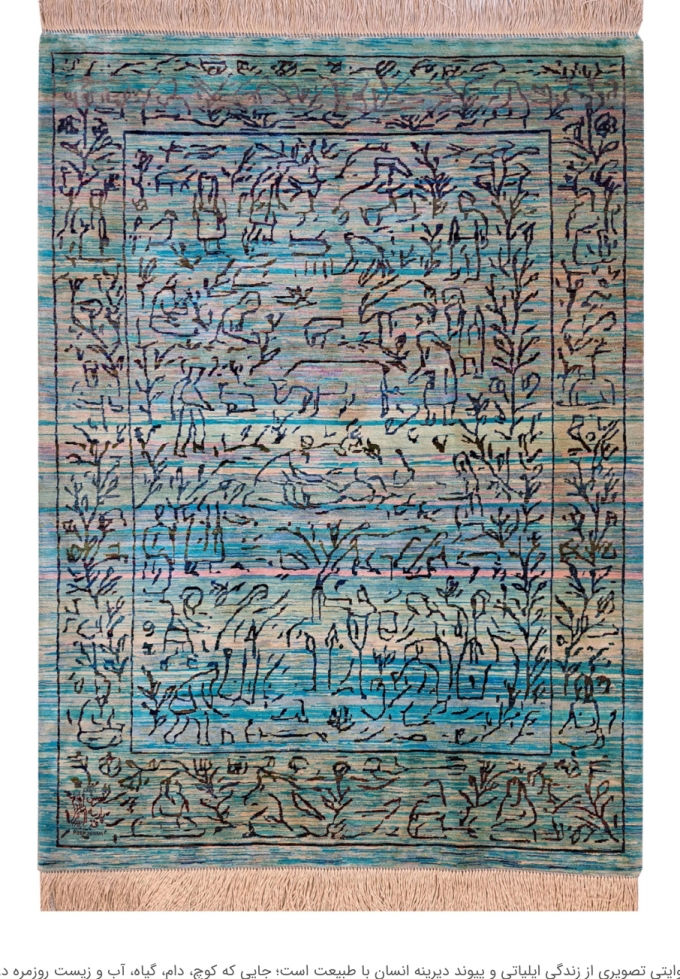
Handmade Iranian carpets have long been synonymous with frozen history. It seems there is no room for experiment in their patterns, and the craftsmen themselves merely repeat canons created hundreds of years ago. However, designer and artist Hadi Pourjahan breaks the stereotypes. His new monumental work “The Desert Carpet”, created in the Parseh Qom workshop, is not simply an interior item but a manifesto. A manifesto about the fragility of nature, the power of cultural memory and why the silk thread still speaks to us in the same language.
The Philosophy of Contrasts: Abangan and the Cry of Blue Silk
— Cultural magazines often write about carpets as craft, but your work looks like pure conceptual art. In “Carpet of the Desert”, the sandy, muted tones literally explode with flashes of deep blue. Why is this visual conflict so dramatic for Iran?
The entire history of Iran is a history of struggle and friendship with drought. On our land, water has never been merely a natural resource or a line on a utility bill. Water — is a sacred element. It is a synonym for hope, the continuity of generations and, in the most literal sense, survival.
In the Iranian calendar there is an ancient pre-Islamic festival — Abangan, the day of honouring water. It was this that became the starting point for my work. The desert in the carpet is a metaphor for Iran itself: harsh, scorched by the sun, yet concealing incredible life within. The blue silk threads that cut through the canvas are not merely a colour accent. They are a sip of water amid endless sands. They are a manifesto of fragility: should the water disappear, and the desert will swallow everything.
— But why a carpet? Today artists more often choose installations, digital art or performances.
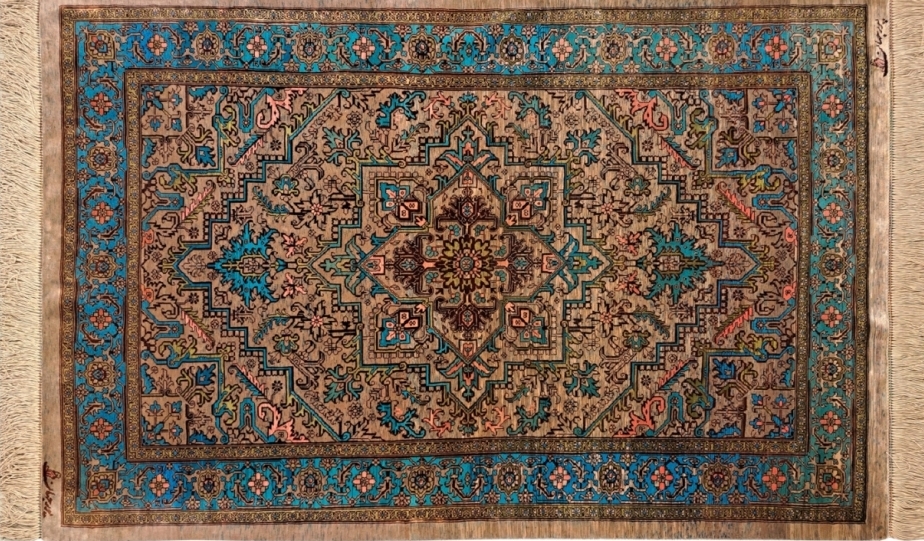
Because the carpet is the DNA of our culture. The genetic memory of Iranians is woven into its knots. For me, a handmade carpet long ago ceased to be a decorative furnishing that is thrown underfoot or hung on a wall for cosiness. It is a medium. It is a canvas through which I can transmit ultra-modern ideas without breaking the connection with my roots. When a viewer touches the carpet, they touch eternity, but they read the meanings of today.
Тұскиіз: The Art of Keeping Memories AliveNatalya Krivets is a textile artist, art historian and collector of vintage Central Asian textiles. Her main interest lies in Kazakh tұskiiz - embroidered wall panels that combine artistic craftsmanship, family history and the memory of generations. While building her collection, Natalya studies not only the composition and embroidery technique but also the lives of the women who created these works.mag.humodoc.com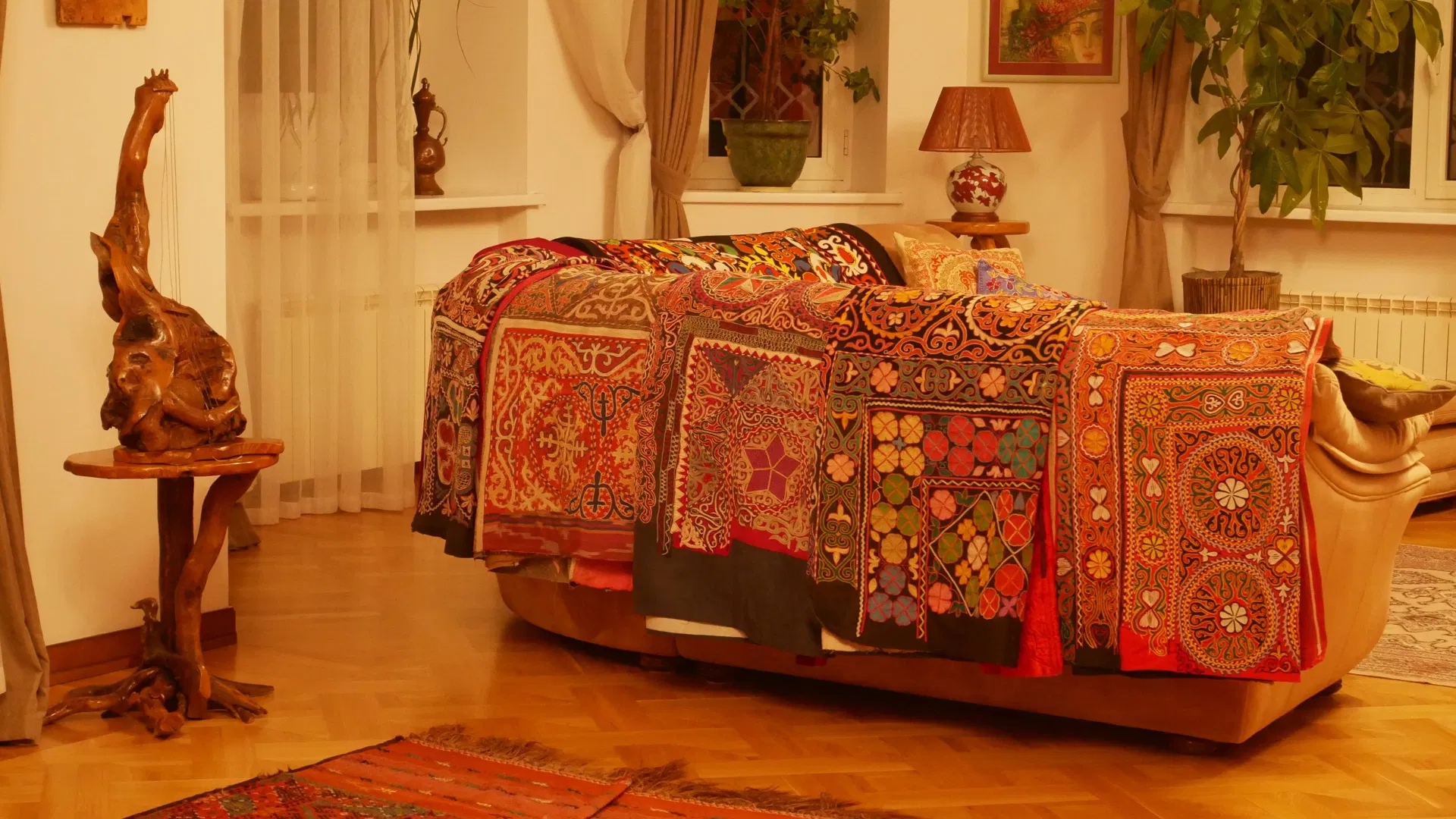
The Magic of “Abrash”: How to Outwit the Canons and Make Silk Breathe
— Designers often complain that the conservatism of weavers and the technical limitations of production “kill” their bold sketches. What compromises did you have to make in the process of creating “Carpet of the Desert”?
None at all. I categorically do not perceive carpet weaving as a barrier of technical constraints. My secret is that I am not simply a “sketch draughtsman” who hands a piece of paper to a factory and waits for the finished product. For many years I worked as a professional restorer of ancient, priceless silk carpets from Qom. I know their anatomy down to the last knot. I know how the thread behaves, how it stretches, how it absorbs pigment.
At Parseh Qom I control everything: from the first charcoal sketch to the dyeing of the yarn. And this is where the most interesting part begins. Industrial carpets have accustomed us to perfect, dead, uniform colour. I use the ancient “abrash” technique — deliberate, controlled imperfection in the dyeing of threads. In my carpets the colour vibrates, flows smoothly from one shade to another, breathes. Perfect smoothness is actually boring, it is the domain of robots. My carpet changes depending on how a ray of sun falls on it, just like real sand dunes.
Who Stands Behind the Knot: On Authorship and Invisible Hands
— Each such carpet is hundreds of thousands, and sometimes millions, of knots tied by hand. How do the ego of the artist-demiurge and the heavy, monotonous labour of a particular weaver coexist in your work?
“Carpet of the Desert” exists in a single copy. I fundamentally do not make copies or repetitions, every piece must have its own soul. The buyer receives not just a carpet, but a passport of the work of art - a certificate of authenticity that records its entire history.
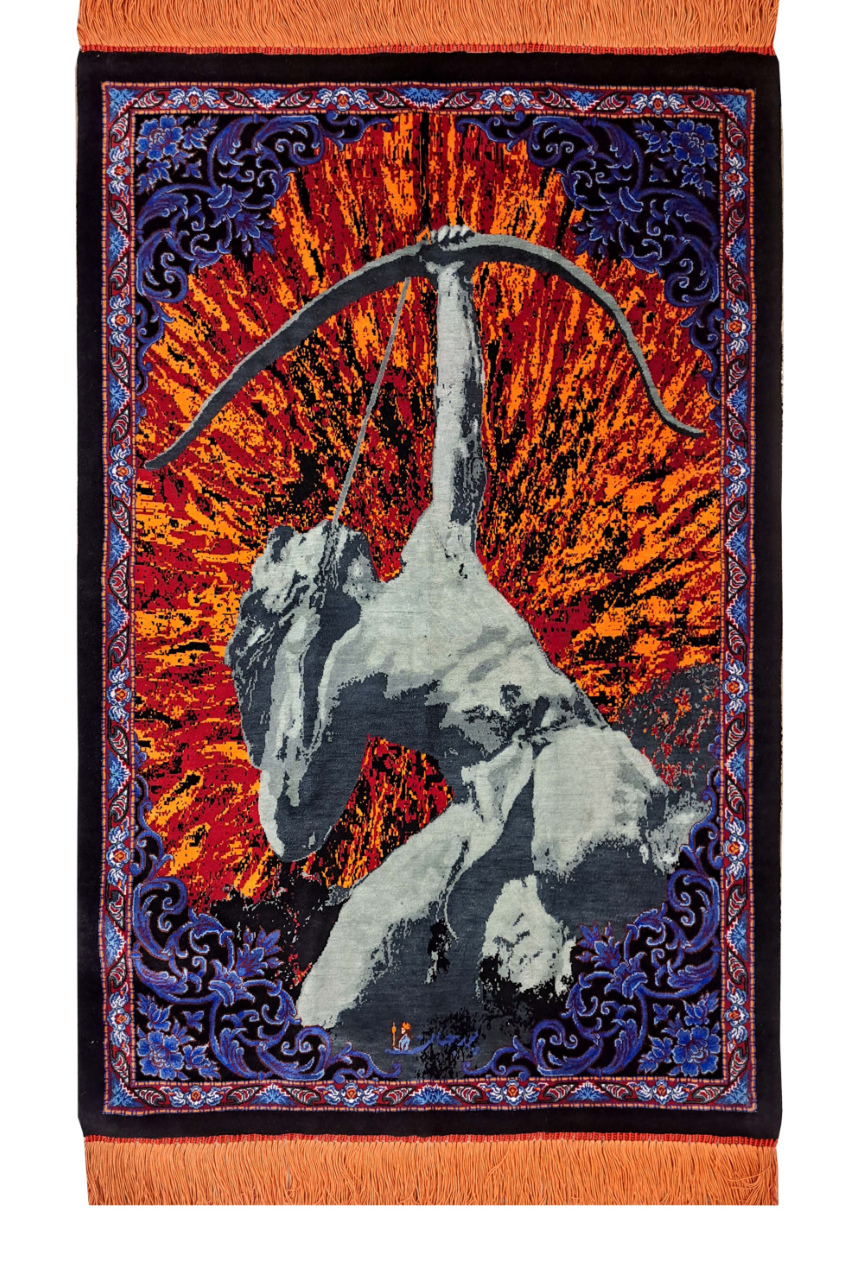
As for the weavers... You have touched on a very important subject. A carpet — is a synergy. Yes, I devise the concept, set the colour and the philosophy. The masters who day after day tie the threads on the loom are also a most important part of this story. Information about the people who wove “Carpet of the Desert” is forever inscribed in its technical documents. We have no right to erase the names of those who literally materialised the artist's thought. Without them the concept would have remained a drawing in my notebook. That is how we “coexist”.
Art Without an Interpreter: How the West Sees the East
— Your work is saturated with purely Iranian motifs — the Abangan festival, the philosophy of the desert, the canons of Qom. Does a foreign viewer understand this message, or does it remain for them simply a “beautiful oriental carpet”?
Good art is obliged to speak a universal visual language even before the viewer reads the wall text in a gallery. The texture of silk, the depth of colour, the magic of composition — all of this strikes a person's emotions anywhere in the world.
Of course, when I give a brief historical background, tell about the cult of water and Abangan, the viewer's “second eye” opens, and they begin to see the context. Some perceive in it an ecological manifesto against global warming, others a personal drama of loneliness.
And in this, perhaps, lies the main power of art: it does not dictate ready-made meanings, but invites everyone to find their own. The silk thread becomes a link between the work and the viewer, allowing each to see something personal in it.
— Hadi, one last question. If your “Carpet of the Desert” could speak to a person who will see it in two hundred years, what main thought should it convey to them?
It would say: “Take care of water. And never forget who you are.” You know, civilisations are born and perish, cities are buried by sand, but as long as a person is capable of turning coarse thread into poetry, this world has a chance. I want this carpet, two centuries from now, to remind people that true beauty is born at the intersection of the greatest patience and absolute devotion to one's craft. And that even in the driest desert one can always find one's own sip of living water.
Newsletter
A letter from the HD editors
Once a week, we send the best stories, events, and cultural discoveries from Central Asia.