Property is usually assessed by price per square metre, location, architecture and build quality. But once the keys have been handed over, a building goes on demanding money for decades: for heating and cooling, water, maintenance of engineering systems, repairs and replacement of equipment.
Energy efficiency, operating costs and a new assessment of property quality
The scale of these costs is largely determined long before occupancy — at the concept and design stage. A building's form, glazing, materials, ventilation and engineering systems all influence how many resources the property will consume and how much its operation will cost.
Construction cost therefore reveals only part of a building's true value.
We have previously examined in detail the economics of green construction and how sustainability affects property value:
When Ecology Becomes EconomicsOn 2 September, as part of Aquatherm Almaty, HD magazine held a panel discussion bringing together representatives of the public sector, architects, urban planners, engineers, and experts in green construction and finance. The central question was how to turn individual environmental solutions into a system with measurable impact, clear costs and a viable financing mechanism.mag.humodoc.com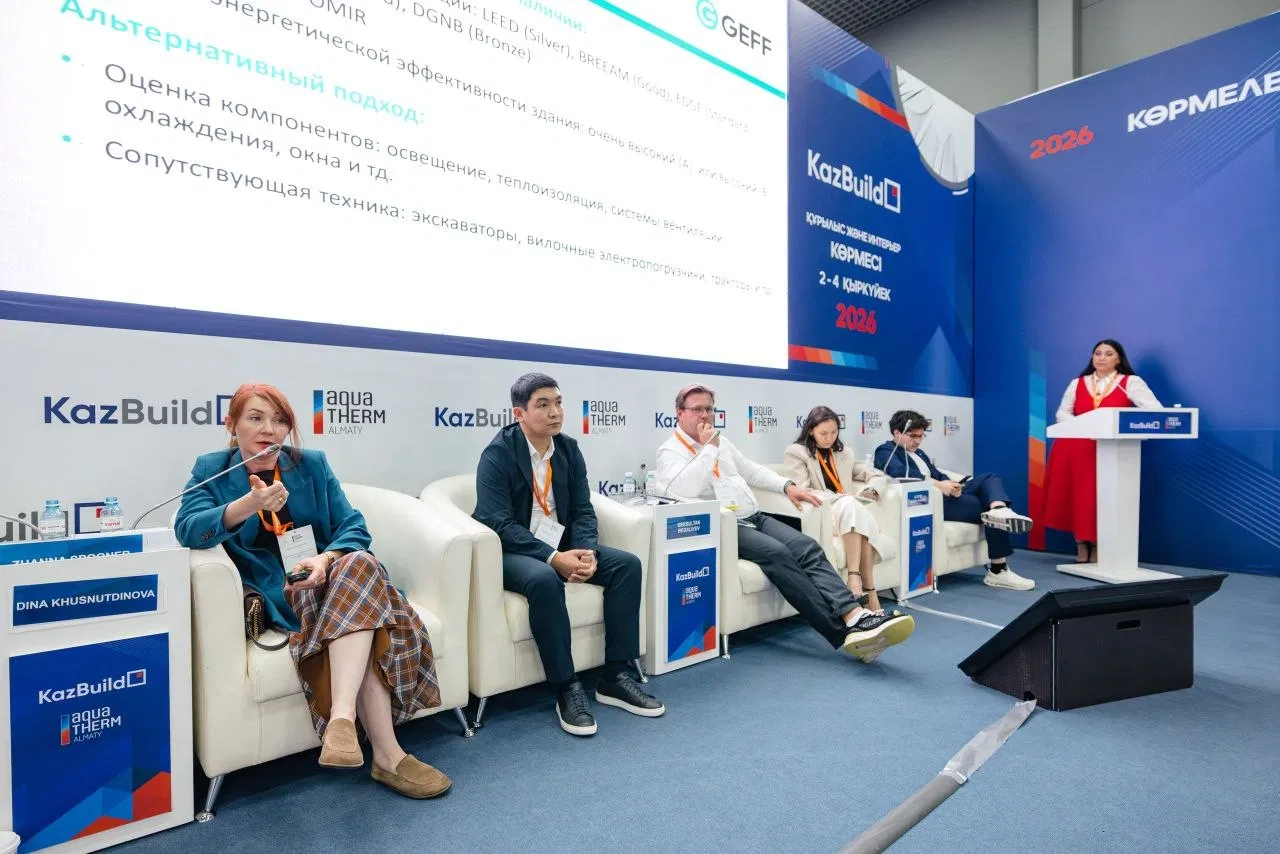
Buildings in the country's energy balance
The scale becomes clearer at the national level. According to the Bureau of National Statistics, in 2025 the housing sector was Kazakhstan's largest final energy consumption sector, accounting for 34.4%, or around 16.7 million tonnes of oil equivalent. A year earlier its share stood at 36.5%.
 Source: Unplush.com
Kazakhstan's housing stock reached 434.3 million m² by the end of 2024. Every new residential complex, office, shopping centre, school or hospital adds yet another consumer of energy and water to this stock for decades to come.
A significant share of its future consumption is determined before construction even begins.
Efficiency begins with design
Siting and building form, the building envelope, glazing area, lighting, ventilation and engineering systems are all determined in the early stages of a project. Once construction is complete, many of these decisions are difficult and costly to change.
Energy efficiency is therefore embedded alongside architecture and engineering. Already at the concept stage, the design team can assess how many resources the building will require in operation and which solutions will reduce that consumption.
Future costs thus become one of the parameters of design.
A building has both a construction cost and an operating cost
In professional practice, the capital expenditure on creating a property is called CAPEX. This is the cost of designing and constructing a building up to its commissioning.
Then OPEX begins — operating expenditure: heating, cooling, ventilation, lighting, water, maintenance of engineering systems, repairs and equipment replacement.
The difference is fundamental. A decision that saves money during construction can increase the owner's costs over the following twenty or thirty years.
Project appraisal therefore takes life-cycle cost into account. It combines the initial investment with future costs of maintaining the property and allows design solutions to be compared by their long-term outcome.
 Source: Unplush.com
First the calculation, then the building's actual performance
Before construction begins, energy modelling makes it possible to calculate a building's projected consumption and to test how architectural and engineering solutions affect it.
But a calculation does not yet mean that the completed building will perform exactly as predicted.
Once engineering systems are installed, they must be tested and adjusted under real conditions. In professional practice this process is called commissioning. The operation of heating, ventilation, air conditioning, lighting and building management systems is verified.
After the property is commissioned, it becomes possible to compare the calculation with reality. Actual indicators, or KPIs, are used for this: how much energy the building consumes per square metre per year, how much water it uses, what the operational emissions are and whether the engineering systems perform in line with the design model.
This reveals just how efficient the building has proved in operation.
 Source: Unplush.com
What a 'green building' actually means
A green façade, a planted roof or solar panels do not in themselves determine a building's sustainability.
What counts is how the whole system performs: energy and water consumption, materials, air quality and indoor climate, waste management, adaptation to climate change, and people's health and comfort.
At city level, the same systemic principle underpins blue-green infrastructure, where buildings, water, greenery and utility networks are viewed as parts of a single system.
We have written about this before:
Green Building: An Investment in TomorrowGreen building is gradually ceasing to be a purely environmental concern. For the property market, the question today is framed differently: how much does it cost to make a building sustainable, and how much can it save or earn over years of operation? Energy efficiency, operating costs, comfort, market appeal, access to financing and the preservation of asset value are all becoming part of a single economic model.mag.humodoc.com
The sequence of decisions also matters. First, architecture and engineering must reduce the building's energy demand. Only then can consumption management be optimised and renewable sources connected where technically and economically justified.
As a result, the building consumes fewer resources, and its engineering systems and energy consumption can be managed. This is how the city's very own energy hub takes shape — a concept increasingly invoked in relation to contemporary real estate.
Energy efficiency affects property quality
Two buildings of identical floor area in comparable locations. One requires more energy, water, maintenance and engineering system costs every year. The other consumes fewer resources, and its operational indicators match the design calculations.
For an owner, these are already two properties of differing quality.
What matters are future operating costs, the condition of engineering systems, resource consumption and the scale of modernisation the building will require in ten or twenty years.
The life cycle of a property must therefore be taken into account before construction: build efficiency indicators into the concept, calculate future costs, carry out energy modelling, verify engineering systems after installation and then compare design indicators with actual operational data.
 Source: Unplush.com
How to verify a building's performance
Environmental certification makes it possible to verify an object's declared characteristics against an established system of indicators.
Kazakhstan uses the national OMIR green building assessment system. Energy accounts for 35% of its assessment. Materials, water, health, ecology, transport and infrastructure, building management and other parameters are also taken into account.
In this case, certification records the measurable characteristics of a building and makes it possible to assess sustainability across a set of indicators.
The life cycle begins after handover
For a construction project, commissioning the facility marks the completion of a major stage. For the building itself, decades of operation still lie ahead.
Every month, design decisions are reflected in energy and water consumption, utility and operating costs, and the performance of equipment. Over time, repairs and modernisation are added to these.
Therefore, the price per square metre at purchase provides only part of the information about the quality of a property. The second part is how much that square metre will demand over the course of its life.
Energy efficiency directly affects this cost and is becoming one of the indicators of property quality.
The material was prepared in partnership with Aquatherm



Newsletter
A letter from the HD editors
Once a week, we send the best stories, events, and cultural discoveries from Central Asia.