In 2025, 11 issues of sustainable development bonds were placed on the Kazakhstan Stock Exchange (KASE): eight social and three green. Their announced volume amounted to 520.2 billion tenge, while the actually placed volume was 404.8 billion. This is an important distinction for those assessing financing of environmental projects: the overall figure includes not only green issues. In 2025, 11 sustainable bond issues were placed on the Kazakhstan Stock Exchange (KASE): eight social bond issues and three green bond issues. Their announced total value was KZT 520.2 billion, while the amount actually placed was KZT 404.8 billion. This distinction matters when assessing the financing of environmental projects, as the overall figure includes social bonds as well as green ones.
At an HD magazine panel discussion held as part of Aquatherm Almaty in September, Aldiyar Kamalkhanov presented the range of instruments available through KASE. These help clarify the commitments issuers undertake and how the funds raised are intended to be used.
Green bonds are designed to finance environmental projects in areas such as water management, energy efficiency, renewable energy and waste recycling. Social bonds support projects related to housing, healthcare, education and basic infrastructure. Sustainability bonds combine environmental and social objectives.
Another instrument is the sustainability-linked bond. Under this arrangement, the issuer commits to meeting specific targets, such as reducing emissions or resource consumption. This differs from a bond whose proceeds are earmarked in advance for particular projects.
A Project Does Not Begin With a FaçadeYou can build a beautiful house and lose money. You can buy expensive land and underestimate its potential. You can increase the number of square metres while simultaneously reducing their value. In development, success is not determined by how impressive a building looks, but by how precisely the entire journey from land to buyer has been mapped out. Lyubov Safronova proposes taking that journey in 20 steps, from site analysis and identifying a market niche to architecture, branding and sales.mag.humodoc.com
The Issuer’s Commitments
A bond is a debt instrument: the issuer raises money from investors and undertakes to repay it under the agreed terms. An environmental label does not replace an assessment of the issuer’s creditworthiness, nor does it guarantee that the stated impact will be achieved.
Before issuing bonds, the issuer sets out how the proceeds will be used, how eligible projects will be selected and which indicators will be used to assess the results. An independent organisation reviews the framework. After the bonds have been placed, the issuer discloses information on how the funds have been used and whether the stated commitments have been met.
Green Project: What Turns Technology Into an InvestmentGreen financing can work with a wide range of investments, from an energy-efficient building and a solar installation to manufacturing equipment and construction machinery. The general principle is the same: the resource effect of the project must be measurable, and the technology’s characteristics must meet the established requirements.mag.humodoc.com
KASE sets the rules for admission to trading and disclosure of information. An independent assessor checks whether a bond issue complies with the stated principles, while investors assess the financial risks separately. Information on bond issues and reporting is available on the KASE Sustainable Finance Data Platform.
For construction and urban development projects, this process has practical implications. If a bond is issued to finance a water-saving system, stormwater management or energy-efficiency upgrades, the relevant expenditure must be identified in the bond documentation, and the results must be measurable from the outset. The project’s name alone does not determine the type of financing.
Investment with a Measurable EffectRainwater stations, water-saving systems and green roofs can reduce costs and protect property. But to attract capital, you first need to determine who benefits from this effect and how the investment will be returned.mag.humodoc.com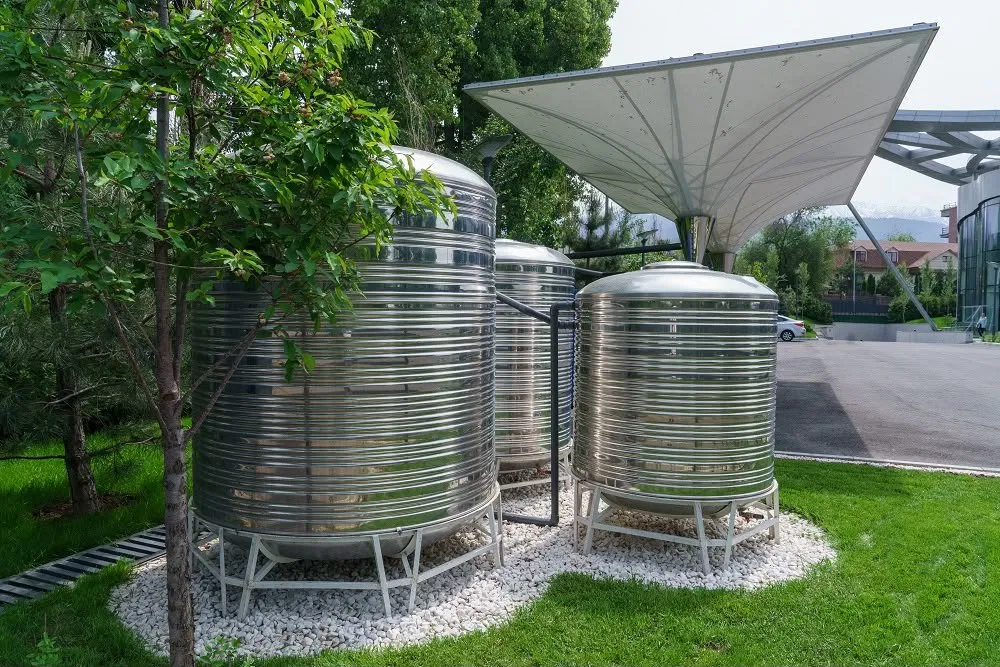
Opportunities for Small Businesses
The presentation also introduced KASE SME Qadam Bonds, a programme launched in January 2026 to help small and medium-sized businesses in the real economy raise capital. It provides a general route to market-based financing rather than a dedicated green bond scheme.
After Construction: What a Building Really CostsProperty is usually assessed by its price per square metre, location, architecture and construction quality. But once the keys have been handed over, a building continues to cost money for decades: heating and cooling, water, maintenance of building systems, repairs and equipment replacement of equipment.mag.humodoc.com
For a company developing solutions for water conservation, energy efficiency or waste recycling, the programme may offer one way to raise capital. However, the environmental classification of a bond issue must be justified separately, while the company’s ability to service its debt must be demonstrated through a financial model.
For cities and property developers, the overall size of the sustainable bond market is not the only consideration. It is also essential to understand who is issuing the bonds, which projects receive the funding and what evidence supports the claimed results.
Produced in partnership with Aquatherm



Newsletter
A letter from the HD editors
Once a week, we send the best stories, events, and cultural discoveries from Central Asia.