Guide
Tashkent Between the Lines: A Guide to the Capital's Literary Power Places
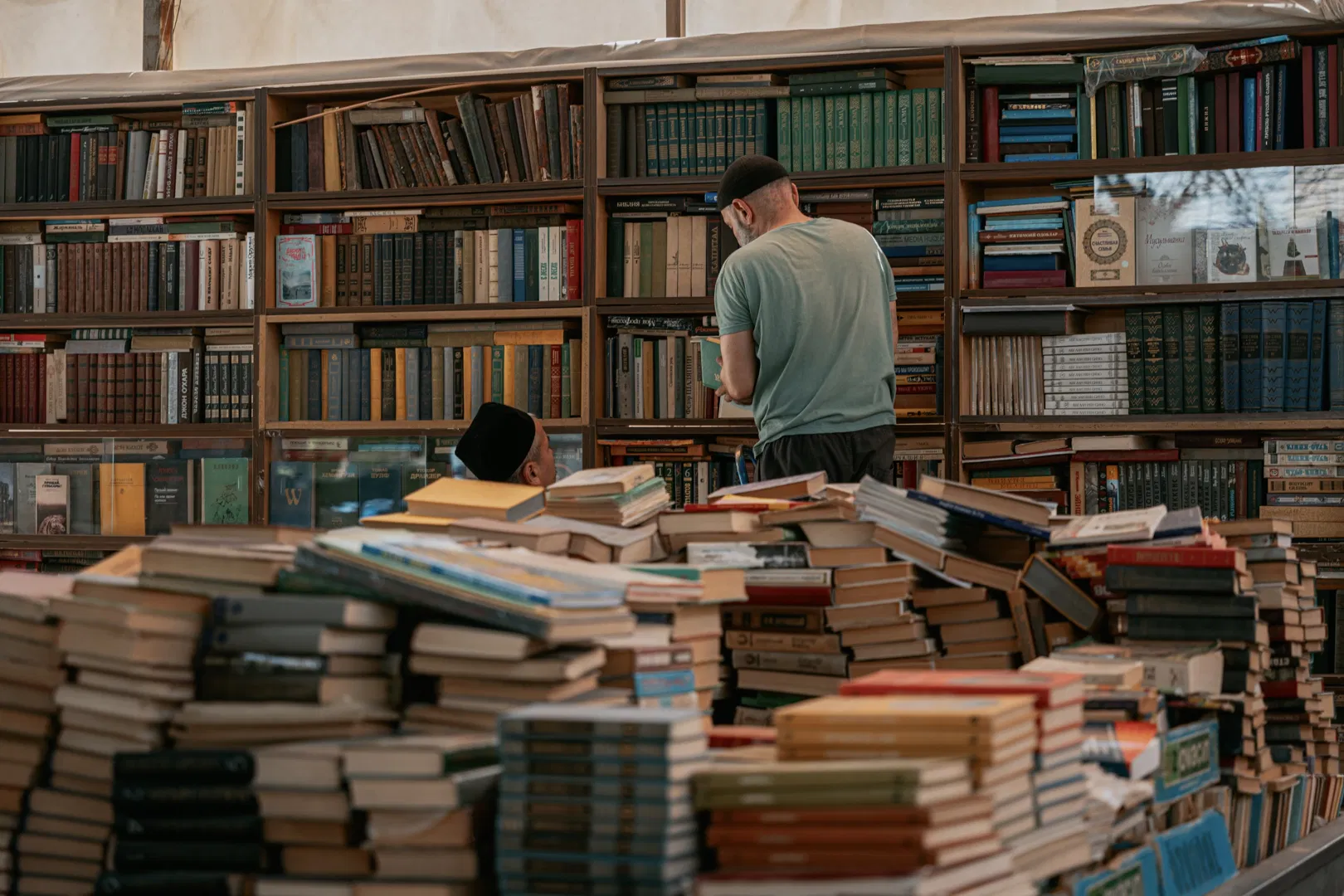
In Tashkent, second-hand bookstores live their quiet but stubborn life. We’ve gathered places where books smell of time, and sellers know what true love for paper is.
For some, used bookselling is simply the resale of second-hand editions. But for those who live for this business, it is more like soulful archaeology. In old books, one can trace how language and historical discourses have changed, how artistic design has evolved. Many books were published in small print runs, and today hunting for them is a true quest. And copies with autographs, inscriptions on endpapers, owner's stamps, and marginalia are almost living beings with their own destinies.
Tashkent's secondhand booksellers are a special phenomenon, sometimes isolated and intimate. They don't always work in antique shops — more often, these are open counters, spontaneous markets, or shops lost in the depths of neighborhoods. Another characteristic feature is multilingualism: Russian classics, Uzbek literature in Cyrillic, German textbooks, Soviet reference books, and English comics coexist here. A single walk along such a shelf is enough — and ideologies, eras, and alphabets flash before your eyes.
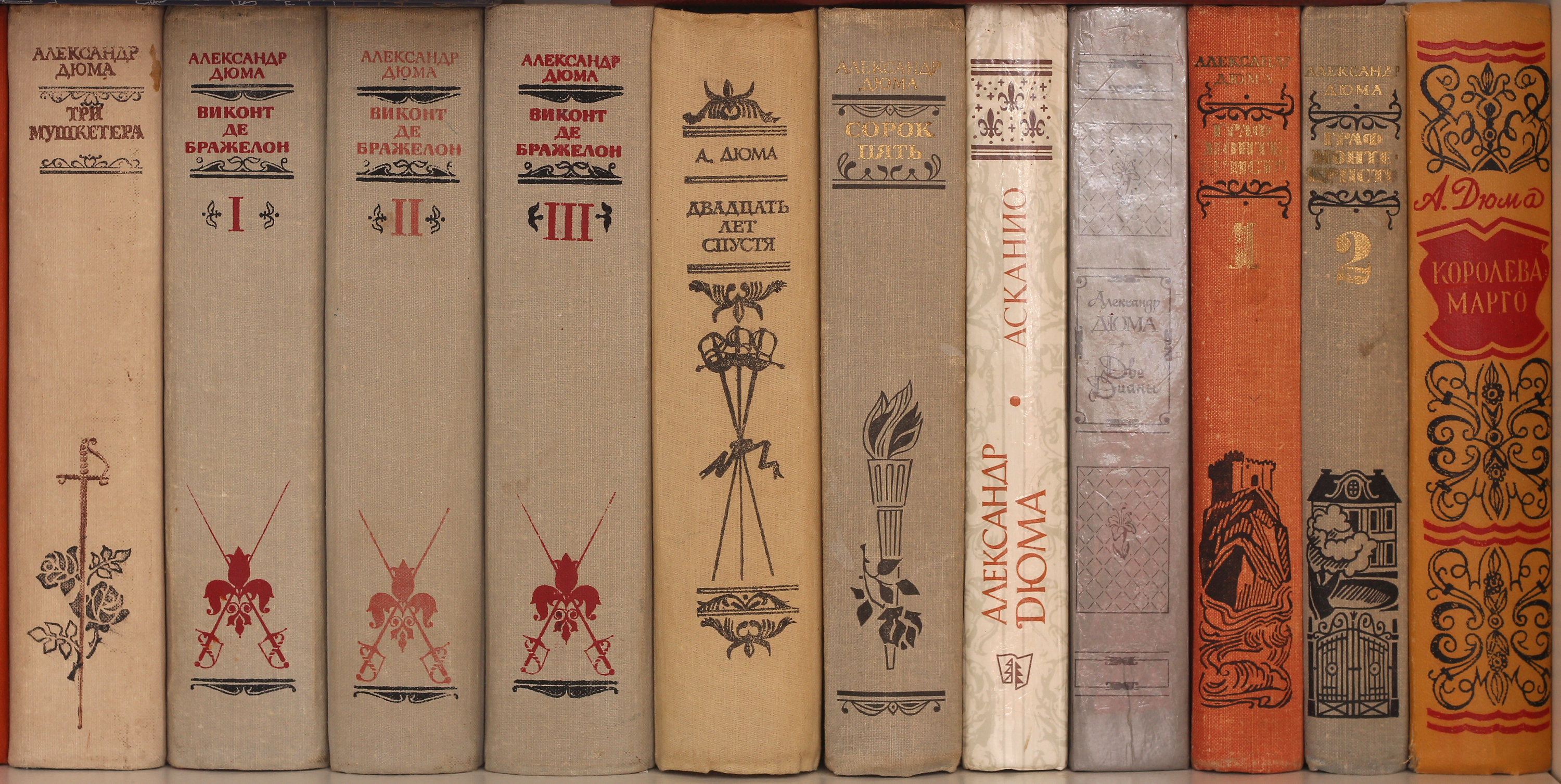 Photo: Dmitry Makeev
Old books by Alexandre Dumas. Photo: Dmitry Makeev
Outdoor Used Book Market
Location: Book Rows near the "Blue Domes"
Working hours: 10:00-18:00
In good weather, it's the perfect place to combine book hunting with a walk. Behind the "Blue Domes" restaurant, its own atmosphere reigns: at the start of the rows, spontaneous stalls with jewelry, badges, porcelain, and vinyl records are set up. A little further, there are seasonal items - flowers, and in autumn - rowan berries and pumpkins.
At the book stalls themselves, the sellers have long been acquainted with each other and gladly redirect customers if they don't have the desired book. On the counters, you can find everything—from modern editions to reprints and old copies. Sometimes, cats lie or sit importantly on the book boxes, probably—scholarly ones.
Unhurried conversations and the clatter of dice can be heard — someone is playing backgammon, while the scent of foliage, mingled with the sweetish smell of old pages, hangs in the air.
One of our regular readers shares:
"I once asked a chemist friend to explain where that old book smell comes from. He told me that books were printed on paper made from wood pulp, which contains lignin. Over time, it begins to decompose, producing substances like vanillin, ethylhexanol, benzaldehyde. That's why the pages smell of vanilla, dried fruits, and sometimes almonds. That's how it is."
The smell of an old book is literally the smell of the past, decaying before our eyes. It's a kind of mono no aware (the sad beauty of things - from Japanese).
Treasure under a layer of dust
Location: Yangibazar Bazaar
Working hours: 06:30-17:30 (weekends)
 Dier Masharipov
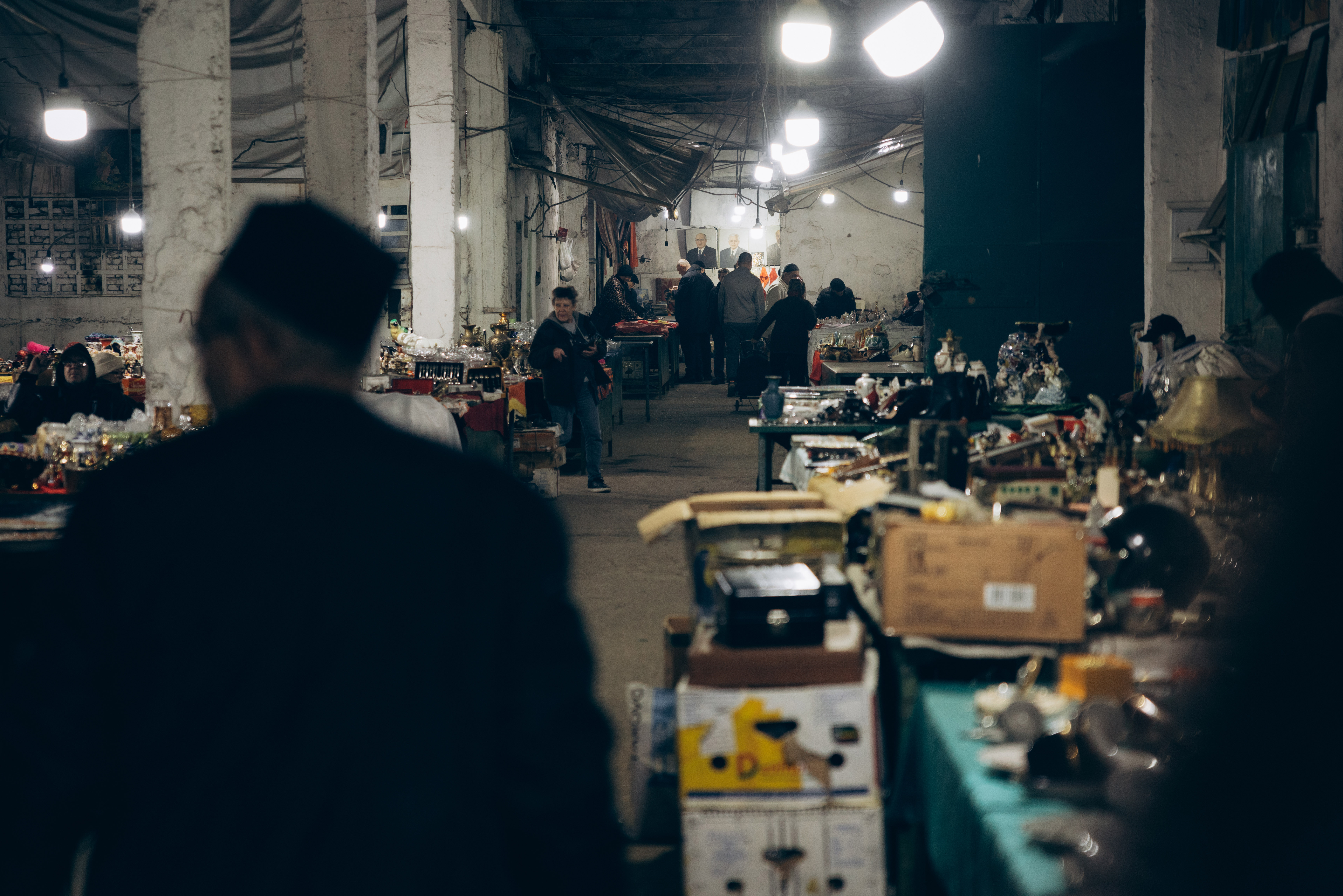
Flea market at the Yangiabod Bazaar. Photo: Yangiabod Bazaar
At first glance, Yangiabad Bazaar is almost no different from all the other city markets. However, on weekends, a spontaneous flea market springs up here from early morning—noisy, colorful, chaotic. Everything is mixed together: old posters, clothing, electronics, pennants, books. People don't typically come here looking for specific items. They come for the atmosphere—for the feeling of a treasure hunt. A little attentiveness—and an interesting find is yours, and you can while away the evening with a good story.
This kingdom of random treasures used to dwell on Tezikovka—beyond the railway. The place got its name from the dacha of merchant Ivan Tezikov, which once stood nearby. Today it is no longer there, but the memory of the bazaar has been preserved in literature: in Dina Rubina's novella "The Calm of the Lake on a Cloudy Day", it is mentioned how trade went on right on the rails—amidst this throng of people, shouts, newspaper sheets underfoot, and goods in hand.
"You'll spill out with the crowd at the terminal, cross the wooden bridge over the Salar, and right there you'll hit the bustle — it starts right on the railway tracks... They sold everything here except your own mother."
In the early 2000s, the market was moved to Yangiabad. Since then, it has grown here like a wild garden: it lives its own life, bustles, and shimmers with goods and voices. The atmosphere remains the same—like in a grandmother's attic: a bit dusty, unpredictable, but for some reason, you don't want to leave.
See also:
Жизнь как искусство: HD Portrait | Тамила БисмаховаИстория художницы Тамилы Бисмаховой — девушки с утонченным вкусом, которая превратила свое увлечение винтажем в искусство. Она с детства проводила часы на ры…youtube.com
Chilanzar Book Navigator
Location: Yuri Kim's Stall
Working hours: 10:00-18:00
At the Dehkan Bazaar near the Chilonzor Shopping Center, Yuri Kim's second-hand book stall is located. He has over 5,000 volumes, all systematically organized. Tall shelves and a colorful carpet of books on the open counter promise a long and thoughtful examination of spines and covers. This includes not only fiction but also history, cookery, technology, and manuals for radio amateurs. Cats are also present—where would we be without them?.
Yuri first decided to get into books after the death of a close friend who bequeathed him a library and a stall at the Yangiabad Bazaar. After five years of trading at the famous "flea market", he moved closer to home—to the bazaar near the "Chilanzar" shopping center. One can often see him personally restoring very worn-out book volumes or engrossed in reading something he has just acquired.
The keeper of this book nook will gladly offer guidance, engage in conversation, and — quite possibly — suggest a book you've been searching for. Or even one you didn't know you needed.
Book with a Double Bottom
Location: "Bukinistic Books"
Working hours: 09.30-21.00
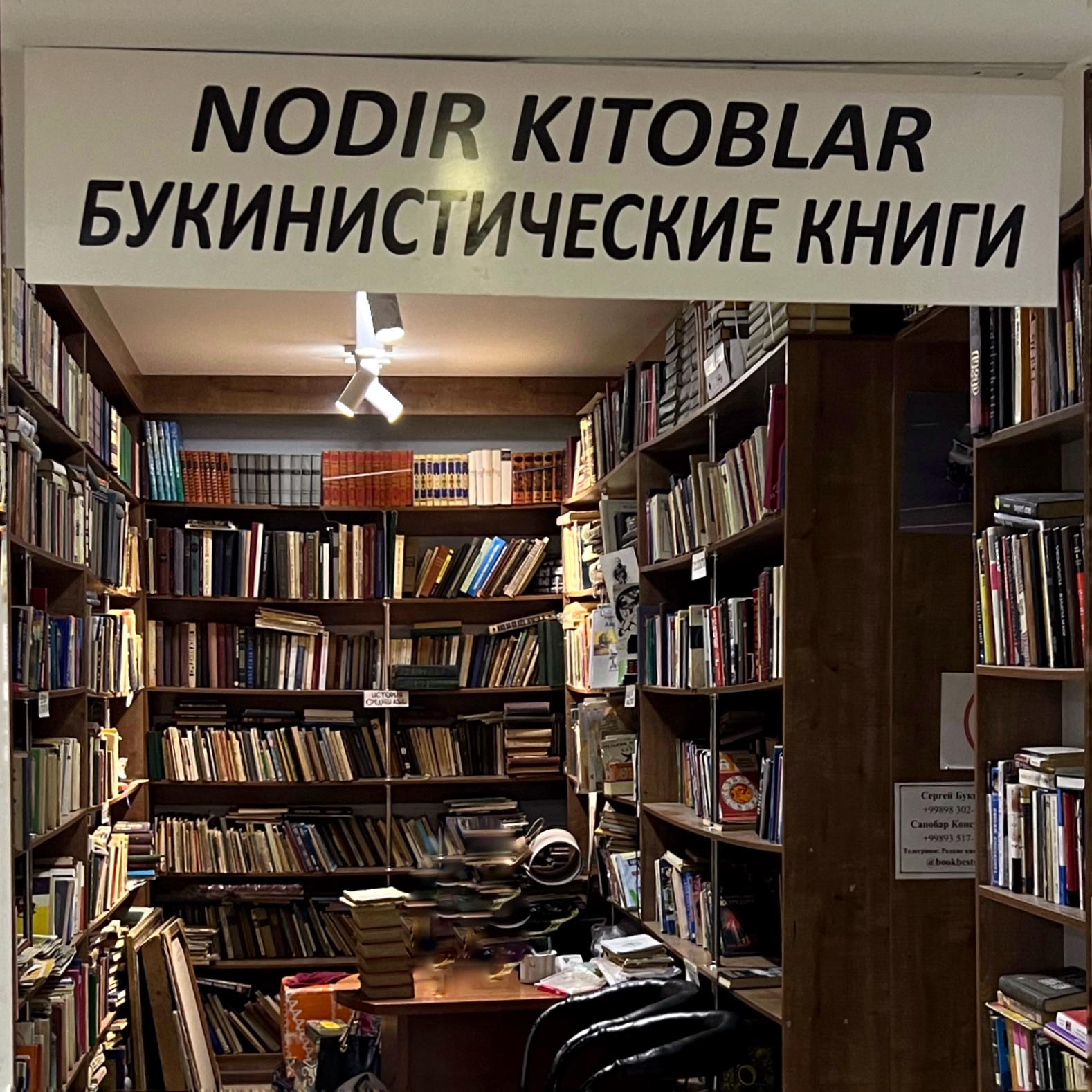 Photo: Daria Zabrodina
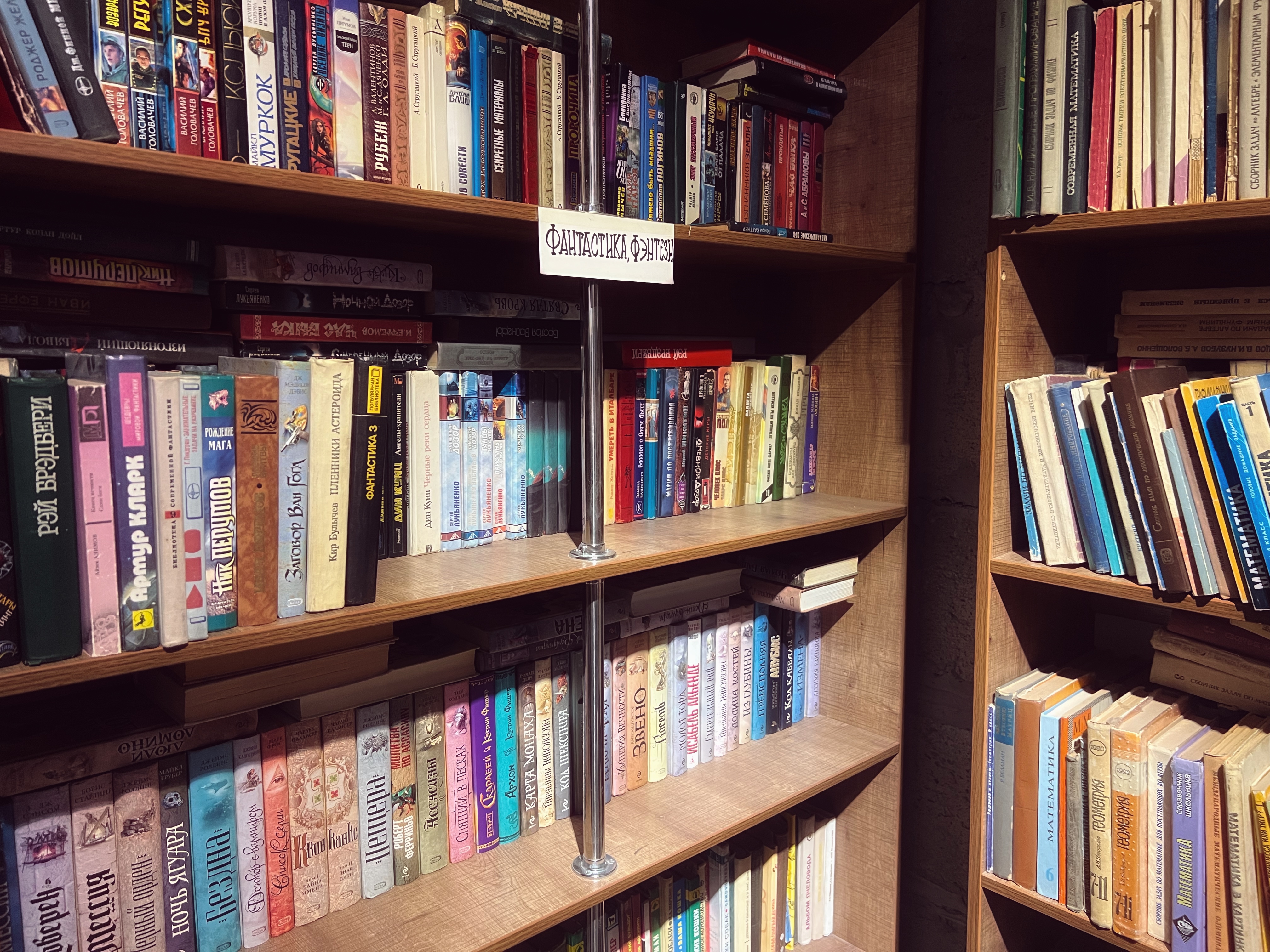
Bookshelves in the second-hand bookstore on Kataratal Street. Photo: Daria Zabrodina
On the way from the "Parus" shopping center to the "Katartal" market, the eye catches the sign of the bookstore Book.uz. It's easy to find modern publications in Uzbek and Russian here. But if, upon entering, you turn right, your gaze meets a modest sign: "Second-hand Books."
Inside, everything is neatly arranged on shelves, and the genres are labeled by hand in beautiful calligraphic script. Philosophy, medicine, history — and, of course, fiction, divided into subgenres.
The shop assistant recalls how in the 1990s, after the collapse of the Soviet Union, people were leaving and not taking their books with them. Some turned them in for recycling, others gave them away...
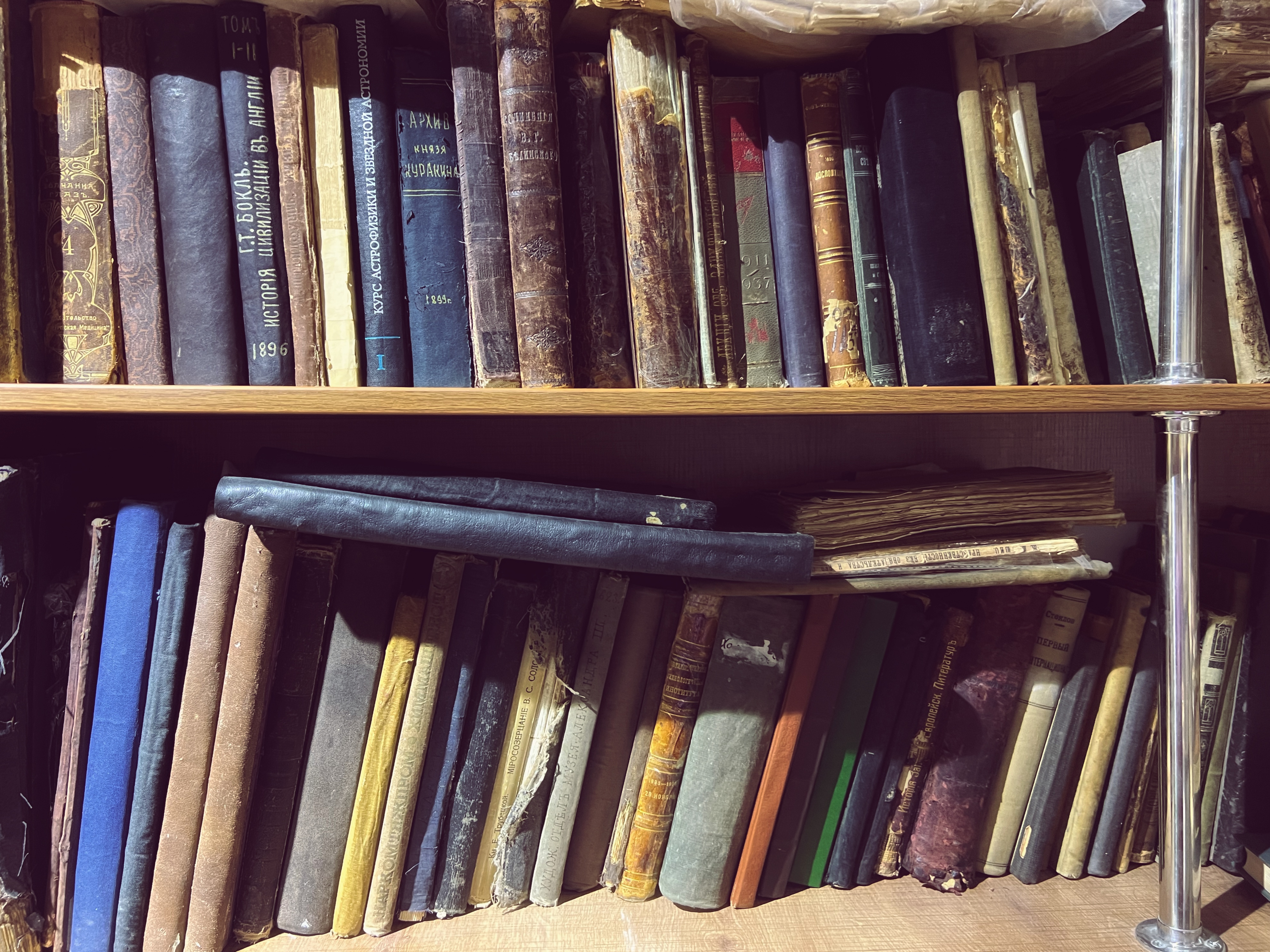
Bookshelves in a second-hand bookstore on Katartal Street. Photo: Daria Zabrodina
The customers in the shop are very diverse: students, pensioners, children. Everyone is looking for their own thing: teachers look for textbooks, the elderly look for classics and memoirs, young people look for science fiction and adventure. If you go deeper into the store, you can find books with a century of history—printed before 1917.
According to the woman, some publications were practically impossible to obtain in Soviet times — now she reads them belatedly. But right now, she is mastering the Uzbek translation of Harry Potter — she is preparing a gift for her grandson, but first she wants to read it herself so she can later discuss the magical world of Hogwarts with him.
Second-hand bookselling is not about the past, but about memory that lives here and now. You just need to stop by a shelf, breathe in the scent of paper — and you're already inside another era, another conversation, another life. In these places, books find you themselves.

Newsletter
A letter from the HD editors
Once a week, we send the best stories, events, and cultural discoveries from Central Asia.