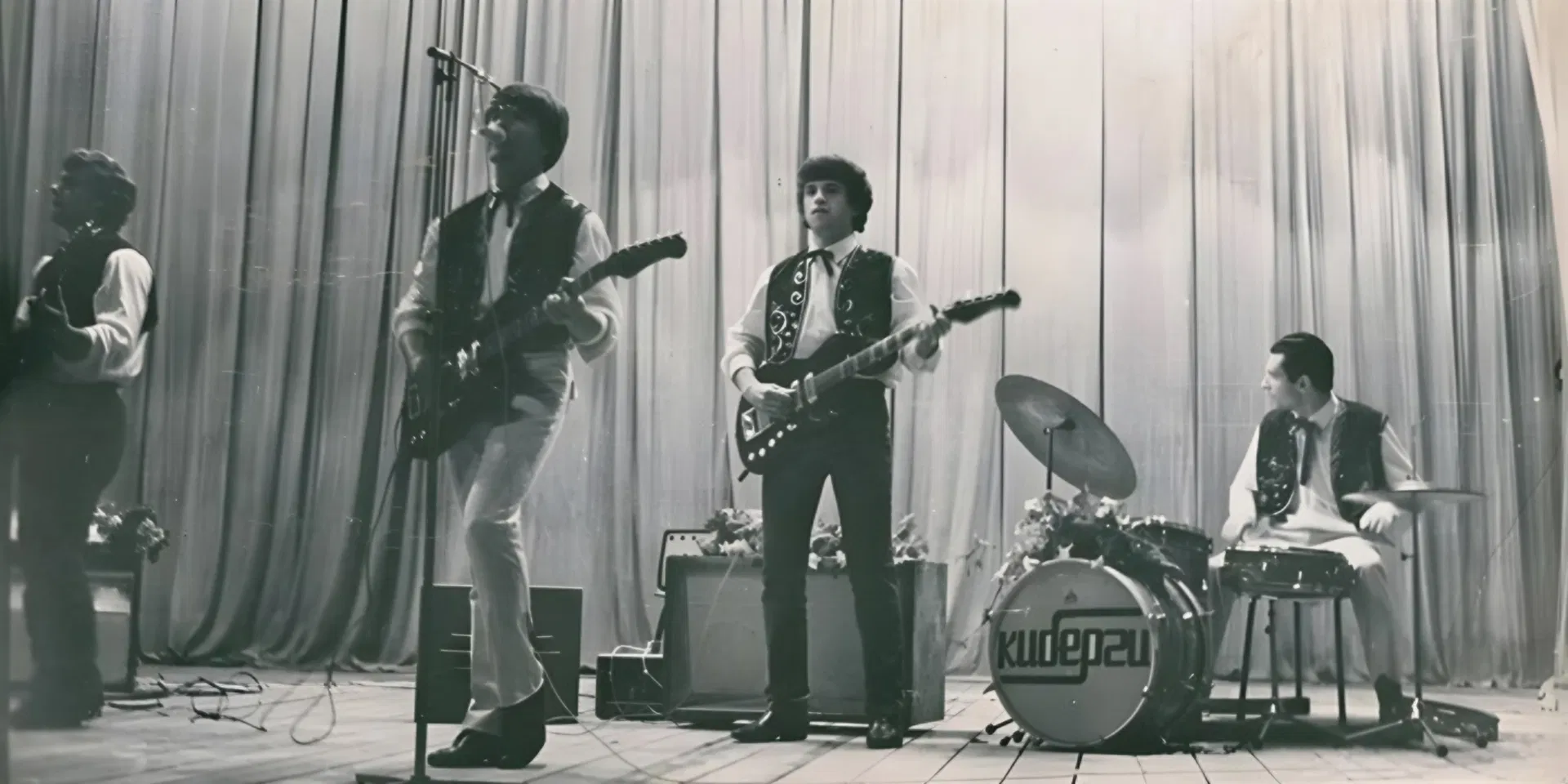
Not in the garages of Liverpool or the basements of Seattle, but in the tents of a city recovering from an earthquake, a unique Uzbek rock scene was born. In this piece, we explore what drive means in the Uzbek context and why Tashkent rock is, above all, an expression of personal freedom.
The First 12 Bars of Bill Haley
If jazz taught the world to improvise at the turn of the 20th century, rock and roll taught it to rebel in the 1950s. The turning point is widely considered to be 12 April 1954, when Bill Haley recorded Rock Around the Clock at Pythian Temple Studios. The song, whose recording date determined 13 April as World Rock and Roll Day, took a full year to find true success. Initially, it was not a major hit and was placed on the B-side of the record. When it was later featured in the 1955 film Blackboard Jungle, its opening sequence had such an impact on young audiences that cinemas reportedly suffered damage from seats being broken during dancing.

The 1960s turned this rebellion into a conscious cultural "religion". Rock and roll's boogie split into two fundamental directions. The Beatles fought for melodic perfection and studio artistry, elevating rock into a form of high art, while the Rolling Stones brought back its bluesy rawness and dangerous edge. Together, they transformed the genre into a universal code of freedom that crossed Iron Curtains and language barriers alike, mutating in each country where people dared to strike a chord.
Bir, ikki, uch, to'rt... Сome on, let’s twist again!
Rock and roll entered our country not through the grand doors of philharmonic halls, but through cracks in the earth itself. The 1966 earthquake turned parts of the capital into ruins. Yet the people, stripped of their former way of life, did not despair. Amid construction sites and tent settlements, a new sound was born, where Western drive resonated with an Eastern thirst for life. In the cramped quarters of temporary housing, a unique atmosphere took shape, where nightly gatherings under the open sky became the first improvised stages and audience halls. Through the crackle of shortwave radios, the hiss of smuggled vinyl and bootleg recordings pressed onto X-ray film, rock and roll burst into Uzbekistan.
The birth of rock in Uzbekistan is often dated to 7 March 1967, when the group Kibergi performed for the first time in a dusty assembly hall of a design bureau. Inspired by the science fiction of Stanisław Lem, Vladimir Baramykov, the founder of the group, achieved the impossible: he assembled homemade but fully functional equipment. At the concert, Liverpool guitar influences merged with a guitar-riff adaptation of the Andijan Polka.
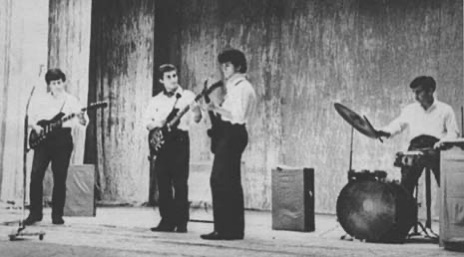
It was not so much a political protest as a musical breakthrough. The band of the future proved that rock ’n’ roll could be played without losing its local identity. The genre was finally legitimised through their appearance in Elyor Ishmukhamedov’s film The Lovers, where they perform on stage. Rock became the pulse of a rebuilding city, the music of those reconstructing life itself to the sound of guitars.
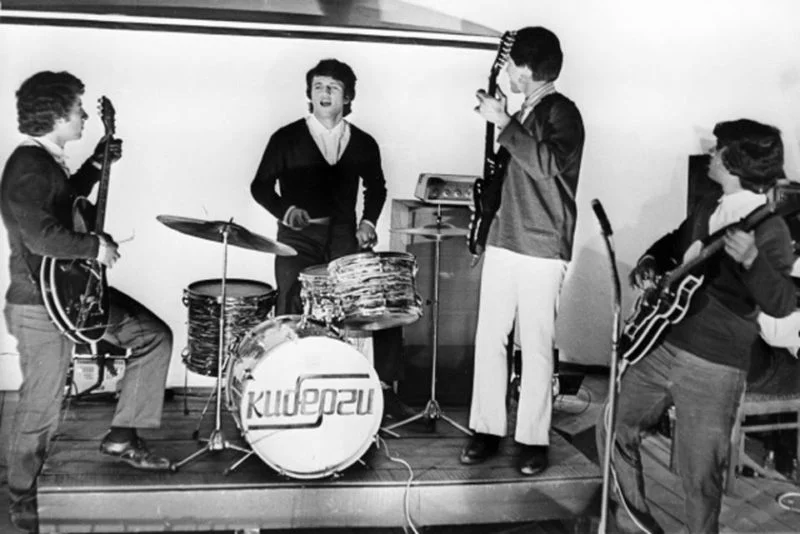
How Western Beat Took Root in Maqams
The Liverpool dream of the early 1960s was swept aside by a new decade. Formed in 1968, Sigma from the Tashkent Polytechnic Institute and Spektr from the Institute of National Economy were already searching for their own musical paths. While Beatlemania was already fading, the magic of Jimi Hendrix’s hard-edged riffs was only beginning to take hold. Led by Yuri Bogdanov and the charismatic bassist Sanzhar Kelginbaev, better known as “Kegel,” Spektr drew inspiration from the mighty triumvirate of Hendrix, Clapton, and Janis Joplin, while the powerful vocals of Natalia Nurmukhamedova completed the group and turned their performances into pure artistry.
By the early 1970s, Skify from the Institute of Physical Culture had entered rock ’n’ roll’s dialogue with the West. The expressive improvisations of Oleg Chesnokov and the energetic vocals of Alexander Melkonyan allowed the band to move freely between the melodic sensibility of The Beatles and the heavier sound of Led Zeppelin.
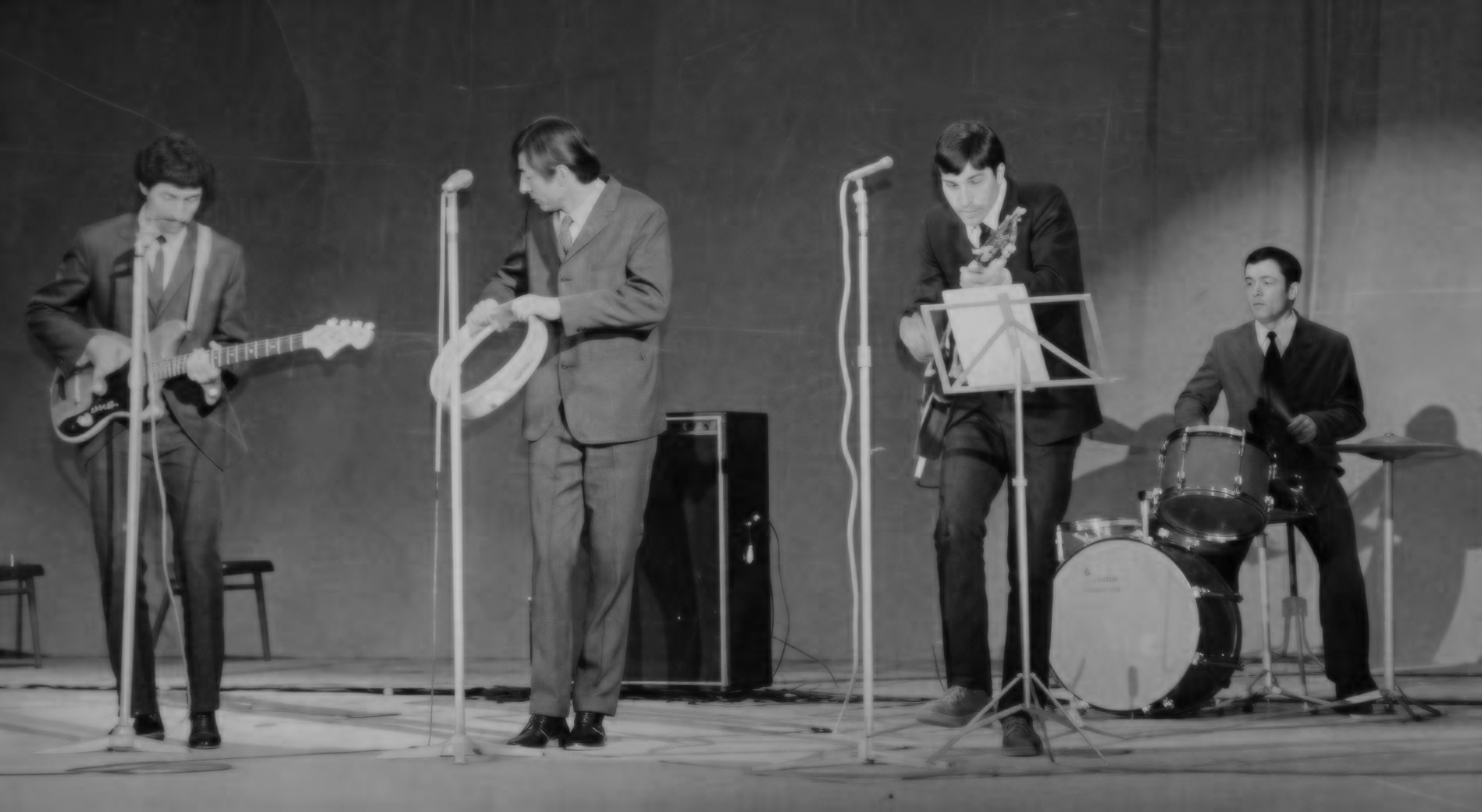
Musicians increasingly turned to the rhythms of Uzbek folklore, while imitation of the West gradually gave way to a more experimental musical language of their own. The fusion of Hendrix-inspired guitar energy with traditional melodic forms created a unique style in which sharper social themes and greater authorial depth began to prevail. The emergence of Sintez and Inter finally cemented the sound of Uzbek jazz rock, and the music began to speak in a new voice.
Our hearts demand change!
In the 1970s, the era of local amateur music-making slowly began to outgrow itself and transform into something greater. Once-amateur musicians started conquering television talent contests and concert halls, becoming fully fledged professional performers. One of the most important catalysts was Central Television. In 1971, two Uzbek ensembles made a nationwide splash on the talent competition Allo, Mi Ishem Talanti (Hello, We’re Looking for Talent!): the Bukhara-based Kvazary and Tashkent’s Yalla.
Yet while Yalla would become the polished public face of the Uzbek stage, with its refined synthesis of tradition and electric-guitar sheen, the musical landscape began to shift by the 1980s. In place of intricate jazz arrangements and philharmonic discipline came the raw energy of the streets, embodied most vividly by Takhir Sadykov and his band Bolalar. Born in 1989, in an era of upheaval, they became a kind of Beatles of change, though no longer the intellectual rock of the 1970s, but a new iteration of it. Sadykov became the voice of a generation that longed not for complex meanings, but for simple, honest songs about love and freedom.
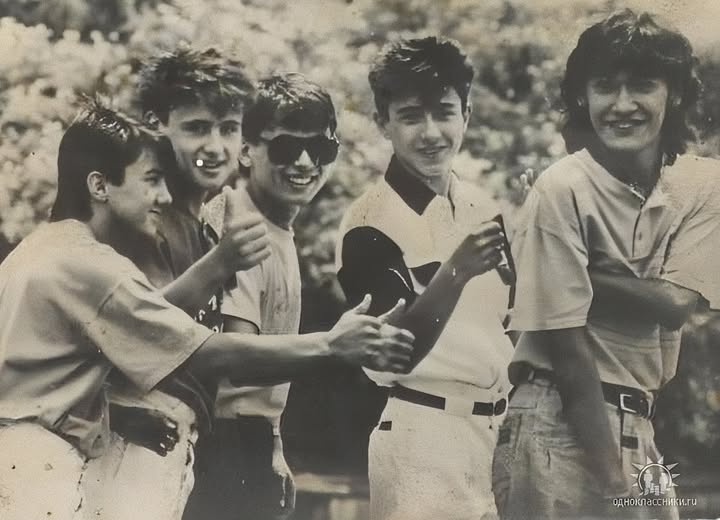
The feverish 1990s brought another striking phenomenon: led by Anvar Juraev, the band Sahar emerged on the scene, bringing a touch of the West into the local sound. Somewhere between Britpop and soft rock, the group struck a balance between rock ’n’ roll aesthetics and mainstream music, becoming an important bridge between the old vocal-instrumental ensemble tradition and the emerging era of independent music.
The new millennium finally fragmented the scene, separating mainstream pop from independent rock, which retreated underground. The genre became part of a distinct community, more intimate and experimental. In the small halls of Palaces of Culture and the basements of the legendary Ilkhom Theatre, bands were born that would, a decade later, become leaders of the today's independent scene. This revolution was thunderous within the community, yet almost inaudible beyond it: while stadiums filled with pop music, the underground was forging the very sound now known as contemporary Uzbek indie rock.
The Three Languages of Uzbek Rock
Today’s Uzbek rock is not only a space for choosing what to sing about, but also what language to sing in. The Russian-language vector continues the tradition of strong poetic expression. This is evident in the conceptual art rock of Fomalhaut or the philosophical indie of Krylya Origami. The band Flyin Up originally performed high-quality English-language material, but their creative evolution took an unexpected and bold turn when, in 2023, they released the album Jimlik (“Silence”), recorded entirely in Uzbek.
This drift toward the native language is not an isolated case: the young indie band Bu Qala has managed to weave national motifs into the fabric of shoegaze and post-punk with remarkable organic ease. For them, as for Flyin Up, it is a search for a sound in which global genres are localised and gain the ability to speak about oneself and one’s time without embellishment.
However, debates about the existence of Uzbek rock as such are still ongoing:
Uzbek rock as a distinct subgenre perhaps does not exist. Rock is a global system with its own rules: there is American "macho-rock," there is the British minor-key wave. Everything else is derivative. In Uzbekistan, musicians use this global form, combine their influences and build something of their own on this foundation. But a kind of calling card, a distinct "Uzbek sound," has not yet emerged. This is neither good nor bad, it is simply a fact. Right now, we are more likely going through a period of thaw after a prolonged decline.
Continuity and change are also felt by Askar Urmanov, one of the frontmen of the punk-cabaret band TupratikonS:
We are an old band, and personally I was influenced by groups that no longer exist, such as Pauchki Anansi, with their playful, theatrical approach. I do not really feel there is a distinct spirit of the local scene today, because it is constantly changing. If the late 1990s and 2000s were marked by a kind of reckless freedom and experimentation, then the 2010s brought a certain intimacy. Everything is still taking shape now, but it is really great that people have started singing in Uzbek. I wanted to introduce that back in the 2000s, but unfortunately I don't speak the language.
The new musical reality has replaced stadiums with intimate clubs, while the music itself has shifted towards sincerity and greater conceptual density. Artists of the new wave are aware that in an age of relentless digital noise, only those who have something to say will survive:
“The internet and social media have enormously expanded the horizon of possibilities. But with accessibility has also come greater responsibility. My advice to emerging musicians is this: try to make your music more interesting. Learn how to structure it, pay attention to the quality of your lyrics, and make sure there is a clear idea behind every musical idea you create. You need to speak to your audience sincerely — it is the only way to build a genuine connection.”
The internet and social media have incredibly expanded the horizon of possibilities. But with accessibility comes responsibility. My advice to emerging musicians: try to make your music more interesting. Learn how to structure your music, pay attention to the quality of your lyrics, and make sure there is a clear idea behind every musical idea you create. You need to speak to your audience sincerely; it is the only way to build a real connection.
Places of Power and Powerful People
In Tashkent, places where guitar riffs once thundered have always existed in defiance of circumstance. Before social media, and certainly before Telegram channels, there was harddays.net, a kind of digital mahalla where, for lack of any alternative, all pressing issues were resolved, from buying and selling guitar pedals to finding bass players. It was there that the early chapters of bands such as Fomalhaut, Titus, Zindan, Cross-Section, Skenb, and Moment of Clarity were first recorded. It was never an ideological headquarters, but rather a living, sometimes rough, yet always honest and practical hub that brought scattered groups together into a single organism.
For listeners in Tashkent, rock music was never just background noise; it was always a form of rebellion and a path to personal freedom. For many, it began with cassette tapes borrowed from friends, as in the story of Ruslan Dzhalmurzaev, whose journey from Viktor Tsoi to Nirvana's album In Utero shaped his musical tastes for years to come. Many fans also underwent their initiation through live performances: Aleksandr Li still vividly remembers his first concert at age 17, when the veterans of the heavy music scene, Zindan, made him believe in the power of the local sound, while the underground was flooded with "nonconformists," creating that very sense of unity.
For Tashkent listeners, rock has never been mere background music; it has always been a form of rebellion and a way of shaping personal freedom. For many, it began with cassette tapes discovered through friends, as in the case of Ruslan Dzhalmurzaev, whose journey from Viktor Tsoi to Nirvana’s In Utero shaped his musical tastes for years to come. Many fans also underwent their initiation through live performances: Alexander Lee still remembers his first concert, when, at seventeen, veterans of the heavy scene Zindan made him believe in the power of local sound, while the underground was flooded with “nonconformists”, creating that unmistakable sense of unity.
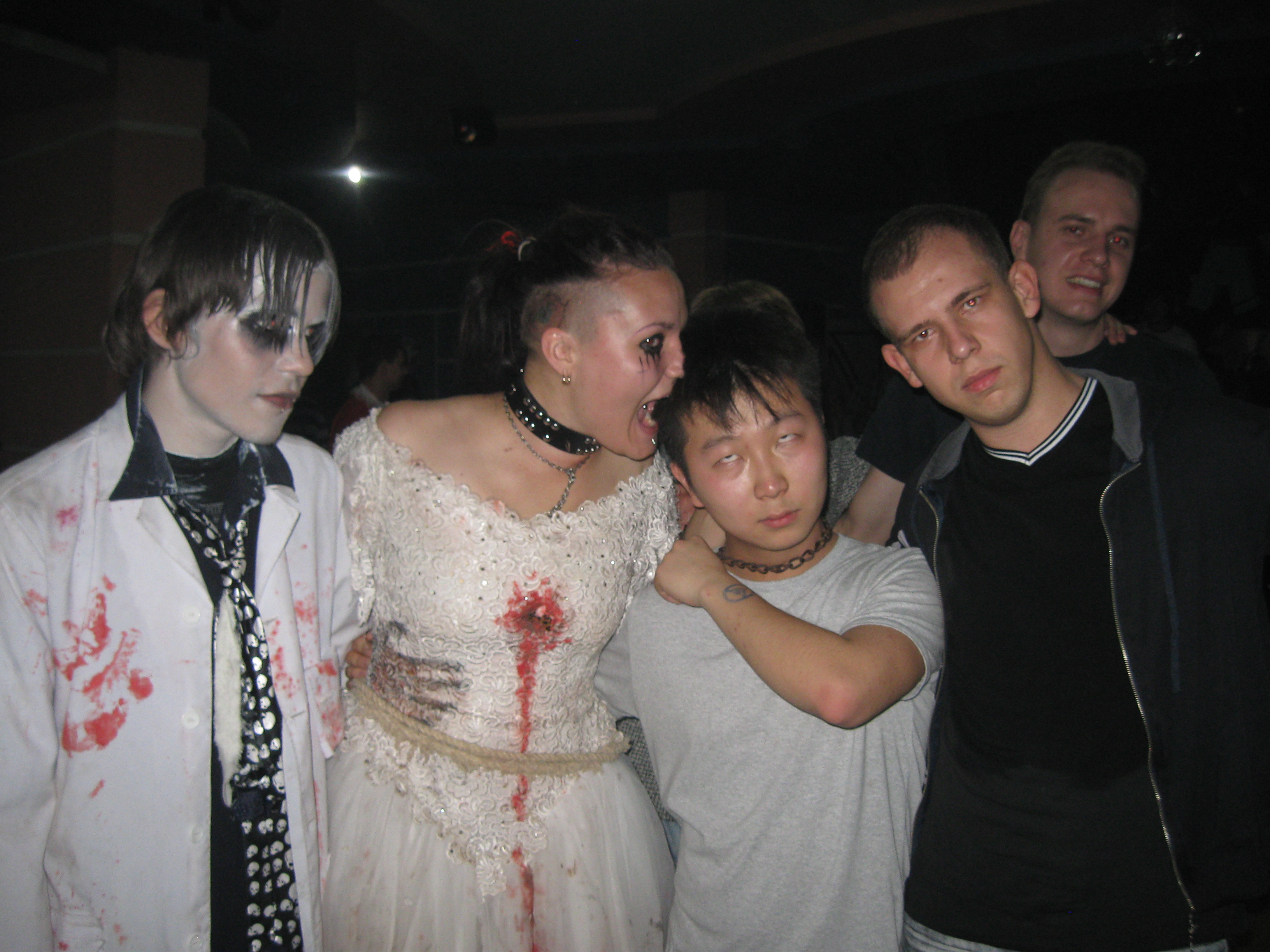 Source: Alexander Lee's personal archive
For many, music has become not only a way to unwind, but also a tool for shaping taste, as in the case of teacher Kamila Adigamova, who passes on her love of guitar-driven music to her students. Uzbek rock may not yet have a truly large stage, but the genre remains vibrantly alive in bars and at festivals, sustained by its enthusiasts.
A Place to Take a Step Forward
Uzbek rock, although clearly experiencing a creative resurgence, continues to exist in an industrial vacuum, as the professional infrastructure is still largely absent. There are no specialised labels, no established promotion systems, and no music agents working within the genre. As a result, even the most promising bands remain confined to club and festival “ghettos”, while musicians themselves are forced to become not only multi-instrumentalists but multidisciplinary professionals in the broadest sense: managers, sound engineers, publicists, and even stagehands. This often leads to burnout, leaving even the most talented with too little energy to record a first full-length album.
From an economic standpoint, however, rock music in Uzbekistan is not profitable. The cost of renting venues and equipment, coupled with the scarcity of sponsors willing to support bands, turns organising a concert into a risky venture. Yet this also preserves a certain degree of sincerity in the music, a quality long lost by glossy mainstream culture. The figures of the underground rock scene do not perform for fees; for them, the act of expression itself takes priority, and that makes their music a valuable document of the era.
The story that began in tents after the 1966 earthquake, and later passed through stadiums and local clubs, is above all a story of stoicism. Political climates have shifted, crises have come and gone, yet there have always been people willing to cut through the noise, and sometimes through the silence as well. Today, this music exists both in indie clubs and under the open sky, which means the genre possesses a unique resilience. It changes shape, retreats underground, or fragments into multiple scenes, but as long as there is someone ready to strike the strings, the electricity of freedom in this country will not fade.


Newsletter
A letter from the HD editors
Once a week, we send the best stories, events, and cultural discoveries from Central Asia.