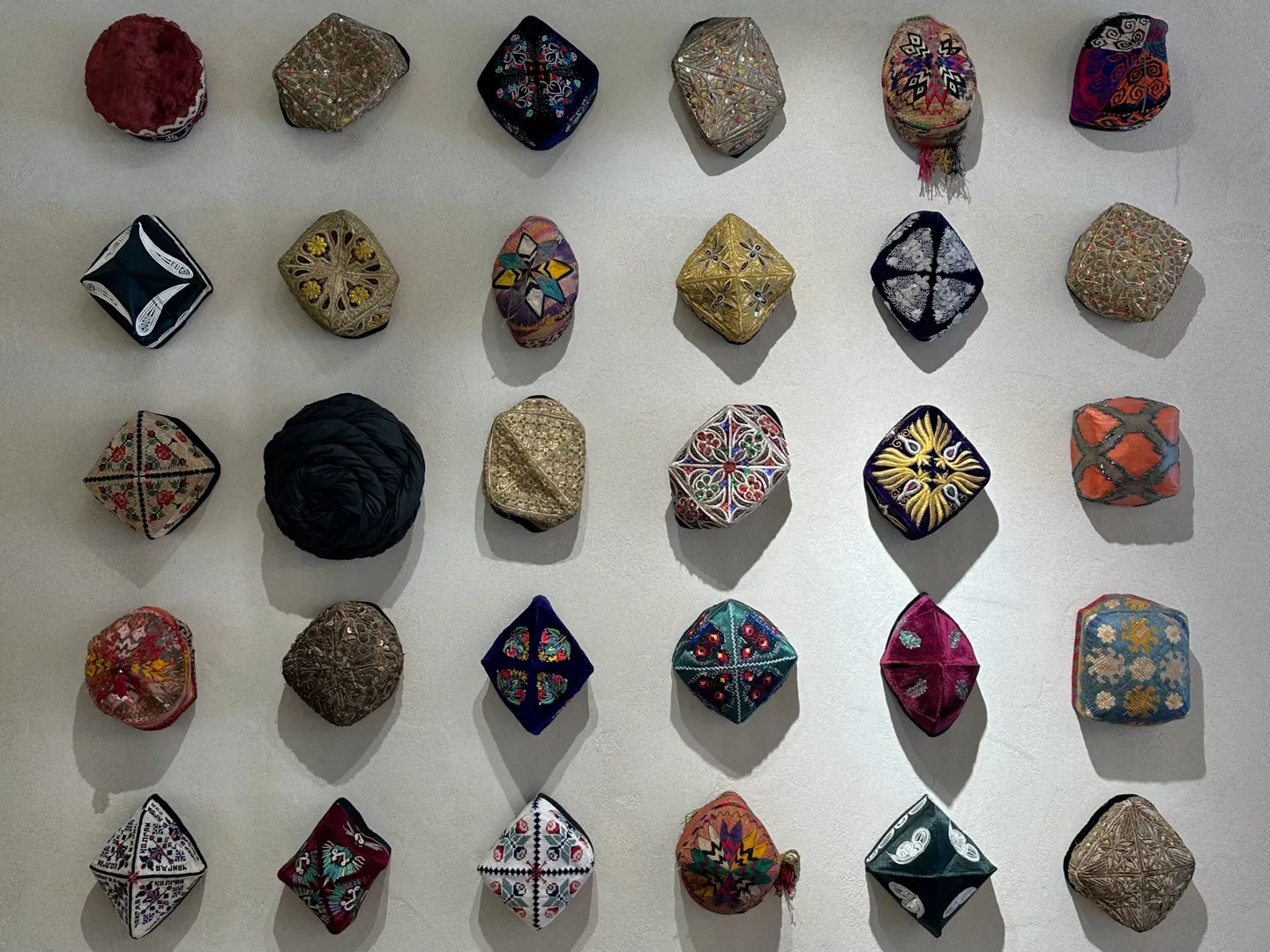
In recent years, Uzbek fashion has increasingly become a part of the urban cultural environment. Fashion has moved beyond the confines of runways and individual names, integrating into the everyday routes and spaces where the city lives. And every designer is well aware that they are not just creating clothes. Their creativity is a way to talk about memory, craftsmanship, identity, and how tradition continues to exist in the present.
Local brands work with heritage in different ways: some reinterpret textile techniques and ornaments, others translate national codes into the language of modern urban fashion, while others seek a balance between the archive and experimentation. There is no single formula in these approaches, which makes it all the more interesting to observe which path each brand will choose.
Boutiques play a special role in this process. They become an extension of the brands—their visual and conceptual logic. Here, it is not so much about hanging merchandise on rails as it is about considering how the brand’s idea will be perceived by customers—through the interior, atmosphere, and the way of interacting with the clothing. Otherwise, how will these places differ from Hippodrome and Urikzor, except for a comfortable fitting room instead of a piece of cardboard on the floor?
This guide is not a store catalog or a list of recommendations. It is an attempt to look at fashion brands as part of Uzbekistan's cultural ecosystem: through their approach to craftsmanship, through their work with form and ornament, and through the spaces where these ideas become visible.
LALI
32 Nukus St.
LALI is a brand whose history coincides with the history of modern Uzbek fashion. It grew out of a small atelier in the early 2000s and gradually developed into an independent fashion house.
LALI collections are born long before the sketches: starting with the development of new ikat patterns for adras in collaboration with artisans from Margilan. Vintage fabrics hold a special place in the brand’s aesthetic—suzani, silk, embroideries found in family archives and grandmother’s chests. They are not reconstructed, but integrated into new forms: bell-shaped skirts, jackets, accessories.
The boutique on Nukus Street is a natural extension of the brand and its philosophy. The red signs in their signature style immediately draw attention. This is not even a classic retail space in the traditional sense—rather, it is a true "home": soft lighting, music, flowers, and a sense of unhurriedness. The case of Lali is an example of how a local brand can work with heritage not as a museum exhibit, but as a living material capable of changing form, context, and resonance while remaining recognizable.
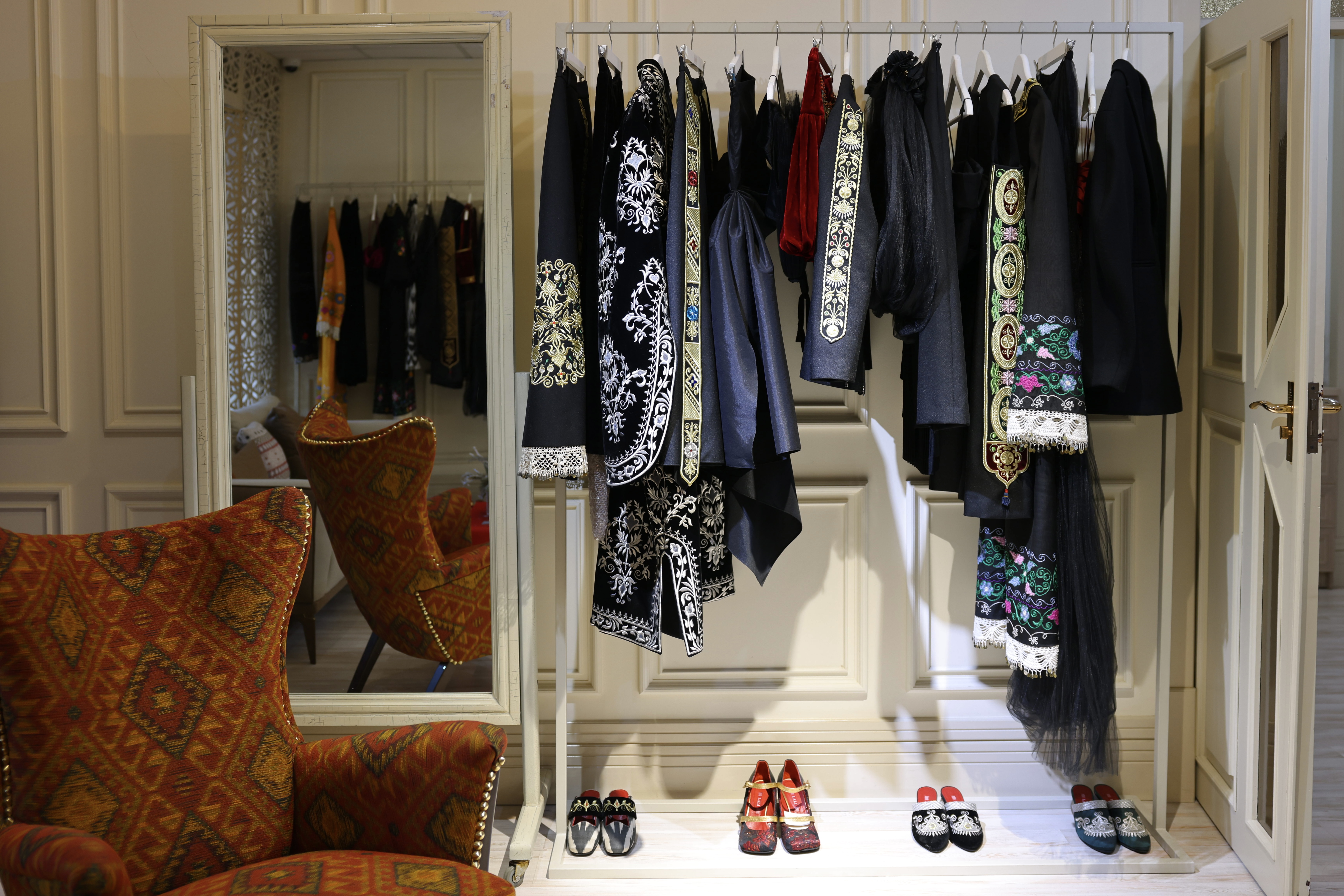
Azukar Moreno
12A/1 Labzak St. (Navruz Ethnopark)
Azukar Moreno is a brand that was formed at the intersection of Uzbek textile heritage and Mediterranean culture, as designer Kamola Rustamova was educated in Madrid, which clearly influenced the blending of traditions, colors, and the approach to the product.
From the very beginning, the brand has built its work around the idea of "slow" fashion. In this case, as the designer herself explains, clothing is perceived as a long-lasting item: with a history, traces of time, and the possibility of being passed on. Handcraft plays an important role — dyeing, embroidery, working with fabrics collected in different regions of Uzbekistan and beyond.
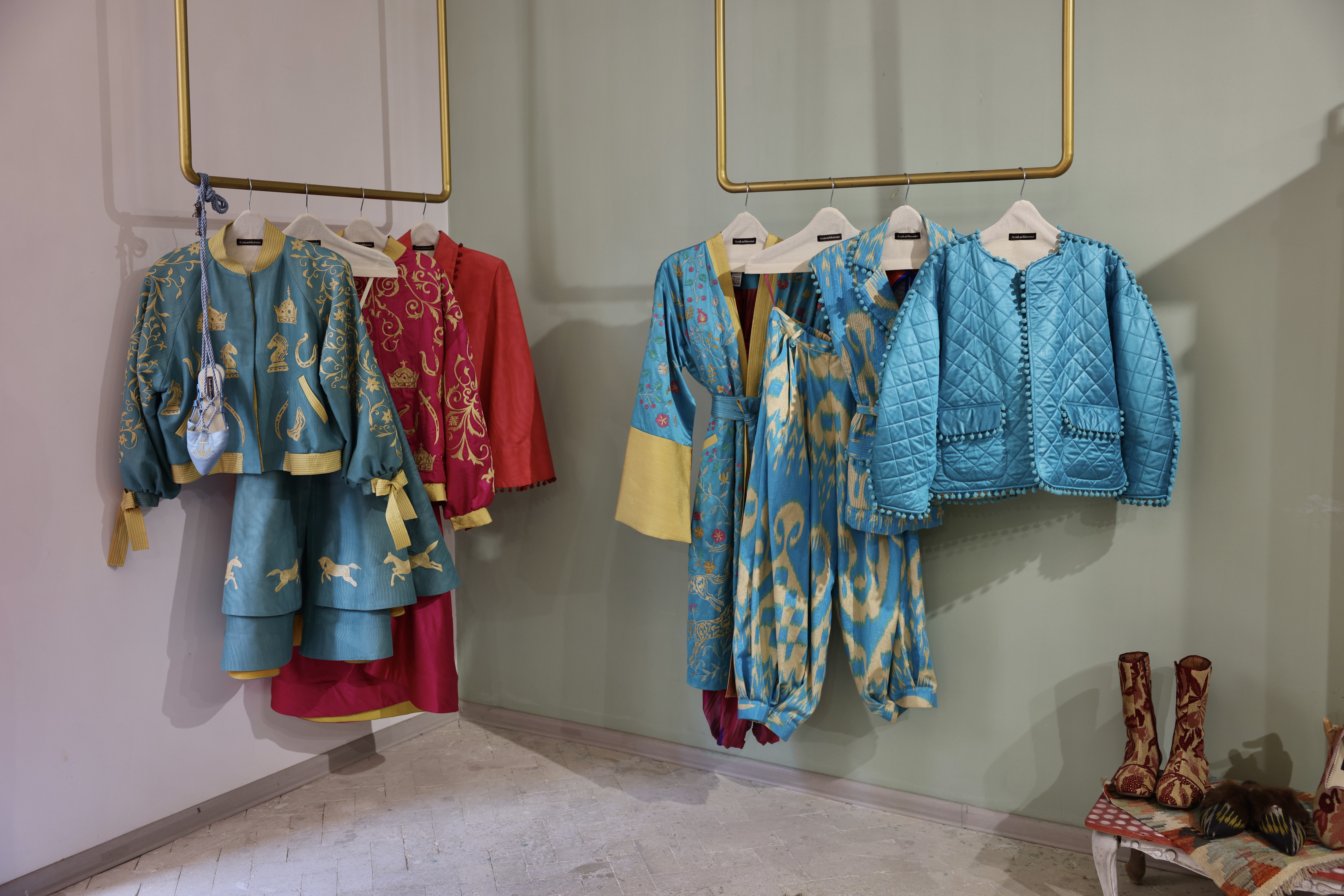
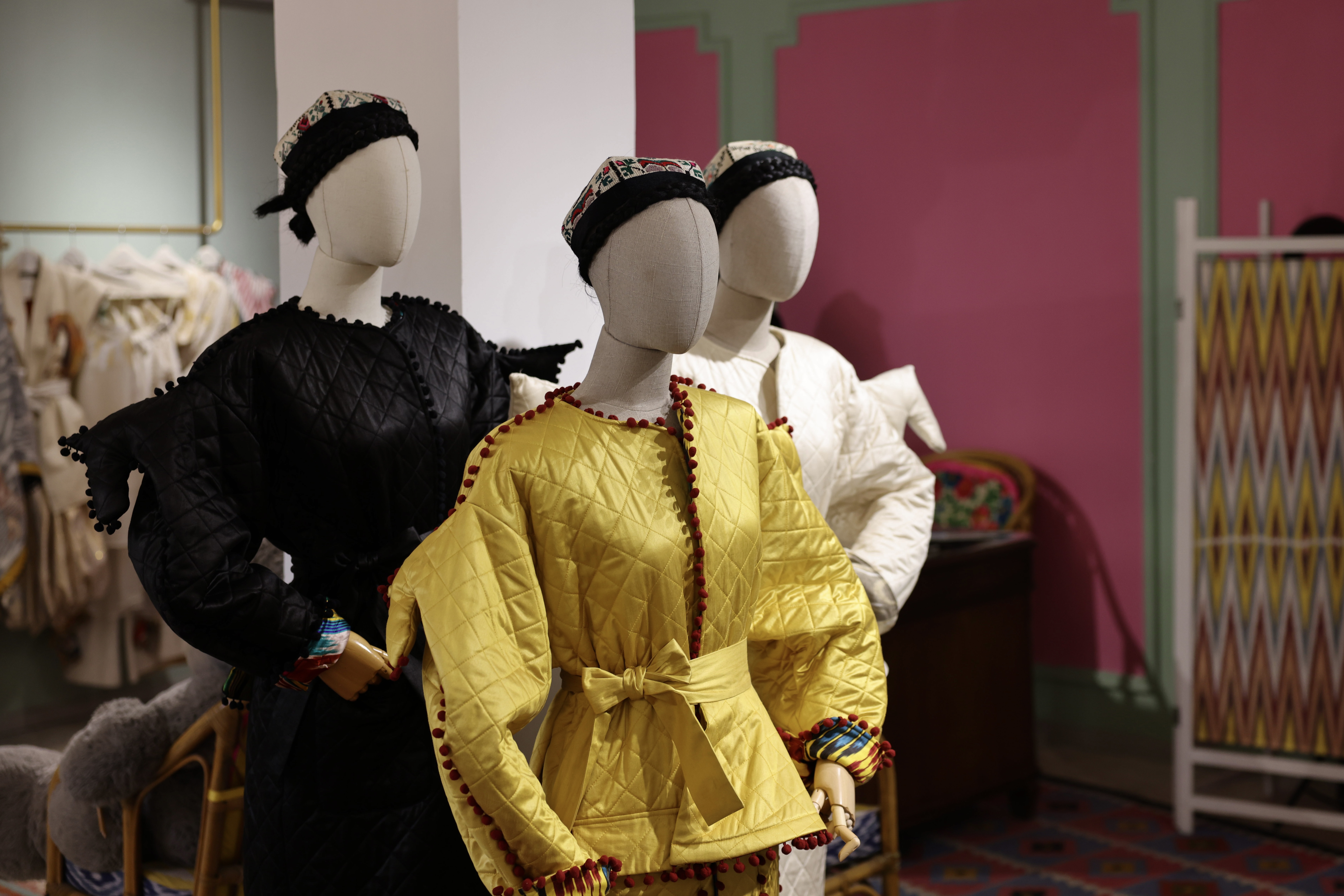
Azukar Moreno's collections already feature an established capsule: dresses and shirts with ruffles, han-atlas skirts, robe-dresses with suzani, and quilted vests (the brand’s most recognizable elements). Special attention is given to vintage: here, antique fabrics, lace, fittings, and embroidery found in various countries and private collections are used. They are not labeled as rarities but are integrated into a modern form. For example, Margilan silk scarves with 19th-century ornaments are only slightly updated—such as with the addition of gilding—and cease to be read as folklore, while still remaining carriers of their era.
The showroom, located in the Navruz ethnopark, is divided into several zones: a small workshop, areas for tea drinking, and a "wall of memory" with photographs and images important to the brand. Here you can also find fabric archives, some of which date back to the 19th century. Carved wooden windows, candles, fragrance, and soft lighting create the feeling of both a workshop and a home at the same time.
Dildora Kasimova
31/3 Nukus St.
A label where traditional techniques of Uzbek decorative and applied arts take on a solemn, almost architectural form, which distinguishes the collections from other local brands. The fashion house's goal is to visually preserve the ornament, its scale, and texture within the context of contemporary fashion.
At the heart of the collections are traditional fabrics and handcraft techniques: gold embroidery, suzani, embroidery using semi-precious stones, elements of wood carving. None of this is stylized or simplified, preserving its density and weight. Dildora Kasimova's clothing is more of an object—with pronounced form and symbolism.
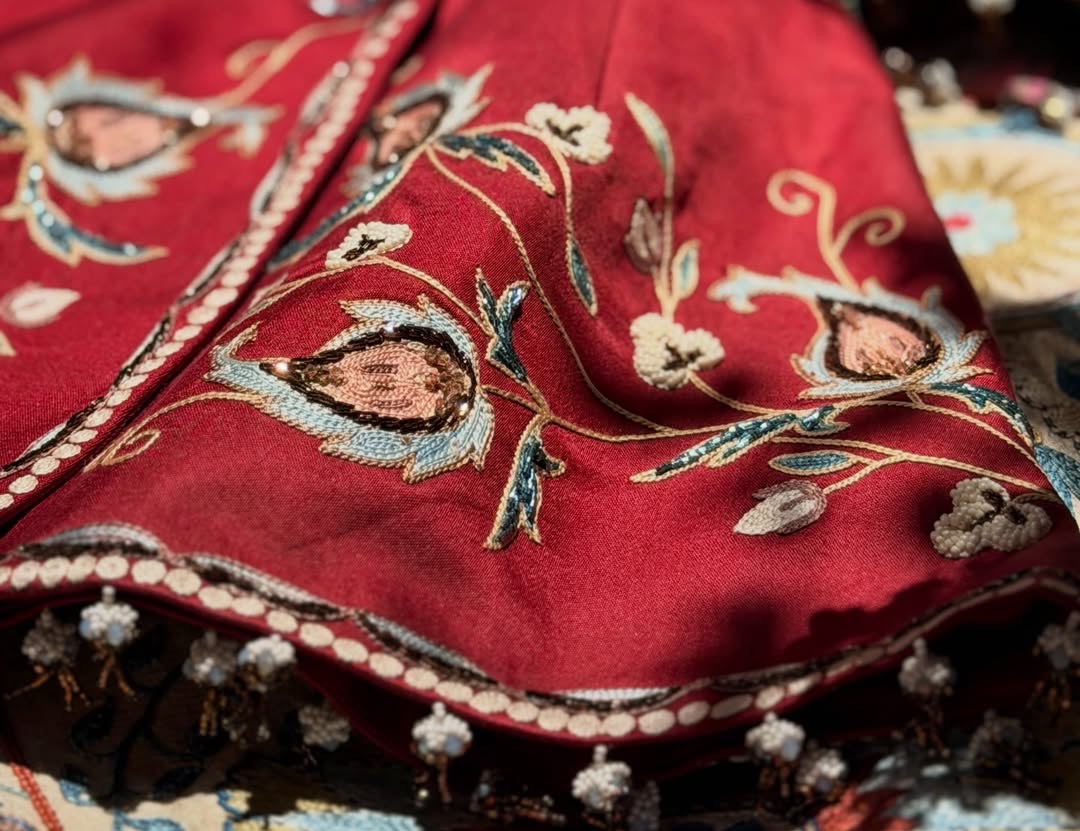 Источник: Instagram @dildorakasimova
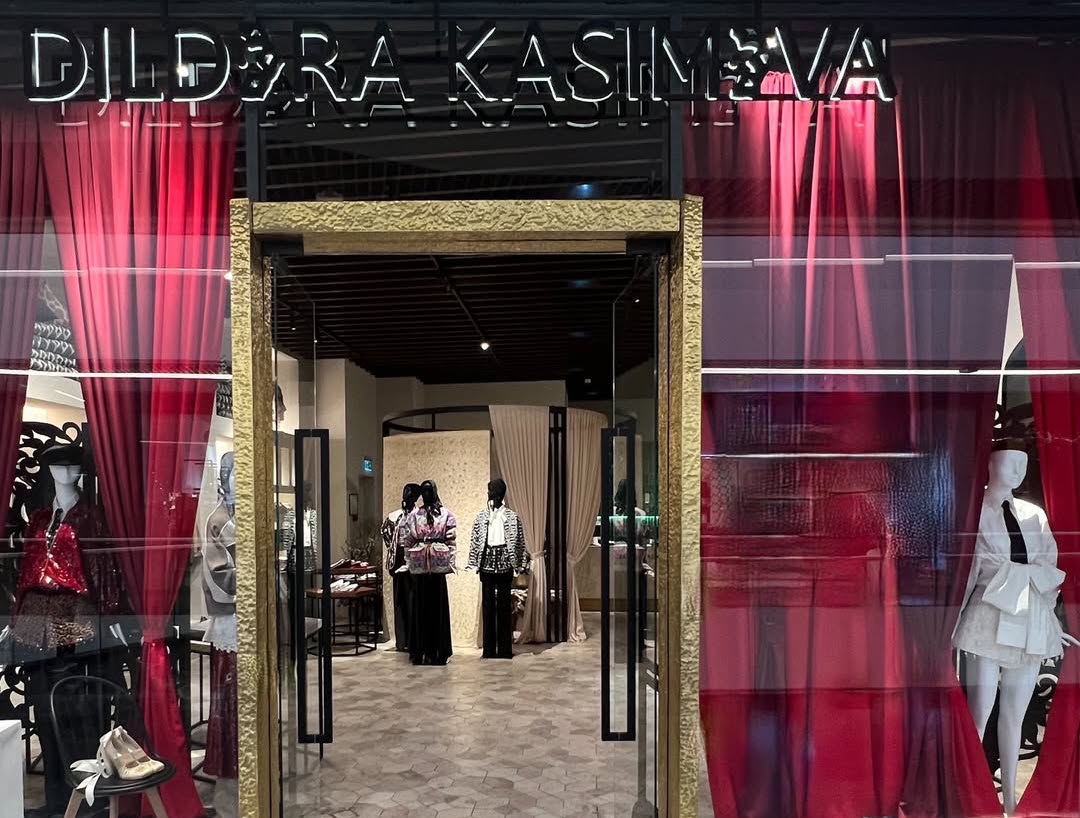
The brand operates in several directions: from couture lines to everyday collections. The flagship Dildora Kasimova boutique, which opened at the end of 2023, is no less chic than the pieces themselves—a three-story space connected by a spiral staircase with golden railings, with paintings on the walls made from fragments of suzani. The space features many familiar cultural attributes: tubeteikas of various shapes and regions, bowls with cotton branches, carpets underfoot. Motifs of everyday life are reflected in the details of the pieces themselves—for example, the image of a bowl, which regularly appears in the brand’s collections.
At another brand location in Tashkent City Mall, the focus is on collaborations and experimental lines. Here, joint projects with other designers and artists appear, as well as accessory capsules and demi-couture formats. Architectural elements — a golden arch, curtains reminiscent of a tent, carpets, and suzani — create a sense of an almost theatrical space.
Twine Space
Tashkent City Mall, 1st floor
The opening of Twine Space in the fall of 2025 was accompanied by an exhibition of young artists from Karakalpakstan and the presentation of the first collection—emphasizing the interdisciplinary nature of the project from the very beginning. Neo-expressionism defined the theme of the collection: the artists’ brushstrokes turned into ornaments, and the rich palette became the color codes of the fabrics. Especially for the collection, Margilan masters developed an original technique for adras and shoyi fabrics (a dense silk fabric with a taffeta weave). They were dyed with natural dyes in shades of blue, brown, and green. Then, the atelier began the stage of handwork: individual tailoring, quilting, embroidery. Each piece is created slowly—for example, quilting a single chapan took about 190 hours, and the beaded embroidery adorning the bags took about 120 hours.
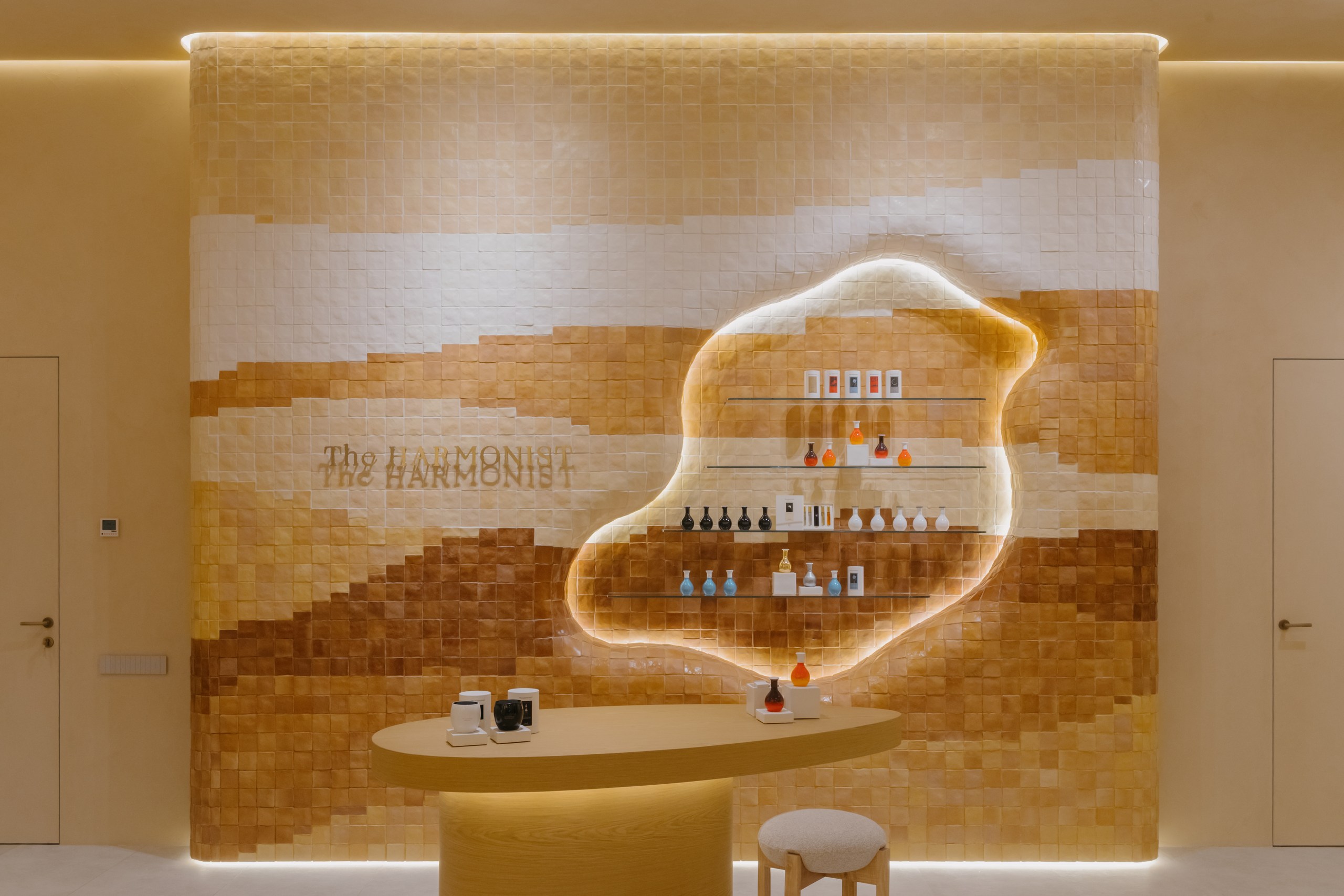 Фото: Сергей Погосян
From materials — natural bases: silk, cotton, bakhmal, adras; local and Indian glass for beads; silver for jewelry; vintage fabrics for textiles and furniture; ceramics. According to the brand’s creators, such recycling is a way to give fabrics and objects new life without disrupting their original character.
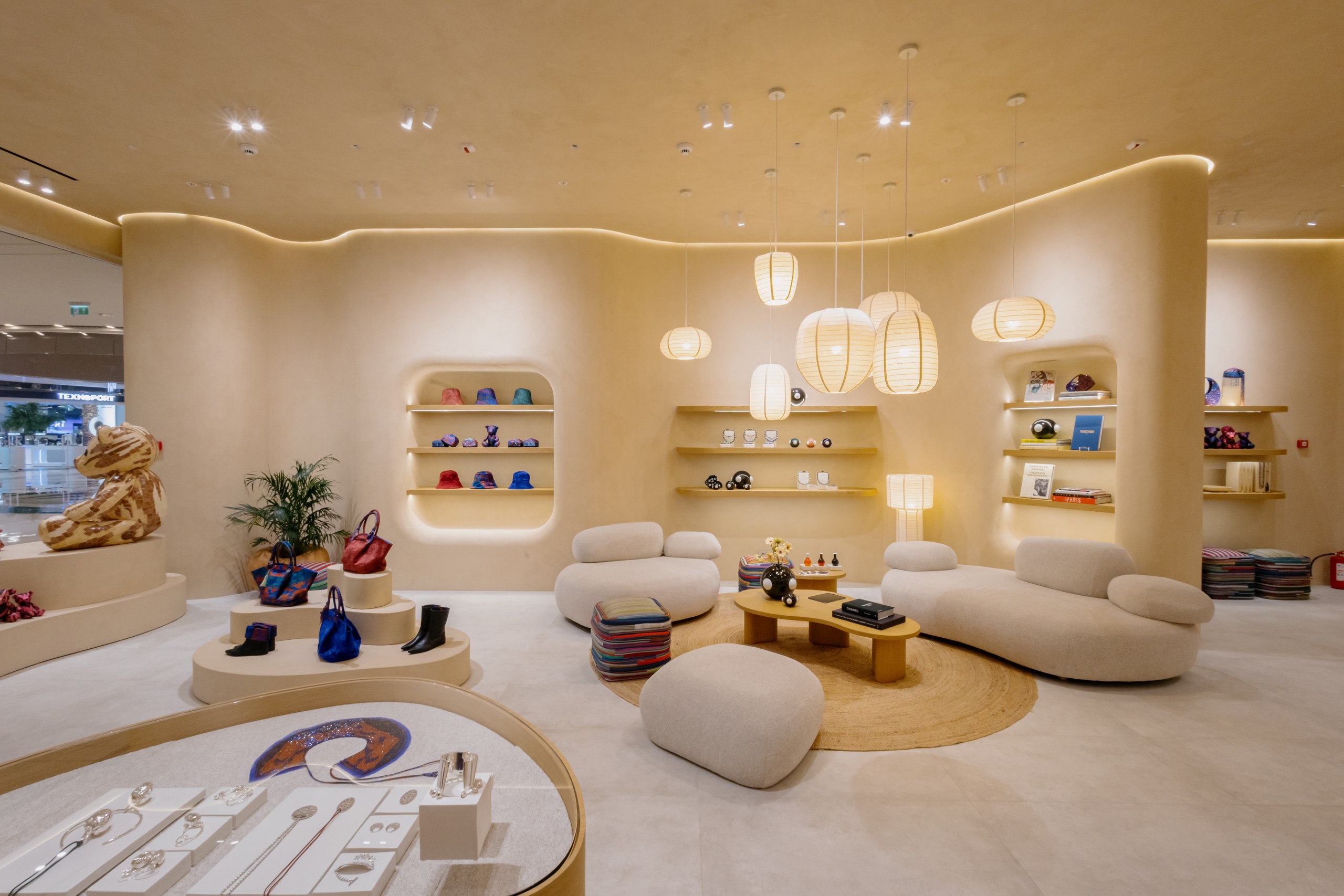
Space is a joint project of Twine Space and The Harmonist Perfume House; from the very beginning, it was conceived not just as a store where you buy something and leave, but as a place where you experience a certain interaction.
The visual aspect was created by scenographer and designer Julien Steinmann, who brought theatrical and cinematic thinking to the boutique's design while maintaining minimalism to highlight the features of the products. That is why every detail, such as decorations, sound, lighting, and scent, enhances the dramatic impact of the space.
Сузани от Касимбаевой
35 Suzuk-Ota St.
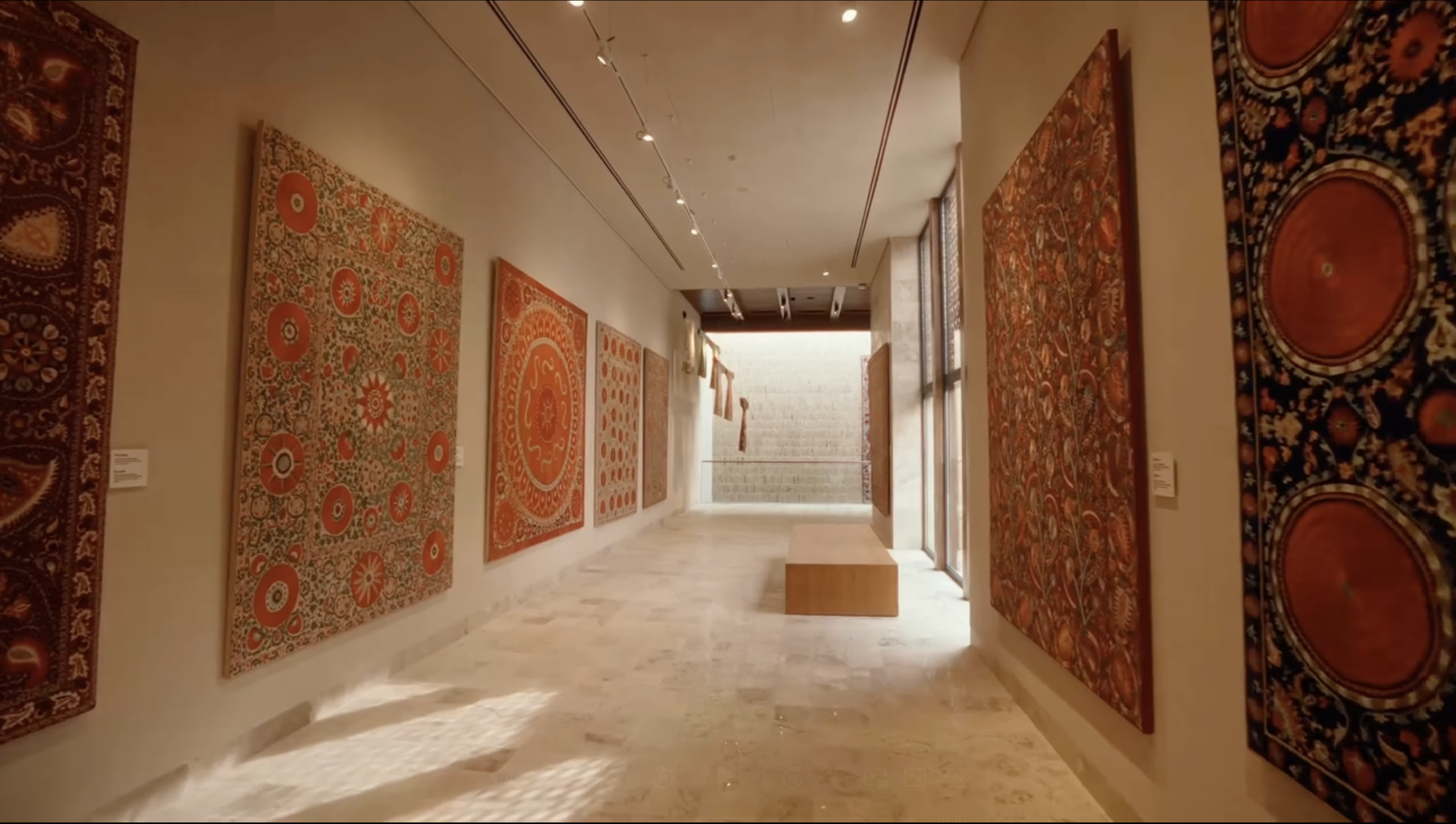
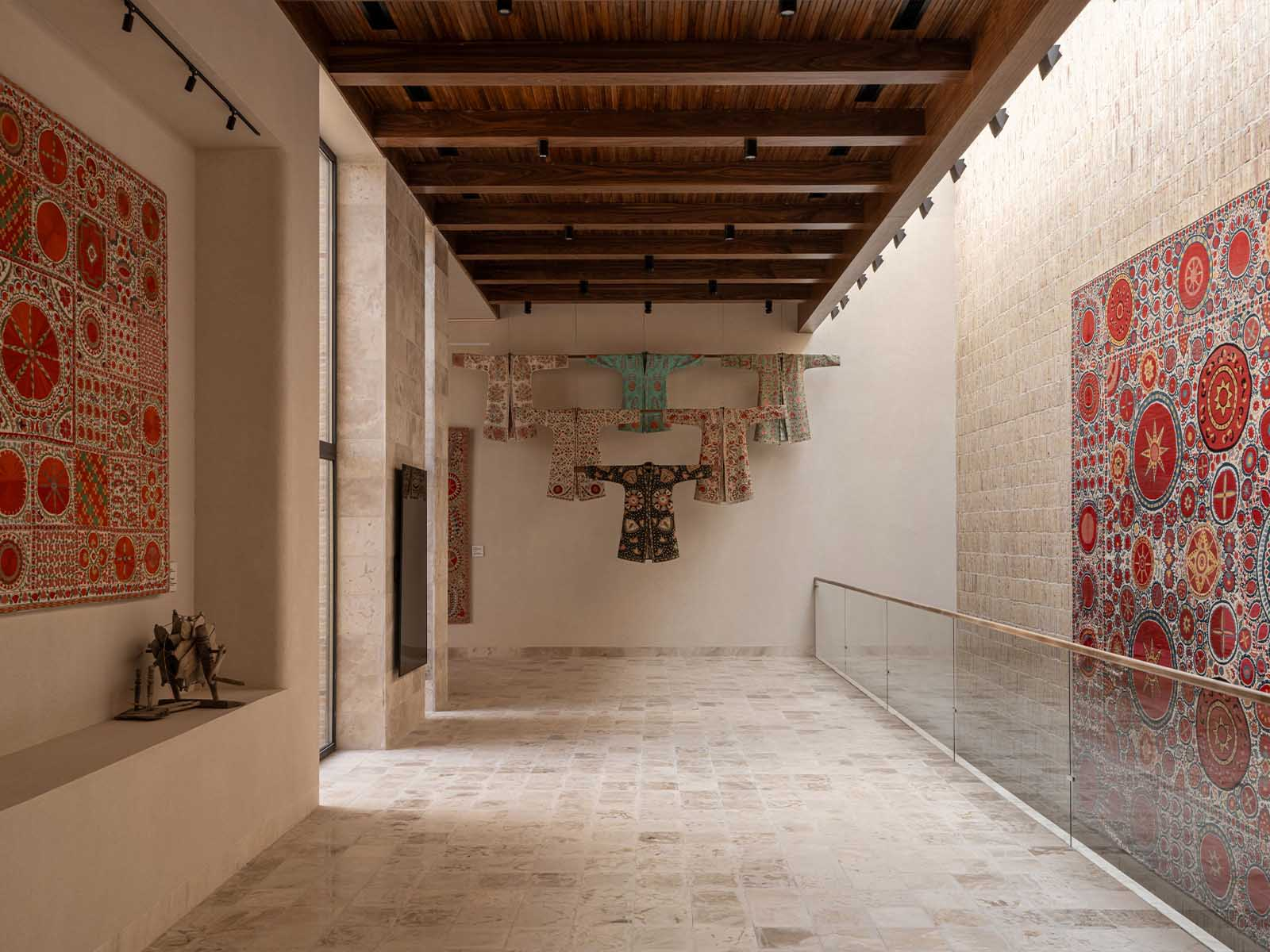
Perhaps the most striking example of how traditional Uzbek craftsmanship can be integrated into a modern context without losing its authenticity and sacred meaning. At the heart of Madina Kasymbayeva's brand is the Tashkent school of suzani, in particular the rare "palyak" tradition with its cosmic symbolism: the sun, moon, stars, circles, and floral structures.
The process of creating suzani in the atelier remains as close to the historical method as possible: the fabric is handmade from natural fibers—silk and cotton. The design is applied directly onto the cloth by hand, without digital templates. The dyes are made from plants and minerals, which ensures that the colors do not fade over time but rather “deepen.” Creating a single large panel can take up to six months of continuous handwork.
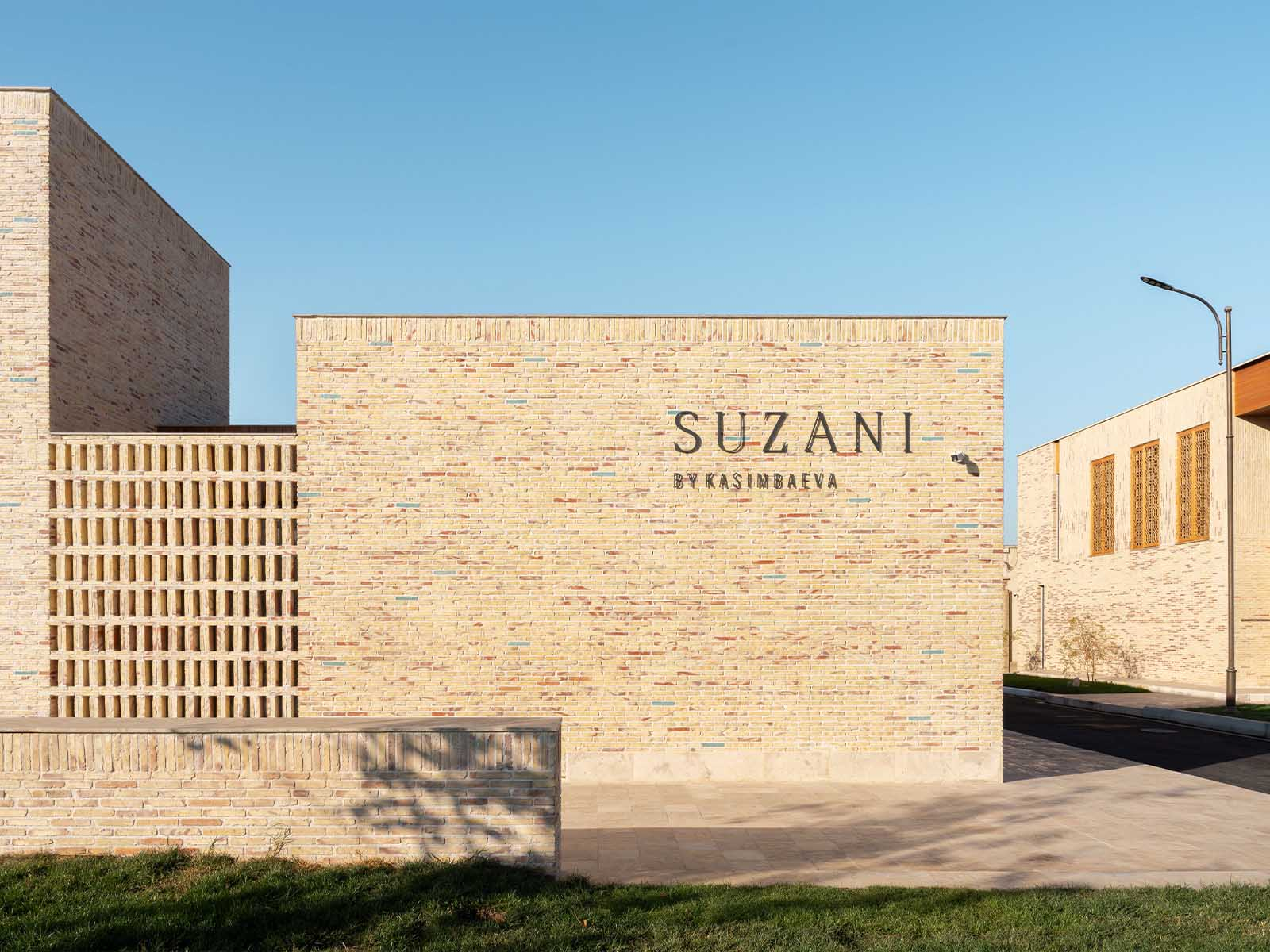
Over time, the brand moved beyond textiles as such. In addition to wall panels, they create interior elements, clothing, bags, furniture pieces, and art objects here.
The brand space in the artisan town of Suzuk-ota is an important part of its identity. It is not just a showroom, but a vibrant cultural cluster that brings together workshops, classrooms, and a gallery. Here you can see the entire journey of suzani: from dyeing threads and sketching the ornament to the final stitch. Choosing such a location makes it open for dialogue with researchers, collectors, tourists, and simply those encountering Uzbek decorative art for the first time. In addition, Suzani by Kasimbaeva also exists as a school. Hundreds of students have passed through it, many of whom have opened their own workshops.
The case of Kasymbayeva is an example of how a local tradition can become part of the global cultural agenda. The brand, with its 30-year journey, reminds us that modern culture is impossible without a careful attitude toward heritage.
Local fashion in Uzbekistan today is not a single style or one aesthetic, as it might seem at first glance. Each of the represented brands speaks its own language (or is only just creating it), but together they form a cohesive cultural map.
Moreover, Uzbek fashion is gradually separating itself from the folkloric framework and gaining freedom and modernity — something that had long been a dead end, when the only starting point for designers was to turn to the past. Fashion in Uzbekistan does not reject its roots — rather, it is about not becoming frozen in them, choosing the path of a new, thoughtful development of history. Boutiques in this process cease to be just locations, becoming a continuation of this already independent and exceptional path.
J.Kim
161 Bogishamol Street
J.Kim is a brand whose visual language was shaped at the intersection of Korean and Uzbek traditions, where the national costume becomes only a starting point for creating collections, rather than an object of its stylization (a path most designers usually choose). The brand’s collections reinterpret elements of clothing from both cultures, combining them with materials from different eras. The recognizable ornament in the form of knots was inspired by Korean fabric bundles and has become a key symbol of the brand. What truly sets J.Kim apart from other designers in the country: her works are not ethnic statements, but clearly contemporary fashion.
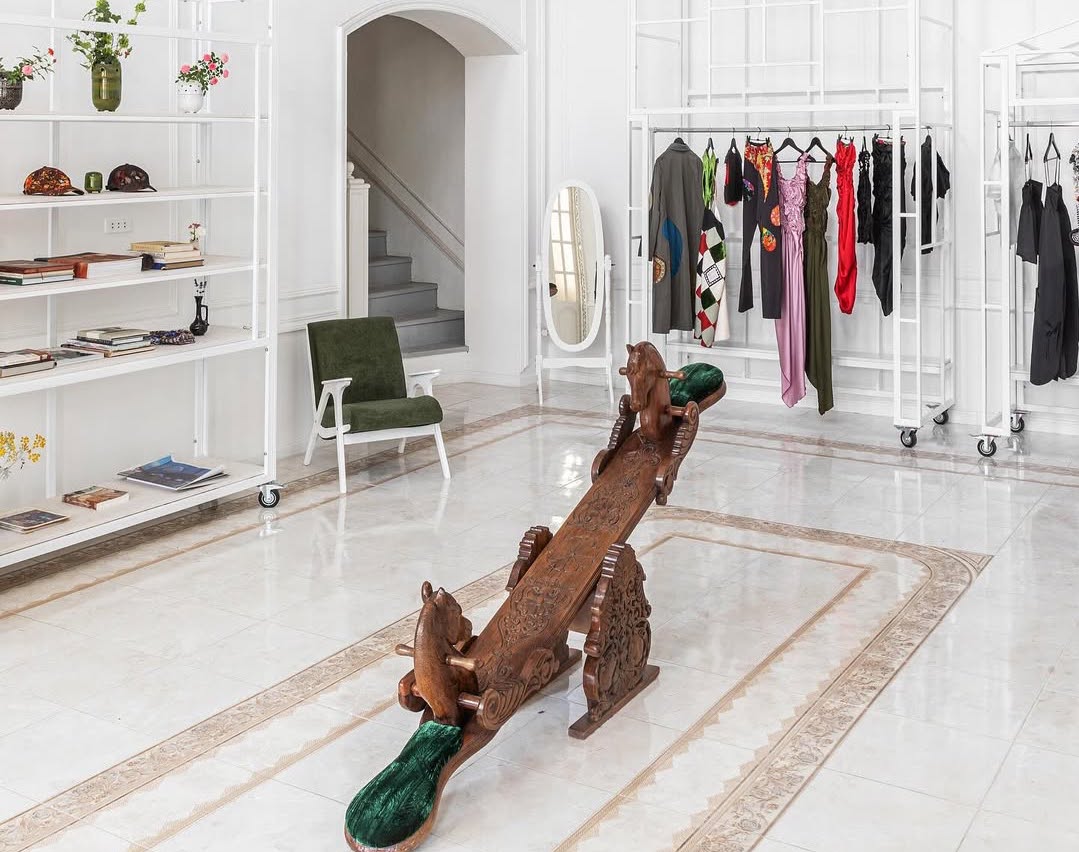 Фото: Денис Комаров
The opening of the J.Kim house-workshop in Tashkent in 2023 was not just the launch of a retail space. Firstly, it is located in a large house with a garden—a format rare for fashion brands. Secondly, inside the house, a consistent, thoughtfully designed route into an atmosphere of memory was created: photographs featuring the brand’s iconic looks; a chandelier assembled from Soviet street lamps; surreal elements like a white “rainbow” reminiscent of those in the courtyards of our childhood; a space for tea ceremonies. All of this immerses visitors, just as the designer intended, in a world of personal experience and collective recognition. This is also where collection presentations and intimate shows are held.
And even though today J.Kim has many points in international concept stores and on global platforms, home remains a landmark place, essential to return to.
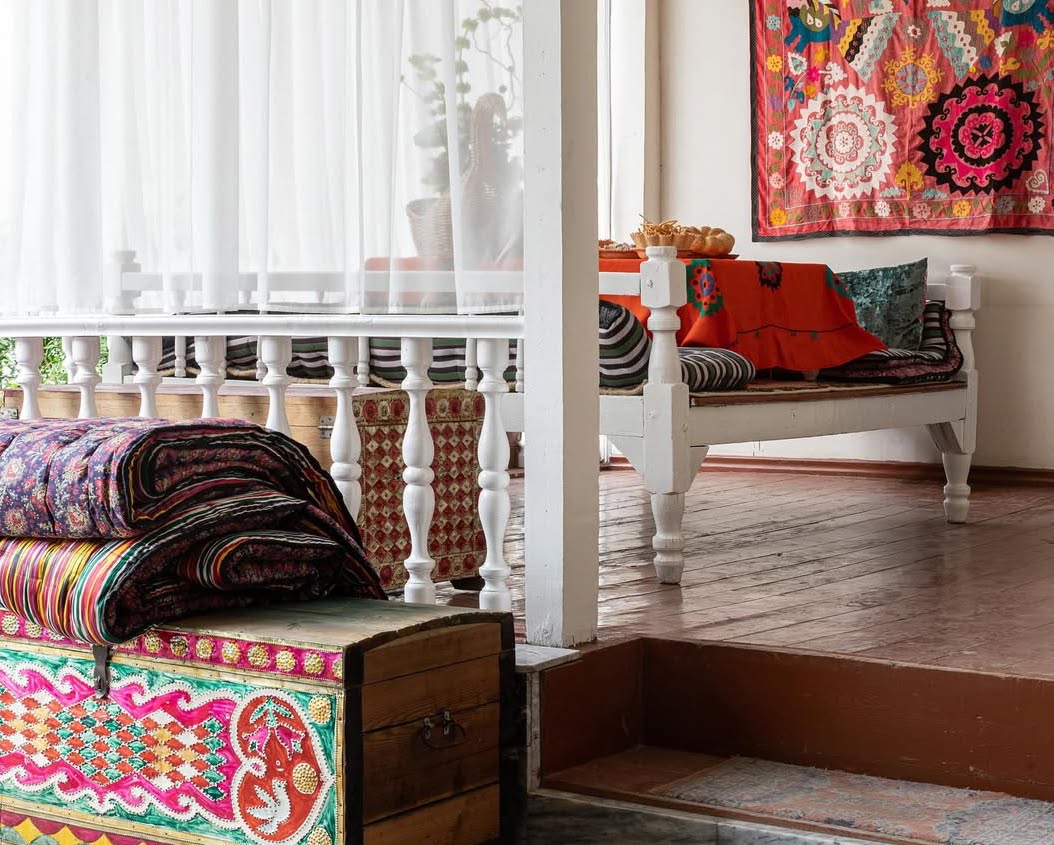 Фото: Денис Комаров
Newsletter
A letter from the HD editors
Once a week, we send the best stories, events, and cultural discoveries from Central Asia.