
In these museums, you won't find crowds, but you might find yourself. Among ancient wheat, dark caves, and musical shadows of the past, Central Asia reveals another, unexpected side of its soul.
Kazakhstan
Underground Museum "Kyluet"
Address: Shymkent, Kazakhstan St., 41
Working hours: daily
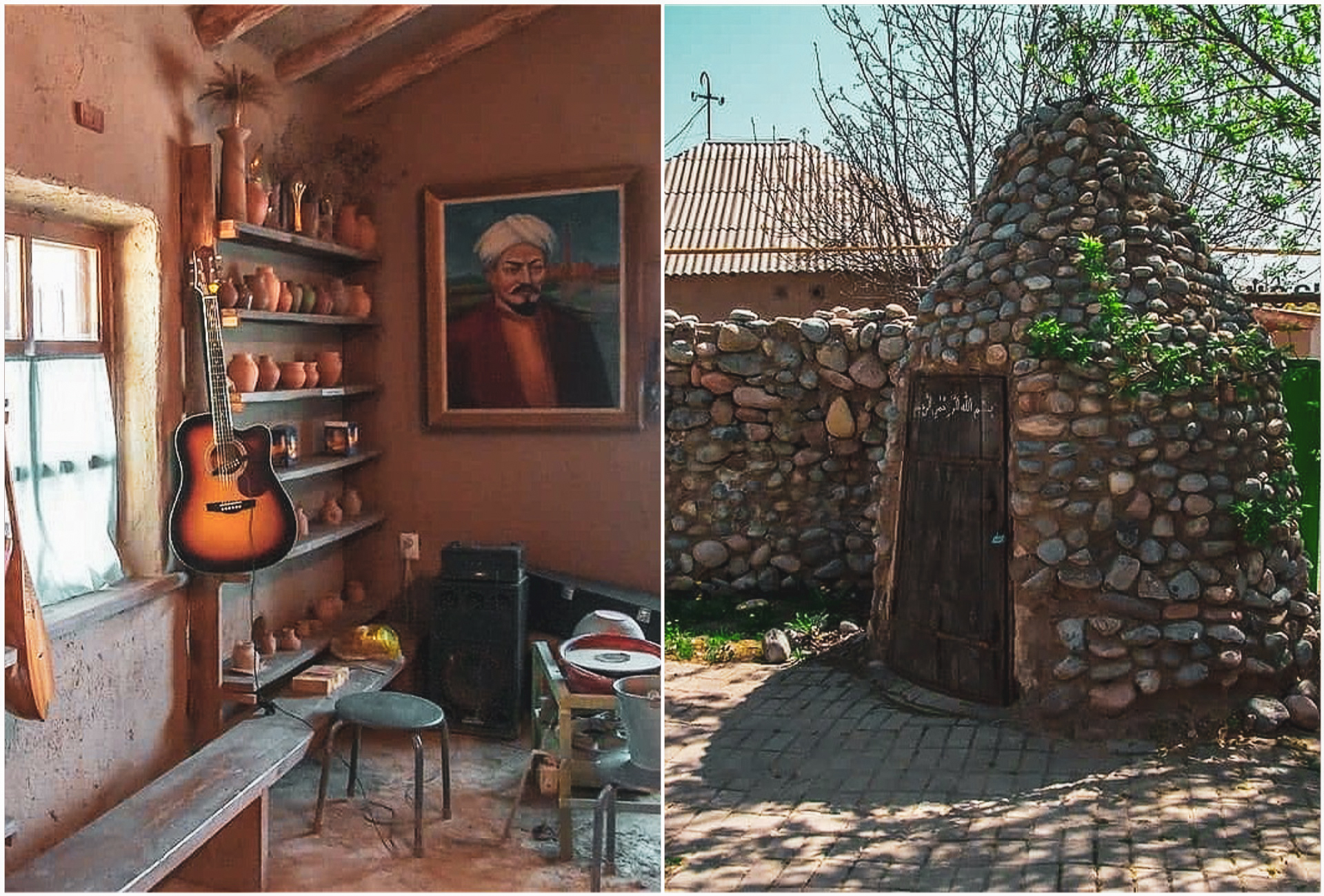
Underground Museum "Kyluet". Photocollage
What happens when an artist, a potter, and an ethnographer dig a little deeper—both literally and figuratively? "Kyluet" is a museum with a hand-dug khilvet, an underground cell for prayer and contemplation, at a depth of seven meters.
Its creator, Kendebai Karabdalyov, seems to have stepped right out of an epic: he molds jugs, plays the harmonica, collects ancient instruments, and talks about Kazakh daily life in a way that gives you goosebumps. And most importantly, he welcomes you like a dear guest. Here, you don't just look—you contemplate. You don't just feel—you simply are present.
Respect for the Mother Museum
Address: Almaty, Upper Kaskelen Highway, 26
Working hours: Tue-Sun 09:00-18:00
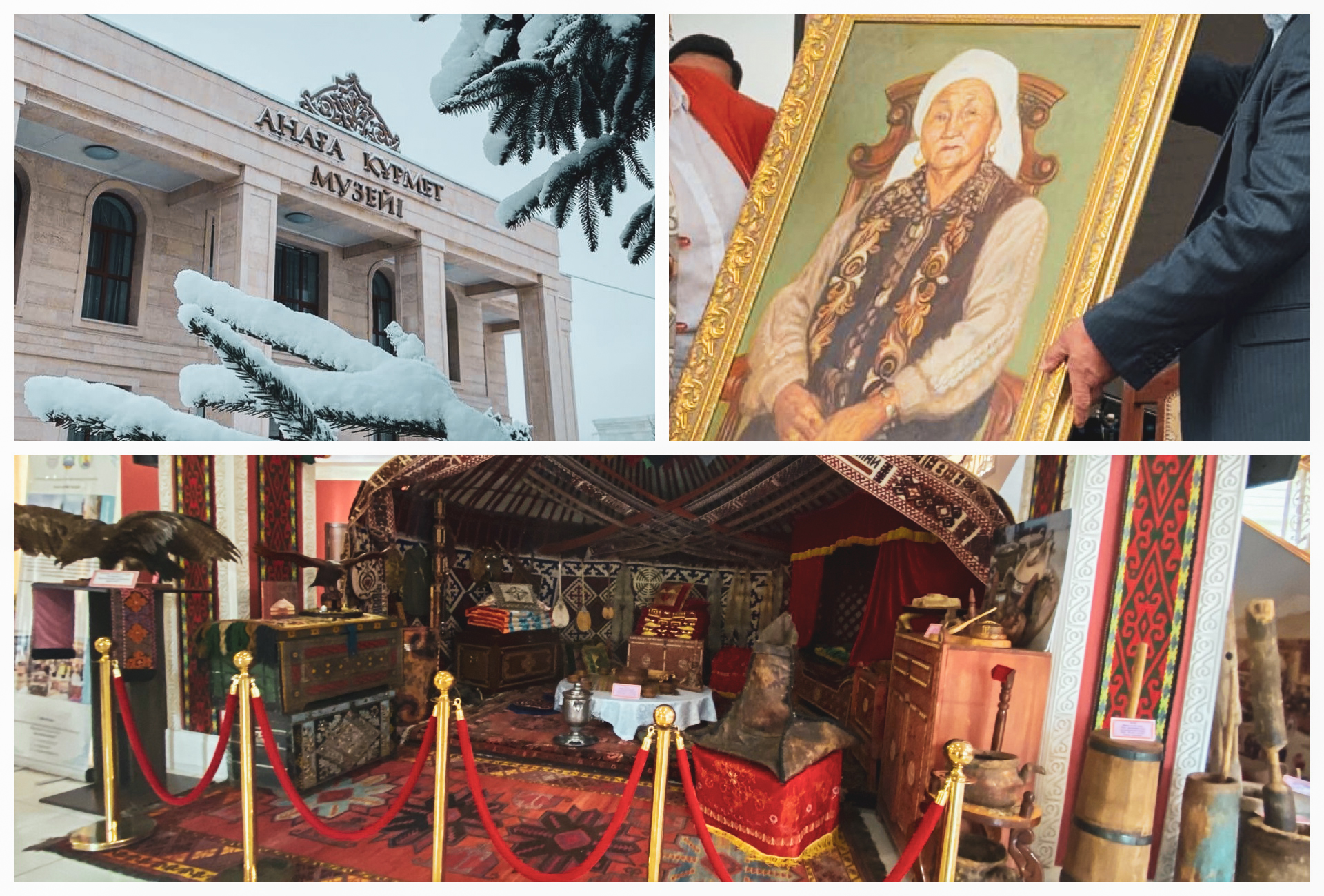
Museum "Respect for the Mother". Photocollage
This museum grew out of love. It was founded by Bakhyt Shpekbayeva in honor of her mother, who raised eight children. Bakhyt meticulously collected everything that reminded her of her mother over a long period: dishes, fabrics, photographs, antique items that held the care, labor, and tenderness of generations. Thus, "Anağa qurmet" (Honor to Mother) was born—an exhibition that tells the story of the Kazakh woman: from nomadic life to the 20th century, from yurts to wars, from the cradle to mourning.
But the museum is just part of a large complex built on donations: nearby are a madrasah, a mosque, a restaurant with halal cuisine, and a monument to a mother, which bears the inscription: "I will love you forever." A place where a woman is not the background, but the center of the universe.
Uzbekistan
Pumpkin House Museum
Address: Tashkent, Sultanija St., 62
Opening hours: weekdays 10:00-18:00, weekends 11:00-17:00
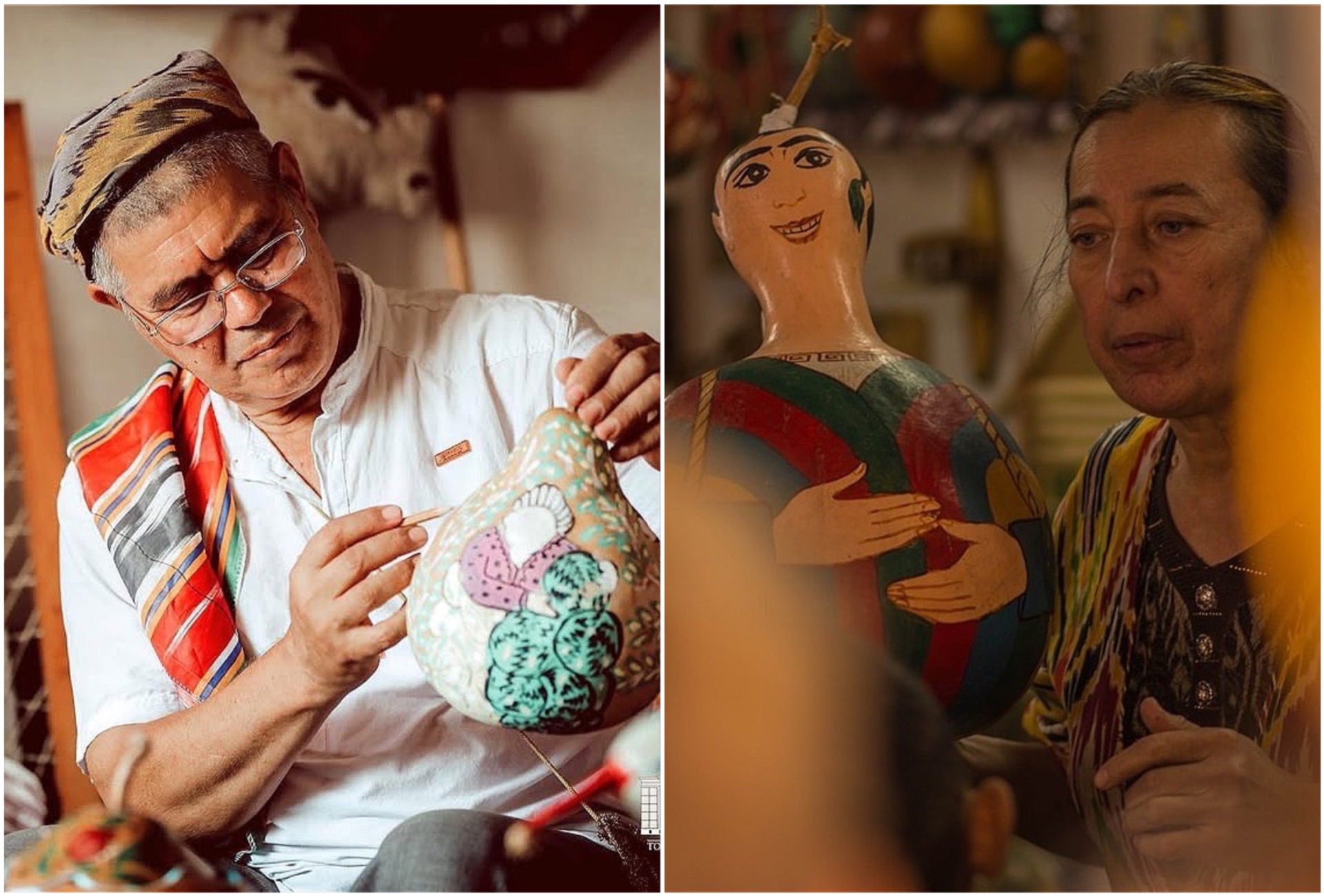
Pumpkin House Museum. Photocollage
At the entrance — a straw camel. Beyond the gates — a thousand pumpkins and two restless souls. The Pumpkin House-Museum is the family universe of Bakhtier and Dildora Pulatov: retired teachers, artists at heart, and a little bit of magicians. It all started with a couple of antique irons and jugs, but one day they were gifted four pumpkins — and everything began to spin. Now, it's not just cucurbits, but pumpkin dolls, pumpkin musical instruments, pumpkin household items, and entire performances featuring pumpkins. And yes, each pumpkin has its own character.
The museum operates on a simple principle: don't just look—participate. Guests play, draw, whittle, sing. They especially love children here. The Pulatovs believe joy is the best medicine, and wonder stays in memory forever. And it seems they succeed in everything: both to amaze and to leave a mark.
Kyrgyzstan
Museum of the Great Void
Address: village of Orto-Sai, 31 Ormokoeva Street
Working hours: Sat-Sun 10:00-18:00
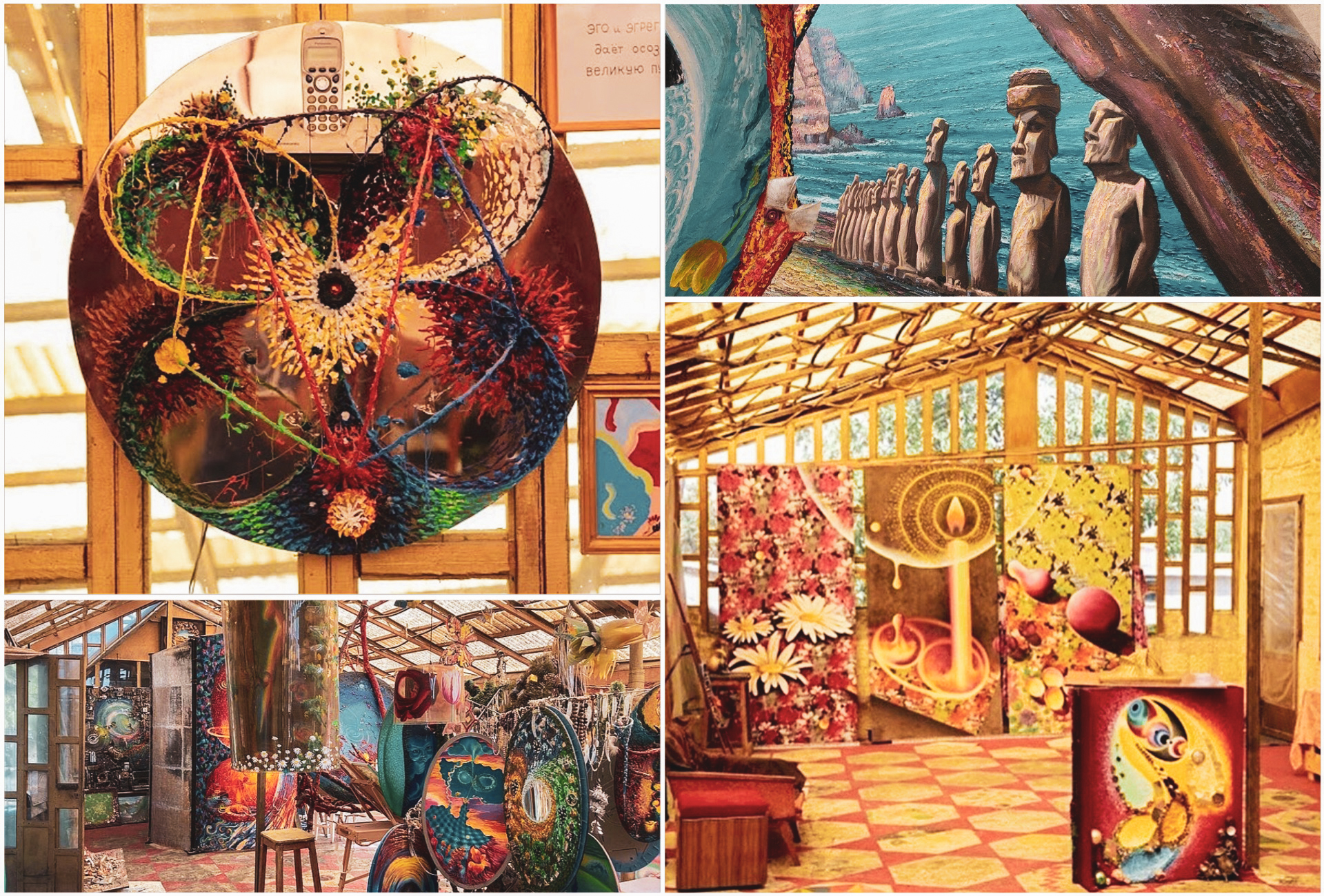
Museum of Great Emptiness. Photocollage
Instead of a ticket – any banknote "from the heart." "The Museum of the Great Emptiness" is not an exhibition, but a revelation. Artist Alexey Skriplev has been building his universe in the foothills near Bishkek for thirty years: from glass, wood, mirrors, and silence. Here, you can get lost in corridors of paintings, enter a pyramid, dive into water, and emerge among the stars. And on the roof – a terrace for meditation and the feeling that you've been slightly reassembled.
Skriplev meets personally. Shows, tells, sometimes remains silent. The main condition: do not come with aggression. Everything here is built on trust — in the viewer, in art, and in the void, which, as it turns out, is not empty at all.
Sulaiman-Too - a museum in the mountain
Address: Osh, Gapara Aitiev Street, 71/2
Opening hours: Tue-Sun 9:00-17:00
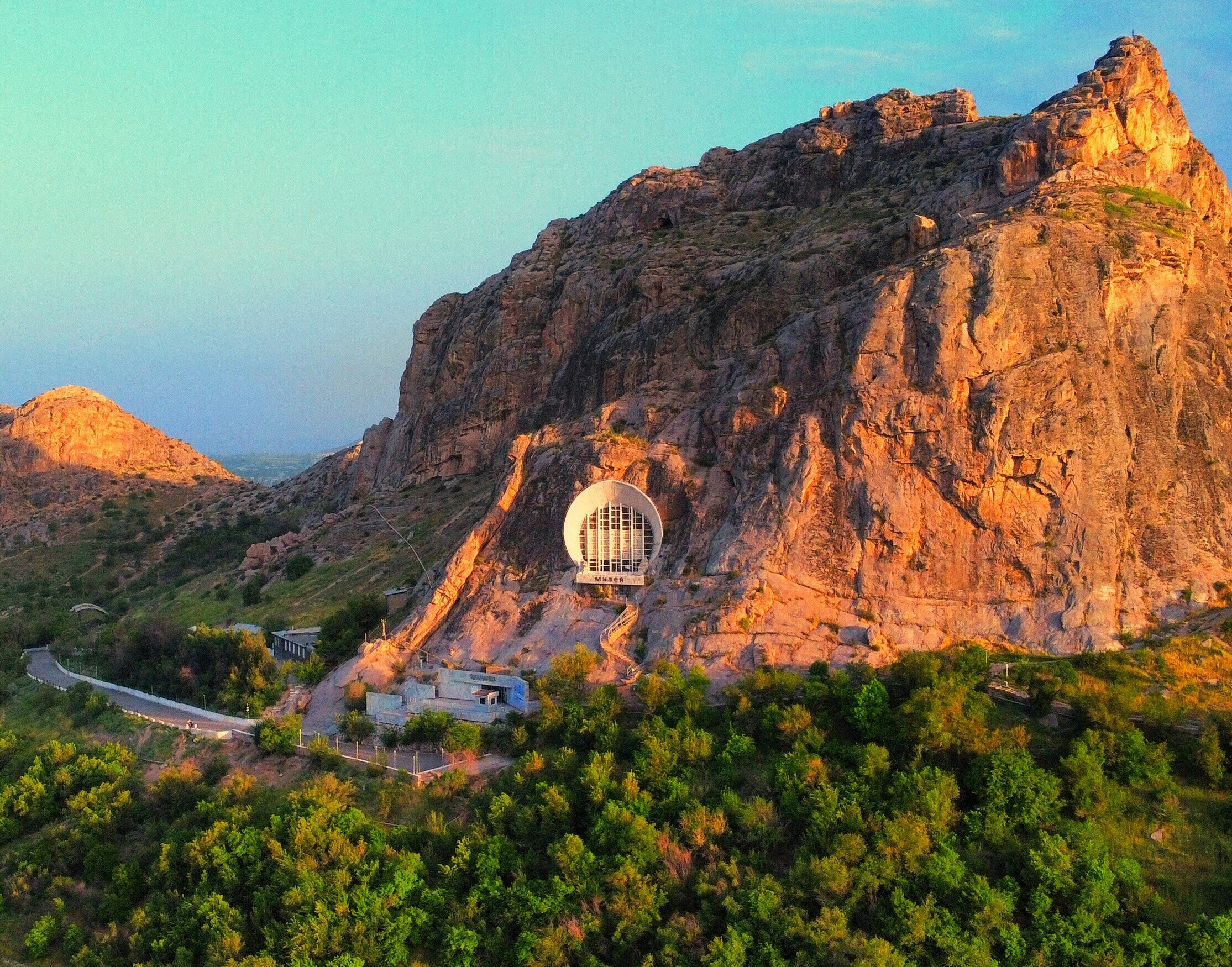
Sulaiman-Too. Photo: Dastan Suiuntbekov / Unsplash
Once they wanted to open a restaurant here. But in 1949, in the sacred mountain of Sulayman-Too, where pilgrims had climbed for centuries, a museum appeared — carved right into the cave. Now it's not just an exhibition space, but the living heart of Osh: the noise of the streets stays below, while above there is silence, stone, and a feeling of eternity.
Inside — cool halls, ancient petroglyphs, Sufi niches, and over 30,000 exhibits: from archaeological finds to felt items and vintage photographs. Here, you feel not only history but also reverence — for the land, the culture, and the people who preserve it. And there's also a great view from the top.
More on the topic:
ТРЦ «Музейный»: как культурные площадки превращаются в торговые — и что с этим делатьБойкая розничная торговля все глубже проникает в музейные пространства и окружает исторические памятники — это давно стало привычным явлением. Но когда ярмарка вытесняет культуру даже внутри музеев, возникает вопрос: как вернуть этим пространствам их подлинное предназначение — просвещать, напоминать, восхищать?humodoc.com
Turkmenistan
Wheat Museum
Address: Ahal Region, Annau, Ahal Street
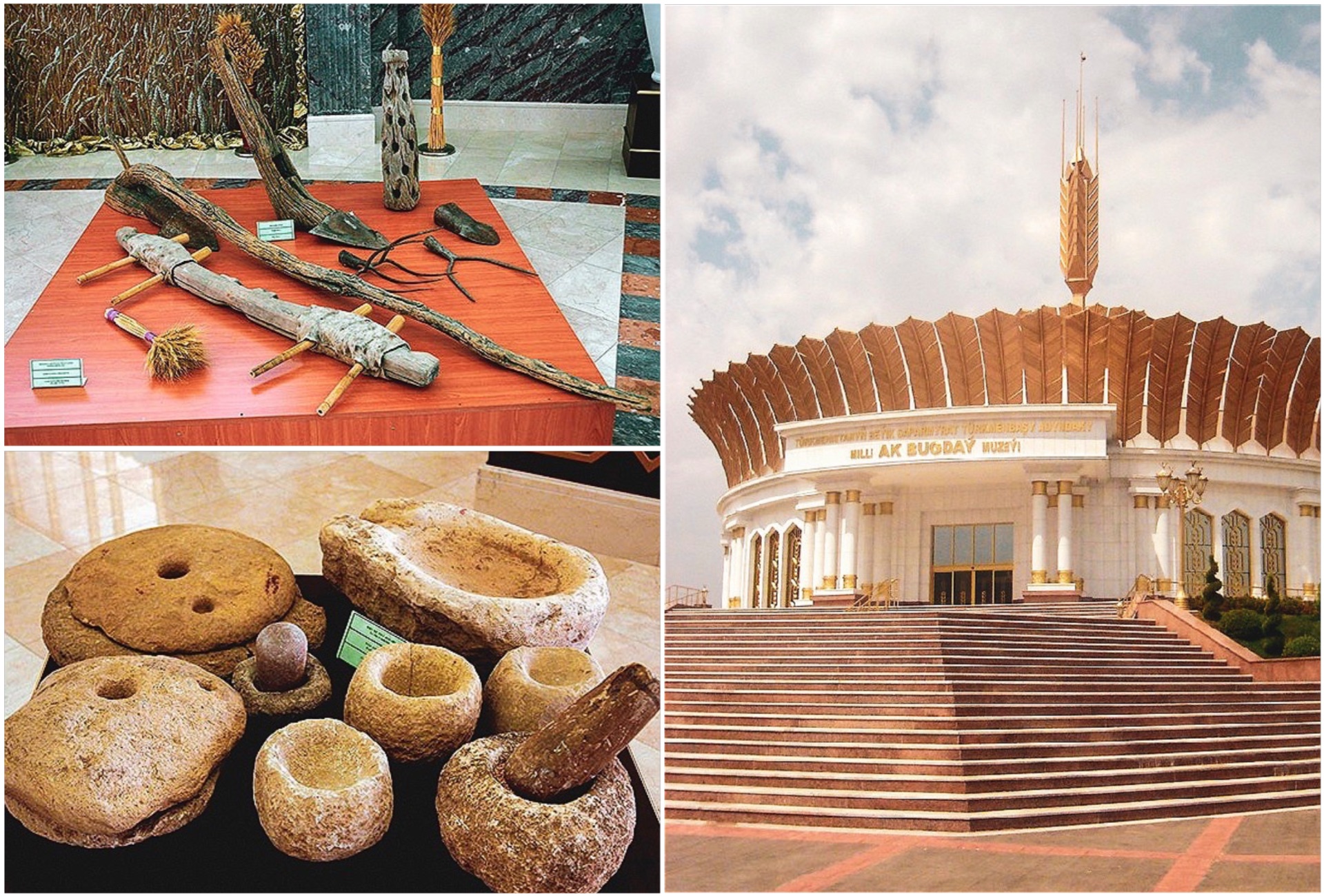
Wheat Museum. Photocollage
If you thought wheat had no place in a museum, you simply haven't been to "Ak Bugday." This is a museum dedicated to the grain that has fed humanity for millennia. Built next to the very site where archaeologists found grains five thousand years old, the museum resembles more of a temple of grain — with a gilded ear of wheat on its roof.
Inside are jugs, millstones, terracotta fertility goddesses, bronze hoes, and hundreds of objects that make up the agricultural history of the region. Part of the hall is dedicated to modern wheat varieties and breeding achievements. The museum tells not only about antiquity but also about the daily life of farmers.
Neutrality Museum
Address: Ashgabat, Chandibil Ave.
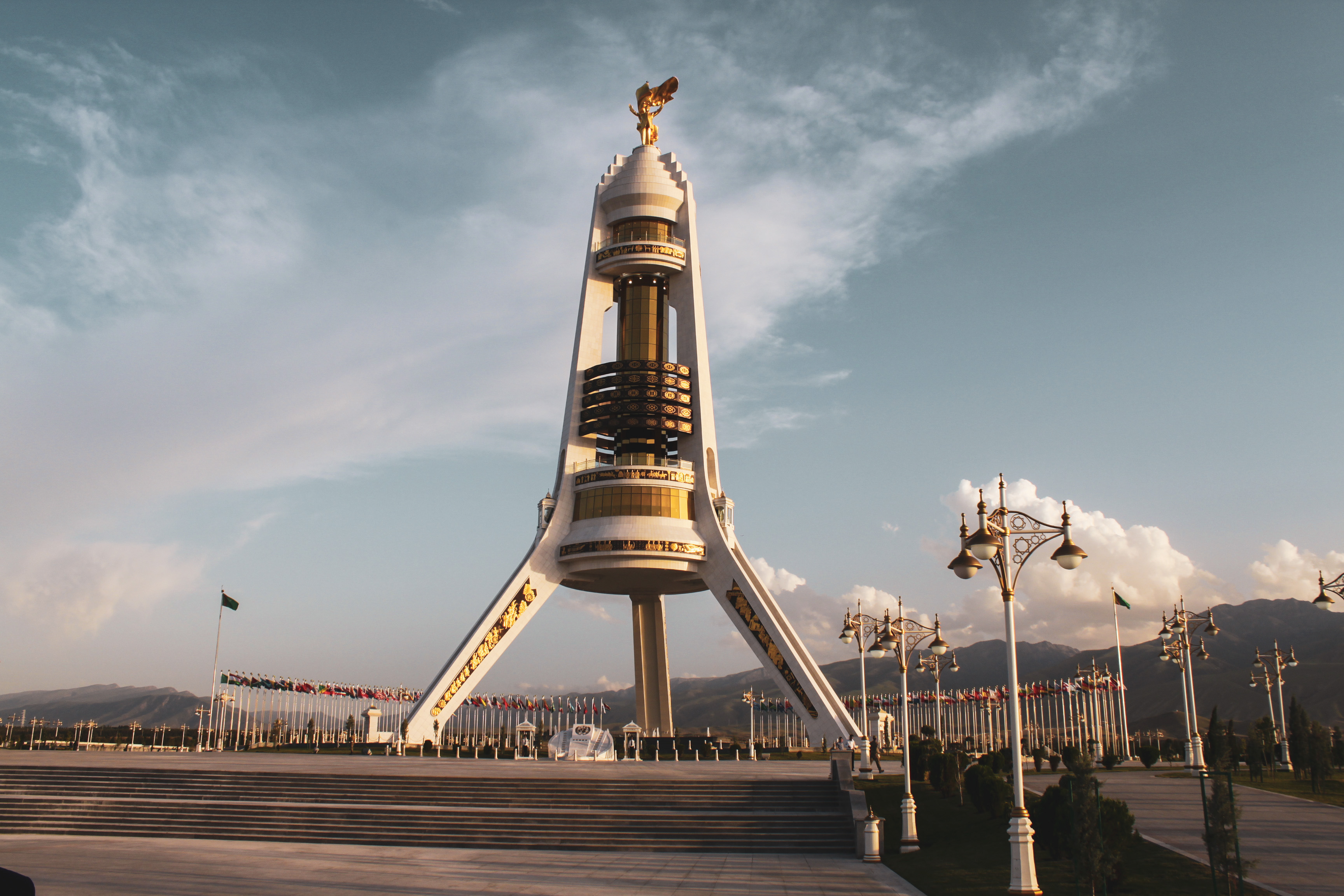
Museum of Neutrality.
The building is 95 meters tall, and this is no coincidence. In 1995, the United Nations recognized Turkmenistan as a neutral state. Now, Neutrality Day is one of the most important national holidays. And such an event deserves its own museum. So it opened 16 years after the declaration of the special political status.
The museum is located on the first floor of a futuristic tripod — a building standing on three columns. Inside, there is a small exhibition dedicated to Turkmenistan's foreign policy and events related to the international recognition of its neutral status. This is a place for those who love architecture with subtext and museum halls that tell the story of the state through the language of details.
Read also:
Не только Савицким богаты: что еще смотреть в НукусеВсе едут в Нукус ради «Савицкого» — и, конечно, не зря. Но если вы думаете, что на этом все, — вы сильно недооцениваете город.humodoc.com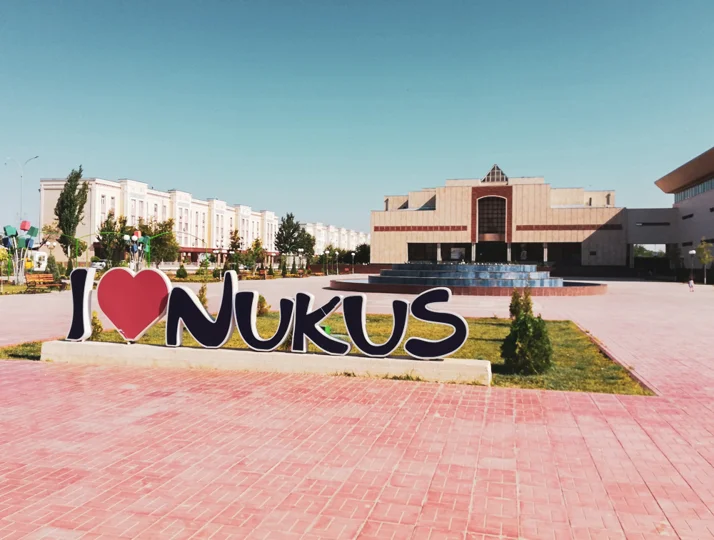

Newsletter
A letter from the HD editors
Once a week, we send the best stories, events, and cultural discoveries from Central Asia.