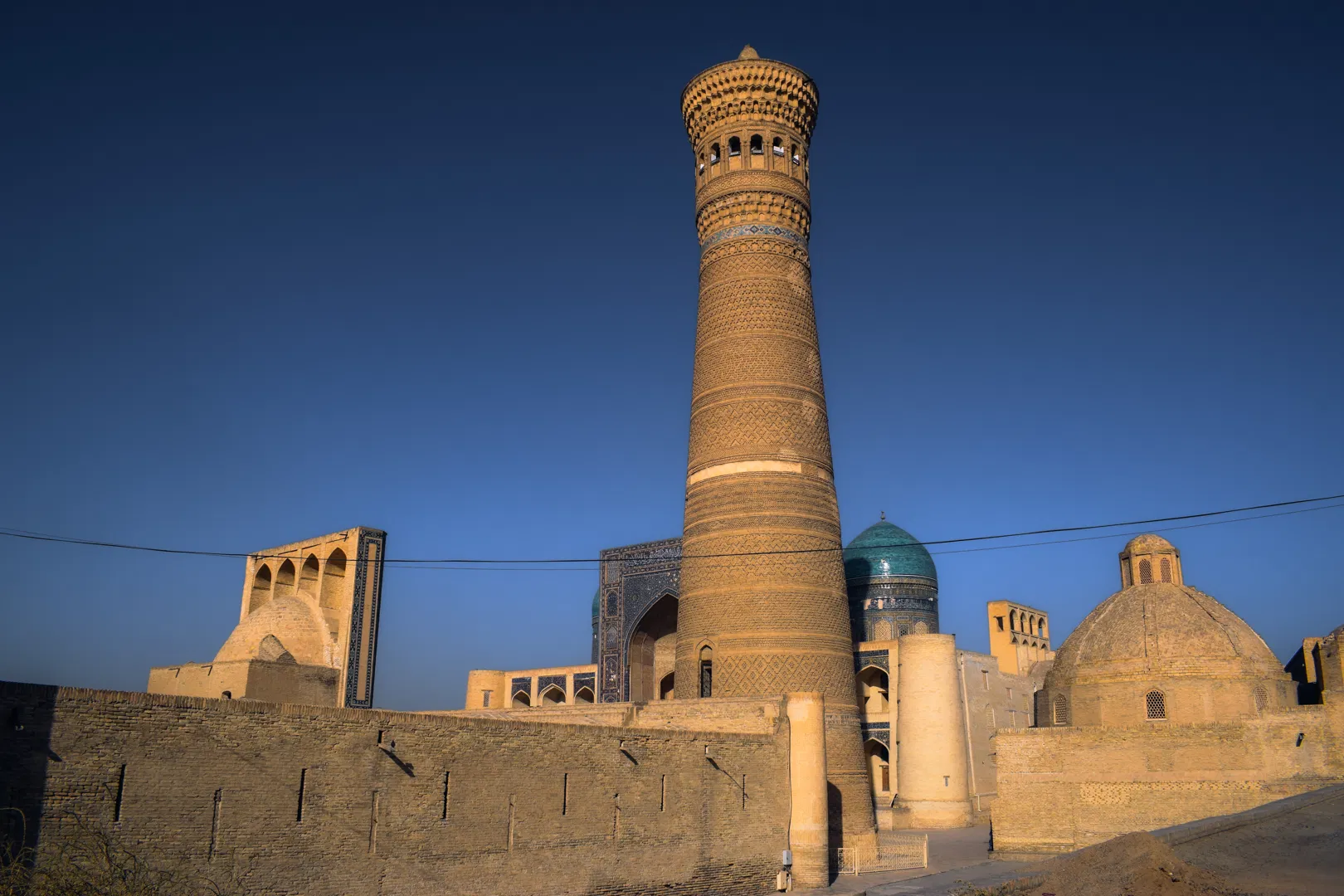
The minarets of Central Asia are not just architecture. They are vertical chronicles of time and faith, rising above the steppes, deserts, and mountains. From the unfinished giant of Khorezm to the corrugated tower of Surkhandarya — HD magazine has compiled a route to the most impressive towers of the region's Islamic world.
Why follow the trail of minarets? To hear the voice of history that resonates in the brickwork and carvings, in the silence at the base and in the echo of the adhan. This guide is not just a list, but a map of cultural memory, where each minaret is like a page in a great book. In Central Asia, towers served not only as calls to prayer but also as beacons, watchtowers, symbols of power. And also—as markers of architectural evolution, aesthetic boldness, and technical genius.
Uzbekistan
Kalyan Minaret (Bukhara)
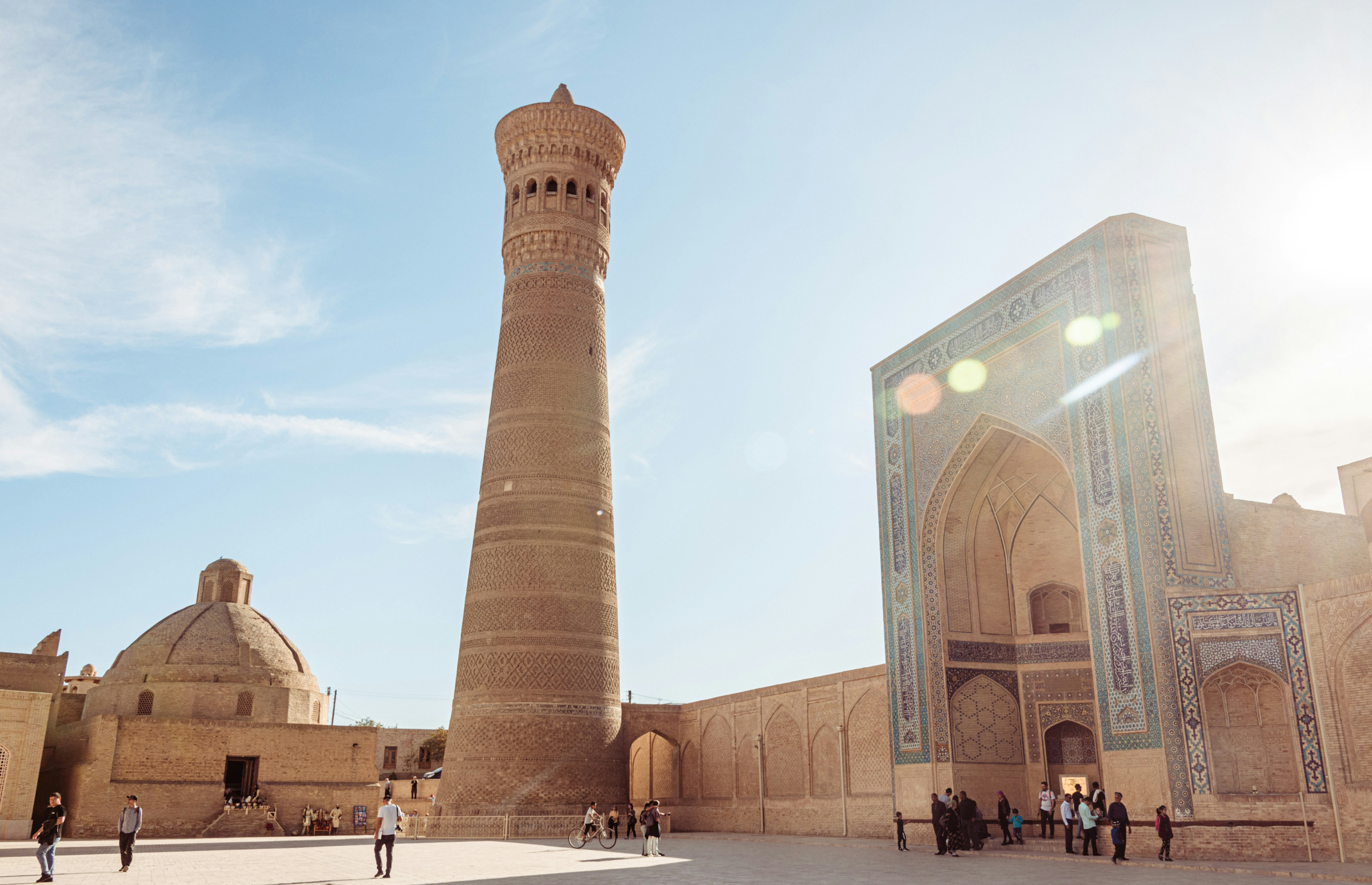
Construction date: 1127
Height: 46.5 meters
Customer: Arslan Khan - ruler of the western Karakhanid state. It was during his reign that city walls, mosques, and minarets were erected in Bukhara.
Architectural Features
The minaret is constructed of fired bricks and consists of a circular tower with a diameter of 9 meters at the base and 6 meters at the top. Its surface is decorated with 12 bands of geometric ornamentation, some of which include Kufic inscriptions. The minaret bears the preserved construction date—1127—and the name of the architect: Bako.
How to get there
From Tashkent to Bukhara — by Afrosiyob train (about 4 hours), express train (6 hours), or by plane (from 1 to 1.5 hours). The minaret is located in the historical center of the city, within walking distance of the main attractions.
Vabkent Minaret (Bukhara Region)
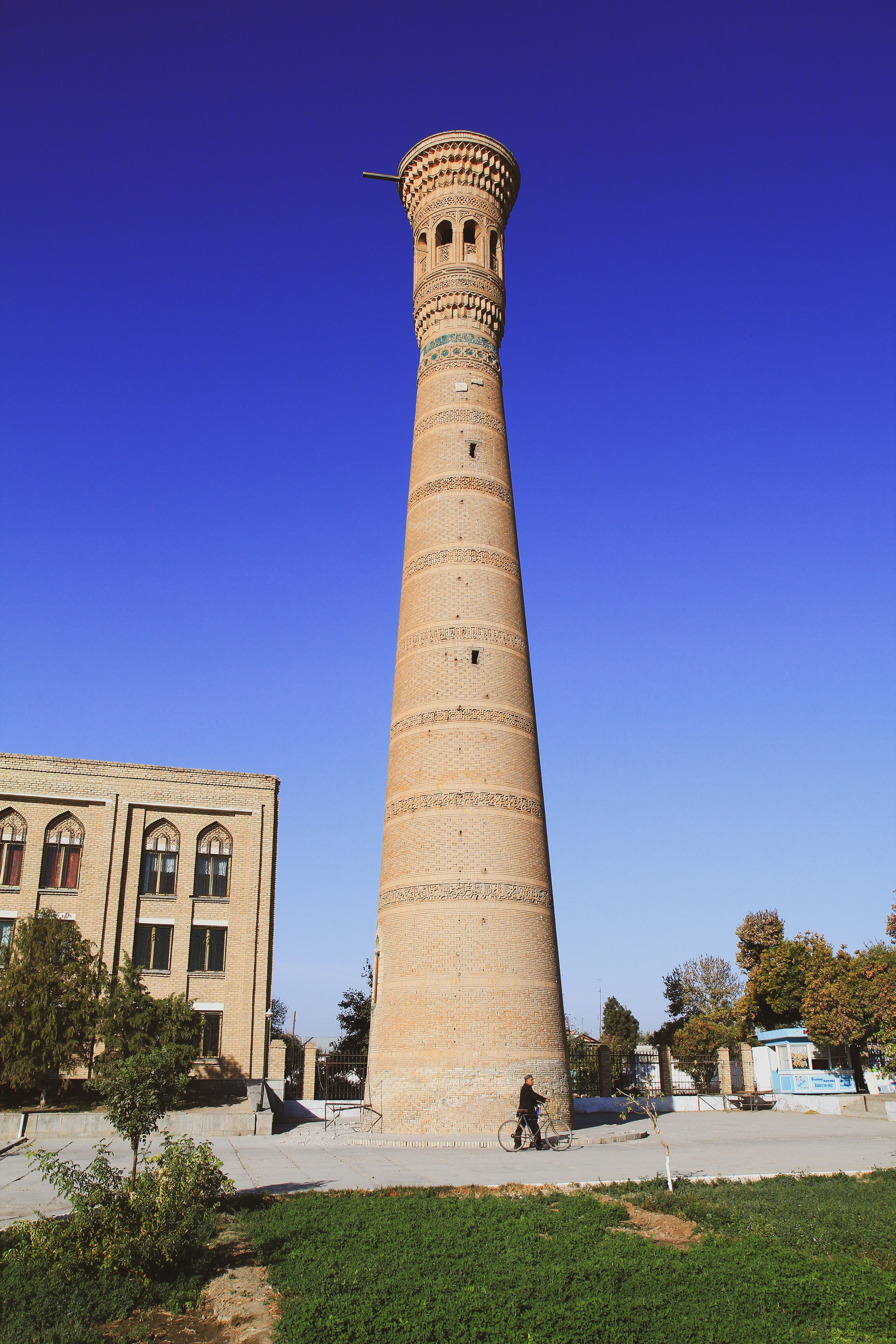
Construction date: 1198–1199
Height: 40.3 meters
Customer: Burhaniddin Abdulaziz II — Bukhara's sadr.
Architectural Features
The minaret is constructed of fired brick, adorned with bands of carved terracotta and glazed ceramics. It is distinguished by its slender form and the elegance of its ornamental design. On its surface, there is a Kufic inscription bearing the ruler's name.
How to get there
Minaret is located in the city of Vobkent, approximately 28 kilometers north of Bukhara. The most convenient way to get there is by taxi or bus from Bukhara. Suitable for a day trip.
Kaltaminor (Khiva)
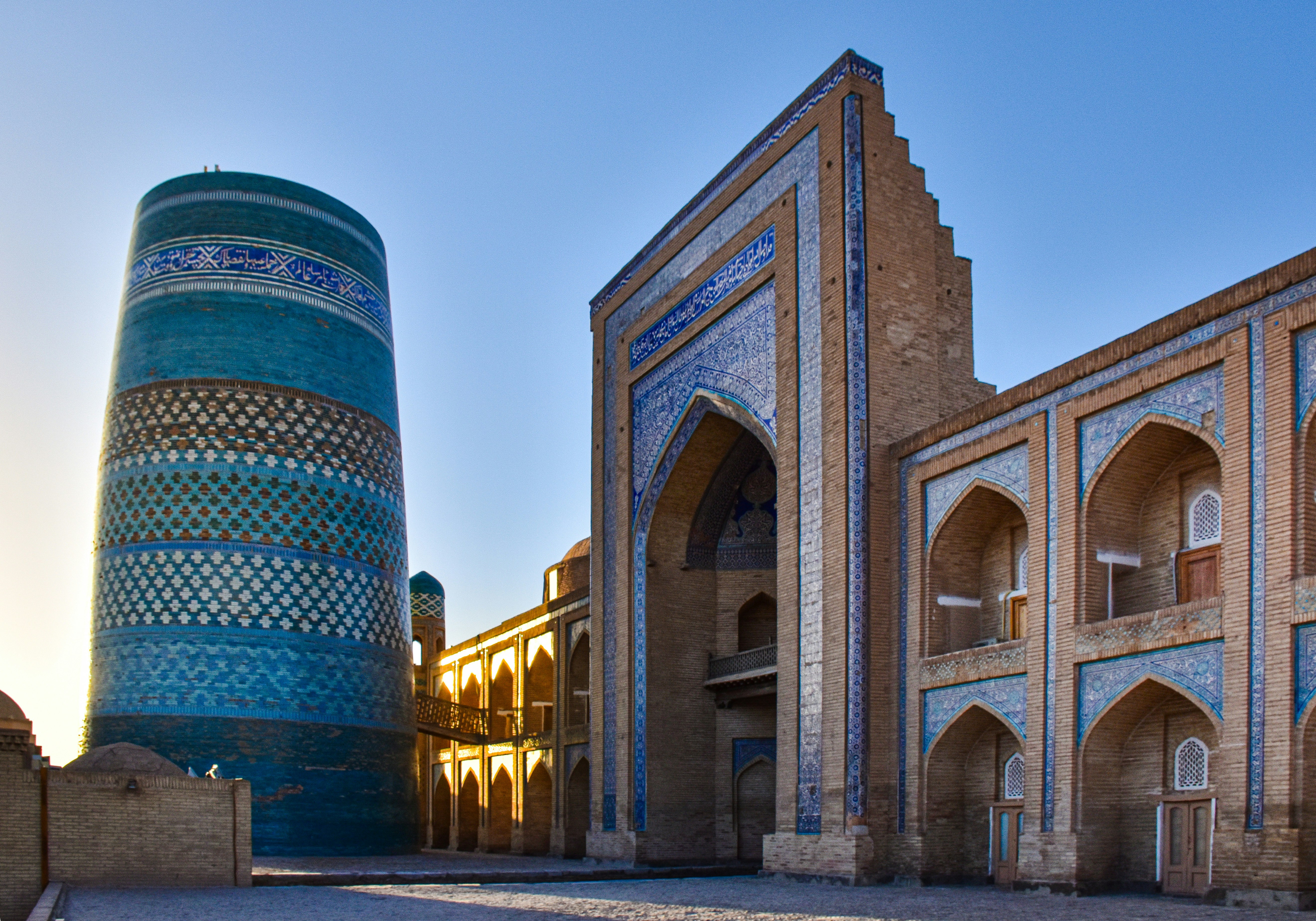
Construction date: construction was halted in 1855.
Height: 29 meters.
Customer: Muhammad Amin Khan - the ruler of Khwarezm, who sought to surpass in scale all the minarets of the East.
Architectural Features
Kalta-Minor was conceived as the tallest minaret in the world but remained unfinished after the khan's death. Its wide base (14.2 meters) and cylindrical form end abruptly—the tower appears massive and "truncated." It is covered with patterns of blue and turquoise tiles. One of the most photogenic landmarks in Ichan Kala.
Islam-Khodja Minaret (also in Khiva)
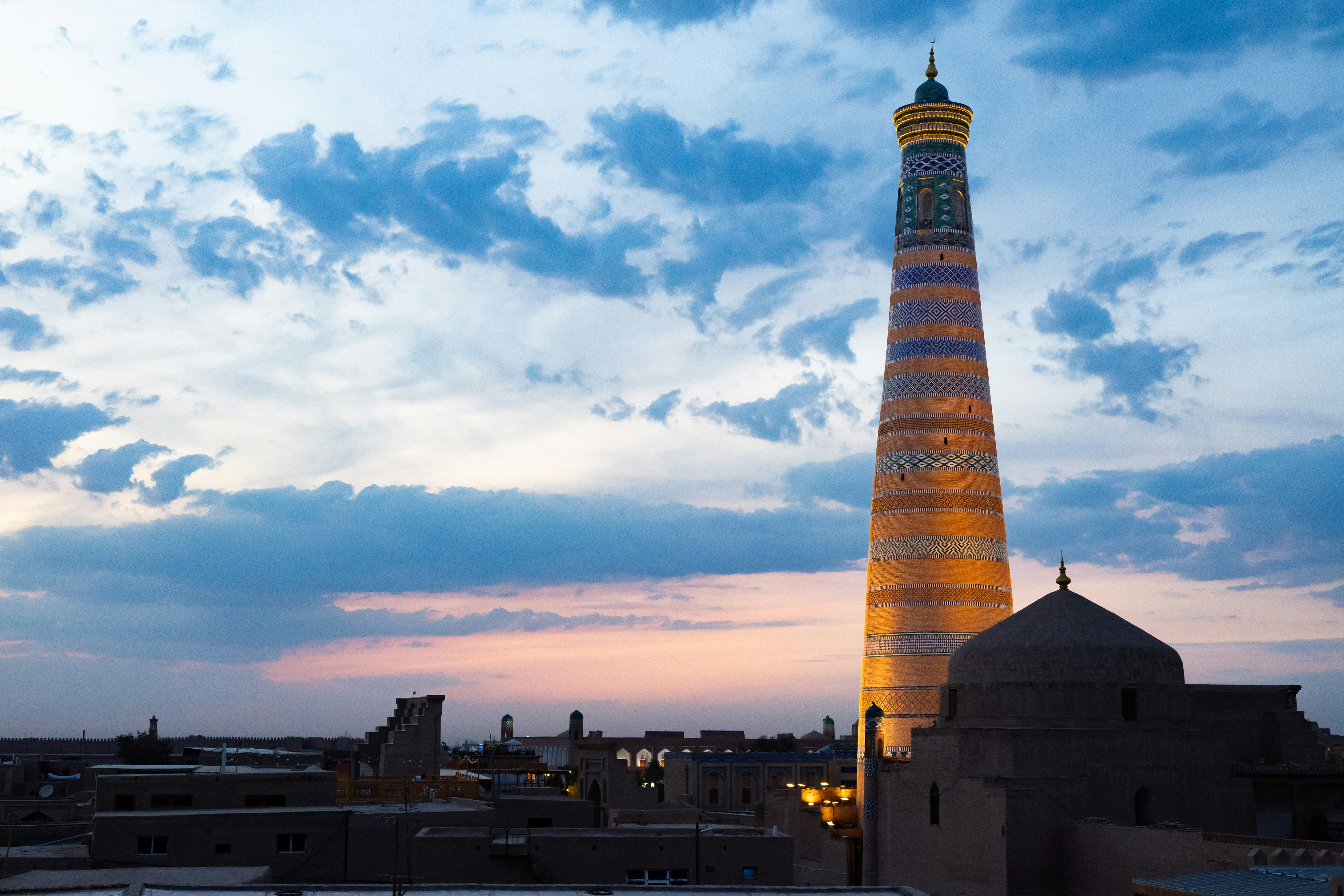
Construction date: 1908–1910
Height: 56.6 meters
Customer: Islam-Khoja — vizier of the Khivan khan Asfandiyar, a reformer and patron of the arts.
Architectural Features
The tallest minaret in Khiva. Narrow, elegant, adorned with alternating bands of polished brick and glazed tiles in a white-blue palette. A spiral staircase of 175 steps leads to the top. The observation deck is open. The ticket for the ascent is about 100,000 UZS.
How to get there: From Tashkent — directly by train to Khiva (journey takes about 14 hours). The railway station is approximately a 20-minute walk from the walls of Ichan Kala.
An alternative is to fly to Urgench, then take a taxi or... a trolleybus. Yes, indeed, an intercity trolleybus runs between Urgench and Khiva—and we especially recommend it for an atmospheric journey.
Jarkurgan Minaret (Surkhandarya Region)
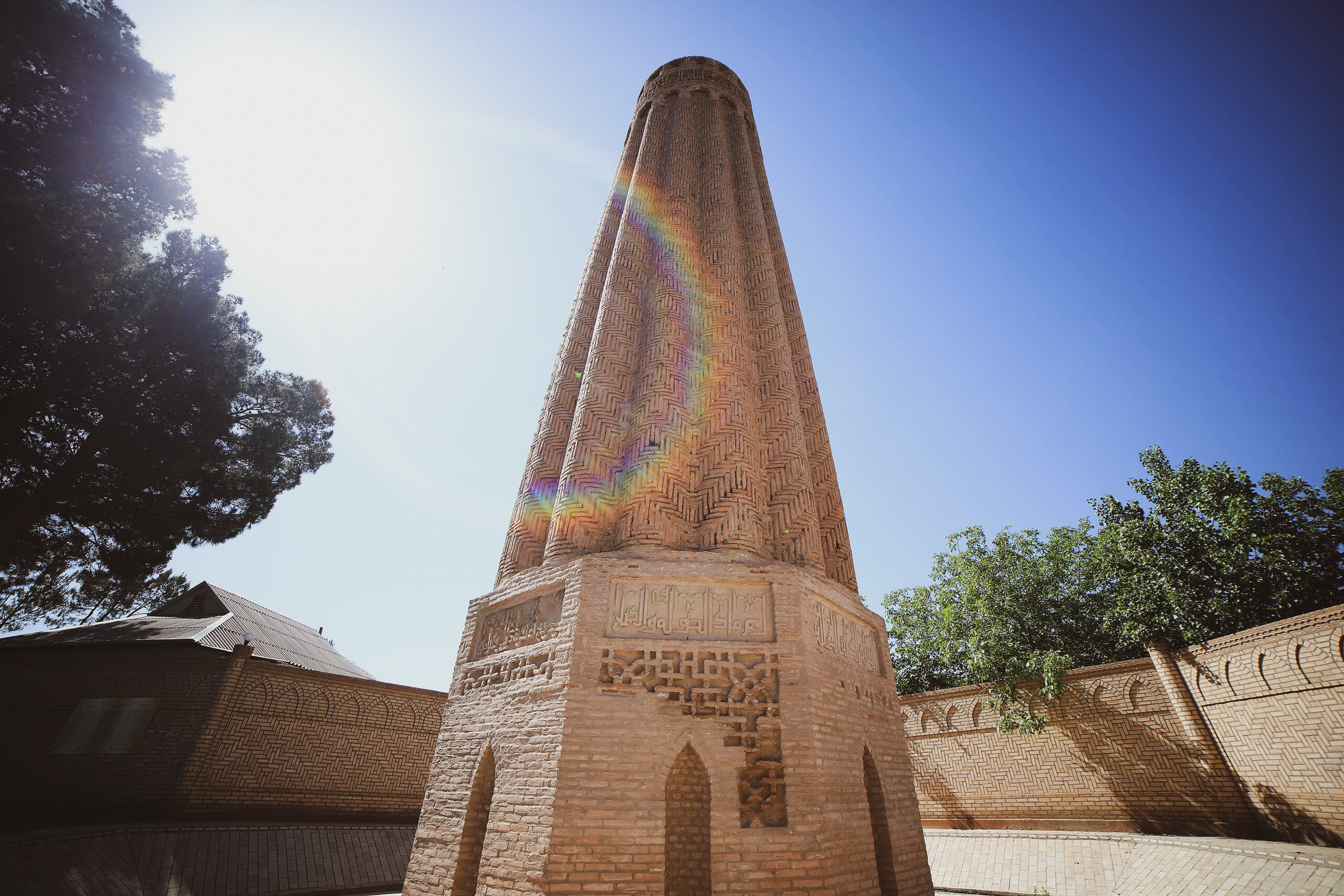
Construction date: 1108–1109
Height: originally about 40 meters (21.6 meters have survived to the present day).
Customer: Sultan Ahmad Sanjar — the ruler of the Seljuk Empire, under whose reign architectural and religious structures were actively developed in the region.
Architectural Features
One of the most unusual minarets in Central Asia. Its cylindrical form is designed with 16 half-columns connected by arches—creating the impression that the tower is "corrugated." Such a structure has no analogues in the region. One of the slabs records the name of the architect—Ali ibn Muhammad from Serakhs.
How to get there
Minaret is located in the Minor village near Jarqoʻrgʻon, approximately 60 kilometers from Termez. You can reach Termez from Tashkent by plane or train.
Additionally, the train from Tashkent stops at Jarkurgan station, making the trip particularly convenient. From there, it's a taxi ride to the minaret. The place is not crowded, suitable for a thoughtful visit and photos without crowds.
Kyrgyzstan
Uzgen minaret
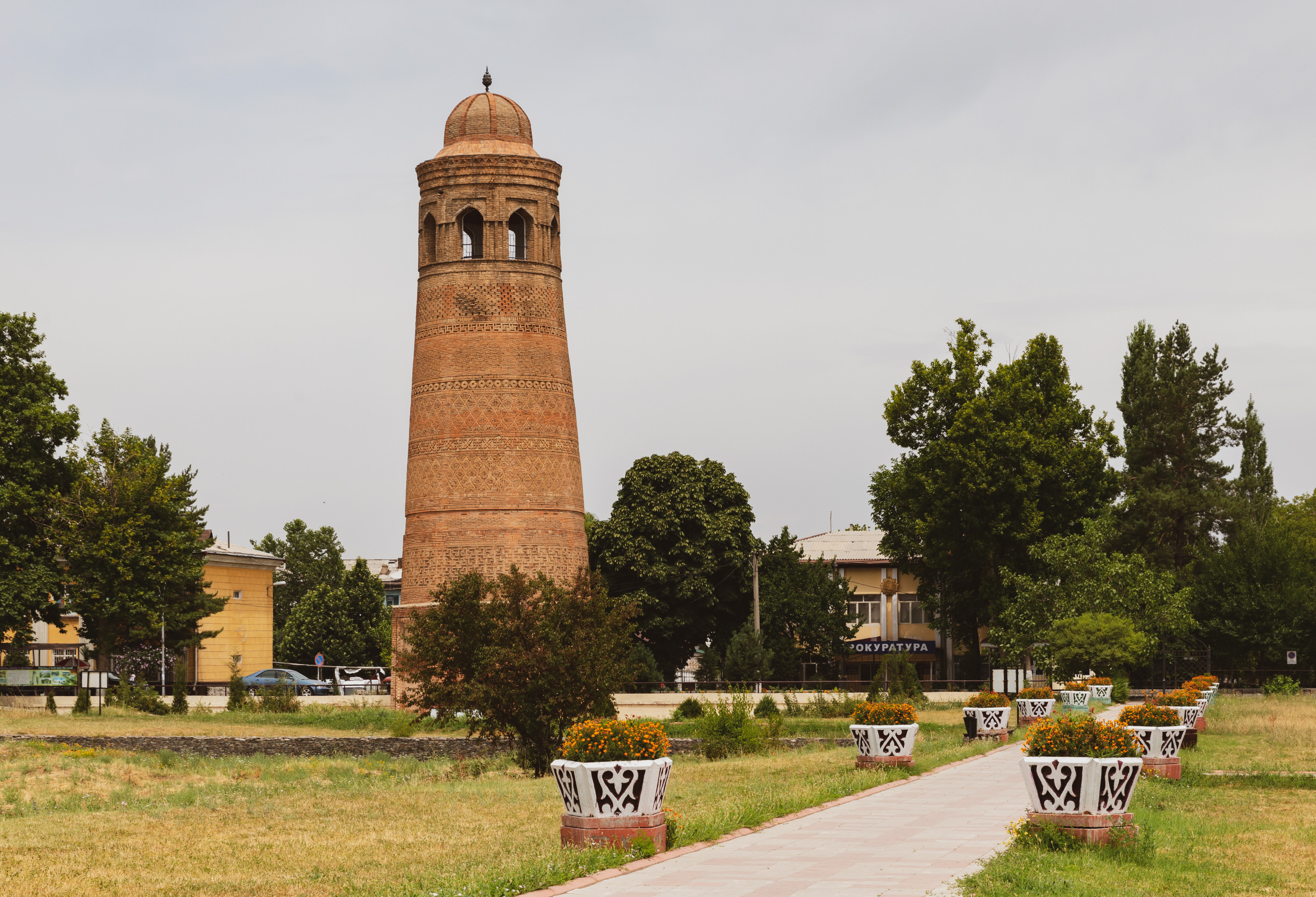
Construction Date: 11th century.
Height: initial — about 45 meters, current — 27.5 meters.
Client: the Karakhanid dynasty — rulers under whom Uzgen was one of the most important centers in Eastern Turkestan. The minaret was part of a complex of mausoleums where members of the Karakhanid nobility are buried.
Architectural Features
The minaret is constructed of fired brick and is divided into three levels: a massive square foundation, an octagonal base, and a slender cylindrical tower that tapers upward. The surface features continuous brick ornamentation: 11 bands executed in deep brickwork technique.
Inside is a spiral staircase with 53 steps, and the entrance is located about two meters above the ground.
In the 1920s, the dome collapsed and was later restored as a lantern—such a finished silhouette is more commonly found in the Fergana Valley.
How to get there
Uzgen is just 56 kilometers from Osh, which is convenient to fly into: the city has an international airport.
Next — minibus No. 105 or a taxi. The journey will take just over an hour.
The minaret is located right in the center of Uzgen, on the territory of the historical and architectural complex with the Karakhanid mausoleums — you definitely can't miss it.
Burana Tower (Chuy Valley)
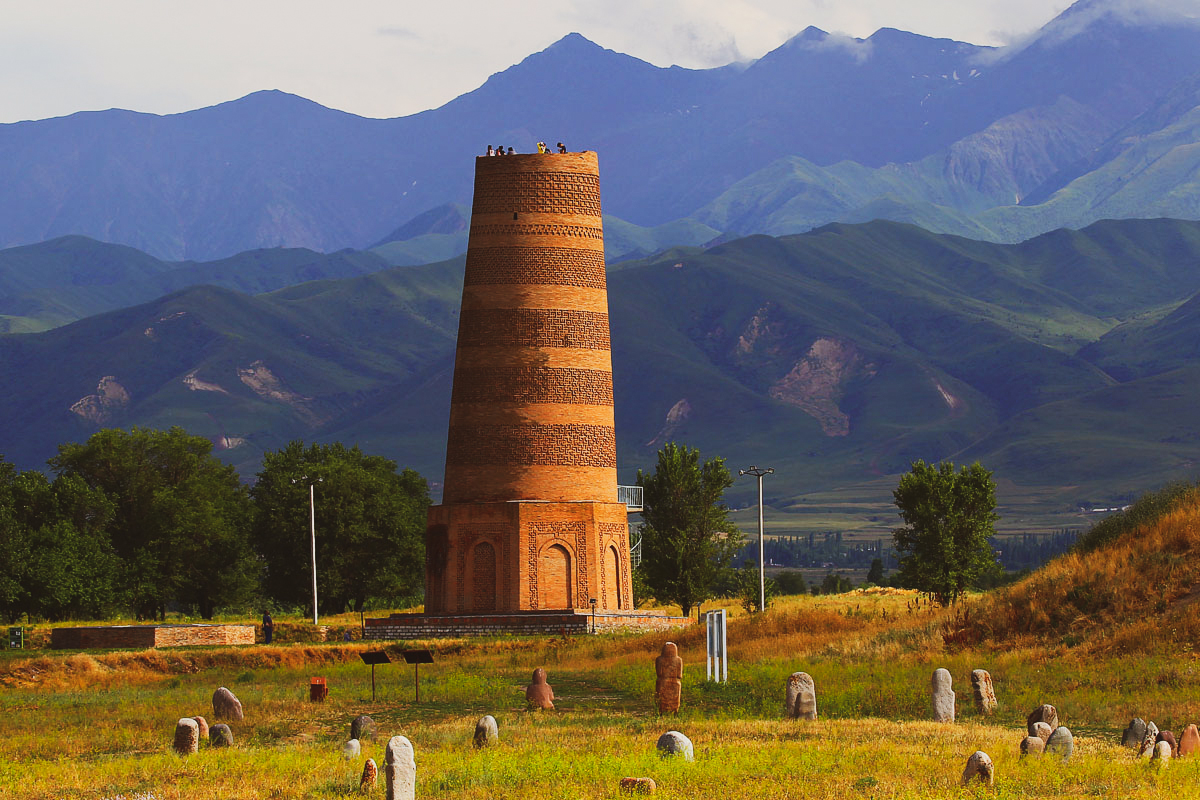
Construction Date: 10th–11th centuries
Height: original — approximately 45 meters, current — 21.7 meters.
Customer: The Karakhanid dynasty — the tower was part of the city's Friday mosque in the ancient city of Balasagun, the capital of the Karakhanid state.
Architectural Features
The tower seems to grow out of the earth: burnt brick, simple geometry, an octagonal base. Its original height was 45 meters — today, just over half remains, but even this is enough to feel the grandeur of the structure.
Inside is a spiral staircase that leads upstairs.
Around is a "stone garden": balbals, Turkic tombstones, fragments of bas-reliefs and carved slabs. All of these are the remains of ancient Balasagun, a vanished city where the Karakhanids ruled, built, and buried their own.
How to get there
From Bishkek — 80 kilometers east, to the city of Tokmak. From there — just 12 kilometers to the tower. You can take a minibus to Tokmak, and then — a taxi or a shared ride.
The journey will take just over an hour. Entry to the territory costs 60 KGS. On site, there is a tower, a mini-museum, and the steppe, which rustles exactly as it did a thousand years ago.
Tajikistan
Ayni Minarets (Sughd Region)
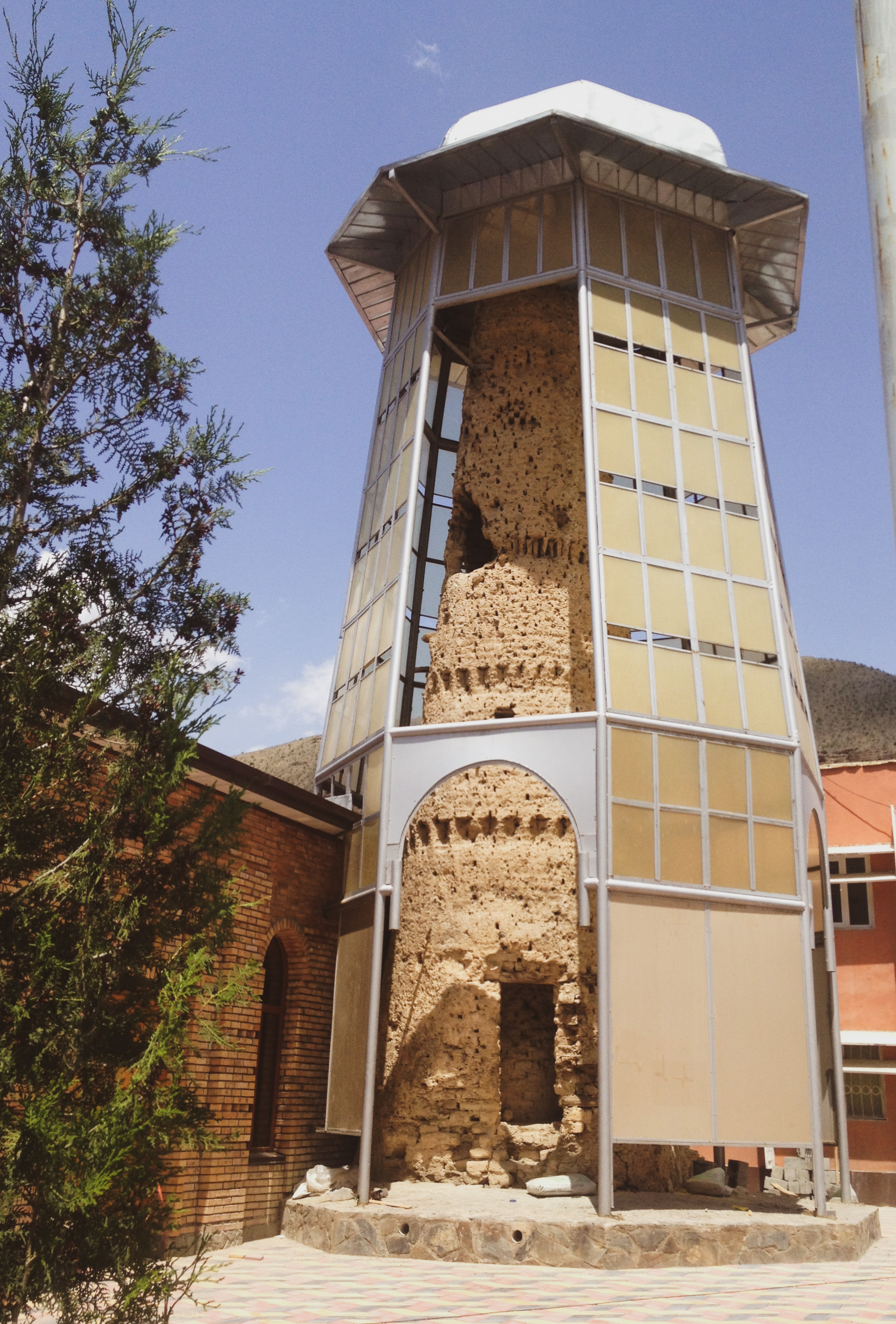
Construction date: 9th century
Customer: likely local rulers from the early Islamic Sogdian nobility — exact names are not established.
Architectural Features
The sun-scorched, adobe minarets of Ayni are not towers, but silhouettes of memory. Only fragments of their former forms remain: cylinders truncated by time, cracks in the clay, yet this is enough to feel that before you stands one of the oldest minarets in the entire region. They were built when Islam was just beginning to penetrate the mountain villages, and thus they possess no luxury—only clay, form, and silence. True ruins, in which the past still pulses.
How to get there
Ayni District is located between Dushanbe and Khujand. From Dushanbe — about 140 kilometers along the Dushanbe-Khujand highway. You can get there by car, bus, or minibus. From Khujand — about 177 kilometers. From there — local transport or on foot to the mountain villages. It's better to go with a local guide or arrange a taxi driver in advance in Ayni. The connection is weak, there are almost no tourists — but this is precisely what makes the trip valuable.
Kazakhstan
Minaret of Khizir (Shymkent)
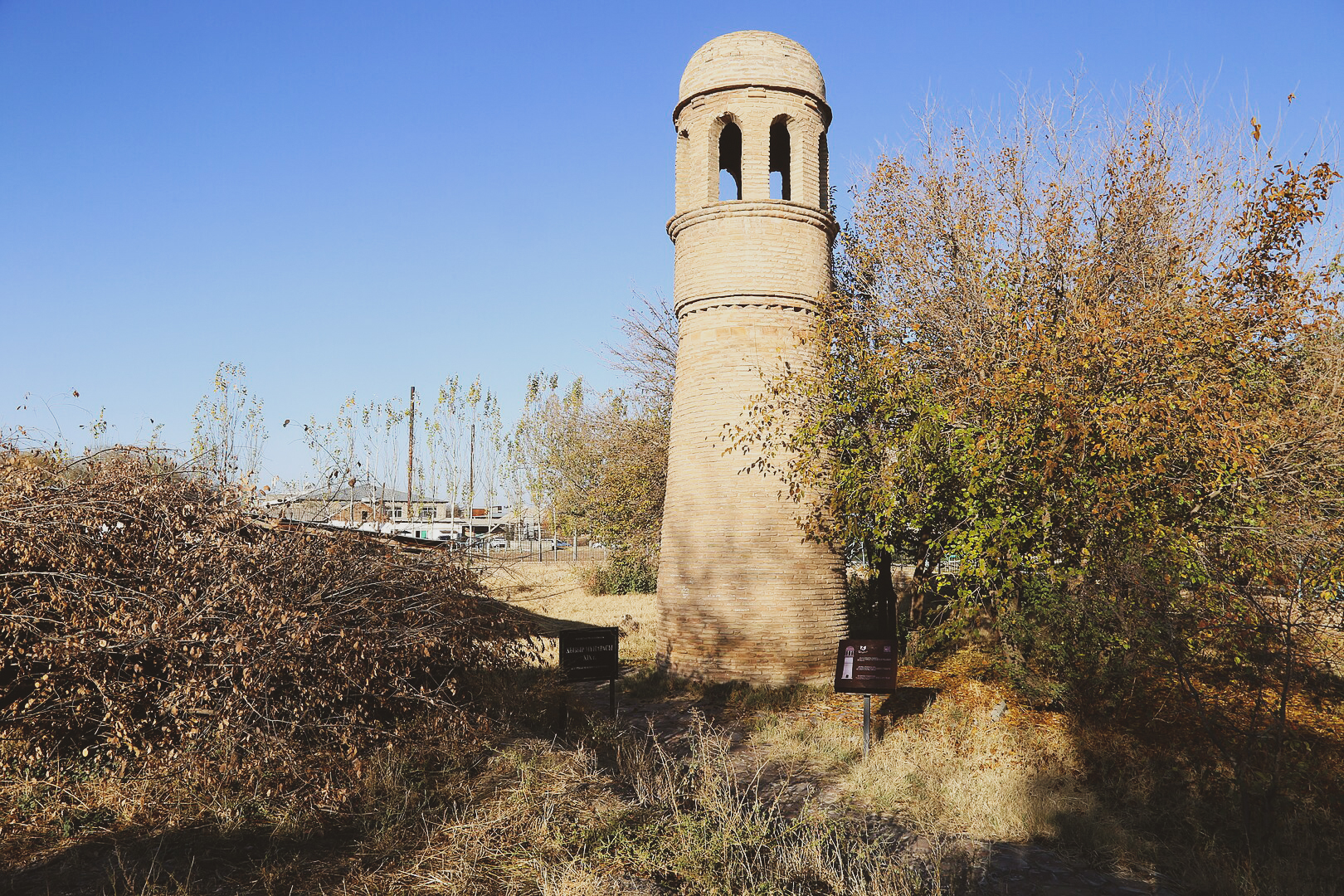
Construction Date: 18th–19th centuries
Height: approximately 10.5 meters
Client: unknown — the minaret was part of a mosque dedicated to Khizr (Khidr the Prophet), traditionally the patron of travelers and wanderers.
Architectural Features
Small, brick, almost invisible from the street — the Khizir minaret has miraculously survived. Its structure is a simple cylindrical masonry without any frills. All that remains of the former mosque is the minaret itself and an underground room where, according to local residents, religious books were once hidden.
How to get there
Shymkent is a major transportation hub with an international airport and a railway station. It is easily accessible by train from Tashkent, Almaty, and other cities in the region.
From the center of Shymkent to the Sairam district, where the Khizr minaret is located, you can get by taxi or public transport.
Turkmenistan
Minarets of Kunya-Urgench
Minaret of Kutlug-Timur
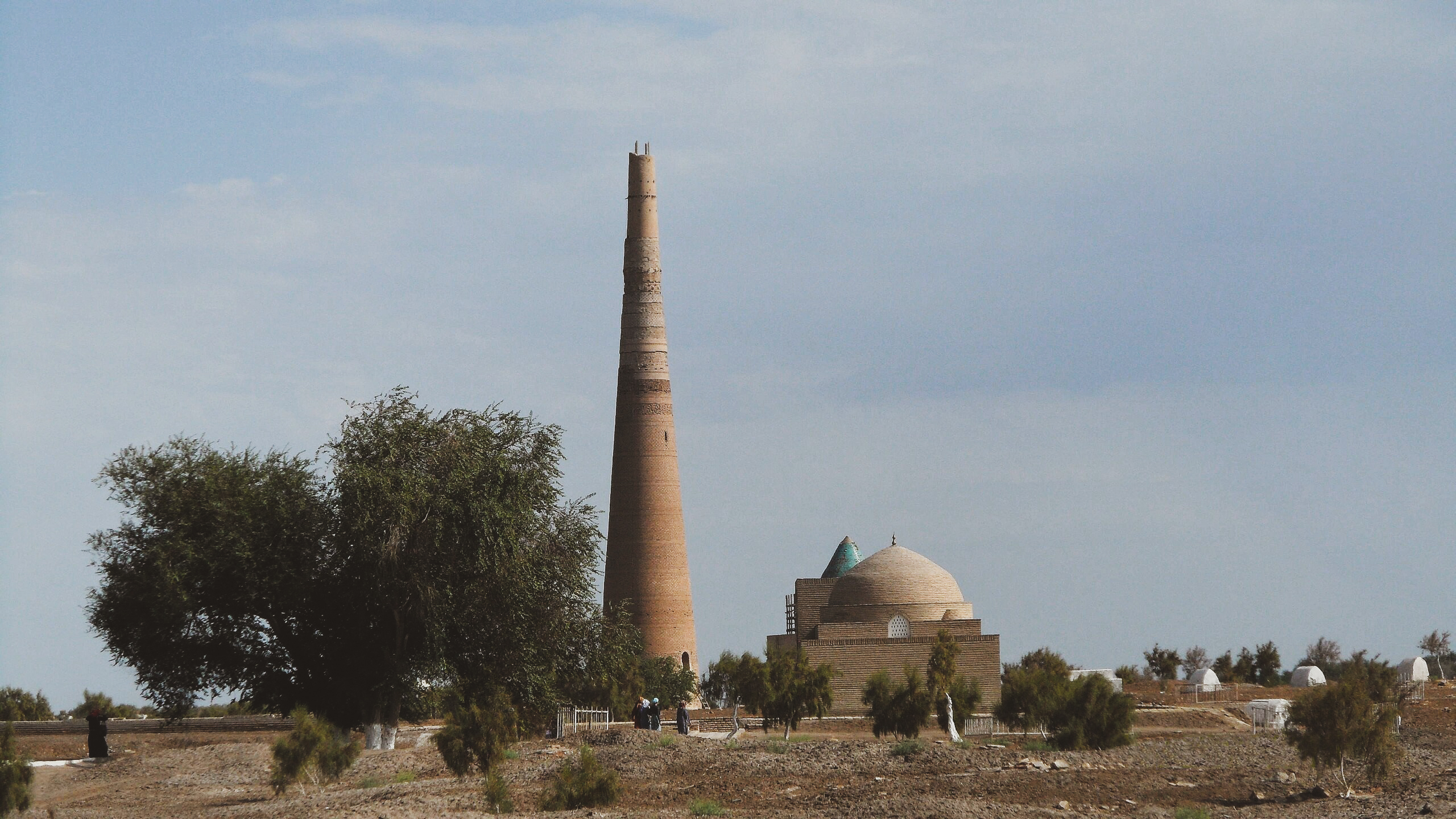
Construction date: 1320–1330
Height: about 60 meters — the tallest medieval minaret in Central Asia
Customer: Kutlug-Timur — the viceroy of the Golden Horde in Khwarezm, under whom the city of Kunya-Urgench experienced the peak of its architectural flourishing.
Architectural Features
This tower is not just tall — it is slender as a needle and seems to pierce the sky. It is built of fired brick, adorned with ornamental belts and inserts of glazed tile.
Inside, there is a spiral staircase: 145 steps lead to the top. Access is currently limited, but even from the ground, the scale is impressive: the tower rises above the ruins like a marker of a bygone empire.
How to get there
From Ashgabat — by plane to the city of Dashoguz (about 50 minutes), and from there — 94 kilometers by taxi or car to Kunya-Urgench. An alternative is crossing the border with Uzbekistan via the "Shavat" checkpoint in the Khorezm region. After passport control — a taxi towards Kunya-Urgench (approximately 20 kilometers from the border). The city itself is an open-air museum. The minaret is visible from afar.
Minarets of Dehistan (Balkan Province)
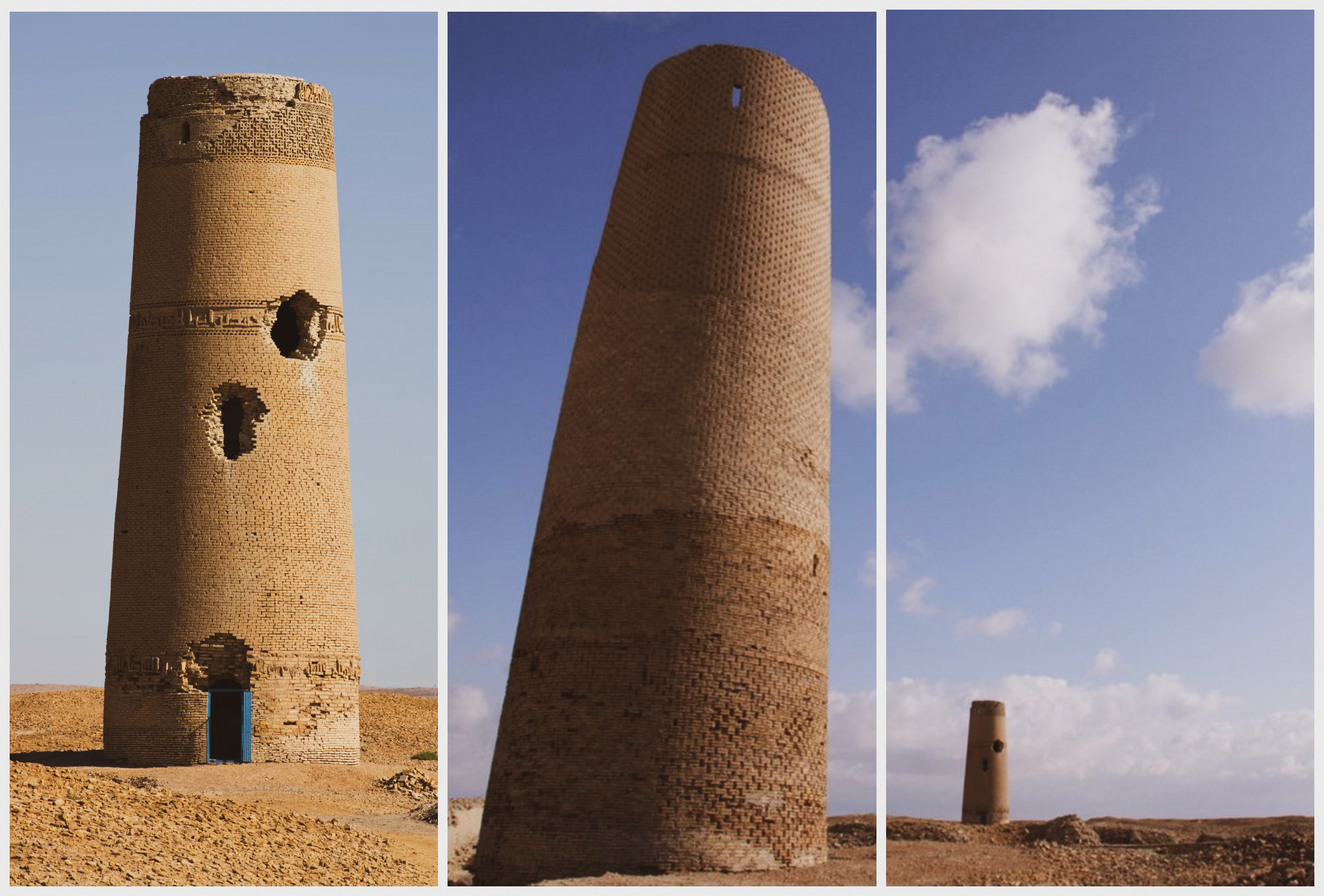
Construction date: early 12th century.
Customer: likely the ruler of Dehistan, Abu Ja'far Ahmad — the name is mentioned in inscriptions on one of the minarets.
Architectural Features
On the expanses of western Turkmenistan, amidst the semi-desert, stand two minarets — northern and southern. Their shafts are scorched by the sun and covered with geometric patterns of brick and Kufic inscriptions.They stand without a mosque, without walls, without a city — from the once bustling Dehistan, only the towers remain, with which the wind speaks the language of oblivion.The northern minaret is attributed to Abu Jafar Ahmad — the name is partially preserved on a ceramic band. Both minarets are built of baked brick; the details of their decoration can only be discerned up close. Here, the silence is almost absolute.
How to get there
You can reach the ruins of Dehistan through the city of Turkmenbashi — regular flights operate there from Ashgabat. From Turkmenbashi, the road leads to the village of Madau, and from there — about another 7 kilometers along a steppe dirt road.
Alternative route - from Balkanabat along the highway towards Madau, then again off-road.
Navigators work intermittently in these areas, and there are almost no signs, so it's better to travel with a local driver or guide. However, once you find yourself among the minarets, you will be surrounded only by wind, ruins, and emptiness.
The minarets of Central Asia are towers of memory. They have survived empires, earthquakes, and oblivion, but have remained in place. Just travel through these places—and you will feel the scale not only of Islamic architecture but also of the region's cultural layering. Bring a map, binoculars, comfortable shoes, and a bit of patience. Sometimes the road to a minaret is difficult—but never useless.



Newsletter
A letter from the HD editors
Once a week, we send the best stories, events, and cultural discoveries from Central Asia.