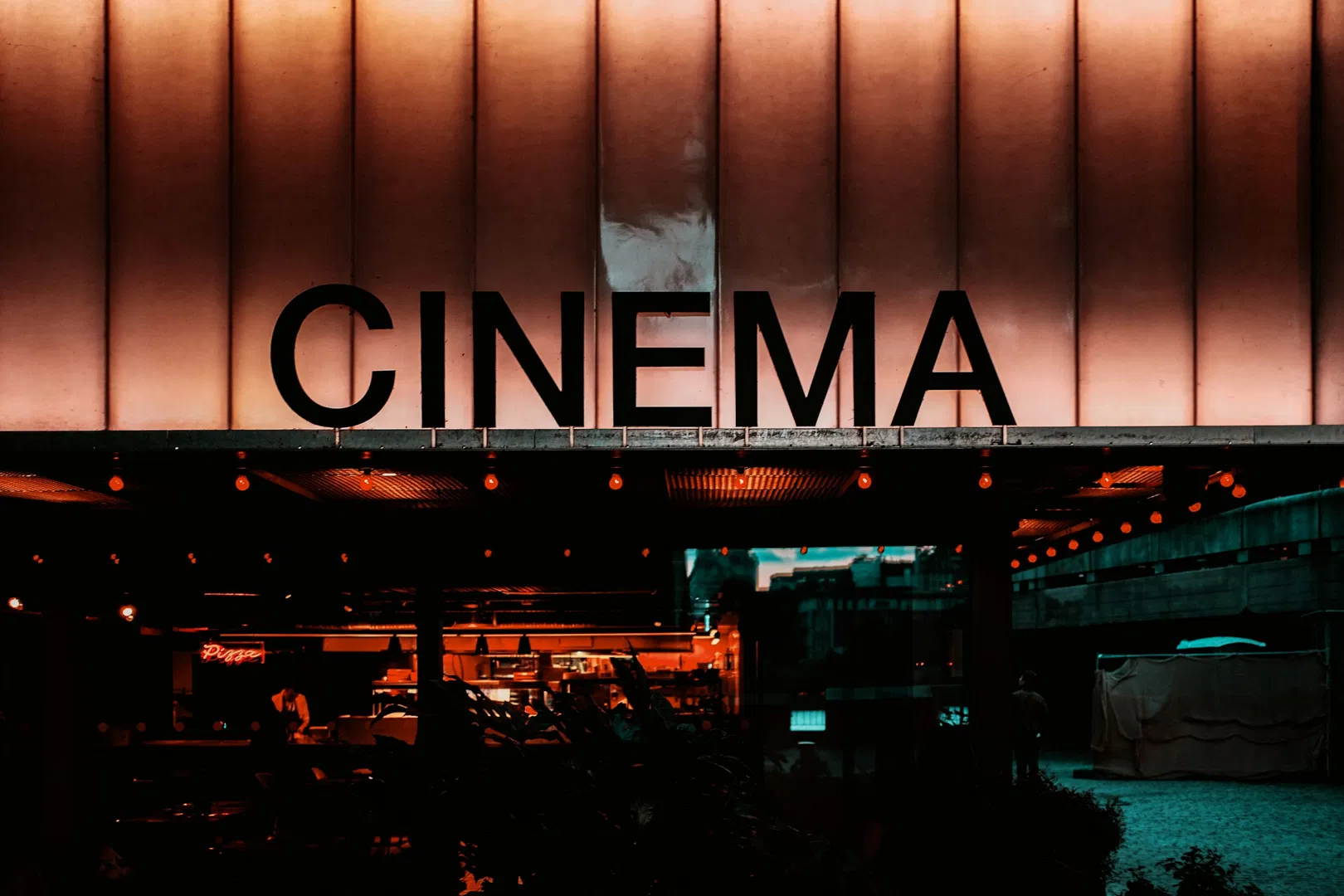
November in cinema is like the final chords before the end of the year. On the screens: comebacks, long-awaited premieres, and dark stories about those who no longer believe in miracles, but are still searching for light.
From a fantasy musical about witches to dystopias with chases, from social dramas to anti-romcoms. Get ready: November is planning to finally fray all our nerves (but we’re not even resisting anymore).
“The Running Man” (from November 14)
The story of "The Running Man" is one of the most convoluted in the world of film adaptations. Formally, the novel belongs to Stephen King, but the roots of the idea go much deeper—to Robert Sheckley's 1958 short story "The Prize of Peril." He was the first to come up with the concept of a television show where participants play for survival for money and fame.
When the film starring Arnold Schwarzenegger was released in 1987, viewers saw a vibrant action movie with arenas and gladiators of the future. But the film had little in common with King’s book. Moreover, the plot of the movie almost completely repeated the French film “Le Prix du Danger” (1983), directed by Yves Boisset, based on Sheckley. After the premiere, the director even considered suing the producers of “The Running Man” for plagiarism.
The new version promises to return the story to its dystopian roots. Director Edgar Wright, known for "Hot Fuzz" and "Baby Driver," is preparing a dark film with no show, no gladiators—only a man, the system, and the hunt. At the center is Ben, a participant in a deadly game where the stakes are not fame, but the life of his sick daughter.
It seems that this time "The Running Man" will finally tell the story that King once envisioned — and Sheckley, in essence, predicted.
"Predator. Planet of Death" (from November 6)
The "Predator" franchise continues to reinvent itself under the direction of Dan Trachtenberg — and this time, viewers can expect an unexpected shift in perspective. The main character of the film is not a human, but a young member of the hunter race — Yautja — named Dek, who is undergoing his first bloody initiation.
His prey is monstrous creatures on a wild planet where survival is nearly impossible. But everything changes when Dek finds the wounded Tia—a half-destroyed android from the Weyland-Yutani mission, the infamous corporation from the Alien film series. A strange alliance forms between the machine and the hunter—and for the first time in the series’ history, the viewer will see the world through the Predator’s eyes.
After "Prey" and "Killer of Killers," Trachtenberg once again experiments with the mythology of the universe, turning the franchise into a sweeping saga about the evolution of monsters and the morality of the hunt. "Planet of Death" promises to become not just an action film, but a new chapter in the legend—where the monster becomes the hero.
“Now You See Me 3” (from November 13)
By 2025, "Now You See Me" had unexpectedly turned into a full-fledged franchise—even though the cult first film seemed like a self-contained trick back in 2013, and the second merely repeated the formula for success. Now Ruben Fleischer ("Venom," "Zombieland") has joined the project, replacing Jon M. Chu, who is busy with "Wicked."
In the new film, the team of illusionists "The Four Horsemen" recruits a new generation to pull off their most ambitious (how could it be otherwise!) heist yet. At stake is the largest diamond in the world. Jesse Eisenberg, Woody Harrelson, Dave Franco, and Isla Fisher return, joined by new faces, including Dominic Sessa ("The Holdovers").
The script promises to expand the scale—from street stunts to international confrontation. However, the main question remains the same: has the magic ended after the first installment? The third film is an attempt to prove that this show can still surprise.
“Wicked: Forever” (from November 20)
The backstage of the sensational tale about the Land of Oz becomes even darker and grander. The second part of "Wicked" continues the story of Elphaba — once a talented, vulnerable, and kind girl, whom the fears, betrayals, and hypocrisy of those around her turned into the Wicked Witch of the West. Her friend Glinda, on the contrary, gains fame, power, and the love of the people. Against this contrast, the world of Oz flourishes and collapses at the same time — like a mirror reflecting the eternal conflict between the outer and the inner.
In the second part, Elphaba finally becomes an outcast, hides in the forest, but at the same time retains a rare dignity — loyalty to herself and her ideals. Glinda, on the other hand, captivated by the applause of the crowd, gradually feels the emptiness that hides behind the brightest outfits.
The scale of the sequel is colossal: director Jon M. Chu turns the magical world of Oz into a true fantasy opera—with flying castles, storms of emerald dust, and musical numbers. The first part has already won Oscars for costumes and production design, and the second, judging by the trailers, raises the bar even higher—both visually and emotionally.
"Die, My Love" (from November 27)
After eight years of silence, Lynne Ramsay (“We Need to Talk About Kevin”) returns with a new psychological drama — unsettling, sensual, and — what we have all been waiting for so long — honest.
At the center are Grace (Jennifer Lawrence, who is also making a triumphant comeback to the big screen) and Jackson (Robert Pattinson). A young couple moves from New York to a house on the edge of the forest, dreaming of a peaceful life. But after the birth of their child, Grace falls into depression, loses touch with reality, and begins to see frightening visions.
The pendulum of their relationship swings between tenderness and hatred, while the film’s genre shifts between family drama and psychological thriller.
Ramsey explores the dark side of motherhood and marriage, creating more of an anti-romcom—a film where love is more about eternal trials. It's worth going to the cinema for the duet performance of Lawrence and Pattinson alone—and gladly immersing yourself in this hypnotically dark nightmare. Love stories are, of course, great, but you can't always watch illusions.
"Zootopia 2" (from November 27)
It seems we've all missed this city a little — where predators and herbivores drink coffee at neighboring tables, and justice is defended by rabbits and foxes. Now Judy Hopps and Nick Wilde are together again — but this time not just partners from the police station, but undercover agents who need to solve the case of a mysterious reptile.
From the very first frames it’s clear: Disney is once again not about childhood. On the other hand, what did we expect, since the team that worked on the sequel—the directors and writers of the first “Zootopia” and “Encanto,” the animated film about generational issues—was involved.
As in the first part, beneath the layer of detective plot lies a conversation about the fear of the "other" and how difficult it is to maintain trust in a society where everyone divides each other into categories. Only this time, the action moves to the darkest district of Zootopia — where the laws of civilization no longer apply.
"I’d kick you if I could" (from November 20)
At the center of the drama is Linda, a young mother trying to cope with her daughter's illness and a growing sense of helplessness. Her husband has been working on a sea vessel for months, and all the household duties and care for a child with a serious diagnosis fall entirely on Linda's shoulders. The girl is fed through a tube, and the doctor regularly reproaches the mother for missed procedures.
When a leak appears in their apartment, Linda and her daughter are forced to temporarily move into a motel. But the domestic upheaval becomes only a reflection of an inner crisis—the woman's life is gradually spiraling out of control.
The film by Mary Bronstein, made for A24 studio, has already made its mark at Sundance and the Berlin Film Festival, where Rose Byrne received the Silver Bear for Best Actress. Critics call this work the strongest of her career—the actress, who is more often remembered either for "Insidious" and "X-Men" or for comedies like "Neighbors" and "Bridesmaids," was able to showcase her dramatic talent and deliver a performance with such truthfulness that it most often strikes right at the heart.

Newsletter
A letter from the HD editors
Once a week, we send the best stories, events, and cultural discoveries from Central Asia.