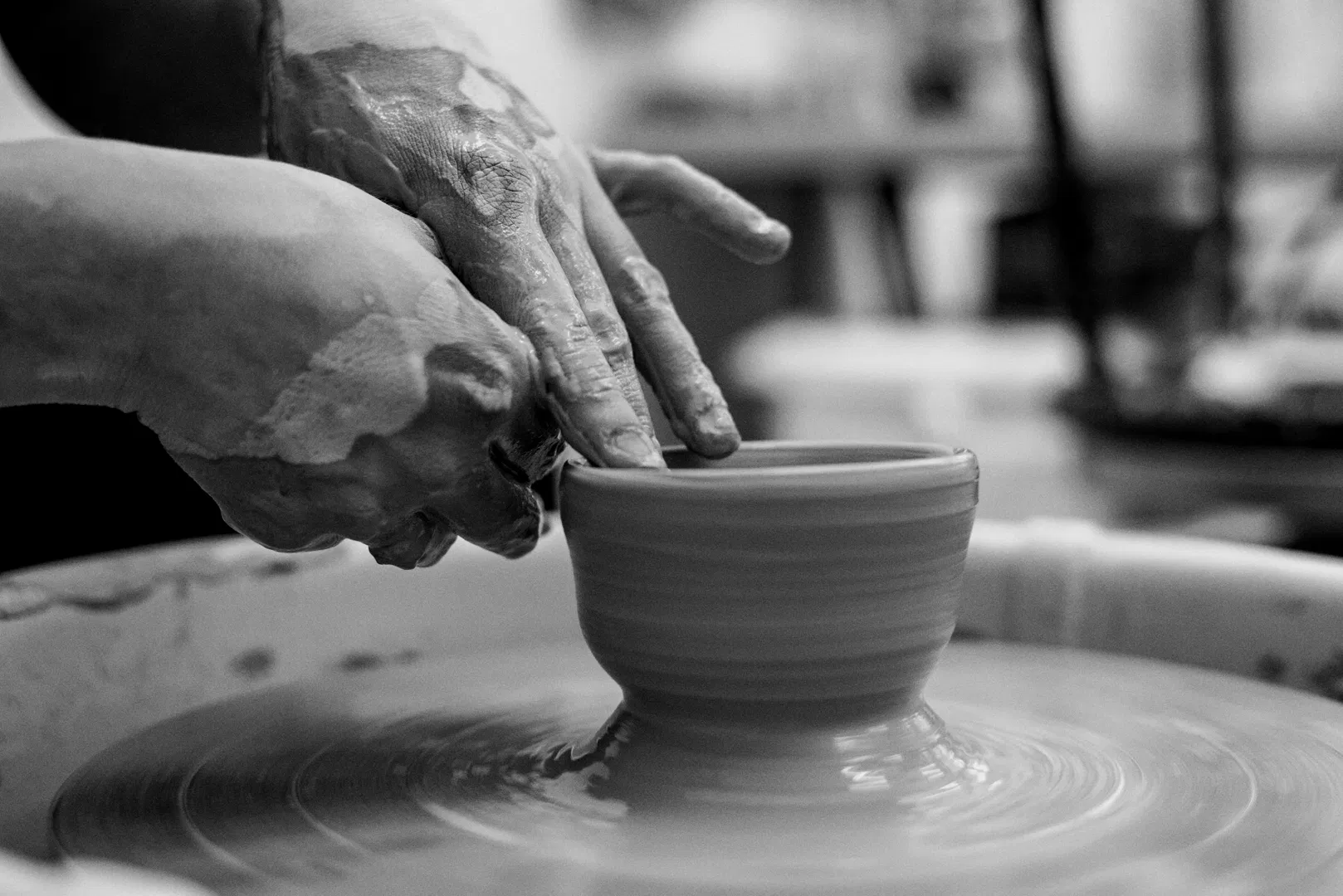
When we say the word "inclusion," we think of a community of people with disabilities, but this definition is not entirely accurate. In fact, our society itself should be considered inclusive, meaning it accepts different people with different abilities and lifestyles.
The topic we are raising in this material is not so much delicate or complicated as it is often overlooked. There is currently a tendency to single out people with disabilities, to create separate groups within society, which is the complete opposite of integration and acceptance. We need to stop drawing this line in chalk and start creating an environment that is adaptive for different groups of people.
December 3 — International Day of Persons with Disabilities, but it is important to make a key clarification: this is not a holiday, but a day of reflection, respect, and ethical responsibility. It is a day meant to refocus attention on people who most often find themselves outside its boundaries.
People with disabilities should not be made objects of charity or symbols of “overcoming,” nor should their stories be turned into inspirational narratives. This day is not about admiring those who “despite everything,” but about recognizing society’s responsibility: for accessibility, for equal opportunities, for cultural visibility and the right to creativity, work, and self-fulfillment without limitations.
And that is precisely why inclusive creative initiatives, which we will discuss in this article, are so important. They allow people to be part of the cultural community not as “special” guests, but as authors, creators, actors, artists, photographers, designers — people who do not need to be singled out with a special word or day to have their contributions recognized.
We consider December 3rd as a day of reflection, a kind of report, to ask ourselves: is everything being done in the field of inclusion truly for people with disabilities? Are there sustainable creative spaces available 365 days a year? How adaptive is the urban environment? And perhaps most importantly, as this day reminds us—inclusion is not limited to this date. It is daily work; the day merely highlights what should always be the norm, namely the creation of spaces and the formation of a society where no one is left beyond the defined boundaries.
Currently, Uzbekistan is undergoing a process of developing an inclusive culture. Just a decade ago, there were almost no creative spaces in the country adapted for people with disabilities. Culture was open to many, but not to everyone: buildings without ramps, educational programs without adaptation, cultural projects without diversity among participants.
Systemic invisibility limited people who did not have universal access. Today, the situation is gradually changing, and these changes are shaping a new norm.
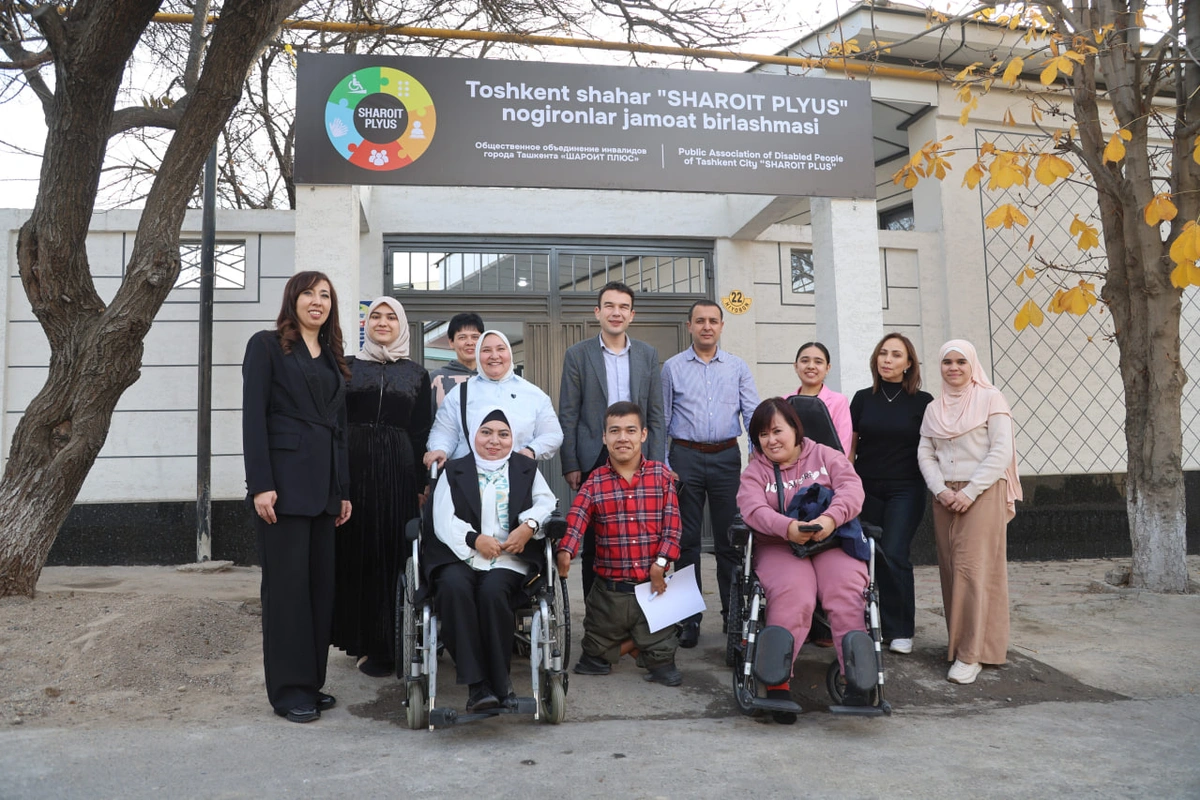
Sharoit Plus
Sharoit Plus is an organization that has long gone beyond social support and has become an important part of shaping a new cultural environment. Although Sharoit Plus is primarily known for its legal, educational, and social projects, it is their contribution to culture, creativity, and self-expression of people with disabilities that has become especially noticeable in recent years.
One of the directions of Sharoit Plus is creating conditions where creativity ceases to be an "additional" aspect of life. In the organization's new offices and centers, workshops, training programs, and art spaces are being established, where classes in decorative and applied arts, design, craft skills, and the creation of original items take place. Here, people learn crafts, create their own products, participate in exhibitions and fairs, and have the opportunity to sell their works and earn money.
An important part of the activity is the creative community that is growing around the organization. Sharoit Plus regularly holds master classes, meetings, themed festivals, and creates opportunities for exchanging experience. Mini-galleries, exhibitions of works, and art projects created by participants are emerging—many of them take place in collaboration with creative studios, designers, photographers, and artisans.
And although Sharoit Plus does not position itself as a cultural institution, they were among the first in Uzbekistan to start talking about the fact that culture is also a right, and therefore the environment should be accessible.
 Sharoit Plus
International Inclusive Hub (Tashkent)
One of the centers of attraction is the International Inclusive Hub. This space was conceived not only as a learning platform, but as an ecosystem. Young artists work here on graphic projects, actors with developmental disabilities perform in plays, photographers learn to work with cameras and lighting, and musicians create their own compositions. All of this happens not “for them,” but together with them, which fundamentally changes the very nature of the cultural process.
Such hubs remind us that creativity does not have to be elitist. It can be a tool for recovery—emotional, artistic, professional. And for many participants, this process becomes a way to communicate with the outside world, an opportunity to speak as equals.
Zamin Creative
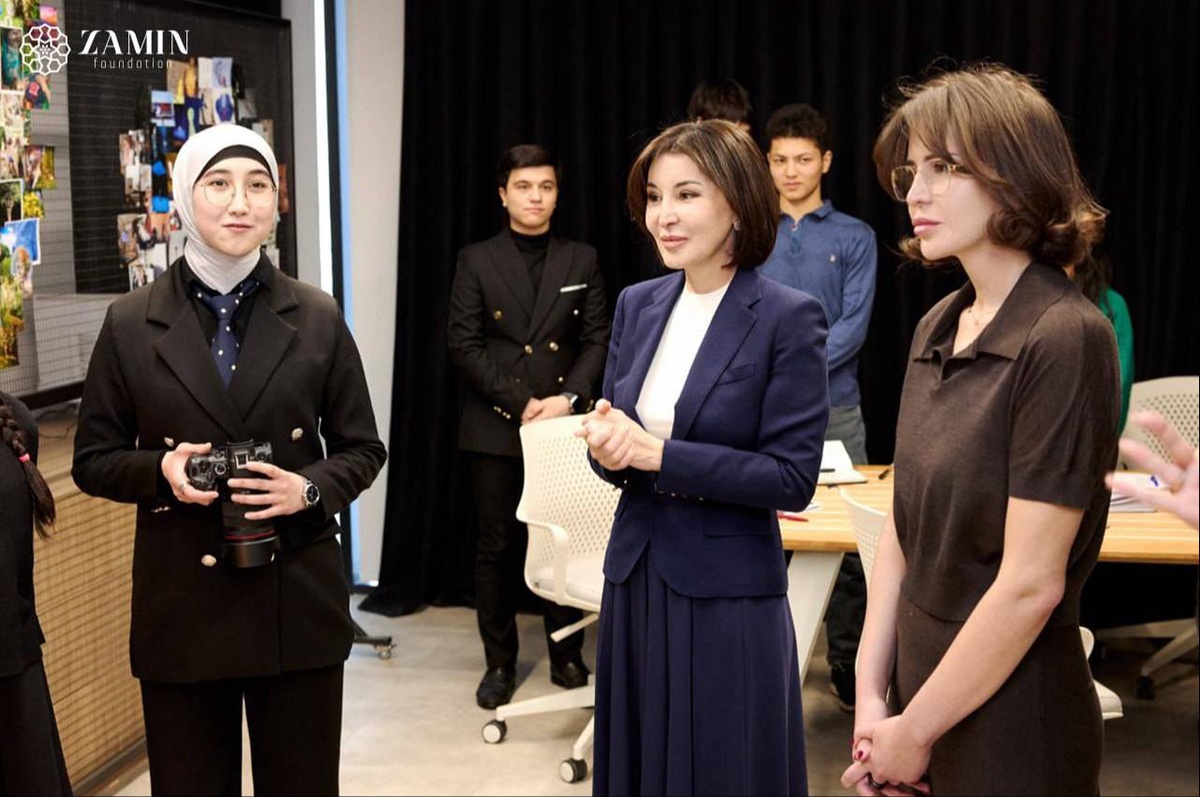
New spaces are emerging in the regions. Inclusive creative studios called Zamin Creative are opening in Margilan, Karshi, Andijan, and Nukus.
Here you can meet teenagers with hearing impairments picking up professional cameras, or young women with mobility limitations creating theatrical mini-productions. Their activities resemble laboratories of the future, where people do not learn to "be like everyone else," but explore their own characteristics as a resource. In these workshops, works are born that often amaze with their maturity: photographs that create new meanings, drawings about inner experience, sincere performances about loneliness, acceptance, and boundaries.
At the same time, an acting studio operates in the capital, created specifically for people with developmental disabilities. Its idea is simple: theater can become a platform where anyone, regardless of motor skills, can take the stage. Within these walls, actors learn to express what is hard to put into words: emotions, conflicts, the desire to be seen.
Annual forum "Time for Good Deeds" and examples of some exceptional initiatives
Inclusive cultural and social life in Uzbekistan is increasingly being shaped around regular events that bring together communities — specialists, parents, educators, activists, and people with disabilities themselves.
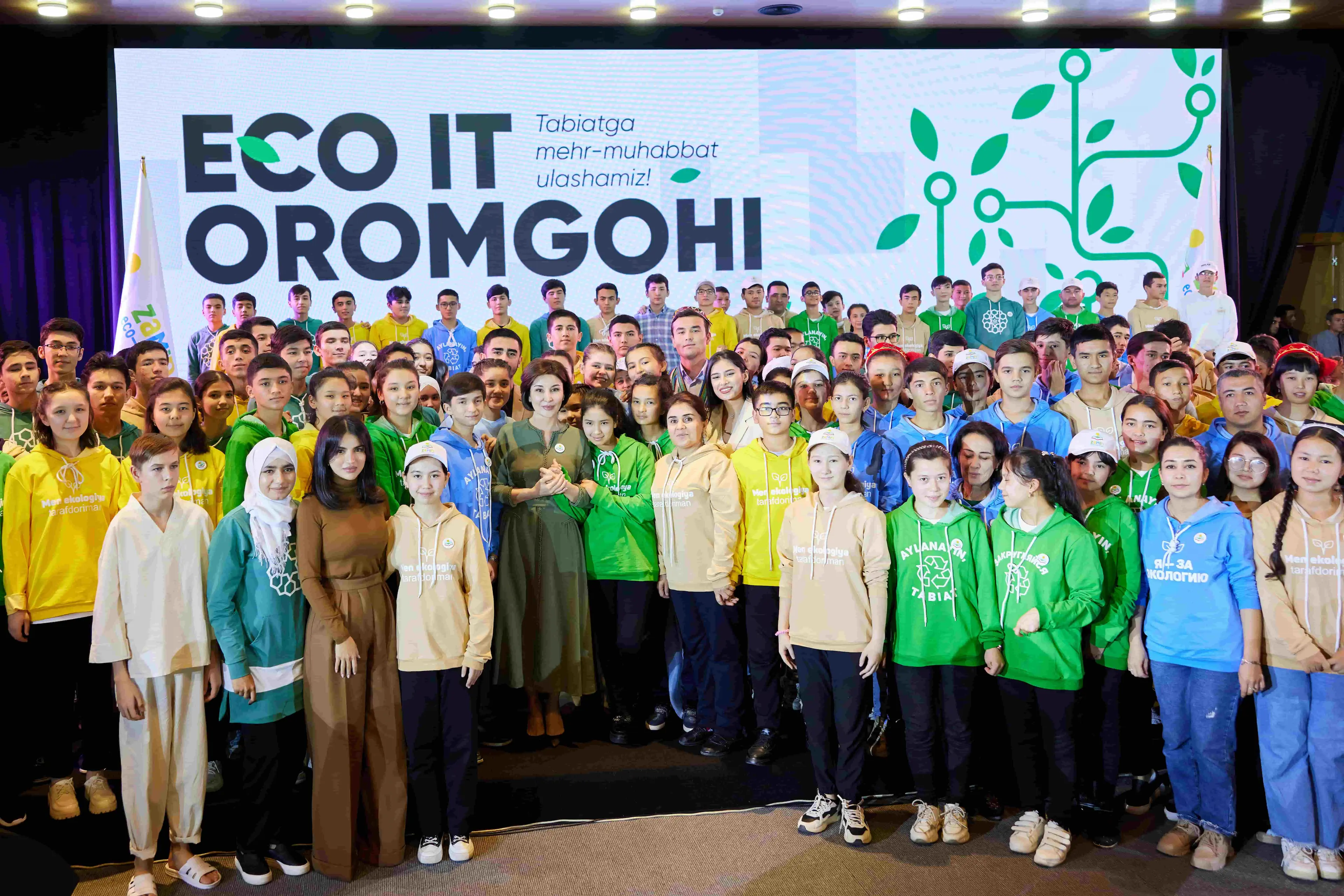
One of the most illustrative examples is the Inclusion Forum “Time for Good Deeds”, which was held for the fourth time in October 2025.
The forum brings together teachers, adaptive physical education trainers, psychologists, and specialists working with children with Down syndrome, autism, cerebral palsy, visual impairments, and other conditions.
Master classes, open lessons, demonstrations of methods, and practical sessions allow participants not only to share experience, but also to form a common professional field where inclusive education and adaptive physical education are regarded as part of the modern educational standard.
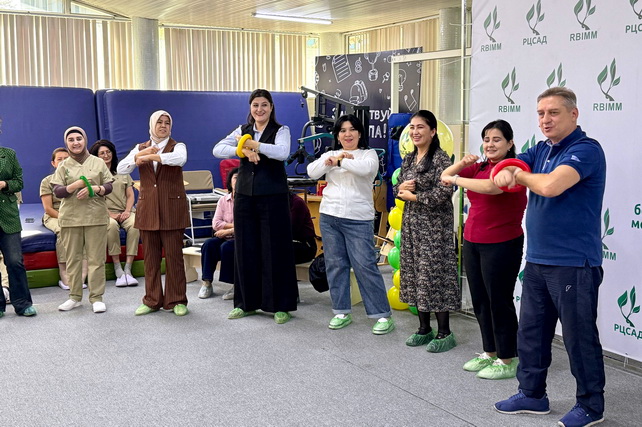
At the same time, other regular initiatives are emerging in the country that operate according to the same logic. For example, the forum on inclusive and accessible art, the Unlimited Art Initiative, Boris Pavlovich's production "Life as a Miracle" at the Ilkhom Theater, as well as exhibitions, creative laboratories, and training programs for employees of cultural institutions. These are also not tied to specific venues, but they create opportunities to return to the topic, deepen knowledge, attract new participants, and showcase new creative projects by people with disabilities.
All this forms an important pattern: the systematic nature of events allows inclusion to gradually move into the realm of sustainable cultural and educational policy. Such forums become not exceptions, but points of growth where a professional environment is formed and the understanding is strengthened that the participation of people with disabilities is part of the normal cultural life of society.
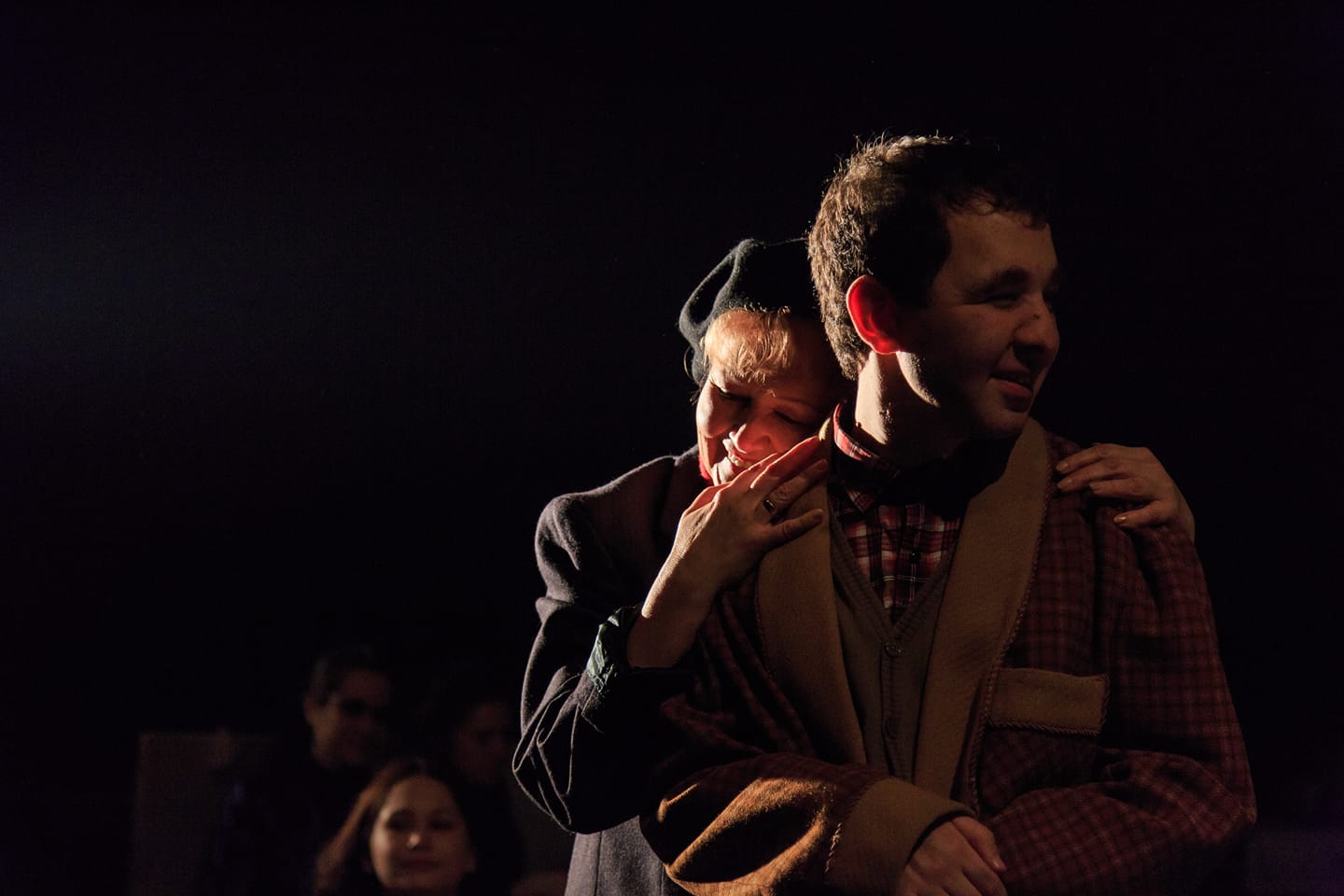
It is important to emphasize that in Uzbekistan, the perception of people with disabilities is gradually changing. And it is changing thanks to culture: public performances, exhibitions, shared stories, rehearsals, and joint laboratories. On stage, in the gallery, or in the studio, people represent themselves through talent and professionalism, not through social issues.
However, we as a society still have a long way to go to learn to see the problem not in people with disabilities, but in the environment itself, in the organization of accessibility, and in the shaping of our mindset.
Perhaps Uzbekistan is only at the beginning of this journey. But there is hope that what is happening now will change the perception of future generations. And, perhaps, it is these very initiatives that will become the foundation on which, in a few years, a full-fledged cultural system of Uzbekistan, open to all, will stand.
Newsletter
A letter from the HD editors
Once a week, we send the best stories, events, and cultural discoveries from Central Asia.