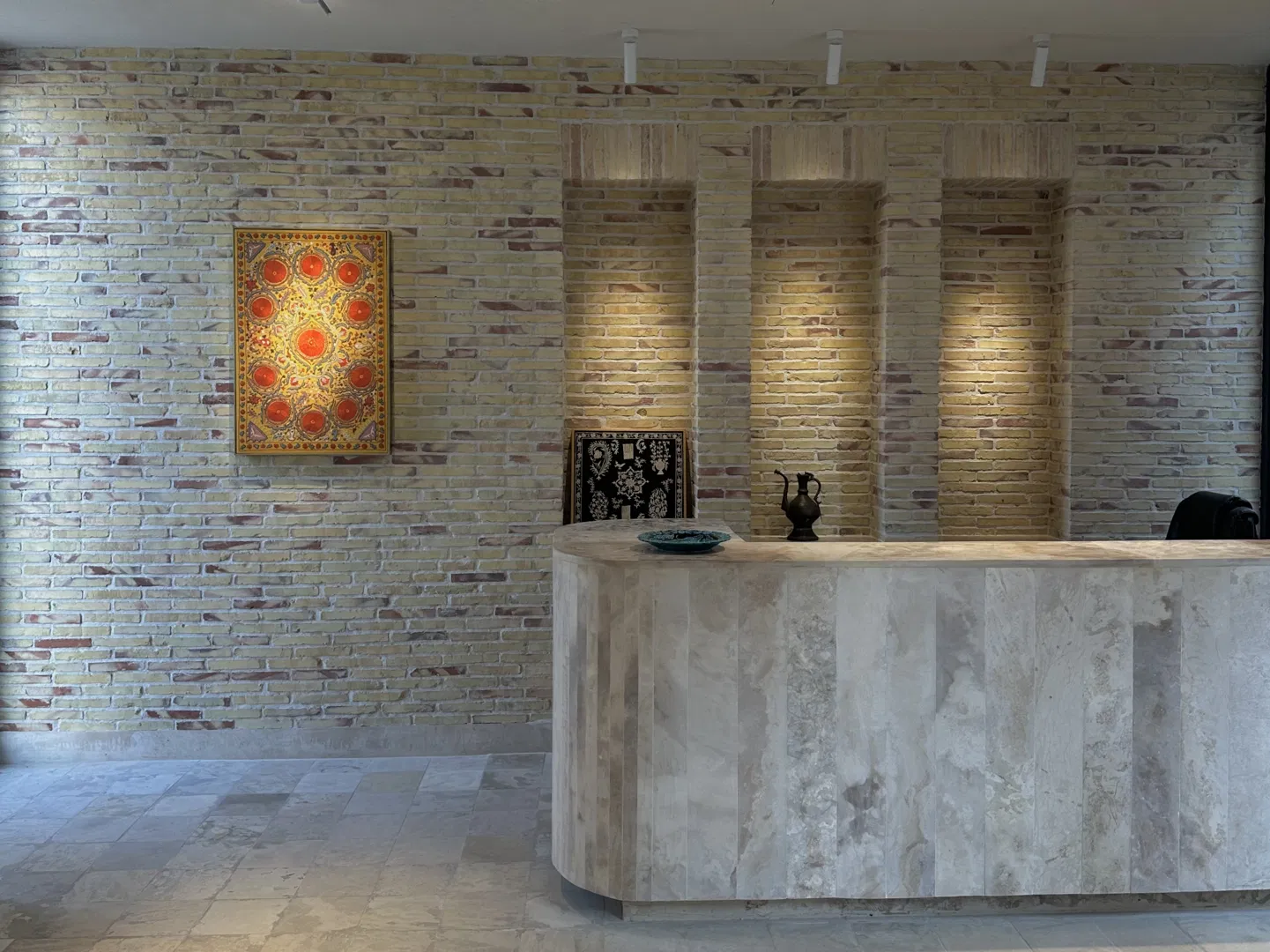
As the New Year approaches, we begin to think about finding gifts, and the closer the holiday gets, the stronger the desire to give something living, warm, and full of meaning.
A handcrafted item preserves the artisan’s touch and becomes part of a people’s cultural memory. Such things convey more than just attention. In Tashkent, it’s not so easy to find such items, but we have gathered the most interesting locations for you: here you will find crafts from all over Uzbekistan, allowing you to choose from a rich palette of traditions and techniques. The selected places have one thing in common: in each location, you will find traditional items that reflect the culture of Uzbek craftsmanship.
Center of Applied Arts in the Abulkasym Madrasa
Address: Tashkent, Furkat Street, 3/2
Opening hours: usually from 10:00 to 18:00, it's better to come during the day — that's when most workshops are open.
Budget: 💸–💸💸💸
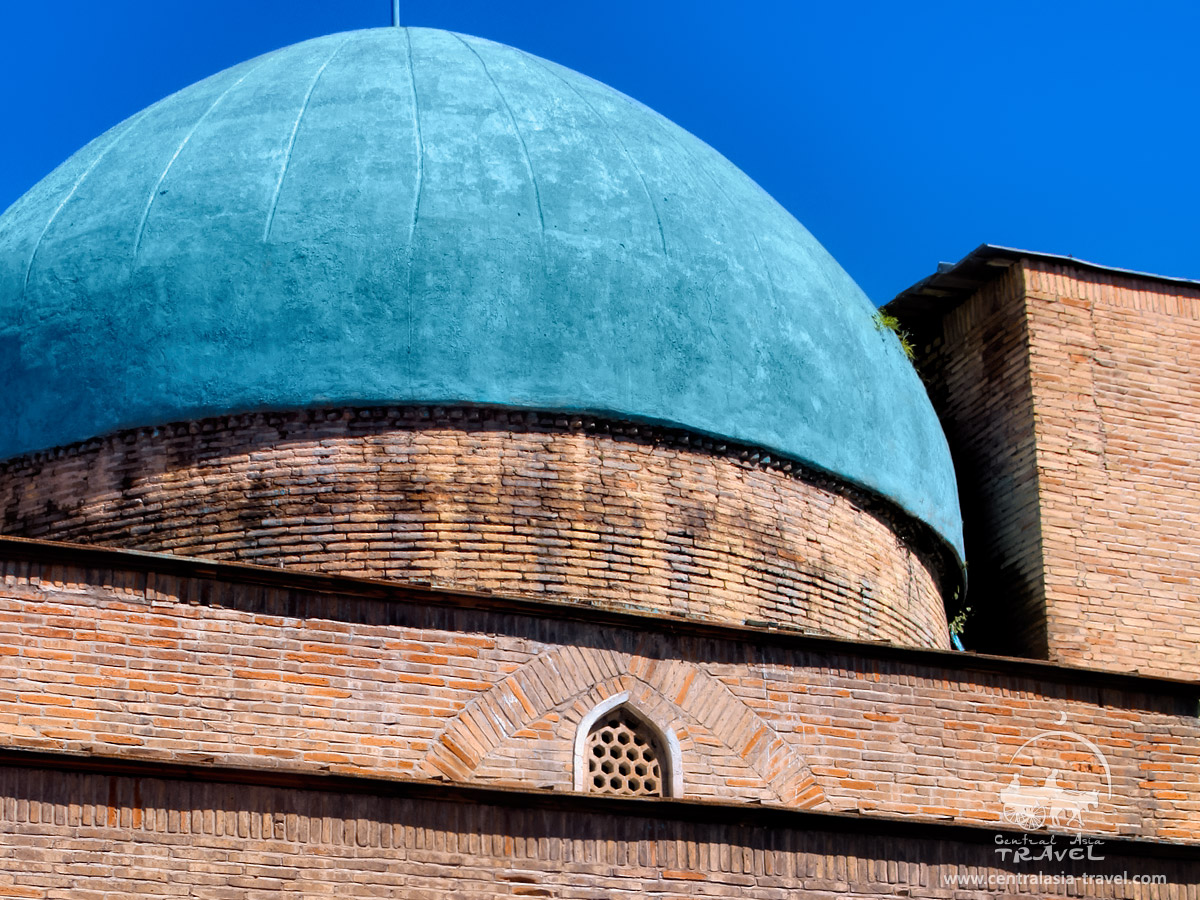
The historic 19th-century madrasa now functions as a Center for Traditional Applied Arts and as a space for the “Hunarmand” Craftsmen’s Association. Masters of various crafts work in its cells, allowing visitors to witness the live process of creating items—from textiles to wood carving, miniature painting, and jewelry making. Here you acquire more than just a souvenir—an item handmade by the artist, reflecting the craft traditions of Uzbekistan.
In the madrasa, you can find items such as miniatures, calligraphy, lacquered boxes, objects with wood carving, as well as scarves, bags, rugs, jewelry, and small accessories. This place will be most interesting for those who want to see the master at work and purchase an item directly from his workshop.
 Central Asia Travel
Человеческий дом
Address: 43 Kichik Mirobod Street, Tashkent.
Hours of operation: 10:00–19:00, daily
Contact number: +998909378373
Budget: 💸–💸💸
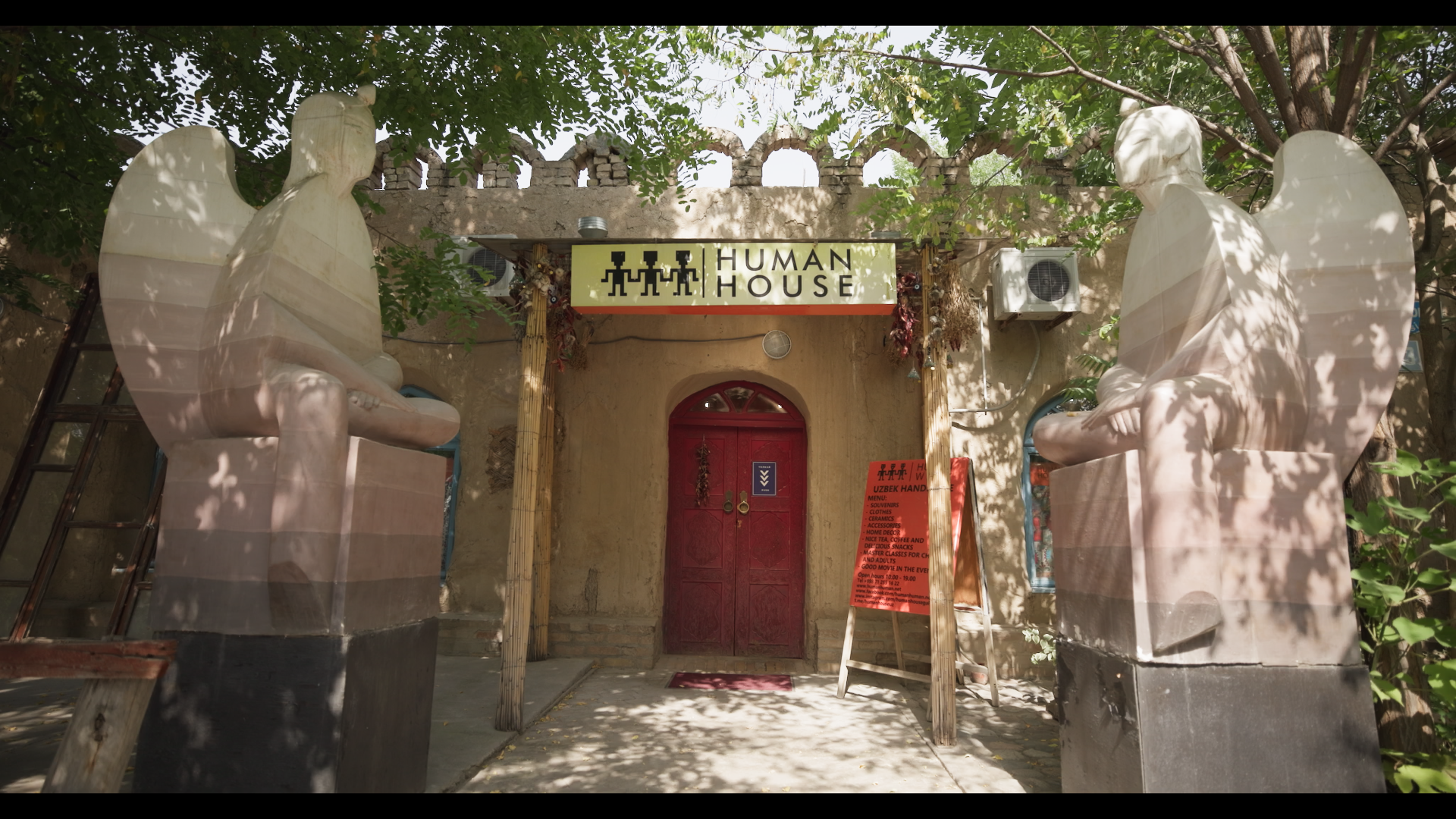
Human House is one of the most renowned spaces in Tashkent, showcasing contemporary applied art of Central Asia. Here, works by more than 260 masters from different countries of the region are gathered, giving the space an almost complete representation of the diversity of techniques, materials, and directions in craftsmanship. Human House combines a gallery and a store of designer items.
Here you can find almost all types of applied arts — from textiles, ceramics, and jewelry to home goods, clothing, and accessories. A convenient city location, a thoughtful selection, and a constantly updated assortment make this place an accessible and comfortable spot for discovering crafts as well as for finding gifts.
Bright Gallery
Address: Tashkent City Mall, 1st floor, Tashkent.
Opening hours: from 10:00 to 23:00
Contact number: +998955511155
Budget: 💸💸–💸💸💸
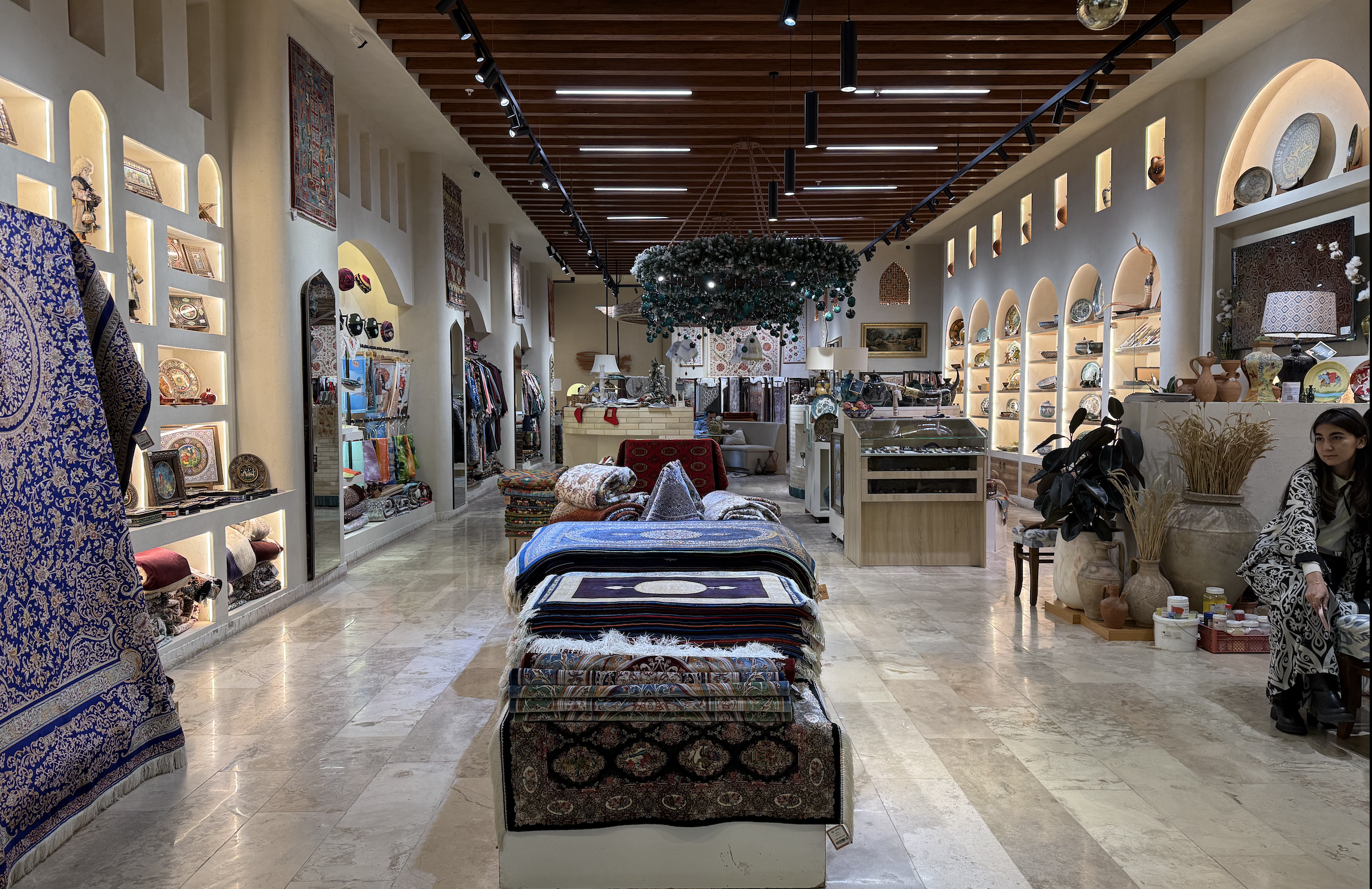
Here, contemporary Uzbek applied art is presented in all its diversity. In addition to original ceramics, the space features porcelain items, carved wooden objects, suzani, traditional fabrics, handmade carpets, as well as other forms of applied and visual arts. All the displayed items are united by careful selection, the use of natural materials, and a respectful approach to craft traditions, reinterpreted in a modern visual style.
Among the featured ceramists are Alisher Nazirov, Numon Ablokulov, Vakhobjon Buvaev, Abdulloh Narzulloev, as well as masters of other fields, including Gayrat Daminov, Anvar Isroilov, and Otabek Irmatov. The presented items are original works and are not mass-produced souvenirs. Since this is a gallery format with a central location and operates with curatorial selection, the cost of individual pieces may be higher than when purchasing works directly from the artists.
Art Miras
Address: 1st Okoltin Passage, 38, Tashkent.
Opening hours: from 9:00 to 22:00
Contact number: +998500202010; +998940777701
Budget: 💸–💸💸
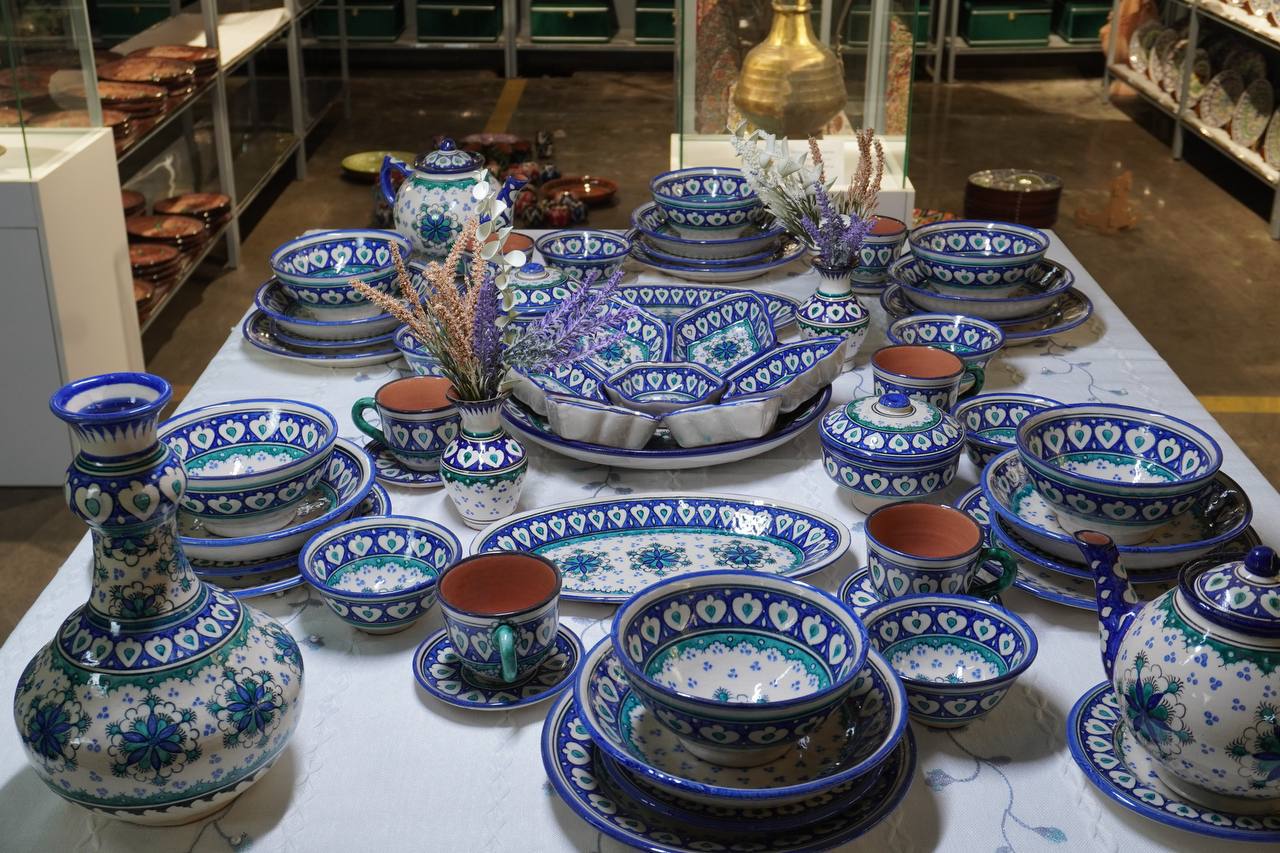
If you admire Rishtan ceramics, you no longer need to travel to the Fergana Valley to see its examples — in Tashkent, the Art Miras store has gathered works by Rishtan masters. This is a place where you’ll find jugs, plates, cups, and dishes, all handmade using traditional techniques with deep blue glaze and recognizable ornamental painting. Here you can find both unique collectible pieces and more affordable serial products.
The store features works by Rishtan masters — Ismoiljon Komilov, Mavsumjon and Shakhboz Mamazhonov, brothers Vahobjon and Odiljon Azizov, as well as brothers Bekzod and Bunyod Yunusov. At Art Miras, all ceramics are made in the traditions of Rishtan craftsmanship. Prices are openly displayed, and the assortment includes items from various price categories.
Adraschi Amaki
Address: Chorsu market, 2nd Khakikat passage, 28, Tashkent.
Opening hours: same as the entire Chorsu — approximately 9:00–18:00 every day except Monday.
Contact number: +998977888884
Budget: 💸
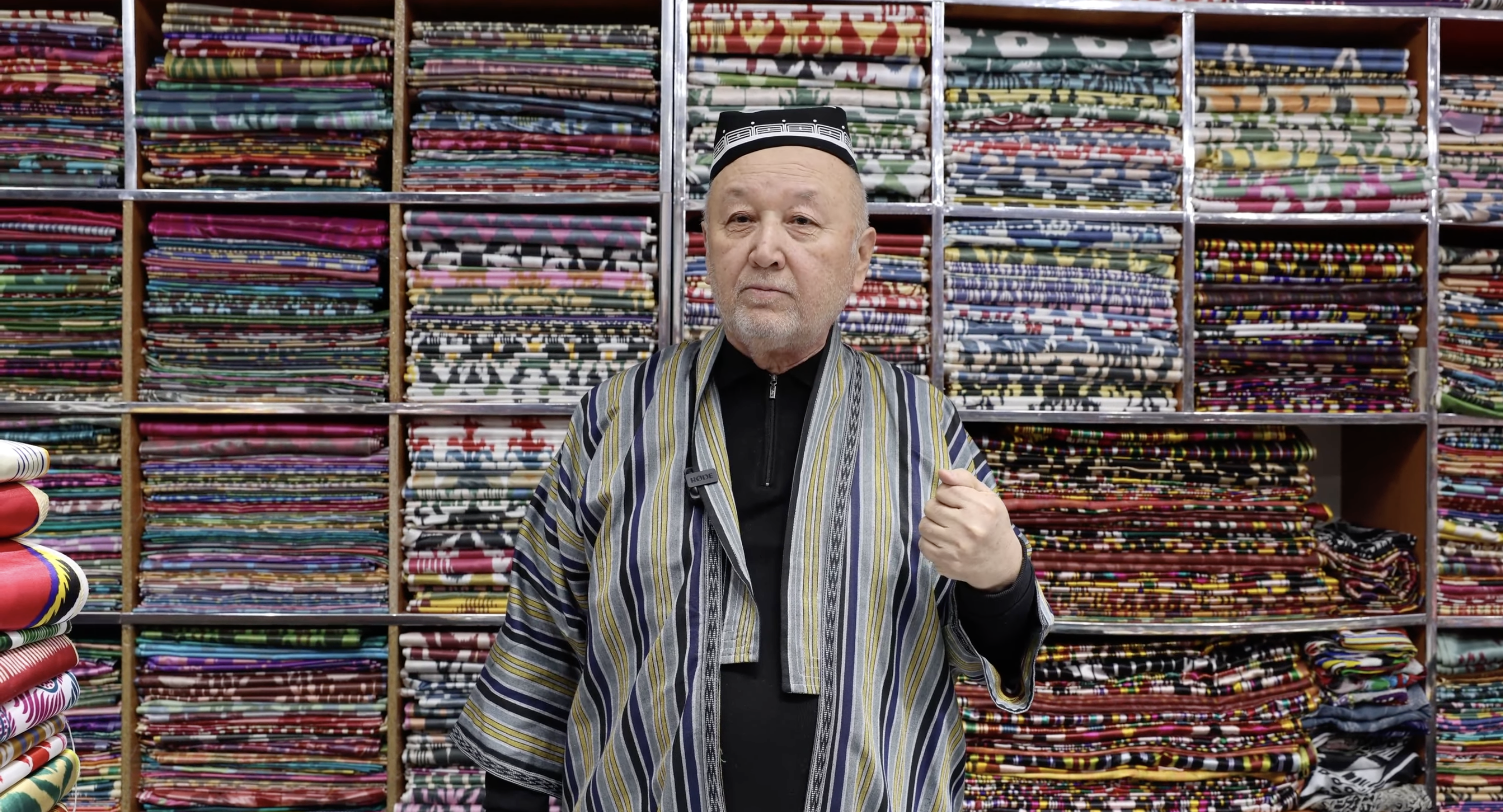
Adraschi Amaki offers a selection of traditional Uzbek fabrics, including vintage ones. His collection features adras, atlas, bakhmal, and other materials that reflect the richness of Uzbek ornamental and weaving traditions. Since factory-made analogues, including Chinese fabrics, sometimes appear on the market, it is important for buyers to carefully examine the item and clarify the details of its origin.
For Uzbekistan, textiles are a reflection of identity through color, shape, and structure, and each fabric is the delicate craftsmanship of weavers who, generation after generation, preserve ancient techniques of dyeing and pattern creation. The fabrics are distinguished by their characteristic play of colors, smooth transitions, and repeating motifs. Such fabric can become a universal gift. It is suitable for clothing, home decor, or designer items, and can also be kept as an independent object with aesthetic and cultural value.
Musical instrument store at Chorsu
Address: 10 Sakichmon Street, Craftsmen's Rows, shop 47, Tashkent.
Opening hours: like the entire Chorsu — approximately 9:00–18:00 every day except Monday.
Contact number: +998909994490
Budget: 💸–💸💸
There is a space operating on the territory of Chorsu where traditional Uzbek musical instruments are sold. Here you can see the dutar, tambur, rubab, nay, karnay, and more. Each instrument is crafted personally by the master—from preparation to tuning—which makes the sound unique.
In the workshops, you can also find related craft items connected to musical culture, including cases, decorative elements, and small accessories. A musical instrument as a gift is not only a rare item and a chance to introduce the recipient to a new hobby or creative direction, but also a decorative element capable of adding a bright accent.
Suzani by Kasimbaeva
Address: Suzuk-Ota Street, 35, Tashkent
Opening hours: from 10:00 to 18:00
Contact number: +998909152551
Budget: 💸💸💸–💸💸💸💸
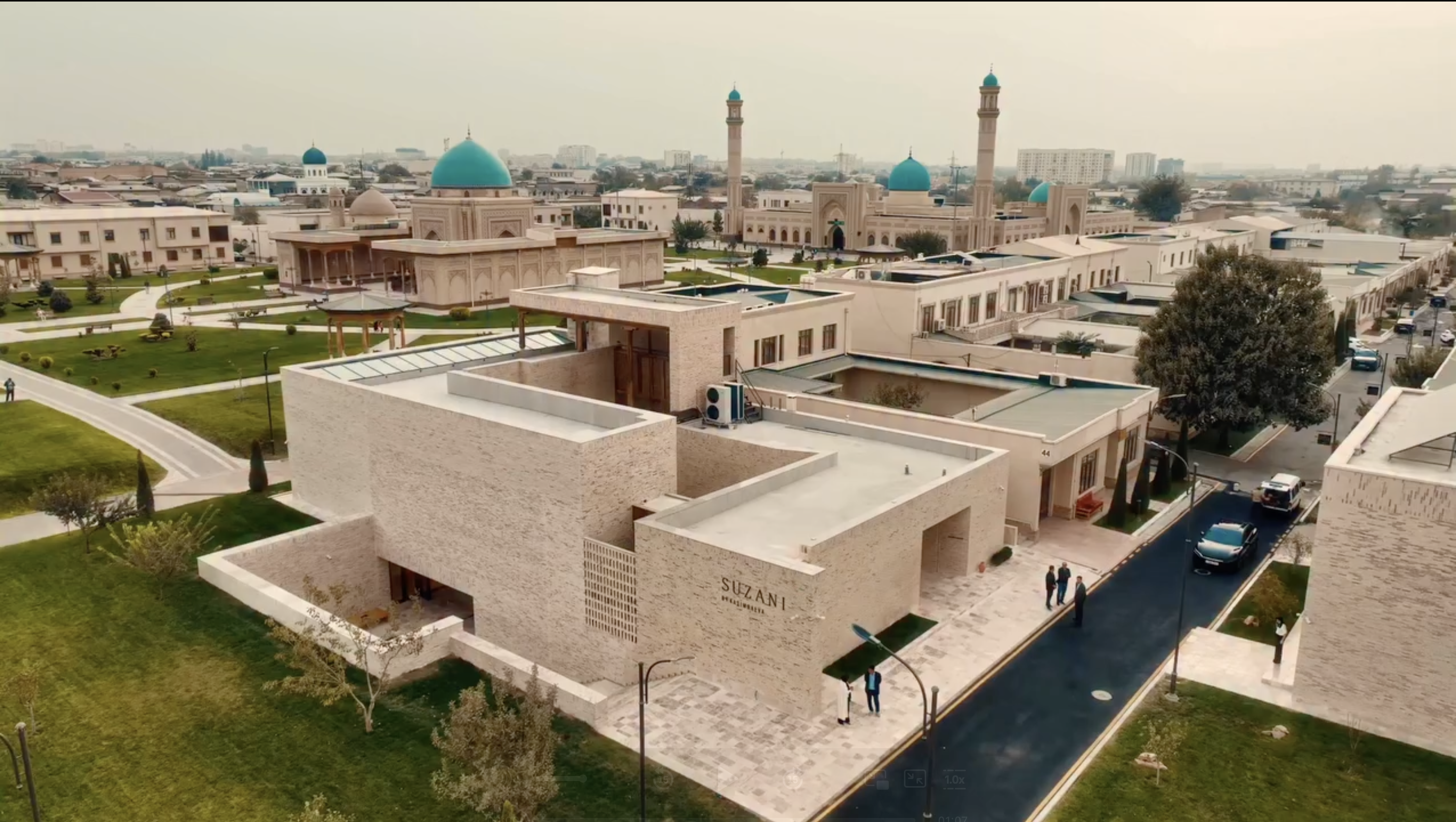
Madina Kasymbaeva is one of Uzbekistan’s leading masters of traditional suzani embroidery, creating unique works in the technique of hand artistic embroidery for over 25 years. Each of her pieces combines historical patterns, symbols, and techniques of regional schools with an individual authorial style and contemporary vision. Her works go beyond mere decoration and are perceived as independent works of art. By acquiring such an item, a person becomes the owner of a collectible piece that, in terms of craftsmanship and symbolic richness, is comparable to museum exhibits.
In a world of quick purchases and uniform gifts, handcrafted items bring back a sense of authenticity and connection to culture. By choosing such pieces, you are not just giving a beautiful item—you are supporting artisans who preserve traditions and passing on warmth that cannot be replicated by mass production.

Newsletter
A letter from the HD editors
Once a week, we send the best stories, events, and cultural discoveries from Central Asia.