
A woman's whisper. A pulsating fire. A train piercing through the chronicle. This is how they speak of silence and freedom. And someone collects paintings in the desert. Someone sings to heal. Art is not just a theme, but a hero. And in Central Asia, it has many voices.
Painting, music, crafts, and theater become not a backdrop, but a way to speak about what matters most. Through the images of artists, bakhshi singers, manaschi storytellers, and dancers, Central Asian directors explore memory, identity, and historical traumas.
Art in these films serves as a prism through which one can see what otherwise cannot be said. It lives a life, speaks for those who were silent. And cinema itself continues the traditions of epic and ritual, transforming into a dialogue between the past and the present.
Women's Silence Finds Its Voice
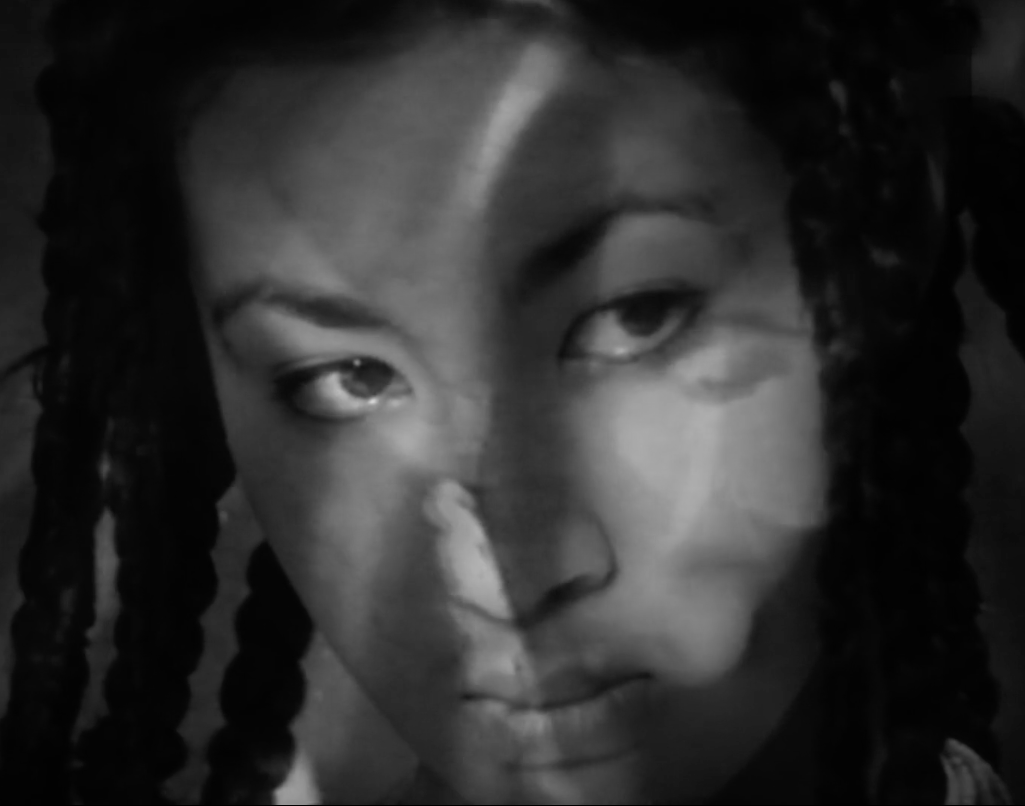
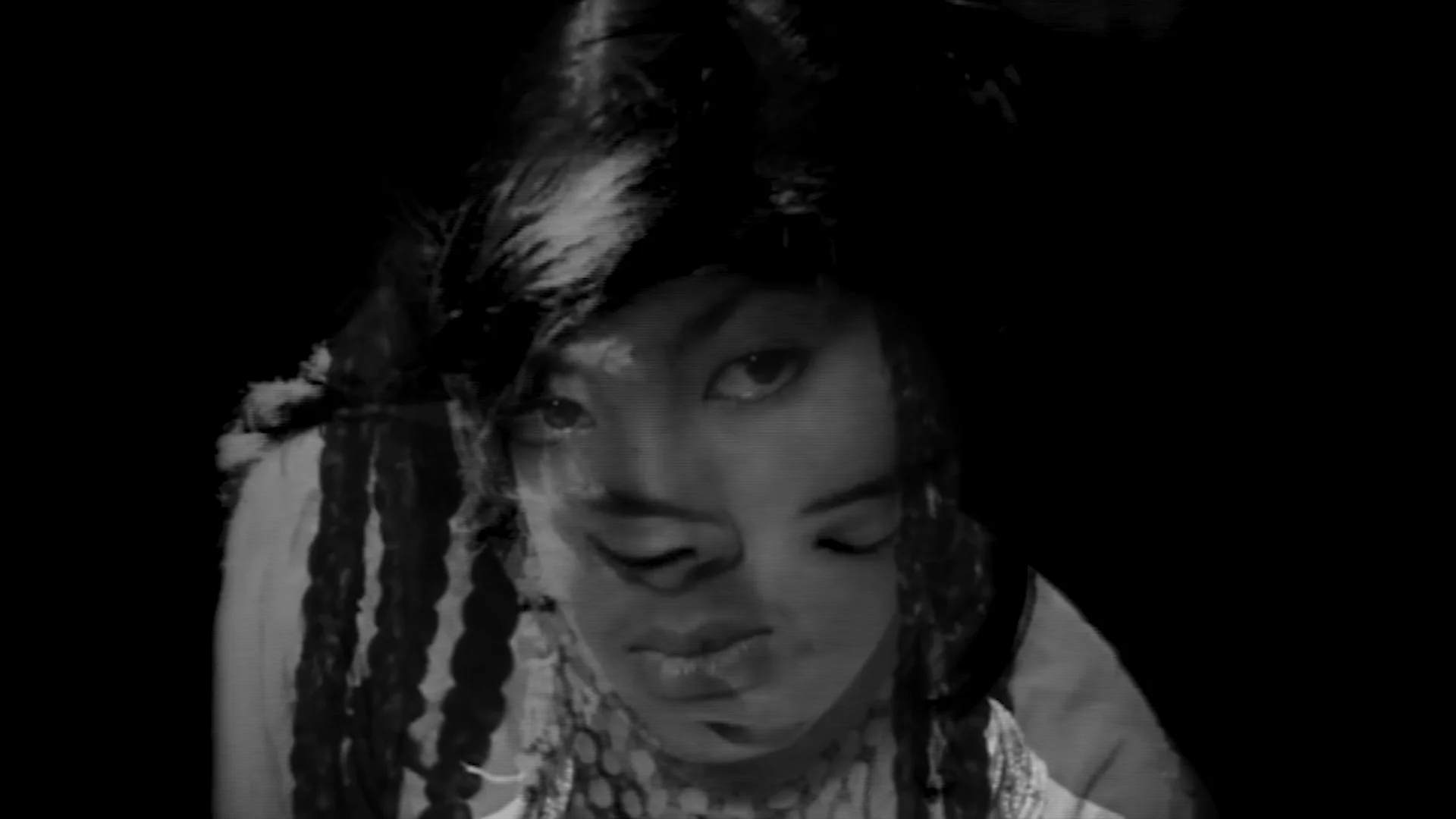
Frame from the film "Her Right". Director Saodat Ismailova
The film by Saodat Ismailova «Her Right» begins with a whisper — multivoiced, halting, as if weaving into a single stream of breath. It is not just a sound, but a metaphor for the centuries-old silence of Eastern women. A whisper that was forbidden to sound openly.
Edited as a 14-minute video collage from Uzbek films of 1927–1985, this short film transforms the archive into a living meditation. Ismoilova, with an artist's precision, weaves together footage from silent and sound films — from “The Veil” by Mikhail Averbakh to “Without Fear” by Ali Khamraev and “The Fiery Roads” by Shukhrat Abbasov.
Editing becomes not just a joining of frames, but a stitching together of torn time: the on-screen female image gains new breath and depth. Among these images is the story of the dancer Nurkhon Yuldashkhodjayeva. Her story here is not an episode, but a cry that has broken through the decades.
Through her visual language, Saodat Ismailova shows how the female image on screen was formed and transformed—from an anonymous silhouette in a veil to a figure capable of resistance. The camera captures how the fabric of the burqa sways—almost trembles. These movements resemble the shudders of a body "locked" in tradition. In one episode, the veil turns into chains, and the woman's jewelry becomes signs not of beauty but of captivity. The gleam of gold proves deceptive: the heroine is like a bird in a cage, dazzlingly bright within the walls of her home, yet forced to conceal this beauty behind thick fabric as soon as she steps beyond the threshold.
The image of the train, rushing through the montage fabric at a terrifying speed, occupies a special place in the film. It appears suddenly — as if piercing the space of stagnation, symbolizing a forward movement towards another life. The only colored element in the black-and-white flow of the chronicle becomes fire — golden, pulsating, like life itself. This is the fire in which veils burn — and with them burn fear, submission, an era.
But every movement toward freedom has its price. The final episode — Nurhon's body on a cart under the spring sky, which in life she could only see through the slits in her fabric. Now — everything is revealed. But too late. The paradox of a woman's freedom: to see the world for the first time — at the moment it is already lost.
The World of the Great Collector
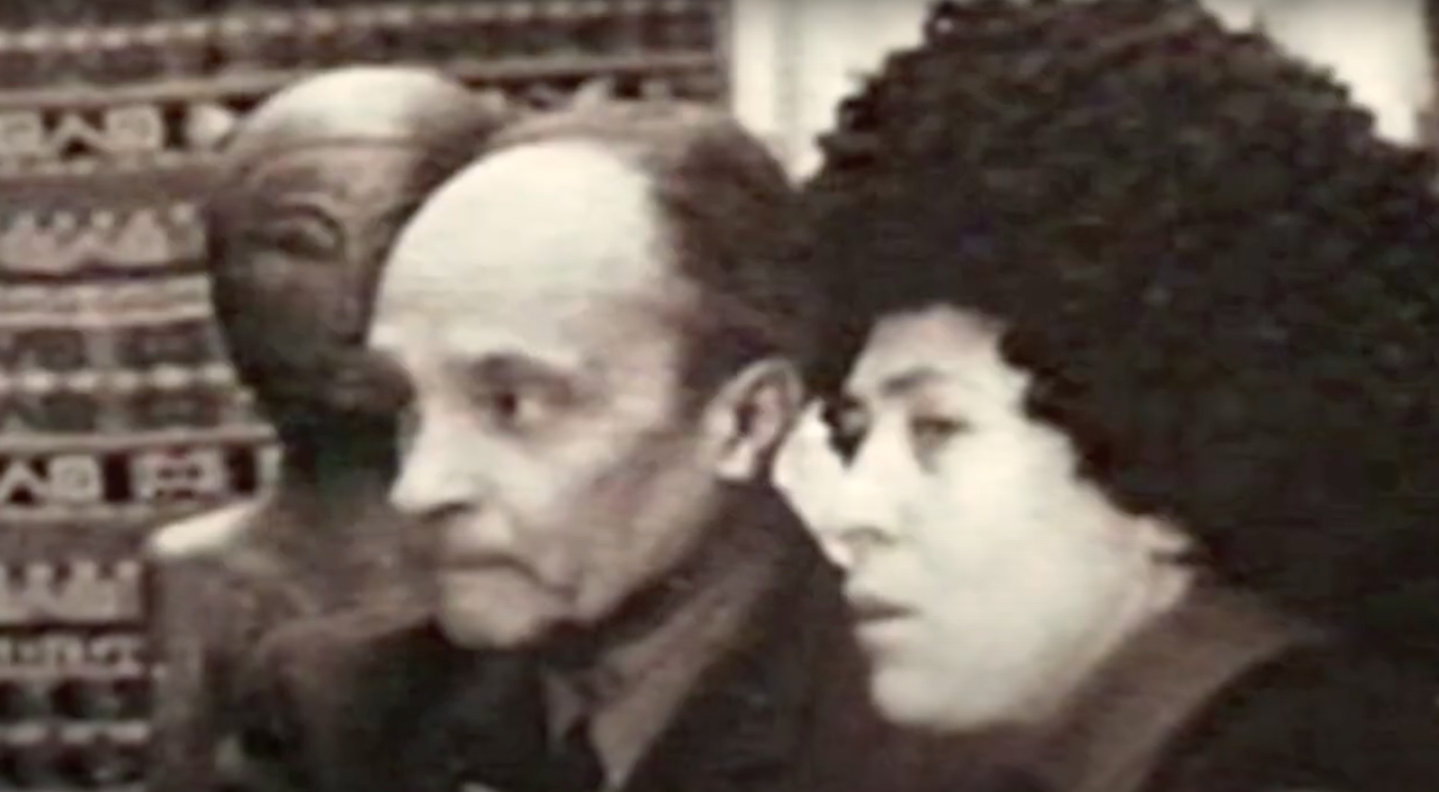
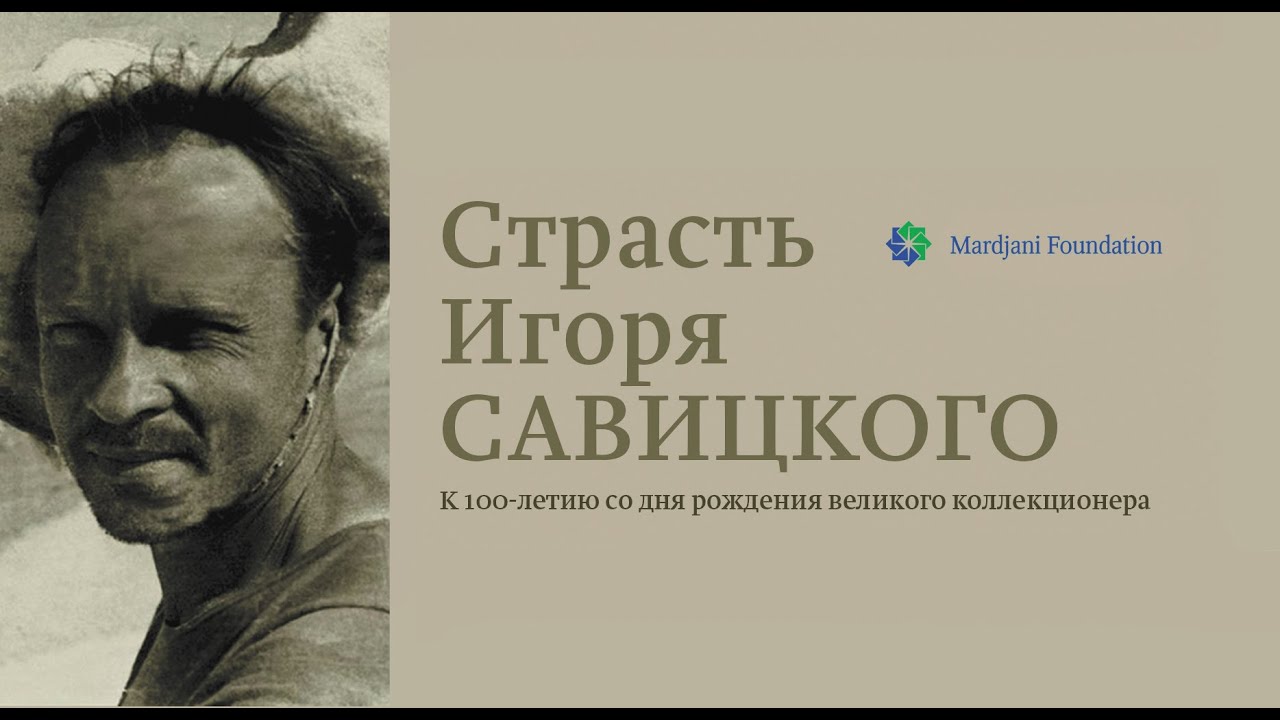
Frame from the film "The Passion of Igor Savitsky". Directed by Ali Khamraev
Many have heard about the Savitsky Museum today. Those who have not been there imagine it as an ordinary museum. But those who have seen it know: it is an entire world. A world where paintings, carpets, ceramics, and graphic art live; where history breathes, woven into lines, colors, and textures.
According to legend, God needed six days to create the world. To create this one—on the edge of the desert, far from empires—Igor Savitsky needed a lifetime.
The documentary film by Ali Khamraev The Passion of Igor Savitsky, made for his centenary, is not just a chronicle. It is a confession of obsession, a story about a man who became a bridge between oblivion and eternity. Savitsky didn't just collect paintings—he saved destinies. Behind every canvas is the name of an artist who could have met the fate of being erased from history. But thanks to him, Usto Mumin, Alexander Volkov, Ural Tansykbaev, and hundreds of others returned to art—through Nukus.
He turned seven rooms of the local history museum into the State Museum of Arts of Karakalpakstan — the very one that is now called the "Louvre of the Desert." He spent his salary on canvases, slept in the museum, forgot about his Moscow studio. Nukus became his destiny — because here, far from censorship, art could survive.
Khamrayev shows Savitsky through the eyes of students, colleagues, officials, and ordinary residents. One of the most poignant episodes is a market vendor comparing him to Leonardo da Vinci. Not a metaphor—an acknowledgment.
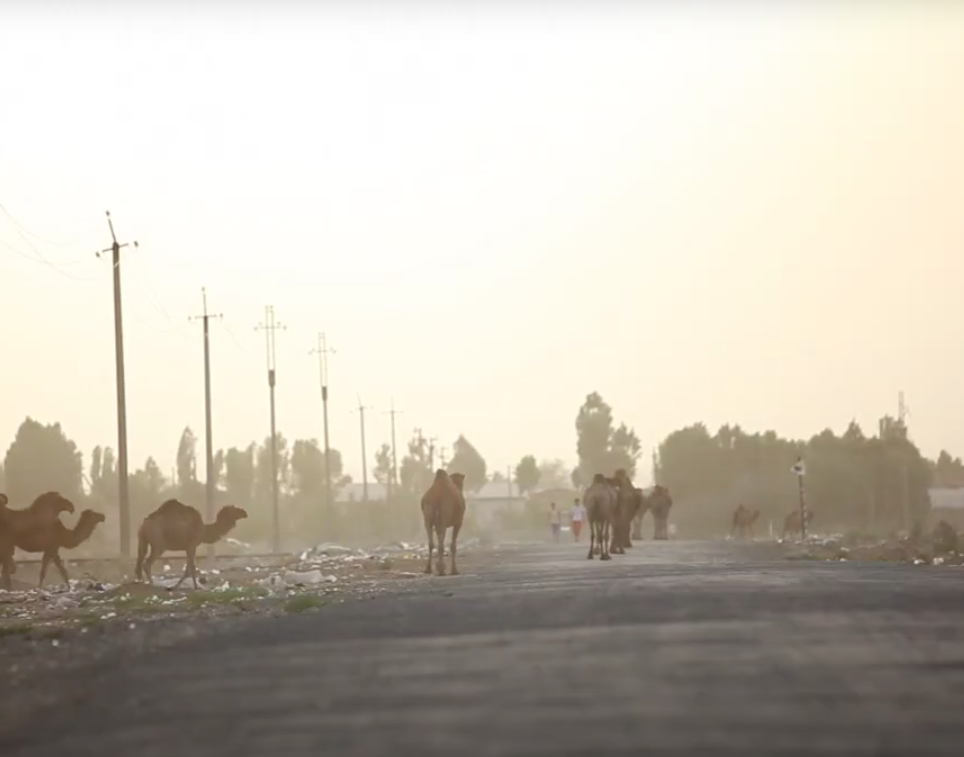
A still from the film "The Passion of Igor Savitsky." Directed by Ali Khamraev
Savitsky endured much. In his youth, he was called the son of an enemy of the people; in his maturity, a strange fanatic. In archival recollections, he himself says: at the Lubyanka, they "beat out everything that could be beaten and almost took away his voice." But his voice remained in his paintings, in museum halls, in faded letters, in rescued destinies.
In this film, Ali Khamraev is not just a director, but an artist and a storyteller. He assembles cinema as Savitsky assembled his collection: from pain, love, archival dust, and a living tremor. The camera here does not just record—it enters into a dialogue with the era. This is a film about a passion that makes the impossible possible. About how art is not merely preserved—it is lived.
Just before the finale — a list. Names. Almost three minutes — like an exhale. These are the ones whose works he saved. Over a hundred fates that could have vanished. But they didn't. They are with us — speaking in paints, lines, clay, and metal. Their voice doesn't shout, but it resonates — and will not fall silent now.
On Savitsky's tombstone is engraved: "To the genius savior of beauty — from grateful descendants." His museum is not just a collection. It is memory. It is freedom built on the rubble of fear. And that is precisely why "The Desert of Forbidden Art" is not just a film about a man, but a statement about salvation, mission, and the price of silence.
The voice of the steppes and the voice of the mountains
In Central Asia, the storyteller is more than just a narrator. He is a keeper of memory, a mediator between eras, a living vessel echoing with the sounds of antiquity. The manaschi and the bakhshi are two faces of this tradition, two rhythms of a single heart. The first speaks — the second sings. One conjures with words, the other heals with sound. But both do not merely tell a story — they conduct a dialogue with eternity.
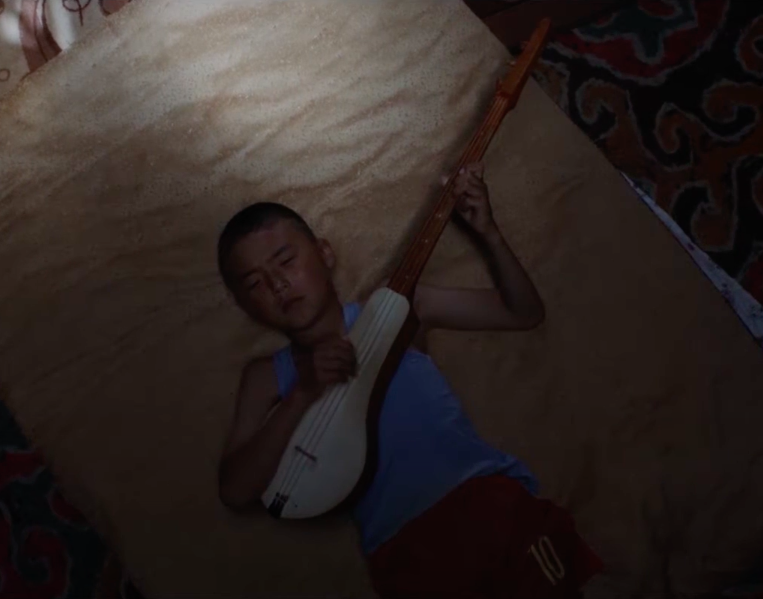
Frame from the film "The Little Storyteller". Directed by Farida Seitalieva
In the Kyrgyz film «The Little Manaschi» director Farida Seitalieva, with documentary precision and artistic delicacy, portrays the formation of a young manaschi—a boy in whose life children's games, television, and the yurt coexist with the voice of the epic. He is still only learning to live, but already heeds the ancient rhythm. Through the atmosphere of everyday life, into which sacred rituals unexpectedly penetrate—a sacrifice, a blessing at the grave of the great manaschi Sayakbay Karalaev—the film reveals that one cannot become a manaschi simply by will. It is a calling that comes through a dream, through revelation, through the invisible touch of the past.
It is echoed by, yet at the same time contrasted with, the Turkmen film «Nedzhep Oglan» directed by Vepa Ishangułyýew. This is a fictional story about a boy who, despite prohibitions, poverty, and loneliness, masters the great art of the bakshy—a singing storyteller. Unlike the manaschy, his word resonates in music, is accompanied by the dutar, and weaves in prayers, parables, and incantations.
Nedzhep doesn't just dream — he walks the path of an exile. His stepfather, a bakhshi himself, out of fear of the boy's foreign gift, forbids his stepson to sing, hides his instrument, and forces him to run away from home. Envy destroys everything: love, family, the eyesight of his wife — Nedzhep's mother, who, even after going blind, recognizes her son by his voice. The confrontation between the two bakhshi becomes a metaphor for a struggle — of the true and the false, the pure and the selfish.
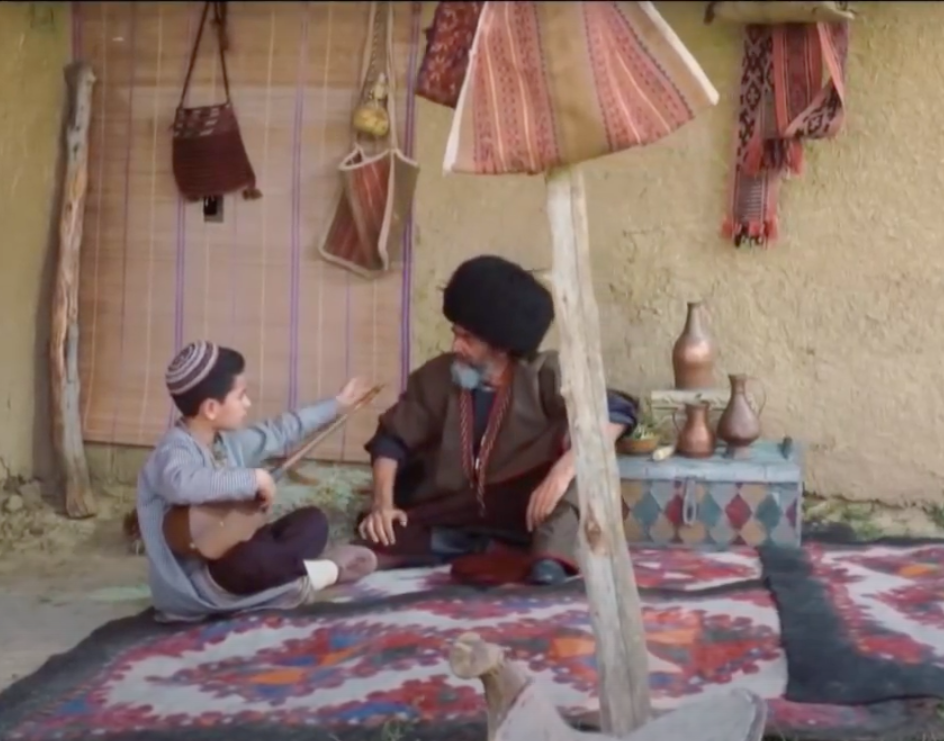
Frame from the film "Nedzhep Oglan". Directed by Vep Ishanguliyev
Nedzhep, exiled but not broken, walks towards his destiny. He heals with the power of music; his dutar revives not only the epic but also human souls. He triumphs not with anger but with sound, healing the ruler's insane and ulcer-covered daughter and bringing light back into the lives of others. His art does not seek glory; it speaks to the world on behalf of the entire people.
Both stories—documentary and fictional—are connected by a common thread: a boy's journey to his gift. One moves forward with support, the other—against all odds. But both strive for the same thing: to comprehend the language of the legend and pass it on. In this striving for knowledge, for the word, for the melody—lies the very essence of Central Asian cinematic storytelling about art. Here, art is not a means of expression, but a form of life. It is not created for exhibition; it returns one to their roots, purifies, and shapes the soul.
And at the same time, to understand these films, it is not necessary to know Kyrgyz or Turkmen. As in Saodat Ismailova's film, here, it's not just words that speak: the visual imagery, rhythm, music, the characters' expressions — all of this reveals the content more deeply than any translation.
Art as a Form of Survival
Central Asian cinema that addresses art is not a genre, but a gesture. A gesture of memory, pain, resistance. Whether it's the voice of a bakhshi, fire in the archives, canvases in the Nukus desert — they all speak of one thing: art does not decorate life, it saves it.
These films are not just about artists. They are acts of creation themselves, where culture becomes a means of survival, and the screen becomes a space for the return of the forgotten. Perhaps this is how true art works—when it speaks, even if all around is silent.


