
In Uzbek culture, the novel Days Gone By lives on in many forms: on screen, on stage, in cultural memory, and in new translations, some of them, as we know, not without a scandal. Perhaps this is precisely where the true power of a canonical work reveals itself, when it refuses to be confined to the school syllabus. In fact, even its status as required reading creates a kind of balance, allowing the text to resonate across different forms of art. It remains relevant and continues to find new expressions to this day.
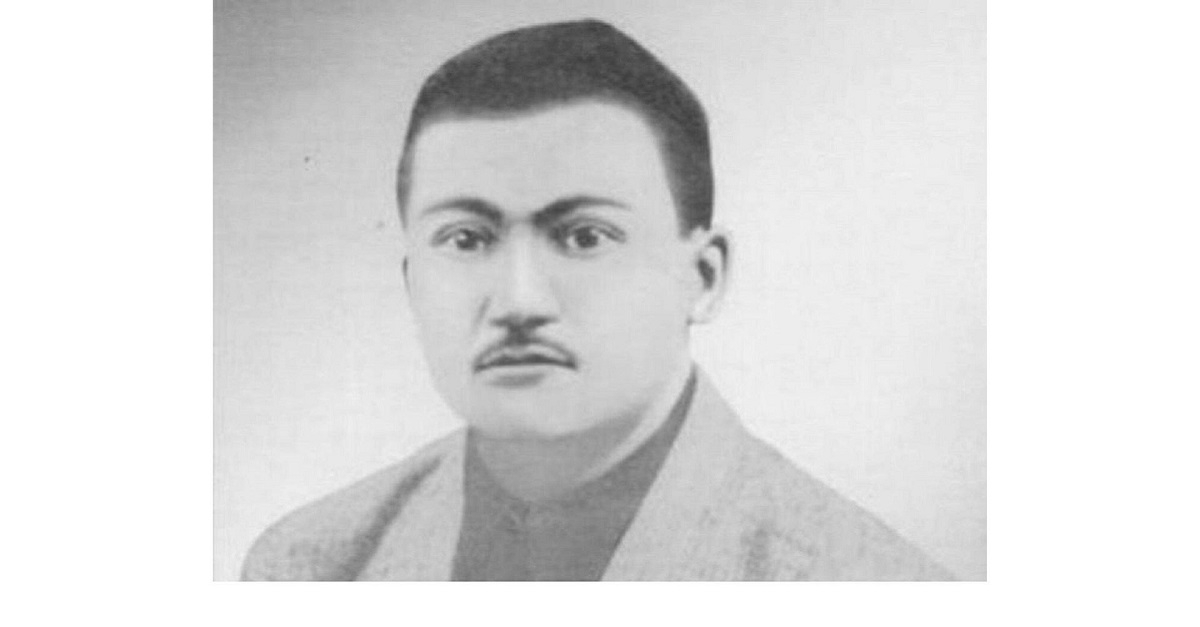
Abdulla Qadiri was born on 10 April 1894, and today his name is primarily associated with a work widely regarded as the first Uzbek novel. From the very beginning, Days Gone By proved to be a landmark text, as the author developed a distinctive mode of storytelling. On one level, there is the plot, a story of love and hardship. Yet far more compelling is the way Qadiri found an innovative language for portraying the individual within a precisely rendered historical moment, focusing on a private fate set against the backdrop of profound social change. It is therefore hardly surprising that the novel remains relevant today, as do its reinterpretations in other art forms. Built on a powerful tension between emotion, duty, power and a sense of unease shaped by history, the story itself seems to invite new readings, a point on which many critics agree.
Publication
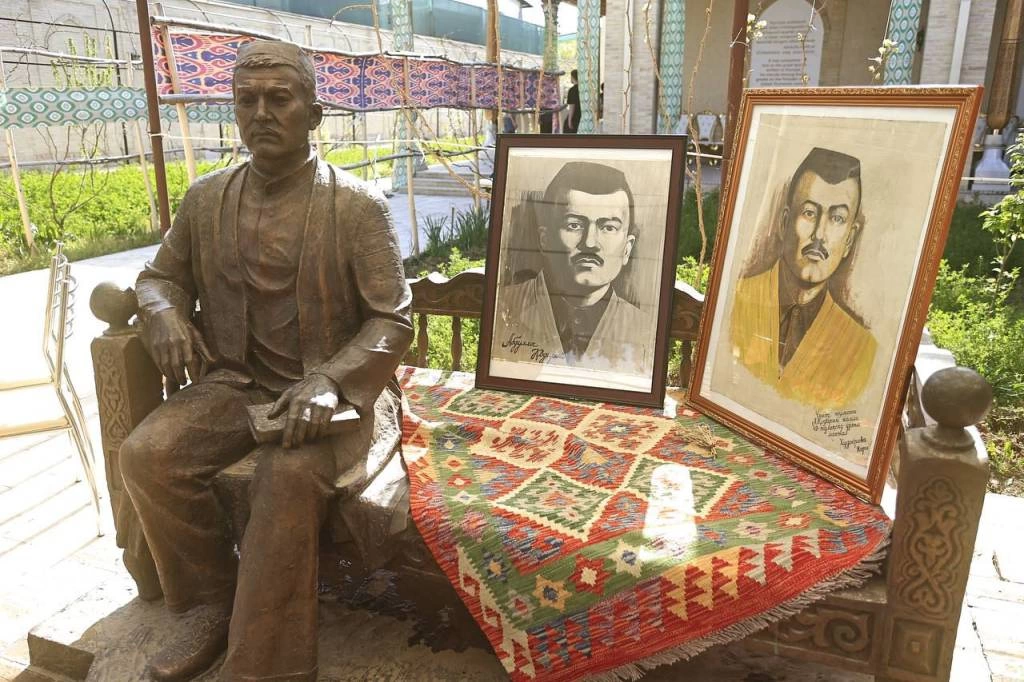
The novel was first published in the magazine Inqilob in 1922 and appeared as a standalone book in 1926. The action unfolds against the backdrop of mid-nineteenth-century events and the struggle for power among local rulers. Already within this framework lies what would later prove so significant for film and theatre directors: in Qadiriy’s work, the personal drama of his characters never exists apart from the broader historical canvas. Love, family life, social pressure, the force of tradition, and social and political instability are woven together so tightly that the narrative can hardly be reduced to a single romantic storyline.
Cinema
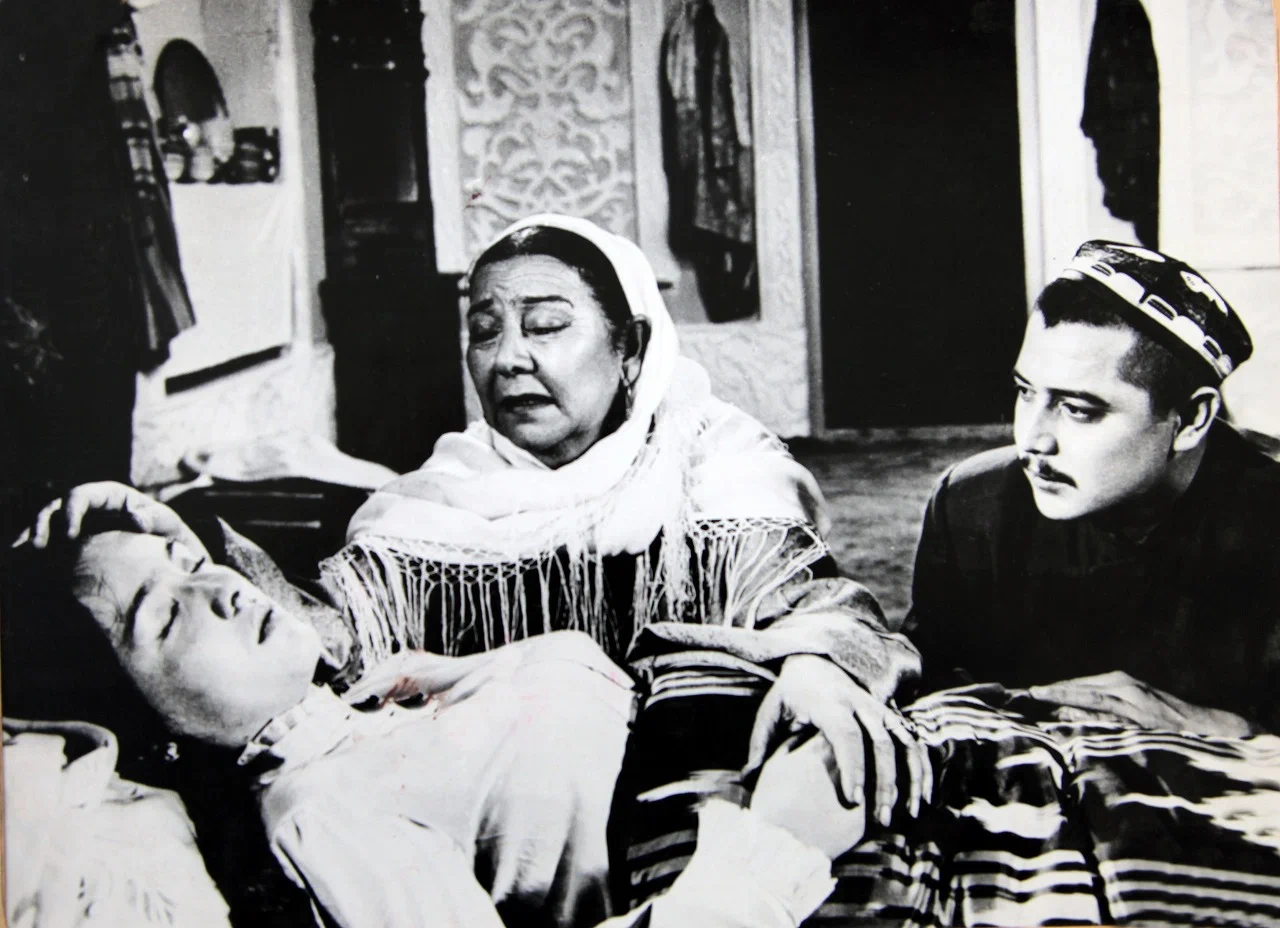
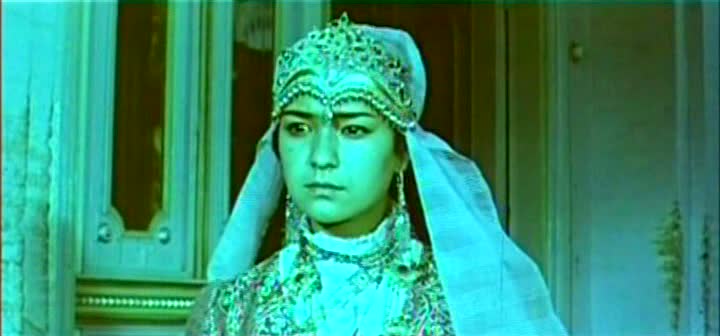
The novel found its screen adaptation in 1969, when director Yuldash Agzamov filmed Days Gone By at the Uzbekfilm studio, with the premiere taking place on 11 May 1970.
The Days Gone By is clearly a work whose significance is not only literary but also deeply visual. For cinema, it offered ideal material: a sweeping historical panorama, generational conflict, a complex network of family relationships, and a central love story. Let us look more closely at the film adaptation, not as a mere reproduction of the literary source, but as an independent cinematic work.
The Approach to Adaptation
One of the film’s strengths is that Agzamov does not reduce the novel to its love story, even though it remains the emotional core
of the film. A broader dimension is built into the very foundation of the plot: the action takes place in mid-nineteenth-century Tashkent against the backdrop of local rulers' struggle for power, and the private fate of the characters is embedded in historical context from the outset. It is particularly important that, as historian Yuri Kosenko notes, the film appears more accurate and respectful towards its literary source than another screen adaptation of Qadiri’s work, Scorpion from the Altar. This observation illuminates Agzamov's directorial method: he does not attempt to reshape the novel to fit an arbitrary concept. For Uzbek cinema of the late 1960s, this approach was especially significant. It was a period marked by the flourishing of poetic cinema, a time of relative thaw that briefly gave filmmakers a sense of creative freedom, lightness, and the possibility of exploring new cinematic language, despite the persistent constraints of the system.
History and Power
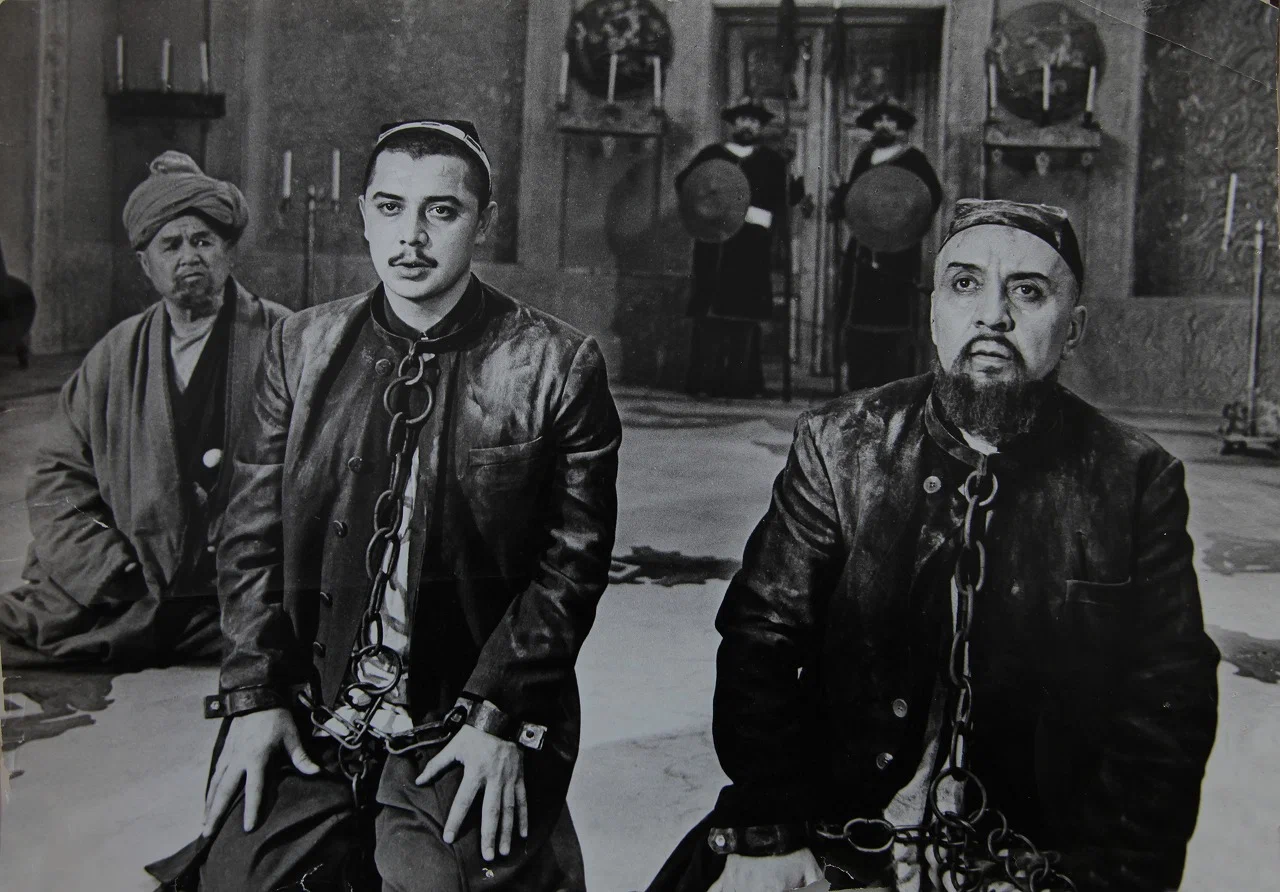
The political dimension of the film is often underestimated, yet it is precisely what elevates the picture beyond a conventional love story. Particularly compelling in this regard is the figure of Yusufbek-hodji, whom historian Yuri Kosenko describes as an honest statesman, yet one incapable of altering the broader course of events. Through him, the film articulates a key theme of historical cinema: a morally grounded individual may exist within a flawed system, but cannot reform it alone. The tragedy of Atabek and Kumush therefore does not appear accidental. It emerges from the very structure of a world in which domestic violence, political arbitrariness and social inertia form a single mechanism of pressure. The significance of Days Gone By in the history of Uzbek cinema lies in its ability to bring together several cultural layers at once: national classic, historical drama, love tragedy and a visual reconstruction of an era.
Theater
While cinema establishes the historical scale and visual power of Days Gone By, theatre reveals another quality of the novel, its dramatic tension. The stage cannot afford a museum-like approach to the text. Any production requires selection, condensation and a rethinking of pace, emotion and dramaturgy. Each staging of Days Gone By therefore raises the question of what, precisely, will resonate with contemporary audiences.
From this perspective, it becomes clear that Qadiri was not writing solely about the past. Certainly, historical distance is essential to the novel, which is deeply rooted in the realities of the nineteenth century, its social structures and struggles for power. Yet in theatre, it is not so much the details of the period that come to the fore, but the universality of its conflicts.
National Theatre
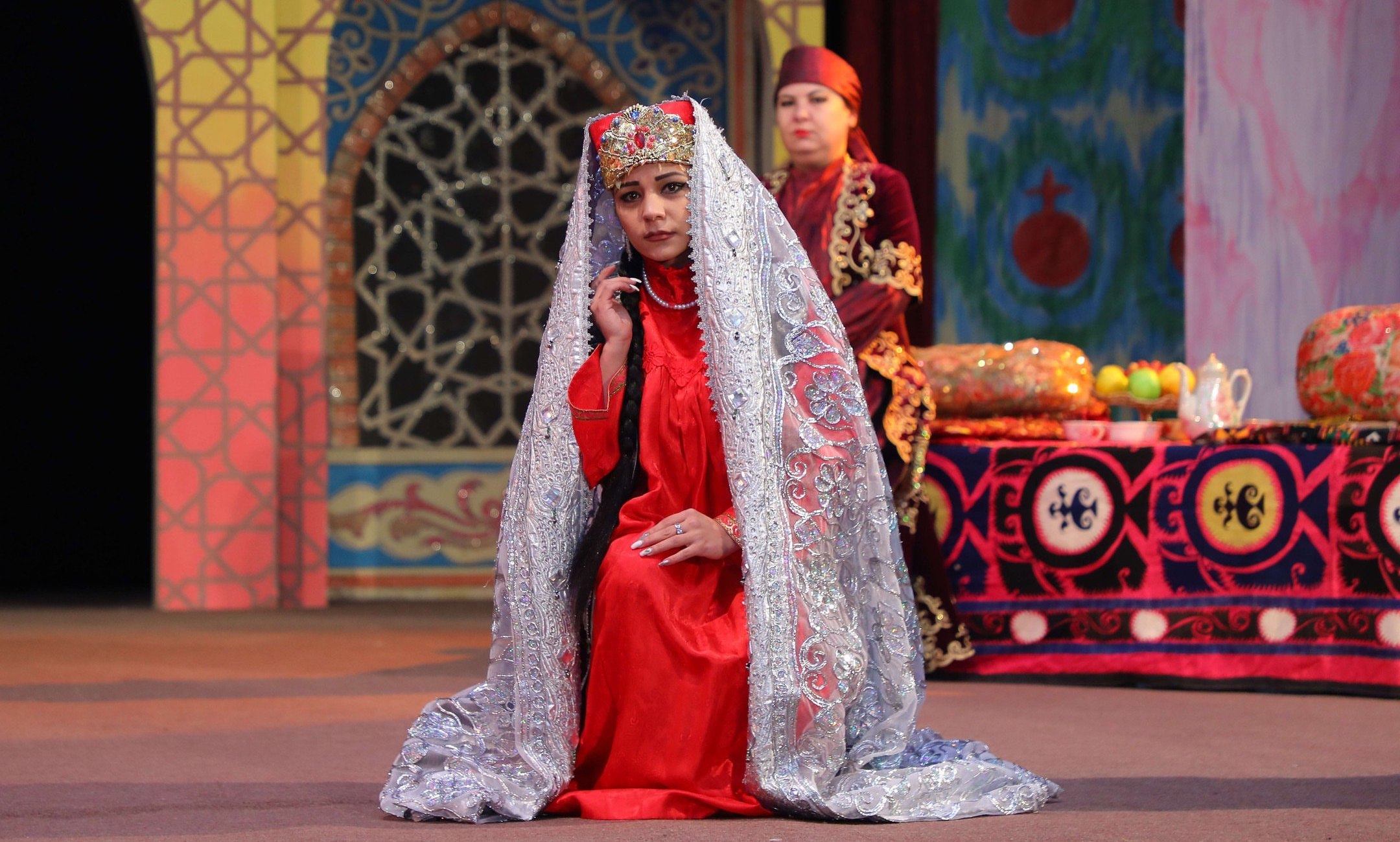
Marat Azimov’s production at the Uzbek National Academic Drama Theatre is presented as a staging of Qadiri’s novel in which “the idea of love is celebrated”, focusing not only on Otabek and Kumush but also on a whole constellation of nationally significant figures, including Yusufbek-hodji, Uzbek oyim, Mirzakarim kutidor, and Oftob oyim. The production reads as a representation of a moral and cultural code, with its characters embodying dignity, fidelity, honour and spiritual refinement.
As a theatrical approach, this tends toward a more ceremonial, representational stage form than toward radical directorial interpretation. Azimov transforms the story into a grand national monument of a production, where the emphasis lies not on psychology as such, but on ethical and cultural models of Uzbek society
as expressed through its characters. From a critical perspective, the strength of this approach lies in its scale and clarity of values; its potential risk lies in smoothing over the darker, more conflict-driven and politically charged aspects of the novel in favour of a more elevated tone.
A stage version of Days Gone By may, even more powerfully than the film, bring out the contemporary resonance of this text: audiences read in it not only the past but the recurrence of those very mechanisms that prevent a person from determining their own fate.
Samarkand Russian Theater
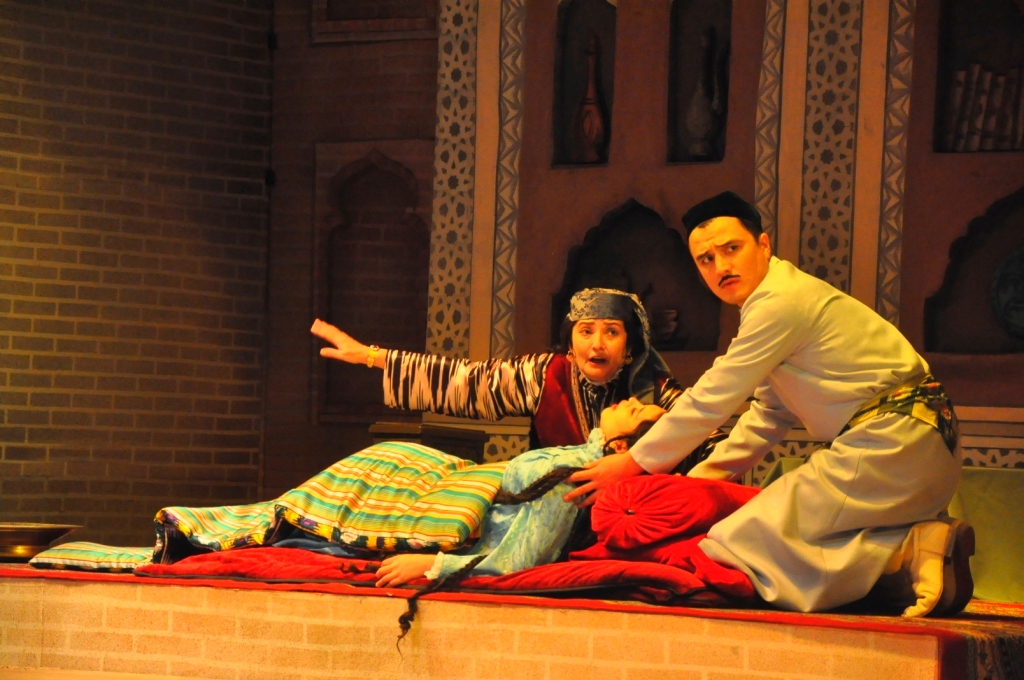
Akhmatullo Niyazov's Samarkand production stands apart from the outset by virtue of its staging in a Russian-language drama theatre. A staging of Days Gone By on a Russian-language stage is an attempt to lift the novel out of its role as an exclusively national symbol and return to its dramatic substance, making it accessible to a broader audience.
The theatre’s announcement places emphasis on the work’s challenge to the remnants of the past, above all the practice of forced marriage dictated not by love, but by parental will. Whereas Azimov's version foregrounds dignity, morality and symbolic national figures, Niyazov's, judging by available descriptions, brings to the fore a dramaturgy of error, familial pressure and the tragic cost of submission to authority.
This staging appears closer to psychological theatre than to theatre of cultural representation. In it, Qadiri’s novel is likely to focus on the tragedy of unfreedom, where tradition ceases to be a noble inheritance and instead becomes a mechanism for the destruction of human destiny.
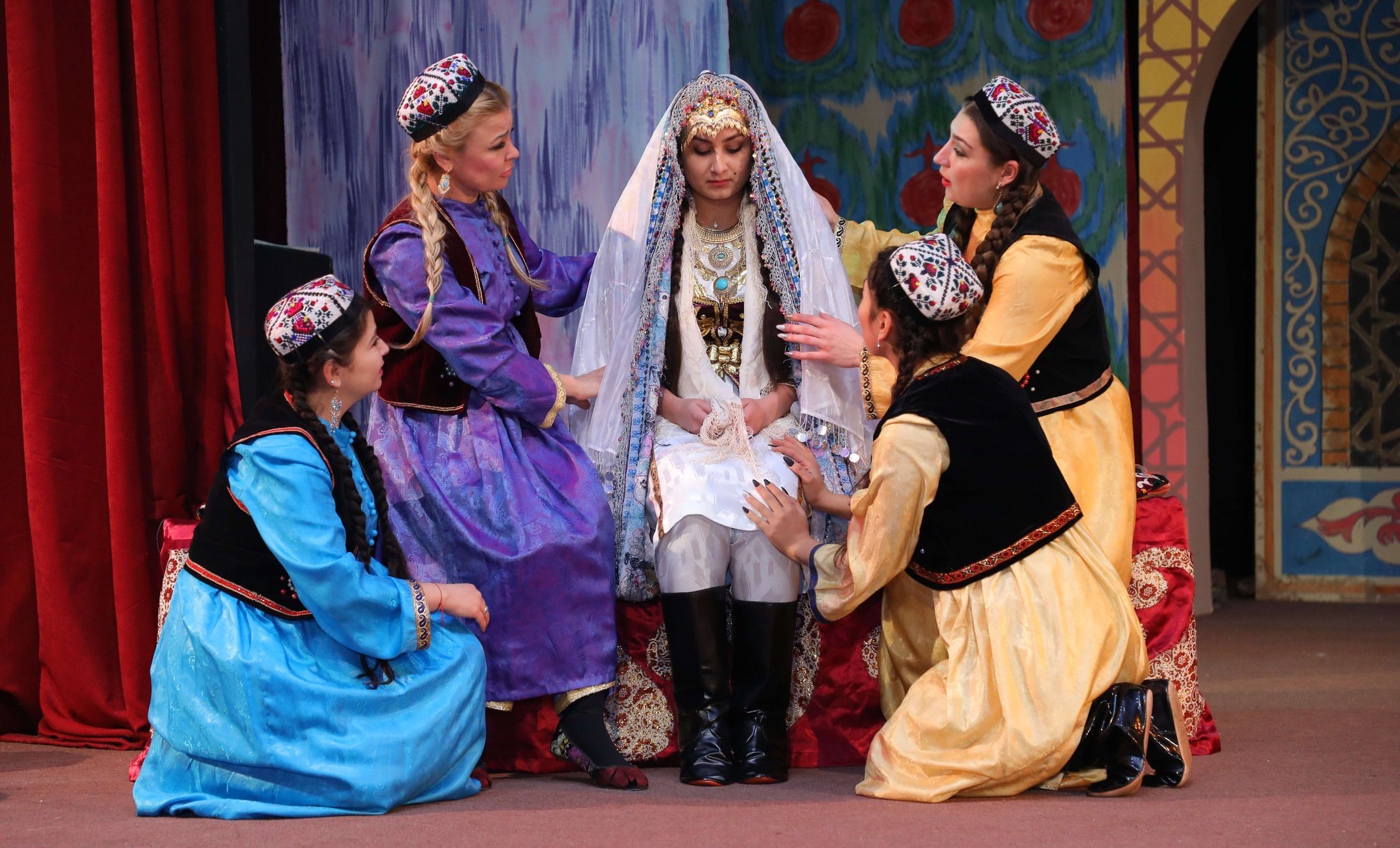
The theatrical life of Days Gone By in Uzbekistan is not confined to existing dramatic productions. In early 2026, a casting call was announced in Tashkent for a musical based on Abdulla Qadiri's novel. The project is presented as an international Uzbek-language musical, intended not only for domestic audiences but also for stages abroad, and is positioned as the first national musical adaptation of Days Gone By.

Conclusion
Thus, a kind of biography of the work beyond the book gradually takes shape. First, the novel becomes a foundation of modern Uzbek prose. It then acquires a screen form that secures its place in visual memory. It returns to the stage, where it is once again tested by the attention of audiences. Later, it enters the space of international reading and translation. Each new medium draws out its own dominant element from Qadiriy's text: literature preserves narrative complexity and historical depth, cinema amplifies imagery and scale, theatre offers a more immediate and emotional experience of conflict, while translation provides mobility and the ability to speak to another culture.
For this reason, on the occasion of Abdulla Qadiri’s birthday, it may be more appropriate to reflect not only on the writer’s biography or the canonical status of his novel, but on the very duration of Days Gone By as a living work. Its story is compelling precisely because it has not remained fixed as a literary monument. It continues to change its form, its audience and its modes of perception. In the book, on screen, on stage and in translation, one theme endures: the drama of an individual striving to preserve dignity and feeling in a world where social mechanisms prove stronger than personal will.


