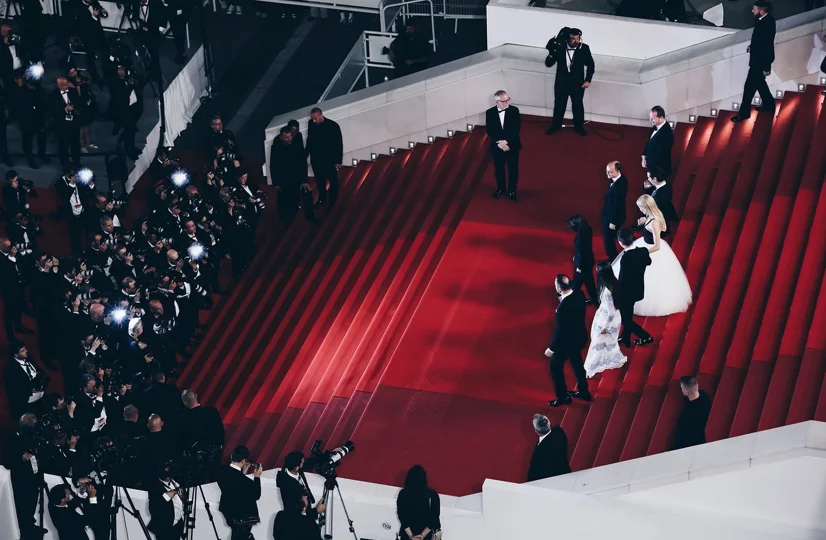
From experiments to future legends
Venice will once again set the rhythm of autumn: films presented at the Lido traditionally lead the Oscar race. In 2025, the festival promises a rare combination of major premieres, sharp political statements, and auteur experiments. The program will open with Paolo Sorrentino's "La Grazia" — an exquisite drama starring Toni Servillo and Anna Ferzetti — and close with Cédric Jimenez's "Dog 51". Among the main competition films are Yorgos Lanthimos's "Bugonia", Guillermo del Toro's "Frankenstein", Jim Jarmusch's philosophical drama "Father, Mother, Sister, Brother", and Kathryn Bigelow's political thriller "Dynamite House".
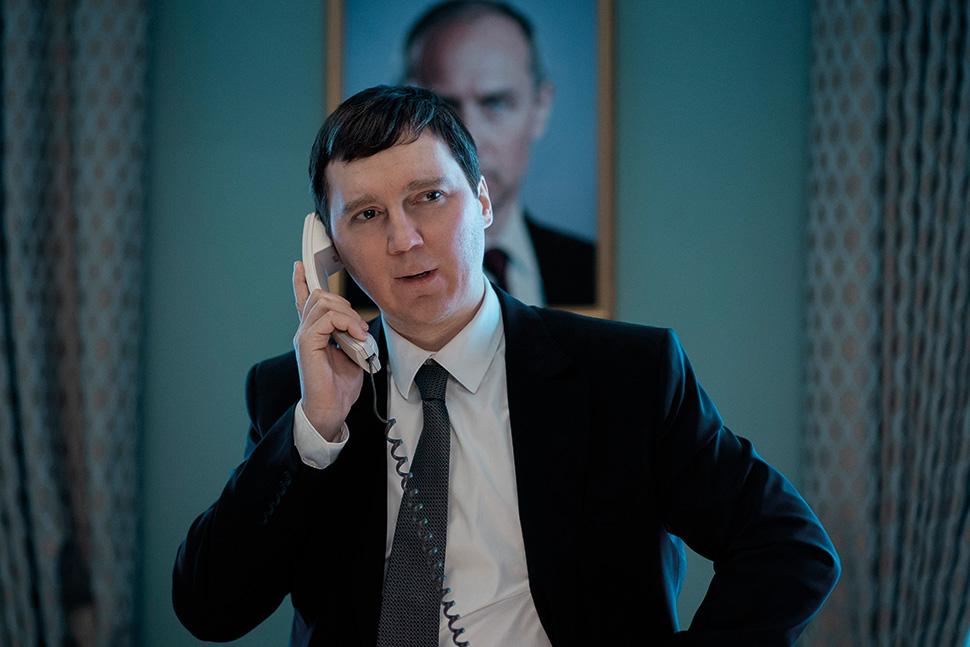
One of the most intense intrigues of the festival, which is sure to spark heated discussions, promises to be the film "The Kremlin Wizard" starring Jude Law as Vladimir Putin. This political thriller, directed by Olivier Assayas, is an adaptation of the novel of the same name by Giuliano da Empoli, published in 2022 in France. The plot revolves around the fictional advisor Vadim Baranov, inspired by the real-life political strategist Vladislav Surkov. The film tells the story of who was behind Putin's sudden rise to power in Russia in the 1990s.
Among the most high-profile premieres is the drama "The Voice of Hind Rajab" directed by Kaouther Ben Hania, known for the film "The Man Who Sold His Skin," twice awarded at the Cannes Festival. The director's new work addresses the tragedy of five-year-old Palestinian girl Hind Rami Iyad Rajab, who died on January 29, 2024, in Gaza. Hind Rajab's family tried to evacuate from the Tel al-Hawa area, but their car was fired upon by an Israeli tank. The girl's uncle, aunt, and three cousins were in the car—all of them perished.
The film transforms this story into a symbol of collective pain, into a tragic image of war, where a child's personal drama becomes a reminder of the cost of political decisions. Including this film in the program speaks to the Venice Film Festival's courage and its desire to turn the screen into a platform for discussing the most acute and painful topics of our time.
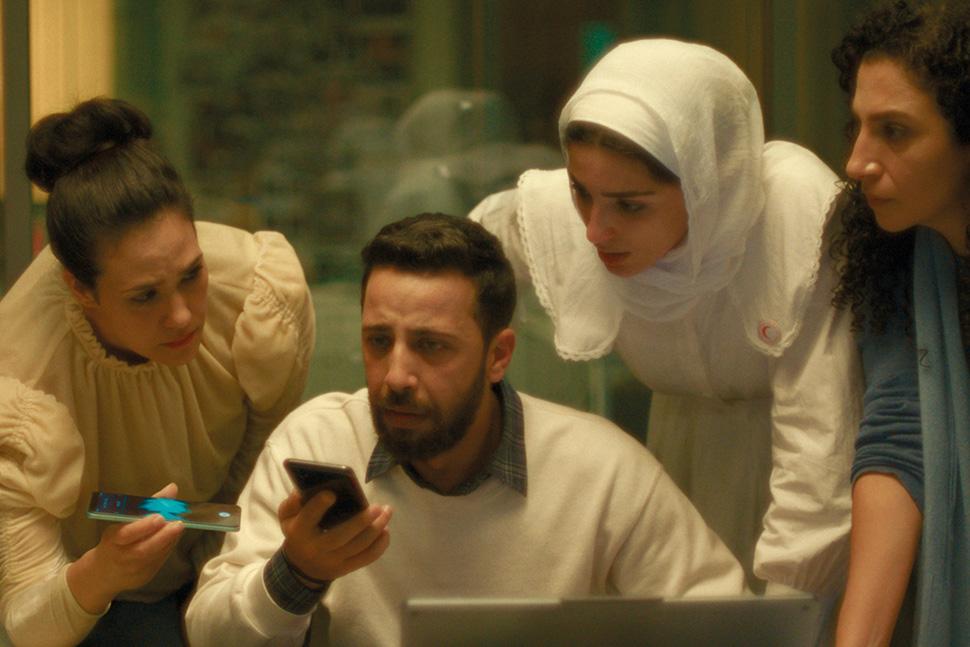
Frame from the film "The Voice of Hind Rajab".
No less attention is drawn to the documentary presence of Russian filmmakers: Alexander Sokurov will present the non-competition 5-hour film "Director's Diary" — a manifesto of personal and national history. Alexander Rodnyansky is the producer of several projects: the drama "Orphan" by Hungarian director László Nemes, dedicated to the theme of the Hungarian Uprising, and his autobiographical film "Notes of a Real Criminal," created in collaboration with Andrey Alferov.
Critics are already placing their bets on those who have once taken the stage with the "Golden Lion." Yorgos Lanthimos, the 2023 triumph with "Poor Things," returns with "Bugonia" — an English-language remake of a Korean dystopia where his usual grotesque turns into a philosophical parable. Guillermo del Toro, the 2017 laureate for "The Shape of Water," will present "Frankenstein" — a story about power and loneliness, which already promises to be the sensation of the year.
Parade of premieres and unexpected discoveries
In the competition program, viewers can look forward to three Jim Jarmush novellas in the film "Father, Mother, Sister, Brother", Paolo Sorrentino's exquisite "The Grace", where the director once again explores the theme of the intertwining of human lives, and the tense "Demolition House" by Kathryn Bigelow. The plot of "Demolition House" revolves around an attack on the White House and the aftermath of a terrorist conspiracy, turning the screen into a battlefield of power, fear, and media. For Bigelow, this is not her first experience with military themes: her "The Hurt Locker" (2008) and "Zero Dark Thirty" (2012) have already proven her ability to combine large-scale action with subtle political subtext. Out of competition, Noah Baumbach will present the ironic drama "Jay Kelly" starring George Clooney and Adam Sandler.
It wouldn't be complete without some wildcards, which break up the serious tone of the competition program and show that Venice is ready for experiments. Charlie Kaufman will present the short film "How to Shoot a Ghost" – an absurdist parable in the spirit of his signature meta-play with reality. Mamoru Hosoda brings the anime "The Endless Scarlet," promising a world-class visual spectacle, while the Dane Anders Thomas Jensen brings the historical drama "The Last Viking" with Mads Mikkelsen, where epic storytelling meets psychological depth. These films expand the festival's boundaries, demonstrating that it equally values philosophical drama and bold genre experiments.
The kaleidoscope of the 2025 festival is taking shape: star names, bold experiments, political themes, and films capable of setting the direction for world cinema for years to come.
Documentary program
The 2025 Venice Film Festival is making a special bet on documentary film—a genre that is increasingly becoming not only a mirror of reality but also a space for bold artistic experiments. It is documentary films that can set the tone for discussions on the Lido, becoming a separate manifesto.
Sofia Coppola will present the film "Marc by Sofia" — a 97-minute portrait of fashion designer Marc Jacobs, blending fashion chronicles with a story of friendship and rare archival materials. Werner Herzog brings "Ghost Elephants" — a meditative journey into the mists of Angola, where reality borders on myth, giving rise to his famous "ecstatic truth." Lucrecia Martel, in the film "Our Land," raises questions of violence, colonial legacy, and the fragility of human existence, dedicating the film to the memory of activist Javier Chocobar.
Particular attention is expected for "Cover-up" by Mark Obenhaus and Laura Poitras. The film centers on the figure of Seymour Hersh, the legendary investigative journalist whose exposure of the My Lai massacre during the Vietnam War earned him a Pulitzer Prize. But this is not just a biography: the picture transforms into an investigation of the price of truth — about how a single word can change history.
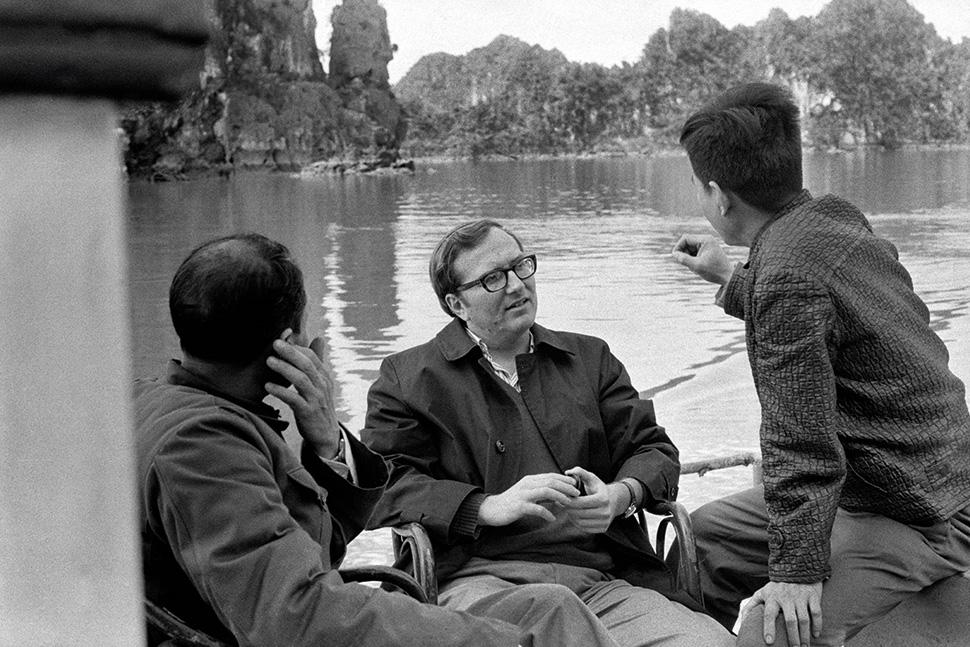
Frame from the film "Cover-up".
"Horizons" and "Critics' Week"
In addition to the main competition, Venice always leaves room for experimentation. The "Horizons" section traditionally serves as a laboratory for bold ideas and new forms. This year, audiences can expect "Late Fame" by Kent Jones with Willem Dafoe — a philosophical drama about dignity and aging; "Rose Nevada" by Mark Jenkin with George MacKay — a visual exploration of solitude; "Mother" by Teona Strugar Mitevska with Noomi Rapace — a fresh perspective on the figure of Mother Teresa; and "The Abduction of Arabella" by Carolina Cavalli with Chris Pine — a tense story where genre dynamics blend with an auteur's touch.
Equally significant will be the anniversary 40th "Critics' Week." This parallel program, created in 1984 for debut feature films, has long earned the status of a showcase for future classics. From nearly 700 submissions in 2025, only seven films were chosen, each announcing its boldness and fresh voice. Among them are the dystopia "Gorgona" by Yvi Kalogirópoulou, the sports drama "Agon" by Giulio Bertelli, the British farce "Direct Circle" by Oscar Hudson, the horror film "Rokia" by Yannis Kousim about an exorcist with Alzheimer's disease, and the documentary work "The Hours of Wakefulness" by Federico Cammarata and Filippo Foscherini.
The section will open with the drama "Stereogirls" by Caroline Peano, transporting viewers back to the 1990s atmosphere, and will close with the out-of-competition premiere of Julia Jackman's star-studded film "A Hundred Nights of the Hero" starring Nicholas Golitsyn, Felicity Jones, Emma Corrin, and singer Charli XCX. The main prize—the "Lion of the Future" and $100,000—makes this platform not just a springboard, but an arena where new idols of world cinema are born.
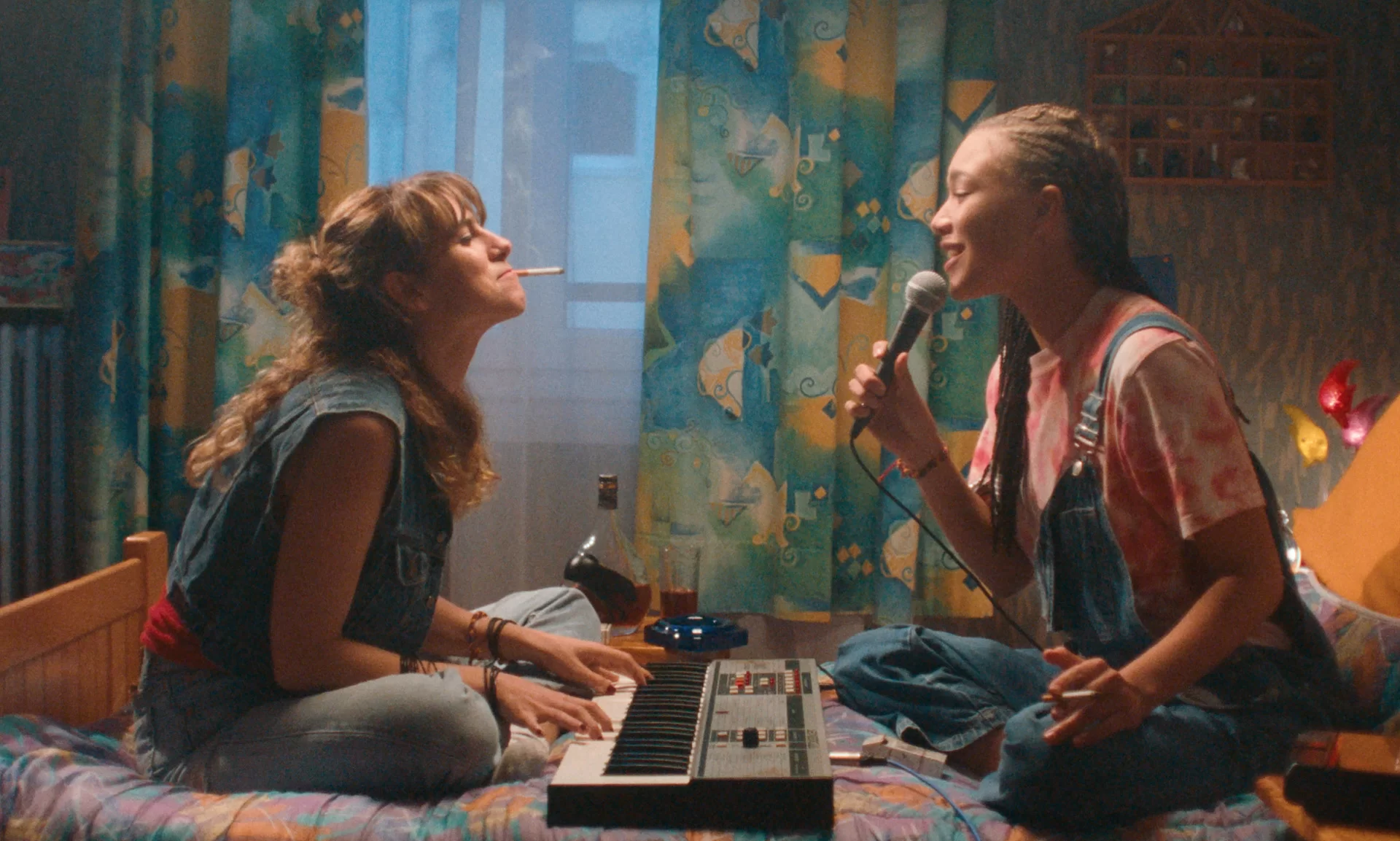
Frame from the film "Stereogirls".
A Look Back: From "Excelsior" to Worldwide Recognition
The history of the Venice Film Festival began in August 1932. The first program took place on the terrace of the legendary Hotel Excelsior (Excelsior) on the Lido di Venezia and lasted two weeks—from August 6 to 21.
- Even back then, the festival brought together the best directors of the era under one roof: audiences saw films by René Clair, Ernst Lubitsch, Frank Capra, and Howard Hawks. The festival opened with Ruben Mamoulian's "Dr. Jekyll and Mr. Hyde," establishing a tradition that would turn the Lido into a symbol of world cinema history.
- Venice quickly became a meeting place for filmmakers, critics, and audiences from across Europe and beyond. Already in 1935, when public enthusiasm reached unprecedented levels, a competitive program was introduced and official awards were established. From that moment on, Venice cemented not only its status as a cultural symbol but also its role as a trendsetter in world cinema.
- In the postwar years, the festival symbolized the rebirth of Europe, in the 1960s it became an arena for protests and ideological clashes, and in the 21st century, it has established itself as the main launching pad for the awards season.
- The history of Venice has also known loud scandals. In 1988, the premiere of Martin Scorsese's "The Last Temptation of Christ" caused a storm of indignation, and Franco Zeffirelli even withdrew his film "Young Toscanini" in protest. In 2019, the spotlight was on Roman Polanski's film "An Officer and a Spy" — the discussion of the film inevitably intertwined with the accusations against the director.
RELATED READING: