
Almaty Museum of Arts — a world-class private museum
Nurlan Smagulov, a well-known Kazakhstani entrepreneur and philanthropist, has been building his art collection for over thirty years. As a result, it comprises over 700 works: primarily pieces by Kazakhstani and Central Asian masters from the 20th–21st centuries, as well as examples of Western contemporary art. Among the exhibits at the new museum are paintings by classics of Kazakhstani painting (Zhanatai Shardenov, Shaimardan Sariyev, etc.) and works by recognized world artists: for example, a philosophical canvas by Anselm Kiefer, a video art installation by Bill Viola, and a multimedia work by the legendary Japanese avant-garde artist Yayoi Kusama.
The scale of investments and the project's status deserve special attention. According to foreign press reports, the construction and launch of the Almaty Museum of Arts cost approximately $30 million (for the building), plus up to $70 million was spent on forming the collection and covering operational expenses. Smagulov himself emphasizes that he created the museum to preserve the national cultural heritage: he aimed to keep the best examples of Kazakhstani art in the homeland and even repurchased lost works from abroad. The patron plans to eventually donate the museum to the city of Almaty, essentially transforming a private gallery into public property.
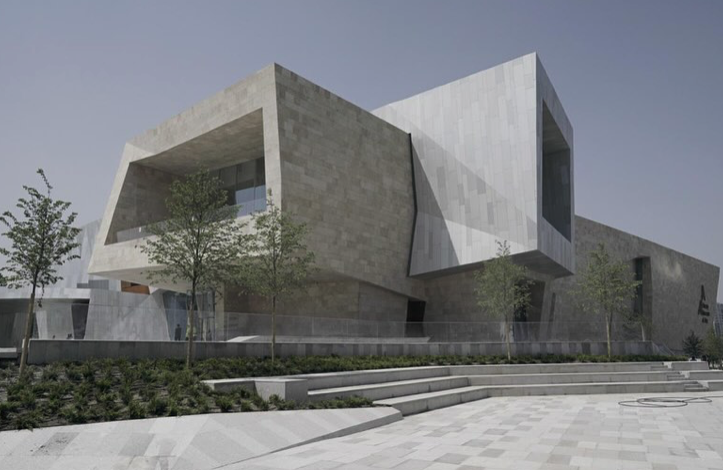
Almaty Museum of Arts. Photo: Instagram
"Tselinny" - the revival of the legendary cinema
The "Tselinny" Center for Contemporary Culture is the second ambitious project that opened this fall. It is located in the historic cinema of the same name, one of the symbols of Soviet Almaty, which has been converted into a multifunctional art space. The building's reconstruction since 2019 was undertaken by the famous British architect Asif Khan, who transformed the hall built in 1964 into a modern open platform for art and public dialogue.
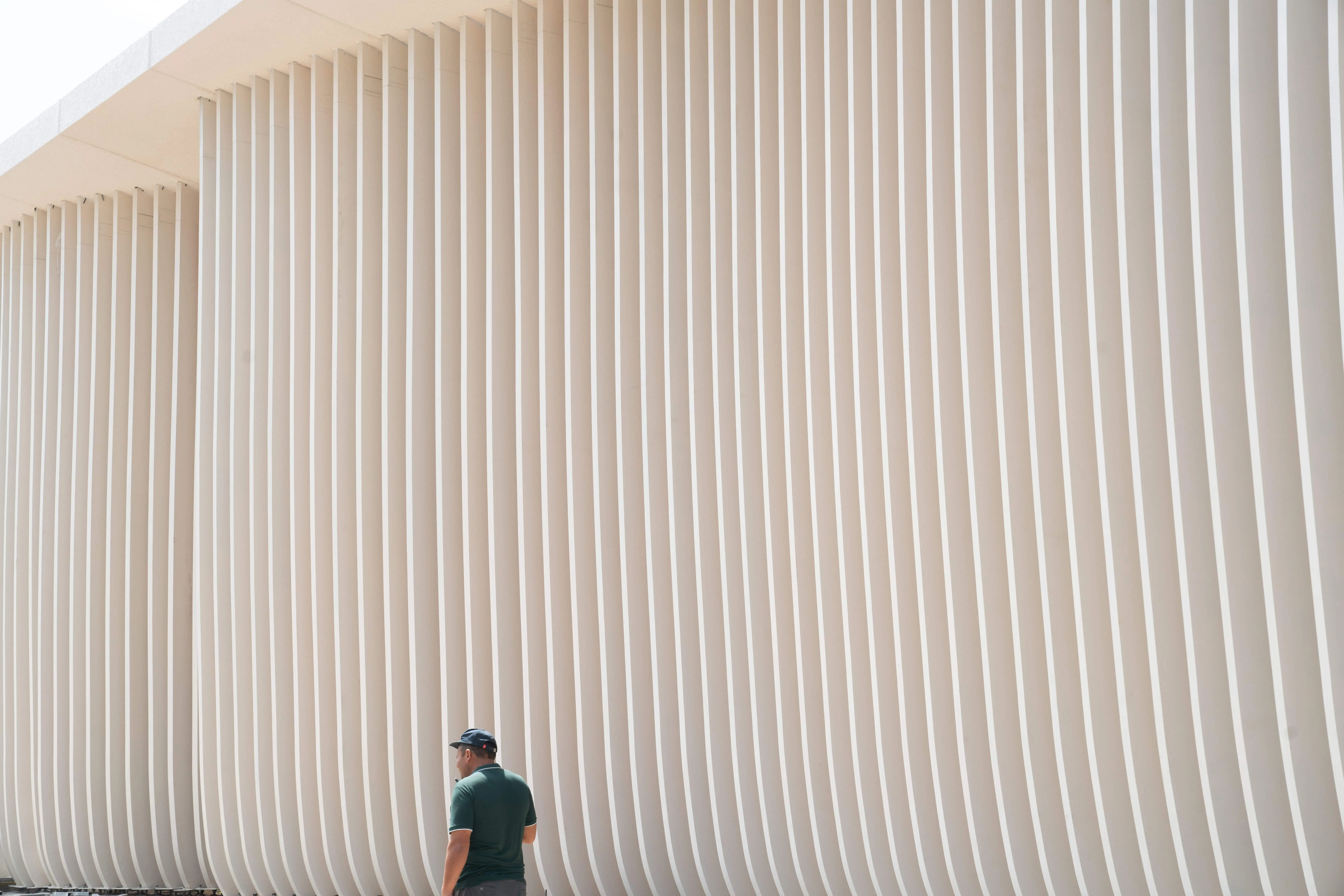
The updated cinema facade takes on futuristic features: the central element, 42 meters long, is shaped like a symbolic "cloud," allegorically connecting sky and earth, tradition and modernity. Inside, the "Capsule" gallery for exhibition projects, the "Atelier" educational space with a library, a bookstore, offices, a café, and a multipurpose hall with 18-meter ceilings for exhibitions, plays, and concerts have been arranged.
"Tselinny" is positioned as the first private institution that will develop contemporary art in Kazakhstan. It does not have a permanent collection—its mission is different. As explained by "Tselinny's" director, Jamila Nurkaliyeva, the new center should become a platform without rigid hierarchy and without a single chief curator, where dialogue, experimentation, and the collaborative creation of artists, curators, and the public play key roles.
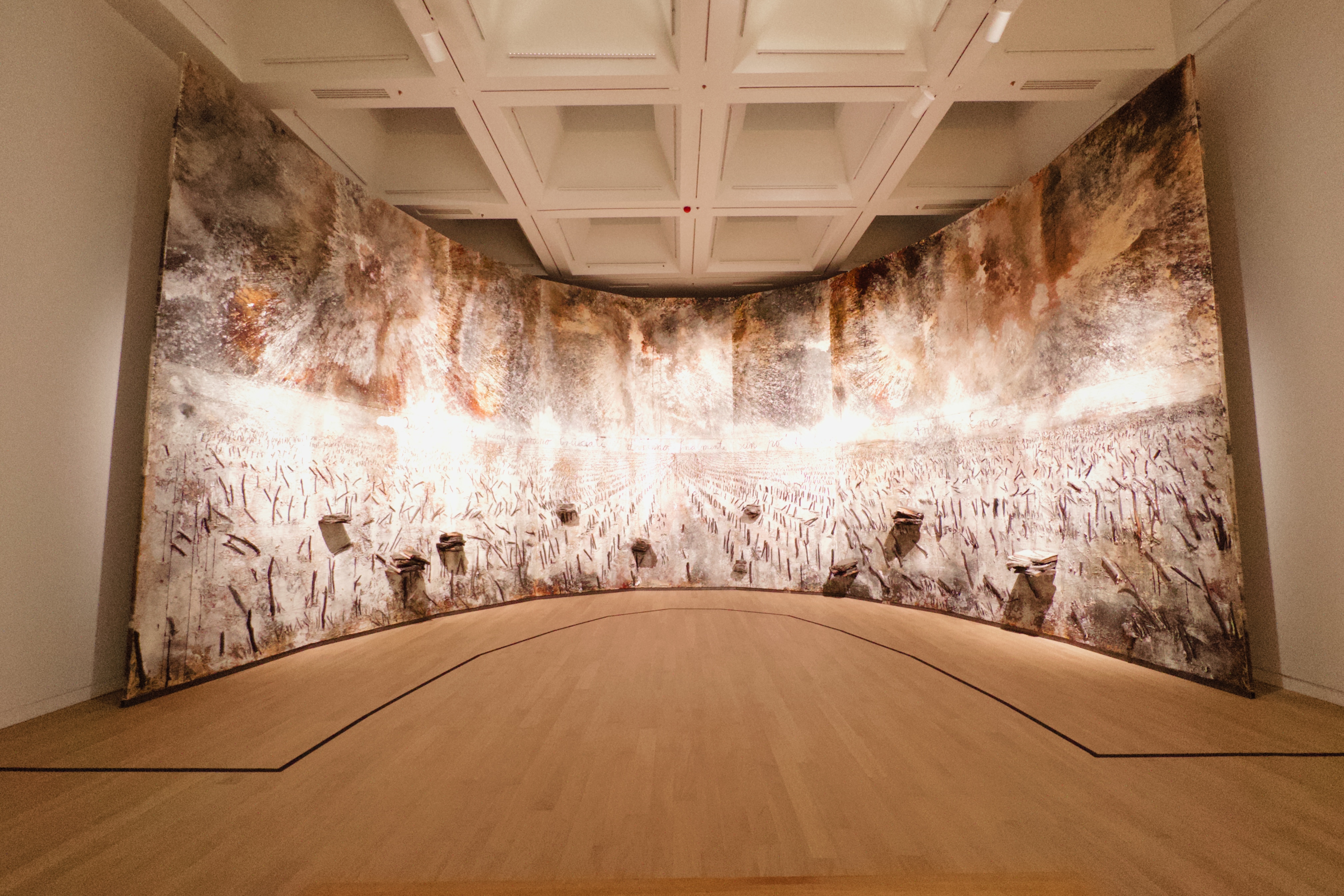
Center for Contemporary Art "Tselinny". Photo: HD magazine
The limited "technical" opening of the center took place on September 5–7, 2025, when entry for all visitors was free of charge. The inaugural program titled Barsakelmes (translated as "a place of no return") presented to the public an interdisciplinary project: several exhibitions, performances, and concerts featuring Kazakhstani artists and musicians. Since autumn, the center has been operating on a reduced schedule for now (three days a week in the evenings), gradually increasing the number of events. Full operation and an extensive program are planned to begin in early 2026.
Kairat Boranbayev - philanthropist and former suspect
The "Tselinny" Center is inextricably linked to the name of its founder, businessman Kairat Boranbayev. This entrepreneur was among the most influential people in Kazakhstan (No. 5 on the Kazakh Forbes list) and was known for his diversified business: from the oil and gas industry and a chain of fitness clubs to a McDonald's franchise and the football club "Kairat". In the public sphere, Boranbayev is often referred to as a "patron of the arts", especially after the launch of "Tselinny" in 2018. However, behind the facade of charity lies a complex biography, typical of representatives of the old business elite of Kazakhstan.
First, Boranbayev is a former relative of the first president's family. His daughter Alima was married to Aisultan Nazarbayev—the grandson of Nursultan Nazarbayev (the son of Dariga Nazarbayeva). This family connection provided the businessman with years of patronage and inclusion in the inner circle of Kazakhstan's elite.
Secondly, following the change in the political course in the country (the events of early 2022), Boranbayev came under an anti-corruption investigation. In 2023, he was sentenced to 6 years in prison with confiscation of property: the court found him guilty of embezzling state funds on a particularly large scale and money laundering of criminally obtained funds. The case concerned machinations in the resale of Russian gas, which also implicated the heads of the QazaqGaz company. Notably, by the end of 2023, the oligarch was already free, having avoided actual prison time. The appellate court replaced his punishment with restriction of liberty, taking into account several factors: Boranbayev had served a third of his term, fully compensated for the damage caused, cooperated with the investigation, and repented of his actions.
After his release, Kairat Boranbayev immediately became active in public space, including promoting "Tselinny." The Center for Contemporary Culture is undoubtedly a long-awaited initiative for Almaty, a project on which the state did not spend any funds.
According to some reports, the reconstruction of "Tselinny" lasted 5 years (2019–2024) and may have required investments of several million dollars (exact amounts were not disclosed). The center itself is part of Boranbayev's business empire: its implementation was handled by the company "Almaly" — the very same one that manages the oligarch's assets and once bought the cinema building. Formally, "Tselinny" is a private facility which, unlike the Smagulov Museum, has not been transferred to the city but remains within Boranbayev's business structure. Nevertheless, it is positioned as a non-profit cultural institution with a public mission.
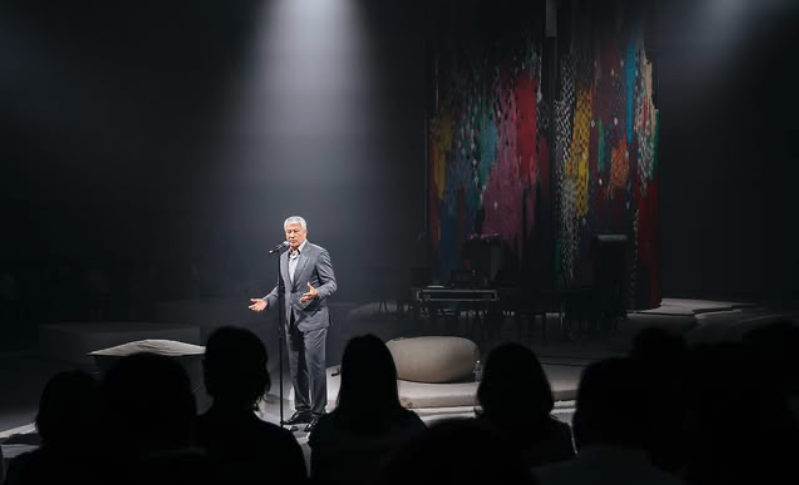
Kairat Boranbayev. Photo: Center for Contemporary Art "Tselinny" / Instagram
Why do oligarchs need contemporary art?
Patronizing the arts has been a long-standing tradition among elites since the Renaissance. Even during the Renaissance era, bankers and aristocrats acted as patrons for artists to demonstrate to society their wealth, generosity, and taste for the sublime. And today, opening a gallery or museum serves an image-building purpose: the philanthropist's name becomes associated with progress and culture. The favorable impression of such a patron sometimes extends to everything connected with them in business or politics—this is the "art halo" effect at work. It is no coincidence that in Russia, the practice of making large contributions to art projects has been aptly termed artwashing—whitewashing one's image through art. By organizing exhibitions and supporting artists, oligarchs elevate their public status, entering the circle of "enlighteners."
In the case of Kairat Boranbayev, the motivation is not clear. Kairat Boranbayev explains his passion for contemporary art through a personal story: even in his student years, he spent a lot of time backstage at the theater, where his uncle, an actor, would take him. There, he first felt the power of art and how it shapes perception. Later, while doing business in the 90s, Boranbayev saw how many artists and musicians lacked a unified space. It was this thought that prompted him to create "Tselinny".
It is noteworthy that the funds directed to "Tselinny" have essentially already been cleansed through the official compensation for damage to the state, meaning the money returned by the oligarch is being reinvested into a socially significant project. In effect, a double cleansing is taking place: of both capital and reputation.
"My passion for art began back in my student days. I went to the theater every week with my uncle and saw how a performance is born from the inside. That had a strong influence on me. Later, I realized: we have many talented people, but they need a space where they can unite. That's how 'Tselinny' came to be. And today I am glad that we hit the mark — more than 12 thousand people visited it in just the first two days," Boranbayev told HD magazine.
One must not forget the direct financial aspect either. Art has long been recognized as a convenient tool for money laundering and tax evasion. For example, a large bribe sum can be transferred to an offshore account and spent on acquiring an expensive painting, which is then sold officially — and the proceeds appear legitimate. Prices for art objects are often subjective and difficult to verify, transactions can be conducted anonymously through intermediaries, and collections can be stored in special zones (freeports) outside tax jurisdictions.
Of course, in the case of "Tselinny," we are not talking about reselling paintings, but about investing money in infrastructure. But there can be benefits here as well: for example, the costs of a cultural facility can provide tax benefits or preferences from the authorities, and the center itself may eventually start receiving grants, sponsor infusions, etc. Moreover, owning a prestigious art venue opens up new connections with the international art community, which in the long term can facilitate access to foreign capital markets and assets.
When Boranbayeva is asked what stands behind "Tselinny" — a desire to create an image or a sincere aspiration to preserve identity, he answers directly: "If we wanted to do it as a showcase, we would simply hang pictures. But that would be a completely different story," he emphasizes.
Boranbayev notes that the emergence of "Tselinny" became possible precisely thanks to private initiative. Similar projects, he says, can be implemented in other cities of Kazakhstan: in Shymkent, Uralsk, — as well as outside the country.
Certainly, the motivations of different patrons can vary. Nurlan Smagulov often calls himself a passionate person (as formulated by Tatler, a "gambler"), whether it's business projects or collecting. He himself admits that as early as the age of 17, upon visiting the Pushkin Museum in Moscow, he was stunned by the paintings of the Impressionists and Modernists.
For Smagulov, creating his own museum became a logical continuation of his path as a patron and collector. He says he sees the mission of his own project as building a bridge, "connecting the rich and dynamic art of Central Asia with the global cultural context" — a platform where Kazakhstanis and visitors to the country can get acquainted with contemporary art.
Although Smagulov notes that he does not like to engage in self-promotion, in the eyes of the public and the authorities, he appears not just as a successful businessman, but as an enlightened philanthropist, "creating a new way of life" and thinking about eternal values.
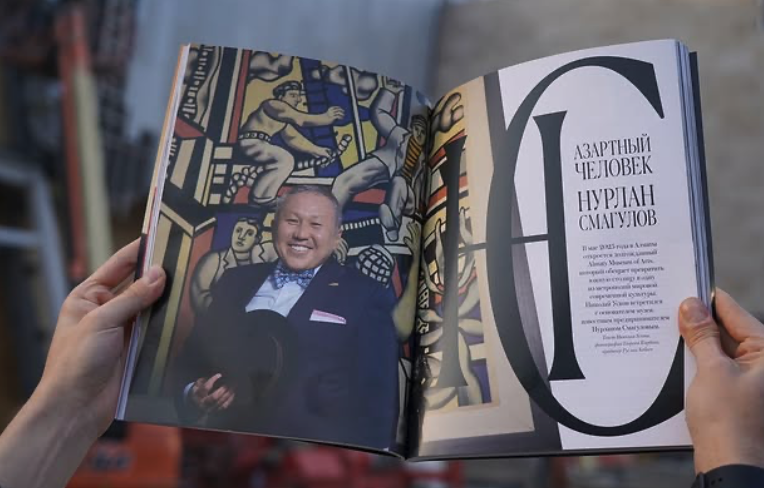
Investing in contemporary art allows him to inscribe his name in the history of the country's cultural development. It is no coincidence that Almaty Museum of Arts is already associated primarily with his persona from its opening — the "Smagulov Museum", which in itself creates a positive brand around the entrepreneur. Participation in international art life (exhibitions, auctions, and connections with the global artistic community) expands Smagulov's contacts and influence beyond the purely business sphere.
One could say that through art, he integrates into the world's elite club of collectors and patrons, which can also bring indirect benefits for his business and the country's reputation as a whole. Finally, a major cultural project serves as a kind of "safety cushion" in unstable times: by investing in the public good, the businessperson strengthens their moral authority and trust from society.
In Kazakhstan, where after the events of 2022, the demand for social responsibility from business has grown, such initiatives help entrepreneurs rebuild dialogue with citizens.


