
Historical framework
The unique composition of clays, enriched with quartz and metal oxides, creates the distinctive blue and turquoise palette. It is this palette that Rishtan—one of the oldest centers of ceramic production in Central Asia—is famous for. Here is what local artisans say about the materials used and the features of their technique:
“We make clay from pure sand, we don’t add anything. In other countries it’s too plastic, but here it’s capricious—you need to know how to handle it.”
Masters describe clay almost as a living being with which you need to establish contact: "If you don't feel the mass, don't guide it, nothing will work out."
In Rishtan ceramics, every color and shape carries meaning:
- blue and white — sky and earth,
- fruit shapes — abundance,
- bird — protection and inspiration.
“Painting is a symbol of the sky and the earth, the harmony between them. Everything on the dishware is a miniature world.”
Ceramics have been developing here since the 9th–10th centuries. Trade routes passed through the region, and along with goods, firing technologies, ornaments, and chemical compositions of glazes made their way here. This led to the formation of a local school, known for its precise proportions and distinctive color.
Today, this tradition is not only preserved, but also institutionalized, becoming a tool of cultural diplomacy and local development. Whereas previously the craft was passed down from family to family, now it is becoming part of a global dialogue. It was with this goal that the II International Ceramics Forum was held in Rishtan.
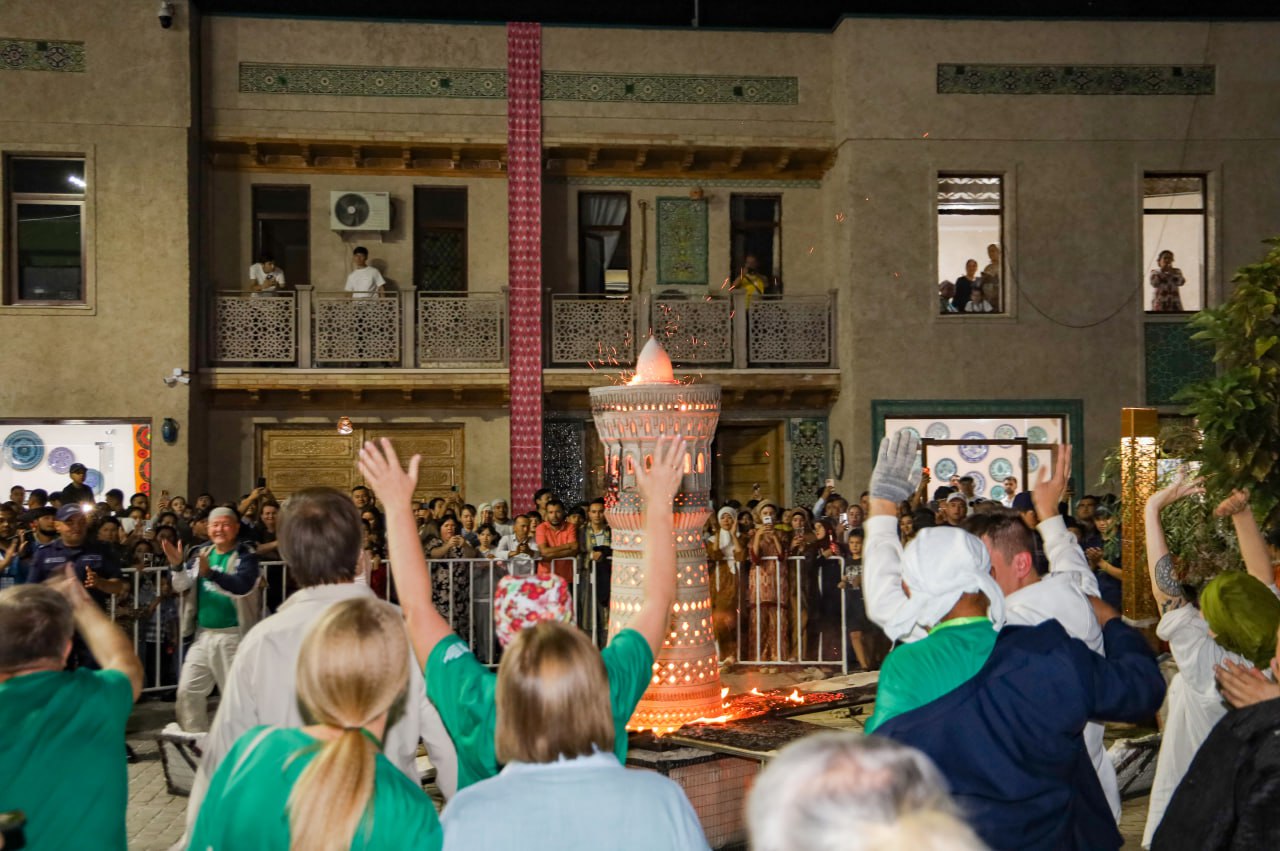
II International Ceramic Forum
(based on interviews with artisans and some observations during the II International Ceramics Forum)
The forum took place this September in Rishtan — the historical center of Uzbek ceramics.
This is a large-scale professional platform that brings together masters, researchers, and curators from different countries to exchange experience, preserve traditions, and develop contemporary ceramic art.
The event took place simultaneously with the International Handicrafts Festival in Kokand. The format combined an exhibition, master classes, and expert discussions.
It became a platform for building connections: representatives from Italy, Kuwait, Iran, Georgia, Kazakhstan, Turkey, Bosnia and Herzegovina, and many other countries participated.
The forum was not limited to showcasing products, but also became a space for discussing the future of the craft. At the international scientific and practical conference "Preservation and Development of Traditional Pottery Art: Problems and Solutions," not only technique and aesthetics were discussed, but also the economics of artisanal labor.
An important part of the program was the opening of the Rishtan "Museum of Traditional Ceramics," which vividly demonstrates how the craft shapes the identity of the region. The presentation of the book "Artistic Ceramics of Uzbekistan" also took place here—a kind of "archive" of the country's artisanal experience, compiled by masters and researchers.
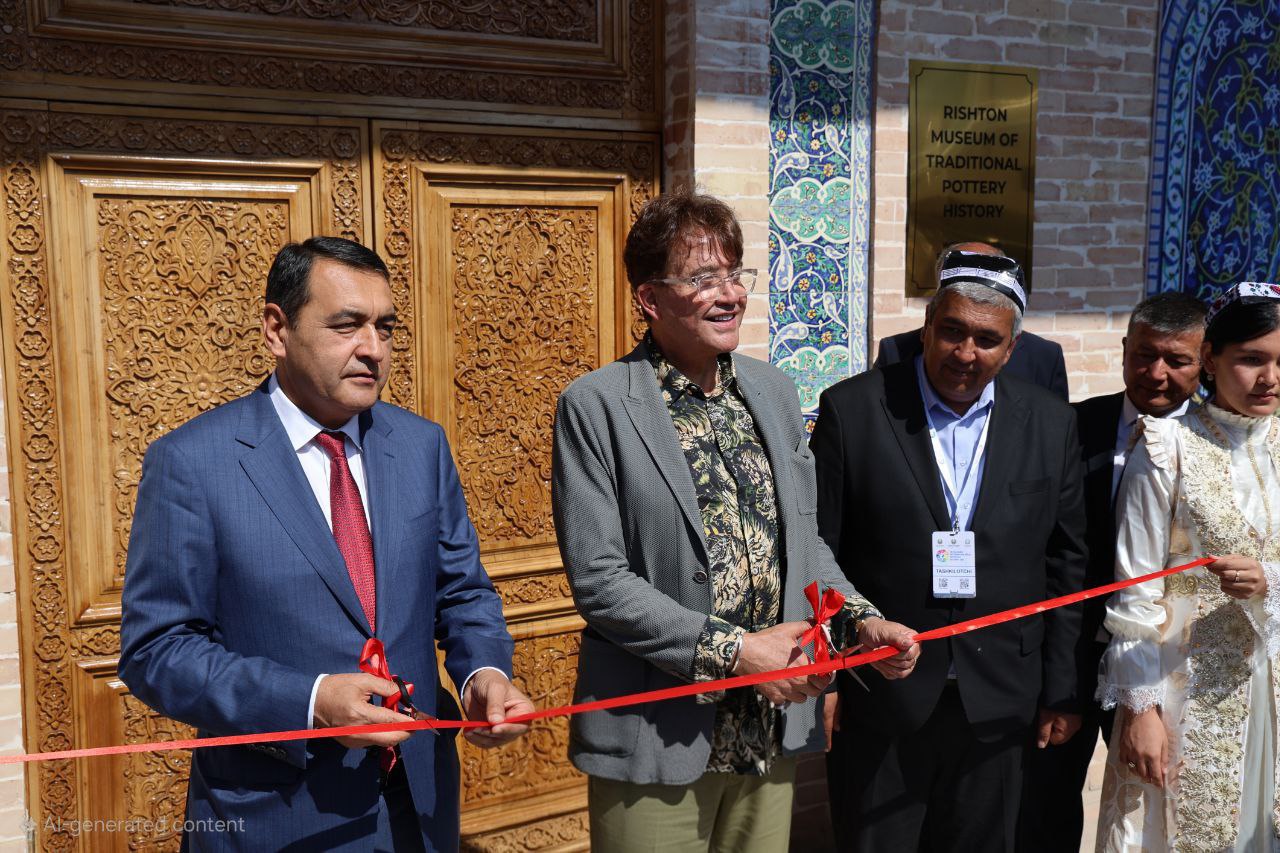
The culmination was the moment of recognition: the chairman of the World Crafts Council, Saad Al-Qaddumi, awarded Rishtan the honorary status of "City of Crafts".
As noted by the chairman of the Guild of Craftsmen of Kyrgyzstan, Nadir Mumbaev, Uzbekistan supports craftsmen more than other republics.
“And these masters show reality, living reality. In ceramics, if you look, each piece has its own bit of soul, there is love, there is sadness, and there is a story.”
Family dynasties and the internal structure of the craft community
Rishta ceramics are sustained by family lines, but kinship is not only by blood. Alisher Nazirov's students have been learning the craft from the master every day for decades.
“To become a master, you must remain a student for life. The master becomes a student, the student—a master, and so it goes on endlessly,” explain the craftsmen.
When the training ends is determined by the master himself. According to Nazirov, it should take at least 15 years. New craftsmen still remain within the common field.
The transmission of a craft is not an act of teaching, but rather a process of growing up within an environment.
“We used to work all together. Then each of us started working separately, but the connection remains — like between the branches of one tree,” says one of Nazirov’s students.
This structure explains why the tradition in Rishtan is not museum-like: it is socially integrated. It is not "preserved" by effort, it simply lives as a way of family life.
The younger generation of craftsmen in Alisher Nazirov's workshop
The story of the young apprentice of the master well reflects the Rishtan system of passing down the craft. A ten-year-old boy came to the workshop "just to have a look," but ended up staying for almost a year. During this time, he became the champion of Uzbekistan in pottery wheel work and was also the youngest participant in the competition. In Rishtan, tradition is not formal, but alive and naturally reproduced through personal interest and inner involvement.
There are no educational barriers here, because the workshop itself becomes the school, and apprenticeship begins with observation and curiosity, not with academic prescription.
This is the key contrast against the backdrop of formal institutions: in Rishtan, knowledge is not taught, but passed on through work, environment, and the structure of everyday life.
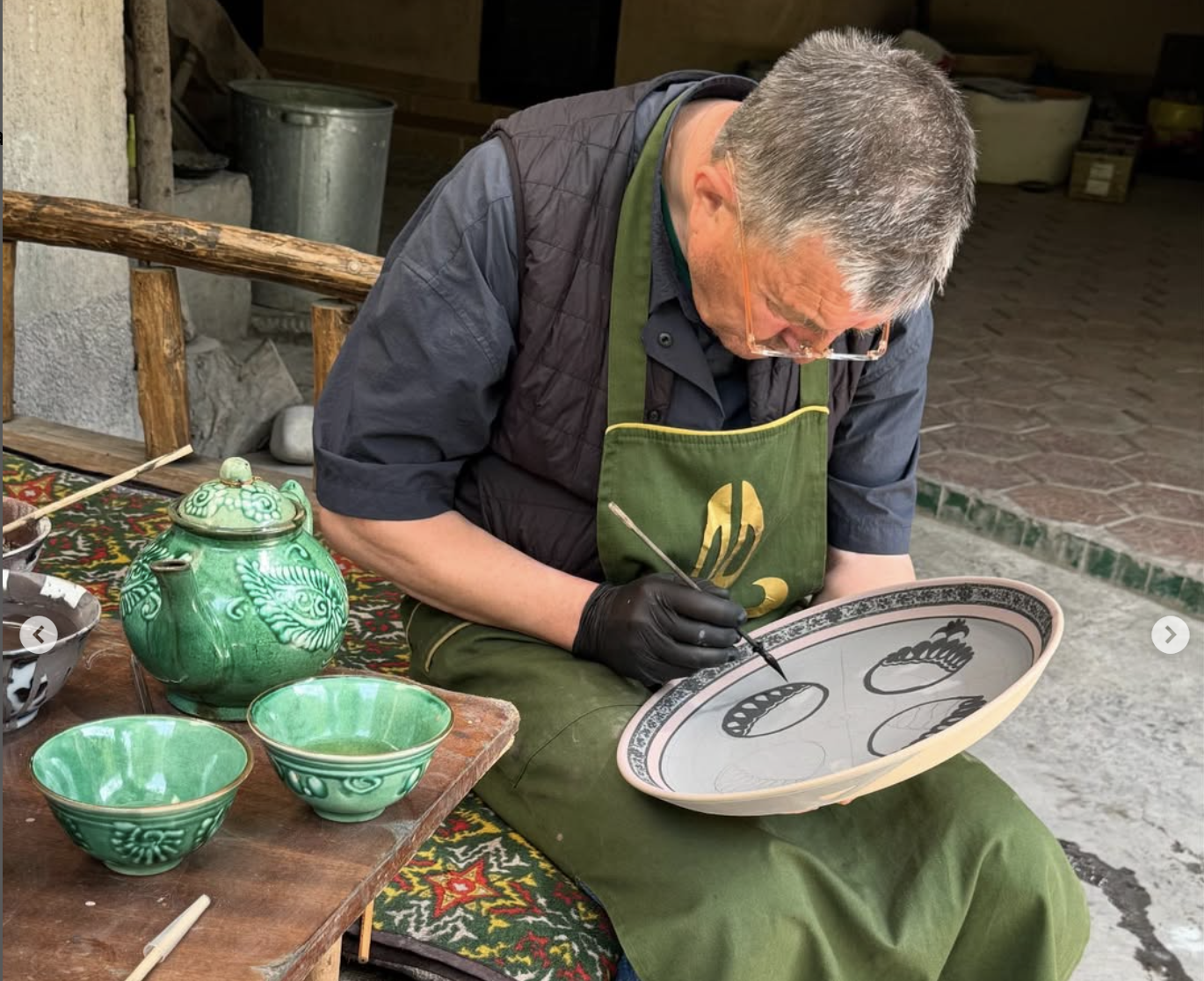
Japanese school and cultural exchange
In Rishtan, a Japanese school has been operating for 30 years. The school was conceived not just as a language educational institution, but as an intercultural center where the exchange of traditions takes place through language, music, artistic practices, and crafts. Students studied the Japanese language and culture, participated in artistic events, and communicated with Japanese artists and engineers.
The history of this school in Rishtan has deep roots and an almost legendary status. It was founded by master Alisher Nazirov and Japanese engineer Shikekatsu Osaki from the Komatsu corporation in the mid-1990s. Their acquaintance began at an exhibition in Kanazawa, Japan, where Nazirov worked with masters of traditional kutani-yaki ceramics.
Osaki came to Uzbekistan as part of an engineering delegation, visited Rishtan, and was so impressed by the local ceramics that he returned with his family and, together with Nazirov, opened the city's first school of Japanese language and culture.
Later, the school became a center of intercultural exchange: Japanese music was studied here, artists' meetings were held, and many of Nazirov's students mastered the Japanese language.
“Almost all the children here know a few words in Japanese: konnichiwa, arigato. This is already part of everyday life,” one of the master's students says.
Today the school operates in a different building, but the very fact of its establishment shows that for Rishtan, craftsmanship is a cultural and diplomatic category. Through the art of ceramics, the city has become part of the international professional community.
On the philosophy of craftsmanship and the uniqueness of each piece
“It’s a whole science. The most important thing in traditional Rishtan ceramics is the painting. It is never prepared in advance. Each ornament is born at the moment when the brush touches the clay.”
The master explains that Rishtan ceramics are never repeated. Each item is created "for one person," just as dishes were once made only for rulers.
“The person who bought my work is the only one who will have it. I will not repeat it again. This is respect for the person and for the craft itself.”
He talks about Humo, the bird of happiness — a traditional motif, which each master interprets in their own way.
"No one has seen this bird, so every master has the right to imagine it in their own way. This is the artist's freedom within tradition."
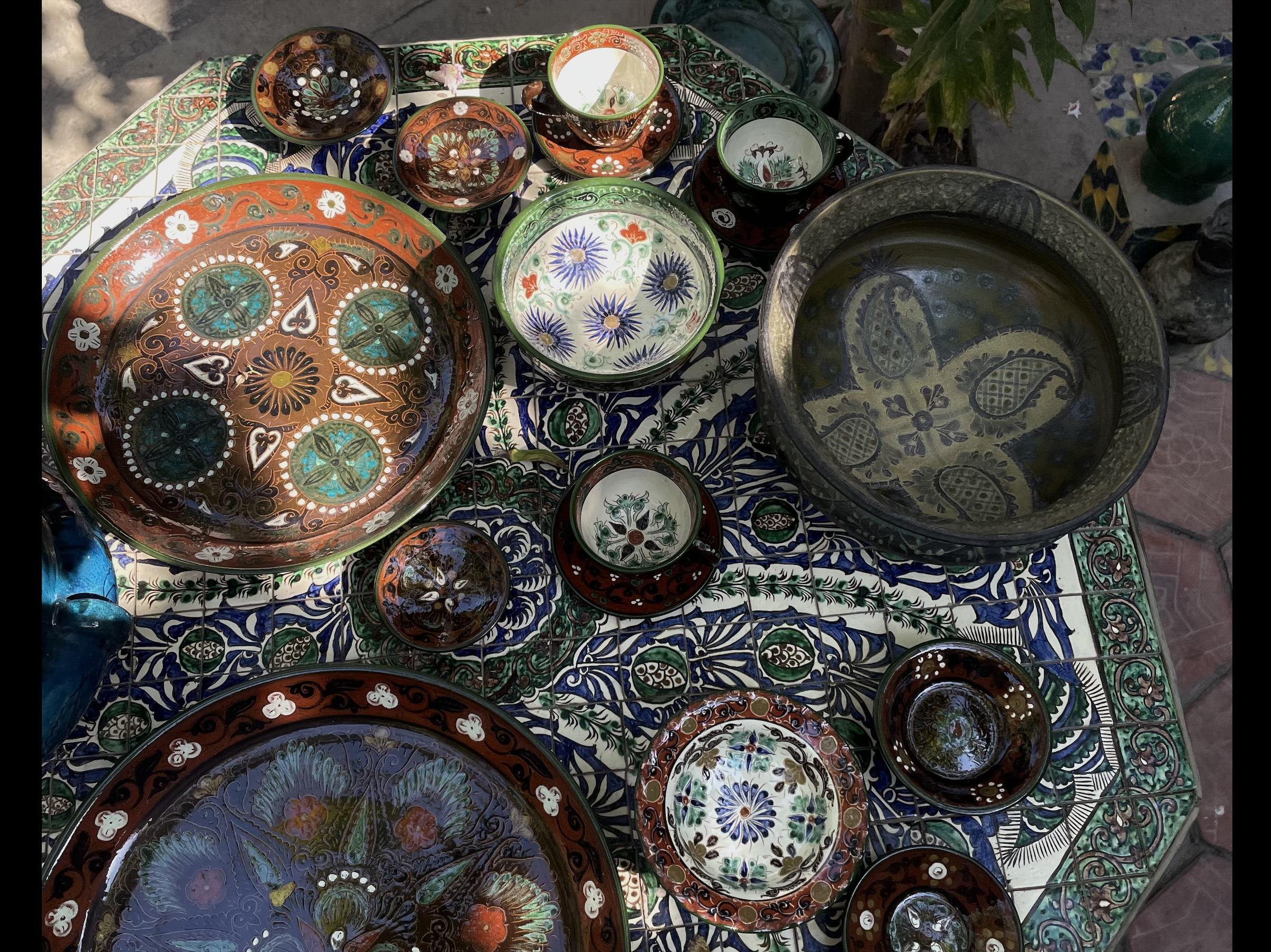
Economy of Rishtan
Ceramics remain a key component of the city's economic sector. More than 500 workshops operate here, each functioning as a microenterprise employing between two and ten people. Most of the products are sold directly to tourists or through private orders. In recent years, exports and online sales have been developing.
However, vulnerability remains: lack of certification, dependence on seasonal tourism, weak logistics infrastructure. Forums and festivals are becoming not just cultural events, but a tool for visibility and attracting attention.


