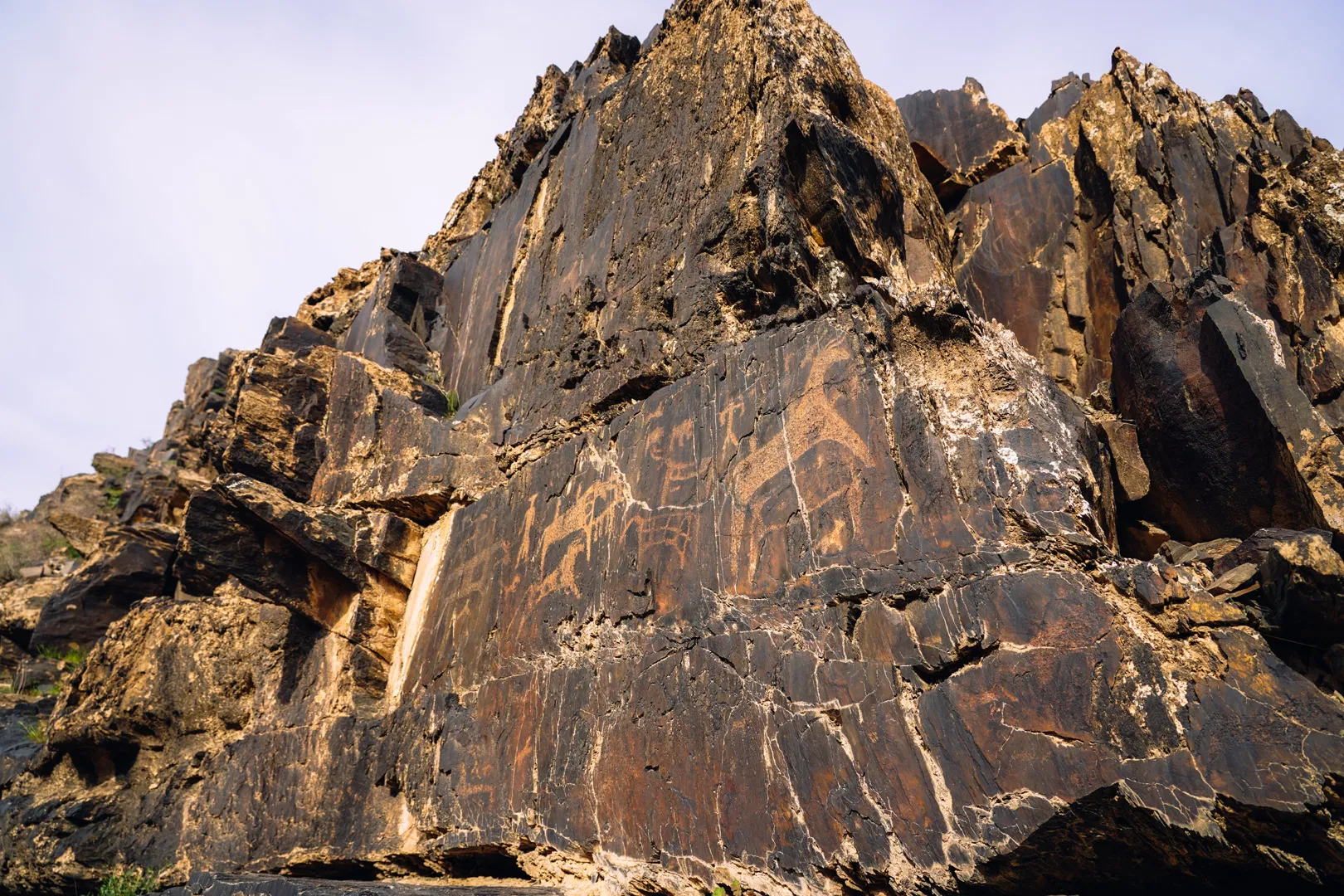
In this article, we have gathered 5 unusual places in western Uzbekistan that few people have heard of. We will tell you where to find ancient rock paintings, how to walk among the ruins of Khorezm fortresses, and how to experience the silence of the endless desert.
The west of Uzbekistan is still an undiscovered land. Here, you can see ancient fortresses among the sands, mysterious cemeteries, untouched gorges, and deserts where saiga antelopes can still be found. You won't see crowds of tourists in such places, but these areas are another side of a country rich in real adventures.
Sarmishsoy Gorge (Sarmish Petroglyphs) — Navoi
In the Sarmishsoy gorge on the southern slope of the Nurata mountains, it is possible to see more than five thousand ancient drawings carved into the rocks. The cliffs depict hunting scenes, people dancing, bulls, and other animals that have disappeared from these places. There are also inscriptions in Arabic script left by Sufis. This place can truly be called an open-air museum where centuries-old history is preserved on the stones. In spring, the gorge turns lush green and everywhere is covered with flowers; the cliffs look especially beautiful.
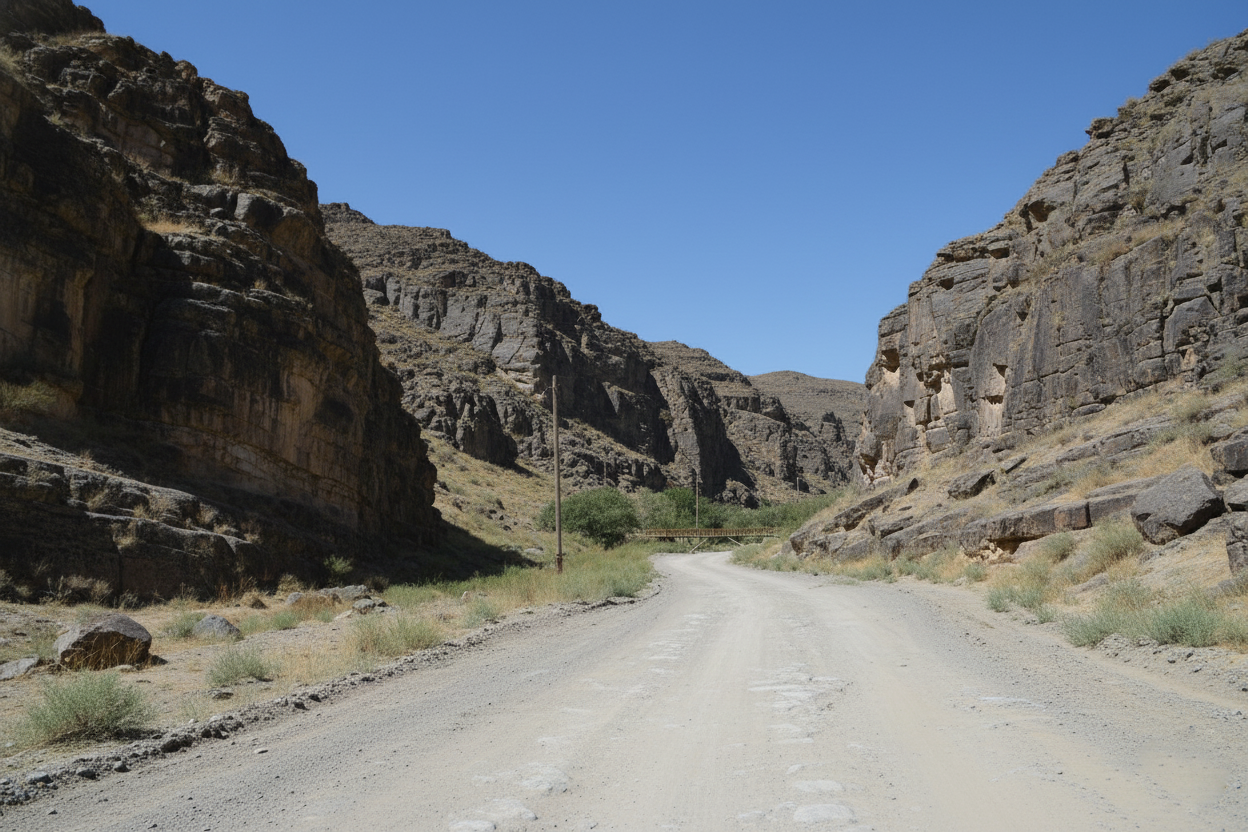
Dara is located in Navoi region, about forty-five kilometers southeast of the city of Navoi, near the villages of Sarmish and Yangirabot. It crosses the Qoratog ridge at the edge of the Kyzylkum desert, one hundred and forty kilometers from Bukhara.
It is better to get there from Navoi by car or taxi; the trip takes about an hour. Public transport does not run here, but you can get to Navoi by train or shared taxi, and then take a taxi from there. At the end of the route, you will cross a dirt road through the desert. Entrance is free, and there is a pedestrian path under the trees. There is almost no infrastructure, so you should bring water and comfortable shoes, and be prepared to climb the rocks to see the views shown in the pictures above.
Ustyurt Plateau — Karakalpakstan
 Muallif: Максат79
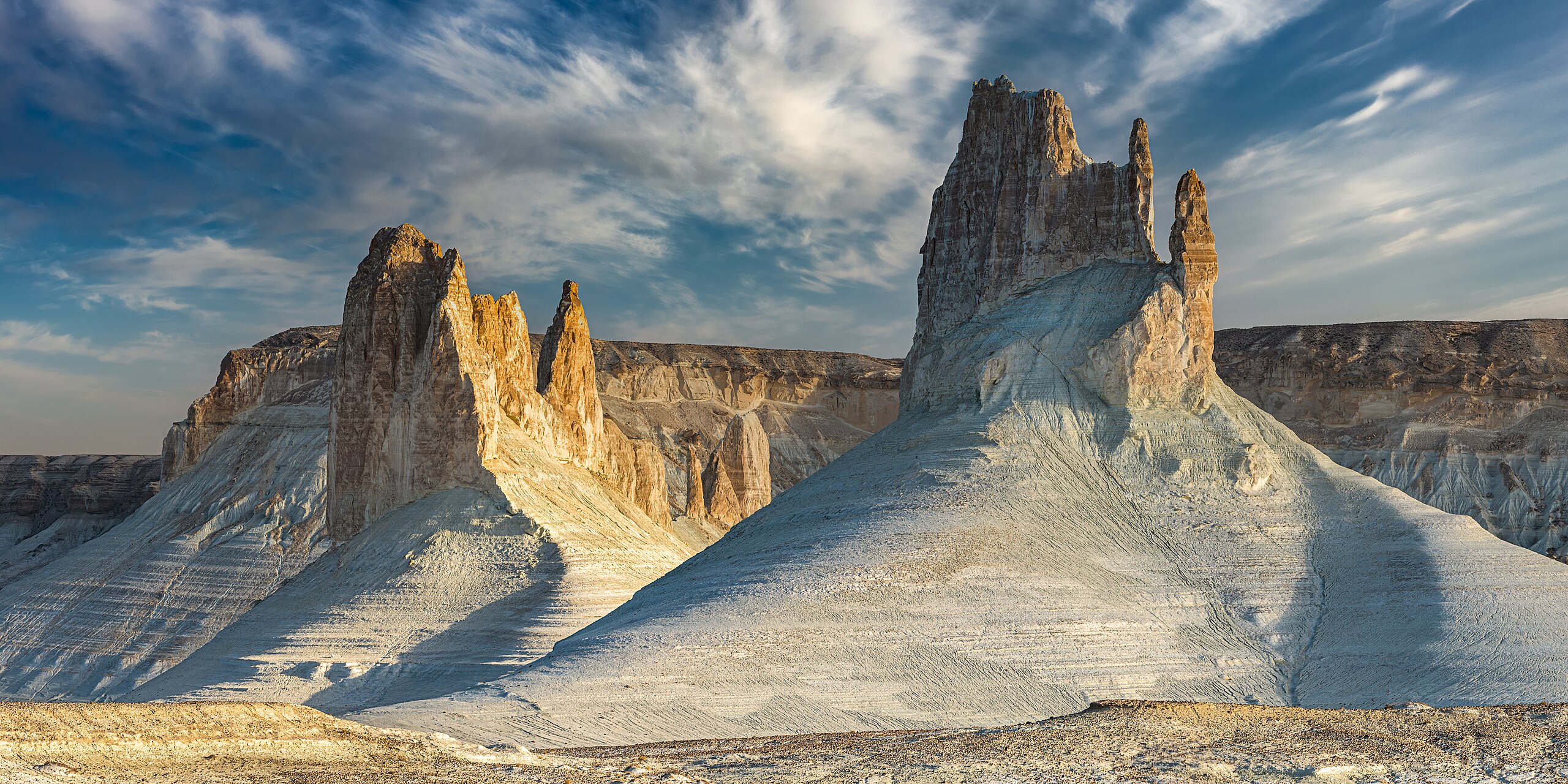
The vast plateau between the Aral Sea and the Kyzylkum is one of the least explored places in the country. Its main feature is the almost one-hundred-meter-high giant chink cliffs and winding canyons in the form of unusual rocks. In the landscapes here, you feel as if you have landed on another planet: layered limestone walls, saline soils, endless deserts.
You can only get there in an off-road vehicle with an experienced driver. Usually, a trip to Ustyurt is combined with a visit to the old Muynak port. From Nukus, you first travel north along the highway, then continue on a dirt road. You can go for one day to greet the dawn on the plateau, but to see the sunset, you need to spend two nights at the yurt camp. Infrastructure here is minimal: in Muynak there are cafes and gas stations, while on the plateau there are only tents or yurts set up, no communication, surrounded by wild nature and complete silence.
Ayoz Fortress — Karakalpakstan
 Mualif: Jean-Pierre Dalbéra
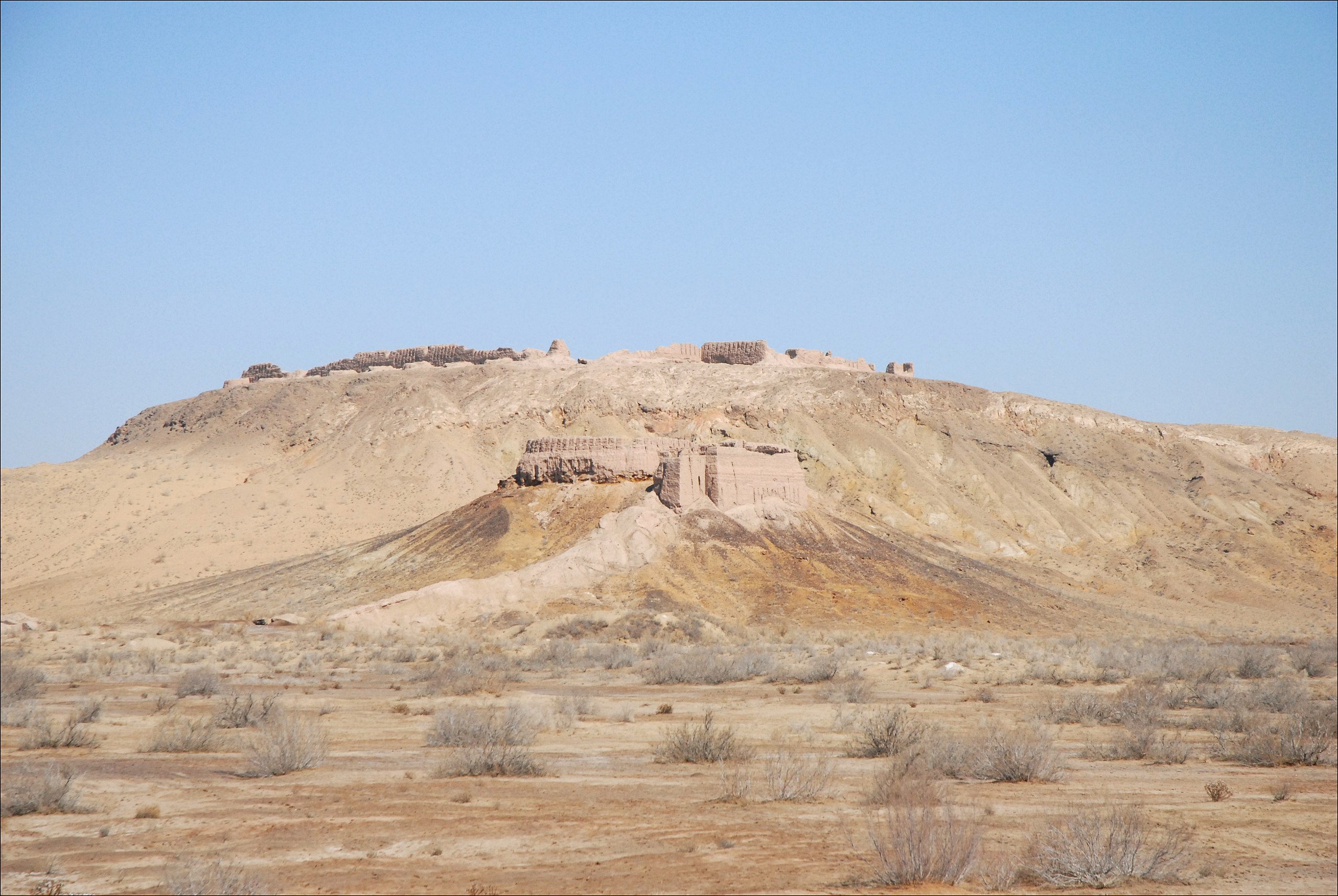
Ayoz Fortress is an ancient fortress consisting of three parts, built between the fourth century BC and the fourth century AD. The towered adobe and brick walls are still visible among the desert sands.
The first fortress is located on a high plateau near Lake Ayazkul. From there, the entire steppe can be seen up to the horizon. Archaeologists have found palace remains, weapons, and ornaments here. Below, there are two more fortresses, surrounded by remnants of walls and narrow corridors. According to legend, the dervish Ayaz lived here, which is why this place is named after him.
The fortresses are located in the Kyzylkum desert, about eighty kilometers from Urgench, near the village of Buston. Some parts of the road are made of dirt. You can get there by private car or with a tour. There is a yurt camp nearby, where you can stay overnight and enjoy the view of the sunset over the desert.
Central Kyzylkum National Park — Navoi
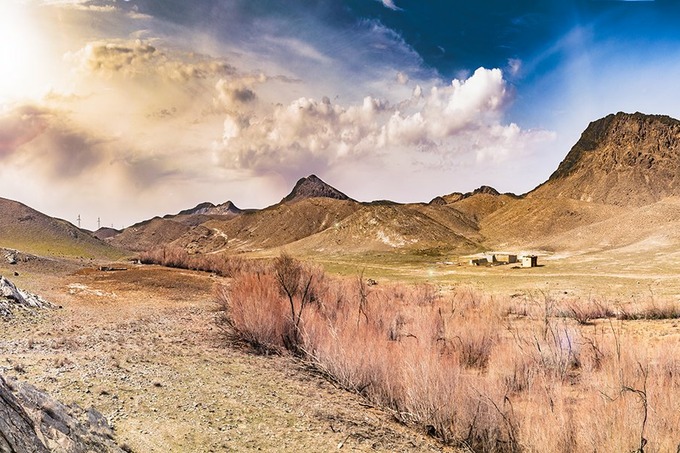 Mualif: Sagit Mirvaliyev / National Geographic
The Central Kyzylkum National Park is located in the Kyzylkum desert in the Uchquduq district of Navoi region. Its area is close to one million two hundred thousand hectares. Here, sandy plains and hills up to seventy meters high stretch out, with salt marshes and small lakes also found. The park contains more than forty species of plants, most of which are edible or medicinal.
In the Kyzylkum, animals such as the goitered gazelle, caracal, saiga antelope, and fox live. This natural environment is one of the few places where you can see the desert landscape and the real life of wild animals.
It is best to come here only by off-road vehicle, preferably with a guide. Often, the trip is combined with a tour around Navoi region and spending the night in yurts at the edge of the sand dunes. For those who want to see truly wild and peaceful nature, visiting this place is ideal. It is better to come in spring or autumn, when the weather is not too hot. In summer, the temperature can be extremely high.
Janbasqala — Karakalpakstan
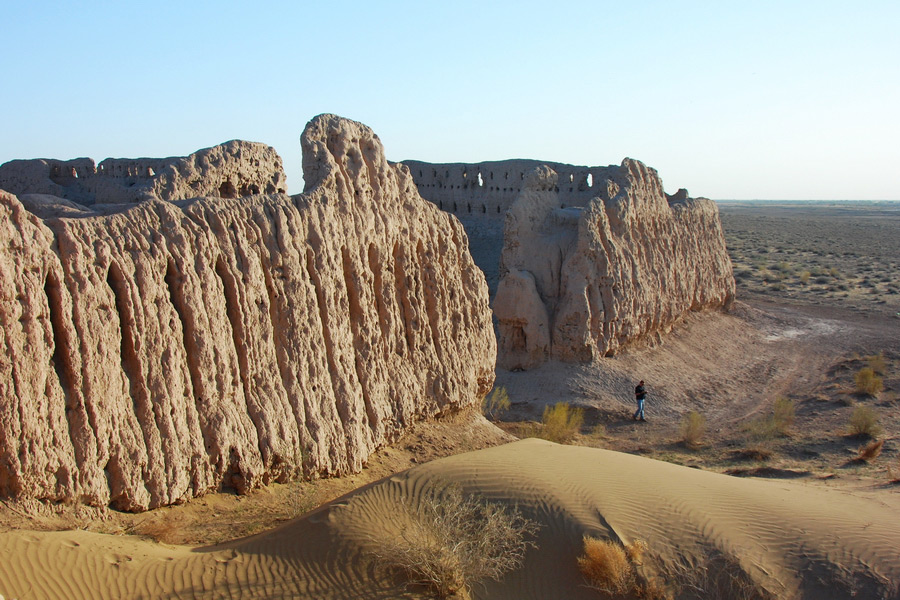 Manba: OrexCA
Janbasqal’a is an ancient fortress and archaeological monument on the edge of the desert. It was built around the fourth century BC and survived in the territory of ancient Khorezm until the first century AD.
The fortress walls rise to nearly twenty meters in height. Its approximate size is two hundred meters by one hundred seventy meters. The uniqueness of this place is that the fortress has no corners or wall towers, which was considered unusual for that era. The fortress is located in the Republic of Karakalpakstan, Uzbekistan, on the slope of a hill stretching to the southeast of Sultan Uvays Mountain near the village of Kokcha.
You can get here from Nukus or other cities of Karakalpakstan. Some parts of the road are made of dirt, so you should choose your vehicle accordingly. This is a unique place where you can see the almost completely preserved ruins of an ancient city with strong walls. Here, you can feel the atmosphere of ancient Khorezm and the tranquility at the edge of the desert. There are not many tourists, so you have the opportunity to be alone with history. It is advisable to visit during the cooler seasons, in spring or autumn.
Did you like our guide? Then you might also be interested in our other materials:
Markaziy Osiyoning zardushtiylik yodgorliklari bo‘yicha qo‘llanmaUshbu qo‘llanma sizga zardushtiylarning izlari bo‘ylab – Qoraqalpog‘iston qumlaridan Pomir tog‘larigacha, Mang‘istauning sokin dashtlaridan qadimgi Niso xarobalarigacha bo‘lgan yo‘lni bosib o‘tishga yordam beradi.mag.humodoc.com


Newsletter
A letter from the HD editors
Once a week, we send the best stories, events, and cultural discoveries from Central Asia.