
You may revere Tolstoy’s intellect, admire Pushkin’s elegance, value Dostoevsky’s moral inquiry, and appreciate Gogol’s humour. Yet it is only Chekhov you wish to resemble.
Sergei Dovlatov
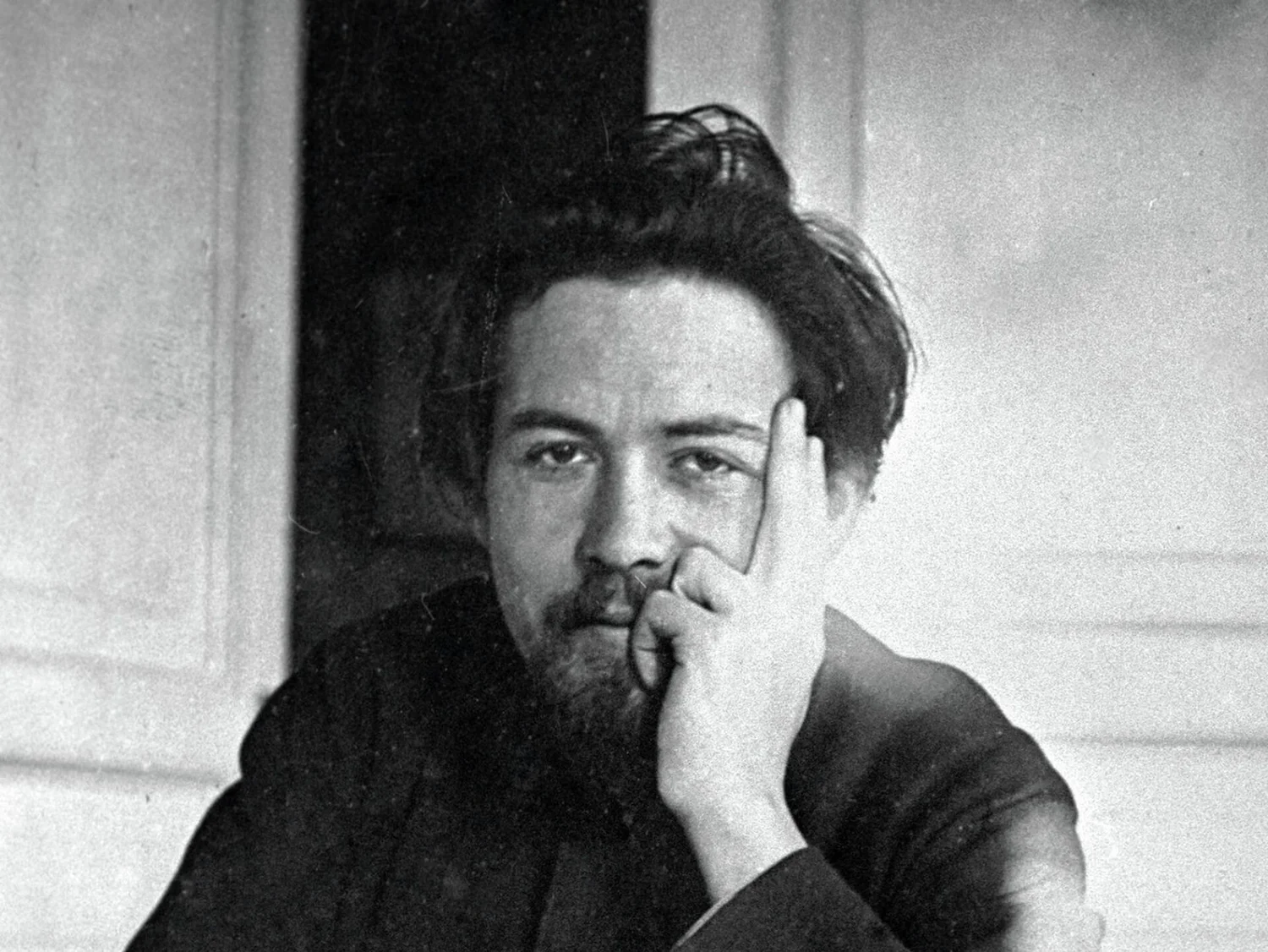
It is impossible to write about Chekhov in the conventional language of criticism. He himself would have dismissed any attempt to place him on a pedestal with a sharp remark or an elegant joke. His ironic distance from his own work, the lightness of his tone, and his rejection of pathos and moralising all served to mask the radical nature of the transformations he introduced.
This text does not attempt to encompass Chekhov’s entire oeuvre or provide a comprehensive analysis of selected works. Rather, it outlines key moments in the writer’s life and focuses on those features of his work that may inspire closer engagement. It seeks to answer a fundamental question: what did Chekhov bring to world literature, and how did he change the rules of the game?
The Methods of a Physician’s Observation
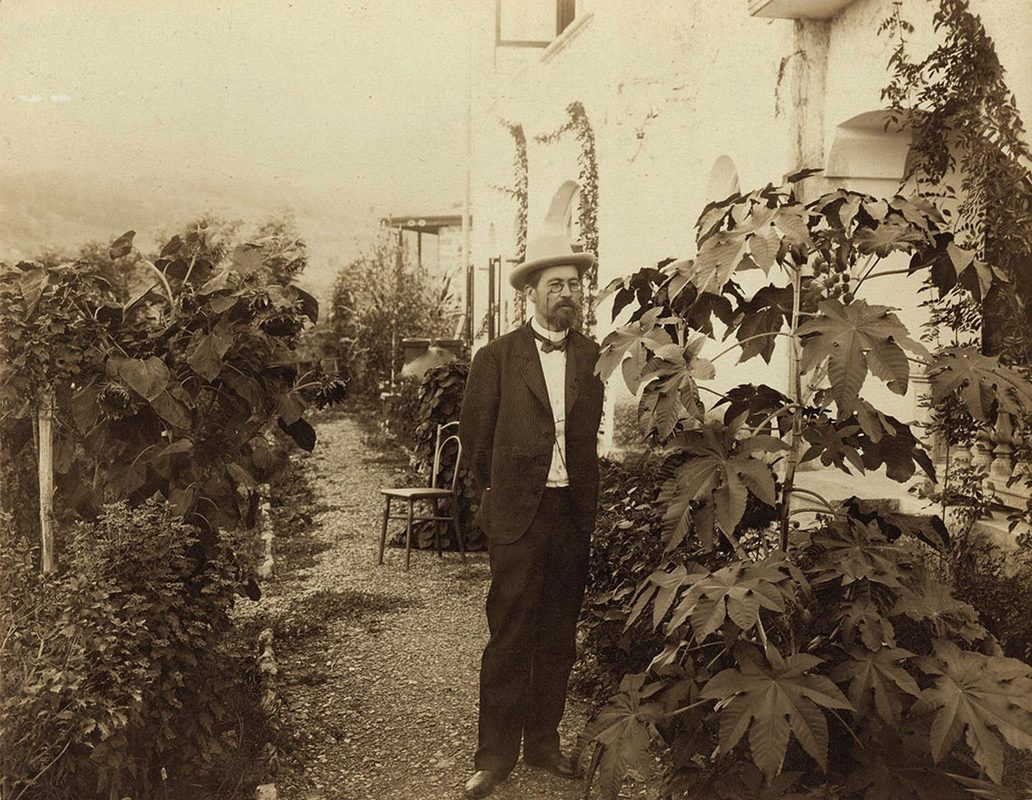
Chekhov is a rare and invaluable case in literature. The apparent ease of his writing was, in fact, deceptive: it dismantled the heavy constructions of romantic pathos, excessive explanation, and authorial didacticism. His irony, on the contrary, was constructive, revealing the depths of the human psyche hidden beneath the most ordinary details of everyday life.
He entered Russian literature not as a conqueror, but as an explorer, guiding readers towards a new path where authentic life resided. Without proclaiming a single manifesto, he transformed the language of narrative and became the founder of a new literary era, all while retaining the self-irony of a man for whom writing was not even his primary profession, but one craft among many.
Chekhov practised medicine for most of his life, and writing did not immediately become his main occupation. His early stories were written to earn money while he was a medical student. This was not a choice between two vocations, but rather a necessity. His medical training instilled in him a habit of precise observation, attention to detail, and, in a sense, diagnosis.
A doctor looks at a patient first and foremost as a set of symptoms to be understood; judgement can interfere with treatment. A doctor is trained in silence, not indifference, but active listening. Chekhov transferred this method into literature. His characters are not carriers of ideas, as in Tolstoy or Dostoevsky, nor objects of satire, as in Gogol.
Perhaps the most striking example of this approach is his expedition to Sakhalin in 1890. When Chekhov announced his intention to travel to the island, home to a major penal colony, his contemporaries were perplexed. This was neither a tourist journey nor a philanthropic pilgrimage. His medico-sociological expedition included interviews with a large part of the population, statistical analysis, and comparisons with other regions of Russia. When Sakhalin Island was published in 1895, it drew attention to the previously little-known colony and contributed to pressure for reform of the Russian penal system. It was both a medical and sociological work, a precise recording of facts with political consequences.
Ward No. 6: From Clinical Case to Literary Phenomenon
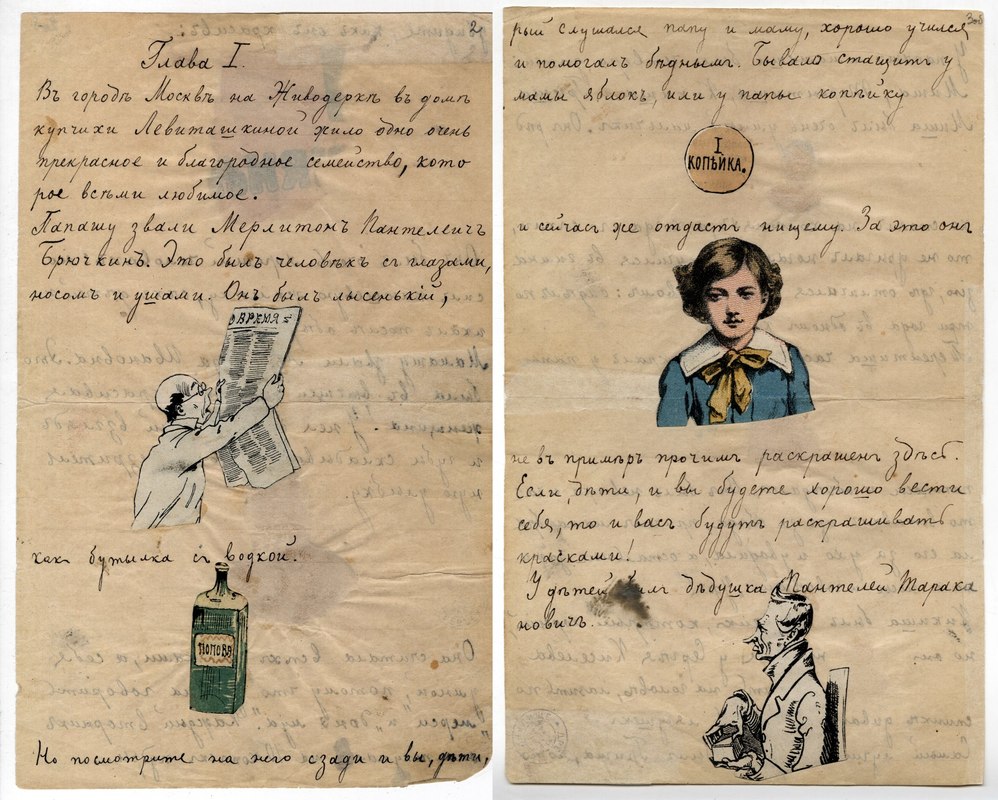
The novella Ward No. 6 (1892) demonstrates this transformation of method with particular clarity. On the surface, it is a story about a provincial psychiatric hospital whose bleak, rusting interiors create an atmosphere of inevitability. Beneath this lies a clinical analysis of systemic cruelty, executed with the precision of a medical report.
Chekhov does not depict suffering in the manner of Dostoevsky, with deep psychological reflection and a demand for repentance. He simply observes. The nails on the fence, “sticking up sharply”, are details that imprison the reader as much as the characters. These characters do not become symbolic embodiments of good and evil; they remain human beings trapped within a system that none of them fully controls.
The story of Doctor Ragin, who initially defends his patients with philosophical arguments but gradually deteriorates and ends up confined himself, follows the logic of clinical observation rather than literary morality. His speech changes over time. At first, he speaks with confident, formal certainty; later, his language breaks down into repetition, revealing a loss of will. In this subtle shift lies an entire spectrum of emotion: confusion, fear, doubt, and sorrow. The phrase becomes a marker of decline. This does not signal the triumph of justice, as it might in a Victorian novel, nor does it constitute a profound exploration of guilt, as in Dostoevsky. Instead, the author records how a system destroys a human being, how ideals collapse under the weight of reality, and how even the doctor becomes a victim of his own medicine.
Rejecting the Conventional Formula of Dramaturgy: Narrative Structure
What astonished Chekhov’s contemporaries was not what he added to literature, but what he removed from it. “When you have written a story, cross out its beginning and its end”, Ivan Bunin quoted him as saying. This was his working principle. In The Lady with the Dog, as Vladimir Nabokov observed, the narrative begins “without a knock”, in the middle of life, without introductions or background. We do not know who Dmitry Gurov is at the beginning, except that he is walking along the promenade and notices a lady with a dog. Everything else is revealed gradually, as we come to know people in real life, through details, behaviour, gestures, pauses, and silence.
In The Examining Magistrate, we are also placed immediately in the midst of the action. The proceedings are already underway, and the conflict is in full swing. The characters are fighting over the space of a fence, and Chekhov does not burden us with any backstory. In The Party, a young man rushes to a reception, thinking about money, and then he is already there, already beginning to invent lies. There is no introduction, no exposition.
This approach transformed the short story as a form. Before Chekhov, the reader occupied a passive position, observing events from a safe distance. With Chekhov, the reader is thrown into the midst of life and must make sense of events independently. This demands active engagement rather than passive consumption.
The Chekhov Paradox
The British critic John Middleton Murry wrote that Chekhov surpassed everything considered modern in literature, and that literature must now measure itself against his work.
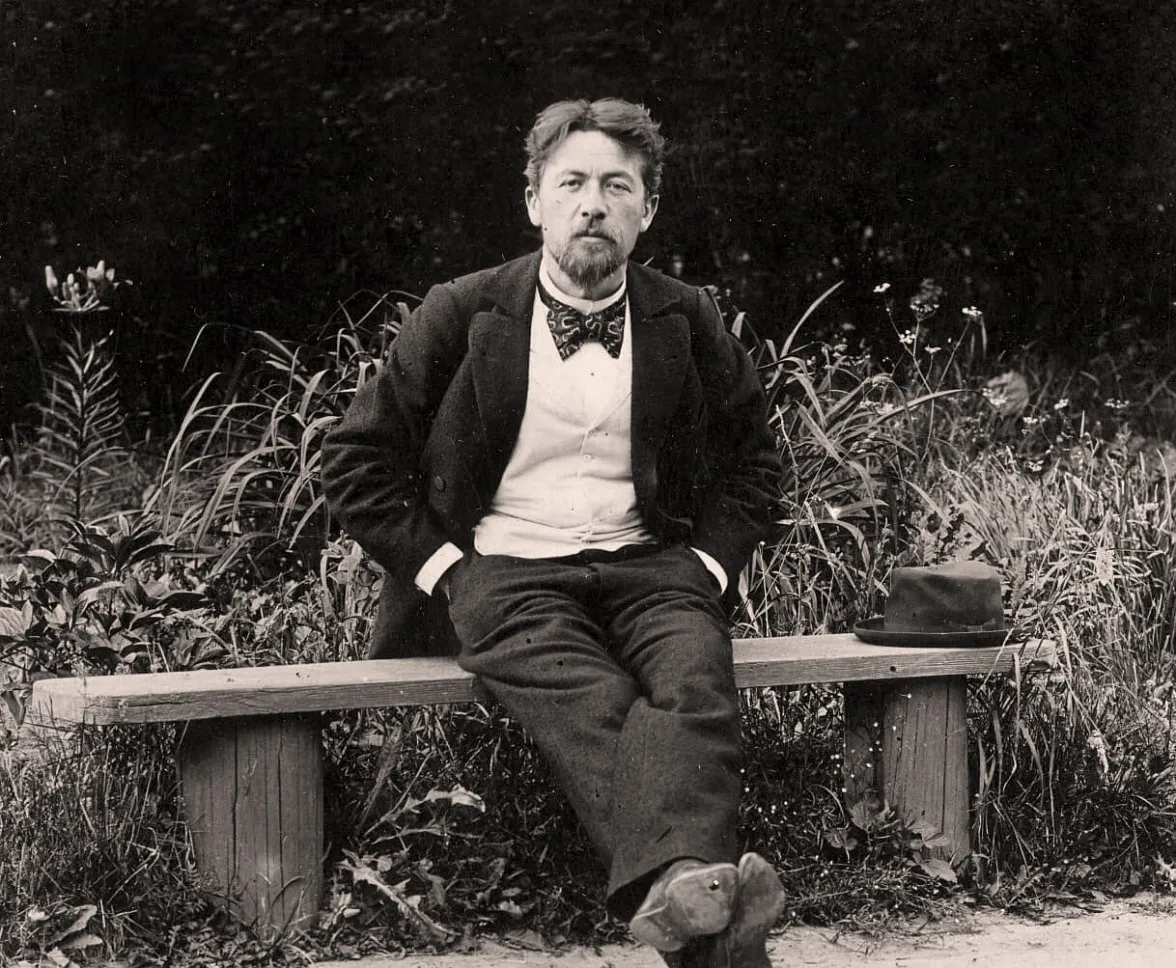
Chekhov’s revolution began with a paradox that puzzled critics for years. He called The Cherry Orchard a comedy, yet where is the humour? An estate is lost, a world collapses. Is it comedy or tragedy? Chekhov’s reality does not fit conventional categories, just as life itself does not.
In The Cherry Orchard, there is no conventional unfolding of action, no traditional dramatic climax, no moment when the protagonist struggles against fate and either triumphs or falls. Instead, Chekhov constructs a new poetics of presence through absence. The estate is sold, the central event occurs, yet we learn about it almost in passing, between conversations about love, memory, and dreams. The real action, the sale of the estate, is obscured by the flow of everyday speech.
Before Chekhov, narrative was built as a chain of cause and effect: a hero wants something, obstacles arise, he struggles or gives up. Every element served the plot. He broke this structure. The principle of narrative uncertainty became the foundation of his poetics. In his refusal of excessive explanations and additions, Chekhov does not reward the reader with clarity at the end of the work. The open ending does not signal incompleteness, but suggests that life continues beyond the text and that resolution never truly arrives. The future of the characters remains uncertain, and in this uncertainty lies all of Chekhov’s art, his entire revolution against a literature that believes it can explain life. This is the most subversive lesson a writer can offer in a world that demands certainty.
 Culture
Theatre Reform
On 29 May 1911, an independent London theatre group staged The Cherry Orchard for the first time in Britain. The premiere intrigued audiences but was met with negative criticism. Reviewers complained of a lack of plot coherence, imperfect staging, and a strange mixture of serious and comic scenes. However, Bernard Shaw, one of the leading playwrights of the 20th century, reacted differently. According to his biographer, after the performance Shaw told the director Kenelm Foss:
I feel that I must tear up all my plays and start again.
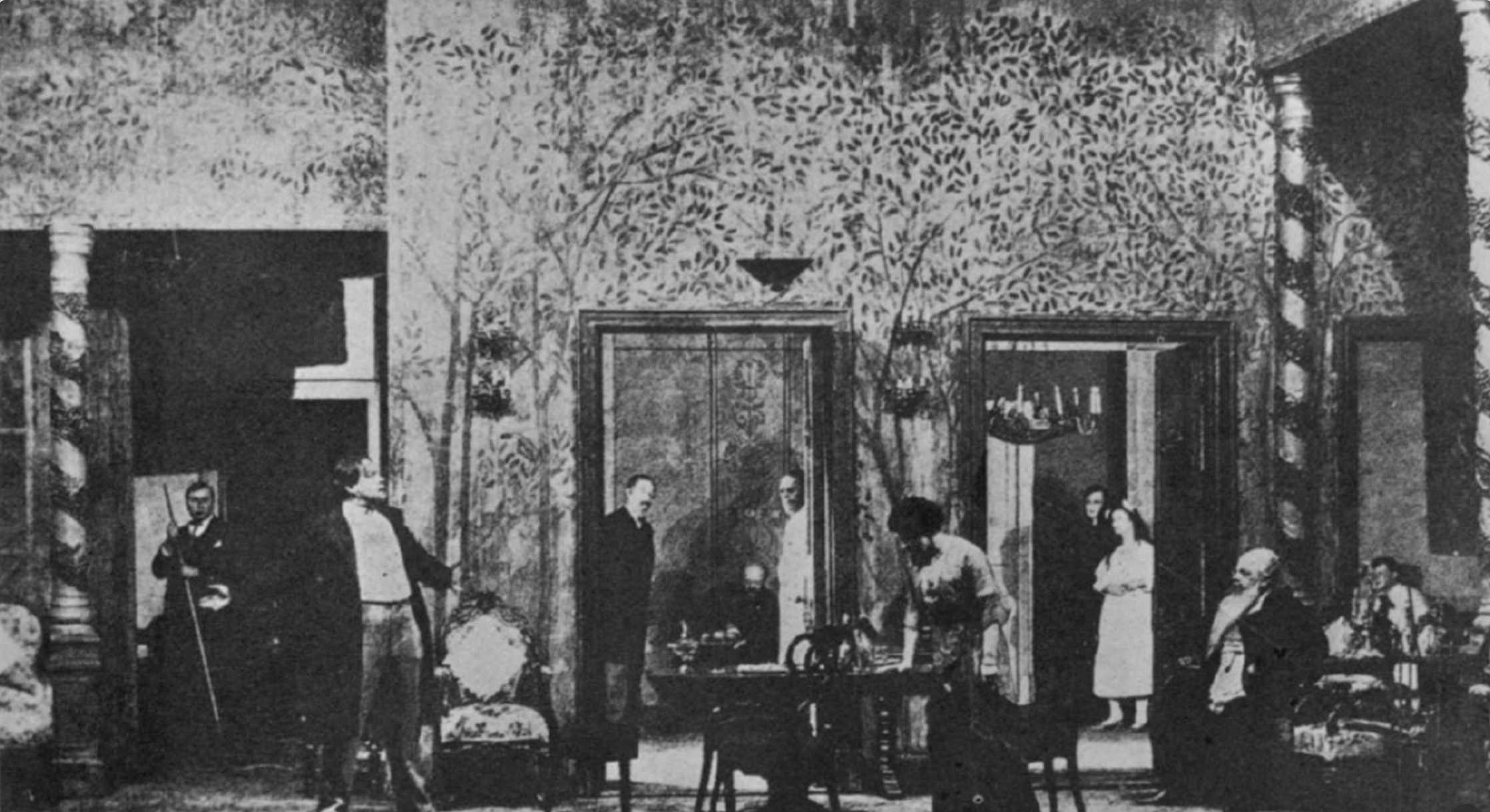 Scene from The Cherry Orchard, Moscow Art Theater. The MAT setting demonstrates a conscious attempt to avoid the stiffness and artificiality of the perfectly symmetrical box set. Variation of planes and glimpses into other rooms in the house continue the
Before Chekhov, theatre was largely a space of spectacle. Melodrama dominated, filled with exaggerated gestures and heightened emotion. Actors shouted, cried, and made grand gestures. People came to experience concentrated emotion: horror, compassion, triumph.
Chekhov introduced a different philosophy. The Seagull, for example, is not a melodrama about a betrayed lover, as it seemed to audiences at its first premiere in 1896. What matters is not scandal or dramatic revelation, but the quiet tragedy of people living side by side without truly seeing one another, how life passes them by through misunderstanding and an inability to listen. This was unfamiliar to audiences at the time, yet it fundamentally changed the way theatre directors and playwrights approached form.
His influence extended far beyond Russia. Chekhov revealed what would later be called subtext in theatre and the iceberg principle in literature. The idea that seven-eighths of meaning lies beneath the surface of the text is essentially Chekhov’s principle of silence and implication. Writers from Ernest Hemingway to Alice Munro and Samuel Beckett developed techniques rooted in Chekhov’s approach: silence, understatement, and ambiguity as ways of expressing deeper truths.
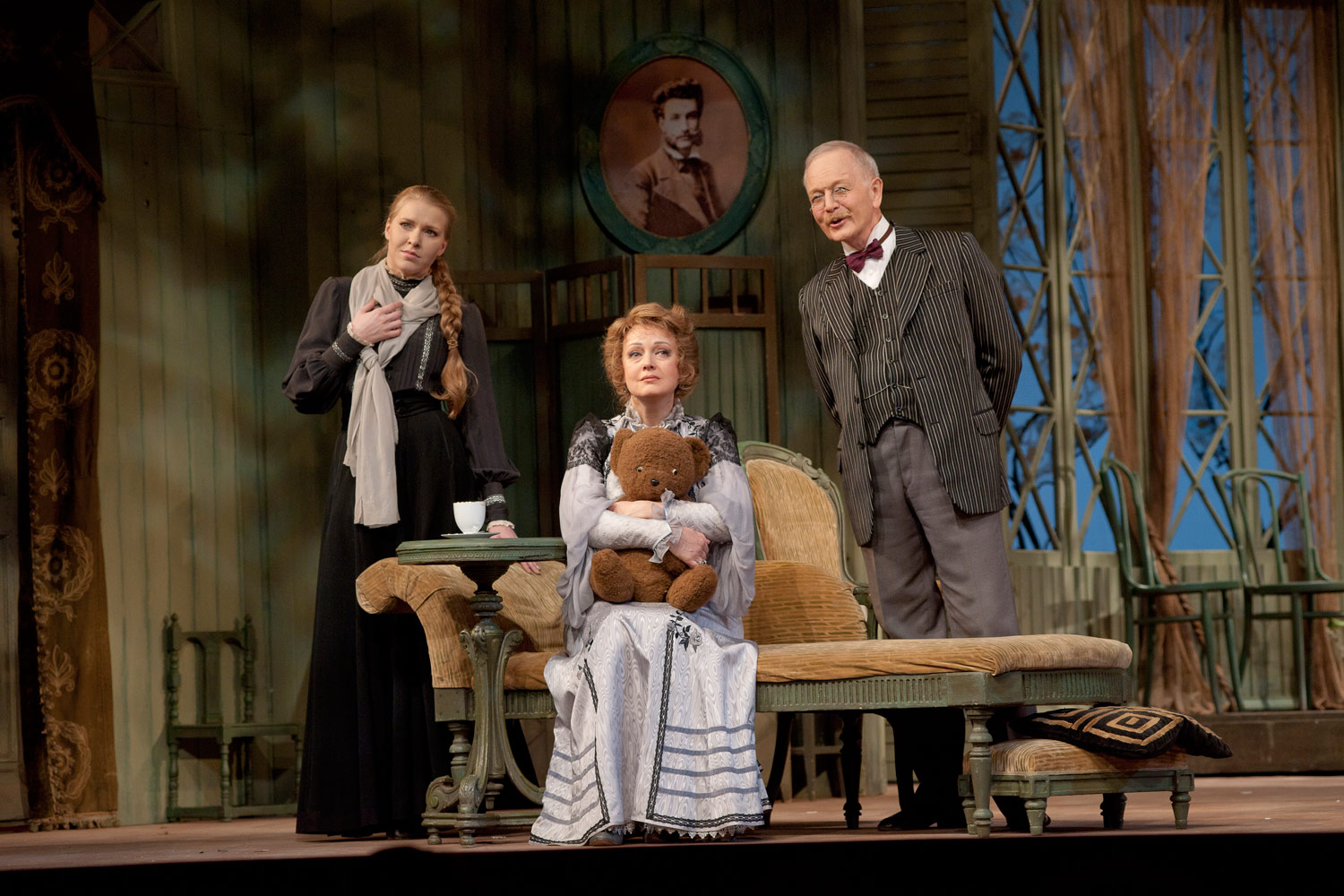 "The Cherry Orchard" State Academic
Chekhov remains relevant because he avoided writing about fashion and instead wrote about what endures: how people live, think, and change internally when nothing seems to happen. We read his contemporaries as historical documents. We read Chekhov because he speaks about us. His characters are us, his problems are our problems, his doubts are our doubts.
There is something Chekhovian in each of us. We live in uncertainty; we do not know what will happen tomorrow. We dream without knowing whether our dreams will come true. We say one thing while meaning another. We wait for major events that may never arrive, or they arrive so quietly that we fail to notice them. Chekhov’s paradox is simple: the less he explains, the more we understand about ourselves.


