
In July and August, air temperatures frequently reach +45 °C, whilst asphalt surfaces heat up to +65…+70 °C. The air scorches one's face, the asphalt is quite literally burning underfoot, metal handrails become impossible to grasp, and a parked car transforms into a veritable oven within a matter of hours. Today, scientists are increasingly united in their view: the most effective protection a city can have against heat is neither concrete, nor air conditioning, nor even the most advanced construction technologies. It is thoughtfully designed green infrastructure.
Why a City Becomes a Scorching Trap
Many people are puzzled by the fact that city centres are sometimes hotter than the surrounding areas. The reason is straightforward: asphalt, concrete, brick, and metal function as vast thermal accumulators. Throughout the morning they absorb solar energy, then slowly release it back into the atmosphere during the evening and night. As a result, streets remain hot long after sunset.
Scientists refer to this phenomenon as the "urban heat island." In densely built-up districts, air temperatures can be 2–8 °C higher than in suburban areas or large parks. The more asphalt there is and the fewer trees, the more severely the city overheats.
A Single Tree Can Replace Several Engineering Structures at Once
When we look at a large tree, it appears simply to be growing. In reality, it is working without pause — cooling the air, casting shade over the street, purifying the atmosphere, retaining rainwater, moderating the wind, absorbing carbon dioxide, and simultaneously making a walk through the city considerably more pleasant.
No engineered system is capable of performing so many functions simultaneously. It is for this reason that green infrastructure is now being planned in many countries with the same rigour applied to roads, bridges, and water supply networks.
How a Tree Cools a City
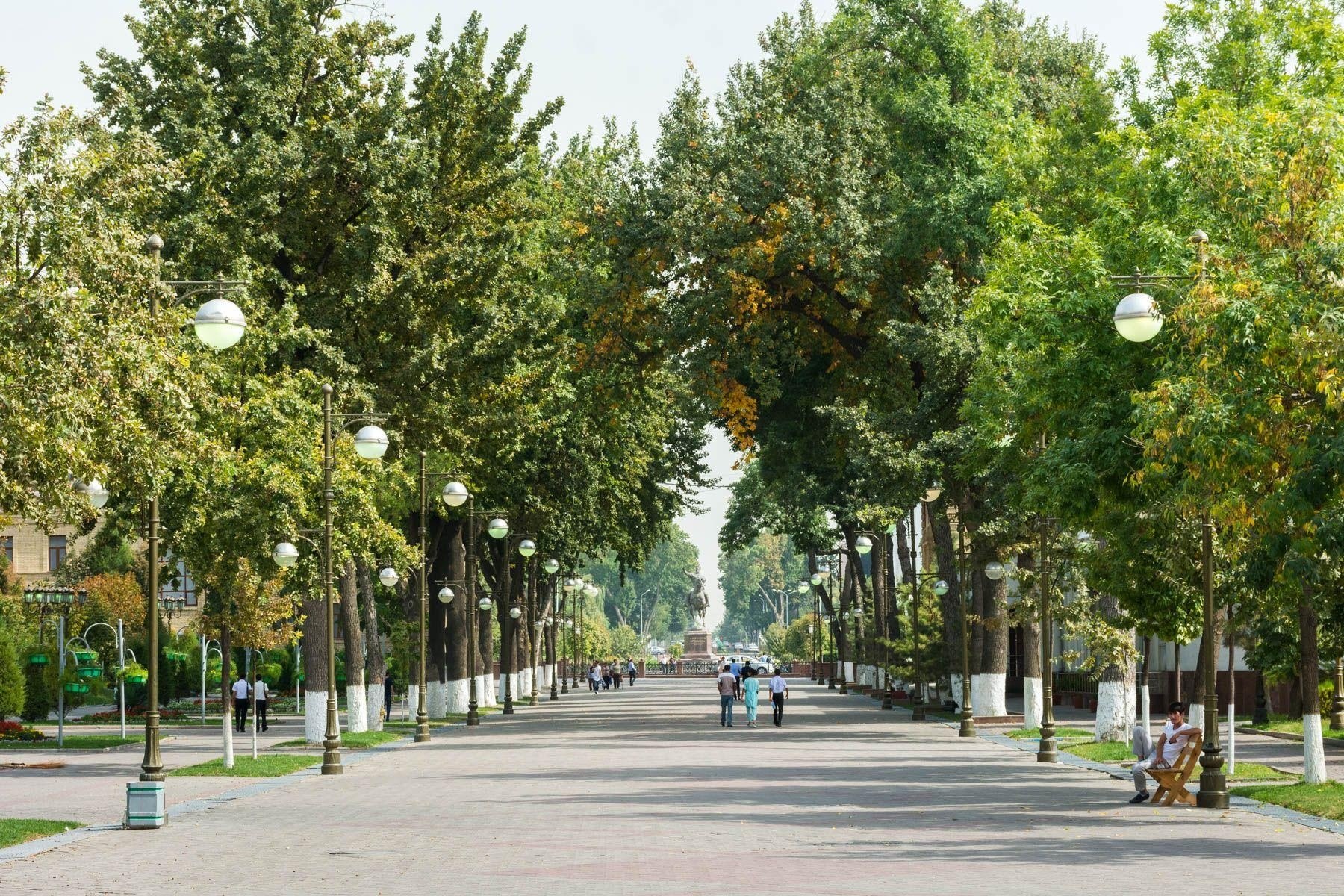
Most people assume that it is cooler beneath a tree simply because it provides shade. And that is indeed the case. Some years ago, scientists made an unexpected discovery: in arid climates such as that of Uzbekistan, ordinary shade proves far more significant than any other factor.
A tree's canopy functions as an enormous natural parasol, preventing sunlight from heating the ground beneath it. Under a single mature tree, asphalt temperatures can be 15–25 °C lower, paving stone temperatures 10–20 °C lower, and the air itself 2–5 °C cooler. In large parks, this difference reaches 6–8 °C. In some cases, just a few well-positioned trees are sufficient to transform the microclimate of an entire courtyard entirely.
Yet there is another indispensable mechanism that relatively few people are aware of. Each leaf acts as a miniature evaporator. Through millions of microscopic stomata, the plant continuously releases water vapour — a process known as transpiration.
The evaporation of water consumes an enormous quantity of solar energy. Rather than heating the air, this energy converts water into vapour. On a hot day, a single mature tree is capable of transpiring 100–400 litres of water, whilst larger specimens may release up to 500 litres in a single day.
Consider this: hundreds of litres of water pass through a single tree every day for the sole purpose of making the surrounding air a little cooler. It is precisely for this reason that humidity beneath the canopy typically increases by 5–15%, and people find extreme heat considerably more bearable as a result.
A Single Plane Tree Can Shelter an Entire Courtyard
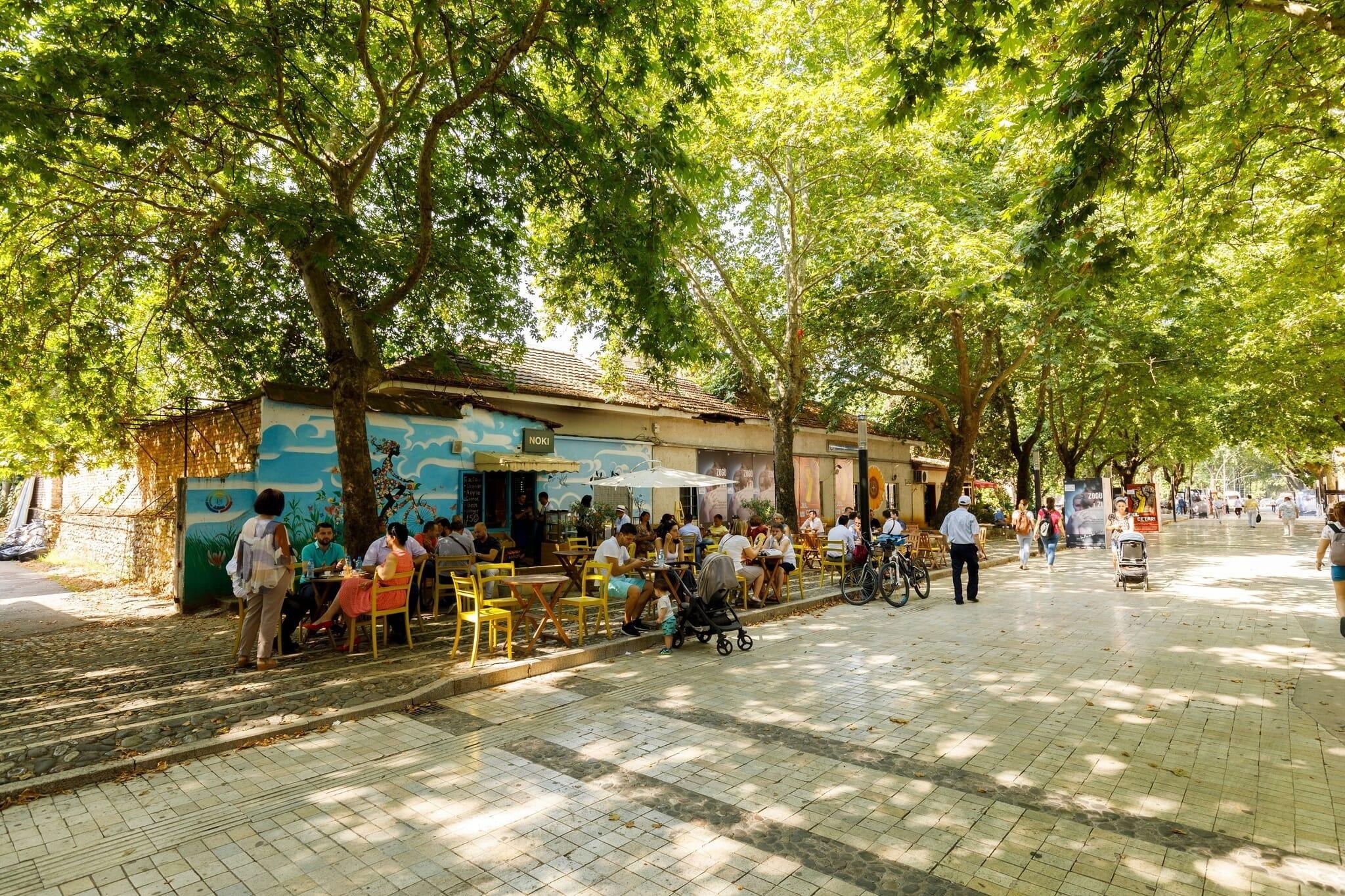
The Oriental plane tree has been held in particular esteem throughout Central Asia since time immemorial — and with good reason. The canopy of a mature specimen can reach 20–25 metres in diameter, and the area of shade it casts at certain times of day may amount to nearly 500 square metres — roughly equivalent to a small urban garden.
It is no coincidence that ancient cities were built around great plane trees. Beneath their boughs stood teahouses, bazaars, mosques, and gathering places for local residents. People instinctively understood what modern science now confirms: a dense canopy has the power to alter the climate of a small space entirely.
Trees Are Capable of Combating Even the Wind
Heat in Uzbekistan rarely arrives alone. It is accompanied by scorching dry winds, and in the south of the country by the notorious "Afghan" wind. This hot wind brings not only dust and sand, but also fresh masses of superheated air. It is as though some enormous hairdryer has been switched on: temperatures climb still higher, the air grows drier, and breathing becomes noticeably more laboured.
At first glance, trees might appear powerless in the face of such a formidable airflow. But this is not so. A properly designed green belt functions as a natural aerodynamic screen. As the airflow passes through several rows of trees and shrubs, it is divided, loses speed, and no longer strikes the city with its former force. As a result, wind speed is reduced by approximately 30–50%, and the protective effect of the green belt extends over a distance of up to fifteen times the height of the trees. This means that plantings of around 20 metres in height are capable of sheltering a zone nearly 300 metres wide.
In Summer, Trees Become the City's Primary Air Filter
There is yet another characteristic of our climate worth noting. During the hottest months, rainfall is almost entirely absent, which means that dust is not washed from the atmosphere. Motor vehicles, construction sites, dry soil, the harmsiyl wind, and the notorious southern "Afghan" wind together lift millions of microscopic particles into the air each day.
Once again, it is trees that come to the rescue. Every leaf is a natural filter. On its surface, PM₂.₅ and PM₁₀ particles, road dust, soot, and heavy metals accumulate and settle. Research indicates that a single mature tree is capable of capturing 20–100 kilograms of dust annually. The plane tree, elm, ash, oak, and linden are particularly effective in this regard. The result is a remarkable phenomenon: in summer, when rain is scarce, it is the leaves themselves that serve as a kind of purification system for the urban air.
The capabilities of trees do not end there. As hot air passes through the canopy, leaves continuously evaporate moisture, gradually cooling the airflow and increasing its humidity. They trap dust, sand, PM₁₀ and PM₂.₅ particles, and other pollutants.
In essence, a green belt becomes a natural climatic barrier. It not only weakens dry winds and the "Afghan" wind, but also partially cools and cleanses the incoming air, reduces moisture evaporation, and creates a cooler, more comfortable microclimate in its wake. For this reason, protective shelterbelts are regarded today not as ornamental plantings, but as one of the most effective tools for adapting cities to extreme heat.
Trees cool more than just streets
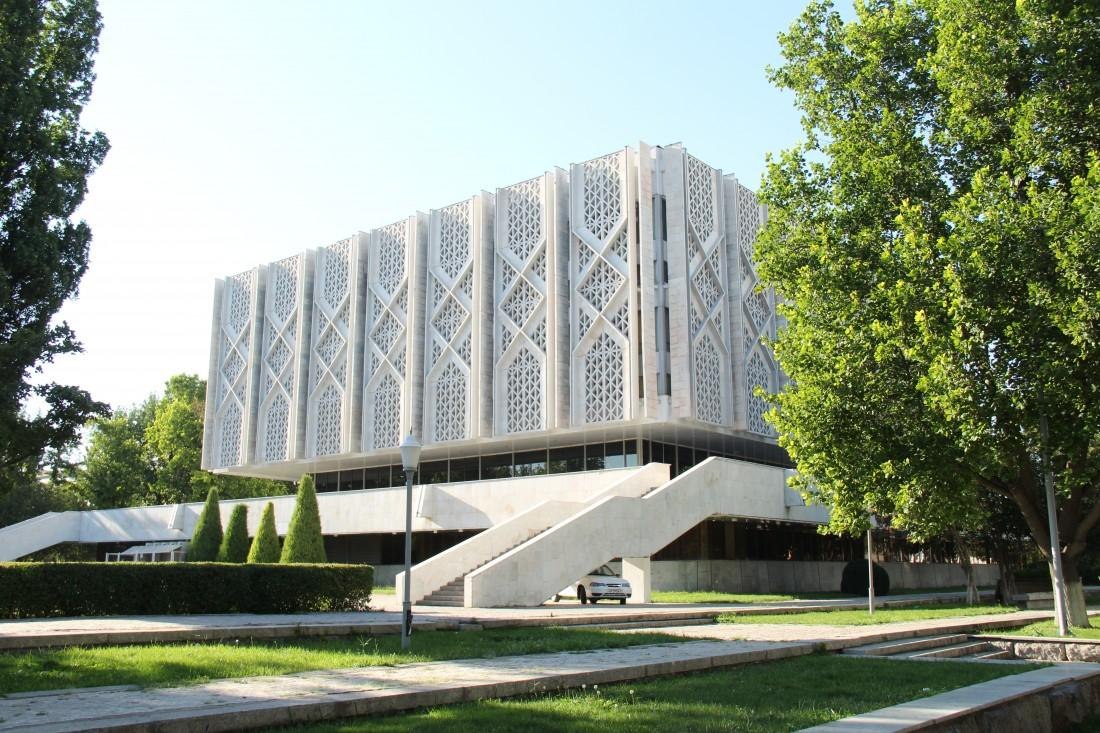
In many countries, plants have long since "climbed" from the ground onto rooftops and building façades. In Singapore, green roofs have become a familiar feature of urban architecture. In Milan, the celebrated Bosco Verticale towers were built, with more than eight hundred trees and thousands of shrubs growing on their balconies.
Such green façades can reduce the temperature of exterior walls by approximately 10–20 °C, whilst green roofs reduce rooftop heat gain in summer by 30–40 °C. As a result, buildings require less energy for cooling, which in turn reduces greenhouse gas emissions.
Why all of this is particularly important for Uzbekistan
According to climatologists' projections, extreme heat in Central Asia will become increasingly prolonged. Cities continue to grow. With them, the surface area of asphalt, concrete, and rooftops expands. If the approach to urban greening is not changed, each new residential district will become hotter than the last.
It is therefore no longer sufficient simply to plant a few trees near a building or lay out a small public garden. Modern cities must be designed in such a way that green infrastructure becomes as integral a component of the master plan as roads, engineering networks, or water supply systems. This means that, from the very design stage, a unified, interconnected green system must be established: creating shaded streets and boulevards, greening courtyards and car parks, linking parks with tree corridors, incorporating green roofs and vertical planting on buildings, and establishing protective shelterbelts around cities.
Only continuous green infrastructure is capable of effectively cooling a city, purifying the air, mitigating the impact of dry winds, and creating a comfortable living environment for millions of people. Only such a system is capable of genuinely transforming the urban climate.
Not all trees are equal
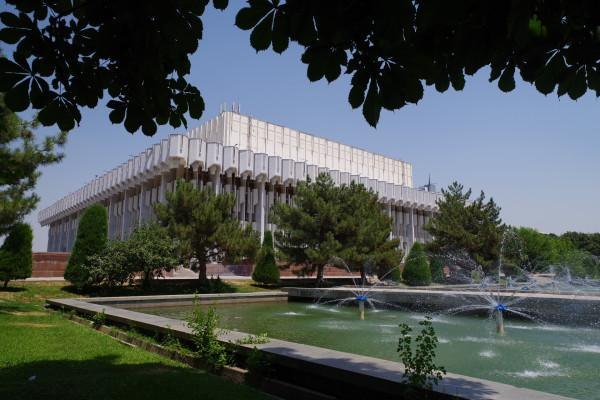
Not every tree copes with heat equally well. Some species cast only modest shade, whilst others spend decades forming a powerful green canopy that transforms the microclimate of entire streets and squares. For this reason, urban planners worldwide are paying ever greater attention not to the number of trees planted, but to their future size and canopy spread.
The finest natural "air conditioners" are considered to be trees capable of forming a broad, dense canopy whilst maintaining high vitality in an urban environment. Such trees not only shield asphalt and buildings from the scorching sun, but also evaporate large quantities of moisture, cooling the surrounding air.
The undisputed frontrunner for conditions in Uzbekistan remains the Oriental plane (Platanus orientalis) — one of the most formidable urban trees, capable of forming a canopy with a diameter of 20–25 metres and casting shade over an area of up to 500 m². Equally valuable species include the English oak (Quercus robur), southern catalpa (Catalpa bignonioides), weeping willow (Salix babylonica), common walnut (Juglans regia), large-leaved lime (Tilia platyphyllos), empress tree (Paulownia tomentosa), silk tree (Albizia julibrissin), wych elm (Ulmus glabra), and sycamore maple (Acer pseudoplatanus). These species form broad canopies, provide substantial shading of streets, courtyards, and public spaces, and many of them are distinguished by a high rate of transpiration, by virtue of which they cool the surrounding air with considerable efficiency.
For the conditions of the arid regions of Central Asia, particularly promising species also include the Siberian elm (Ulmus pumila), dense elm (Ulmus densa), Sogdian ash (Fraxinus sogdiana), green ash (Fraxinus pennsylvanica), tree of heaven (Ailanthus altissima), Japanese pagoda tree (Styphnolobium japonicum), and white mulberry (Morus alba). These trees are distinguished by their high resistance to heat, drought, and urban pollution, and are capable of thriving in conditions where many other species experience stress.
There is, of course, no universal tree. Some species cast the densest shade, others grow more rapidly, whilst others still are more effective at purifying the air or better able to tolerate moisture deficiency. It is precisely for this reason that modern green infrastructure must be founded upon a combination of different tree species, each fulfilling its own ecological function.
The tree — a city's finest ally
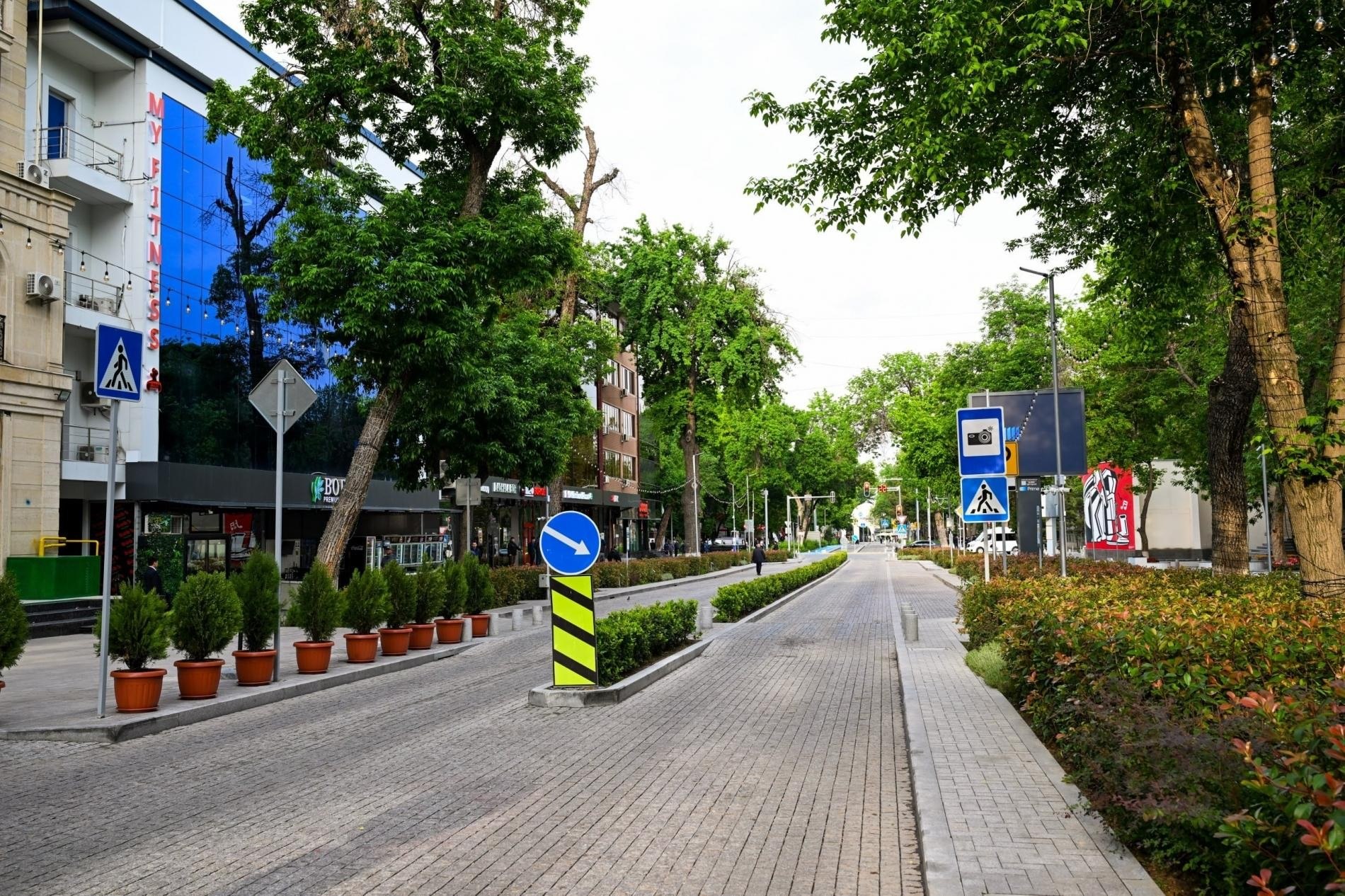
Trees can seem, at first glance, like the simplest element of the urban landscape. Yet they perform an extraordinary amount of work each day that we scarcely notice. They cool the air and humidify it, filter dust, temper the wind, shield building facades from overheating, absorb carbon dioxide, and render streets liveable even on the most sweltering days. It is for this reason that the twenty-first century has fundamentally transformed our relationship with urban greenery.
Today, a tree is no longer merely an ornament of the city but an essential component of urban infrastructure, as indispensable as a road, a bridge, or a water supply network. It is possible that within a few decades the defining measure of a modern city will be neither the height of its skyscrapers nor the breadth of its boulevards, but the number of cool, shaded streets along which a person can walk comfortably even in forty-degree heat.
The city of the future is not simply one where more trees have been planted. It is a city in which, from the very earliest stages of planning, consideration has been given to the green canopy that will take shape over the next thirty to fifty years. Broad-crowned trees must form the backbone of new streets, squares, parks, residential districts, and protective shelterbelts. For it is their canopies that will determine how cool, comfortable, and resilient to climate change the cities of Uzbekistan become in the second half of the twenty-first century.


