Art
11 Iconic Paintings by Ural Tansykbaev: What You Need to Know
Diana Ibatullina, Шахло Бахриева
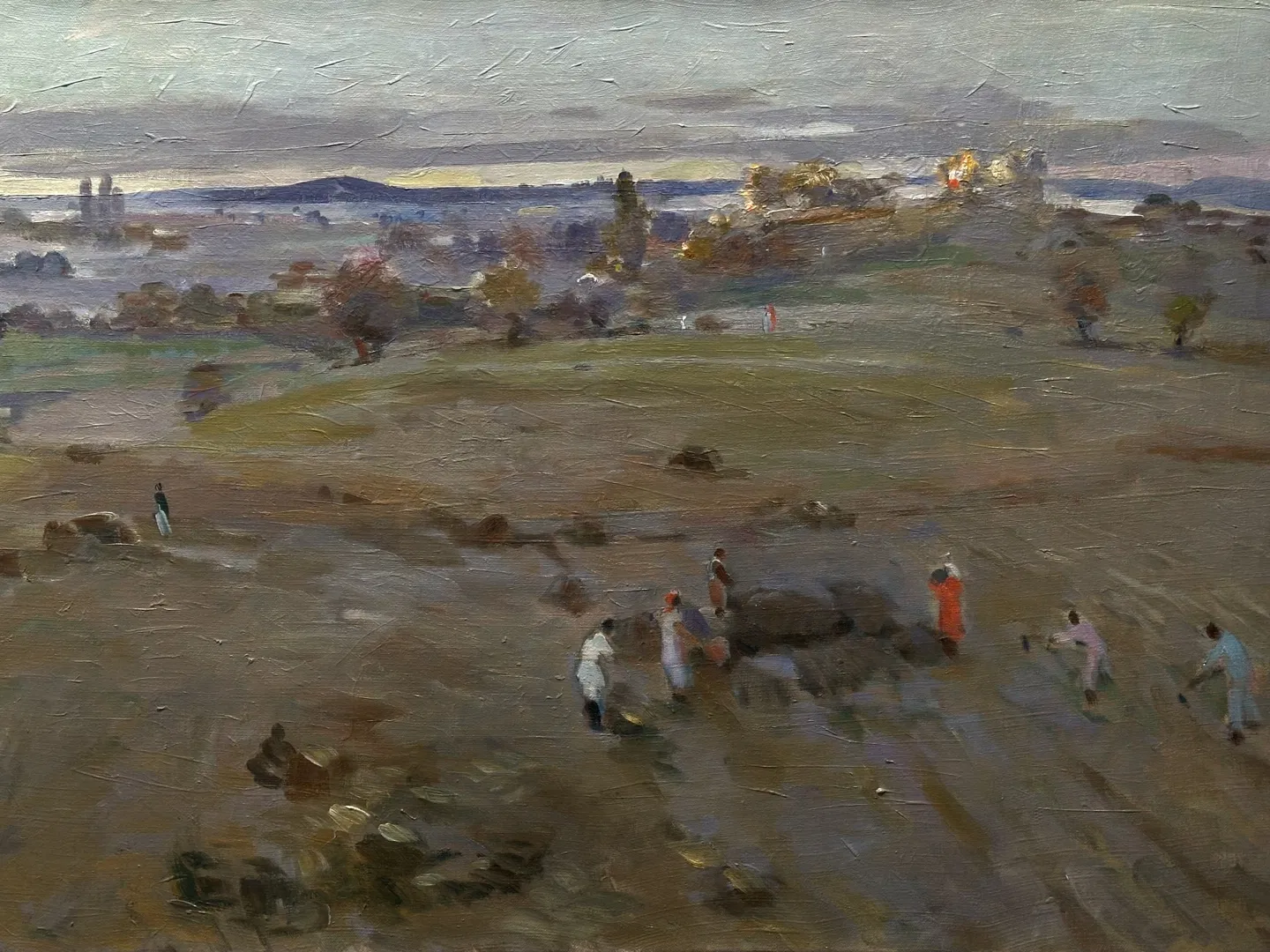
Ural Tansykbaev combined Eastern traditions with avant-garde boldness, creating paintings that reflect the spirit of the era. HD magazine selected eleven of his key works, without which it is impossible to grasp the scale of the artist.
Tansykbaev went from being a worker at the Tashkent wine factory to one of the leading masters of Central Asia in the 20th century. He was born into a modest family, started drawing for the factory club, and first caught the attention of critics as a "worker-artist." His studies at the studio of the Tashkent Museum of Art, then at the Penza Art School, and later—a fateful trip to Moscow, where he saw the canvases of Western European masters—all became steps towards his own style.
He sought a language in which one could speak both about the East and about modernity — and found it in painting, full of color, rhythm, and inner light. His paintings are not merely a reflection of the time, but a profound philosophical conversation with it, without fuss and slogans.
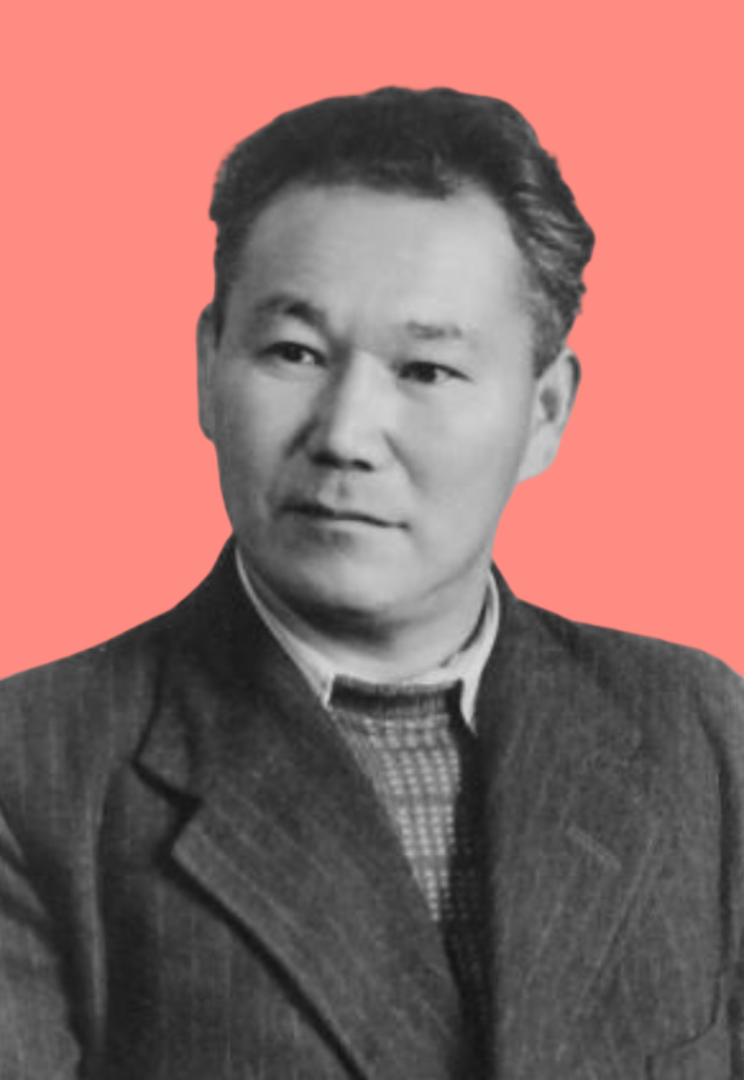
Tansykbaev's path is the story of an artist striving to break beyond academic confines. Impressionism, Cubism, Neoprimitivism—all these stylistic experiments were not mere formal play, but a search for a living language capable of expressing both modernity and his native land. The East in his works is not ornament or exoticism, but a cultural code, a source of personal strength and spiritual relevance.
Over time, he abandons experimentation for its own sake. His painting matures: he increasingly turns to nature, to themes of memory and human presence in the world. The painting becomes a philosophical statement about culture and humanity—through color, rhythm, space.
This path aligns Tansykbaev with other artists of the 20th century. Picasso destroyed tradition to build something new. Modigliani sought poetry in plasticity and refinement. And Tansykbaev found a balance between form and his native land. Different styles — one impulse: the desire to speak about the era, about oneself, about the world in the language of painting.
1. "Portrait of an Uzbek" ("Portrait of A. Tashkenbayev"), 1927
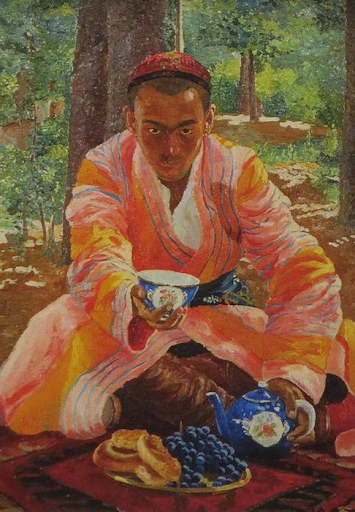
Early work dominated by a restrained palette, angular forms, and a heavy, almost sculptural volume. The influence of Expressionism and Post-Cubism is felt in the tension of the lines. The image seems to be carved from dark matter—it conveys the drama of personal formation against the backdrop of an era.
Dimensions: 98 cm x 70 cm
Technique: canvas, oil
Location: State Museum of Oriental Art (State Museum of the Orient), Moscow.
2. "Caravan", 1929
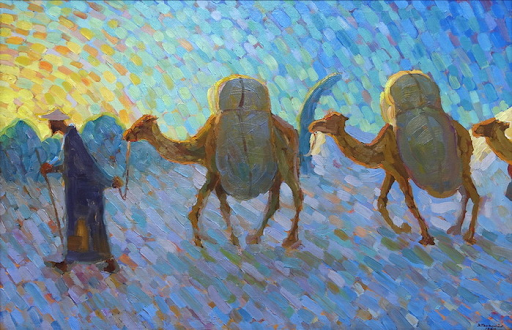
On the canvas, camels move leisurely toward the light—as if life itself is walking its eternal path. The artist painted his work with strokes of pure, iridescent colors, as if weaving the canvas from light and air. This is not just a scene from Eastern life—it is an image of the road, tradition, and inner peace.
Technique: canvas, oil
Location: The State Museum of Arts of the Republic of Karakalpakstan named after I. V. Savitsky, Nukus, Uzbekistan
3. "Portrait of an Uzbek Against a Yellow Background", 1934
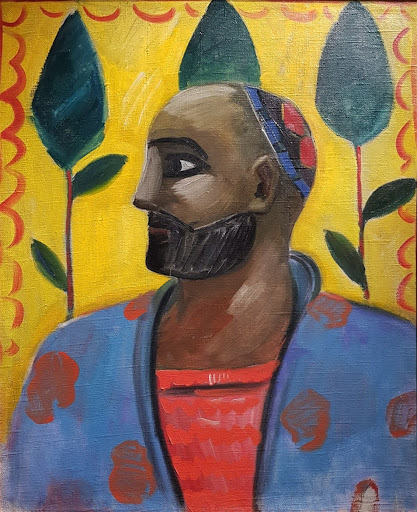
In this work, decorativeness emerges; the form becomes more generalized, and the background becomes richly colored and stylized.
Sizes: 85.2cm x 69.2cm
Technique: canvas, oil
Location: State Museum of Arts of the Republic of Karakalpakstan named after I. V. Savitsky, Nukus city, Uzbekistan
4. "Kazashka", 1934
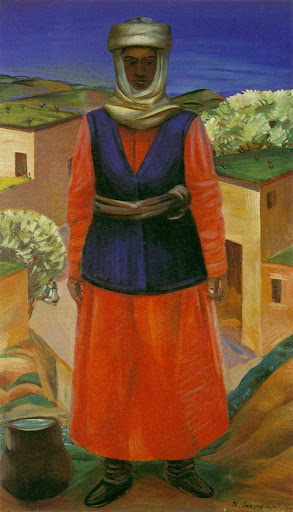
The female figure is depicted frontally, almost like an icon. The work conveys dignity, composure, and decorative clarity.
Sizes: 210 cm x 105 cm
Technique: canvas, oil
Location: State Museum of Arts of the Republic of Karakalpakstan named after I.V. Savitsky, Nukus city, Uzbekistan
"Portrait of an Uzbek on a Yellow" background and "Kazakh Woman" - these works mark a transition from individual psychologism to an archetypal image of the Eastern person.
5. Self-Portrait, 1935
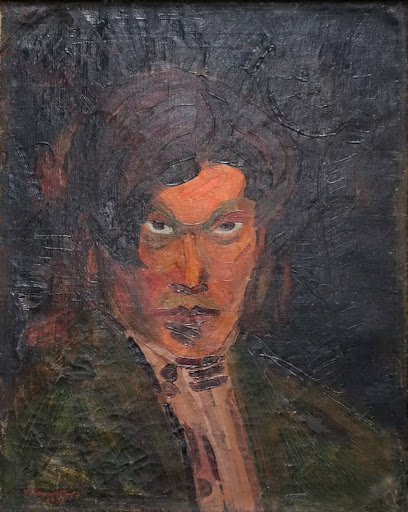
Evidence of an important shift — the artist turns to light and painterly texture. A warm palette, soft brushstrokes, subtle rendering of skin tones and light — here one senses a growing mastery and inner emotional stability.
Technique: canvas, oil
Location: State Museum of Arts of Uzbekistan
6. "By the Village", 1935
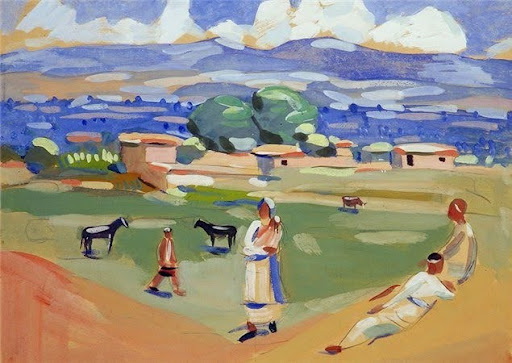
Here, flatness and local color still predominate; space is perceived as ornament. But the figures come alive as silhouettes, and the composition indicates a transition from decorativeness to observation.
Sizes: 50 × 68 cm
Technique: cardboard, gouache
Location: State Museum of Oriental Art, Moscow, Russia.
7. "Evening on the Syr Darya", 1935
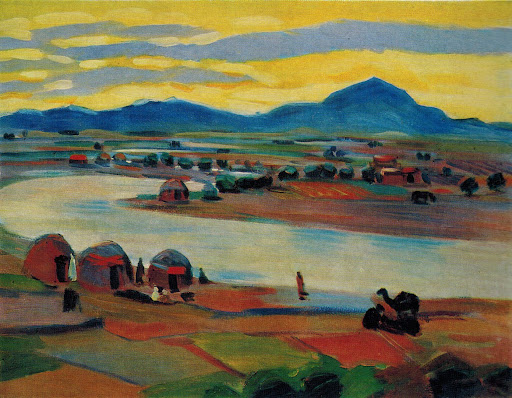
The painting marks a turn towards landscape as an independent genre. The soft transitions, smooth outlines of the river, and atmospheric quality speak of a striving for depth and the creation of a living space.
Sizes: 85cm x 101cm
Technique: canvas, oil
Location: I. V. Savitsky State Museum of Art of the Republic of Karakalpakstan, Nukus, Uzbekistan
8. Self-Portrait, 1943
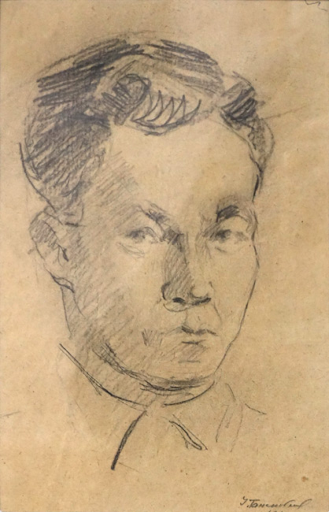
In this self-portrait, Tansykbaev is extremely laconic. He renounces color, working with a simple pencil. In this graphic image lies maturity, restraint, and inner strength. The face is precise, the gaze is focused. This is the portrait of an artist who has endured trials.
Technique: paper, pencil
Location: I.V. Savitsky State Museum of Arts of the Republic of Karakalpakstan, Nukus, Uzbekistan
9. "Evening in the Mountains", 1962
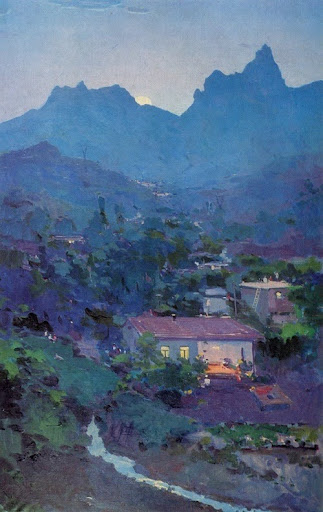
In this work, the artist achieves a balance between realism and lyricism. A restrained palette, half-tones, and meditative silence create a sense of nature's breath.
Print dimensions: 34 × 26.5 cm.
Technique: canvas, oil
Location: House-Museum of Ural Tansykbayev, Tashkent, Uzbekistan
10. "Angren Valley", 1970
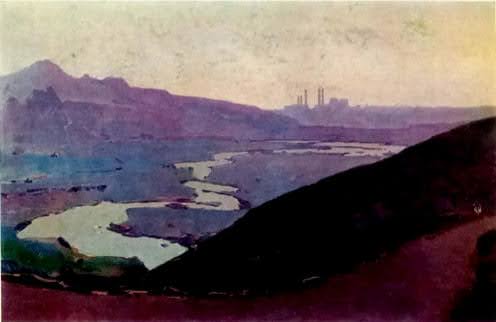
In mature works, scale and philosophical depth emerge. Here, color is saturated, space filled with light and meaning. The landscape becomes an image of time and memory.
Dimensions: 84 × 130 cm
Technique: canvas, oil
Location: State Museum of Arts of Uzbekistan
11. "My Song", 1972
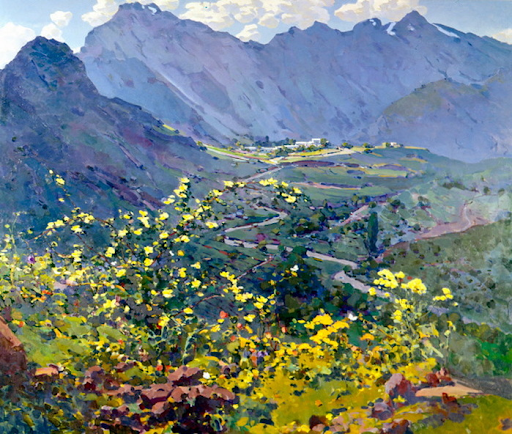
One of the final works where the landscape transforms into a philosophical statement. Light, movement, saturated color—in this painting, the artist speaks of the merging of man and nature as the primary harmony.
Sizes: 200 × 236 cm
Technique: canvas, oil
Location: State Museum of Arts of Uzbekistan
Landscape and Portrait as Revelation
Tansykbaev's creative journey is that of an artist who progressed from decorative flatness and local color to a monumental, philosophically rich landscape. Nature in his works is not a background, but an independent protagonist. He does not so much depict a landscape as enter into a dialogue with it: he scrutinizes, listens, and internalizes it. His painterly spaces seem to breathe—filled with air, light, and inner meaning. Every detail here is important, every brushstroke is like a pause in the conversation.
For Tansykbaev, landscape is not merely a view. It is a mirror of the era, an image of culture, a way of contemplating time and humanity.
The 2014 anniversary reminded us of Tansykbaev as an artist whose works continue to remain relevant. His painting is not a museum relic, but a living conversation about time, culture, and humanity. These ten paintings help us see how he searched for and found his own language—between the East and modernity, between personal experience and the epoch.
Worked on the material: Diana Ibatullina, Shakhlo Bakhriyeva
Did you like the story? Support us on Instagram and Telegram.
Newsletter
A letter from the HD editors
Once a week, we send the best stories, events, and cultural discoveries from Central Asia.