Literature and Storytelling
From Filmstrips to ComicCon: A Brief History of Central Asian Comics and Their Superpowers
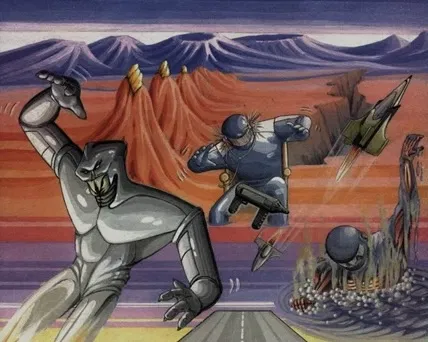
In early 1990, a futuristic new title hit the shelves of Tashkent bookshops, its cover and name seemingly lifted straight from a Western pulp magazine. For 1 rouble and 20 kopecks, readers could take home an engrossing visual story that would make Tashkent the birthplace of the Soviet comic book.
Kosmicheskiy detektiv (Cosmic Detective), illustrated by Suren Ter-Avakyan and Vladimir Kim, transported readers to the 25th century. On Mars, the astronaut protagonist takes on an underground company producing chemical weapons and battles robot pirates. Kosmicheskiy detektiv has none of the familiar speech bubbles or the kind of visual action associated with the Marvel universe. Instead, each panel is accompanied at the bottom by a concise explanatory caption.
Yet this particular publication is widely regarded as the first Soviet comic book. And it was published not in Moscow, but in Tashkent, by the then-prestigious Uzbekistan Publishing House.
Kosmicheskiy detektiv marks the beginning not only of the history of Soviet comics, but of the Central Asian story as well. Local artists have turned to the genre to explore identity, mythology, feminism, everyday urban life and ecology. And they do so in their own distinctive style.
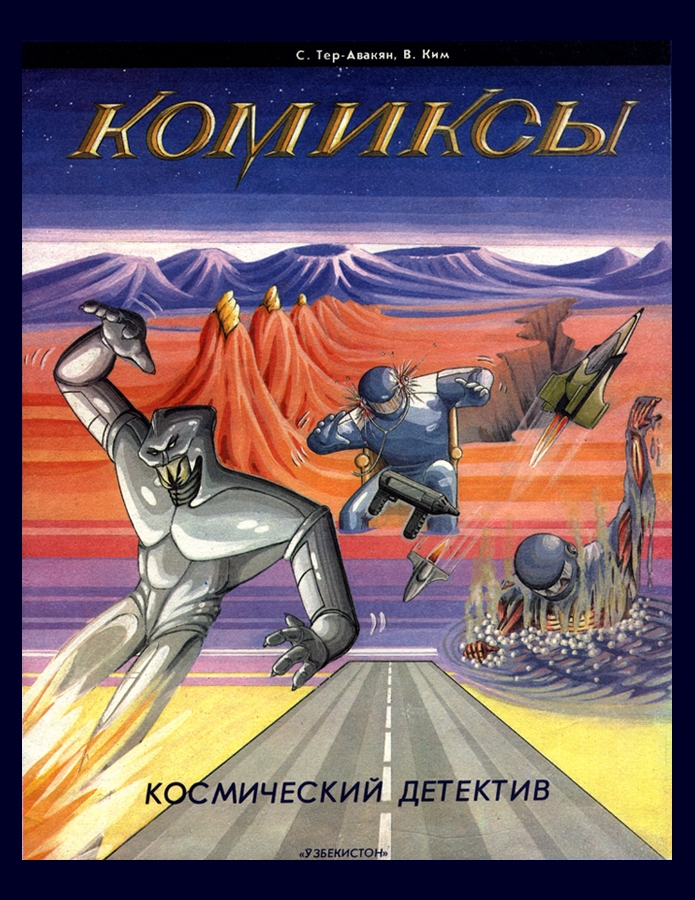
Cover of Kosmicheskiy detektiv (Cosmic Detective). Authors: Suren Ter-Avakyan and Vladimir Kim. Uzbekistan Publishing House, 1990. Print run: 100,000 copies.
Murzilka, Khoja Nasreddin and Propaganda Posters
The first Soviet comic did not appear out of nowhere. The formats used for visual storytelling had already taken shape in the USSR and Soviet Central Asia long before Ter-Avakyan and Kim.
Children's and youth magazines such as Murzilka, Vesyolye Kartinki and Misha published sequences of illustrations with captions and recurring characters. They were not officially called comics, but in practice they functioned much like them. Misha, for example, adapted works of world and Soviet literature into this format, from Jules Verne and Jonathan Swift to Kir Bulychev.
The editors of Misha were the first to introduce realistic comic-style drawing to children's periodicals. Its development can be traced through the work of artists Sergei Kravchenko, Mark Lisogorsky, Viktor Skrylev and Anatoly Dubovik.
Kravchenko drew comics for Misha, and one of his most frequently featured characters was Khoja Nasreddin, familiar to generations of people in Uzbekistan. The artist based his stories on the two-part novel The Tale of Khoja Nasreddin by Soviet writer Leonid Solovyov. Two Soviet filmstrips about the folk hero were released in 1974 and 1975.
Filmstrips are not formally considered comics, but they follow many of the conventions of the “ninth art”: a sequence of illustrations is accompanied by captions that move the story forward.
All these forms of storytelling that preceded the comic book helped familiarise readers with the idea of conveying complex stories through a combination of words and images.
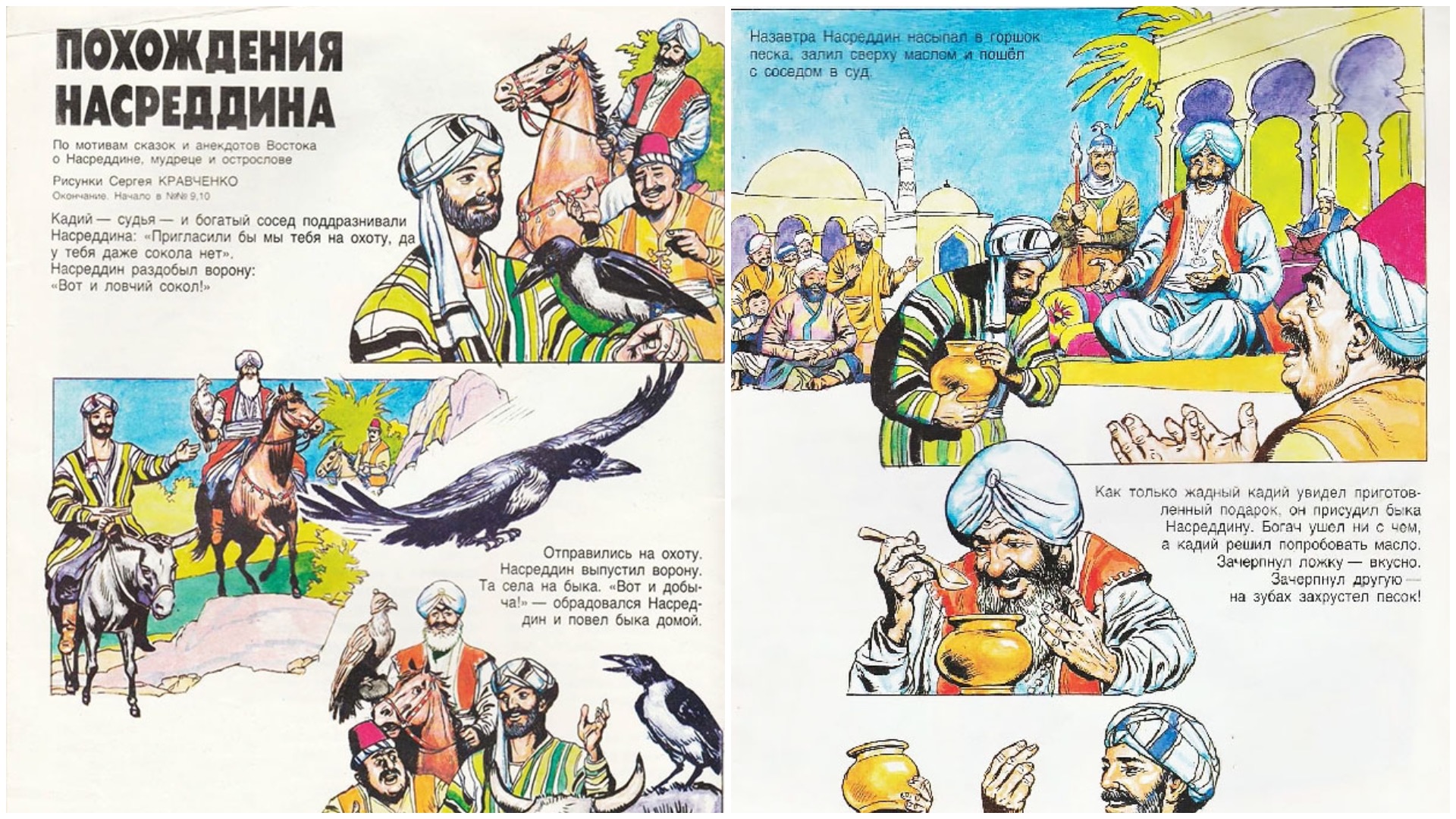
Sergei Kravchenko's comic about Nasreddin Hodja.
From Genetic Mutations to Galactic Brothers
In 1991, shortly after the release of Kosmicheskiy detektiv (Cosmic Detective), Ter-Avakyan and Kim published another full-fledged comic, Bezumiye metamorfozy (The Madness of Metamorphosis). This time, it was not adventure science fiction but a thriller with elements of horror, centred on genetic experiments and their consequences. The dark narrative ends with a warning:
“We hope this little book will at least make the person who has come so close to the secrets of nature, so powerful and yet so vulnerable, stop and think.”
Neon va Red can be considered the first full-fledged Uzbek comic, with its first pages released in 2019. Producing the comic required 90 million soums, a sum that was raised by January 2020. The Comics.uz team, led by Shahrukh Nizamutdinov, told the story of Mardon and Shahzod, two brothers who attend a school named after Elon Musk.
The brothers gain superpowers and encounter the mysterious planet Tuunsan. The story is set in Uzbekistan, with familiar streets visible in the panels. A continuation of the first issue never made it onto shop shelves because of the project's financial difficulties.
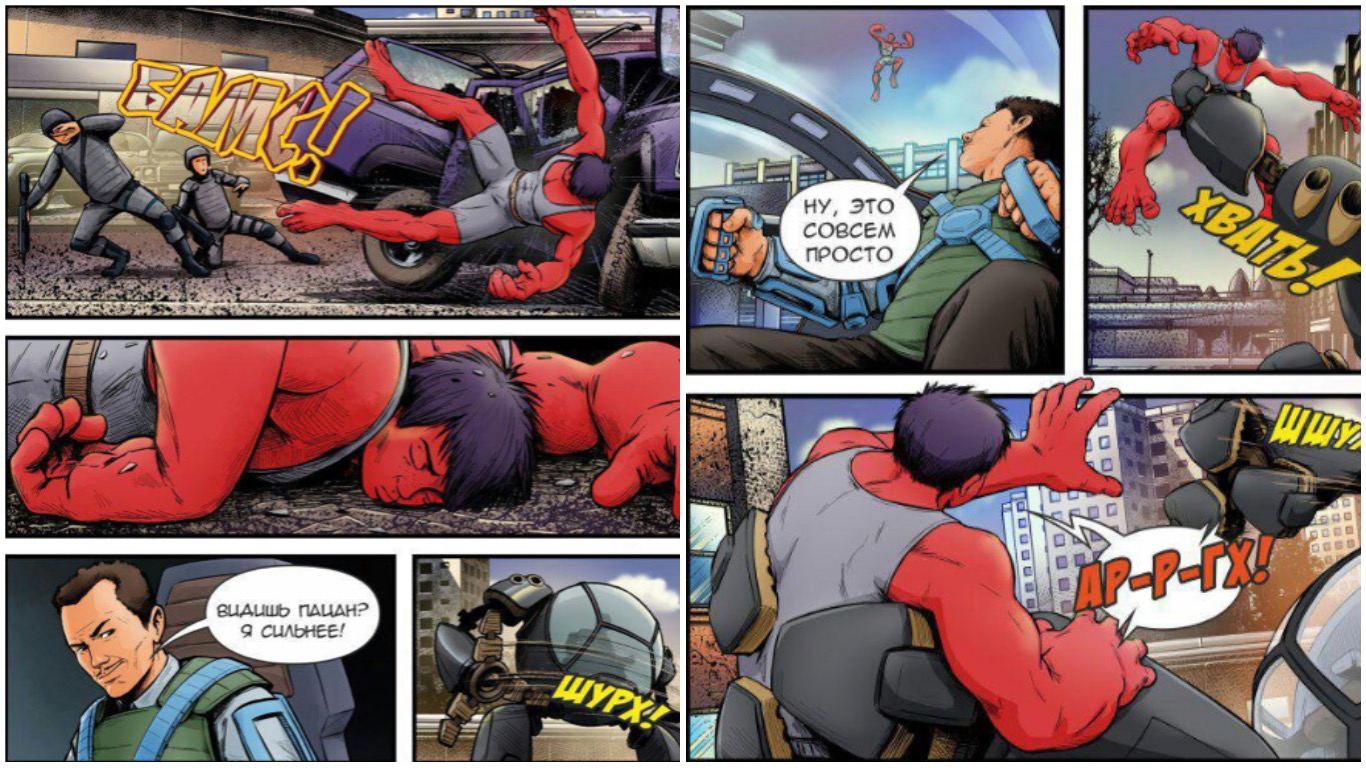
Screenshots of the "Neon and Red" pages. Source: Comics.uz / Telegram
Graphic Activism in Central Asia
Contemporary comics often serve as a way to express social views and engage with issues that matter to society. In 2022, artists from Kyrgyzstan, Viktor Tsoi, Kazakhstan, Alisher Seitov, and Uzbekistan, Viktoria Kim, launched the international project Comics of Asia, dedicated to important social and personal issues.
Its short stories tackle media literacy, personal boundaries, mental health, the environment, scientific thinking, nationalism, motivation and animal welfare. A minimalist colour palette, straightforward storylines and texts in Russian, Kyrgyz, Kazakh and Uzbek make the works accessible to a broad audience. The project exists entirely in digital form, with an archive of its issues available on Instagram. The account is no longer updated, but the project remains an important example of comics being used for education and social commentary.
In 2021, Uzbekistan's first manga studio, Tokyo Group, appeared and began publishing its work online. One of its most notable projects is Chirchik Ghoul, a story featuring the mythical creature Albasty and a Kushan princess. The studio actively draws on Uzbek folklore and local stories in its work.
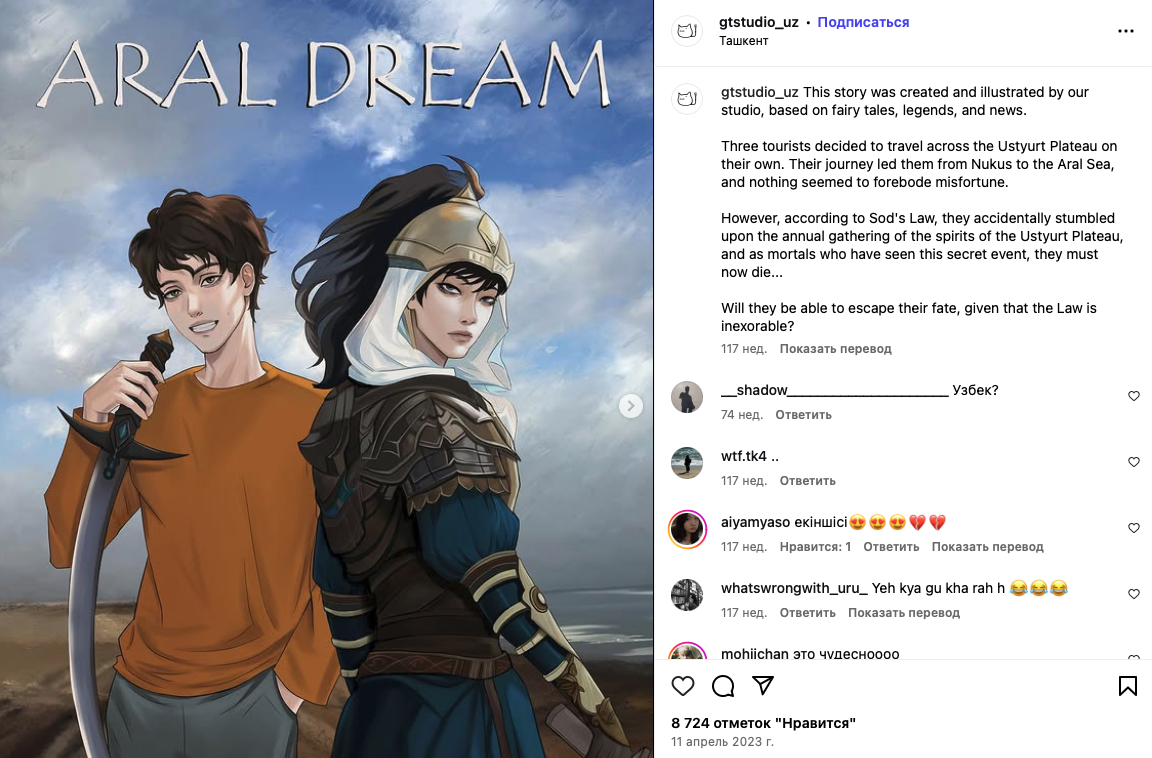
Screenshot: Tokyo Group / Instagram
To complete the picture, it is worth mentioning events such as GeekCon and ComicCon, which take place in Tashkent every year. At Artists' alleys, comic artists and illustrators showcase their work, including comics, zines, merchandise and postcards. These events provide an important entry point for potential readers and aspiring creators, offering a chance to receive feedback and sometimes even a small amount of funding for a creative project.
The Neighbours' Experience
In 2015, Bishkek-based Bulut Studio released Altai, a comic about a schoolboy with paranormal abilities and a mythical threat from the Ala-Too mountain range. Each issue was drawn by hand, digitised and then coloured using digital tools.
Almaty-based publishing house KHAN Comics has been actively developing the ethno-fantasy subgenre. Its titles include the Erketay, Jetysu and Orda series, all steeped in Kazakh folklore while blending naturally with contemporary culture and the visual language of comics.Bult Comics continued the trend with its Kazakhman series, centred on a Batyr superhero who balances everyday life with saving the city. The first issue, released in 2020, sold 15,000 copies and was distributed through Kazakhstan's Meloman bookshop chain.
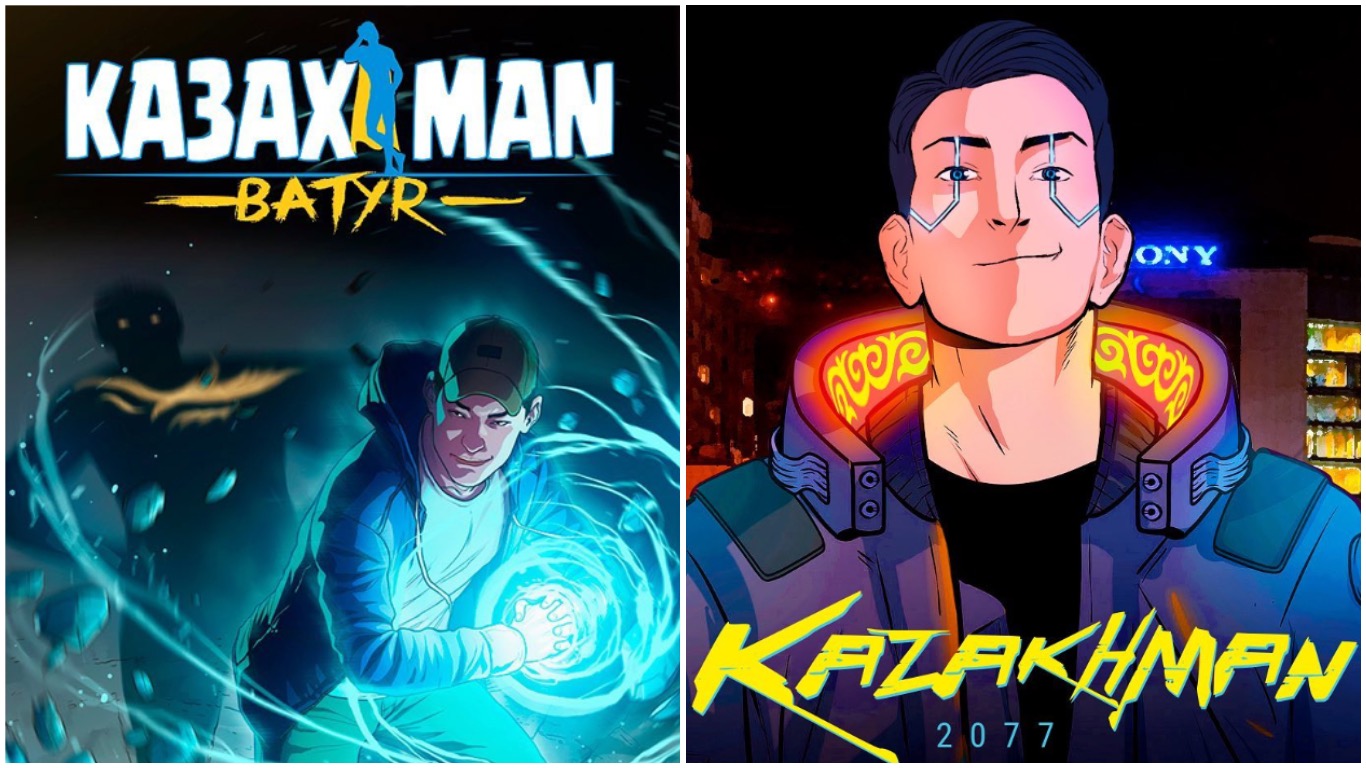
Screenshot: BultComics / Instagram
In Tajikistan, actor and producer Jayhun Nasimi created Mardi-Mehrubona in 2018, described as “the first Tajik superhero”. The character has unusual mental abilities, can communicate with animals and insects, control his enemies, invent a rescue robot and face a host of challenges.
All these projects have come to life thanks to crowdfunding, festivals and the enthusiasm of their creators. This is not yet a fully fledged industry or a cultural phenomenon, but it is no longer simply a collection of isolated success stories either.
Thank you for reading to the end! If you enjoyed the story, support us on Instagram and Telegram.
Read also
 Literature and Storytelling
Kazakhstan announces a hunt for readers. Read 15 books and get 10 million tenge
Kairat Baltabai
 Literature and Storytelling
"Days Gone By" Today: Cinema, Theatre and the Living Legacy of Abdulla Qadiri
Christina Inyakina
 Literature and Storytelling
The Doctor Who Changed Literature: Anton Chekhov
Christina Inyakina
Newsletter
A letter from the HD editors
Once a week, we send the best stories, events, and cultural discoveries from Central Asia.