Architecture & Urban Environment
Tashkent House of Cinema: A Wrecking Ball for a Landmark Soviet Modernist Building
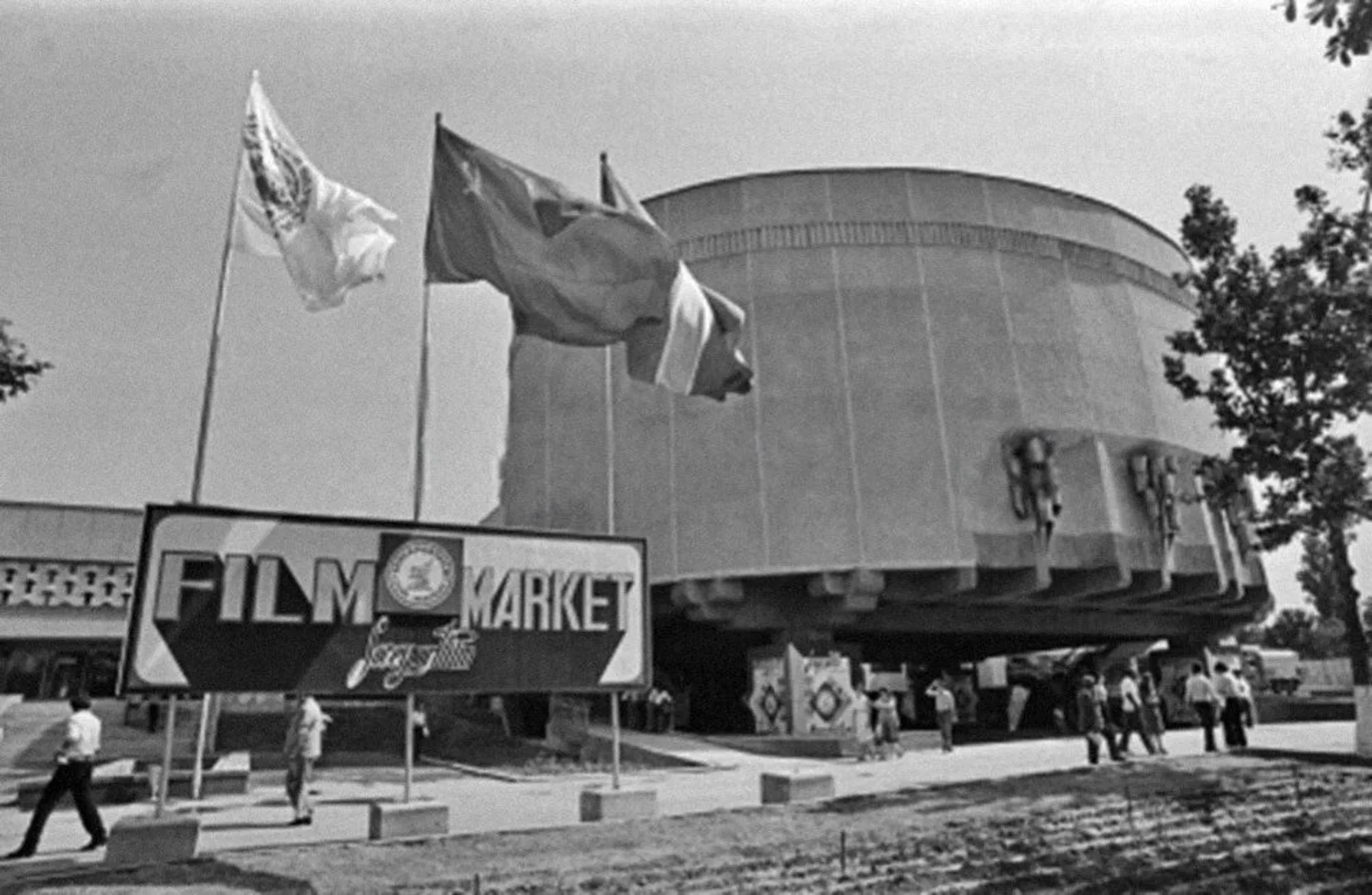
In December 2017, the Tashkent House of Cinema – one of the few remaining Soviet-era modernist buildings scattered over Uzbekistan’s capital – has been reduced to rubble. For over 35 years the landmark building housed the very best of Soviet Uzbekistan’s film industry – and yet it was demolished in a matter of days to free up space for prime real estate and high-rises slated to be built inside the Tashkent City business district. Municipal authorities chose not to make it public, with residents learning the news from social media. Here is why the House of Cinema was an important spot on the local cultural map and how its demolition generated a debate about the cost of unbridled redevelopment.
A man behind the idea to build the House of Cinema was film director Malik Kayumov who secured the backing of the then-head of Soviet Uzbekistan, Sharaf Rashidov. The latter had thrown his bureaucratic weight behind the project and approved the budget expansion. The Filmmaker Union of the USSR in Moscow decided to support it financially after the superior management had a look at the initial concept.
The House was designed by two architects from the Tashgiprogor Design Institute, Rafael Khairutdinov and Viktor Breusenko. One of the most remarkable buildings of Soviet Tashkent was constructed in a record five-month period, and the commissioning was aligned with the 1982 Asian, African, and Latin American Film Festival. The newly built temple of cinema impressed those who had a chance to see it in the making. Khairutdinov later recalled how Sergei Bondarchuk remarked, somewhat jealously: “Even us Muscovites don't have such a cinema hall!”
Light, shadow, marble
The creator of the Oscar-winning “War and Peace” film adaptation had a reason to speak highly of the modernist building in Tashkent. The Moscow House of Cinema, located between 2nd Brestskaya and Vasilievskaya streets, is not known for outstanding design. On the contrary, its sister building in Tashkent was the right mix of aesthetics, functionality, structural lightness, and the geometry of light and shades — just like a proper black-and-white movie.
Interestingly, the House of Cinema was designed right in the heart of a busy downtown Tashkent — the allocated construction site was sandwiched between a metro line and a kindergarten which architects decided to keep. In the meantime, there had to be some free space in front of the building for filming equipment and – just in case – large crowds. Khairutdinov and Breusenko addressed these challenges by designing a hall that protruded sideways and was supported by four massive pillars. The duo was also mindful of Central Asia’s harsh climate; for instance, the drum-shaped main hall casts a large shadow on the main entrance and the surrounds.
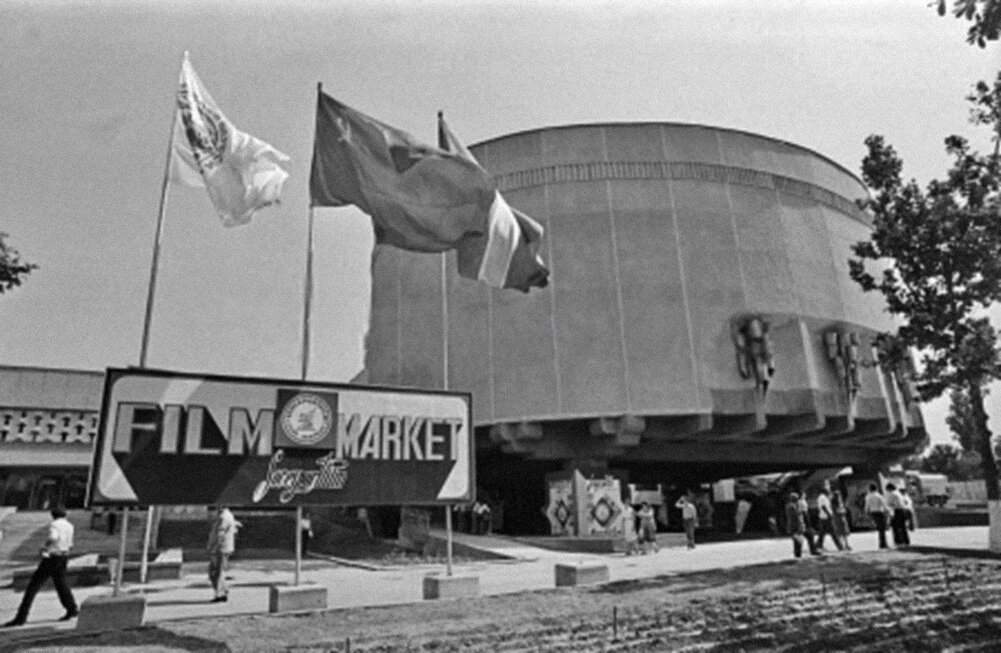 Авторы фото: Кавелин В.,Казанцев В.
 An important element of the facade was the combination of large protruding and recessed planes with rounded side towers and narrow window slits with sun protection elements on the light openings. The House of Cinema was decorated using Gazgan marble (the likes of which could be found in metro stations in Tashkent and Moscow), granite, fiberglass plaster, and various cast elements. The painted murals by Bakhodir Jalalov, stained glass windows, and purpose-designed lamps by Viktor and Albert Gan, as well as stylized brass film rolls by Robert Avakyan were to give the exterior and interior a unique look.
An important element of the facade was the combination of large protruding and recessed planes with rounded side towers and narrow window slits with sun protection elements on the light openings. The House of Cinema was decorated using Gazgan marble (the likes of which could be found in metro stations in Tashkent and Moscow), granite, fiberglass plaster, and various cast elements. The painted murals by Bakhodir Jalalov, stained glass windows, and purpose-designed lamps by Viktor and Albert Gan, as well as stylized brass film rolls by Robert Avakyan were to give the exterior and interior a unique look.
The House of Cinema was not about aesthetics only —filmmakers themselves found it convenient to work in. Svetlana Ivanova, who worked as secretary at Uzbekistan’s Film Association, called it the heart of the entire cinematic life of the country.
“Nikita Mikhalkov, Tatyana Lavrova, Natalya Krachkovskaya, Vyacheslav Tikhonov, Oleg Anofriev, and Natalia Varley would all pay a visit. They used to stay here and have lunch in a restaurant downstairs — they didn’t even have to go outside. This is, of course, what the architects can claim credit for. They had nothing to do with filmmaking, but they were sensitive to our needs and provided us with everything – isn’t it amazing? We are grateful to them to this day for this home away from home,” she recalled in 2017.
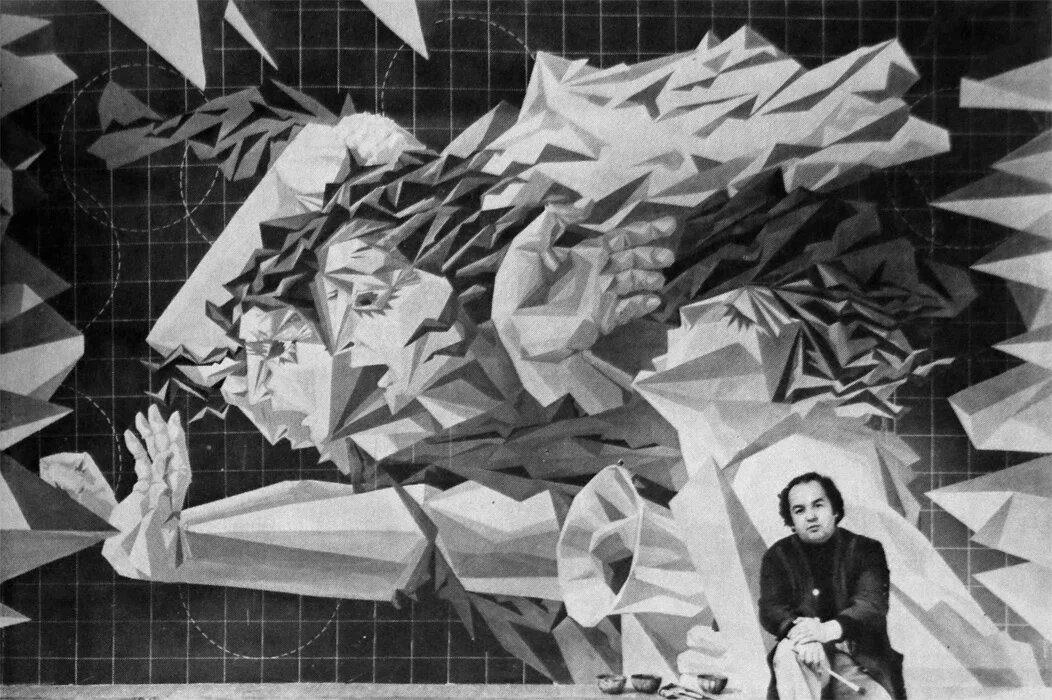 Автор фото неизвестен. 1983 г. Художник Баходир Джалалов во время работы над росписью «Посланники вечности» в Доме кино.
Renovation vs. Demolition
Throughout 2017 and by the time it was demolished, the House of Cinema had begun to fall into disrepair. “We used to have our own restaurant, billiards, even a hotel with six rooms. There were only three halls — the Large, the Pink, and the Small one. Artists and sculptors decorated the exhibition hall. And what a piece of work was that! Malik Kayumov would even order chandeliers from [the Latvian city of] Liepaja,” Ivanova said. Throughout its final years, the House premises were rented out for offices or restaurants; rooms where filmmakers and young creators would hold meetings were converted into small cinemas.
Careful renovation could have breathed new life into the unique modernist monument, but the vicinity of the House of Cinema was repurposed to build the Tashkent City business district. That was done without much publicity and the architectural community learned about the planned demolition from social media. House of Cinema staff faced eviction from their workplaces even before the Tashkent City construction project was given approval.
Chief architect’s widow, Firuza Khairutdinova, spent a month trying to set up an open discussion on how to preserve and renovate the House, and amalgamate it into the Tashkent City concept.
More than 70 Uzbek architects, filmmakers, and artists signed a petition to President Shavkat Mirziyoyev, but to no avail — the correspondence got stuck in the State Committee for Construction and Architecture, which forwarded it to Tashkent City management. Petitioners were soon made aware that their effort was useless.
Khairutdinova happened to get access to a range of Tashkent City concepts pitched up by designers from Turkey, Singapore, the USA, and Uzbekistan. An architect herself, she concluded that it was Singaporean one that looked viable. The project in question included approaches towards Tashkent’s seismic activity, on-site groundwater, and the need to preserve modernist monuments. Nevertheless, investors chose to pick up the Turkish one.
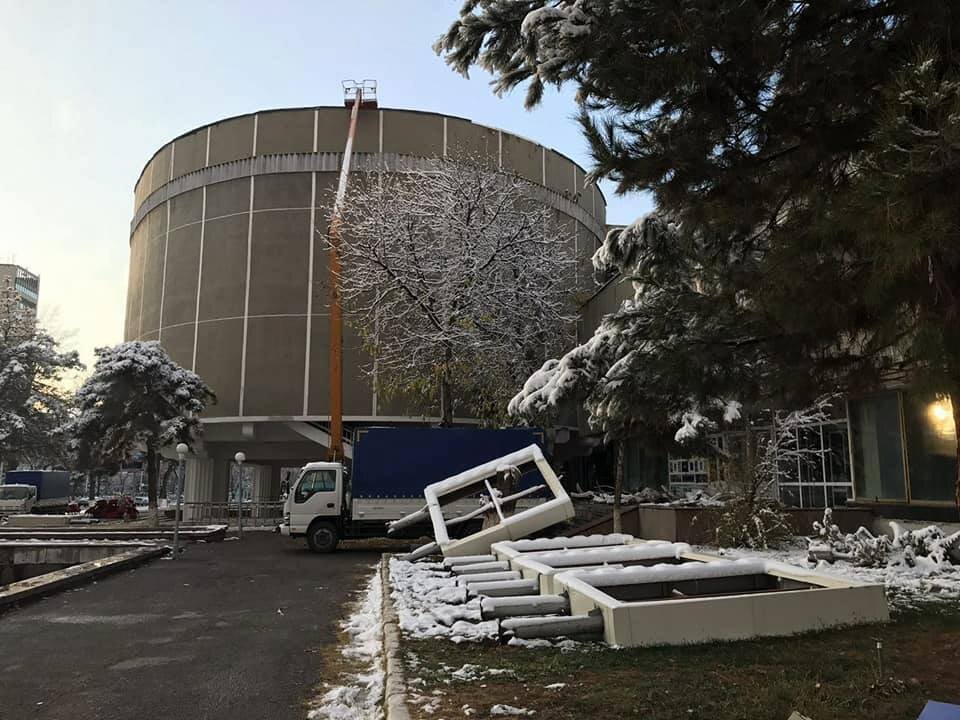 Шохира Хамро. Снос Дома кино.
What Architects and Urbanists Say
Architect Takhmina Turdialieva, founder of the independent Association of Young Architects of Uzbekistan, believes that demolitions and redevelopment erase the material history of Tashkent: “The pain point is the demolition of our cultural architectural monuments, because they cannot be brought back or restored... when the House of Cinema was demolished, I was very upset, but I was young and didn't know how to influence the situation. Later, I realized that these were not random mistakes made by the authorities but a lack of understanding of how precious these buildings were; that should be communicated to the government.”
Her colleague Alexander Kuranov didn’t mince his words: “[Soviet] Modernism of the 1960s and 1980s is an amazing and complex period, and it was a bit of a pain for architects. We as regular Tashkent residents sometimes struggle to comprehend this architecture. Take, for example, projects by Rafael Khairutdinov: the unique House of Cinema — now demolished, the House of Foresters — demolished as well. This is a crime and an act of barbarism!”
The House of Foresters, faced a wrecking ball just a few month after the House of Cinema was demolished. It was built in 1974 and featured a Forestry Design Institute, an exhibition hall dedicated to Uzbekistan’s flora and fauna, and a thematic store called Nature. The façade was unconventional: vertical two- and three-story elements resembled tree trunks and crowns, with the entire structure blending into the surrounding environment. It protected the interior from the summer heat and eliminated the need for air conditioning. This place is now occupied by the NestOne tower.
Experts believe that the demolished buildings could have found a place in the Tashkent City landscape. Alexander Fedorov, who studies the aesthetics of Soviet modernist architecture, noted, “When I thought about how do we transform the Tashkent modernist buildings, I realized that there are many such buildings. Take, for example, the House of Cinema, which I integrated into the Tashkent City environment using a collage. After all, if it had not been demolished, it could stand out. New districts can always be merged with with modernist architecture.”
Fatima Abdurakhmanova, an activist and street photographer, reminded that the House of Cinema was destroyed along with its unique foyer murals. “This is troublesome because unique and inspiring pieces of art are now gone forever.”
Read also
 Architecture & Urban Environment
The Architecture of Tomorrow: New Identities, Emerging Technologies and the Human Factor
Damir Ussenov
 Architecture & Urban Environment
A Pretty Facade Doesn’t Make a Business
Maxim Shabashov
 Architecture & Urban Environment
Walking Almaty’s Modernism: Architecture Against the Mountains | A Photo Essay
Alfiya Kalmaganbetova, Amira Kassenova
Newsletter
A letter from the HD editors
Once a week, we send the best stories, events, and cultural discoveries from Central Asia.